Goal: Create sustainable competitive
differentiation through successful products
/ services
#MarketHacking
Who is this dude?
 20+ yrs tech/media/advertising (9 yrs at Yahoo)
 Marketing, product, strategy, ecosystem
 Founder and Advisor
 USC MBA
Approach
 Framework
 Strategic gamification
 Signals
 Tools
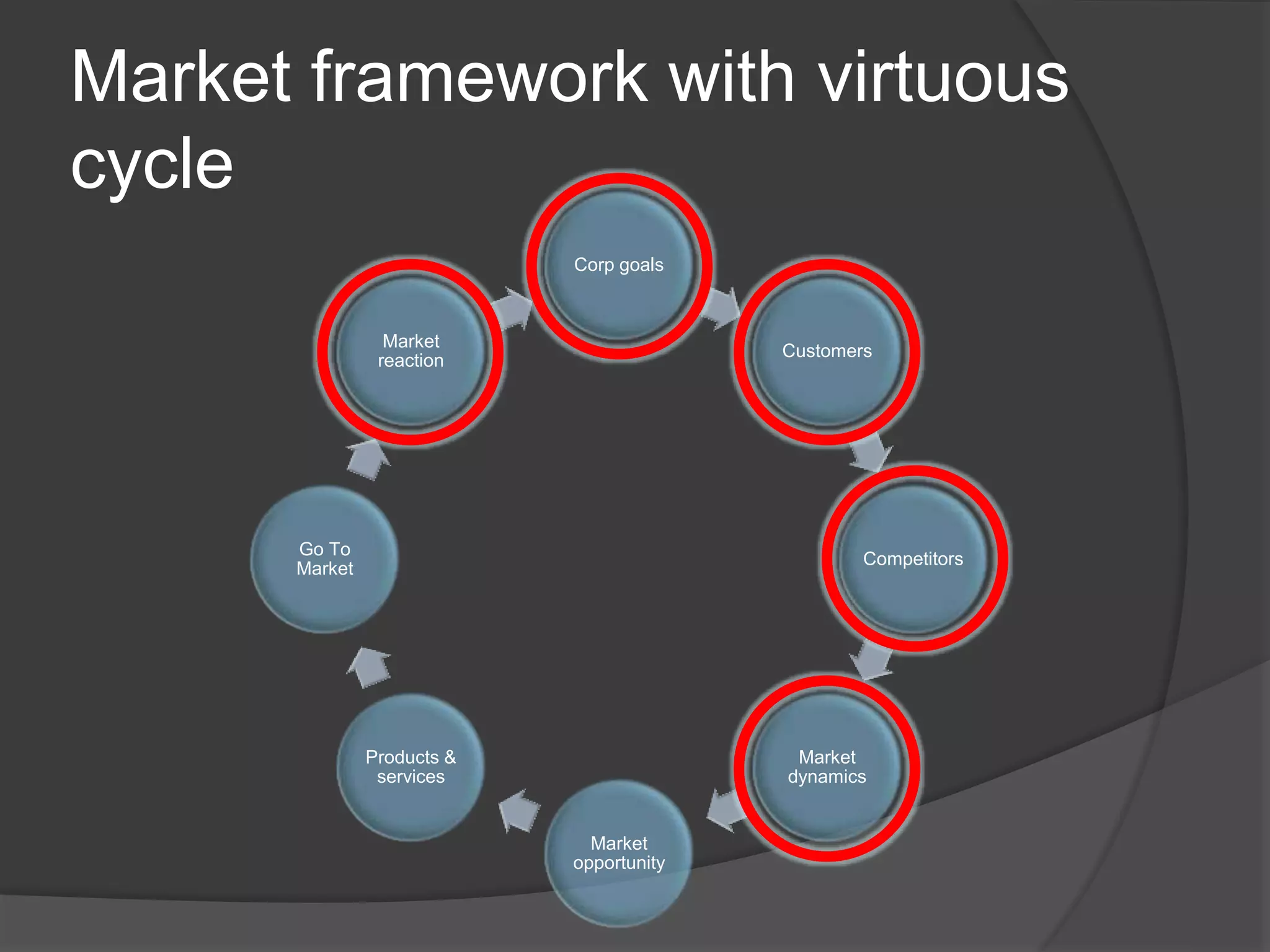
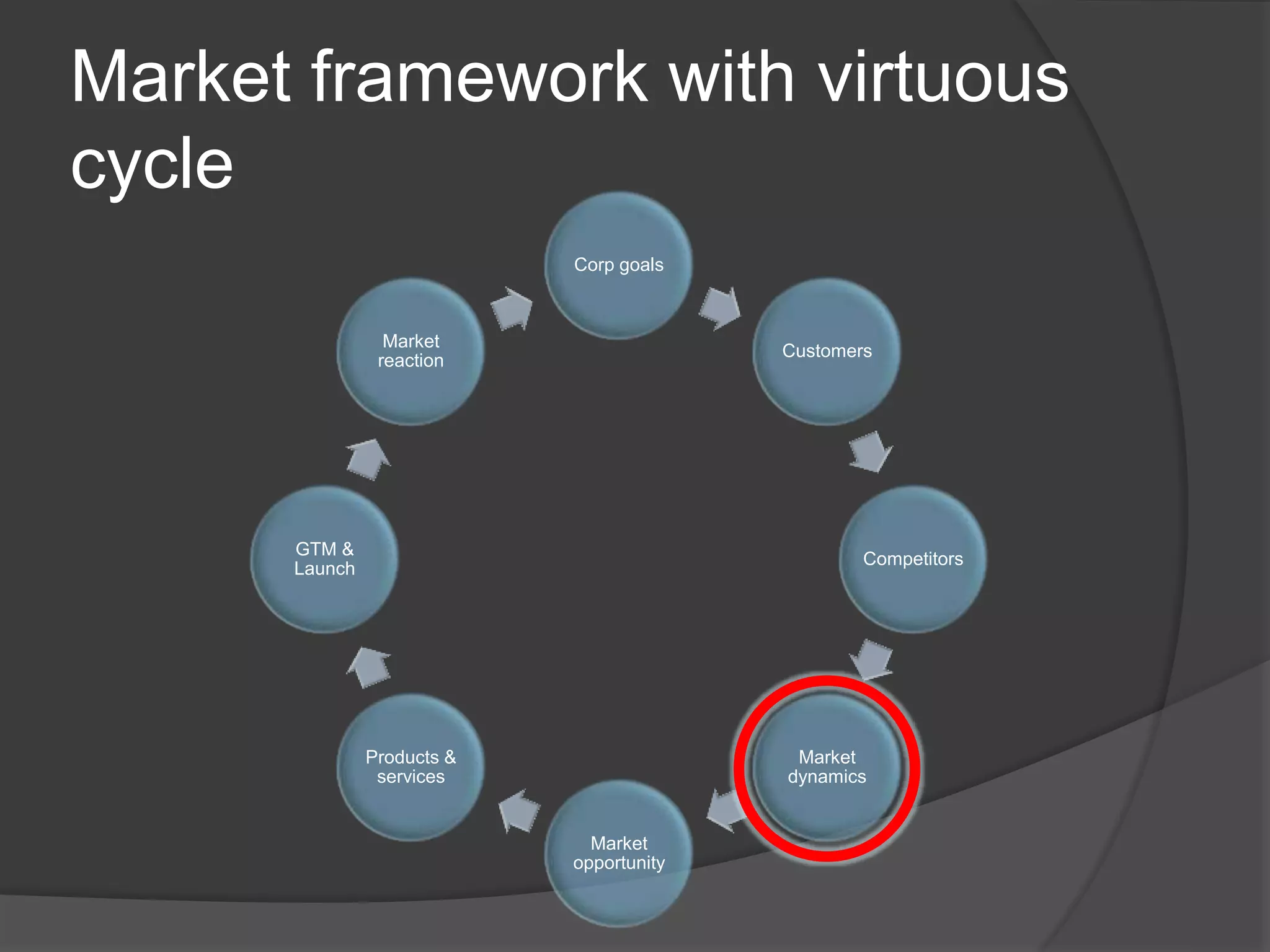
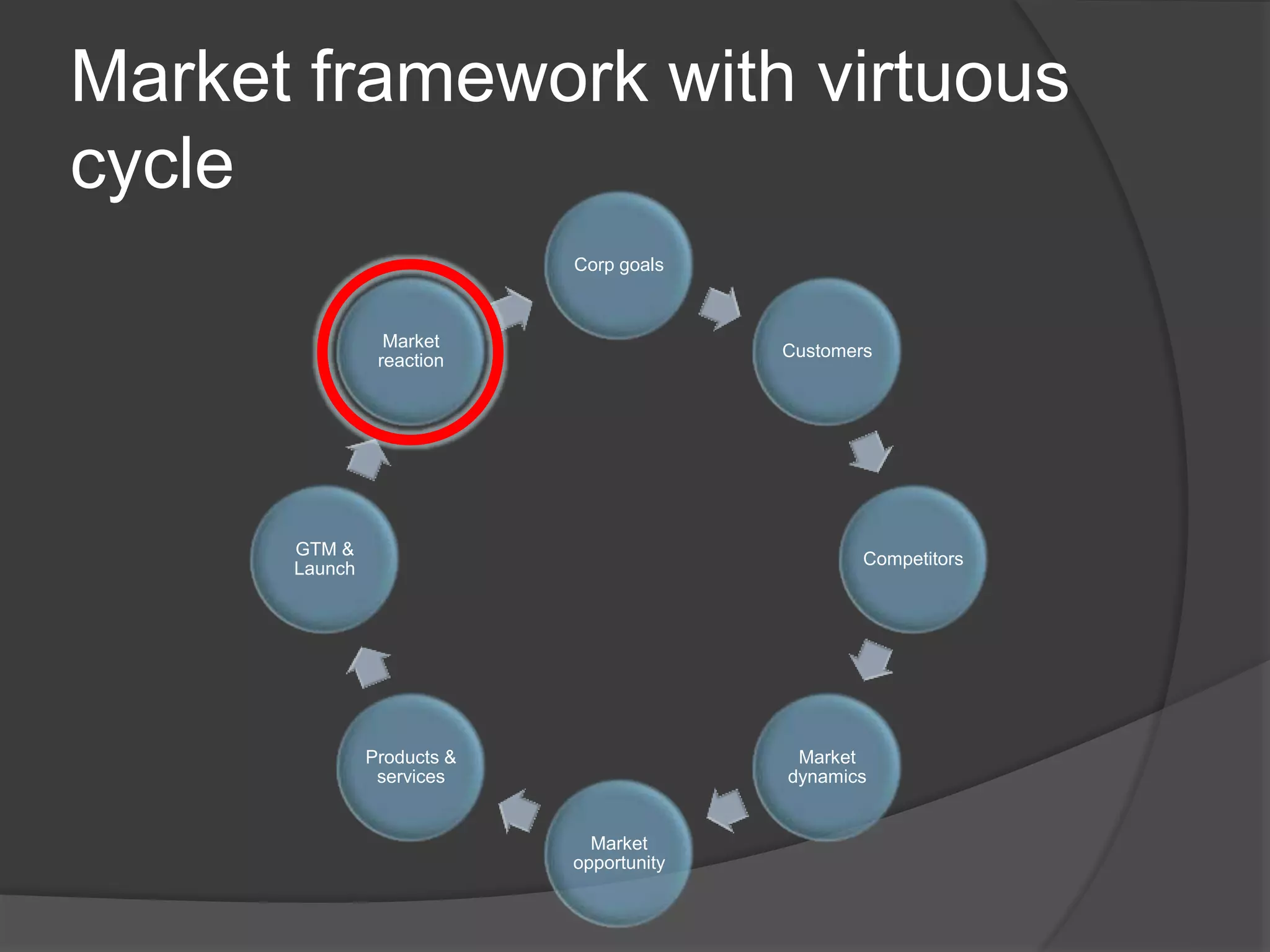
Market framework with virtuous
cycle
Corp goals
Customers
Competitors
Market
dynamics
Market
opportunity
Products &
services
Go To
Market
Market
reaction
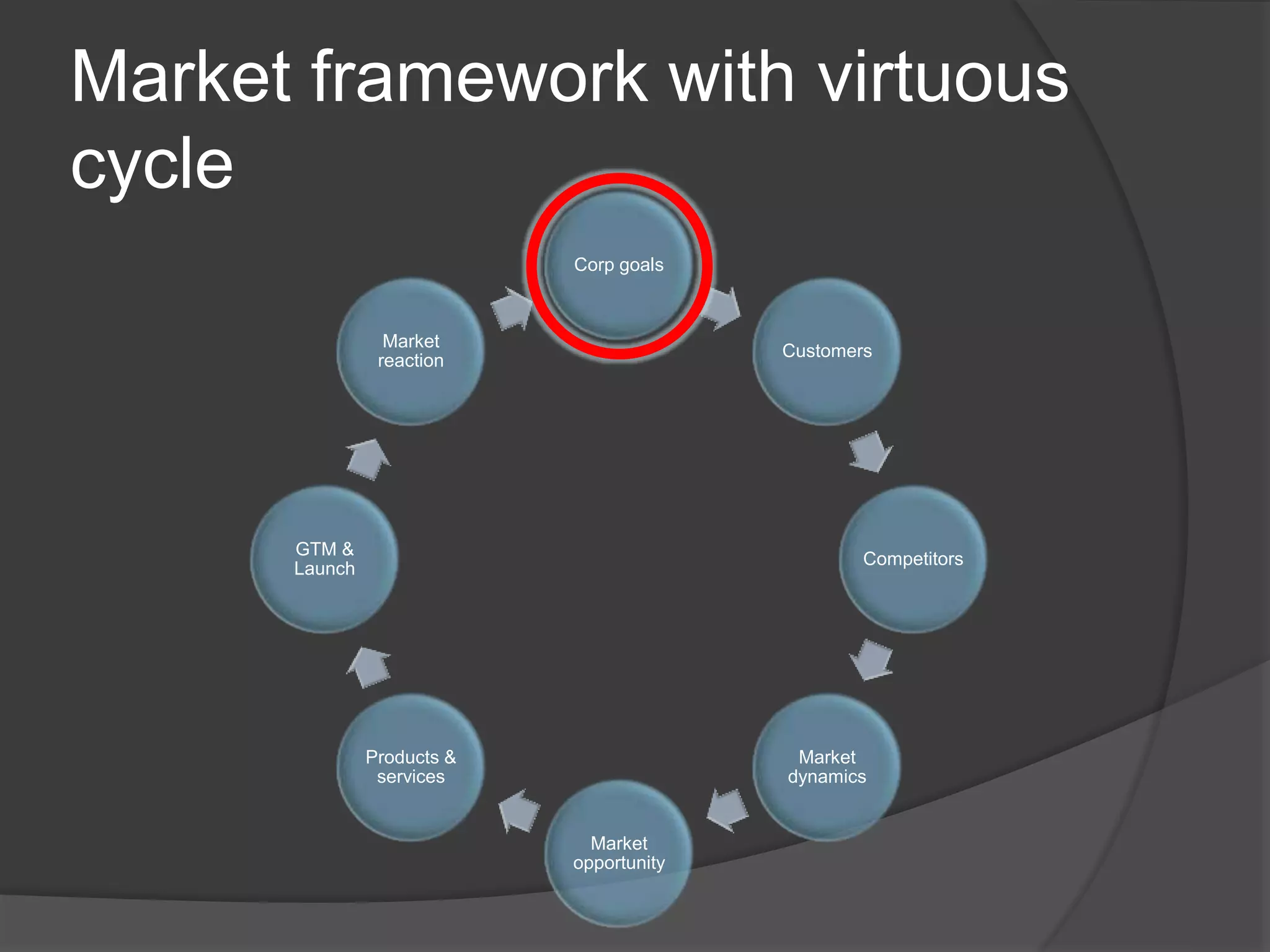
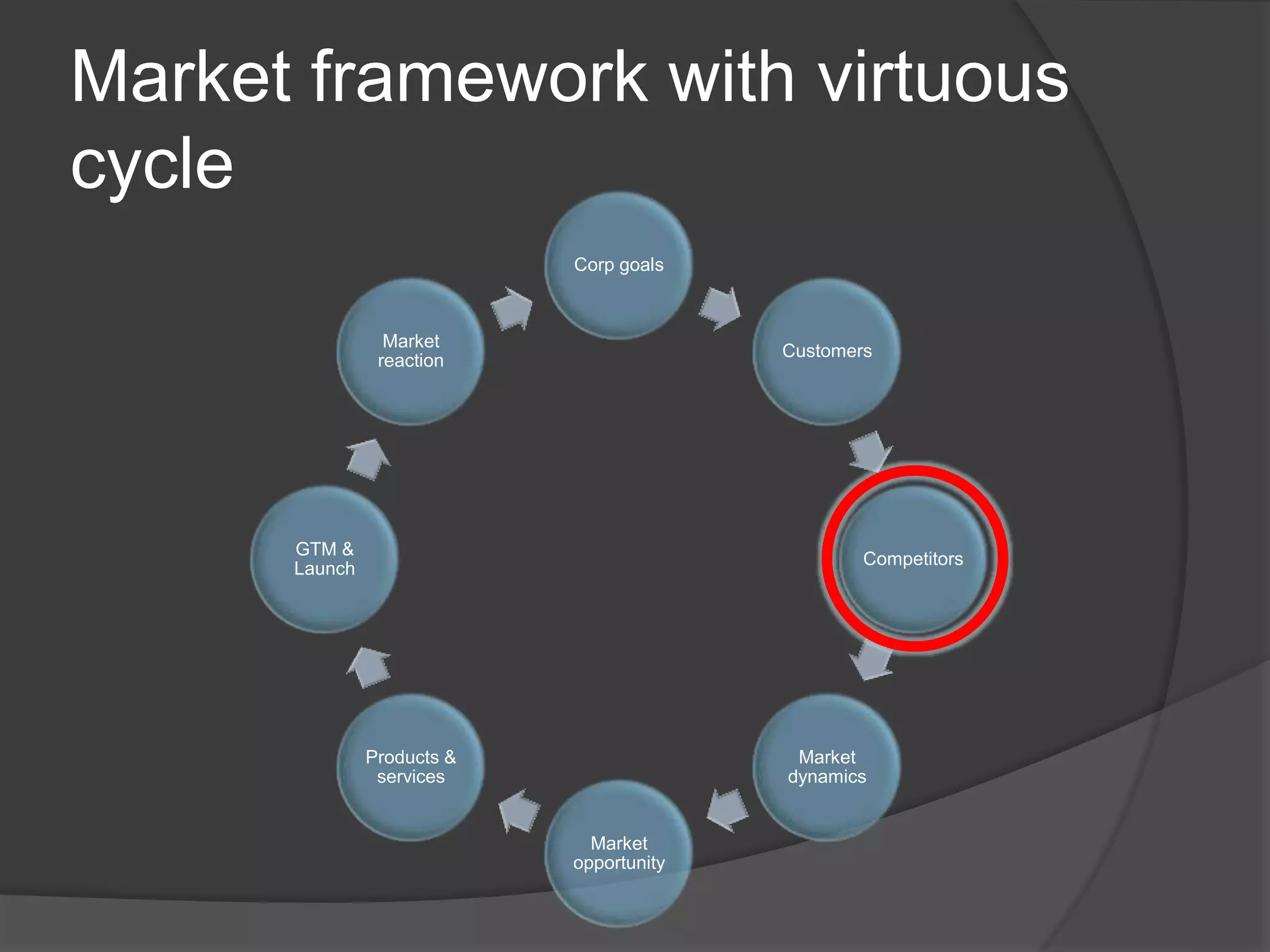
Market framework with virtuous
cycle
Corp goals
Customers
Competitors
Market
dynamics
Market
opportunity
Products &
services
GTM &
Launch
Market
reaction
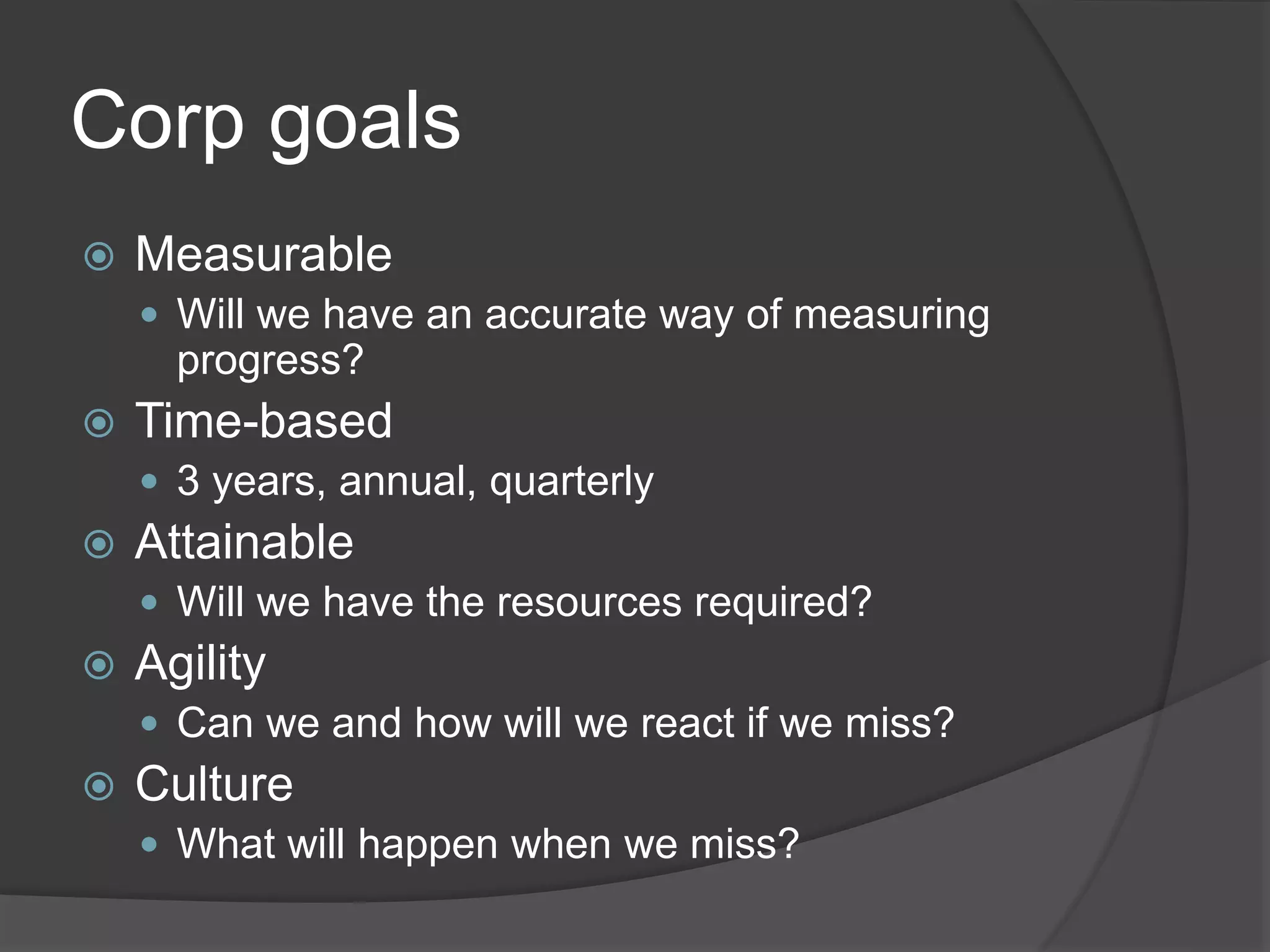
Corp goals
 Measurable
 Will we have an accurate way of measuring
progress?
 Time-based
 3 years, annual, quarterly
 Attainable
 Will we have the resources required?
 Agility
 Can we and how will we react if we miss?
 Culture
 What will happen when we miss?
Market framework with virtuous
cycle
Corp goals
Customers
Competitors
Market
dynamics
Market
opportunity
Products &
services
GTM &
Launch
Market
reaction
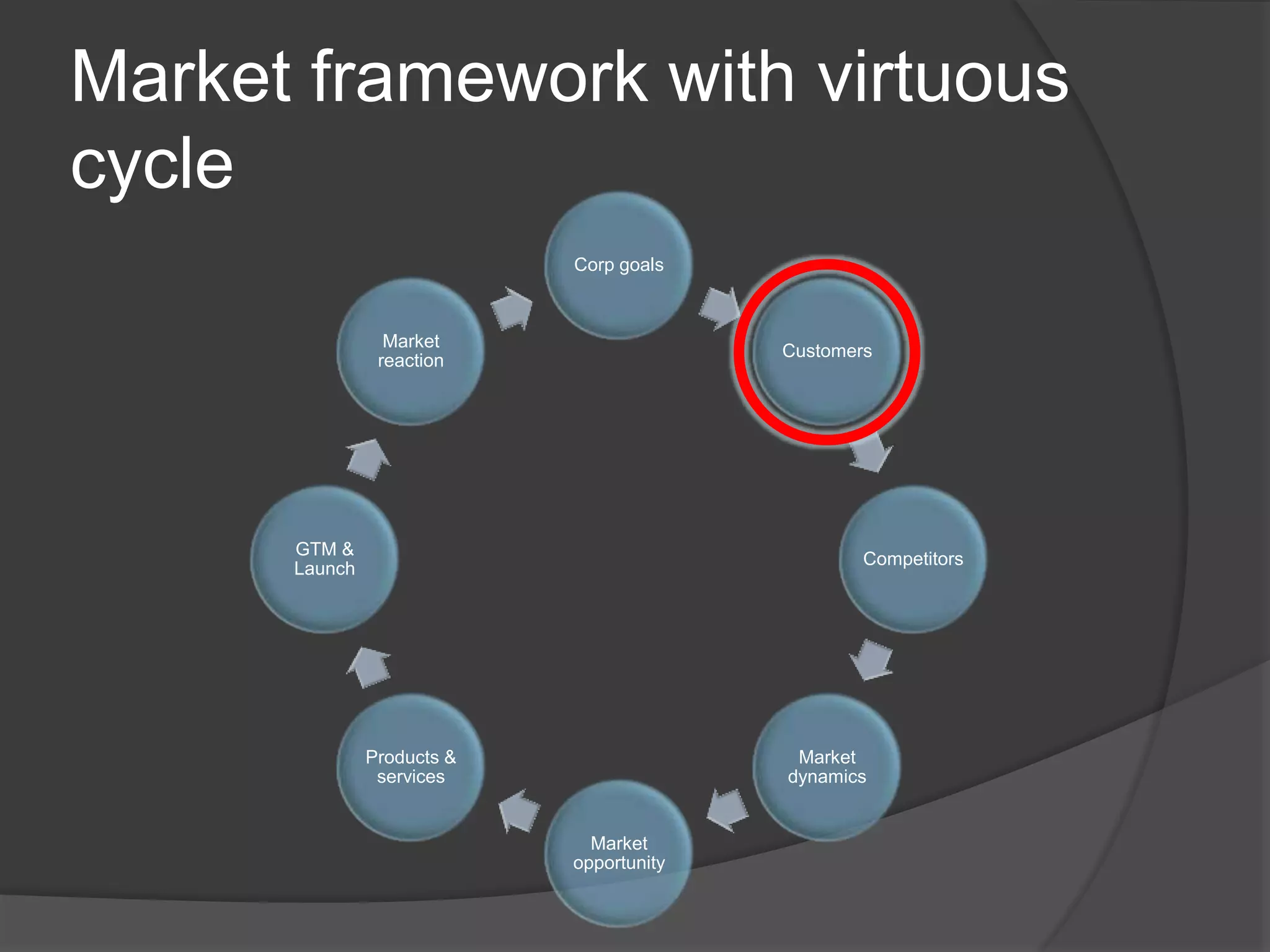
Customers
 What is a customer?
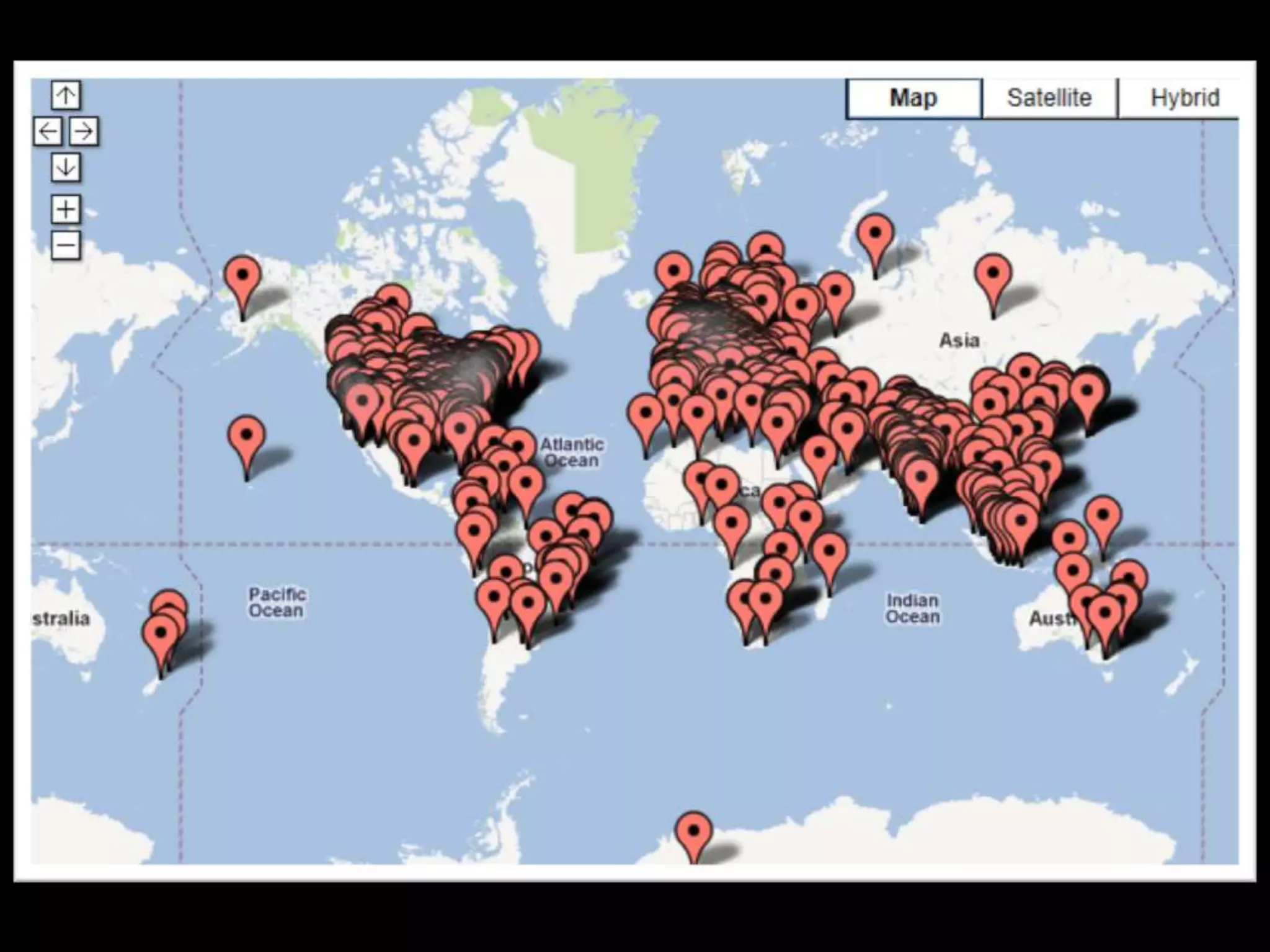
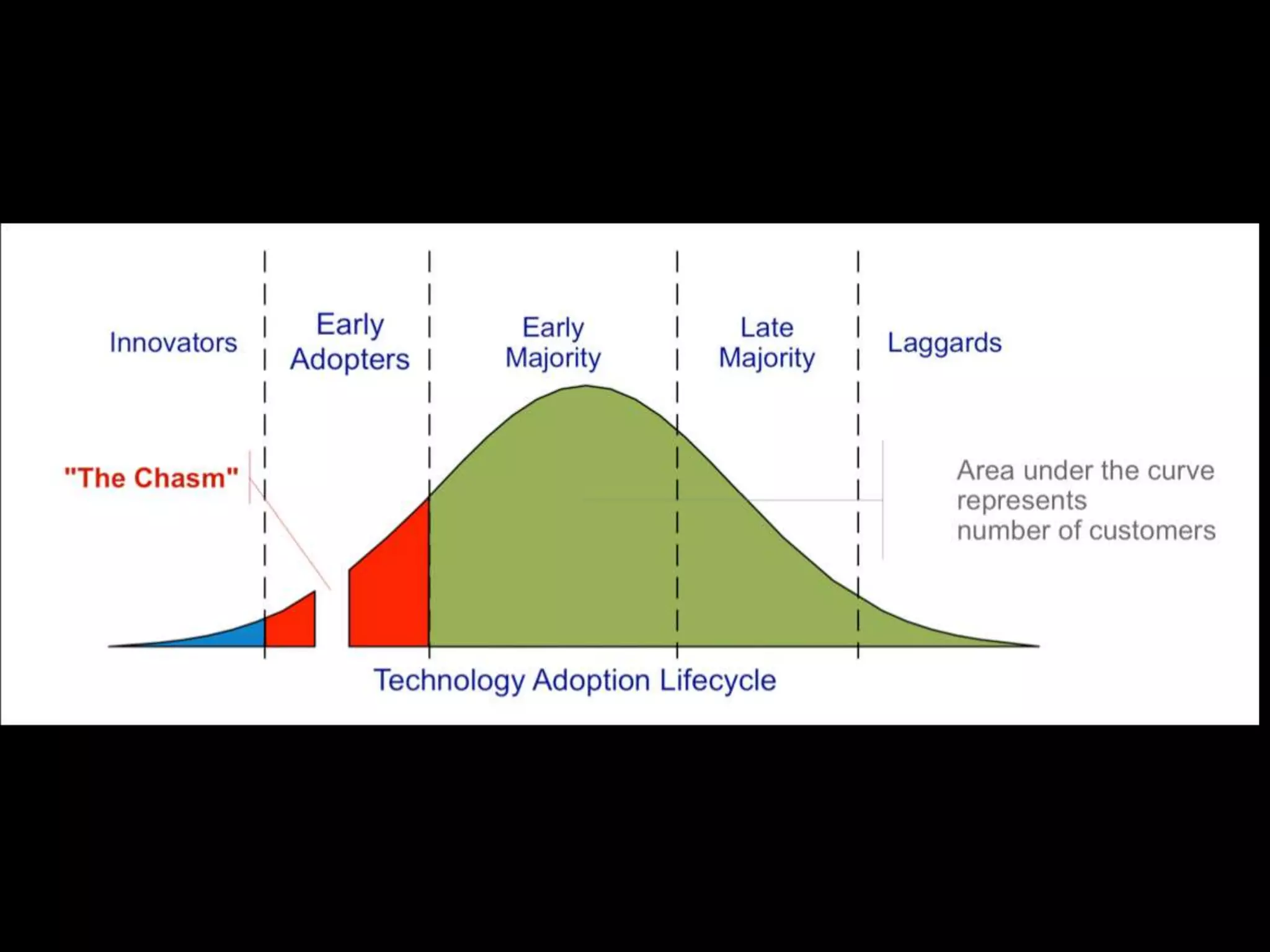
 Future (where the puck will be)
 Customer segments
 Benefits-based segments
 Use cases
 Demo, geo, behavioral, psychographic, title
 Signals and sources
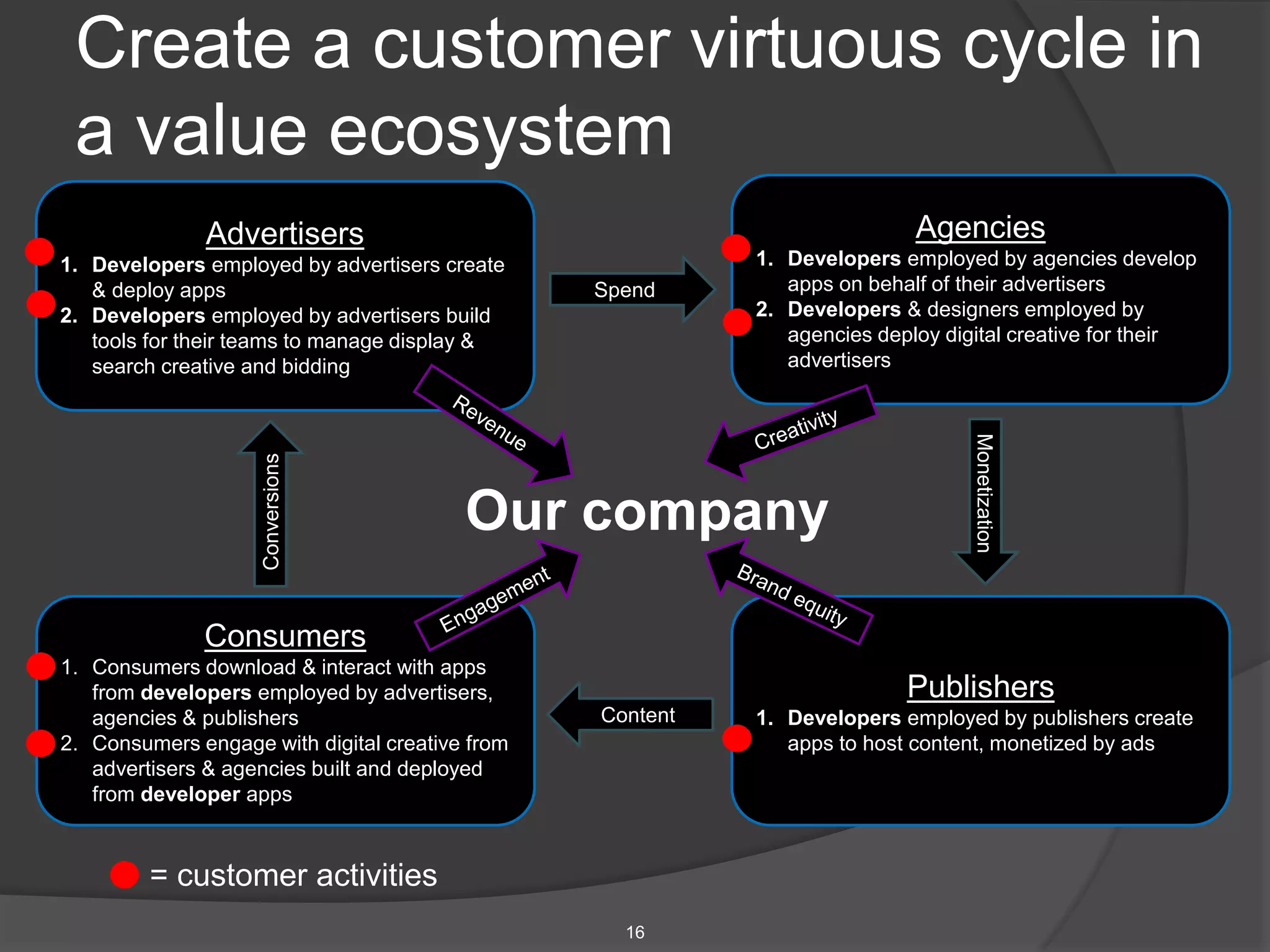
Create a customer virtuous cycle in
a value ecosystem
16
Advertisers
1. Developers employed by advertisers create
& deploy apps
2. Developers employed by advertisers build
tools for their teams to manage display &
search creative and bidding
Agencies
1. Developers employed by agencies develop
apps on behalf of their advertisers
2. Developers & designers employed by
agencies deploy digital creative for their
advertisers
Consumers
1. Consumers download & interact with apps
from developers employed by advertisers,
agencies & publishers
2. Consumers engage with digital creative from
advertisers & agencies built and deployed
from developer apps
Publishers
1. Developers employed by publishers create
apps to host content, monetized by ads
= customer activities
Monetization
Conversions
Spend
Content
Our company
Market framework with virtuous
cycle
Corp goals
Customers
Competitors
Market
dynamics
Market
opportunity
Products &
services
GTM &
Launch
Market
reaction
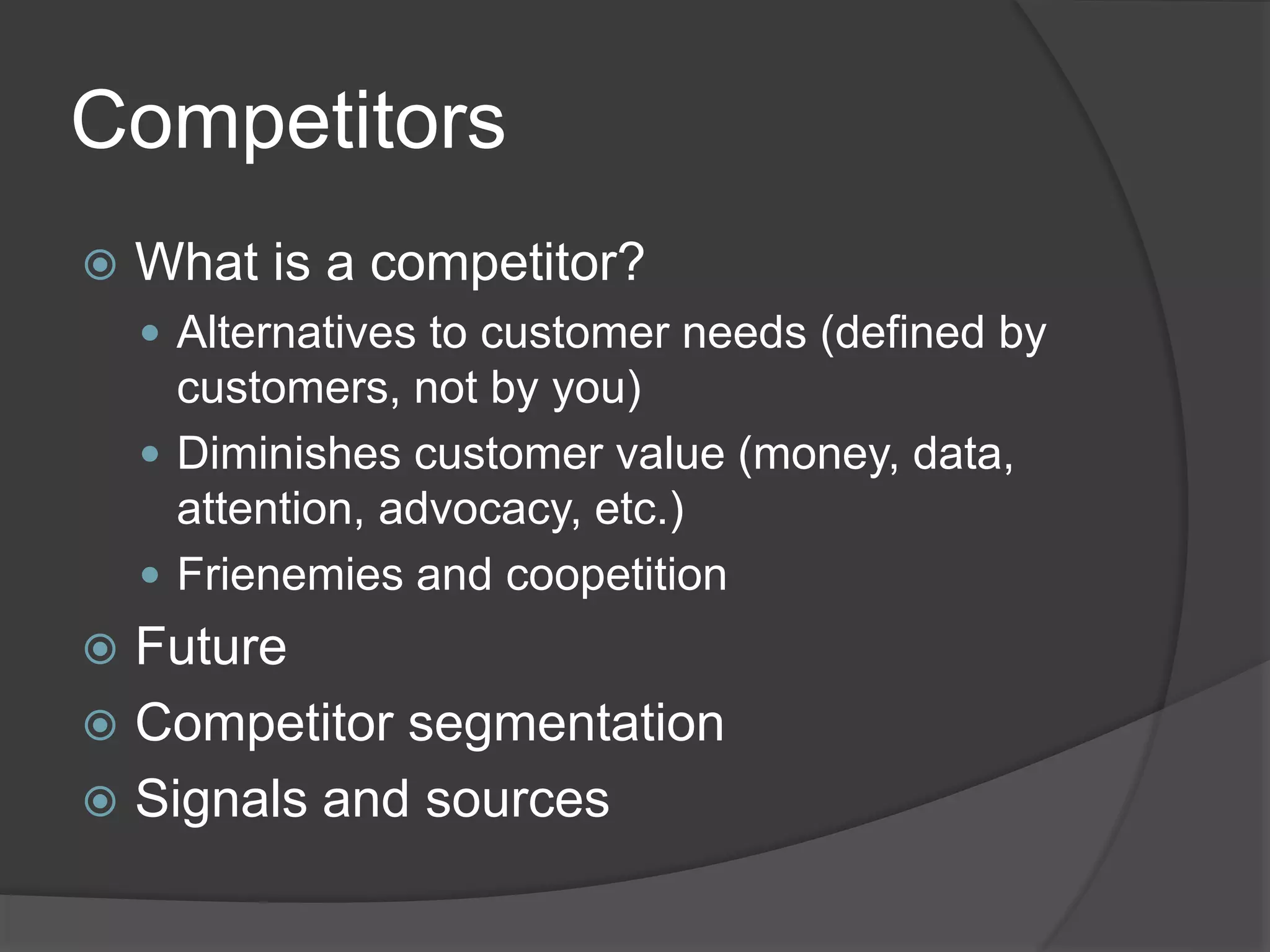
Competitors
 What is a competitor?
 Alternatives to customer needs (defined by
customers, not by you)
 Diminishes customer value (money, data,
attention, advocacy, etc.)
 Frienemies and coopetition
 Future
 Competitor segmentation
 Signals and sources
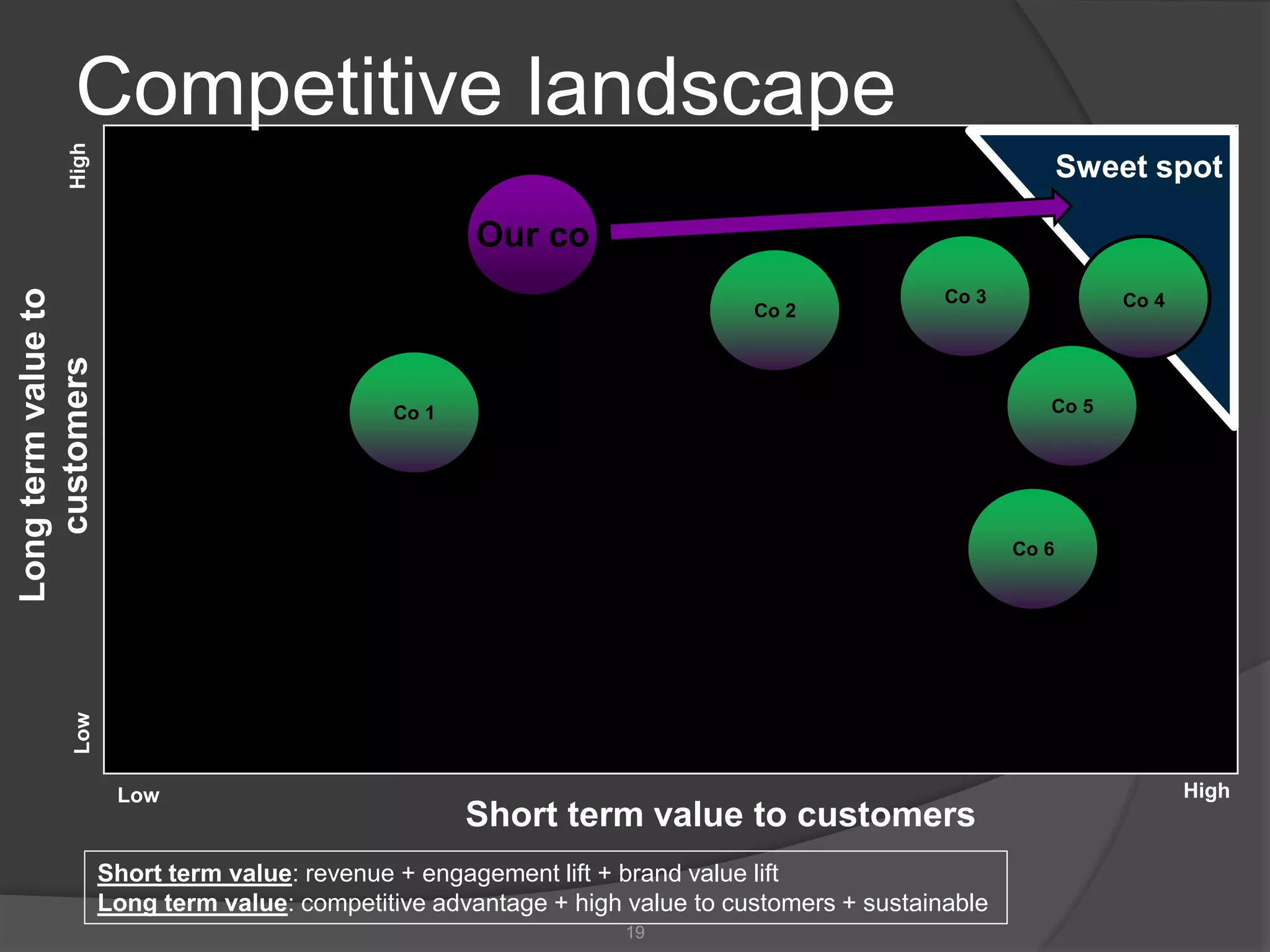
Competitive landscape
19
HighLow
Longtermvalueto
customers
Short term value to customers
HighLow
Our co
Co 2
Co 3
Sweet spot
Short term value: revenue + engagement lift + brand value lift
Long term value: competitive advantage + high value to customers + sustainable
Co 5
Co 6
Co 1
Co 4
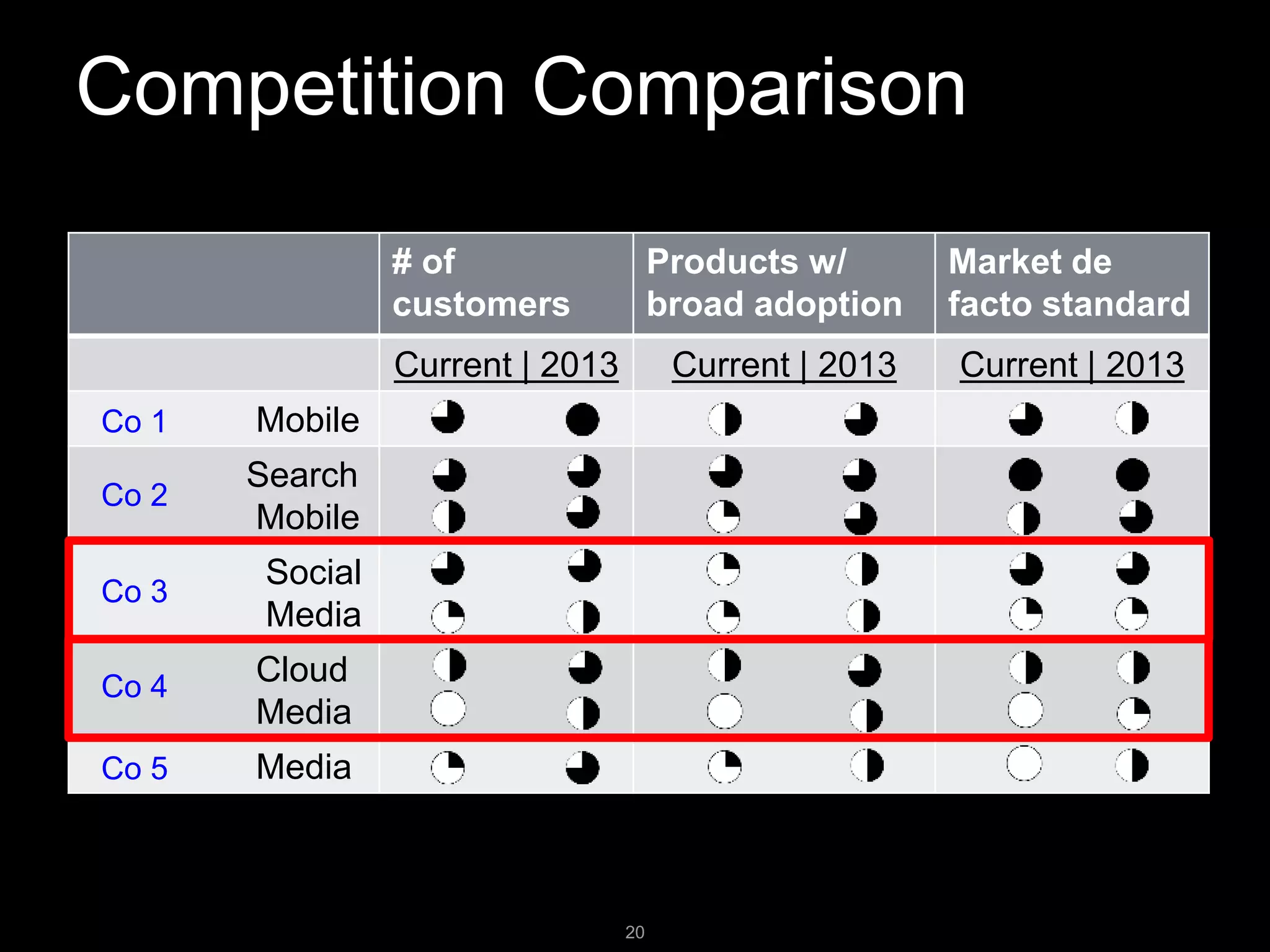
Competition Comparison
20
# of
customers
Products w/
broad adoption
Market de
facto standard
Current | 2013 Current | 2013 Current | 2013
Mobile
Search
Mobile
Social
Media
Cloud
Media
Media
Co 1
Co 2
Co 3
Co 4
Co 5
Market framework with virtuous
cycle
Corp goals
Customers
Competitors
Market
dynamics
Market
opportunity
Products &
services
GTM &
Launch
Market
reaction
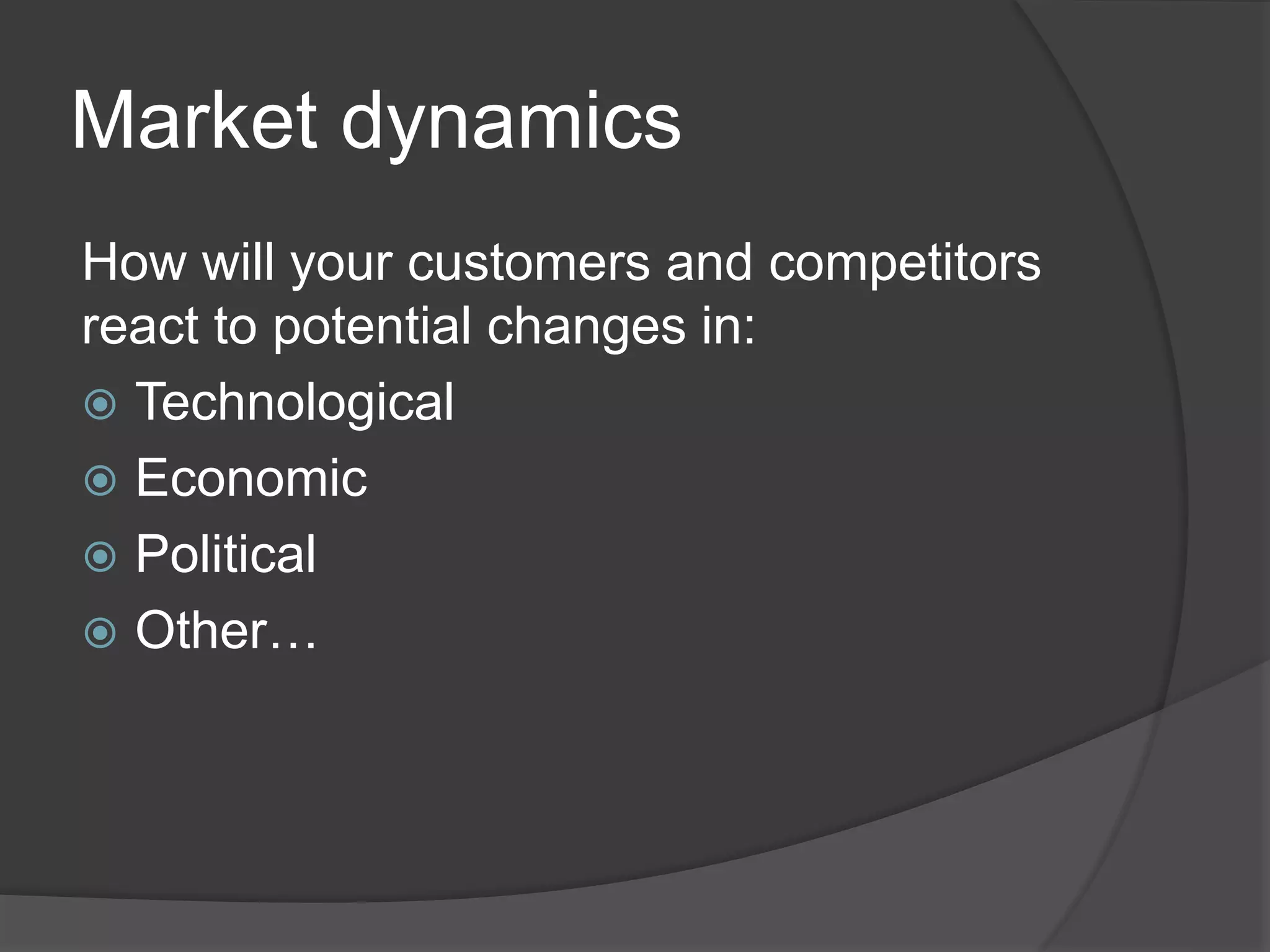
Market dynamics
How will your customers and competitors
react to potential changes in:
 Technological
 Economic
 Political
 Other…
Market framework with virtuous
cycle
Corp goals
Customers
Competitors
Market
dynamics
Market
opportunity
Products &
services
GTM &
Launch
Market
reaction
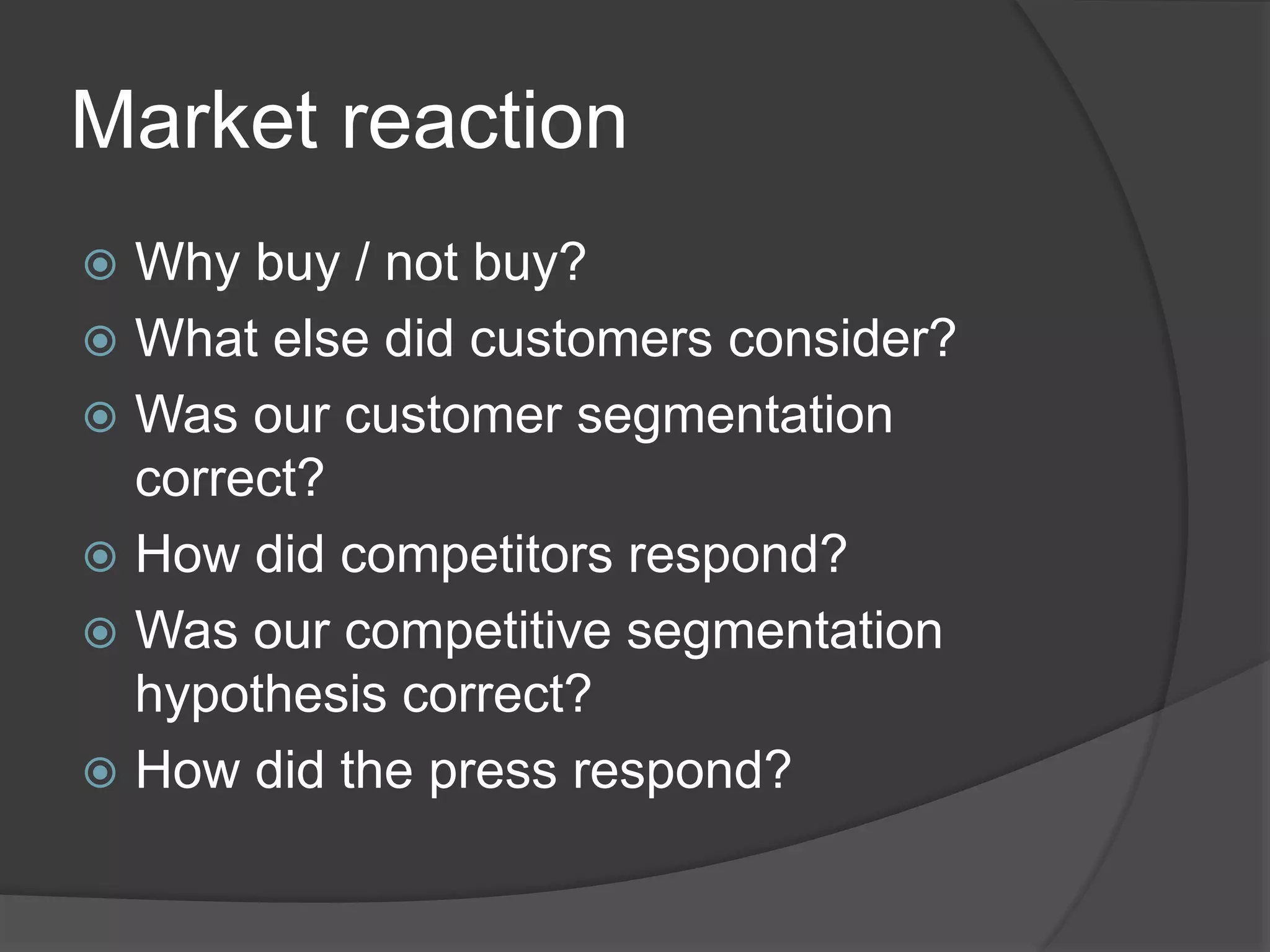
Market reaction
 Why buy / not buy?
 What else did customers consider?
 Was our customer segmentation
correct?
 How did competitors respond?
 Was our competitive segmentation
hypothesis correct?
 How did the press respond?
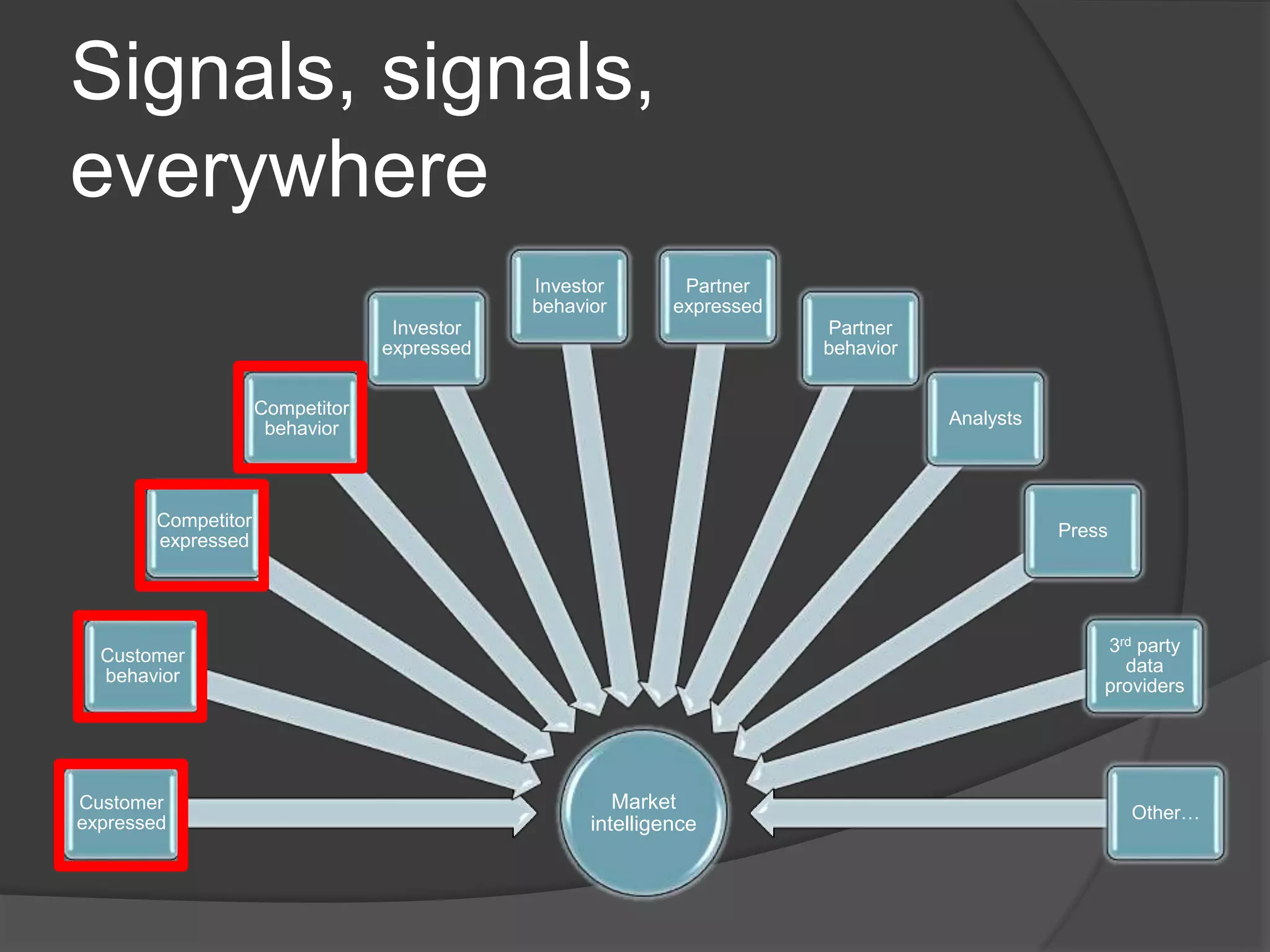
Signals, signals,
everywhere
Market
intelligence
Customer
expressed
Customer
behavior
Competitor
expressed
Competitor
behavior
Investor
expressed
Investor
behavior
Partner
expressed
Partner
behavior
Analysts
Press
3rd party
data
providers
Other…
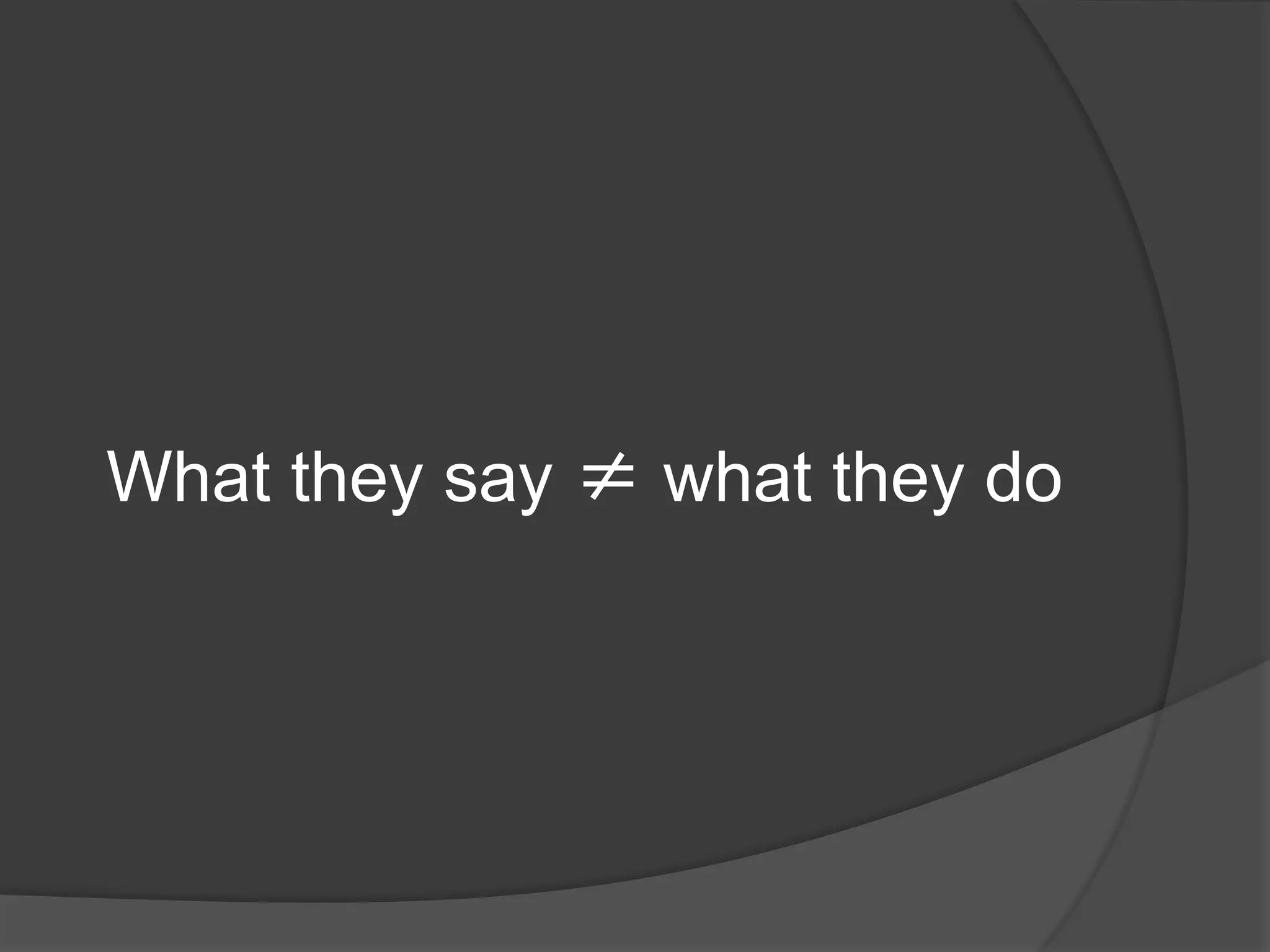
What they say ≠ what they do
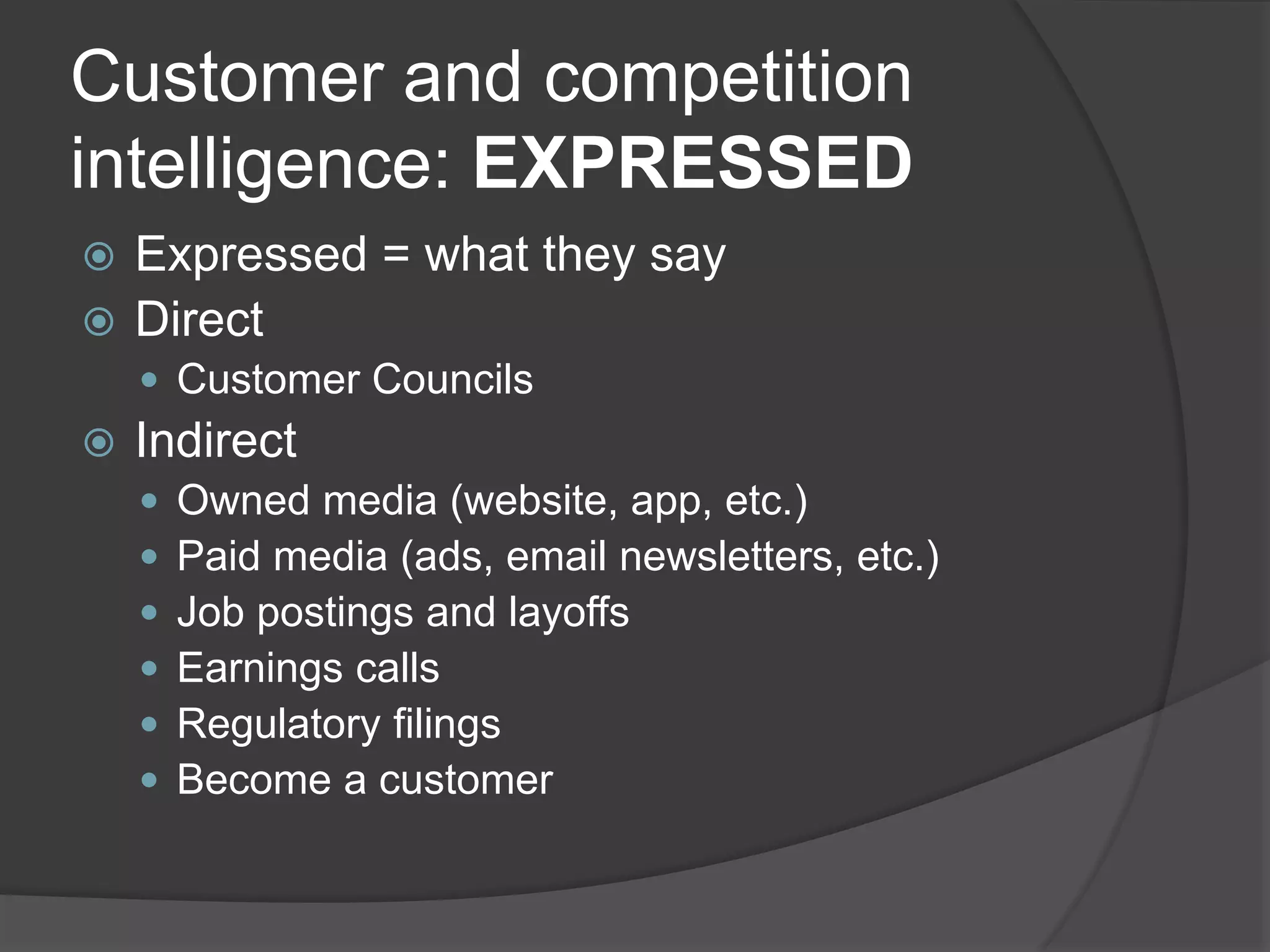
Customer and competition
intelligence: EXPRESSED
 Expressed = what they say
 Direct
 Customer Councils
 Indirect
 Owned media (website, app, etc.)
 Paid media (ads, email newsletters, etc.)
 Job postings and layoffs
 Earnings calls
 Regulatory filings
 Become a customer
Customer and competition
intelligence: BEHAVIOR
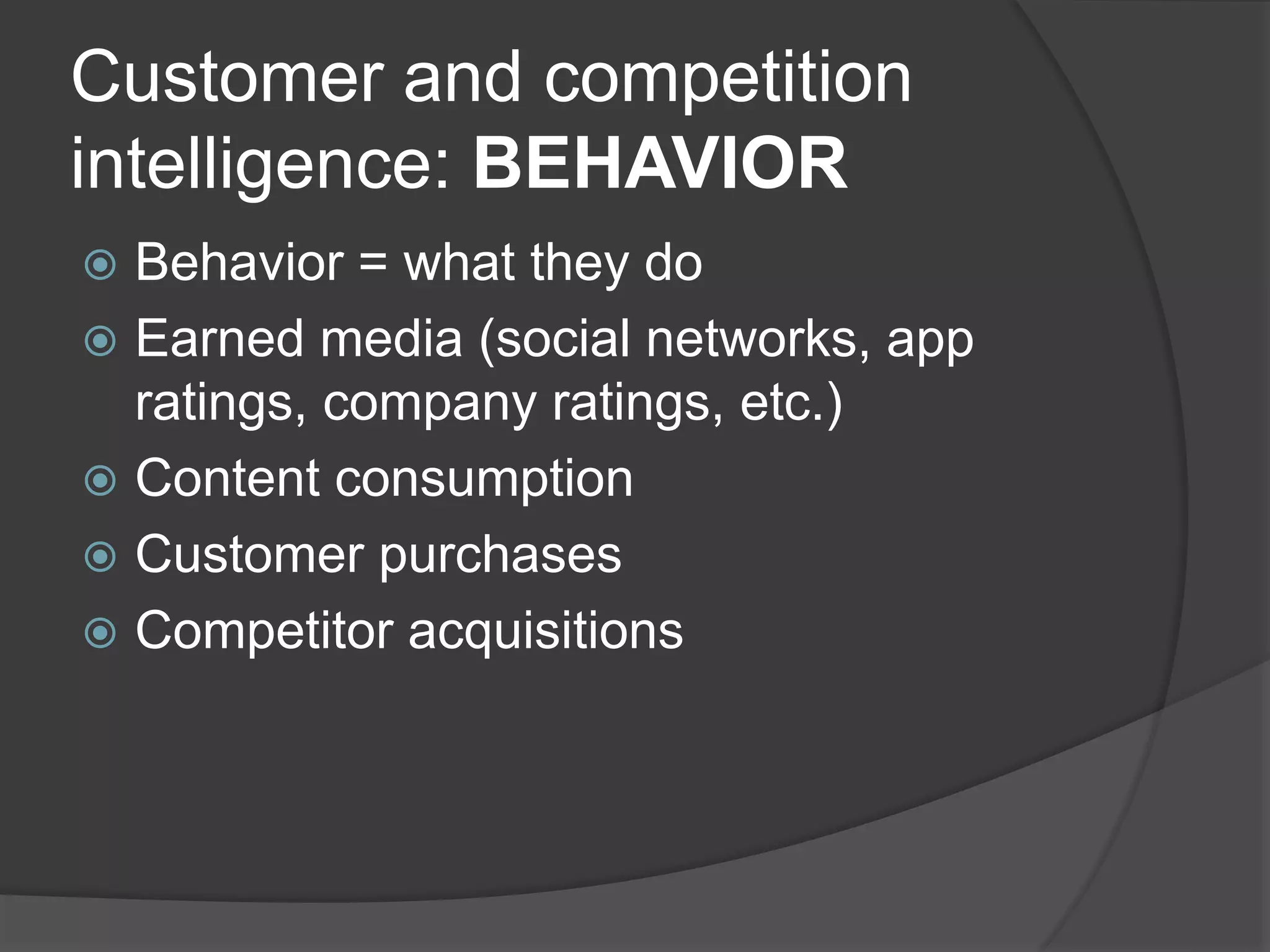
 Behavior = what they do
 Earned media (social networks, app
ratings, company ratings, etc.)
 Content consumption
 Customer purchases
 Competitor acquisitions
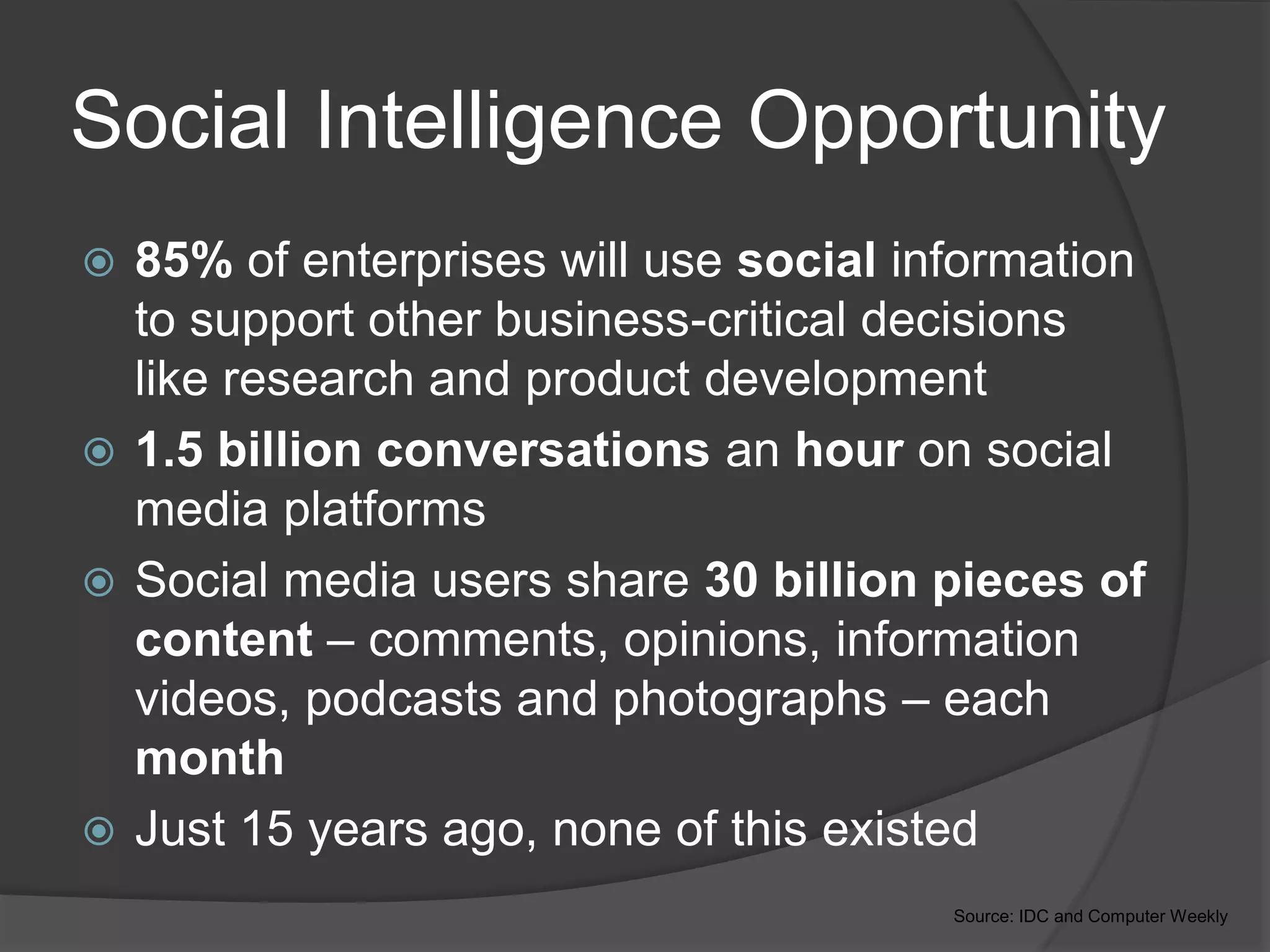
Social Intelligence Opportunity
 85% of enterprises will use social information
to support other business-critical decisions
like research and product development
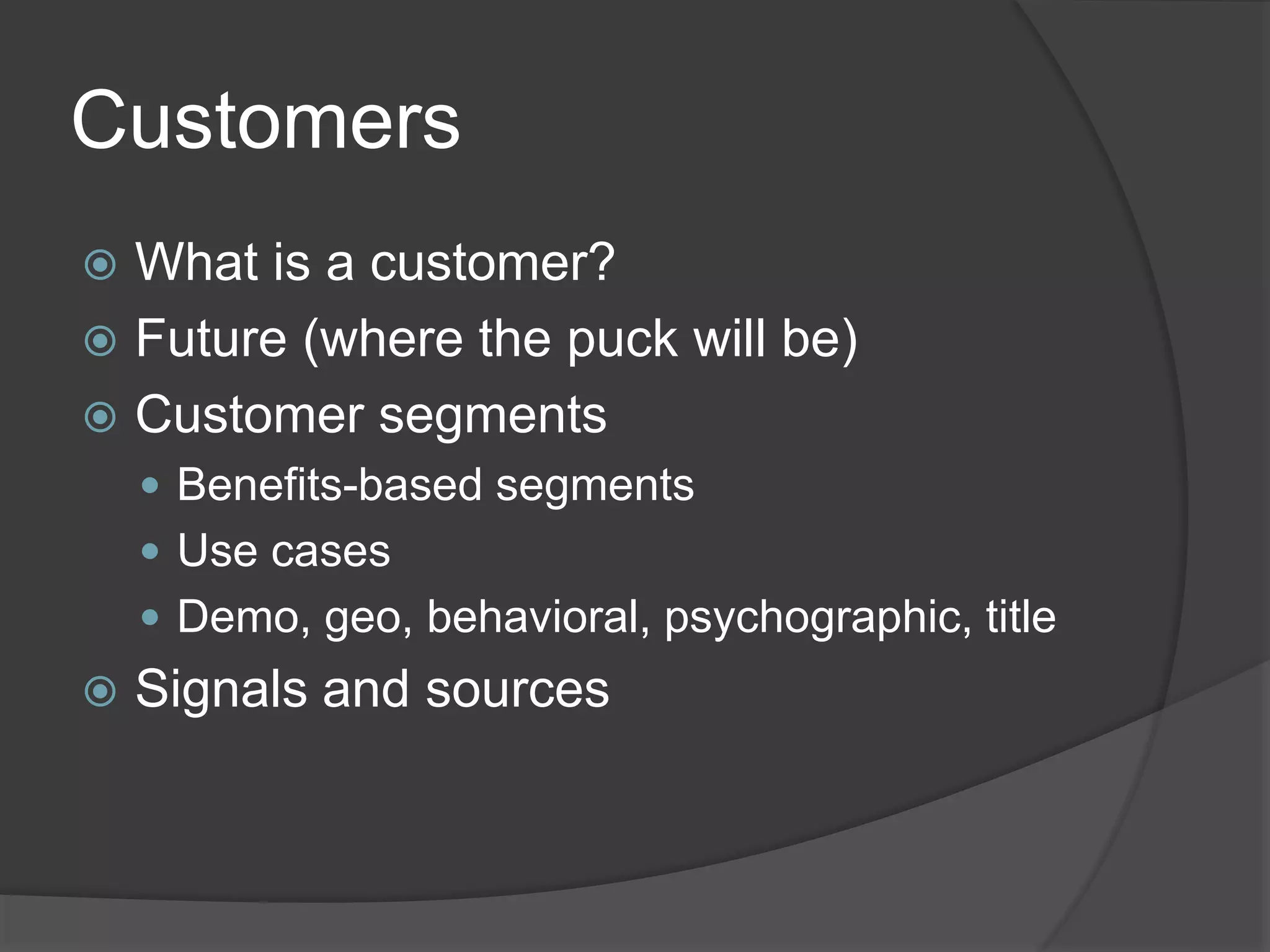
 1.5 billion conversations an hour on social
media platforms
 Social media users share 30 billion pieces of
content – comments, opinions, information
videos, podcasts and photographs – each
month
 Just 15 years ago, none of this existed
Source: IDC and Computer Weekly
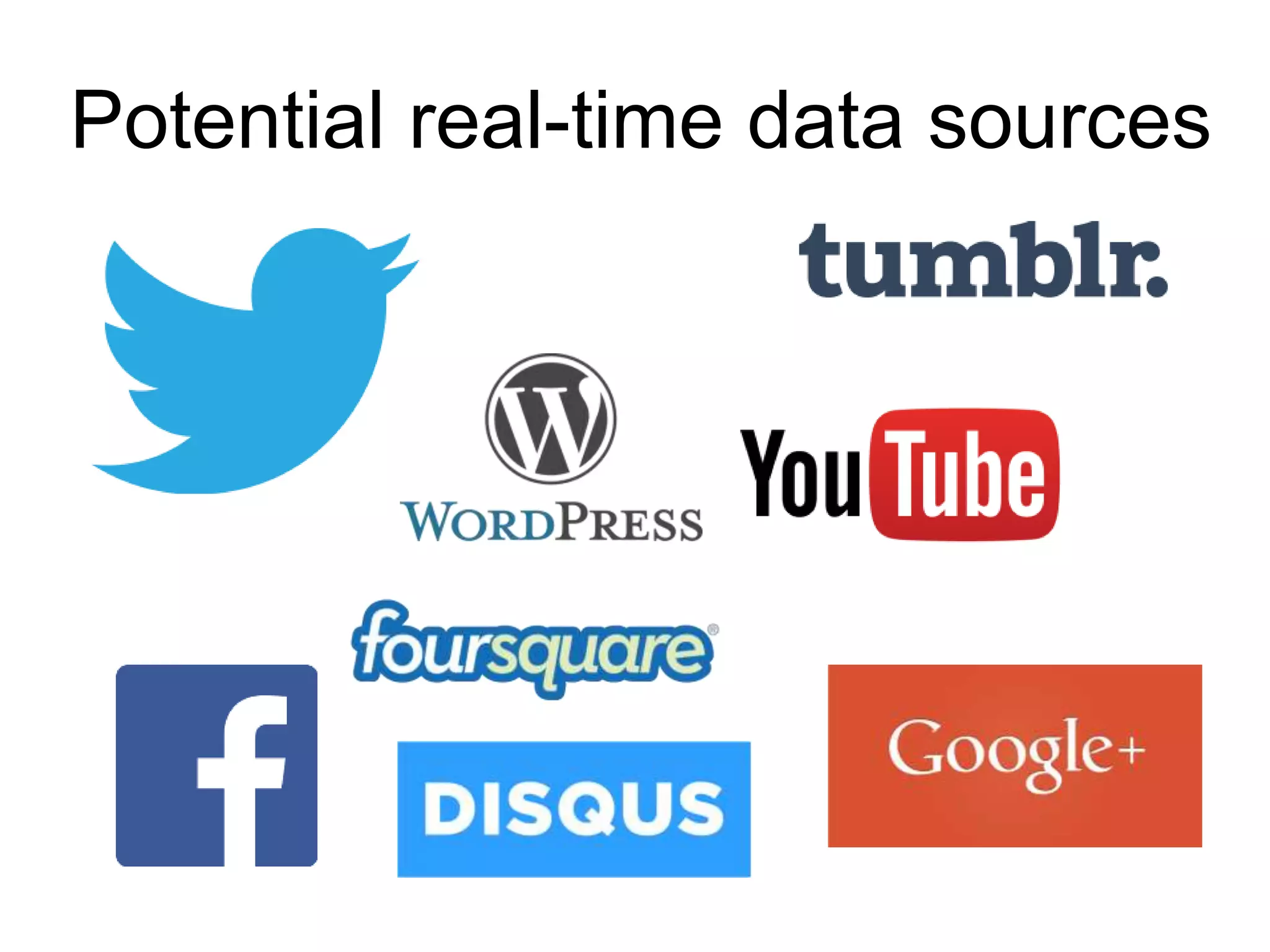
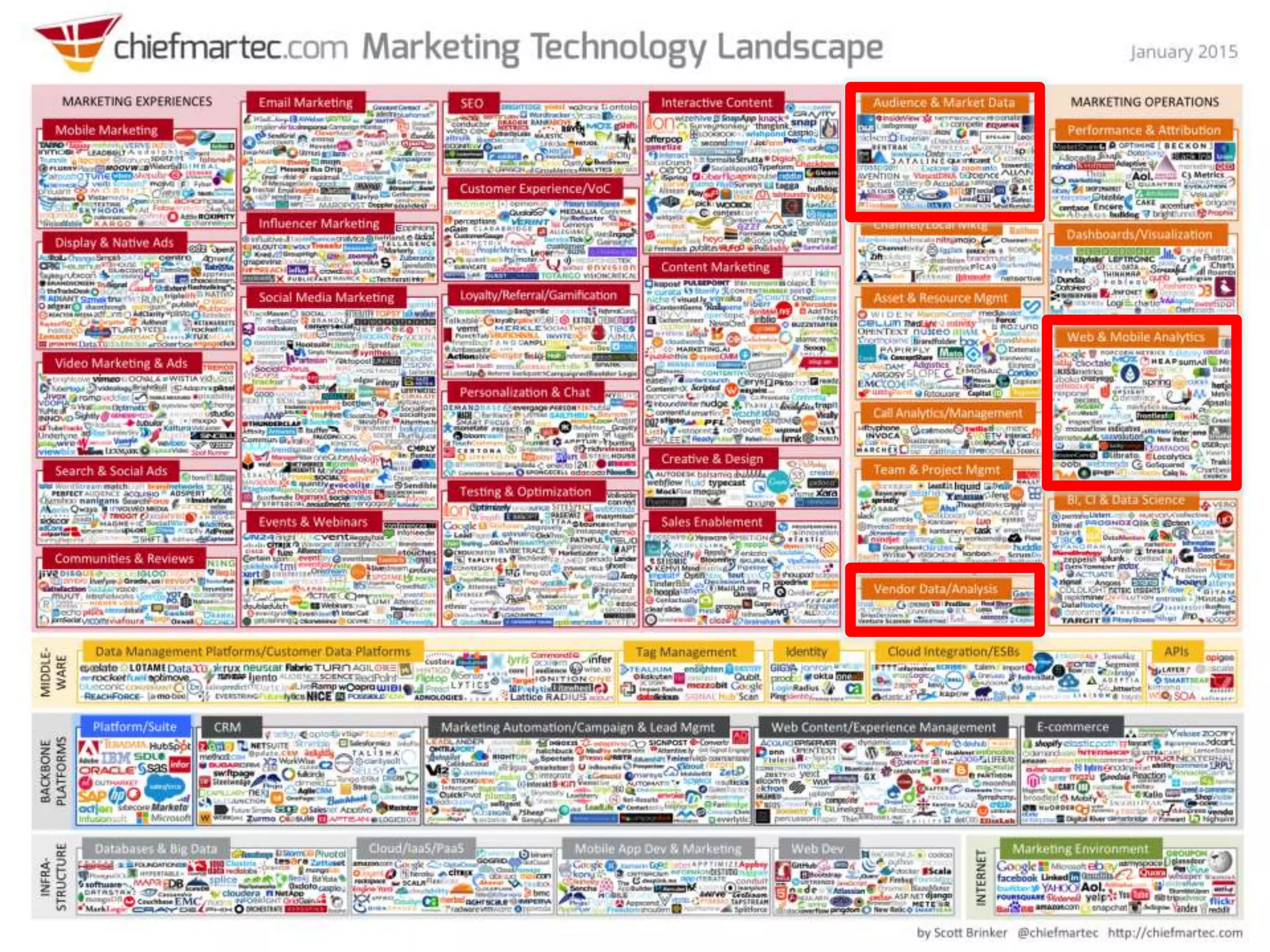
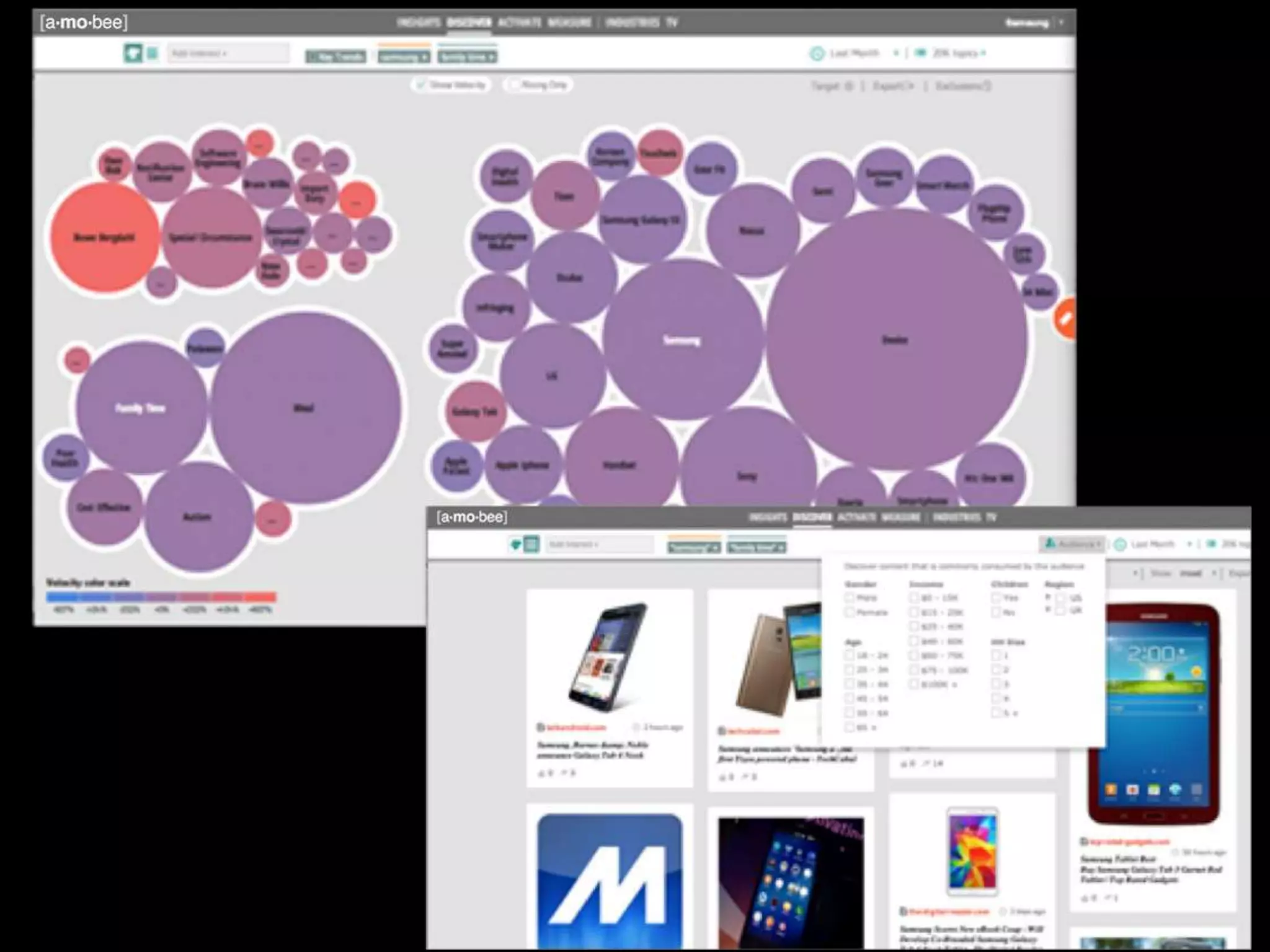
Potential real-time data sources
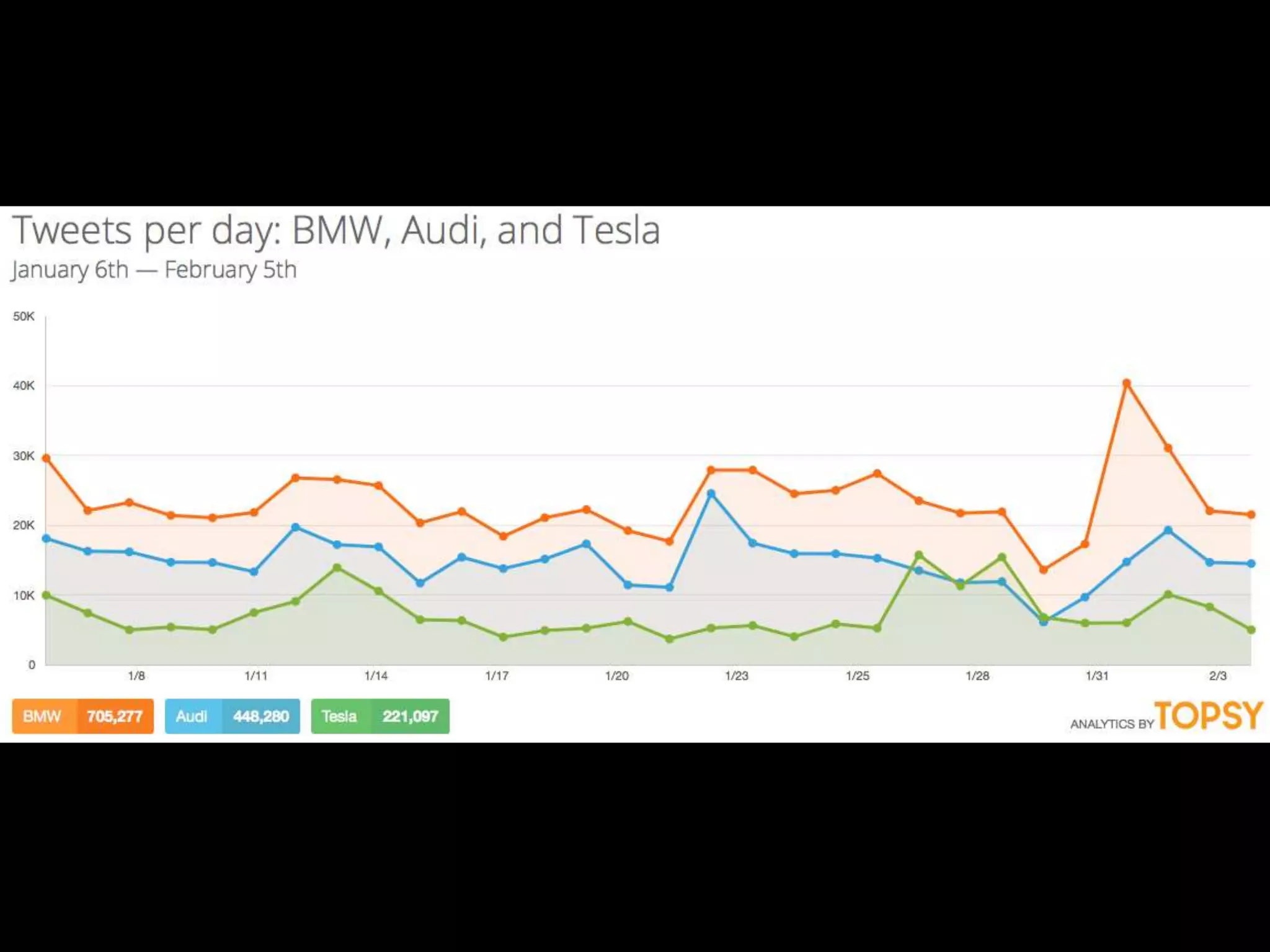
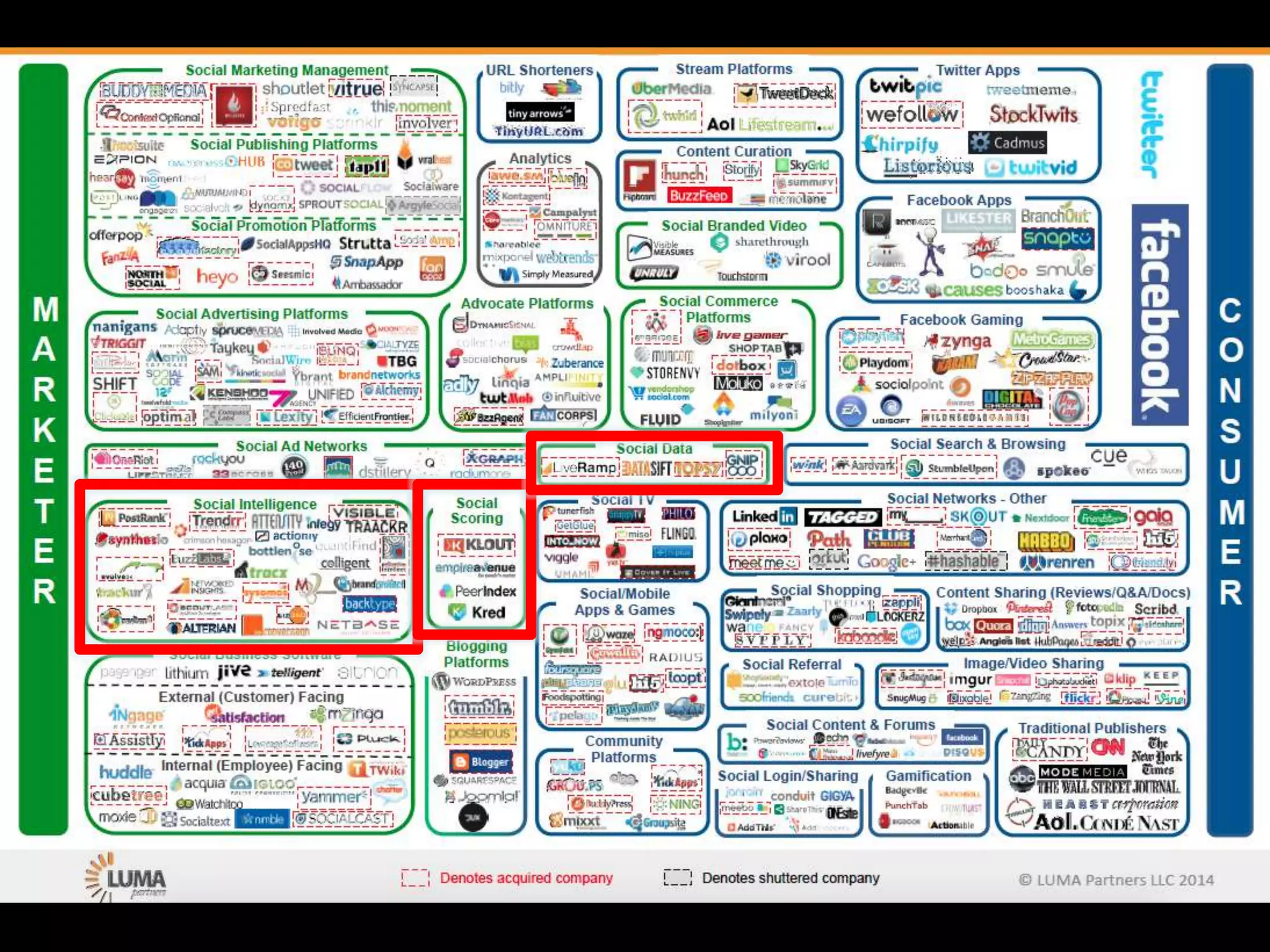
Market Intel Tools & Data
 Social Listening (what are people saying), Social
Analytics (what are people doing), Social Intelligence
(decision making)
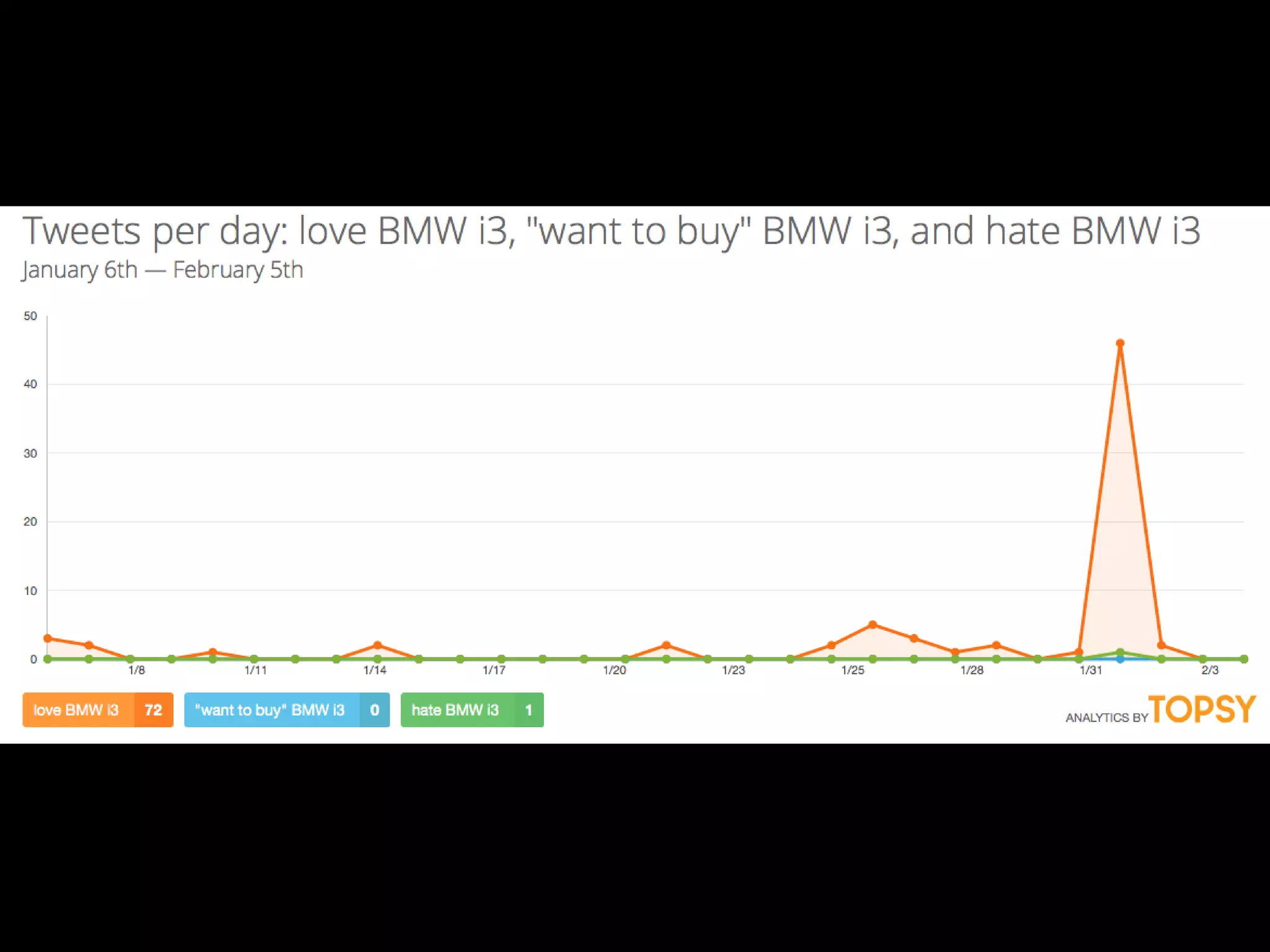
 Topsy
 DataSift
 Gnip (acquired by Twitter)
 Sprout Social (FB and Twitter)
 Iconosquare (Instagram)
 Hootsuite (reporting)
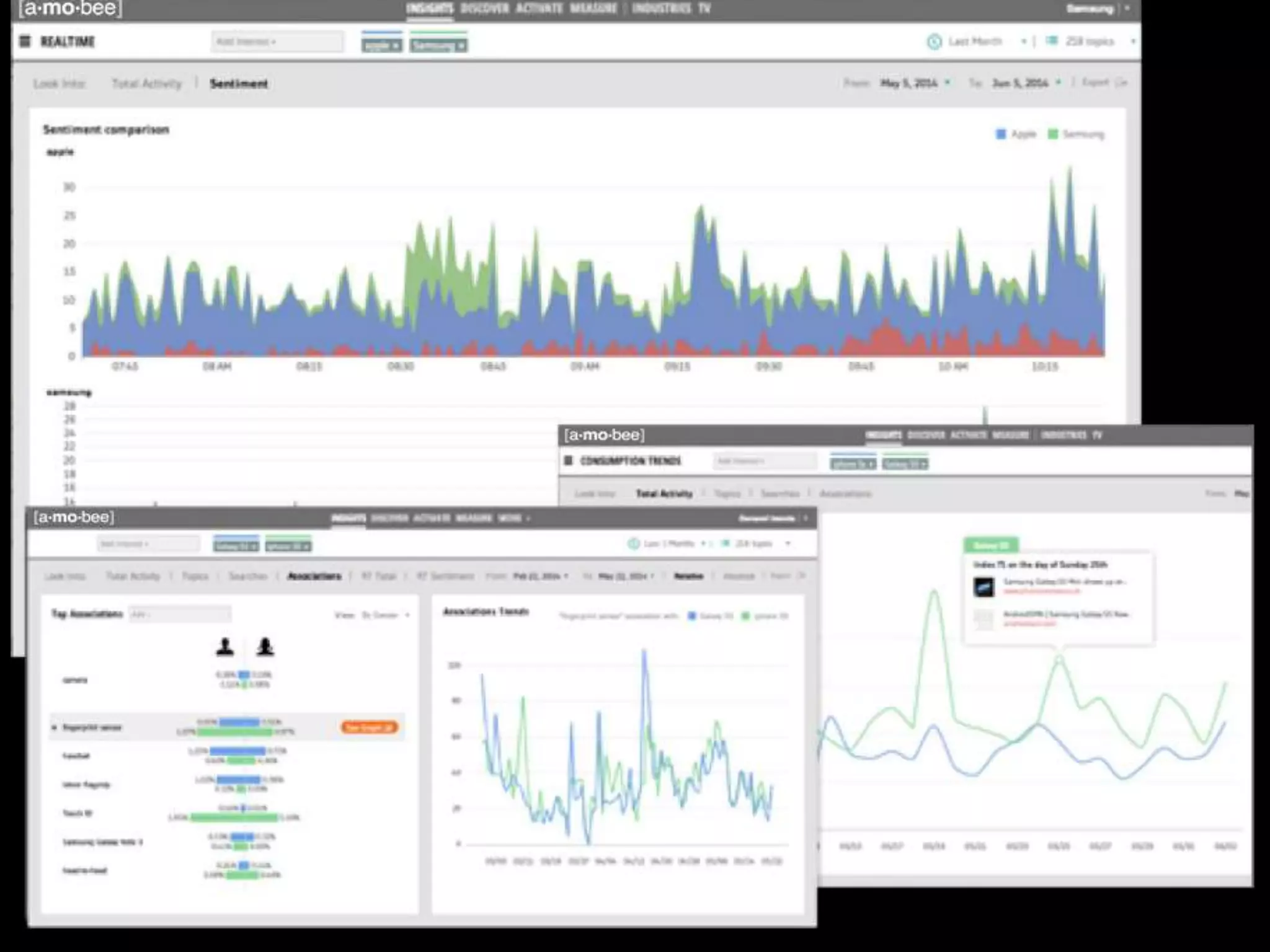
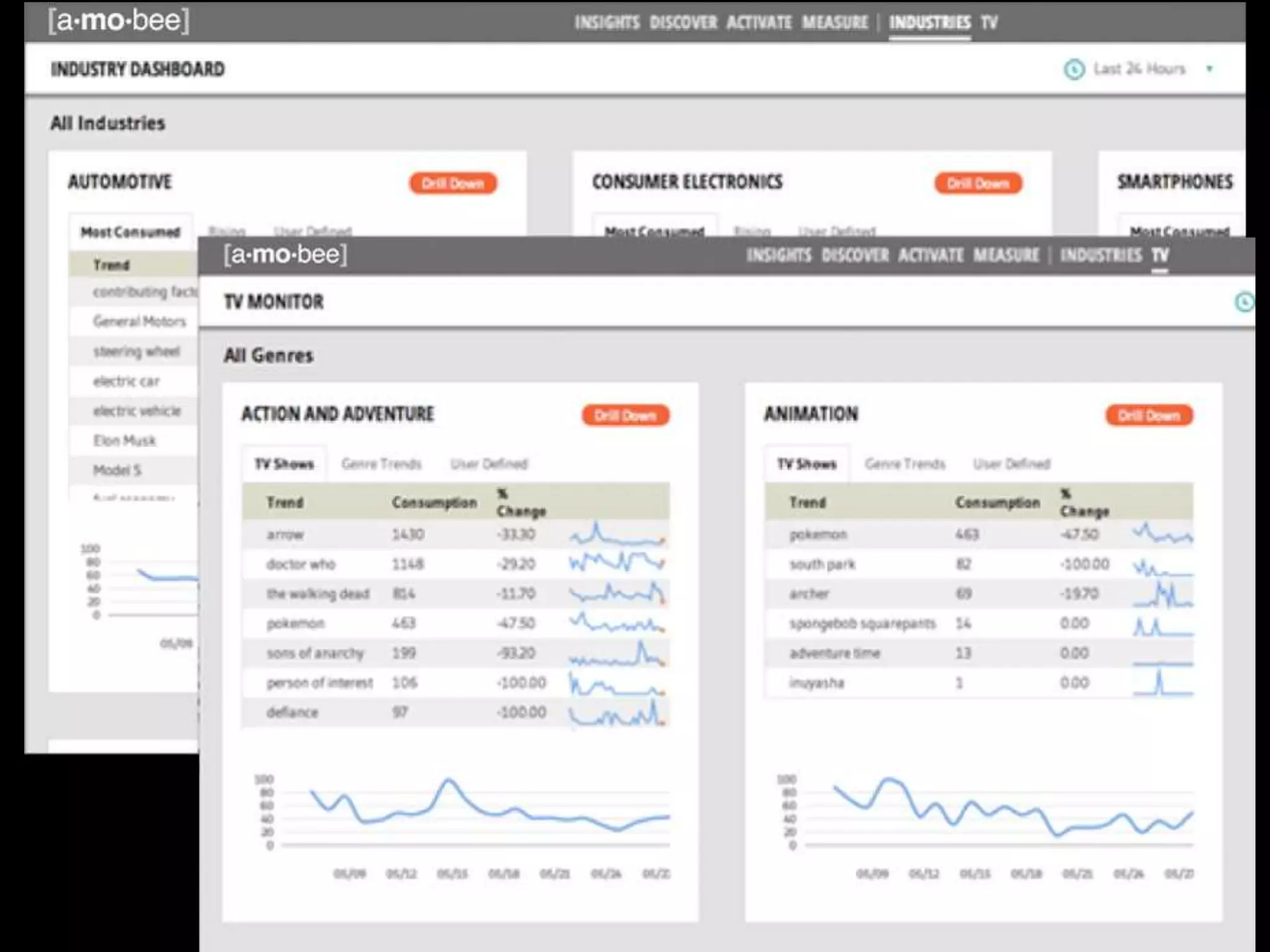
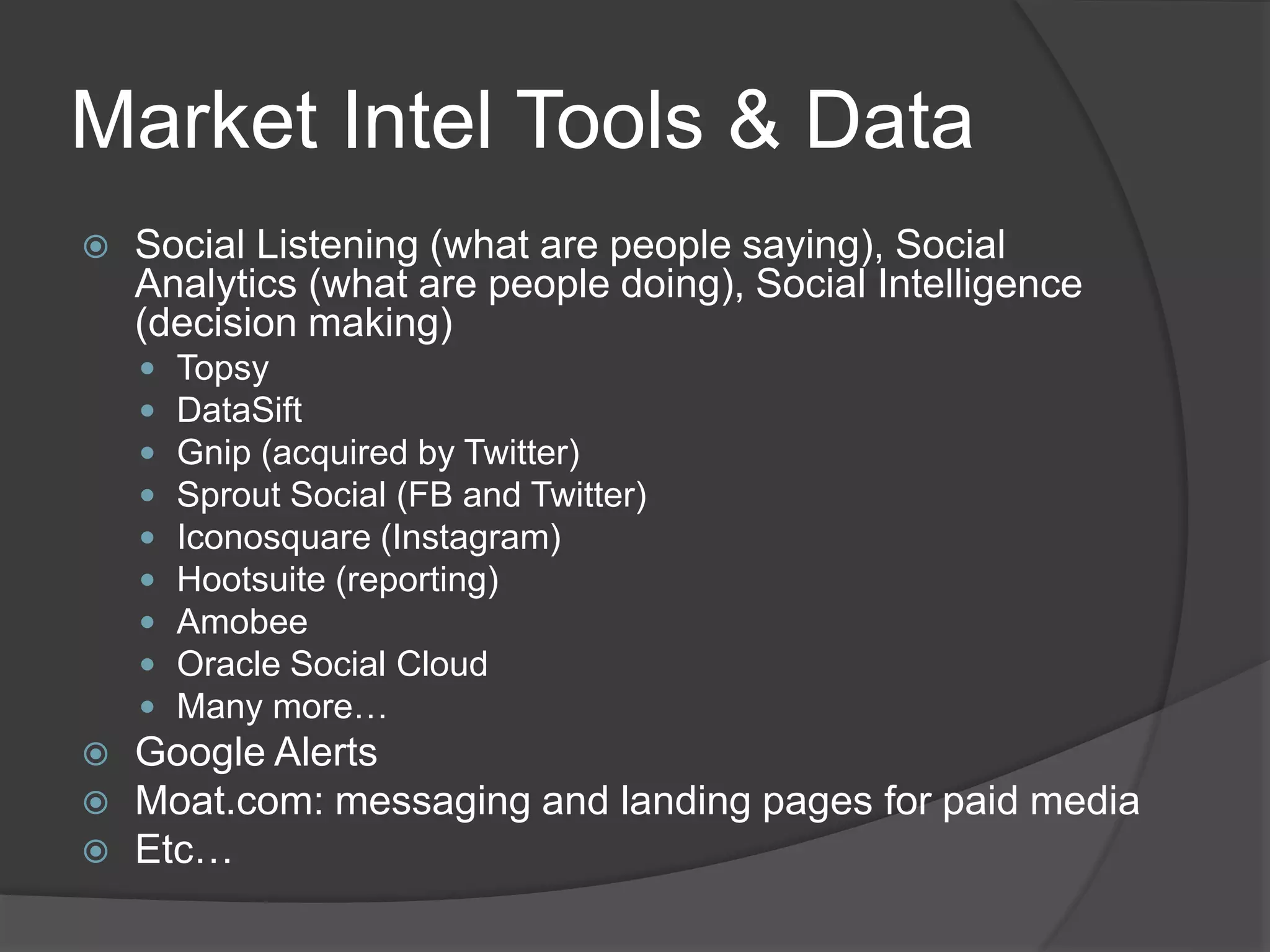
 Amobee
 Oracle Social Cloud
 Many more…
 Google Alerts
 Moat.com: messaging and landing pages for paid media
 Etc…
#MarketHacking take-aways
 To understand the market opportunity,
you must first understand corp goals,
competitors, customer and dynamics
 Sustainable competitive differentiation is
a real-time, agile, iterative cycle (chess
game)
 Make customers your BFF, and
supplement with real-time signals and
tools
Thank you!
Tweet me @ESuhonen #MarketHacking
Connect on LinkedIn:
https://www.linkedin.com/in/eriksuhonen
Erik Suhonen copyright 2015

Market Hacking: Agile Market Analysis. Presented by Erik Suhonen.

  • 2.
    Goal: Create sustainablecompetitive differentiation through successful products / services #MarketHacking
  • 6.
    Who is thisdude?  20+ yrs tech/media/advertising (9 yrs at Yahoo)  Marketing, product, strategy, ecosystem  Founder and Advisor  USC MBA
  • 7.
    Approach  Framework  Strategicgamification  Signals  Tools
  • 8.
    Market framework withvirtuous cycle Corp goals Customers Competitors Market dynamics Market opportunity Products & services Go To Market Market reaction
  • 9.
    Market framework withvirtuous cycle Corp goals Customers Competitors Market dynamics Market opportunity Products & services GTM & Launch Market reaction
  • 10.
    Corp goals  Measurable Will we have an accurate way of measuring progress?  Time-based  3 years, annual, quarterly  Attainable  Will we have the resources required?  Agility  Can we and how will we react if we miss?  Culture  What will happen when we miss?
  • 11.
    Market framework withvirtuous cycle Corp goals Customers Competitors Market dynamics Market opportunity Products & services GTM & Launch Market reaction
  • 12.
    Customers  What isa customer?  Future (where the puck will be)  Customer segments  Benefits-based segments  Use cases  Demo, geo, behavioral, psychographic, title  Signals and sources
  • 16.
    Create a customervirtuous cycle in a value ecosystem 16 Advertisers 1. Developers employed by advertisers create & deploy apps 2. Developers employed by advertisers build tools for their teams to manage display & search creative and bidding Agencies 1. Developers employed by agencies develop apps on behalf of their advertisers 2. Developers & designers employed by agencies deploy digital creative for their advertisers Consumers 1. Consumers download & interact with apps from developers employed by advertisers, agencies & publishers 2. Consumers engage with digital creative from advertisers & agencies built and deployed from developer apps Publishers 1. Developers employed by publishers create apps to host content, monetized by ads = customer activities Monetization Conversions Spend Content Our company
  • 17.
    Market framework withvirtuous cycle Corp goals Customers Competitors Market dynamics Market opportunity Products & services GTM & Launch Market reaction
  • 18.
    Competitors  What isa competitor?  Alternatives to customer needs (defined by customers, not by you)  Diminishes customer value (money, data, attention, advocacy, etc.)  Frienemies and coopetition  Future  Competitor segmentation  Signals and sources
  • 19.
    Competitive landscape 19 HighLow Longtermvalueto customers Short termvalue to customers HighLow Our co Co 2 Co 3 Sweet spot Short term value: revenue + engagement lift + brand value lift Long term value: competitive advantage + high value to customers + sustainable Co 5 Co 6 Co 1 Co 4
  • 20.
    Competition Comparison 20 # of customers Productsw/ broad adoption Market de facto standard Current | 2013 Current | 2013 Current | 2013 Mobile Search Mobile Social Media Cloud Media Media Co 1 Co 2 Co 3 Co 4 Co 5
  • 21.
    Market framework withvirtuous cycle Corp goals Customers Competitors Market dynamics Market opportunity Products & services GTM & Launch Market reaction
  • 22.
    Market dynamics How willyour customers and competitors react to potential changes in:  Technological  Economic  Political  Other…
  • 25.
    Market framework withvirtuous cycle Corp goals Customers Competitors Market dynamics Market opportunity Products & services GTM & Launch Market reaction
  • 26.
    Market reaction  Whybuy / not buy?  What else did customers consider?  Was our customer segmentation correct?  How did competitors respond?  Was our competitive segmentation hypothesis correct?  How did the press respond?
  • 30.
  • 31.
    What they say≠ what they do
  • 32.
    Customer and competition intelligence:EXPRESSED  Expressed = what they say  Direct  Customer Councils  Indirect  Owned media (website, app, etc.)  Paid media (ads, email newsletters, etc.)  Job postings and layoffs  Earnings calls  Regulatory filings  Become a customer
  • 33.
    Customer and competition intelligence:BEHAVIOR  Behavior = what they do  Earned media (social networks, app ratings, company ratings, etc.)  Content consumption  Customer purchases  Competitor acquisitions
  • 34.
    Social Intelligence Opportunity 85% of enterprises will use social information to support other business-critical decisions like research and product development  1.5 billion conversations an hour on social media platforms  Social media users share 30 billion pieces of content – comments, opinions, information videos, podcasts and photographs – each month  Just 15 years ago, none of this existed Source: IDC and Computer Weekly
  • 35.
  • 38.
    Market Intel Tools& Data  Social Listening (what are people saying), Social Analytics (what are people doing), Social Intelligence (decision making)  Topsy  DataSift  Gnip (acquired by Twitter)  Sprout Social (FB and Twitter)  Iconosquare (Instagram)  Hootsuite (reporting)  Amobee  Oracle Social Cloud  Many more…  Google Alerts  Moat.com: messaging and landing pages for paid media  Etc…
  • 44.
    #MarketHacking take-aways  Tounderstand the market opportunity, you must first understand corp goals, competitors, customer and dynamics  Sustainable competitive differentiation is a real-time, agile, iterative cycle (chess game)  Make customers your BFF, and supplement with real-time signals and tools
  • 45.
    Thank you! Tweet me@ESuhonen #MarketHacking Connect on LinkedIn: https://www.linkedin.com/in/eriksuhonen Erik Suhonen copyright 2015

Editor's Notes

  • #10 This can be quick. Doesn’t need to be a long annual cycle. Build into DNA of company with transparency and accountability. Who does what and how will others be aware of the info?