Ergonomic Evaluation -
Sterile Process Department
Instructor: Dr. Sang Choi, Ph.D., CSP, CPE
Presented By: Eric Brown
Philip Porter
Nick Bradley
Omari Taylor
Sam Stauber
Gary Young
Agenda
 Introduction & Background
 Work-Related Musculoskeletal Disorders
 Ergonomic Assessment Techniques/Tools
 Methods – Job Task Analysis
 Recommendations
Introduction & Background
Injury and Illness Rates – (DOL, 2010)
- Healthcare industry had higher rates of injury and illness than
manufacturing.
- Healthcare industry had the highest rates of work-related
musculoskeletal disorders of all occupations.
- Work-related musculoskeletal disorders (MSDs) account for
over 600,000 injuries and illness in the U.S (OSHA, 2013).
Work-Related Musculoskeletal Disorders
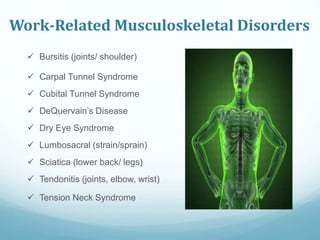
 Bursitis (joints/ shoulder)
 Carpal Tunnel Syndrome
 Cubital Tunnel Syndrome
 DeQuervain’s Disease
 Dry Eye Syndrome
 Lumbosacral (strain/sprain)
 Sciatica (lower back/ legs)
 Tendonitis (joints, elbow, wrist)
 Tension Neck Syndrome
Risk Factors for Work-Related MSDs
 AWKWARD POSTURES
 FREQUENT REPETITIVE MOTIONS
 HEAVY AND AWKWARD LIFTING
 FORCE AND PRESSURE
 CONTACT STRESS
Why Does Ergonomics Matter?
 1/3 of all workers’ comp. costs are associated with MSDs
 Employer’s spend over $20 billion annually on direct
costs and five times that amount on indirect costs
(hiring & training replacement workers).
 Cost to an organization:
 Workers’ compensation
 Medical Bills
 Lost revenue
 Employee morale
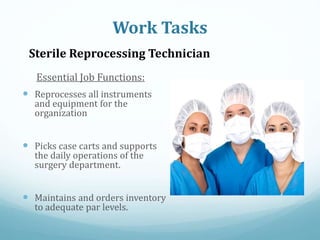
Essential Job Functions:
 Reprocesses all instruments
and equipment for the
organization
 Picks case carts and supports
the daily operations of the
surgery department.
 Maintains and orders inventory
to adequate par levels.
Work Tasks
Sterile Reprocessing Technician
Ergonomic Assessment Techniques
OBJECTIVE:
 RULA- Rapid Upper Limb Assessment
 REBA – Rapid Entire Body Assessment
 JSI - Job Strain Index
 NIOSH Lifting Equation
SUBJECTIVE:
 Body Mapping
 Informal Interviews
Rapid Upper Limb Assessment (RULA)
 Developed by Dr. Corlett and Dr. McAtamney in 1993
 Survey method developed focusing on ergonomic
investigation of the workplace.
 RULA is a screening tool that measures biomechanical and
postural loading on the whole body with specific
consideration to the neck, trunk and upper limbs.
 RULA is an ergonomic technique that evaluates an
individuals’ exposure to postures, forces and muscle activities
that can contribute to WMSDs.
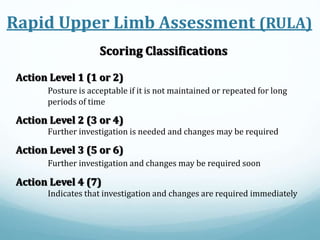
Scoring Classifications
Action Level 1 (1 or 2)
Posture is acceptable if it is not maintained or repeated for long
periods of time
Action Level 2 (3 or 4)
Further investigation is needed and changes may be required
Action Level 3 (5 or 6)
Further investigation and changes may be required soon
Action Level 4 (7)
Indicates that investigation and changes are required immediately
Rapid Upper Limb Assessment (RULA)
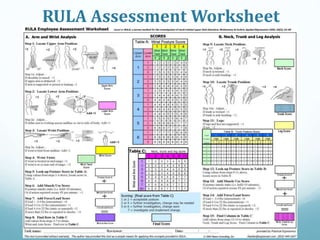
RULA Assessment Worksheet
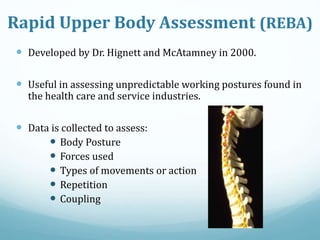
 Developed by Dr. Hignett and McAtamney in 2000.
 Useful in assessing unpredictable working postures found in
the health care and service industries.
 Data is collected to assess:
 Body Posture
 Forces used
 Types of movements or action
 Repetition
 Coupling
Rapid Upper Body Assessment (REBA)
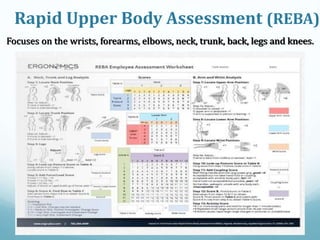
Focuses on the wrists, forearms, elbows, neck, trunk, back, legs and knees.
Rapid Upper Body Assessment (REBA)
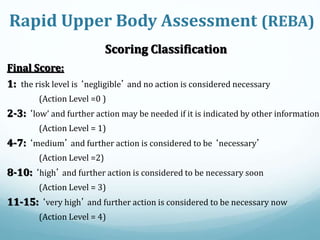
Scoring Classification
Final Score:
1: the risk level is ‘negligible’ and no action is considered necessary
(Action Level =0 )
2-3: ‘low’ and further action may be needed if it is indicated by other information
(Action Level = 1)
4-7: ‘medium’ and further action is considered to be ‘necessary’
(Action Level =2)
8-10: ‘high’ and further action is considered to be necessary soon
(Action Level = 3)
11-15: ‘very high’ and further action is considered to be necessary now
(Action Level = 4)
NIOSH Lifting Equation
 Improper lifting techniques can lead to MSDs with special
regard to low back pain.
 The NIOSH lifting equation was revised in 1993 – it is
used to evaluate the physical demands of Manual
Materials Handling (MMH)
 The equation breaks down several variables of a task into
an quantitative equation and by using a formula we can
determine the risk of the task
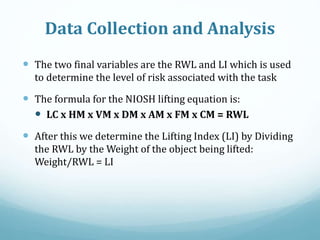
Data Collection and Analysis
 The two final variables are the RWL and LI which is used
to determine the level of risk associated with the task
 The formula for the NIOSH lifting equation is:
 LC x HM x VM x DM x AM x FM x CM = RWL
 After this we determine the Lifting Index (LI) by Dividing
the RWL by the Weight of the object being lifted:
Weight/RWL = LI
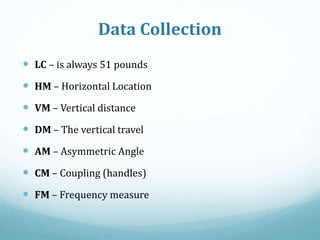
Data Collection
 LC – is always 51 pounds
 HM – Horizontal Location
 VM – Vertical distance
 DM – The vertical travel
 AM – Asymmetric Angle
 CM – Coupling (handles)
 FM – Frequency measure
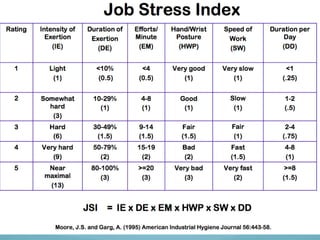
Job Strain Index
 Moore & Garg (1995) published in American Industrial
Hygiene Association Journal
 Job Strain Index (JSI) is a means to assess jobs for risk
factors for work-related musculoskeletal disorders (MSDs)
of upper extremities:
 Hands
 Wrists
 Elbow
 Forearm
 Divide the job into tasks –
For each task and for each hand, you must assess the six job
risk factors by assigning it to a category.
Job Strain Index Elements
 Intensity of exertions (force)
 Duration of Exertion (% cycle)
 Efforts per minute
 Hand/wrist posture
 Speed of work
 Duration of task per day (hours)
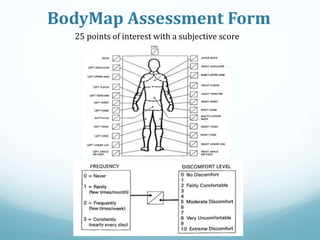
BodyMap Assessment
What is a Body Map Assessment?
 An aid in assessing potential ergonomic concerns or “leading indicators”
for musculoskeletal disorder risk.
 By comparing the different symptoms of members working in the same
department or performing the same task you can identify trends.
 Cluster of common problems and their causes (area of causes).
 Gives employees an understanding of shared risk factors.
 Provides anonymity and gives the workforce a voice/involvement.
 Can be used to identify and help to develop practical solutions.
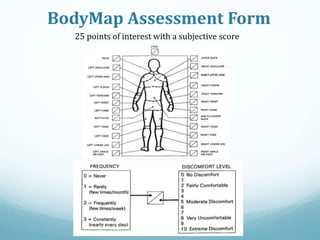
BodyMap Assessment Form
25 points of interest with a subjective score
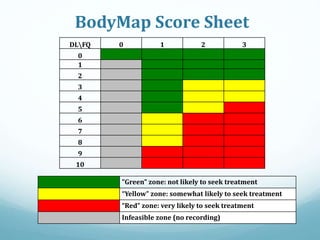
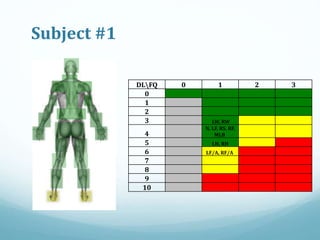
BodyMap Score Sheet
DLFQ 0 1 2 3
0
1
2
3
4
5
6
7
8
9
10
”Green” zone: not likely to seek treatment
“Yellow” zone: somewhat likely to seek treatment
“Red” zone: very likely to seek treatment
Infeasible zone (no recording)
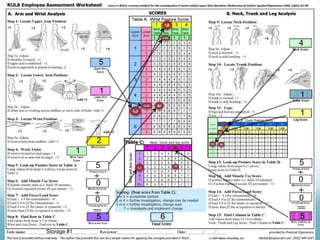
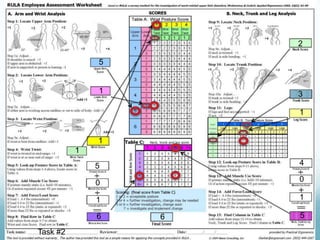
RULA:
STORAGE
PROCESSING
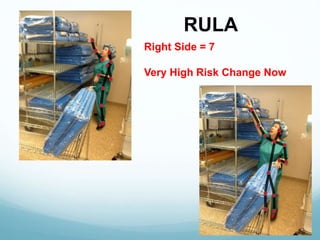
Right Side = 7
Very High Risk Change Now
RULA
5
1
2
1
5
0
0
5
4
1
1
5
0
0
56
Storage #1
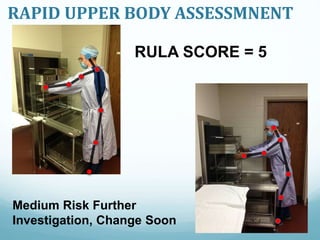
RULA SCORE = 5
Medium Risk Further
Investigation, Change Soon
RAPID UPPER BODY ASSESSMNENT
5
1
1
1
5
0
1
6
2
3
4
0
1
1
56
Task #2
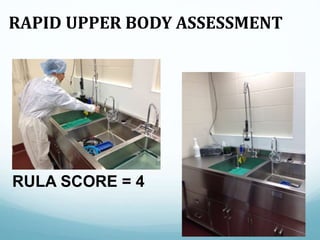
RULA SCORE = 4
RAPID UPPER BODY ASSESSMENT
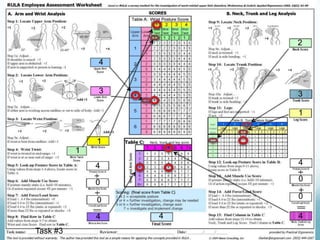
4
3
1
1
4
0
0
4
2
3
4
1
0
44
0
Task #3
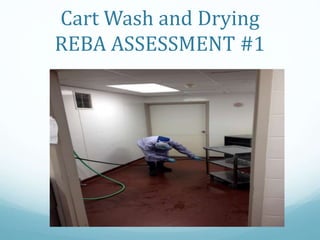
Cart Wash and Drying
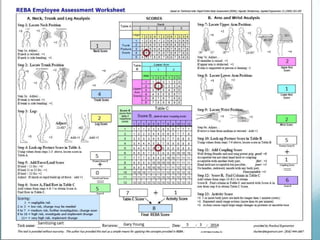
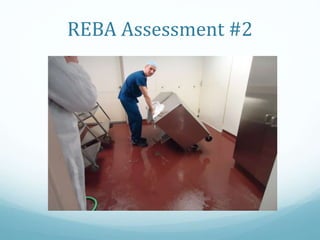
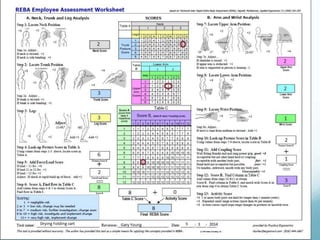
REBA ASSESSMENT #1
REBA Assessment #2
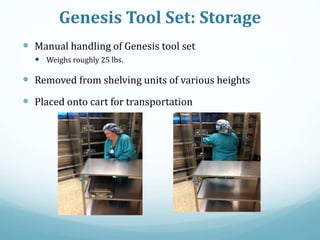
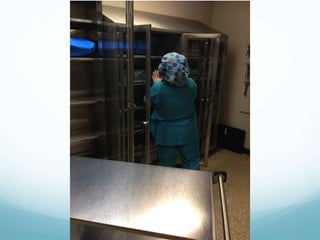
Genesis Tool Set: Storage
 Manual handling of Genesis tool set
 Weighs roughly 25 lbs.
 Removed from shelving units of various heights
 Placed onto cart for transportation
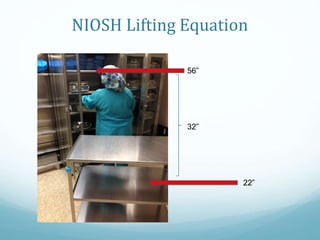
NIOSH Lifting Equation
56”
22”
32”
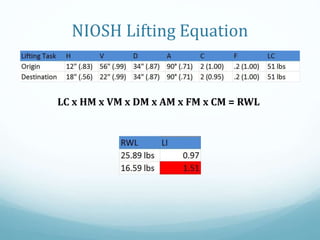
NIOSH Lifting Equation
LC x HM x VM x DM x AM x FM x CM = RWL
Results
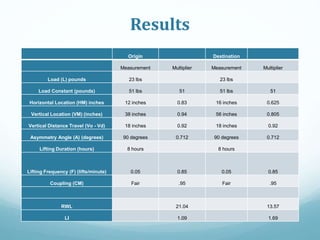
 Based upon the results:
 The weight at the origin is acceptable
 The weight at the destination creates the potential for
WMSDs
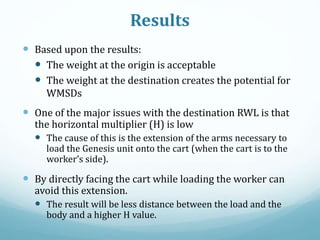
 One of the major issues with the destination RWL is that
the horizontal multiplier (H) is low
 The cause of this is the extension of the arms necessary to
load the Genesis unit onto the cart (when the cart is to the
worker’s side).
 By directly facing the cart while loading the worker can
avoid this extension.
 The result will be less distance between the load and the
body and a higher H value.
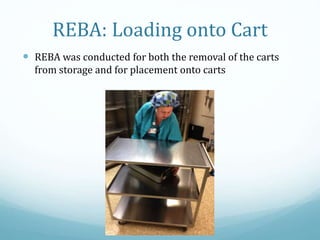
REBA: Loading onto Cart
 REBA was conducted for both the removal of the carts
from storage and for placement onto carts
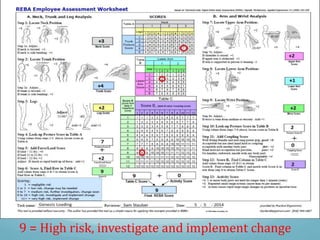
9 = High risk, investigate and implement change
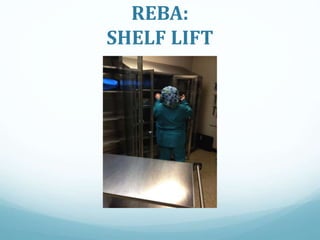
REBA:
SHELF LIFT
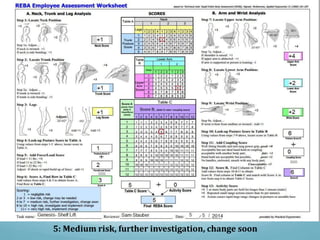
5: Medium risk, further investigation, change soon
Recommendations
REBA SHELF LIFT
 Hazard may increase when units are taken from
higher shelves
 Carts with adjustable heights may solve the problem
 Employee could slide the unit onto the cart, eliminating the lift
almost entirely
 Adjustable carts may not meet the requirement of equipment
in the sterile processing operation; could also result in
increased washing times
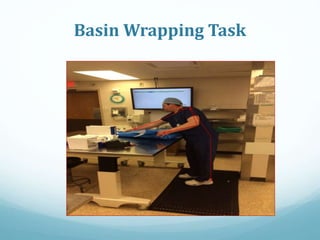
Basin Wrapping Task
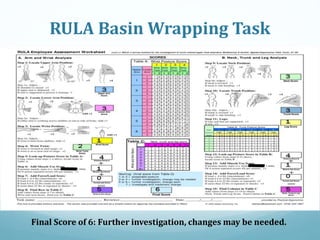
RULA Basin Wrapping Task
Final Score of 6: Further investigation, changes may be needed.
Peel Packing
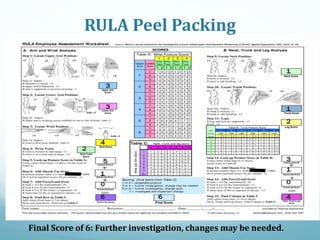
RULA Peel Packing
Final Score of 6: Further investigation, changes may be needed.
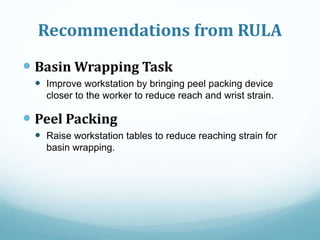
 Basin Wrapping Task
 Improve workstation by bringing peel packing device
closer to the worker to reduce reach and wrist strain.
 Peel Packing
 Raise workstation tables to reduce reaching strain for
basin wrapping.
Recommendations from RULA
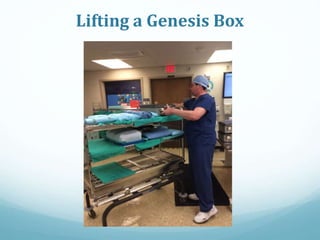
Lifting a Genesis Box
 The task in question is the lifting of a surgical basin onto
the top shelf of a cart
 This task can by performed up to 24 times in a shift
 The table is 36 inches high and the top of the cart is 52
inches off the ground
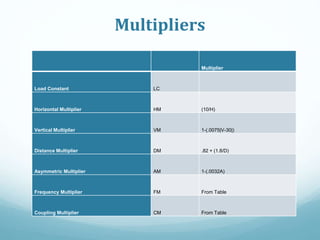
Multipliers
Multiplier
Load Constant LC
Horizontal Multiplier HM (10/H)
Vertical Multiplier VM 1-(.0075|V-30|)
Distance Multiplier DM .82 + (1.8/D)
Asymmetric Multiplier AM 1-(.0032A)
Frequency Multiplier FM From Table
Coupling Multiplier CM From Table
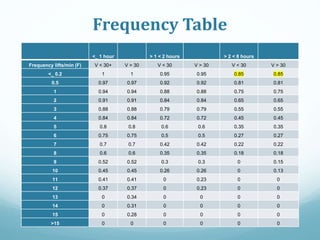
Frequency Table
<_ 1 hour > 1 < 2 hours > 2 < 8 hours
Frequency lifts/min (F) V < 30+ V > 30 V < 30 V > 30 V < 30 V > 30
<_ 0.2 1 1 0.95 0.95 0.85 0.85
0.5 0.97 0.97 0.92 0.92 0.81 0.81
1 0.94 0.94 0.88 0.88 0.75 0.75
2 0.91 0.91 0.84 0.84 0.65 0.65
3 0.88 0.88 0.79 0.79 0.55 0.55
4 0.84 0.84 0.72 0.72 0.45 0.45
5 0.8 0.8 0.6 0.6 0.35 0.35
6 0.75 0.75 0.5 0.5 0.27 0.27
7 0.7 0.7 0.42 0.42 0.22 0.22
8 0.6 0.6 0.35 0.35 0.18 0.18
9 0.52 0.52 0.3 0.3 0 0.15
10 0.45 0.45 0.26 0.26 0 0.13
11 0.41 0.41 0 0.23 0 0
12 0.37 0.37 0 0.23 0 0
13 0 0.34 0 0 0 0
14 0 0.31 0 0 0 0
15 0 0.28 0 0 0 0
>15 0 0 0 0 0 0
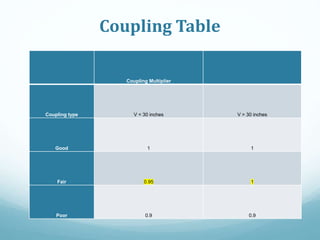
Coupling Table
Coupling Multiplier
Coupling type V < 30 inches V > 30 inches
Good 1 1
Fair 0.95 1
Poor 0.9 0.9
Results
Origin Destination
Measurement Multiplier Measurement Multiplier
Load (L) pounds 23 lbs 23 lbs
Load Constant (pounds) 51 lbs 51 51 lbs 51
Horizontal Location (HM) inches 12 inches 0.83 16 inches 0.625
Vertical Location (VM) (inches) 38 inches 0.94 56 inches 0.805
Vertical Distance Travel (Vo - Vd) 18 inches 0.92 18 inches 0.92
Asymmetry Angle (A) (degrees) 90 degrees 0.712 90 degrees 0.712
Lifting Duration (hours) 8 hours 8 hours
Lifting Frequency (F) (lifts/minute) 0.05 0.85 0.05 0.85
Coupling (CM) Fair .95 Fair .95
RWL 21.04 13.57
LI 1.09 1.69
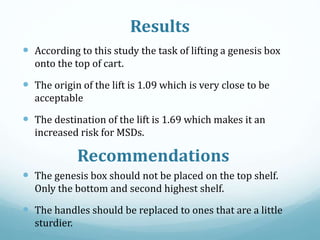
Results
 According to this study the task of lifting a genesis box
onto the top of cart.
 The origin of the lift is 1.09 which is very close to be
acceptable
 The destination of the lift is 1.69 which makes it an
increased risk for MSDs.
Recommendations
 The genesis box should not be placed on the top shelf.
Only the bottom and second highest shelf.
 The handles should be replaced to ones that are a little
sturdier.
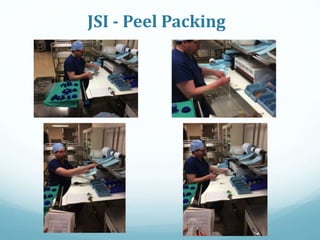
Peel Packing
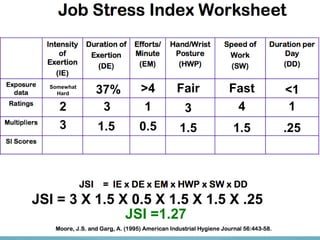
JSI - Peel Packing
Somewhat
Hard
2
3
37%
3
1.5
>4
1
0.5
Fair
3
1.5
Fast
1.5
4
<1
.25
1
JSI = 3 X 1.5 X 0.5 X 1.5 X 1.5 X .25
JSI =1.27
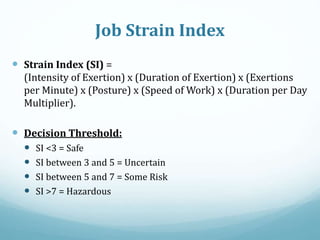
Job Strain Index
 Strain Index (SI) =
(Intensity of Exertion) x (Duration of Exertion) x (Exertions
per Minute) x (Posture) x (Speed of Work) x (Duration per Day
Multiplier).
 Decision Threshold:
 SI <3 = Safe
 SI between 3 and 5 = Uncertain
 SI between 5 and 7 = Some Risk
 SI >7 = Hazardous
BodyMap Assessment Form
25 points of interest with a subjective score
Subject #1
DLFQ 0 1 2 3
0
1
2
3 LW, RW
4
N, LF, RS, RF,
MLB
5 LH, RH
6 LF/A, RF/A
7
8
9
10
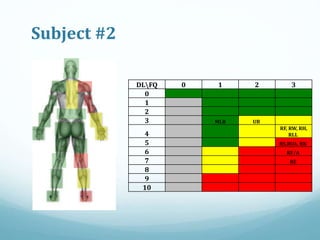
Subject #2
DLFQ 0 1 2 3
0
1
2
3 MLB UB
4
RF, RW, RH,
RLL
5 RS,RUA, RK
6 RF/A
7 RE
8
9
10
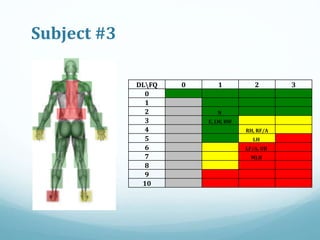
Subject #3
DLFQ 0 1 2 3
0
1
2 N
3 E, LW, RW
4 RH, RF/A
5 LH
6 LF/A, UB
7 MLB
8
9
10
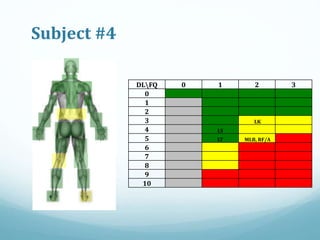
Subject #4
DLFQ 0 1 2 3
0
1
2
3 LK
4 LS
5 LT MLB, RF/A
6
7
8
9
10
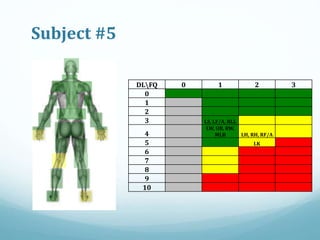
Subject #5
DLFQ 0 1 2 3
0
1
2
3 LS, LF/A, RLL
4
LW, UB, RW,
MLB LH, RH, RF/A
5 LK
6
7
8
9
10
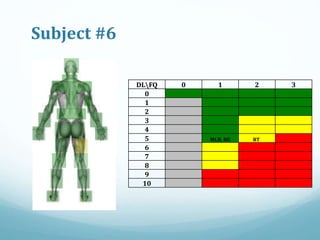
Subject #6
DLFQ 0 1 2 3
0
1
2
3
4
5 MLB, RK RT
6
7
8
9
10
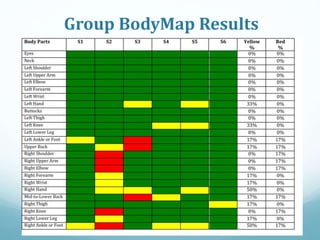
Group BodyMap Results
Recommendations:
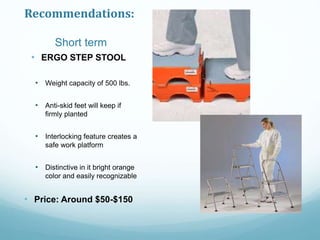
Short term
• ERGO STEP STOOL
• Weight capacity of 500 lbs.
• Anti-skid feet will keep if
firmly planted
• Interlocking feature creates a
safe work platform
• Distinctive in it bright orange
color and easily recognizable
• Price: Around $50-$150
Recommendations:
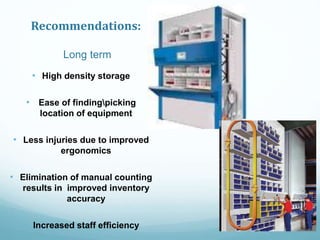
Long term
• High density storage
• Ease of findingpicking
location of equipment
• Less injuries due to improved
ergonomics
• Elimination of manual counting
results in improved inventory
accuracy
• Increased staff efficiency
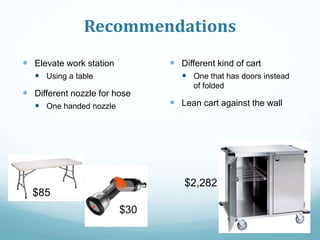
Recommendations
 Elevate work station
 Using a table
 Different nozzle for hose
 One handed nozzle
 Different kind of cart
 One that has doors instead
of folded
 Lean cart against the wall
$85
$30
$2,282
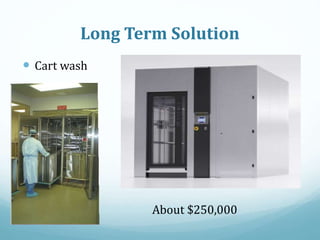
Long Term Solution
 Cart wash
About $250,000
References
REBA- Rapid Entire Body Assessment . (2009, June). Retrieved from REBA- Rapid Entire Body
Assessment:
http://www.ttl.fi/en/ergonomics/methods/workload_exposure_methods/table_and_methods/Documents/RE
BA.pdf
RULA- Rapid Upper Limb Assessment . (2009, June). Retrieved from RULA- Rapid Upper Limb
Assessment :
http://www.ttl.fi/en/ergonomics/methods/workload_exposure_methods/table_and_methods/Documen
ts/RULA.pdf
Labor Statistics. (2012). Retrieved March 2012, from United States Department of Labor Bureau of labor
statistics: http://www.bls.gov/
Callaghan, J., & McGill, S. (2001). Low Back joint loading and kinematics during standing and
unsupported sitting . Ergonomics, 280-294.
Centers for Disease Control and Prevention, National Institute for Occupational Safety
and Health. (2013). Workplace Safety & Health Topics: Anthropometry.
Retrieved from http://www.cdc.gov/niosh/topics/anthropometry/
Hignett, S. McAtamney, L. (2000). Department of Design and Environmental Analysis: The Rapid Entire
Body Assessment (REBA). Retrieved July 20, 2010, from Cornell University Ergonomic Web site:
http://ergo.human.cornell.edu/ahREBA.html
Insy. (2005, Spring ). Rapid Upper Limb Assessment (Power Point Presentation).
Retrieved from www.eng.auburn.edu/ise/courses/.../3021%20RULA%2007.ppt
Johnston, V., Souvlis, T. j., & Jull, G. (2008). Associations between individual and
workplace risk factors for self-reported neck pain and disability among female office
workers . Applied Ergonomics, 171-182.
Lawlor, C. Hamilton, D. (2010). The use of rapid entire body assessment (REBA) for
the quantification of manual handling risks. Retrieved August 2, 2010, from Unclear
Medicine Website: http://www.unclear-medicine.co.uk/pdf/reba_handout.pdf
Marley, RJ., and Kumar, N. (1996). An improved musculoskeletal discomfort
assessment tool.
International Journal of Industrial Ergonomics, 17, 21-27.
McAtamney, Lynn and Nigel Corlett, COPE Occupational Health and Ergonomic
Services Ltd, Business Park, Technology Drive, Beeston, Nottingham, NG8 2RB,
U.K., http://www.rula.co.uk/index.html , accessed 4/23/2012
Middlesworth, M. (2013). Ergonomic considerations – head to toe. Retrieved from
http://www.ergo-plus.com/healthandsafetyblog/ergonomics/ergonomic-
considerations/
Montgomery, J. F. (2001). Office Safety . In P. Hagan, J. F. Montgomery, & J. T. O'Reilly, Accident Prevention
Manual for Business and Industy Administration and Programs (pp. 556-557). Itasca, Illinois: National Safety
Council.
Moore, J.A. and Garg, A. (1995). The Strain Index: A proposed method to analyze jobs for risk of distal upper
extremity disorders. American Industrial Hygiene Association Journal, 56:443-458.
OSHA Ergonomic Solutions. (n.d.). Retrieved March 2012, from United States Department of Labor -
Occupational Safety and Health Administration:
http://www.osha.gov/SLTC/etools/computerworkstations/index.html
Robertson, M. M., Huang, Y.-H., & Schleifer, L. M. (2008). Flexible Workspace design and ergonomic training :
Impacts on the psychosocial work environment, musculoskeletal health and work effectiveness among
knowledge workers. Applied Ergonomics, 482-494.
Teresa A. Bellingar, P. A. (n.d.). Preventative -Measures-for-Common-Musculoskeletal-disorders-pdf. Retrieved
March 2012, from Haworth: http://www.haworth.com
Union, P. a. (2012). Body Mapping . Retrieved from Body Mapping -PCS:
http://www.pcs.org.uk/en/resources/health_and_safety/health_and_safety_reps_toolkit/body-mapping.cfm
Upper Limb Assessment . (n.d.). Retrieved from Upper Limb Assessment :
http://www.ahs.uwaterloo.ca/~wells/C%20RULA%20to%20UAW-GM%206.pdf
U.S Department of Labor, Occupational Safety and Health Administration.
(2013). Prevention of work-related musculoskeletal disorders (Unified Agenda).
Retrieved from https://www.osha.gov/pls/oshaweb/owadisp.show_document?
p_table=UNIFIED_AGENDA&p_id=4481
U.S Department of Labor, Occupational Safety and Health Administration.
(2013). Prevention of musculoskeletal disorders in the workplace: Ergonomics. Retrieved from
https://www.osha.gov/SLTC/ergonomics/index.html

Eric & phil presentation final

  • 1.
    Ergonomic Evaluation - SterileProcess Department Instructor: Dr. Sang Choi, Ph.D., CSP, CPE Presented By: Eric Brown Philip Porter Nick Bradley Omari Taylor Sam Stauber Gary Young
  • 2.
    Agenda  Introduction &Background  Work-Related Musculoskeletal Disorders  Ergonomic Assessment Techniques/Tools  Methods – Job Task Analysis  Recommendations
  • 3.
    Introduction & Background Injuryand Illness Rates – (DOL, 2010) - Healthcare industry had higher rates of injury and illness than manufacturing. - Healthcare industry had the highest rates of work-related musculoskeletal disorders of all occupations. - Work-related musculoskeletal disorders (MSDs) account for over 600,000 injuries and illness in the U.S (OSHA, 2013).
  • 4.
    Work-Related Musculoskeletal Disorders Bursitis (joints/ shoulder)  Carpal Tunnel Syndrome  Cubital Tunnel Syndrome  DeQuervain’s Disease  Dry Eye Syndrome  Lumbosacral (strain/sprain)  Sciatica (lower back/ legs)  Tendonitis (joints, elbow, wrist)  Tension Neck Syndrome
  • 5.
    Risk Factors forWork-Related MSDs  AWKWARD POSTURES  FREQUENT REPETITIVE MOTIONS  HEAVY AND AWKWARD LIFTING  FORCE AND PRESSURE  CONTACT STRESS
  • 6.
    Why Does ErgonomicsMatter?  1/3 of all workers’ comp. costs are associated with MSDs  Employer’s spend over $20 billion annually on direct costs and five times that amount on indirect costs (hiring & training replacement workers).  Cost to an organization:  Workers’ compensation  Medical Bills  Lost revenue  Employee morale
  • 7.
    Essential Job Functions: Reprocesses all instruments and equipment for the organization  Picks case carts and supports the daily operations of the surgery department.  Maintains and orders inventory to adequate par levels. Work Tasks Sterile Reprocessing Technician
  • 8.
    Ergonomic Assessment Techniques OBJECTIVE: RULA- Rapid Upper Limb Assessment  REBA – Rapid Entire Body Assessment  JSI - Job Strain Index  NIOSH Lifting Equation SUBJECTIVE:  Body Mapping  Informal Interviews
  • 9.
    Rapid Upper LimbAssessment (RULA)  Developed by Dr. Corlett and Dr. McAtamney in 1993  Survey method developed focusing on ergonomic investigation of the workplace.  RULA is a screening tool that measures biomechanical and postural loading on the whole body with specific consideration to the neck, trunk and upper limbs.  RULA is an ergonomic technique that evaluates an individuals’ exposure to postures, forces and muscle activities that can contribute to WMSDs.
  • 10.
    Scoring Classifications Action Level1 (1 or 2) Posture is acceptable if it is not maintained or repeated for long periods of time Action Level 2 (3 or 4) Further investigation is needed and changes may be required Action Level 3 (5 or 6) Further investigation and changes may be required soon Action Level 4 (7) Indicates that investigation and changes are required immediately Rapid Upper Limb Assessment (RULA)
  • 11.
  • 12.
     Developed byDr. Hignett and McAtamney in 2000.  Useful in assessing unpredictable working postures found in the health care and service industries.  Data is collected to assess:  Body Posture  Forces used  Types of movements or action  Repetition  Coupling Rapid Upper Body Assessment (REBA)
  • 13.
    Rapid Upper BodyAssessment (REBA) Focuses on the wrists, forearms, elbows, neck, trunk, back, legs and knees.
  • 14.
    Rapid Upper BodyAssessment (REBA) Scoring Classification Final Score: 1: the risk level is ‘negligible’ and no action is considered necessary (Action Level =0 ) 2-3: ‘low’ and further action may be needed if it is indicated by other information (Action Level = 1) 4-7: ‘medium’ and further action is considered to be ‘necessary’ (Action Level =2) 8-10: ‘high’ and further action is considered to be necessary soon (Action Level = 3) 11-15: ‘very high’ and further action is considered to be necessary now (Action Level = 4)
  • 15.
    NIOSH Lifting Equation Improper lifting techniques can lead to MSDs with special regard to low back pain.  The NIOSH lifting equation was revised in 1993 – it is used to evaluate the physical demands of Manual Materials Handling (MMH)  The equation breaks down several variables of a task into an quantitative equation and by using a formula we can determine the risk of the task
  • 16.
    Data Collection andAnalysis  The two final variables are the RWL and LI which is used to determine the level of risk associated with the task  The formula for the NIOSH lifting equation is:  LC x HM x VM x DM x AM x FM x CM = RWL  After this we determine the Lifting Index (LI) by Dividing the RWL by the Weight of the object being lifted: Weight/RWL = LI
  • 17.
    Data Collection  LC– is always 51 pounds  HM – Horizontal Location  VM – Vertical distance  DM – The vertical travel  AM – Asymmetric Angle  CM – Coupling (handles)  FM – Frequency measure
  • 18.
    Job Strain Index Moore & Garg (1995) published in American Industrial Hygiene Association Journal  Job Strain Index (JSI) is a means to assess jobs for risk factors for work-related musculoskeletal disorders (MSDs) of upper extremities:  Hands  Wrists  Elbow  Forearm  Divide the job into tasks – For each task and for each hand, you must assess the six job risk factors by assigning it to a category.
  • 19.
    Job Strain IndexElements  Intensity of exertions (force)  Duration of Exertion (% cycle)  Efforts per minute  Hand/wrist posture  Speed of work  Duration of task per day (hours)
  • 20.
    BodyMap Assessment What isa Body Map Assessment?  An aid in assessing potential ergonomic concerns or “leading indicators” for musculoskeletal disorder risk.  By comparing the different symptoms of members working in the same department or performing the same task you can identify trends.  Cluster of common problems and their causes (area of causes).  Gives employees an understanding of shared risk factors.  Provides anonymity and gives the workforce a voice/involvement.  Can be used to identify and help to develop practical solutions.
  • 21.
    BodyMap Assessment Form 25points of interest with a subjective score
  • 22.
    BodyMap Score Sheet DLFQ0 1 2 3 0 1 2 3 4 5 6 7 8 9 10 ”Green” zone: not likely to seek treatment “Yellow” zone: somewhat likely to seek treatment “Red” zone: very likely to seek treatment Infeasible zone (no recording)
  • 23.
  • 24.
    Right Side =7 Very High Risk Change Now RULA
  • 25.
  • 26.
    RULA SCORE =5 Medium Risk Further Investigation, Change Soon RAPID UPPER BODY ASSESSMNENT
  • 27.
  • 28.
    RULA SCORE =4 RAPID UPPER BODY ASSESSMENT
  • 29.
  • 30.
    Cart Wash andDrying REBA ASSESSMENT #1
  • 32.
  • 34.
    Genesis Tool Set:Storage  Manual handling of Genesis tool set  Weighs roughly 25 lbs.  Removed from shelving units of various heights  Placed onto cart for transportation
  • 36.
  • 37.
    NIOSH Lifting Equation LCx HM x VM x DM x AM x FM x CM = RWL
  • 38.
    Results  Based uponthe results:  The weight at the origin is acceptable  The weight at the destination creates the potential for WMSDs  One of the major issues with the destination RWL is that the horizontal multiplier (H) is low  The cause of this is the extension of the arms necessary to load the Genesis unit onto the cart (when the cart is to the worker’s side).  By directly facing the cart while loading the worker can avoid this extension.  The result will be less distance between the load and the body and a higher H value.
  • 39.
    REBA: Loading ontoCart  REBA was conducted for both the removal of the carts from storage and for placement onto carts
  • 40.
    9 = Highrisk, investigate and implement change
  • 41.
  • 42.
    5: Medium risk,further investigation, change soon
  • 43.
    Recommendations REBA SHELF LIFT Hazard may increase when units are taken from higher shelves  Carts with adjustable heights may solve the problem  Employee could slide the unit onto the cart, eliminating the lift almost entirely  Adjustable carts may not meet the requirement of equipment in the sterile processing operation; could also result in increased washing times
  • 44.
  • 45.
    RULA Basin WrappingTask Final Score of 6: Further investigation, changes may be needed.
  • 46.
  • 47.
    RULA Peel Packing FinalScore of 6: Further investigation, changes may be needed.
  • 48.
     Basin WrappingTask  Improve workstation by bringing peel packing device closer to the worker to reduce reach and wrist strain.  Peel Packing  Raise workstation tables to reduce reaching strain for basin wrapping. Recommendations from RULA
  • 49.
  • 50.
    Lifting a GenesisBox  The task in question is the lifting of a surgical basin onto the top shelf of a cart  This task can by performed up to 24 times in a shift  The table is 36 inches high and the top of the cart is 52 inches off the ground
  • 51.
    Multipliers Multiplier Load Constant LC HorizontalMultiplier HM (10/H) Vertical Multiplier VM 1-(.0075|V-30|) Distance Multiplier DM .82 + (1.8/D) Asymmetric Multiplier AM 1-(.0032A) Frequency Multiplier FM From Table Coupling Multiplier CM From Table
  • 52.
    Frequency Table <_ 1hour > 1 < 2 hours > 2 < 8 hours Frequency lifts/min (F) V < 30+ V > 30 V < 30 V > 30 V < 30 V > 30 <_ 0.2 1 1 0.95 0.95 0.85 0.85 0.5 0.97 0.97 0.92 0.92 0.81 0.81 1 0.94 0.94 0.88 0.88 0.75 0.75 2 0.91 0.91 0.84 0.84 0.65 0.65 3 0.88 0.88 0.79 0.79 0.55 0.55 4 0.84 0.84 0.72 0.72 0.45 0.45 5 0.8 0.8 0.6 0.6 0.35 0.35 6 0.75 0.75 0.5 0.5 0.27 0.27 7 0.7 0.7 0.42 0.42 0.22 0.22 8 0.6 0.6 0.35 0.35 0.18 0.18 9 0.52 0.52 0.3 0.3 0 0.15 10 0.45 0.45 0.26 0.26 0 0.13 11 0.41 0.41 0 0.23 0 0 12 0.37 0.37 0 0.23 0 0 13 0 0.34 0 0 0 0 14 0 0.31 0 0 0 0 15 0 0.28 0 0 0 0 >15 0 0 0 0 0 0
  • 53.
    Coupling Table Coupling Multiplier Couplingtype V < 30 inches V > 30 inches Good 1 1 Fair 0.95 1 Poor 0.9 0.9
  • 54.
    Results Origin Destination Measurement MultiplierMeasurement Multiplier Load (L) pounds 23 lbs 23 lbs Load Constant (pounds) 51 lbs 51 51 lbs 51 Horizontal Location (HM) inches 12 inches 0.83 16 inches 0.625 Vertical Location (VM) (inches) 38 inches 0.94 56 inches 0.805 Vertical Distance Travel (Vo - Vd) 18 inches 0.92 18 inches 0.92 Asymmetry Angle (A) (degrees) 90 degrees 0.712 90 degrees 0.712 Lifting Duration (hours) 8 hours 8 hours Lifting Frequency (F) (lifts/minute) 0.05 0.85 0.05 0.85 Coupling (CM) Fair .95 Fair .95 RWL 21.04 13.57 LI 1.09 1.69
  • 55.
    Results  According tothis study the task of lifting a genesis box onto the top of cart.  The origin of the lift is 1.09 which is very close to be acceptable  The destination of the lift is 1.69 which makes it an increased risk for MSDs. Recommendations  The genesis box should not be placed on the top shelf. Only the bottom and second highest shelf.  The handles should be replaced to ones that are a little sturdier.
  • 56.
  • 57.
    JSI - PeelPacking
  • 59.
  • 60.
    Job Strain Index Strain Index (SI) = (Intensity of Exertion) x (Duration of Exertion) x (Exertions per Minute) x (Posture) x (Speed of Work) x (Duration per Day Multiplier).  Decision Threshold:  SI <3 = Safe  SI between 3 and 5 = Uncertain  SI between 5 and 7 = Some Risk  SI >7 = Hazardous
  • 61.
    BodyMap Assessment Form 25points of interest with a subjective score
  • 62.
    Subject #1 DLFQ 01 2 3 0 1 2 3 LW, RW 4 N, LF, RS, RF, MLB 5 LH, RH 6 LF/A, RF/A 7 8 9 10
  • 63.
    Subject #2 DLFQ 01 2 3 0 1 2 3 MLB UB 4 RF, RW, RH, RLL 5 RS,RUA, RK 6 RF/A 7 RE 8 9 10
  • 64.
    Subject #3 DLFQ 01 2 3 0 1 2 N 3 E, LW, RW 4 RH, RF/A 5 LH 6 LF/A, UB 7 MLB 8 9 10
  • 65.
    Subject #4 DLFQ 01 2 3 0 1 2 3 LK 4 LS 5 LT MLB, RF/A 6 7 8 9 10
  • 66.
    Subject #5 DLFQ 01 2 3 0 1 2 3 LS, LF/A, RLL 4 LW, UB, RW, MLB LH, RH, RF/A 5 LK 6 7 8 9 10
  • 67.
    Subject #6 DLFQ 01 2 3 0 1 2 3 4 5 MLB, RK RT 6 7 8 9 10
  • 68.
  • 69.
    Recommendations: Short term • ERGOSTEP STOOL • Weight capacity of 500 lbs. • Anti-skid feet will keep if firmly planted • Interlocking feature creates a safe work platform • Distinctive in it bright orange color and easily recognizable • Price: Around $50-$150
  • 70.
    Recommendations: Long term • Highdensity storage • Ease of findingpicking location of equipment • Less injuries due to improved ergonomics • Elimination of manual counting results in improved inventory accuracy • Increased staff efficiency
  • 71.
    Recommendations  Elevate workstation  Using a table  Different nozzle for hose  One handed nozzle  Different kind of cart  One that has doors instead of folded  Lean cart against the wall $85 $30 $2,282
  • 72.
    Long Term Solution Cart wash About $250,000
  • 73.
    References REBA- Rapid EntireBody Assessment . (2009, June). Retrieved from REBA- Rapid Entire Body Assessment: http://www.ttl.fi/en/ergonomics/methods/workload_exposure_methods/table_and_methods/Documents/RE BA.pdf RULA- Rapid Upper Limb Assessment . (2009, June). Retrieved from RULA- Rapid Upper Limb Assessment : http://www.ttl.fi/en/ergonomics/methods/workload_exposure_methods/table_and_methods/Documen ts/RULA.pdf Labor Statistics. (2012). Retrieved March 2012, from United States Department of Labor Bureau of labor statistics: http://www.bls.gov/ Callaghan, J., & McGill, S. (2001). Low Back joint loading and kinematics during standing and unsupported sitting . Ergonomics, 280-294. Centers for Disease Control and Prevention, National Institute for Occupational Safety and Health. (2013). Workplace Safety & Health Topics: Anthropometry. Retrieved from http://www.cdc.gov/niosh/topics/anthropometry/ Hignett, S. McAtamney, L. (2000). Department of Design and Environmental Analysis: The Rapid Entire Body Assessment (REBA). Retrieved July 20, 2010, from Cornell University Ergonomic Web site: http://ergo.human.cornell.edu/ahREBA.html
  • 74.
    Insy. (2005, Spring). Rapid Upper Limb Assessment (Power Point Presentation). Retrieved from www.eng.auburn.edu/ise/courses/.../3021%20RULA%2007.ppt Johnston, V., Souvlis, T. j., & Jull, G. (2008). Associations between individual and workplace risk factors for self-reported neck pain and disability among female office workers . Applied Ergonomics, 171-182. Lawlor, C. Hamilton, D. (2010). The use of rapid entire body assessment (REBA) for the quantification of manual handling risks. Retrieved August 2, 2010, from Unclear Medicine Website: http://www.unclear-medicine.co.uk/pdf/reba_handout.pdf Marley, RJ., and Kumar, N. (1996). An improved musculoskeletal discomfort assessment tool. International Journal of Industrial Ergonomics, 17, 21-27. McAtamney, Lynn and Nigel Corlett, COPE Occupational Health and Ergonomic Services Ltd, Business Park, Technology Drive, Beeston, Nottingham, NG8 2RB, U.K., http://www.rula.co.uk/index.html , accessed 4/23/2012 Middlesworth, M. (2013). Ergonomic considerations – head to toe. Retrieved from http://www.ergo-plus.com/healthandsafetyblog/ergonomics/ergonomic- considerations/
  • 75.
    Montgomery, J. F.(2001). Office Safety . In P. Hagan, J. F. Montgomery, & J. T. O'Reilly, Accident Prevention Manual for Business and Industy Administration and Programs (pp. 556-557). Itasca, Illinois: National Safety Council. Moore, J.A. and Garg, A. (1995). The Strain Index: A proposed method to analyze jobs for risk of distal upper extremity disorders. American Industrial Hygiene Association Journal, 56:443-458. OSHA Ergonomic Solutions. (n.d.). Retrieved March 2012, from United States Department of Labor - Occupational Safety and Health Administration: http://www.osha.gov/SLTC/etools/computerworkstations/index.html Robertson, M. M., Huang, Y.-H., & Schleifer, L. M. (2008). Flexible Workspace design and ergonomic training : Impacts on the psychosocial work environment, musculoskeletal health and work effectiveness among knowledge workers. Applied Ergonomics, 482-494. Teresa A. Bellingar, P. A. (n.d.). Preventative -Measures-for-Common-Musculoskeletal-disorders-pdf. Retrieved March 2012, from Haworth: http://www.haworth.com Union, P. a. (2012). Body Mapping . Retrieved from Body Mapping -PCS: http://www.pcs.org.uk/en/resources/health_and_safety/health_and_safety_reps_toolkit/body-mapping.cfm Upper Limb Assessment . (n.d.). Retrieved from Upper Limb Assessment : http://www.ahs.uwaterloo.ca/~wells/C%20RULA%20to%20UAW-GM%206.pdf U.S Department of Labor, Occupational Safety and Health Administration. (2013). Prevention of work-related musculoskeletal disorders (Unified Agenda). Retrieved from https://www.osha.gov/pls/oshaweb/owadisp.show_document? p_table=UNIFIED_AGENDA&p_id=4481 U.S Department of Labor, Occupational Safety and Health Administration. (2013). Prevention of musculoskeletal disorders in the workplace: Ergonomics. Retrieved from https://www.osha.gov/SLTC/ergonomics/index.html