PRESENTATION OF PROJECT
IMPLEMENTATION
27TH PRIMARY SCHOOL OF THESSALONIKI
GREECE
SEPTEMBER 2018
ERASMUS+ KA1 2017- 2018
“INTRODUCTION TO ENTREPRENEURIAL
LEARNING AND EUROPEAN
PARTNERSHIPS”
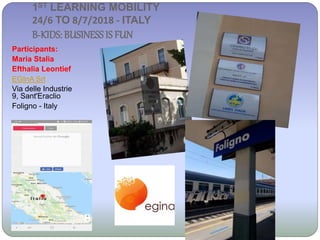
1ST LEARNING MOBILITY
24/6 TO 8/7/2018 - ITALY
B-KIDS: BUSINESSIS FUN
Participants:
Maria Stalia
Efthalia Leontief
EGInA Srl
Via delle Industrie
9, Sant'Eraclio
Foligno - Italy
1st week 25/6 to 29/6/2018
 25/6: Presentation by key
trainer Irene Morici of the
objectives of the seminar
and the activities of the
coming days, introduction to
the concept of
entrepreneurial learning in
primary education.
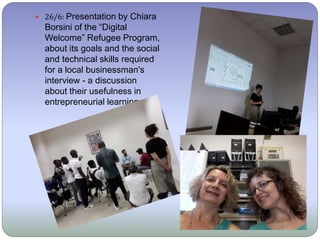
 26/6: Presentation by Chiara
Borsini of the “Digital
Welcome” Refugee Program,
about its goals and the social
and technical skills required
for a local businessman's
interview - a discussion
about their usefulness in
entrepreneurial learning.
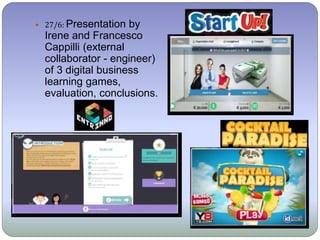
 27/6: Presentation by
Irene and Francesco
Cappilli (external
collaborator - engineer)
of 3 digital business
learning games,
evaluation, conclusions.
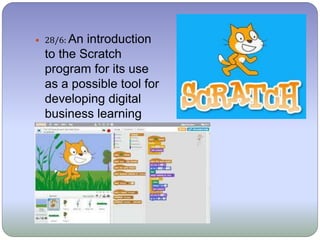
 28/6: An introduction
to the Scratch
program for its use
as a possible tool for
developing digital
business learning
games for our
students.
 29/6: Presenting our
assessment of the 3 digital
games - research on the
internet for entrepreneurial
learning and presentation of
our personal perception of
the concept and our personal
experience in our teaching
practice.
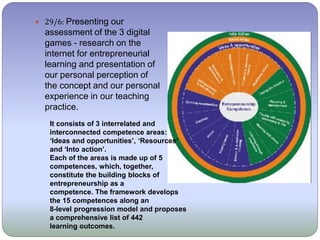
It consists of 3 interrelated and
interconnected competence areas:
‘Ideas and opportunities’, ‘Resources’
and ‘Into action’.
Each of the areas is made up of 5
competences, which, together,
constitute the building blocks of
entrepreneurship as a
competence. The framework develops
the 15 competences along an
8-level progression model and proposes
a comprehensive list of 442
learning outcomes.
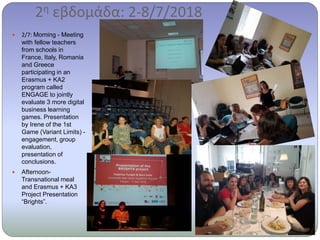
2η εβδομάδα: 2-8/7/2018
 2/7: Morning - Meeting
with fellow teachers
from schools in
France, Italy, Romania
and Greece
participating in an
Erasmus + KA2
program called
ENGAGE to jointly
evaluate 3 more digital
business learning
games. Presentation
by Irene of the 1st
Game (Variant Limits) -
engagement, group
evaluation,
presentation of
conclusions.
 Afternoon-
Transnational meal
and Erasmus + KA3
Project Presentation
“Brights”.
 3/7: Morning -
Report by Irene
on the actions
and results of the
b-kids co-
operation
program and the
possibilities of
integrating
entrepreneurial
learning into our
teaching practice.
Dealing with the
2nd Digital Game
(GEM) - team
evaluation and
presentation of
results.
 Afternoon: Visit to
the Quintana 4D
exhibition -
transnational
dinner.
 4/7: Morning -
Presentation,
engagement
and evaluation
of the 3rd and
final digital
game (Agropoly)
- Joint
preparation for
the interview of
the creators of
the 3 games
 Afternoon:
Presentation of
Digital Welcome
results
 5/7: Morning - Analysis
of the evaluation
criteria of the 3 games
and final decision on
the best game -
meeting and interview
from their creators.
 Afternoon - Visit to
SHU's playzone
(Social Hackathon
Umbria) 2018 - 1st
meeting with the
working group on
designing our digital
game to participate in
SHU.
 6 και 7/7:
Designing a digital
business learning
game by the
ENGAGE and B-
TEACH competitor
teams for the SHU
2018 competition -
attending the
Erasmus KA2
project
presentation
"Science girls" -
completing work.
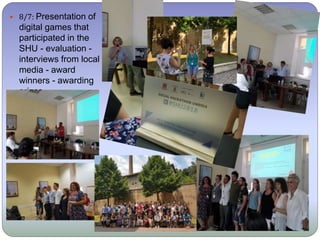
 8/7: Presentation of
digital games that
participated in the
SHU - evaluation -
interviews from local
media - award
winners - awarding
prizes.
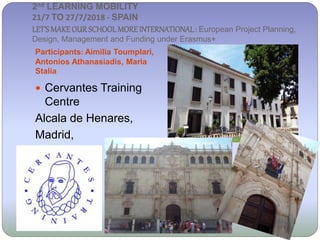
2nd LEARNING MOBILITY
21/7 TO 27/7/2018 - SPAIN
LET’SMAKE OUR SCHOOL MORE INTERNATIONAL: European Project Planning,
Design, Management and Funding under Erasmus+
Participants: Aimilia Toumplari,
Antonios Athanasiadis, Maria
Stalia
 Cervantes Training
Centre
Alcala de Henares,
Madrid,
Spain
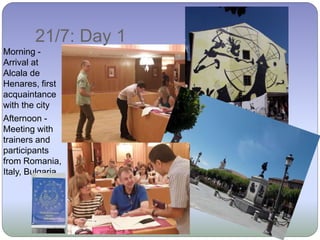
21/7: Day 1
Morning -
Arrival at
Alcala de
Henares, first
acquaintance
with the city
Afternoon -
Meeting with
trainers and
participants
from Romania,
Italy, Bulgaria.
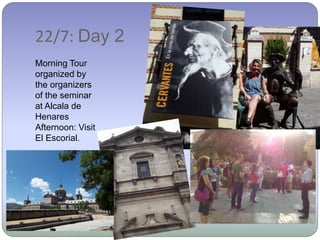
22/7: Day 2
Morning Tour
organized by
the organizers
of the seminar
at Alcala de
Henares
Afternoon: Visit
El Escorial.
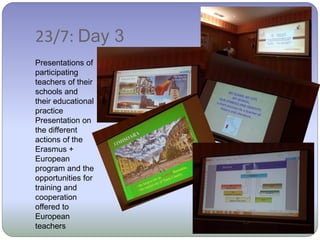
23/7: Day 3
Presentations of
participating
teachers of their
schools and
their educational
practice
Presentation on
the different
actions of the
Erasmus +
European
program and the
opportunities for
training and
cooperation
offered to
European
teachers
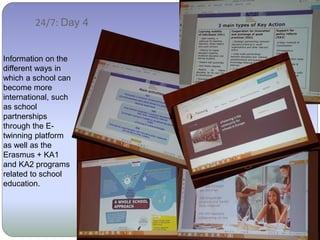
24/7: Day 4
Information on the
different ways in
which a school can
become more
international, such
as school
partnerships
through the E-
twinning platform
as well as the
Erasmus + KA1
and KA2 programs
related to school
education.
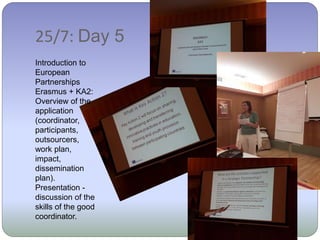
25/7: Day 5
Introduction to
European
Partnerships
Erasmus + KA2:
Overview of the
application
(coordinator,
participants,
outsourcers,
work plan,
impact,
dissemination
plan).
Presentation -
discussion of the
skills of the good
coordinator.
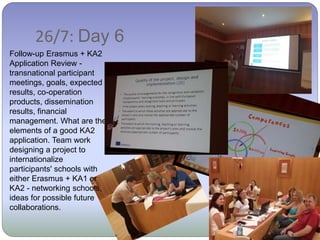
26/7: Day 6
Follow-up Erasmus + KA2
Application Review -
transnational participant
meetings, goals, expected
results, co-operation
products, dissemination
results, financial
management. What are the
elements of a good KA2
application. Team work
designing a project to
internationalize
participants' schools with
either Erasmus + KA1 or
KA2 - networking schools,
ideas for possible future
collaborations.
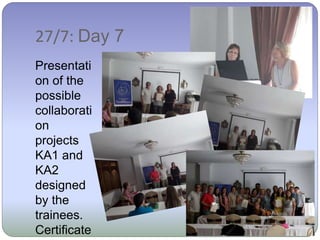
27/7: Day 7
Presentati
on of the
possible
collaborati
on
projects
KA1 and
KA2
designed
by the
trainees.
Certificate
Erasmus+ 2017  2018 english

Erasmus+ 2017 2018 english

  • 1.
    PRESENTATION OF PROJECT IMPLEMENTATION 27THPRIMARY SCHOOL OF THESSALONIKI GREECE SEPTEMBER 2018 ERASMUS+ KA1 2017- 2018 “INTRODUCTION TO ENTREPRENEURIAL LEARNING AND EUROPEAN PARTNERSHIPS”
  • 2.
    1ST LEARNING MOBILITY 24/6TO 8/7/2018 - ITALY B-KIDS: BUSINESSIS FUN Participants: Maria Stalia Efthalia Leontief EGInA Srl Via delle Industrie 9, Sant'Eraclio Foligno - Italy
  • 3.
    1st week 25/6to 29/6/2018  25/6: Presentation by key trainer Irene Morici of the objectives of the seminar and the activities of the coming days, introduction to the concept of entrepreneurial learning in primary education.
  • 4.
     26/6: Presentationby Chiara Borsini of the “Digital Welcome” Refugee Program, about its goals and the social and technical skills required for a local businessman's interview - a discussion about their usefulness in entrepreneurial learning.
  • 5.
     27/6: Presentationby Irene and Francesco Cappilli (external collaborator - engineer) of 3 digital business learning games, evaluation, conclusions.
  • 6.
     28/6: Anintroduction to the Scratch program for its use as a possible tool for developing digital business learning games for our students.
  • 7.
     29/6: Presentingour assessment of the 3 digital games - research on the internet for entrepreneurial learning and presentation of our personal perception of the concept and our personal experience in our teaching practice. It consists of 3 interrelated and interconnected competence areas: ‘Ideas and opportunities’, ‘Resources’ and ‘Into action’. Each of the areas is made up of 5 competences, which, together, constitute the building blocks of entrepreneurship as a competence. The framework develops the 15 competences along an 8-level progression model and proposes a comprehensive list of 442 learning outcomes.
  • 8.
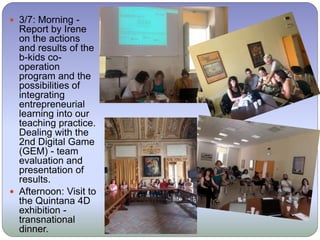
    2η εβδομάδα: 2-8/7/2018 2/7: Morning - Meeting with fellow teachers from schools in France, Italy, Romania and Greece participating in an Erasmus + KA2 program called ENGAGE to jointly evaluate 3 more digital business learning games. Presentation by Irene of the 1st Game (Variant Limits) - engagement, group evaluation, presentation of conclusions.  Afternoon- Transnational meal and Erasmus + KA3 Project Presentation “Brights”.
  • 9.
     3/7: Morning- Report by Irene on the actions and results of the b-kids co- operation program and the possibilities of integrating entrepreneurial learning into our teaching practice. Dealing with the 2nd Digital Game (GEM) - team evaluation and presentation of results.  Afternoon: Visit to the Quintana 4D exhibition - transnational dinner.
  • 10.
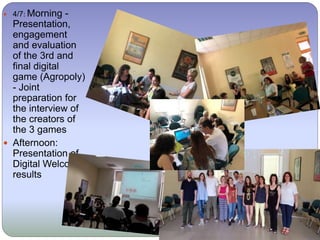
     4/7: Morning- Presentation, engagement and evaluation of the 3rd and final digital game (Agropoly) - Joint preparation for the interview of the creators of the 3 games  Afternoon: Presentation of Digital Welcome results
  • 11.
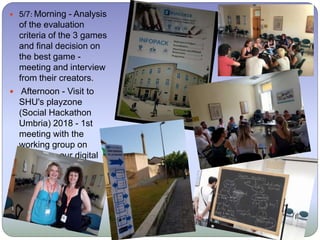
     5/7: Morning- Analysis of the evaluation criteria of the 3 games and final decision on the best game - meeting and interview from their creators.  Afternoon - Visit to SHU's playzone (Social Hackathon Umbria) 2018 - 1st meeting with the working group on designing our digital game to participate in SHU.
  • 12.
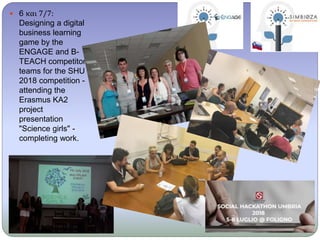
     6 και7/7: Designing a digital business learning game by the ENGAGE and B- TEACH competitor teams for the SHU 2018 competition - attending the Erasmus KA2 project presentation "Science girls" - completing work.
  • 13.
     8/7: Presentationof digital games that participated in the SHU - evaluation - interviews from local media - award winners - awarding prizes.
  • 14.
    2nd LEARNING MOBILITY 21/7TO 27/7/2018 - SPAIN LET’SMAKE OUR SCHOOL MORE INTERNATIONAL: European Project Planning, Design, Management and Funding under Erasmus+ Participants: Aimilia Toumplari, Antonios Athanasiadis, Maria Stalia  Cervantes Training Centre Alcala de Henares, Madrid, Spain
  • 15.
    21/7: Day 1 Morning- Arrival at Alcala de Henares, first acquaintance with the city Afternoon - Meeting with trainers and participants from Romania, Italy, Bulgaria.
  • 16.
    22/7: Day 2 MorningTour organized by the organizers of the seminar at Alcala de Henares Afternoon: Visit El Escorial.
  • 17.
    23/7: Day 3 Presentationsof participating teachers of their schools and their educational practice Presentation on the different actions of the Erasmus + European program and the opportunities for training and cooperation offered to European teachers
  • 18.
    24/7: Day 4 Informationon the different ways in which a school can become more international, such as school partnerships through the E- twinning platform as well as the Erasmus + KA1 and KA2 programs related to school education.
  • 19.
    25/7: Day 5 Introductionto European Partnerships Erasmus + KA2: Overview of the application (coordinator, participants, outsourcers, work plan, impact, dissemination plan). Presentation - discussion of the skills of the good coordinator.
  • 20.
    26/7: Day 6 Follow-upErasmus + KA2 Application Review - transnational participant meetings, goals, expected results, co-operation products, dissemination results, financial management. What are the elements of a good KA2 application. Team work designing a project to internationalize participants' schools with either Erasmus + KA1 or KA2 - networking schools, ideas for possible future collaborations.
  • 21.
    27/7: Day 7 Presentati onof the possible collaborati on projects KA1 and KA2 designed by the trainees. Certificate