EQUIPMENTS &
INSTRUMENTS
IN AN IVF LAB
Dr. Rahul Sen (PhD. MSc.)
Consultant Embryologist, NEELKANTH IVF
KEY OBJECTIVES
 INTRODUCTION
 EQUIPMENTS OF IVF LABORATORY
 HOW TO SELECT THE LABORATORY EQUIPMENTS
 HOW TO VALIDATE THE LABORATORY EQUIPMENTS
 GOOD LABORATORY PRACTICES WITH RESPECT TO EQUIPMENTS
 INDIAN GUIDELINES – WITH RESPECT TO EQUIPMENTS
 CONCLUSION
INTRODUCTION
 It is very important to built an IVF lab with efficient equipments/ instruments, produces good
cleavage and blastulation rates.
 Main aim is to achieve good take home baby rates
IVF Laboratory is “HEART” of an every ART project
Equipment's are the “SOUL” of an IVF Laboratory
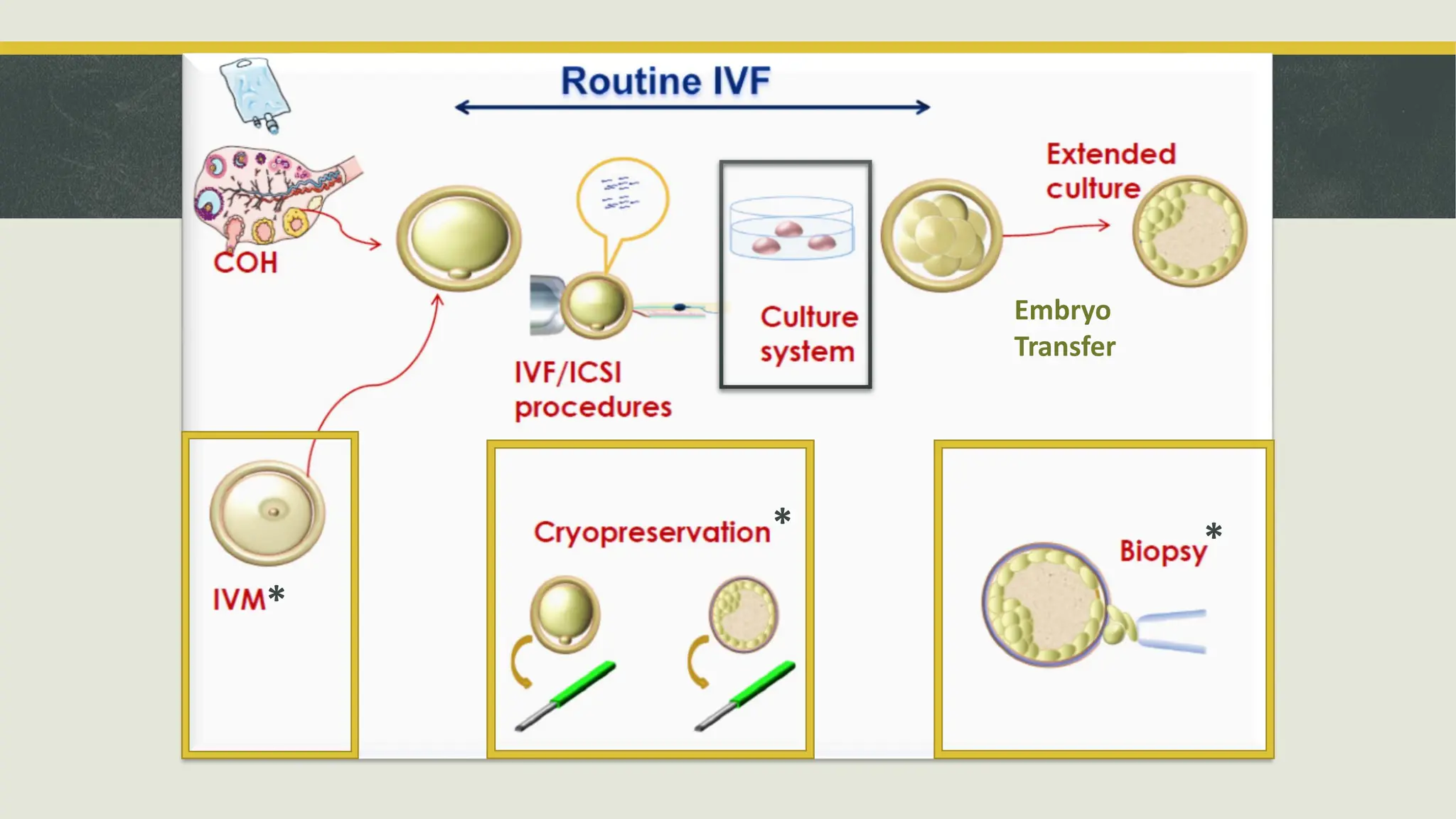
Embryo
Transfer
*
* *
vs.
in vitro is not in vivo
 In vitro environment is a stressful place
 A prerequisite is to reduce in vitro induced stress
factors
 many efforts to improve embryo culture systems,
Can in vitro be maintained same as in vivo?
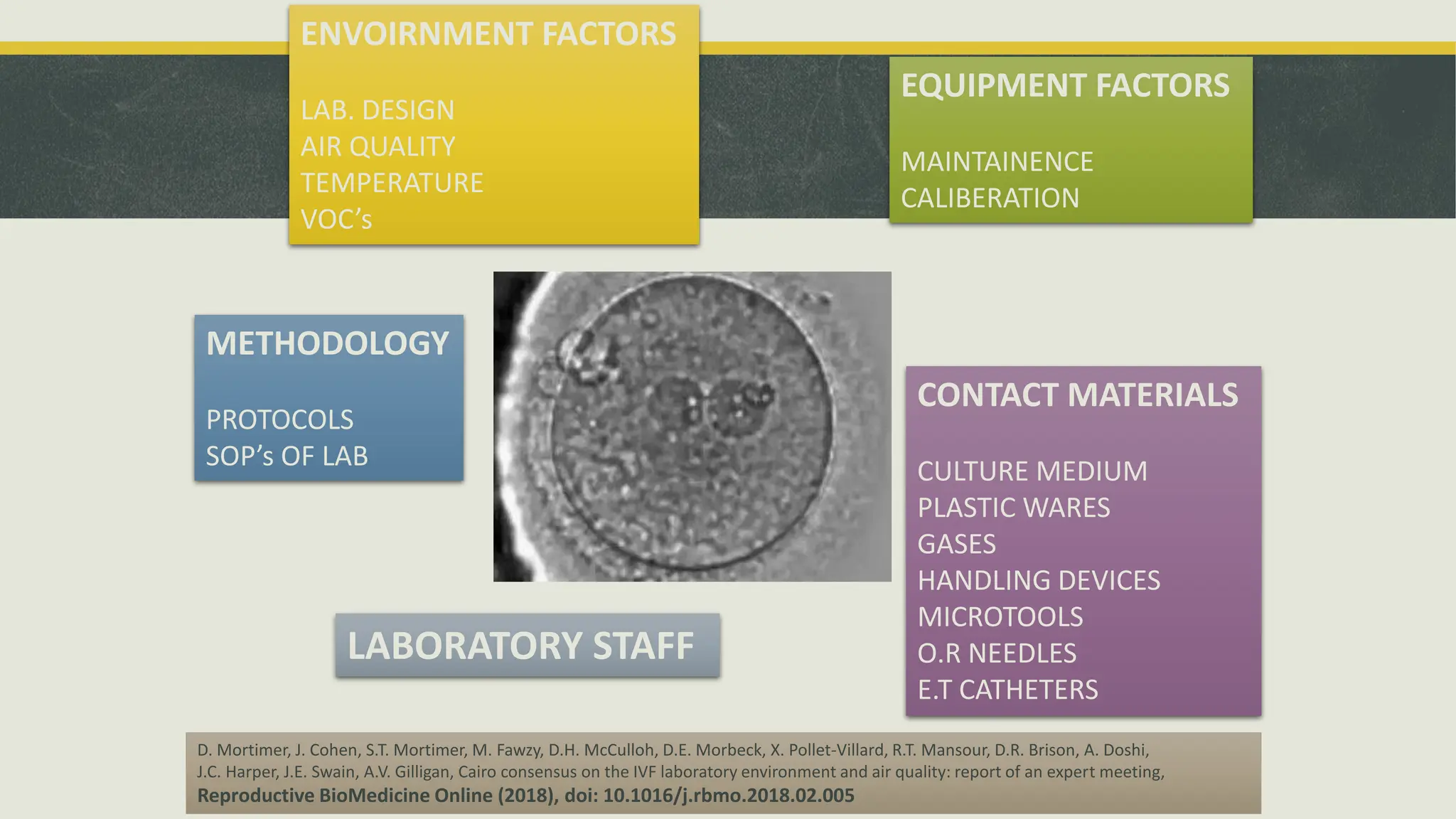
ENVOIRNMENT FACTORS
LAB. DESIGN
AIR QUALITY
TEMPERATURE
VOC’s
EQUIPMENT FACTORS
MAINTAINENCE
CALIBERATION
CONTACT MATERIALS
CULTURE MEDIUM
PLASTIC WARES
GASES
HANDLING DEVICES
MICROTOOLS
O.R NEEDLES
E.T CATHETERS
D. Mortimer, J. Cohen, S.T. Mortimer, M. Fawzy, D.H. McCulloh, D.E. Morbeck, X. Pollet-Villard, R.T. Mansour, D.R. Brison, A. Doshi,
J.C. Harper, J.E. Swain, A.V. Gilligan, Cairo consensus on the IVF laboratory environment and air quality: report of an expert meeting,
Reproductive BioMedicine Online (2018), doi: 10.1016/j.rbmo.2018.02.005
METHODOLOGY
PROTOCOLS
SOP’s OF LAB
LABORATORY STAFF
TRUE THAT…
Your IVF Program is
only as good as the LAB
which supports it
LIST OF EQUIPMENTS
PRIMARY EQUIPMENTS
• INCUBATOR
• CENTRIFUGE
• WORKSTATION
• STAGE WARMERS
• MICROSCOPES
• MICROMANIPULATOR
• MICROPIPETTES
• AIR HANDLING UNIT
SECONDARY EQUIPMENTS
• THERMO-COUPLERS
• GAS ANALYZERS
• ALARM SYSTEMS
• CYRO-CONTAINERS
• MICROMANIPULATOR ADD-ONS
• REFRIGERATOR
• WATER PURIFICATION SYSTEM
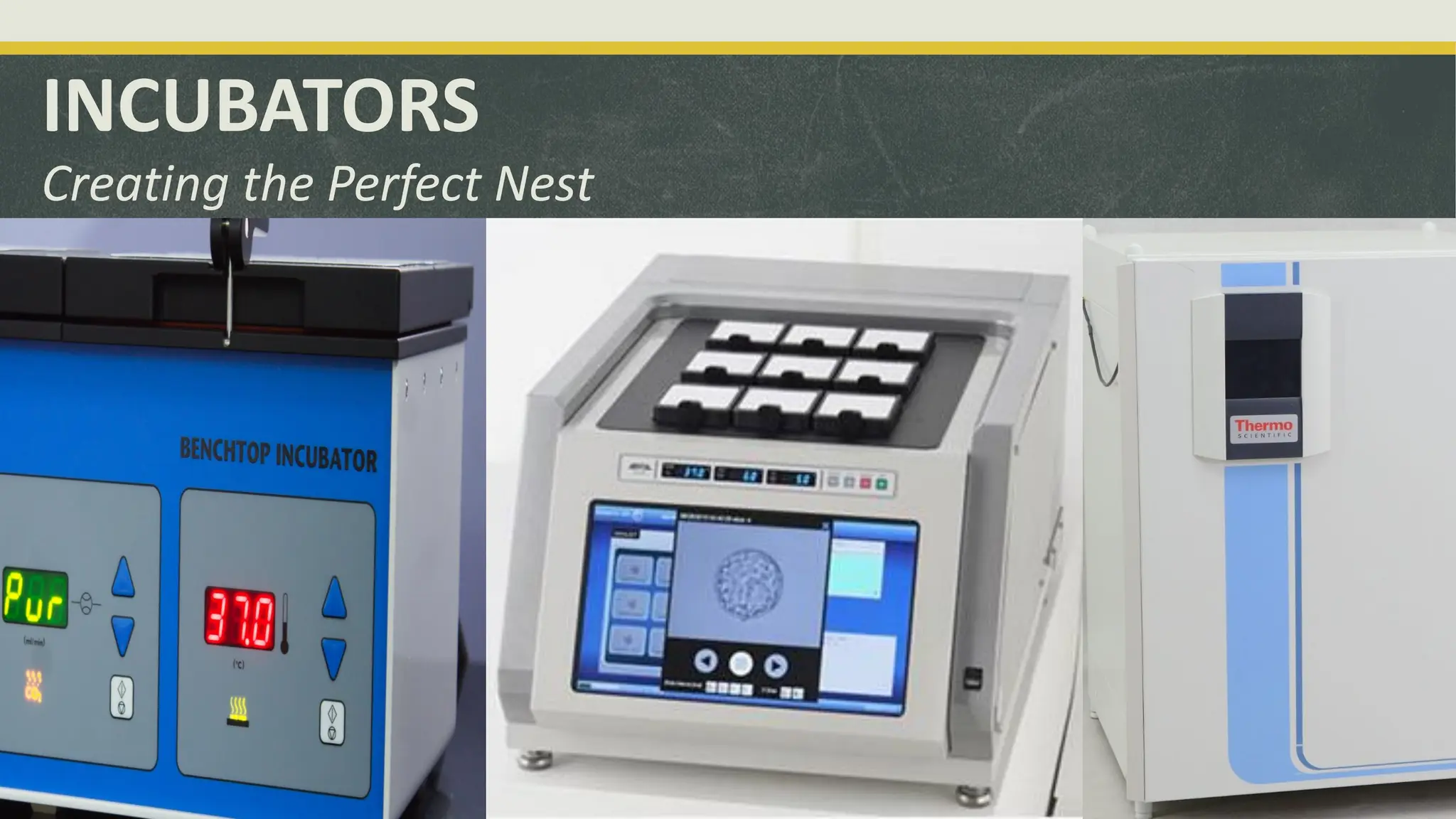
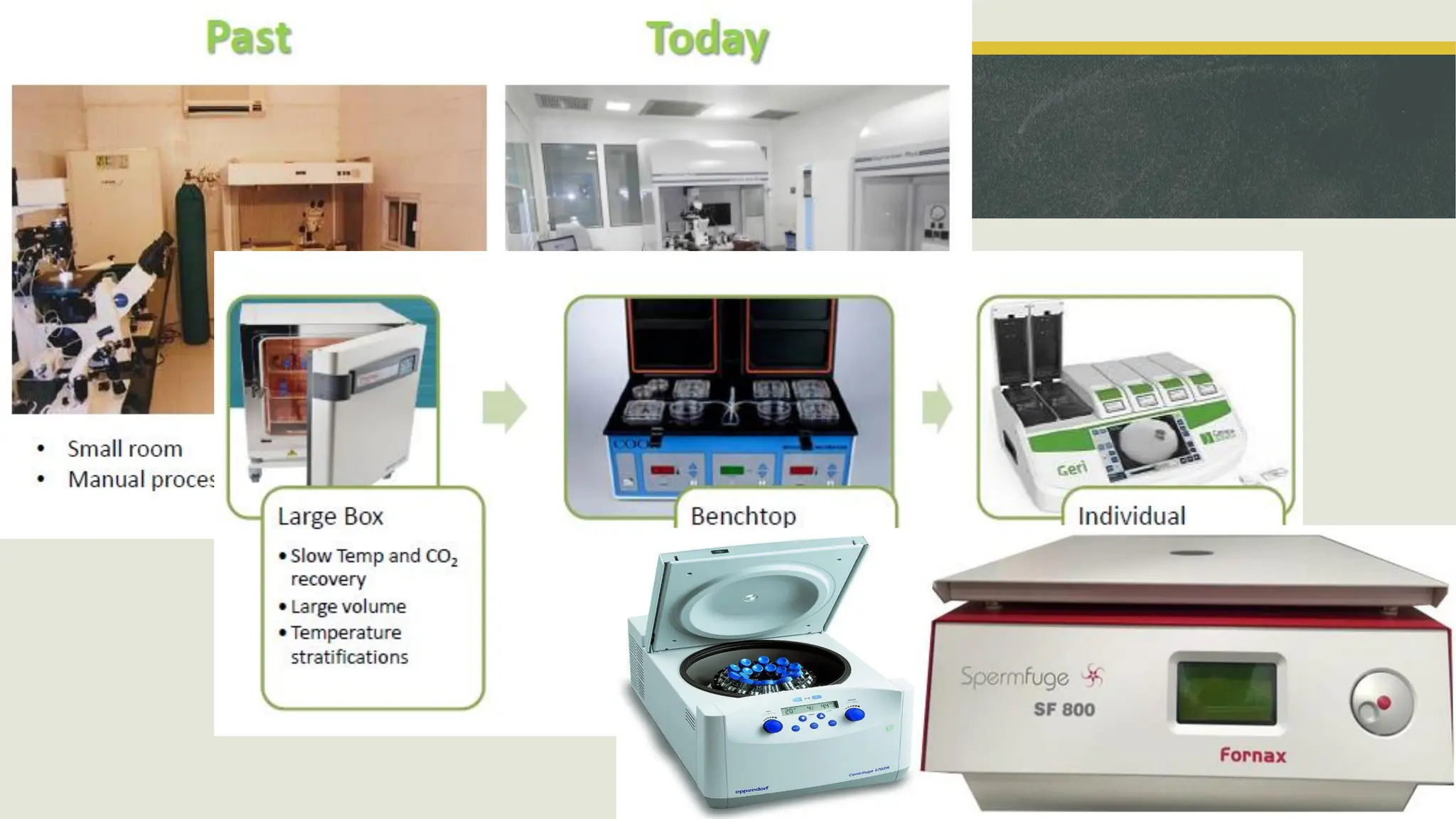
INCUBATORS
Creating the Perfect Nest
A CO2 incubator is a specialized device used in laboratories to
provide a controlled environment for cell culture by maintaining
specific temperature, humidity, and CO2 levels.
Features:
 Temperature Control: Maintains a constant temperature
 CO2 Regulation: CO2 Sensor and Controller: Monitors and regulates
CO2 concentration to create a physiological environment
 Sterile Environment: Air Filtration: HEPA filters ensure clean air
circulation
 Anti-Contamination Measures: Designed to prevent cross-
contamination
 Humidity Regulation: Water Pan or Reservoir: Provides
humidification to prevent evaporation and maintain moisture levels
within the chamber.
Essential Functions:
• Optimal Conditions during embryo culture:
• Extended Viability:
• Gamete Handling:
Sperm and Oocyte Storage:
Fertilization Support:
• Internal & External Quality Control:
• Consistent Environment: Sterility:
Advanced Features:
• Monitoring Systems: Includes CO2 sensors and alarms for real-time
monitoring and adjustments.
• Data Logging: Records environmental parameters for quality assurance
and regulatory compliance.
INCUBATORS
Creating the Perfect Nest
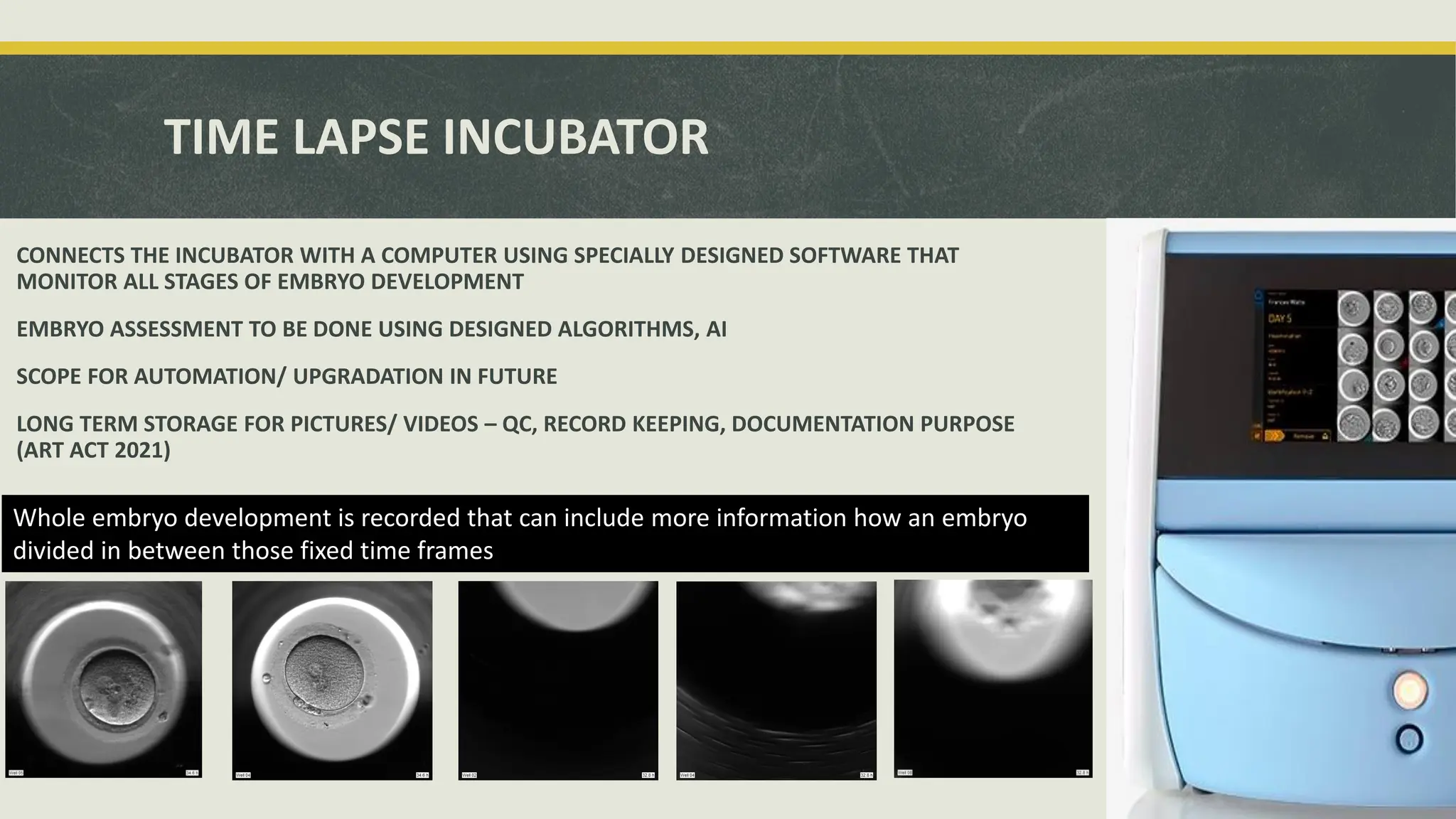
TIME LAPSE INCUBATOR
CONNECTS THE INCUBATOR WITH A COMPUTER USING SPECIALLY DESIGNED SOFTWARE THAT
MONITOR ALL STAGES OF EMBRYO DEVELOPMENT
EMBRYO ASSESSMENT TO BE DONE USING DESIGNED ALGORITHMS, AI
SCOPE FOR AUTOMATION/ UPGRADATION IN FUTURE
LONG TERM STORAGE FOR PICTURES/ VIDEOS – QC, RECORD KEEPING, DOCUMENTATION PURPOSE
(ART ACT 2021)
Whole embryo development is recorded that can include more information how an embryo
divided in between those fixed time frames
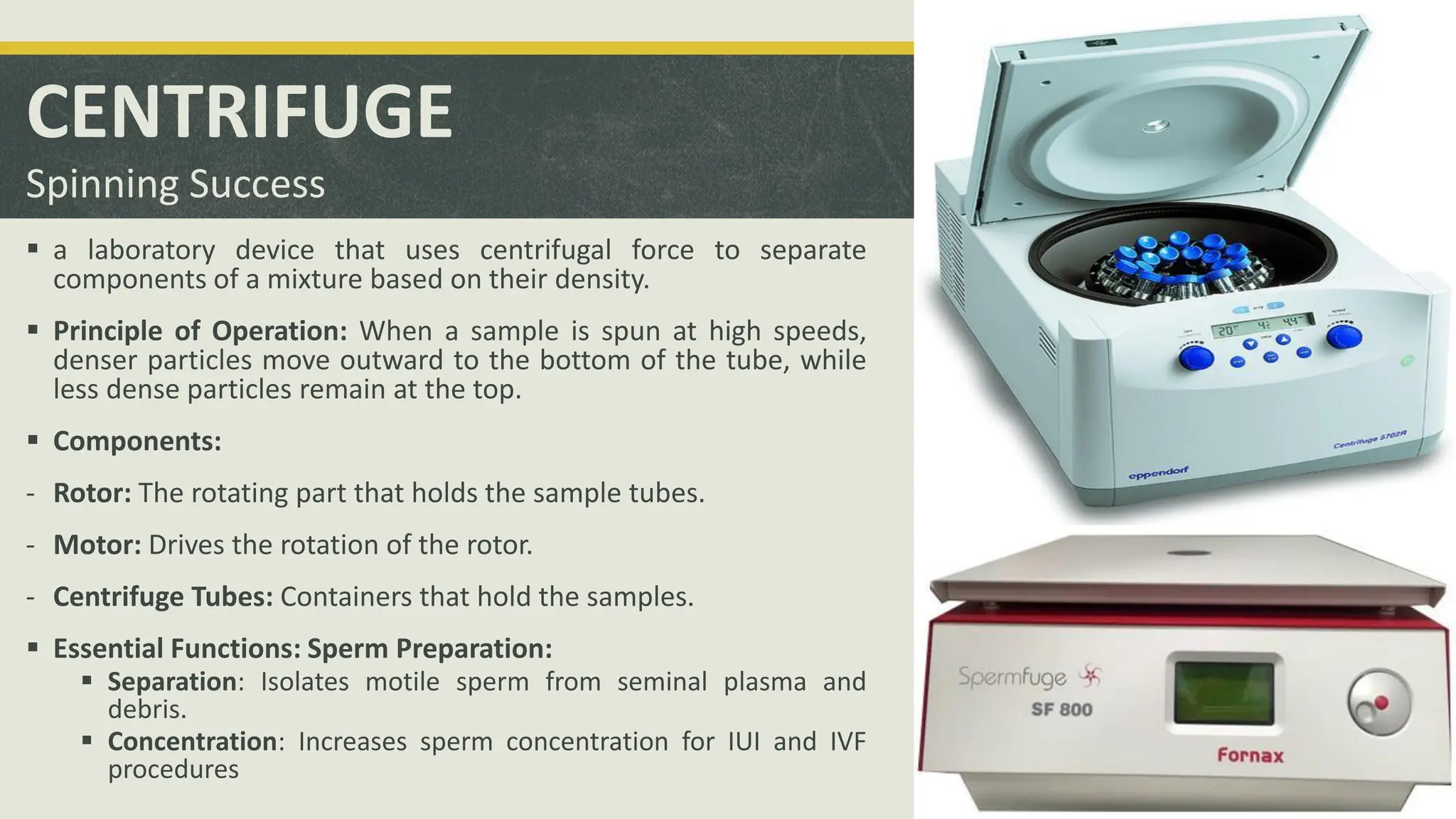
CENTRIFUGE
Spinning Success
 a laboratory device that uses centrifugal force to separate
components of a mixture based on their density.
 Principle of Operation: When a sample is spun at high speeds,
denser particles move outward to the bottom of the tube, while
less dense particles remain at the top.
 Components:
- Rotor: The rotating part that holds the sample tubes.
- Motor: Drives the rotation of the rotor.
- Centrifuge Tubes: Containers that hold the samples.
 Essential Functions: Sperm Preparation:
 Separation: Isolates motile sperm from seminal plasma and
debris.
 Concentration: Increases sperm concentration for IUI and IVF
procedures
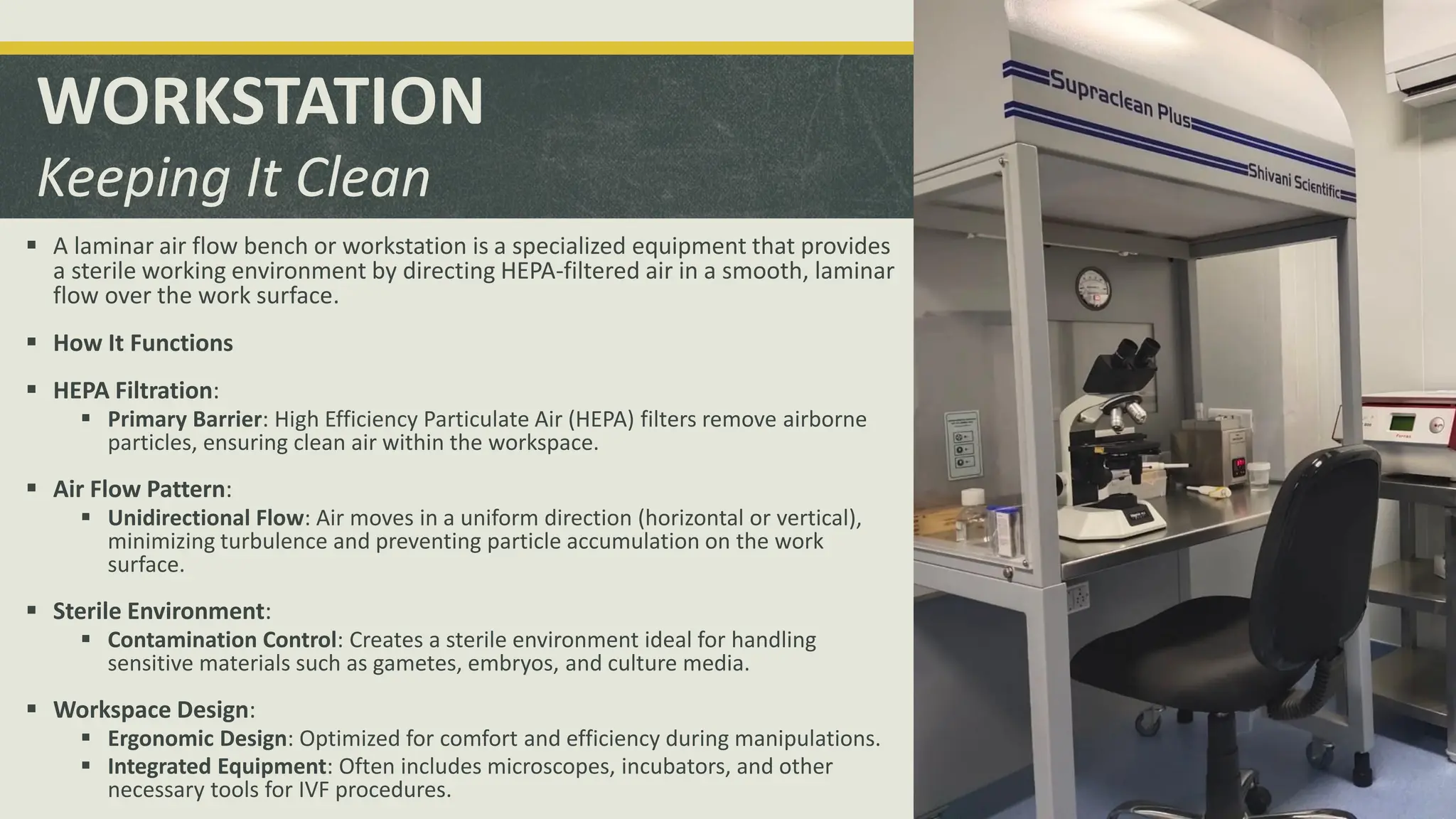
WORKSTATION
Keeping It Clean
 A laminar air flow bench or workstation is a specialized equipment that provides
a sterile working environment by directing HEPA-filtered air in a smooth, laminar
flow over the work surface.
 How It Functions
 HEPA Filtration:
 Primary Barrier: High Efficiency Particulate Air (HEPA) filters remove airborne
particles, ensuring clean air within the workspace.
 Air Flow Pattern:
 Unidirectional Flow: Air moves in a uniform direction (horizontal or vertical),
minimizing turbulence and preventing particle accumulation on the work
surface.
 Sterile Environment:
 Contamination Control: Creates a sterile environment ideal for handling
sensitive materials such as gametes, embryos, and culture media.
 Workspace Design:
 Ergonomic Design: Optimized for comfort and efficiency during manipulations.
 Integrated Equipment: Often includes microscopes, incubators, and other
necessary tools for IVF procedures.
MICROSCOPES
Seeing is Believing
 A microscope is a scientific instrument used to
magnify and visualize objects that are too small to
be seen with the naked eye.
 LIGHT, INVERTED & POLARIZED
 How It Functions
-Magnification:
-Illumination:
-Sample Preparation:
-Observation and Analysis:
 Essential Functions:
-Oocyte Assessment:
-Sperm Analysis:
-Embryo Evaluation:
-ICSI (Intra-cytoplasmic Sperm Injection):
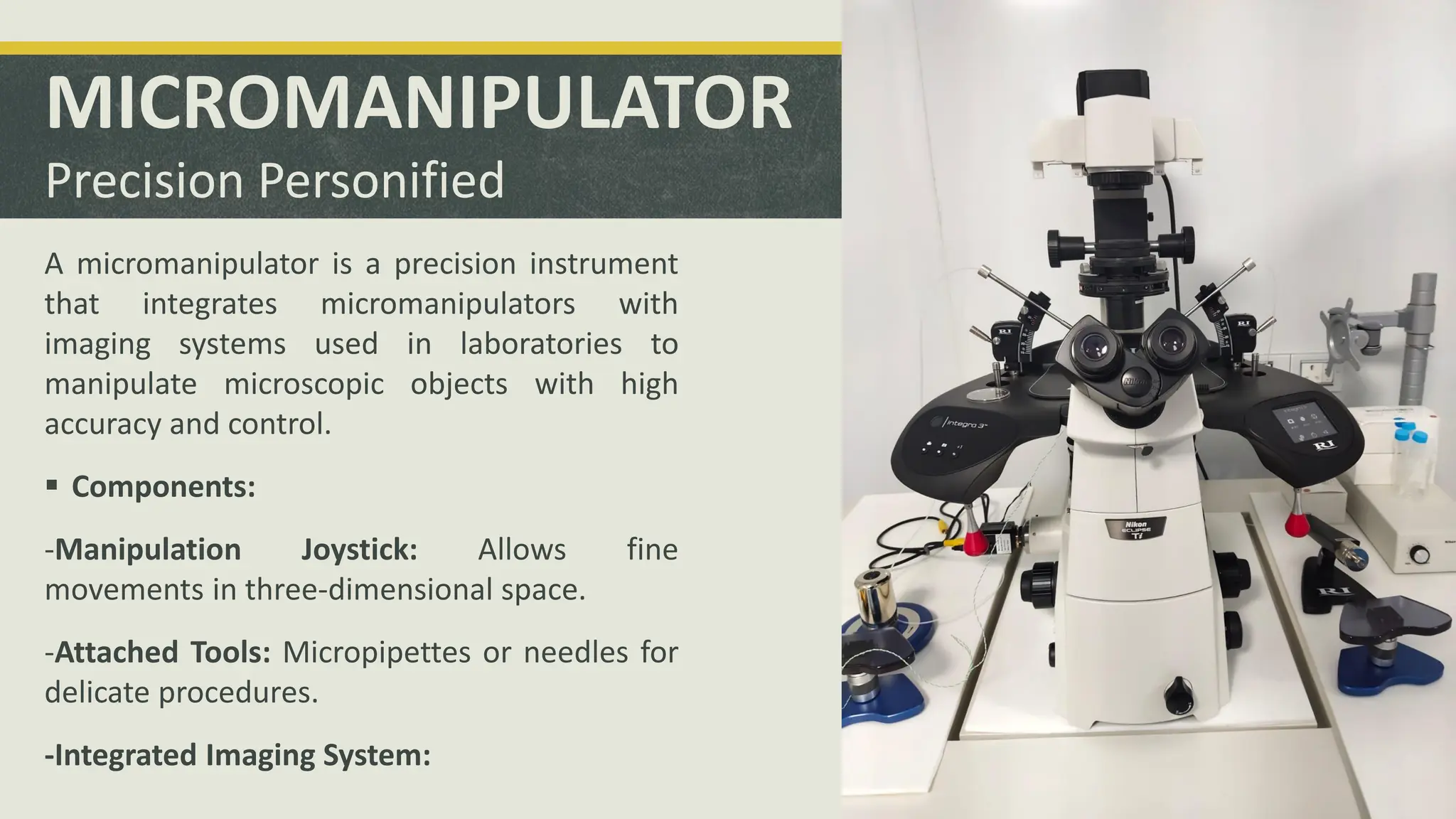
MICROMANIPULATOR
Precision Personified
A micromanipulator is a precision instrument
that integrates micromanipulators with
imaging systems used in laboratories to
manipulate microscopic objects with high
accuracy and control.
 Components:
-Manipulation Joystick: Allows fine
movements in three-dimensional space.
-Attached Tools: Micropipettes or needles for
delicate procedures.
-Integrated Imaging System:
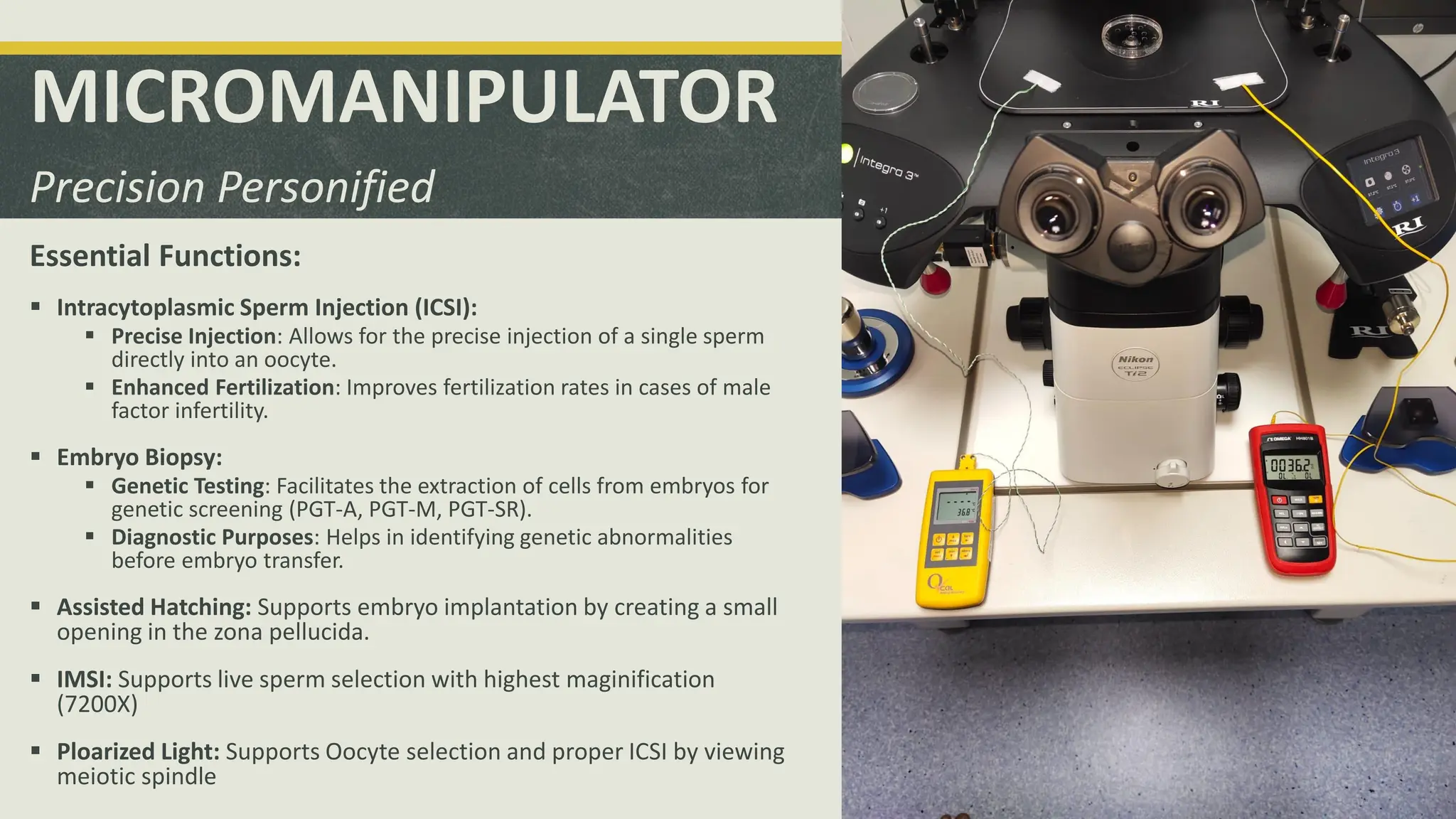
MICROMANIPULATOR
Precision Personified
Essential Functions:
 Intracytoplasmic Sperm Injection (ICSI):
 Precise Injection: Allows for the precise injection of a single sperm
directly into an oocyte.
 Enhanced Fertilization: Improves fertilization rates in cases of male
factor infertility.
 Embryo Biopsy:
 Genetic Testing: Facilitates the extraction of cells from embryos for
genetic screening (PGT-A, PGT-M, PGT-SR).
 Diagnostic Purposes: Helps in identifying genetic abnormalities
before embryo transfer.
 Assisted Hatching: Supports embryo implantation by creating a small
opening in the zona pellucida.
 IMSI: Supports live sperm selection with highest maginification
(7200X)
 Ploarized Light: Supports Oocyte selection and proper ICSI by viewing
meiotic spindle
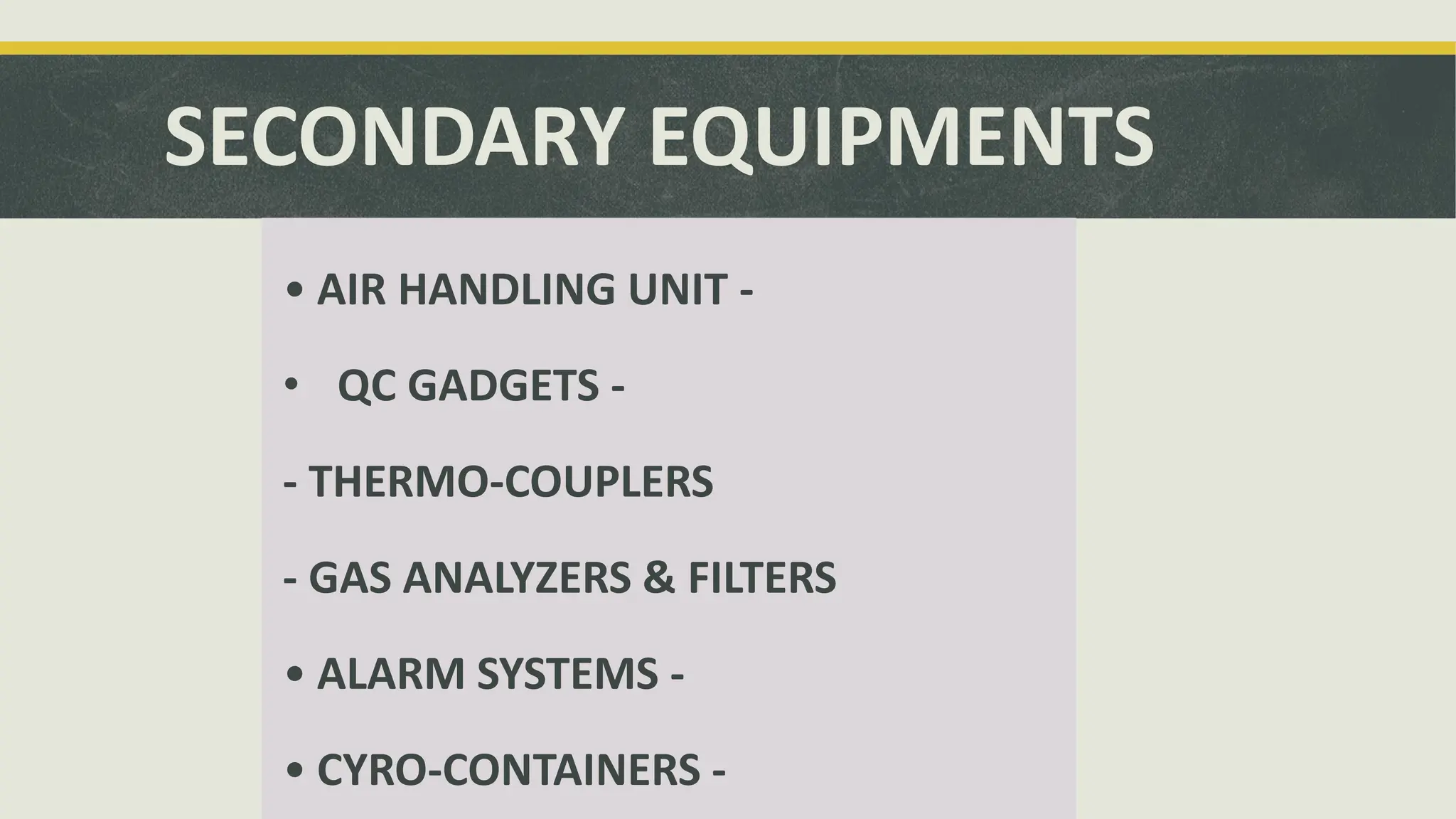
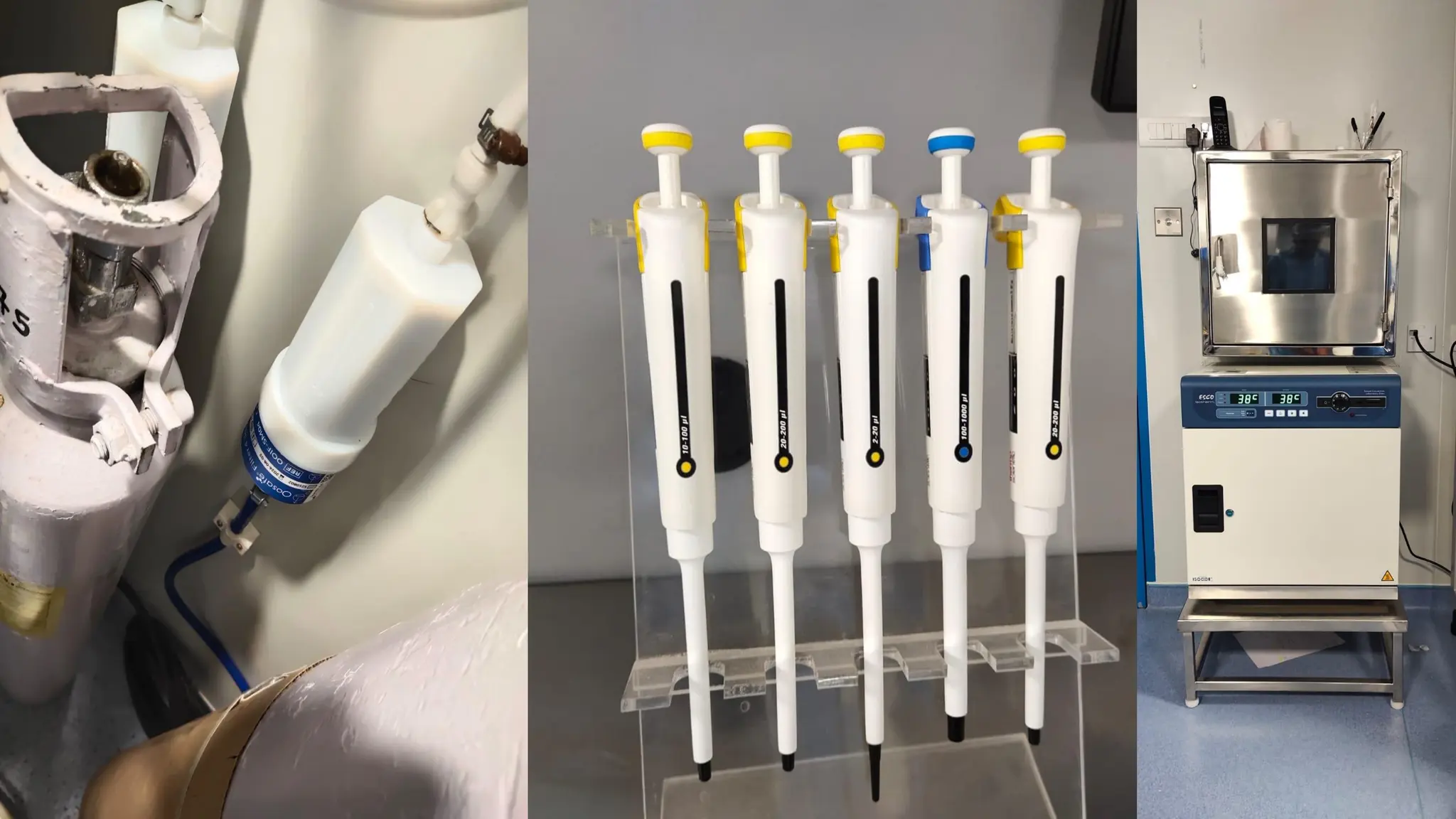
SECONDARY EQUIPMENTS
• AIR HANDLING UNIT -
• QC GADGETS -
- THERMO-COUPLERS
- GAS ANALYZERS & FILTERS
• ALARM SYSTEMS -
• CYRO-CONTAINERS -
AIR HANDLING UNITS
Clearing the air with mechanical flair
 An Air Handling Unit (AHU) is a device used to condition and circulate air as part of an HVAC system.
How It Functions
 Air Circulation:
 Intake: Draws in air from the outside environment or from within the building.
 Distribution: Circulates conditioned air through ducts to different zones or rooms.
 Temperature Control:
 Heating and Cooling: Utilizes coils to heat or cool the air to maintain desired temperature settings.
 Thermostat Control: Monitors and adjusts temperature levels based on set parameters.
 Humidity Regulation:
 Humidification and Dehumidification: Adds or removes moisture from the air to maintain optimal
humidity levels.
 Condensate Management: Manages condensation generated during the cooling process.
 Air Filtration:
 Filters: Removes dust, allergens, and contaminants from the air using filters (e.g., HEPA filters) to
improve indoor air quality.
 Ventilation:
 Fresh Air Intake: Supplies fresh outdoor air to dilute indoor pollutants and improve air exchange
rates.
 Exhaust: Removes stale air and contaminants from the building.
 In IVF laboratories it is well documented that
ambient air carries harmful VOC as well as
microbes
 Perfumes, deo’s, any odour from the outside
enviornment are potential molecules that deter
the development of embryos
 Many studies have shown improvement in Embryo
Quality and Reduction of Less miscarriage rates
when air quality was improved (Boone WR,
Johnson JE, Locke AJ. Control of air qulaity in
an ART laboratory. Fert Steril 1999;71:150-4)
 Air can be purified by activated carbon, potassium
permagnet with UV, HEPA filteration.
IMPORTANCE OF AIR QUALITY
QC GADETS –
HOW MUCH IS TOO MUCH ???
 Measure Heated surface Temperature,
Gases, Lab. Humidity, VOC, Air quality,
Ambient Temperature
 Available in different Varieties
 Purpose to assure proper Functioning
 Validate with system before purchasing
 If possible must be attached with an alarm
system
 NEVER EVER RELY ON DISPLAY
 AUDIT “THE AUDITOR”
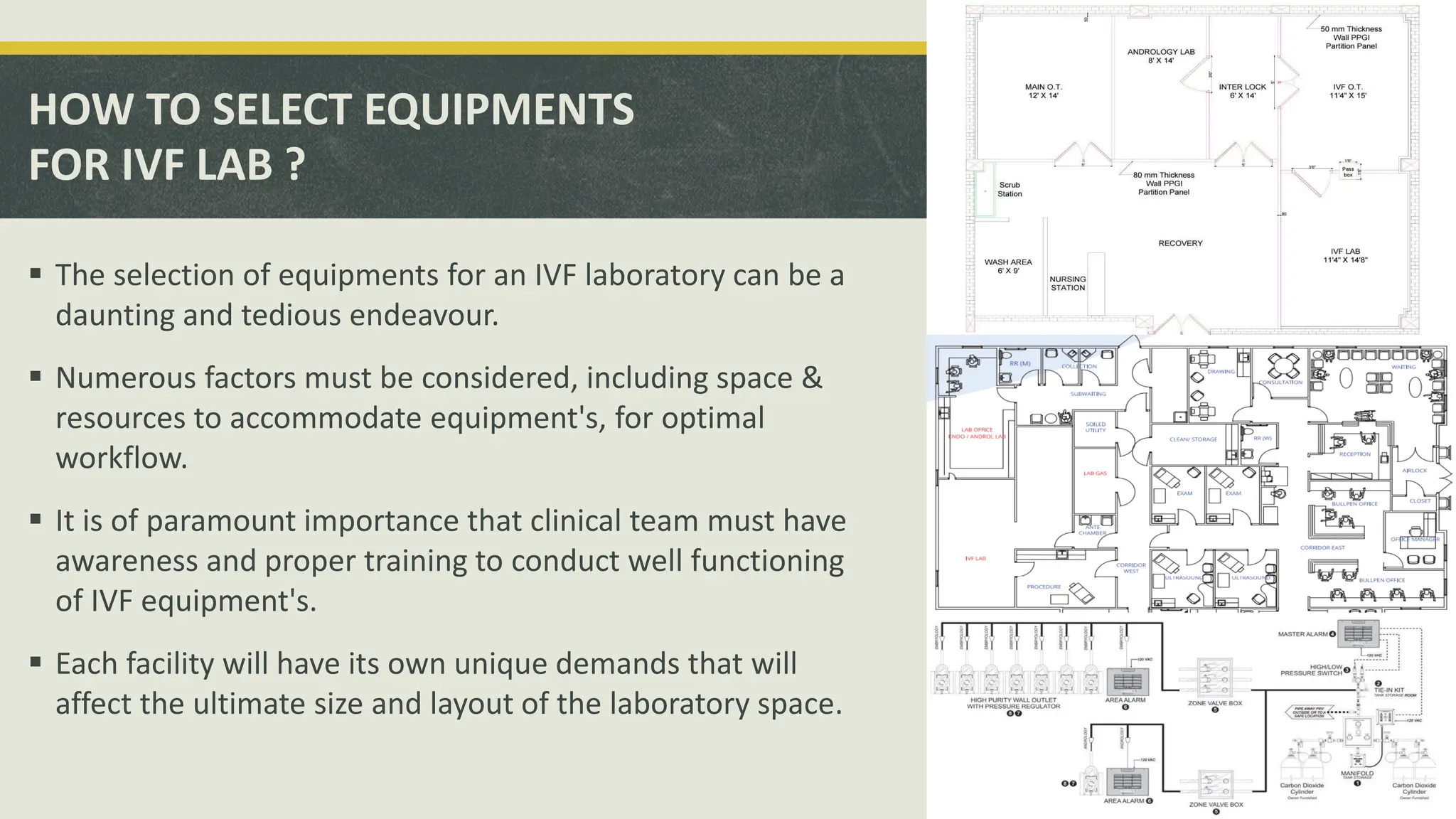
HOW TO SELECT EQUIPMENTS
FOR IVF LAB ?
 The selection of equipments for an IVF laboratory can be a
daunting and tedious endeavour.
 Numerous factors must be considered, including space &
resources to accommodate equipment's, for optimal
workflow.
 It is of paramount importance that clinical team must have
awareness and proper training to conduct well functioning
of IVF equipment's.
 Each facility will have its own unique demands that will
affect the ultimate size and layout of the laboratory space.
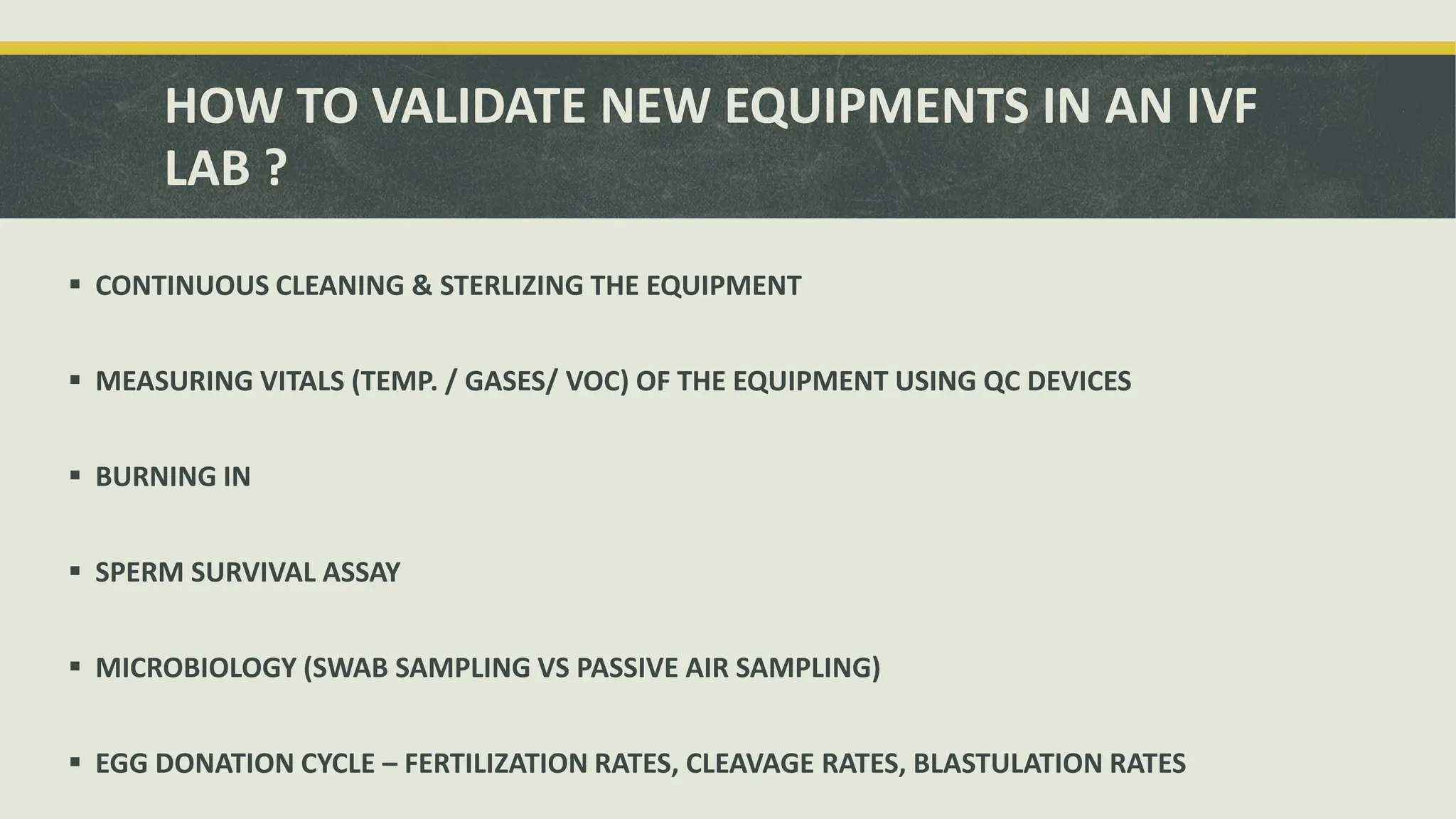
HOW TO VALIDATE NEW EQUIPMENTS IN AN IVF
LAB ?
 CONTINUOUS CLEANING & STERLIZING THE EQUIPMENT
 MEASURING VITALS (TEMP. / GASES/ VOC) OF THE EQUIPMENT USING QC DEVICES
 BURNING IN
 SPERM SURVIVAL ASSAY
 MICROBIOLOGY (SWAB SAMPLING VS PASSIVE AIR SAMPLING)
 EGG DONATION CYCLE – FERTILIZATION RATES, CLEAVAGE RATES, BLASTULATION RATES
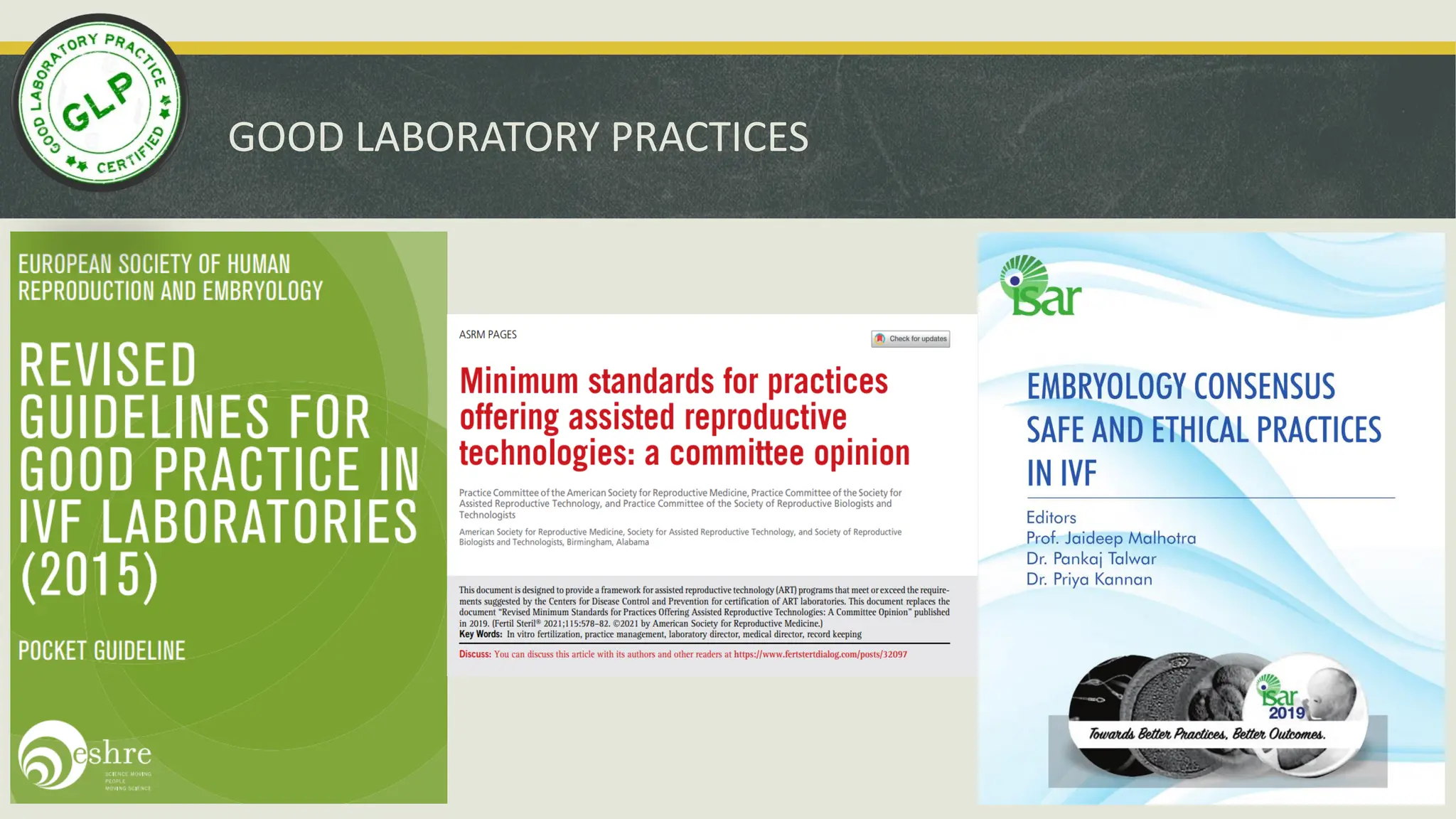
GOOD LABORATORY PRACTICES
The requirements cover the organisation, management, personnel, equipment and materials,
facilities/premises, documentation, records and quality review.
- defining responsibilities and ensuring all personnel are qualified and competent;
- ensuring proper and periodic equipment maintenance, service and calibration;
- verifying conformance to specifications;
- reviewing performance of all equipments to ensure continuous and systematic QMS improvement;
- A documentation system should be in place for dealing with non-compliances, emergencies, errors, adverse
events
- Critical performance levels should be defined
- Participation in Internal Quality Control (IQC) and External Quality Assurance (EQA)
- An audit system, both internal and external, must be in place.
- having validated, written instructions for each process (SOP), including management of adverse events;
GOOD LABORATORY PRACTICES
to follow the rules of the road
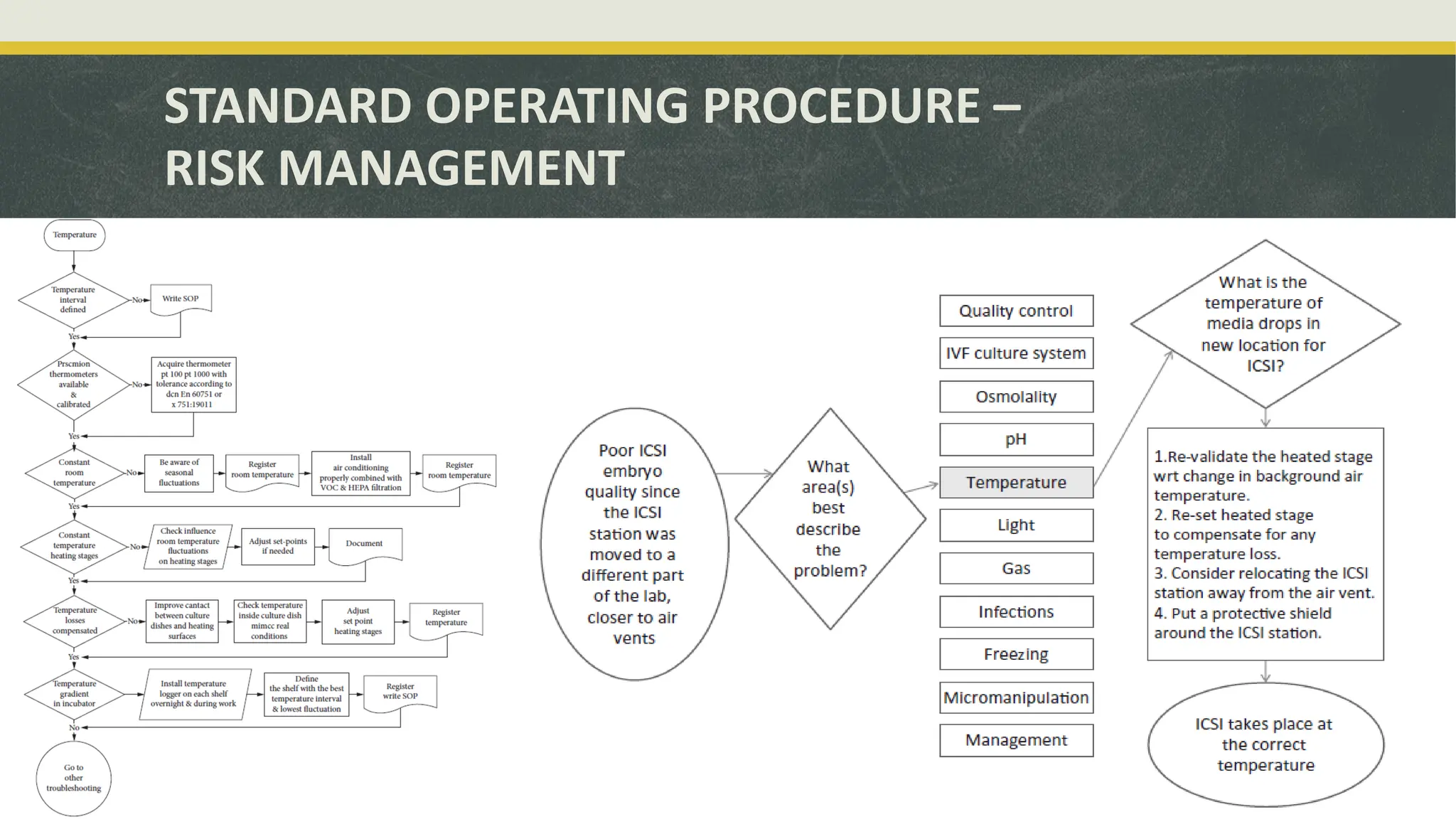
STANDARD OPERATING PROCEDURE –
RISK MANAGEMENT
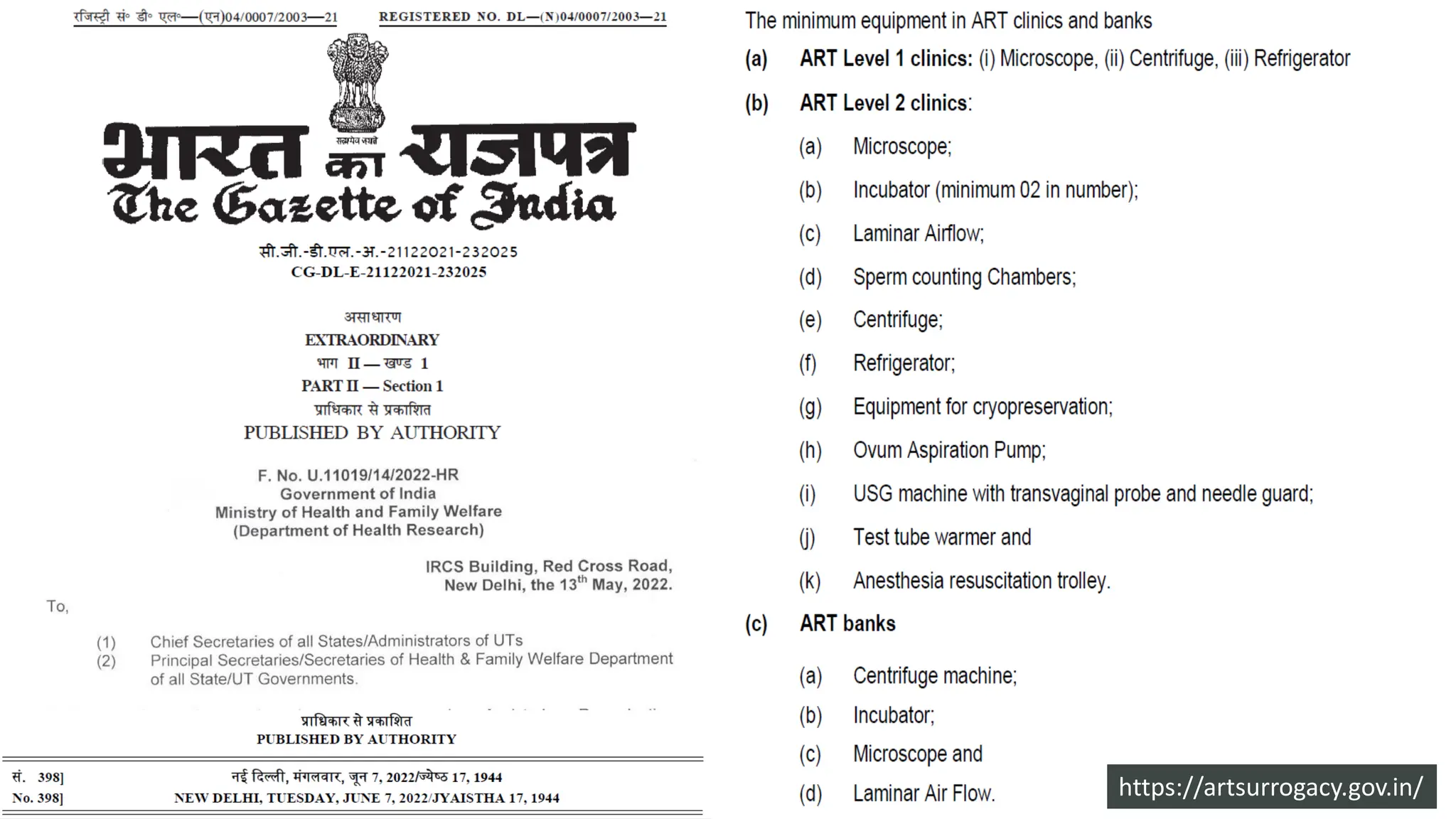
https://artsurrogacy.gov.in/
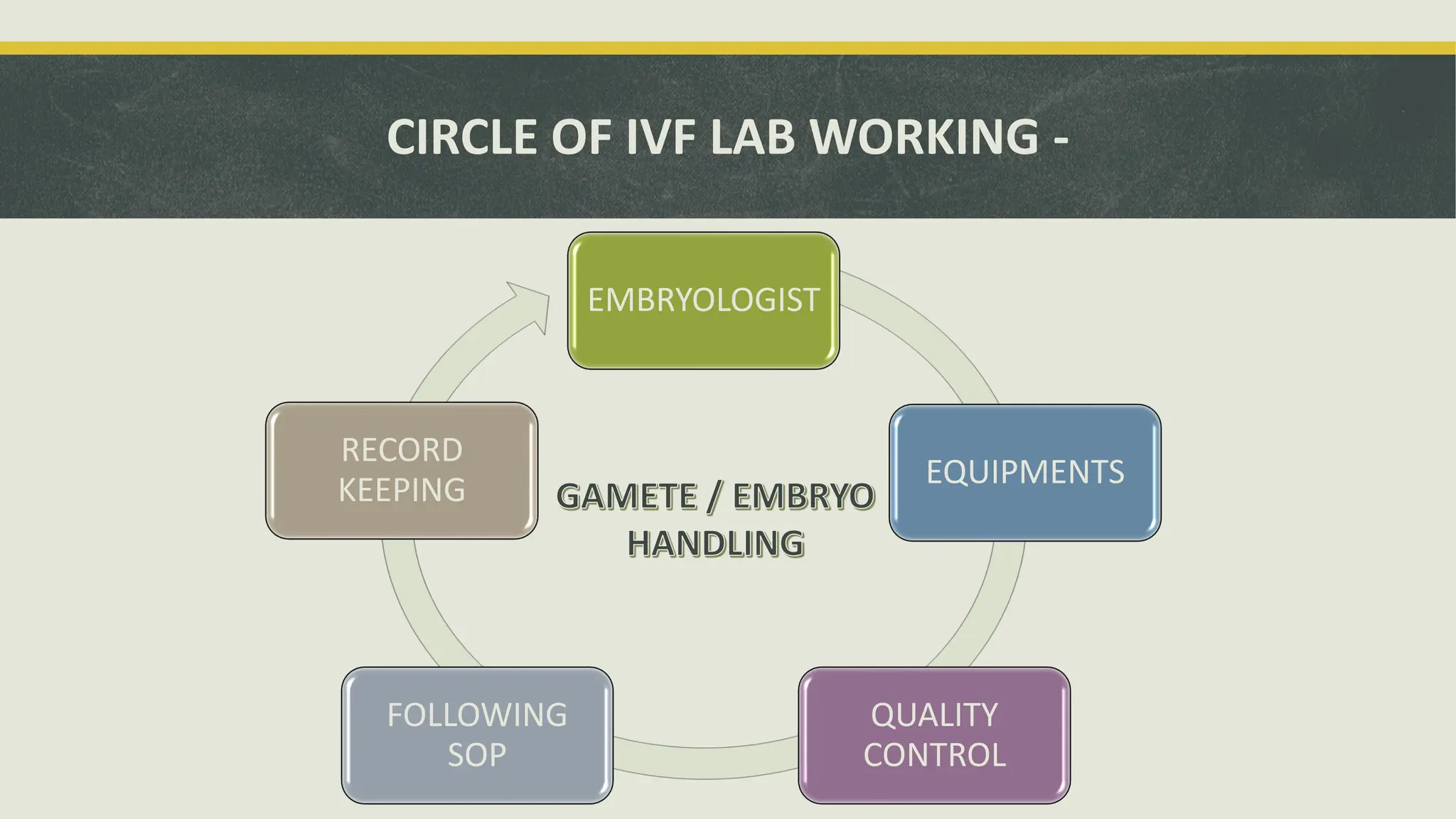
CIRCLE OF IVF LAB WORKING -
EMBRYOLOGIST
EQUIPMENTS
QUALITY
CONTROL
FOLLOWING
SOP
RECORD
KEEPING
What's More Important
 To work properly in lab
 To run a lab correctly
The most important is TO LET THE LAB FUNCTION APPROPRIATELY WHILE
FOLLOWING THE SOP
THANK YOU

EQUIPMENTS & INSTRUMENTS IN IVF LAB .pdf

  • 1.
    EQUIPMENTS & INSTRUMENTS IN ANIVF LAB Dr. Rahul Sen (PhD. MSc.) Consultant Embryologist, NEELKANTH IVF
  • 3.
    KEY OBJECTIVES  INTRODUCTION EQUIPMENTS OF IVF LABORATORY  HOW TO SELECT THE LABORATORY EQUIPMENTS  HOW TO VALIDATE THE LABORATORY EQUIPMENTS  GOOD LABORATORY PRACTICES WITH RESPECT TO EQUIPMENTS  INDIAN GUIDELINES – WITH RESPECT TO EQUIPMENTS  CONCLUSION
  • 4.
    INTRODUCTION  It isvery important to built an IVF lab with efficient equipments/ instruments, produces good cleavage and blastulation rates.  Main aim is to achieve good take home baby rates IVF Laboratory is “HEART” of an every ART project Equipment's are the “SOUL” of an IVF Laboratory
  • 5.
  • 6.
    vs. in vitro isnot in vivo  In vitro environment is a stressful place  A prerequisite is to reduce in vitro induced stress factors  many efforts to improve embryo culture systems, Can in vitro be maintained same as in vivo?
  • 7.
    ENVOIRNMENT FACTORS LAB. DESIGN AIRQUALITY TEMPERATURE VOC’s EQUIPMENT FACTORS MAINTAINENCE CALIBERATION CONTACT MATERIALS CULTURE MEDIUM PLASTIC WARES GASES HANDLING DEVICES MICROTOOLS O.R NEEDLES E.T CATHETERS D. Mortimer, J. Cohen, S.T. Mortimer, M. Fawzy, D.H. McCulloh, D.E. Morbeck, X. Pollet-Villard, R.T. Mansour, D.R. Brison, A. Doshi, J.C. Harper, J.E. Swain, A.V. Gilligan, Cairo consensus on the IVF laboratory environment and air quality: report of an expert meeting, Reproductive BioMedicine Online (2018), doi: 10.1016/j.rbmo.2018.02.005 METHODOLOGY PROTOCOLS SOP’s OF LAB LABORATORY STAFF
  • 8.
    TRUE THAT… Your IVFProgram is only as good as the LAB which supports it
  • 9.
    LIST OF EQUIPMENTS PRIMARYEQUIPMENTS • INCUBATOR • CENTRIFUGE • WORKSTATION • STAGE WARMERS • MICROSCOPES • MICROMANIPULATOR • MICROPIPETTES • AIR HANDLING UNIT SECONDARY EQUIPMENTS • THERMO-COUPLERS • GAS ANALYZERS • ALARM SYSTEMS • CYRO-CONTAINERS • MICROMANIPULATOR ADD-ONS • REFRIGERATOR • WATER PURIFICATION SYSTEM
  • 10.
    INCUBATORS Creating the PerfectNest A CO2 incubator is a specialized device used in laboratories to provide a controlled environment for cell culture by maintaining specific temperature, humidity, and CO2 levels. Features:  Temperature Control: Maintains a constant temperature  CO2 Regulation: CO2 Sensor and Controller: Monitors and regulates CO2 concentration to create a physiological environment  Sterile Environment: Air Filtration: HEPA filters ensure clean air circulation  Anti-Contamination Measures: Designed to prevent cross- contamination  Humidity Regulation: Water Pan or Reservoir: Provides humidification to prevent evaporation and maintain moisture levels within the chamber. Essential Functions: • Optimal Conditions during embryo culture: • Extended Viability: • Gamete Handling: Sperm and Oocyte Storage: Fertilization Support: • Internal & External Quality Control: • Consistent Environment: Sterility: Advanced Features: • Monitoring Systems: Includes CO2 sensors and alarms for real-time monitoring and adjustments. • Data Logging: Records environmental parameters for quality assurance and regulatory compliance.
  • 11.
  • 12.
    TIME LAPSE INCUBATOR CONNECTSTHE INCUBATOR WITH A COMPUTER USING SPECIALLY DESIGNED SOFTWARE THAT MONITOR ALL STAGES OF EMBRYO DEVELOPMENT EMBRYO ASSESSMENT TO BE DONE USING DESIGNED ALGORITHMS, AI SCOPE FOR AUTOMATION/ UPGRADATION IN FUTURE LONG TERM STORAGE FOR PICTURES/ VIDEOS – QC, RECORD KEEPING, DOCUMENTATION PURPOSE (ART ACT 2021) Whole embryo development is recorded that can include more information how an embryo divided in between those fixed time frames
  • 14.
    CENTRIFUGE Spinning Success  alaboratory device that uses centrifugal force to separate components of a mixture based on their density.  Principle of Operation: When a sample is spun at high speeds, denser particles move outward to the bottom of the tube, while less dense particles remain at the top.  Components: - Rotor: The rotating part that holds the sample tubes. - Motor: Drives the rotation of the rotor. - Centrifuge Tubes: Containers that hold the samples.  Essential Functions: Sperm Preparation:  Separation: Isolates motile sperm from seminal plasma and debris.  Concentration: Increases sperm concentration for IUI and IVF procedures
  • 15.
    WORKSTATION Keeping It Clean A laminar air flow bench or workstation is a specialized equipment that provides a sterile working environment by directing HEPA-filtered air in a smooth, laminar flow over the work surface.  How It Functions  HEPA Filtration:  Primary Barrier: High Efficiency Particulate Air (HEPA) filters remove airborne particles, ensuring clean air within the workspace.  Air Flow Pattern:  Unidirectional Flow: Air moves in a uniform direction (horizontal or vertical), minimizing turbulence and preventing particle accumulation on the work surface.  Sterile Environment:  Contamination Control: Creates a sterile environment ideal for handling sensitive materials such as gametes, embryos, and culture media.  Workspace Design:  Ergonomic Design: Optimized for comfort and efficiency during manipulations.  Integrated Equipment: Often includes microscopes, incubators, and other necessary tools for IVF procedures.
  • 16.
    MICROSCOPES Seeing is Believing A microscope is a scientific instrument used to magnify and visualize objects that are too small to be seen with the naked eye.  LIGHT, INVERTED & POLARIZED  How It Functions -Magnification: -Illumination: -Sample Preparation: -Observation and Analysis:  Essential Functions: -Oocyte Assessment: -Sperm Analysis: -Embryo Evaluation: -ICSI (Intra-cytoplasmic Sperm Injection):
  • 17.
    MICROMANIPULATOR Precision Personified A micromanipulatoris a precision instrument that integrates micromanipulators with imaging systems used in laboratories to manipulate microscopic objects with high accuracy and control.  Components: -Manipulation Joystick: Allows fine movements in three-dimensional space. -Attached Tools: Micropipettes or needles for delicate procedures. -Integrated Imaging System:
  • 18.
    MICROMANIPULATOR Precision Personified Essential Functions: Intracytoplasmic Sperm Injection (ICSI):  Precise Injection: Allows for the precise injection of a single sperm directly into an oocyte.  Enhanced Fertilization: Improves fertilization rates in cases of male factor infertility.  Embryo Biopsy:  Genetic Testing: Facilitates the extraction of cells from embryos for genetic screening (PGT-A, PGT-M, PGT-SR).  Diagnostic Purposes: Helps in identifying genetic abnormalities before embryo transfer.  Assisted Hatching: Supports embryo implantation by creating a small opening in the zona pellucida.  IMSI: Supports live sperm selection with highest maginification (7200X)  Ploarized Light: Supports Oocyte selection and proper ICSI by viewing meiotic spindle
  • 19.
    SECONDARY EQUIPMENTS • AIRHANDLING UNIT - • QC GADGETS - - THERMO-COUPLERS - GAS ANALYZERS & FILTERS • ALARM SYSTEMS - • CYRO-CONTAINERS -
  • 20.
    AIR HANDLING UNITS Clearingthe air with mechanical flair  An Air Handling Unit (AHU) is a device used to condition and circulate air as part of an HVAC system. How It Functions  Air Circulation:  Intake: Draws in air from the outside environment or from within the building.  Distribution: Circulates conditioned air through ducts to different zones or rooms.  Temperature Control:  Heating and Cooling: Utilizes coils to heat or cool the air to maintain desired temperature settings.  Thermostat Control: Monitors and adjusts temperature levels based on set parameters.  Humidity Regulation:  Humidification and Dehumidification: Adds or removes moisture from the air to maintain optimal humidity levels.  Condensate Management: Manages condensation generated during the cooling process.  Air Filtration:  Filters: Removes dust, allergens, and contaminants from the air using filters (e.g., HEPA filters) to improve indoor air quality.  Ventilation:  Fresh Air Intake: Supplies fresh outdoor air to dilute indoor pollutants and improve air exchange rates.  Exhaust: Removes stale air and contaminants from the building.
  • 21.
     In IVFlaboratories it is well documented that ambient air carries harmful VOC as well as microbes  Perfumes, deo’s, any odour from the outside enviornment are potential molecules that deter the development of embryos  Many studies have shown improvement in Embryo Quality and Reduction of Less miscarriage rates when air quality was improved (Boone WR, Johnson JE, Locke AJ. Control of air qulaity in an ART laboratory. Fert Steril 1999;71:150-4)  Air can be purified by activated carbon, potassium permagnet with UV, HEPA filteration. IMPORTANCE OF AIR QUALITY
  • 22.
    QC GADETS – HOWMUCH IS TOO MUCH ???  Measure Heated surface Temperature, Gases, Lab. Humidity, VOC, Air quality, Ambient Temperature  Available in different Varieties  Purpose to assure proper Functioning  Validate with system before purchasing  If possible must be attached with an alarm system  NEVER EVER RELY ON DISPLAY  AUDIT “THE AUDITOR”
  • 25.
    HOW TO SELECTEQUIPMENTS FOR IVF LAB ?  The selection of equipments for an IVF laboratory can be a daunting and tedious endeavour.  Numerous factors must be considered, including space & resources to accommodate equipment's, for optimal workflow.  It is of paramount importance that clinical team must have awareness and proper training to conduct well functioning of IVF equipment's.  Each facility will have its own unique demands that will affect the ultimate size and layout of the laboratory space.
  • 26.
    HOW TO VALIDATENEW EQUIPMENTS IN AN IVF LAB ?  CONTINUOUS CLEANING & STERLIZING THE EQUIPMENT  MEASURING VITALS (TEMP. / GASES/ VOC) OF THE EQUIPMENT USING QC DEVICES  BURNING IN  SPERM SURVIVAL ASSAY  MICROBIOLOGY (SWAB SAMPLING VS PASSIVE AIR SAMPLING)  EGG DONATION CYCLE – FERTILIZATION RATES, CLEAVAGE RATES, BLASTULATION RATES
  • 27.
  • 28.
    The requirements coverthe organisation, management, personnel, equipment and materials, facilities/premises, documentation, records and quality review. - defining responsibilities and ensuring all personnel are qualified and competent; - ensuring proper and periodic equipment maintenance, service and calibration; - verifying conformance to specifications; - reviewing performance of all equipments to ensure continuous and systematic QMS improvement; - A documentation system should be in place for dealing with non-compliances, emergencies, errors, adverse events - Critical performance levels should be defined - Participation in Internal Quality Control (IQC) and External Quality Assurance (EQA) - An audit system, both internal and external, must be in place. - having validated, written instructions for each process (SOP), including management of adverse events; GOOD LABORATORY PRACTICES to follow the rules of the road
  • 29.
    STANDARD OPERATING PROCEDURE– RISK MANAGEMENT
  • 30.
  • 31.
    CIRCLE OF IVFLAB WORKING - EMBRYOLOGIST EQUIPMENTS QUALITY CONTROL FOLLOWING SOP RECORD KEEPING
  • 32.
    What's More Important To work properly in lab  To run a lab correctly The most important is TO LET THE LAB FUNCTION APPROPRIATELY WHILE FOLLOWING THE SOP
  • 33.