Extended Producer Responsibility in E-
Waste Management
Indian Prospective
INTERNATIONAL WORKSHOP ON EXTENDED PRODUCER
RESPONSIBILITY IN INDIA: OPPORTUNITIES, CHALLENGES AND
LESSONS FROM INTERNATIONAL EXPERIENCE
May 12-13, 2016
Dr Shruti Rai Bhardwaj
Ministry of Environment, Forest and Climate Change
Govt. of India
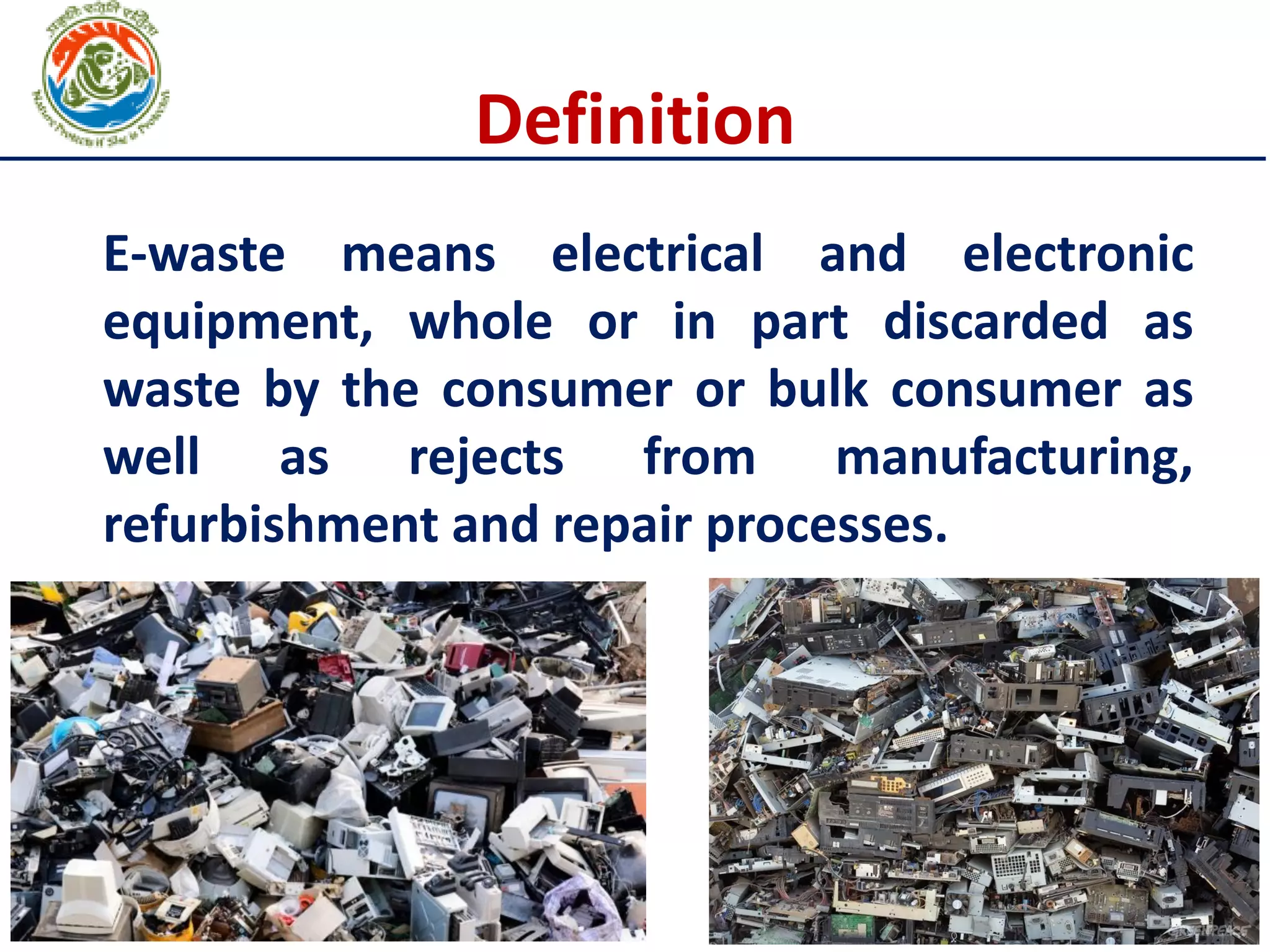
Definition
E-waste means electrical and electronic
equipment, whole or in part discarded as
waste by the consumer or bulk consumer as
well as rejects from manufacturing,
refurbishment and repair processes.
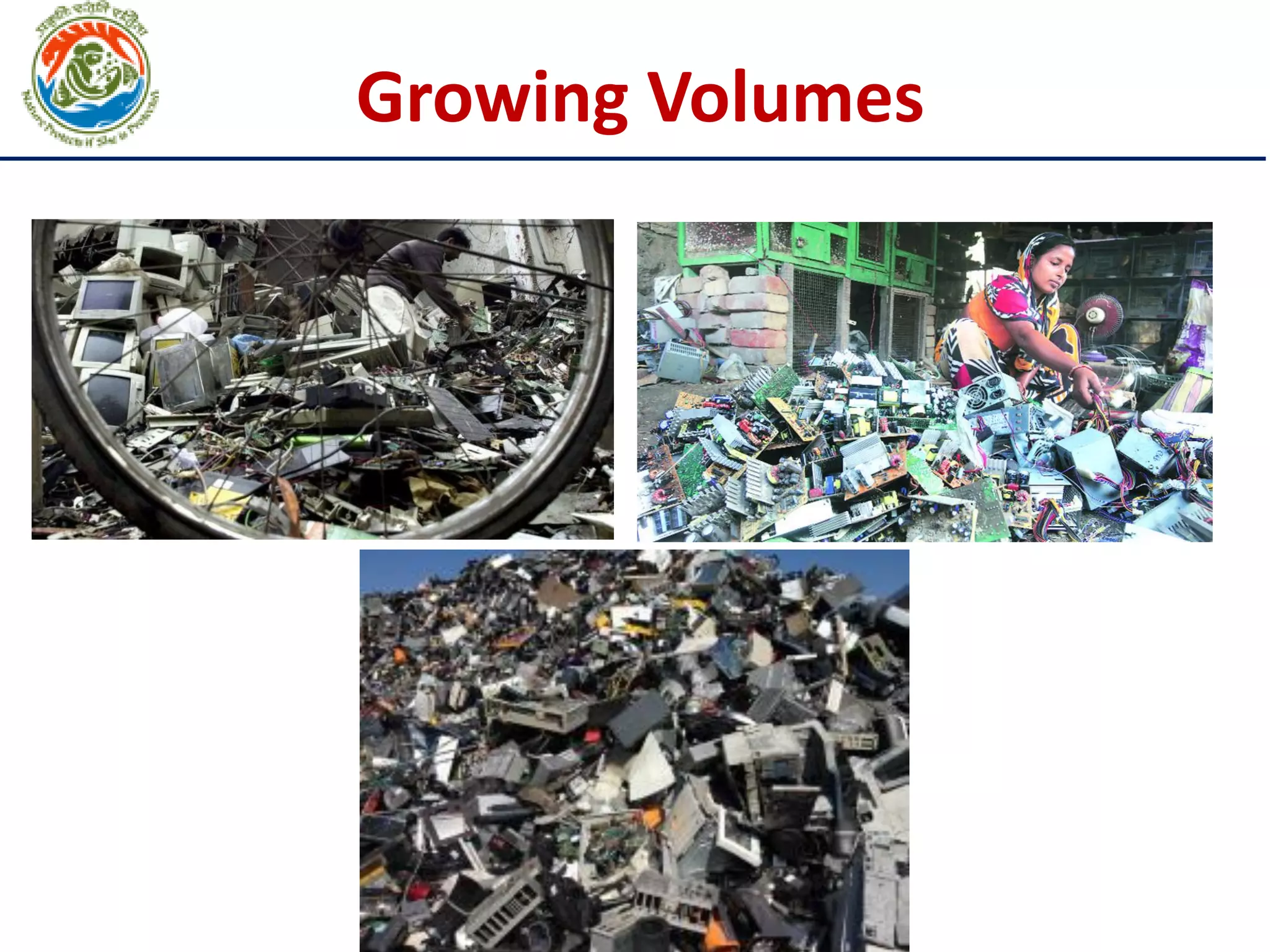
Growing Volumes
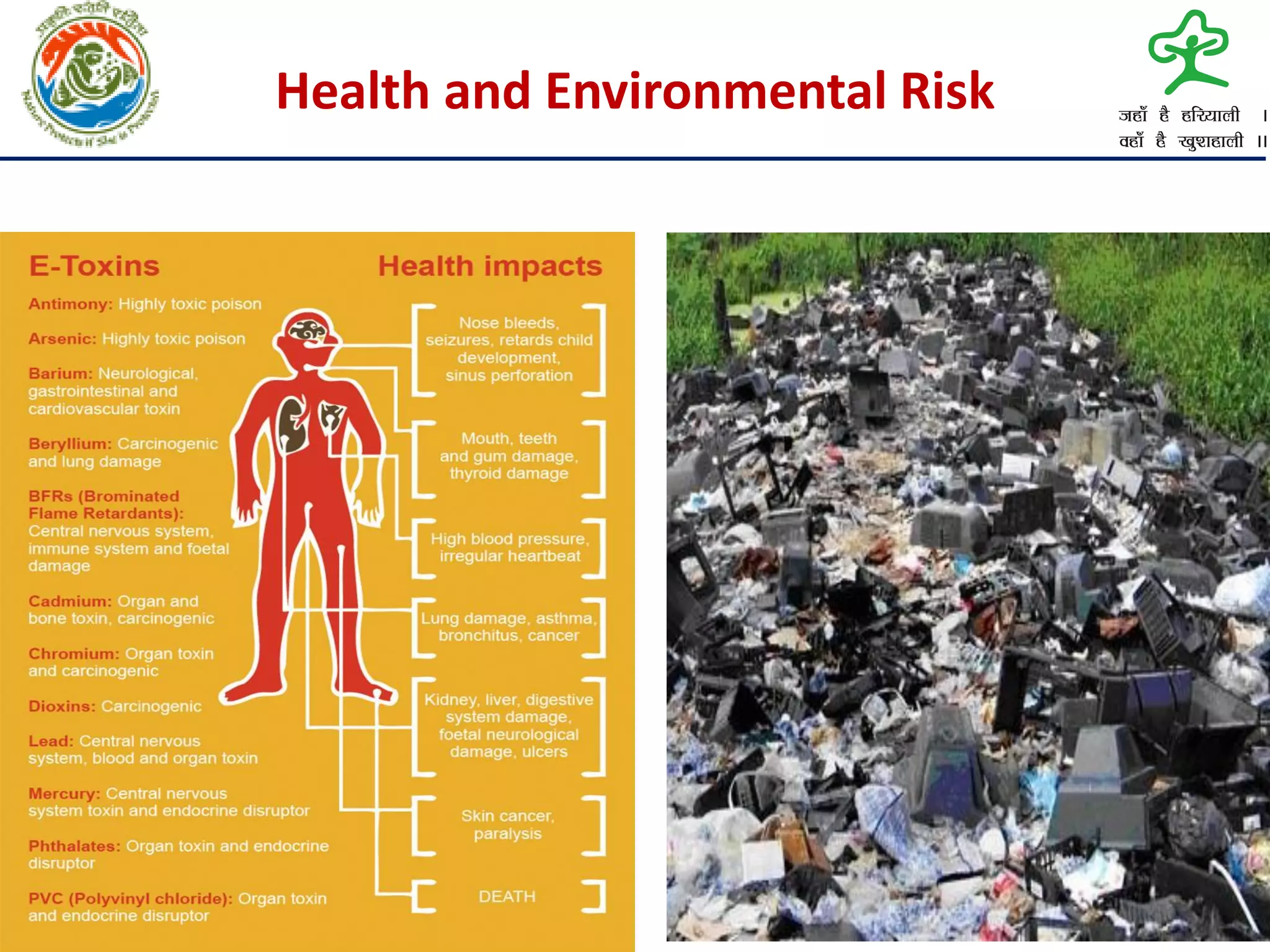
Health and Environmental Risk
E Waste – A Rich Resource
6
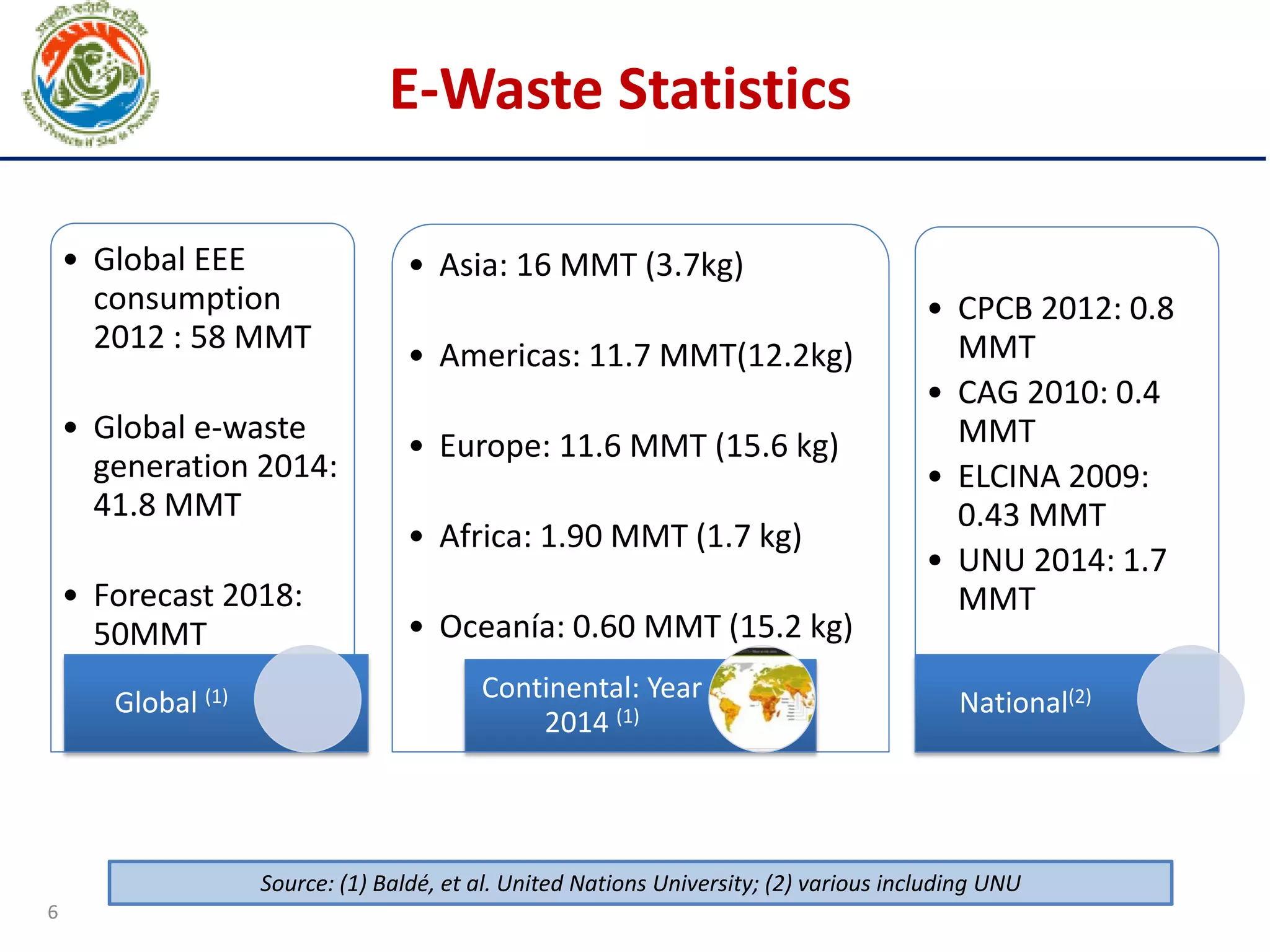
• Global EEE
consumption
2012 : 58 MMT
• Global e-waste
generation 2014:
41.8 MMT
• Forecast 2018:
50MMT
Global (1)
• Asia: 16 MMT (3.7kg)
• Americas: 11.7 MMT(12.2kg)
• Europe: 11.6 MMT (15.6 kg)
• Africa: 1.90 MMT (1.7 kg)
• Oceanía: 0.60 MMT (15.2 kg)
Continental: Year
2014 (1)
• CPCB 2012: 0.8
MMT
• CAG 2010: 0.4
MMT
• ELCINA 2009:
0.43 MMT
• UNU 2014: 1.7
MMT
National(2)
E-Waste Statistics
Source: (1) Baldé, et al. United Nations University; (2) various including UNU
e-waste (Management and Handling)
Rules, 2011- Salient Feature
 Extended Producer’s Responsibility (EPR) - Producer of EEE has
the responsibility of managing such equipment after its end of
life.
 Producer -manufacturer or assembler who offers to sell the EEE
under their own brand or offers to sell imported EEE.
 EPR Authorization- From SPCB/PCC
 Applicability- Producer, consumer, collection centre, dismantler
and recycler. IT & telecommunication and consumer EEE
 Exemption- Micro and Small enterprises
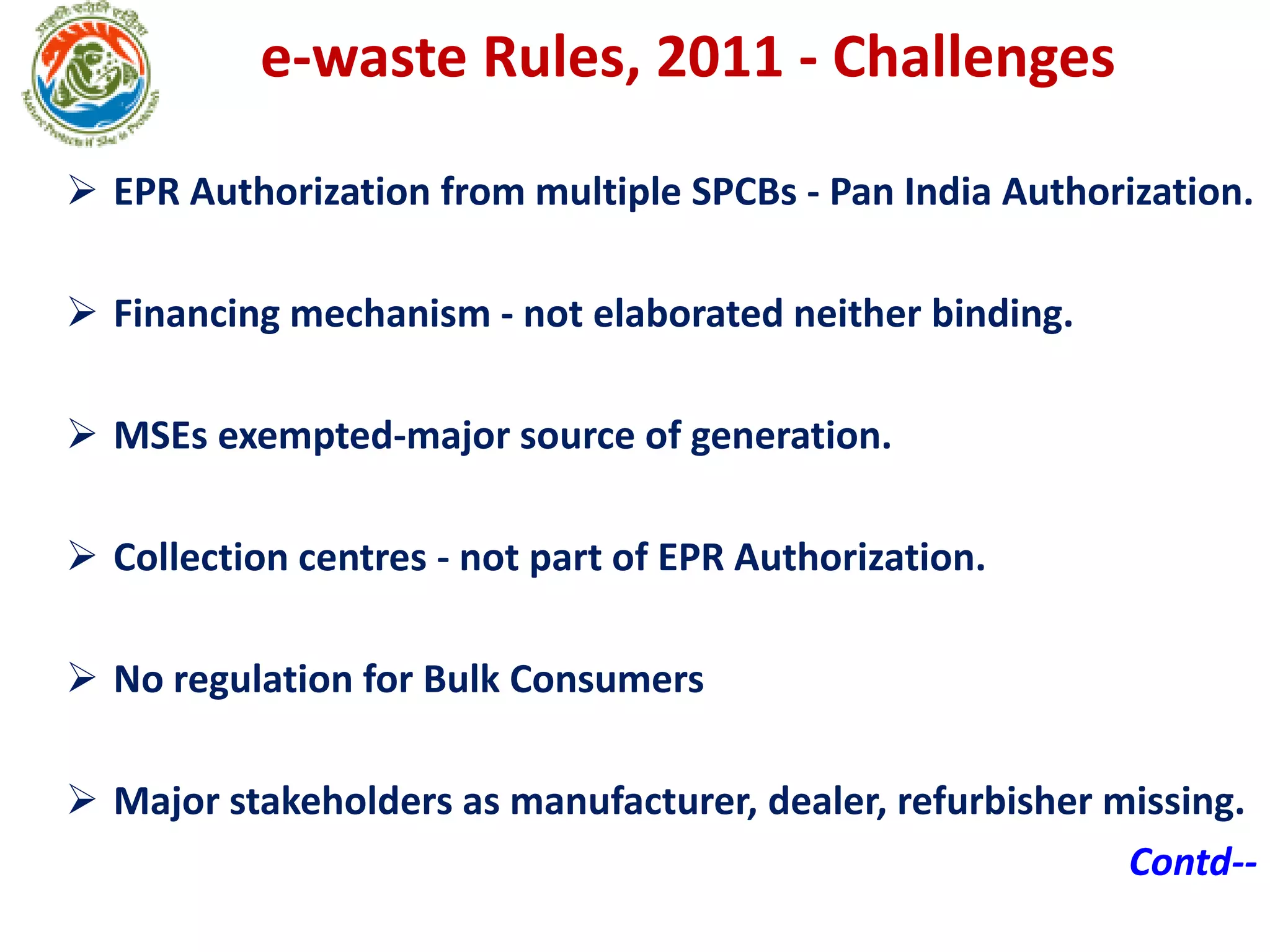
e-waste Rules, 2011 - Challenges
 EPR Authorization from multiple SPCBs - Pan India Authorization.
 Financing mechanism - not elaborated neither binding.
 MSEs exempted-major source of generation.
 Collection centres - not part of EPR Authorization.
 No regulation for Bulk Consumers
 Major stakeholders as manufacturer, dealer, refurbisher missing.
Contd--
e-waste Rules, 2011
Challenges contd…
 Separate Authorization & Registration.
 Ineffective provisions for dismantling and recycling -
illegal operations.
 Registered Recyclers and Dismantlers not getting e-
waste.
 Lack of capacity building and awareness initiatives
by Producers.
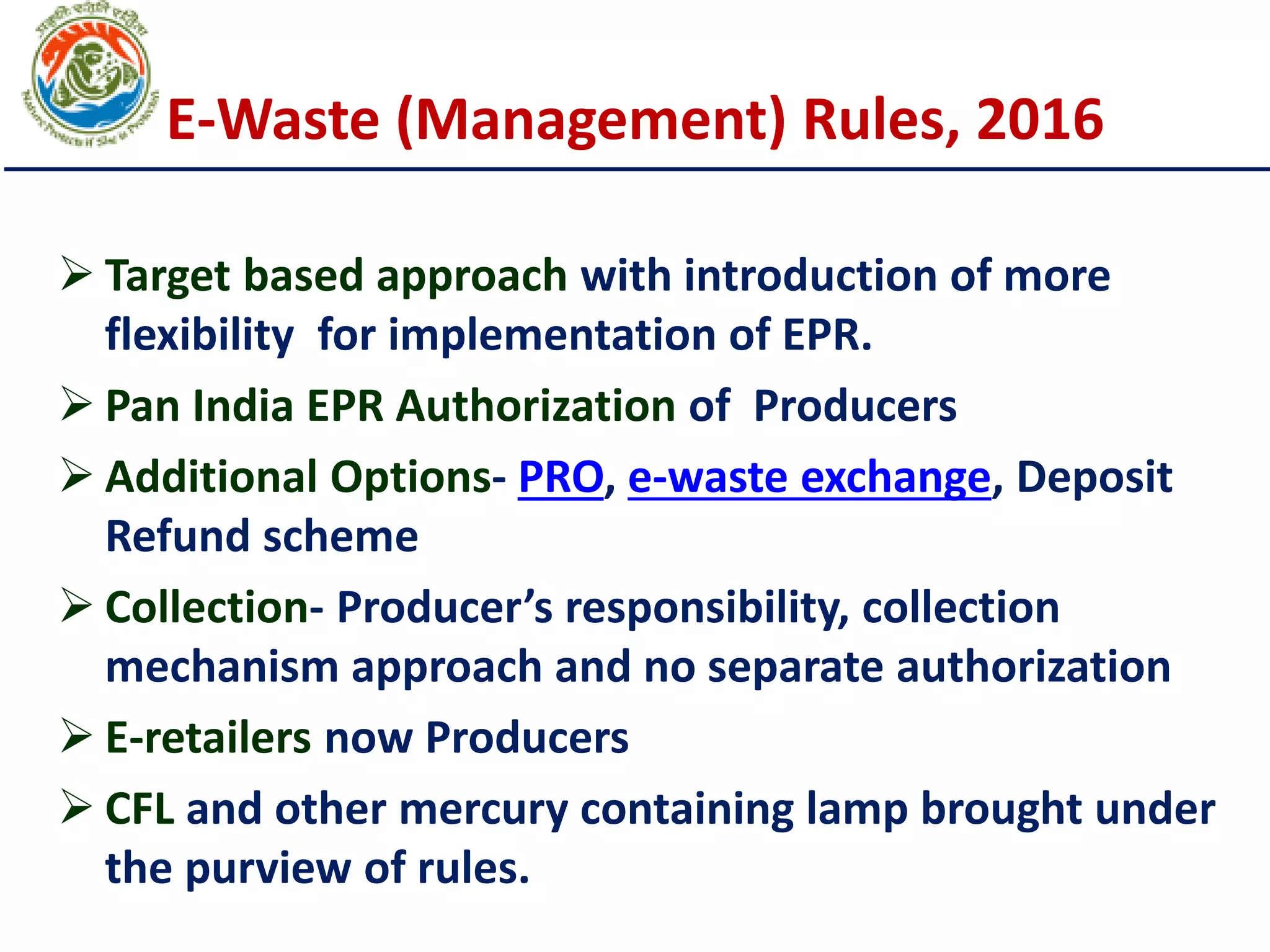
E-Waste (Management) Rules, 2016
 Target based approach with introduction of more
flexibility for implementation of EPR.
 Pan India EPR Authorization of Producers
 Additional Options- PRO, e-waste exchange, Deposit
Refund scheme
 Collection- Producer’s responsibility, collection
mechanism approach and no separate authorization
 E-retailers now Producers
 CFL and other mercury containing lamp brought under
the purview of rules.
E-Waste (Management) Rules, 2016
 Extended to manufacturers, dealers and refurbishers
 Exemption – only for micro enterprises
 Bulk Consumer- need to file annual returns now.
 Only one permission- Authorization for all
stakeholders including dismantlers and recyclers.
 Inter-state transportation- strengthen the mechanism
 Liability clause- penalty for violation of the rules
 State Govt Responsibility- allot space, skill
development, health and safety of workers
Extended Producer Responsibility
Brand Owner E-Retailer
Importer others
Producer
Consumer Refurbisher
Reuse
Secondary
Consumer
Producer
Take Back,
Collection
centre
E waste
Exchange
PRO
Authorized Recyclers /
Dismantlers
Material
Market Manufacturer
Dealer /
Retailer
Regulator
CPCB (EPR
Authorization)
SPCB
(Monitoring and
Inventory
Way Forward
 Evolve effective implementation procedure
 Specific guidelines on EPR Authorization and Target
calculations.
 Review of guidelines for recyclers and dismantlers
 Evaluation of existing authorized recyclers
 Specific instructions in form of guidance to major Bulk
Consumers
 Change in tendering conditions for e-waste
 Capacity building and awareness initiatives targeting
specific consumers
The End
The
Circular Economy
in the
Asia Pacific Region
www.circularecconomyasia.org

EPR in E-Waste Management

  • 1.
    Extended Producer Responsibilityin E- Waste Management Indian Prospective INTERNATIONAL WORKSHOP ON EXTENDED PRODUCER RESPONSIBILITY IN INDIA: OPPORTUNITIES, CHALLENGES AND LESSONS FROM INTERNATIONAL EXPERIENCE May 12-13, 2016 Dr Shruti Rai Bhardwaj Ministry of Environment, Forest and Climate Change Govt. of India
  • 2.
    Definition E-waste means electricaland electronic equipment, whole or in part discarded as waste by the consumer or bulk consumer as well as rejects from manufacturing, refurbishment and repair processes.
  • 3.
  • 4.
  • 5.
    E Waste –A Rich Resource
  • 6.
    6 • Global EEE consumption 2012: 58 MMT • Global e-waste generation 2014: 41.8 MMT • Forecast 2018: 50MMT Global (1) • Asia: 16 MMT (3.7kg) • Americas: 11.7 MMT(12.2kg) • Europe: 11.6 MMT (15.6 kg) • Africa: 1.90 MMT (1.7 kg) • Oceanía: 0.60 MMT (15.2 kg) Continental: Year 2014 (1) • CPCB 2012: 0.8 MMT • CAG 2010: 0.4 MMT • ELCINA 2009: 0.43 MMT • UNU 2014: 1.7 MMT National(2) E-Waste Statistics Source: (1) Baldé, et al. United Nations University; (2) various including UNU
  • 7.
    e-waste (Management andHandling) Rules, 2011- Salient Feature  Extended Producer’s Responsibility (EPR) - Producer of EEE has the responsibility of managing such equipment after its end of life.  Producer -manufacturer or assembler who offers to sell the EEE under their own brand or offers to sell imported EEE.  EPR Authorization- From SPCB/PCC  Applicability- Producer, consumer, collection centre, dismantler and recycler. IT & telecommunication and consumer EEE  Exemption- Micro and Small enterprises
  • 8.
    e-waste Rules, 2011- Challenges  EPR Authorization from multiple SPCBs - Pan India Authorization.  Financing mechanism - not elaborated neither binding.  MSEs exempted-major source of generation.  Collection centres - not part of EPR Authorization.  No regulation for Bulk Consumers  Major stakeholders as manufacturer, dealer, refurbisher missing. Contd--
  • 9.
    e-waste Rules, 2011 Challengescontd…  Separate Authorization & Registration.  Ineffective provisions for dismantling and recycling - illegal operations.  Registered Recyclers and Dismantlers not getting e- waste.  Lack of capacity building and awareness initiatives by Producers.
  • 10.
    E-Waste (Management) Rules,2016  Target based approach with introduction of more flexibility for implementation of EPR.  Pan India EPR Authorization of Producers  Additional Options- PRO, e-waste exchange, Deposit Refund scheme  Collection- Producer’s responsibility, collection mechanism approach and no separate authorization  E-retailers now Producers  CFL and other mercury containing lamp brought under the purview of rules.
  • 11.
    E-Waste (Management) Rules,2016  Extended to manufacturers, dealers and refurbishers  Exemption – only for micro enterprises  Bulk Consumer- need to file annual returns now.  Only one permission- Authorization for all stakeholders including dismantlers and recyclers.  Inter-state transportation- strengthen the mechanism  Liability clause- penalty for violation of the rules  State Govt Responsibility- allot space, skill development, health and safety of workers
  • 12.
  • 13.
    Brand Owner E-Retailer Importerothers Producer Consumer Refurbisher Reuse Secondary Consumer Producer Take Back, Collection centre E waste Exchange PRO Authorized Recyclers / Dismantlers Material Market Manufacturer Dealer / Retailer Regulator CPCB (EPR Authorization) SPCB (Monitoring and Inventory
  • 14.
    Way Forward  Evolveeffective implementation procedure  Specific guidelines on EPR Authorization and Target calculations.  Review of guidelines for recyclers and dismantlers  Evaluation of existing authorized recyclers  Specific instructions in form of guidance to major Bulk Consumers  Change in tendering conditions for e-waste  Capacity building and awareness initiatives targeting specific consumers
  • 15.
  • 16.
    The Circular Economy in the AsiaPacific Region www.circularecconomyasia.org