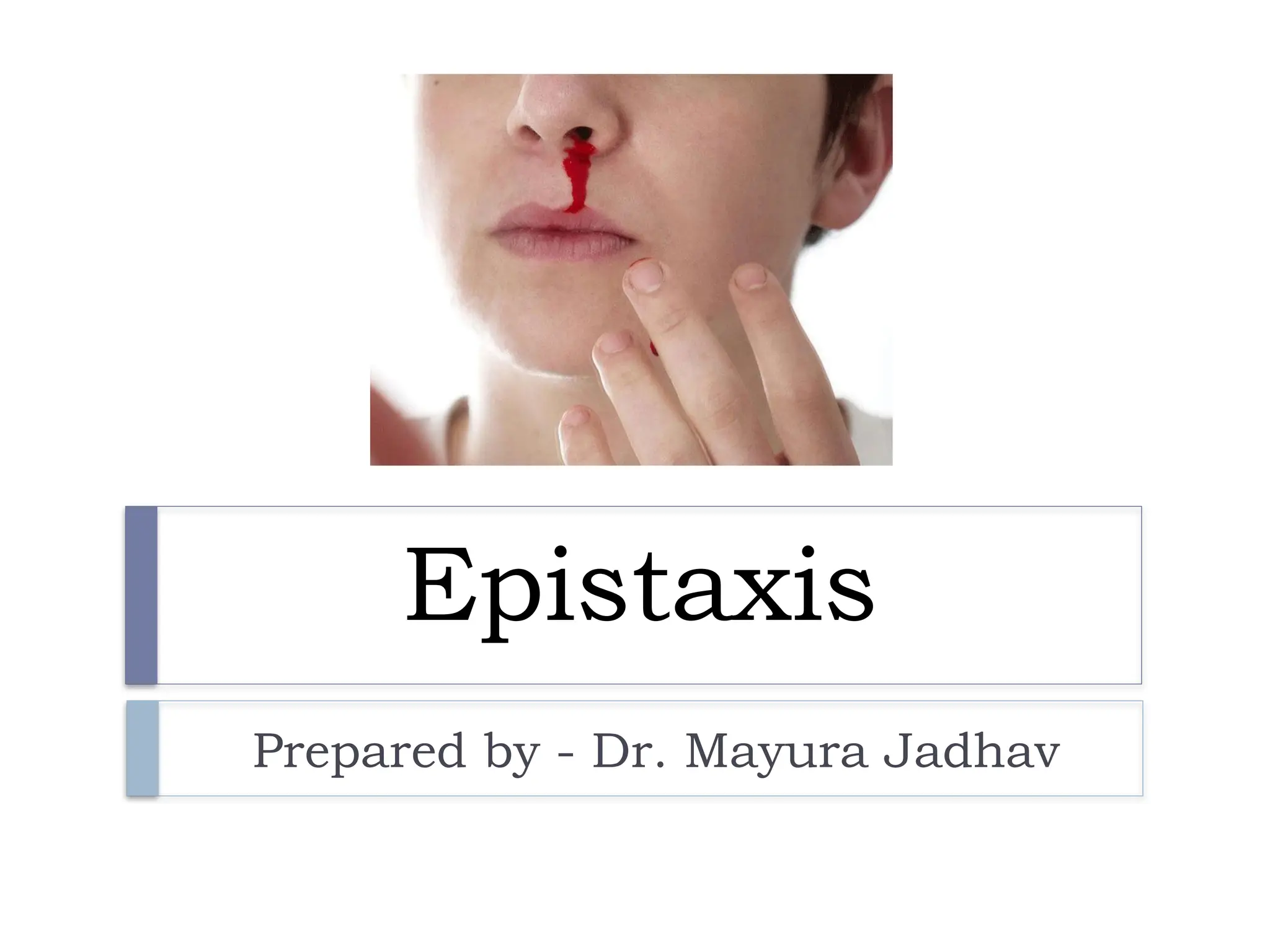
Epistaxis
Prepared by - Dr. Mayura Jadhav
08/14/2024
Prepared by - Dr. Mayura Jadhav
2
Introduction
 Epistaxis also called acute hemorrhage or nose bleed
 It is a medical condition in which bleeding occurs from
the nasal cavity of the nostril.
 More common in male than female.
08/14/2024
Prepared by - Dr. Mayura Jadhav
3
Causes of epistaxis
Hematological:-
1. Thrombocytopenia:- leukemia, aplastic anemia
2. Qualitative platelet defect:- Glanzmann’s
thrombosthenia, von willebrand’s disease etc.
3. Coagulation disorder:- hemophilia, afibrinogenemia etc.
4. Miscellaneous:- hypersplenism, vit B12 deficiency,
chronic liver disease etc.
08/14/2024
Prepared by - Dr. Mayura Jadhav
4
Causes of epistaxis
Nasal diseases:-
1. Trauma
2. Tumor
3. Rhinitis
4. Diptheria
5. Sinusitis
6. Squamous cell carcinoma
7. Nasopharyngeal carcinoma
08/14/2024
Prepared by - Dr. Mayura Jadhav
5
Causes of epistaxis
Systemic diseases:-
1. Infective fever- typhoid, malaria, measles, viral infection
etc.
2. Hypertension
3. High altitude
4. Collagen diseases
5. Anticoagulant medications
08/14/2024
Prepared by - Dr. Mayura Jadhav
6
Pathophysiology of Epistaxis
 The nasal mucosa contains a rich blood supply that can
be easily ruptured and cause bleeding. Rupture may be
spontaneous or initiated by trauma.
 Bleeding may occure through anterior or posterior part of
nose.
 Anterior bleed:-
The vast majority of nose bleeds occur in the anterior
part of the nose from the nasal septum. This area is richly
endowed with blood vessels (Kiesselbach’s plexus). This
region is also known as Little’s area.
08/14/2024
Prepared by - Dr. Mayura Jadhav
7
Pathophysiology of Epistaxis
 posterior bleed-
It is usually due to bleeding from Woodruff’s plexus, a
venous plexus situated in the posterior part of inferior
meatus.
Posterior bleeds are often prolonged and difficult to
control.
They can be associated with bleeding from both nostrils
and with a greater flow of blood into the mouth
08/14/2024
Prepared by - Dr. Mayura Jadhav
8
Initial Management of Epistaxis
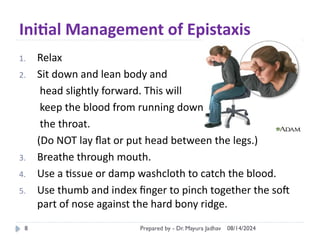
1. Relax
2. Sit down and lean body and
head slightly forward. This will
keep the blood from running down
the throat.
(Do NOT lay flat or put head between the legs.)
3. Breathe through mouth.
4. Use a tissue or damp washcloth to catch the blood.
5. Use thumb and index finger to pinch together the soft
part of nose against the hard bony ridge.
08/14/2024
Prepared by - Dr. Mayura Jadhav
9
Initial Management of Epistaxis
6. Keep pinching nose continuously for at least 5 minutes.
7. If nose is still bleeding, continue squeezing the nose for
another 10 minutes.
8. You can spray an decongestant spray such as
oxymetazoline into the bleeding side of the nose and
then apply pressure to the nose as described above.
9. Once the bleeding stops, DO NOT bend over; strain
and/or lift anything heavy; and DO NOT blow, rub, or
pick your nose for several days.
08/14/2024
Prepared by - Dr. Mayura Jadhav
10
Management according to cause
 Cauterization:- The application of a chemical substance
(silver nitrate) or heat energy (electrocautery) to seal the
bleeding blood vessel.
 Nasal packing:- The placement of strips of gauze into the
nasal cavity to create pressure on the bleeding site.
Alternately, other materials that promote clotting may be
used.
 Medications:- Reducing or stopping the amount of blood
thinning medications can be helpful. In addition,
medications for controlling blood pressure may be
necessary.
08/14/2024
Prepared by - Dr. Mayura Jadhav
11
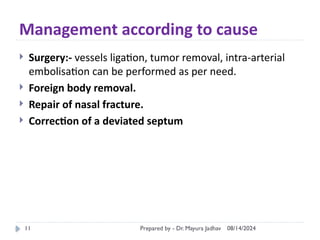
Management according to cause
 Surgery:- vessels ligation, tumor removal, intra-arterial
embolisation can be performed as per need.
 Foreign body removal.
 Repair of nasal fracture.
 Correction of a deviated septum
08/14/2024
Prepared by - Dr. Mayura Jadhav
12
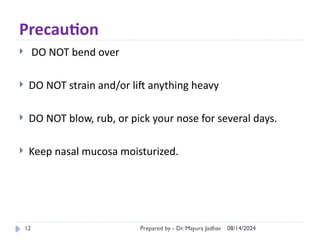
Precaution
 DO NOT bend over
 DO NOT strain and/or lift anything heavy
 DO NOT blow, rub, or pick your nose for several days.
 Keep nasal mucosa moisturized.
08/14/2024
Prepared by - Dr. Mayura Jadhav
13

Epistaxis.pptx bleeding through nose know the treatment

  • 1.
    Epistaxis Prepared by -Dr. Mayura Jadhav
  • 2.
    08/14/2024 Prepared by -Dr. Mayura Jadhav 2 Introduction  Epistaxis also called acute hemorrhage or nose bleed  It is a medical condition in which bleeding occurs from the nasal cavity of the nostril.  More common in male than female.
  • 3.
    08/14/2024 Prepared by -Dr. Mayura Jadhav 3 Causes of epistaxis Hematological:- 1. Thrombocytopenia:- leukemia, aplastic anemia 2. Qualitative platelet defect:- Glanzmann’s thrombosthenia, von willebrand’s disease etc. 3. Coagulation disorder:- hemophilia, afibrinogenemia etc. 4. Miscellaneous:- hypersplenism, vit B12 deficiency, chronic liver disease etc.
  • 4.
    08/14/2024 Prepared by -Dr. Mayura Jadhav 4 Causes of epistaxis Nasal diseases:- 1. Trauma 2. Tumor 3. Rhinitis 4. Diptheria 5. Sinusitis 6. Squamous cell carcinoma 7. Nasopharyngeal carcinoma
  • 5.
    08/14/2024 Prepared by -Dr. Mayura Jadhav 5 Causes of epistaxis Systemic diseases:- 1. Infective fever- typhoid, malaria, measles, viral infection etc. 2. Hypertension 3. High altitude 4. Collagen diseases 5. Anticoagulant medications
  • 6.
    08/14/2024 Prepared by -Dr. Mayura Jadhav 6 Pathophysiology of Epistaxis  The nasal mucosa contains a rich blood supply that can be easily ruptured and cause bleeding. Rupture may be spontaneous or initiated by trauma.  Bleeding may occure through anterior or posterior part of nose.  Anterior bleed:- The vast majority of nose bleeds occur in the anterior part of the nose from the nasal septum. This area is richly endowed with blood vessels (Kiesselbach’s plexus). This region is also known as Little’s area.
  • 7.
    08/14/2024 Prepared by -Dr. Mayura Jadhav 7 Pathophysiology of Epistaxis  posterior bleed- It is usually due to bleeding from Woodruff’s plexus, a venous plexus situated in the posterior part of inferior meatus. Posterior bleeds are often prolonged and difficult to control. They can be associated with bleeding from both nostrils and with a greater flow of blood into the mouth
  • 8.
    08/14/2024 Prepared by -Dr. Mayura Jadhav 8 Initial Management of Epistaxis 1. Relax 2. Sit down and lean body and head slightly forward. This will keep the blood from running down the throat. (Do NOT lay flat or put head between the legs.) 3. Breathe through mouth. 4. Use a tissue or damp washcloth to catch the blood. 5. Use thumb and index finger to pinch together the soft part of nose against the hard bony ridge.
  • 9.
    08/14/2024 Prepared by -Dr. Mayura Jadhav 9 Initial Management of Epistaxis 6. Keep pinching nose continuously for at least 5 minutes. 7. If nose is still bleeding, continue squeezing the nose for another 10 minutes. 8. You can spray an decongestant spray such as oxymetazoline into the bleeding side of the nose and then apply pressure to the nose as described above. 9. Once the bleeding stops, DO NOT bend over; strain and/or lift anything heavy; and DO NOT blow, rub, or pick your nose for several days.
  • 10.
    08/14/2024 Prepared by -Dr. Mayura Jadhav 10 Management according to cause  Cauterization:- The application of a chemical substance (silver nitrate) or heat energy (electrocautery) to seal the bleeding blood vessel.  Nasal packing:- The placement of strips of gauze into the nasal cavity to create pressure on the bleeding site. Alternately, other materials that promote clotting may be used.  Medications:- Reducing or stopping the amount of blood thinning medications can be helpful. In addition, medications for controlling blood pressure may be necessary.
  • 11.
    08/14/2024 Prepared by -Dr. Mayura Jadhav 11 Management according to cause  Surgery:- vessels ligation, tumor removal, intra-arterial embolisation can be performed as per need.  Foreign body removal.  Repair of nasal fracture.  Correction of a deviated septum
  • 12.
    08/14/2024 Prepared by -Dr. Mayura Jadhav 12 Precaution  DO NOT bend over  DO NOT strain and/or lift anything heavy  DO NOT blow, rub, or pick your nose for several days.  Keep nasal mucosa moisturized.
  • 13.
    08/14/2024 Prepared by -Dr. Mayura Jadhav 13