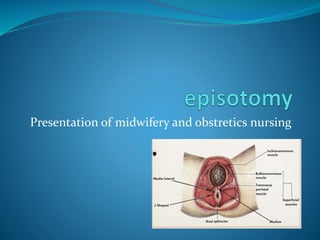
Presentation of midwifery and obstretics nursing
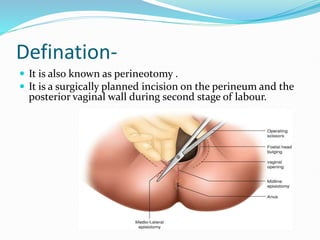
Defination-
 It is also known as perineotomy .
 It is a surgically planned incision on the perineum and the
posterior vaginal wall during second stage of labour.
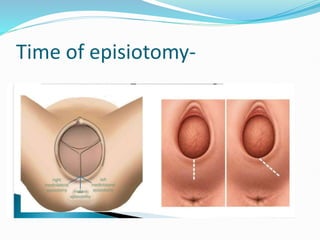
Time of episiotomy-
Indication of episotomy-
 Prolonged second stage of labor.
 Fetal distress.
 Forcep and vacum delivery.
 Baby in breech pesentation.
 Twins or multiples deliveries.
 Large size of baby.
 Abnormal position of the baby head
 The mother has a history of pelvic surgery.
 Hydrocephalus
 Cord prolapse
 Face presentation
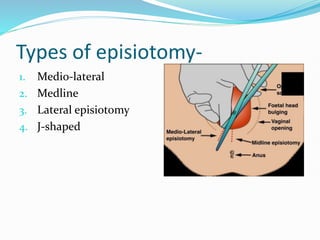
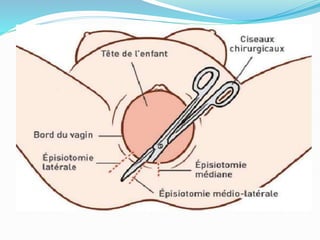
Types of episiotomy-
1. Medio-lateral
2. Medline
3. Lateral episiotomy
4. J-shaped
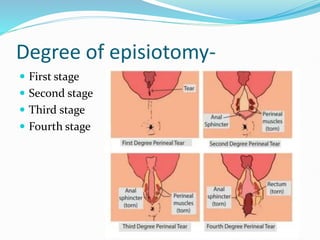
Degree of episiotomy-
 First stage
 Second stage
 Third stage
 Fourth stage
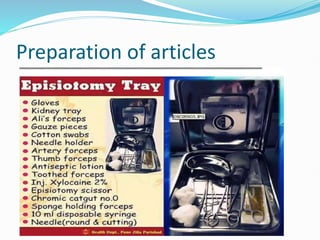
Preparation of articles
Steps of episiotomy-
Step 1-
 10 ml lignocane [1% ]local anesthesia
 Clean the perineum area [antiseptic solution].
Step2-
 Incision.
 To prevent injury of presenting part.
Step 3-
 Placenta delivery then reparing .
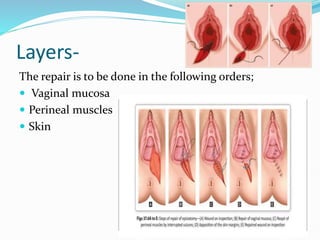
Layers-
The repair is to be done in the following orders;
 Vaginal mucosa
 Perineal muscles
 Skin
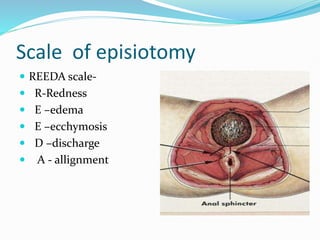
Scale of episiotomy
 REEDA scale-
 R-Redness
 E –edema
 E –ecchymosis
 D –discharge
 A - allignment
Care of episiotomy-
 Local wound care
 Pain mangment
 During the first 12 hour after delivery, an ice pack may
be helpful in preventing both pain and swelling of the
site of the episiotomy
 The episiotomy site should be cleaned after a bowel
movement or after urination
 Kegel exercise- help make the muscles strong
 Removal of stitches- non absorable [6th day]
Risk of episiotomy-
 Bleeding
 Infection
 Painful sex
 Injury to the anal sphincher and rectum
 Scarring
 Urinary incontinence
 Prolonged recovery time
episotomy.pptx,...........   .............

episotomy.pptx,........... .............

  • 1.
    Presentation of midwiferyand obstretics nursing
  • 2.
    Defination-  It isalso known as perineotomy .  It is a surgically planned incision on the perineum and the posterior vaginal wall during second stage of labour.
  • 3.
  • 4.
    Indication of episotomy- Prolonged second stage of labor.  Fetal distress.  Forcep and vacum delivery.  Baby in breech pesentation.  Twins or multiples deliveries.  Large size of baby.  Abnormal position of the baby head  The mother has a history of pelvic surgery.  Hydrocephalus  Cord prolapse  Face presentation
  • 6.
    Types of episiotomy- 1.Medio-lateral 2. Medline 3. Lateral episiotomy 4. J-shaped
  • 8.
    Degree of episiotomy- First stage  Second stage  Third stage  Fourth stage
  • 9.
  • 10.
    Steps of episiotomy- Step1-  10 ml lignocane [1% ]local anesthesia  Clean the perineum area [antiseptic solution]. Step2-  Incision.  To prevent injury of presenting part. Step 3-  Placenta delivery then reparing .
  • 11.
    Layers- The repair isto be done in the following orders;  Vaginal mucosa  Perineal muscles  Skin
  • 12.
    Scale of episiotomy REEDA scale-  R-Redness  E –edema  E –ecchymosis  D –discharge  A - allignment
  • 13.
    Care of episiotomy- Local wound care  Pain mangment  During the first 12 hour after delivery, an ice pack may be helpful in preventing both pain and swelling of the site of the episiotomy  The episiotomy site should be cleaned after a bowel movement or after urination  Kegel exercise- help make the muscles strong  Removal of stitches- non absorable [6th day]
  • 14.
    Risk of episiotomy- Bleeding  Infection  Painful sex  Injury to the anal sphincher and rectum  Scarring  Urinary incontinence  Prolonged recovery time