REVIEW


CURRENT
OPINION         Epilepsy care challenges in developing countries
                                  Michelle P. Kvalsund a and Gretchen L. Birbeck b,c


                  Purpose of review
                  This review discusses recent literature relevant to the diagnosis and treatment of epilepsy in developing
                  countries with particular attention to underlying causes, natural history, and advances made toward
                  optimizing systems of care and bridging the treatment gap.
                  Recent findings
                  Prospective data suggest that cerebral malaria-induced brain injury may explain the high prevalence of
                  epilepsy in malaria-endemic regions. Population-based mortality studies support the long proposed
                  hypothesis that seizure-related deaths contribute to excessive premature mortality. WHO guidelines have
                  the potential to improve care, but macrolevel barriers related to pharmaceutical regulation and distribution
                  continue to contribute to the treatment gap. Evidence-based guidelines endorsed by the WHO and
                  American Academy of Neurology regarding the optimal management of comorbid epilepsy and HIV may
                  raise awareness regarding critical drug interactions between antiepileptic drugs and antiretrovirals, but are
                  also problematic as the treatment regimen and diagnostic facilities routinely available in developing
                  countries will prevent most healthcare providers from following the recommendations.
                  Summary
                  New insights into the causes, natural history and best care practices for epilepsy in developing countries
                  are available but without prioritization and action from policy makers, the present treatment gap will likely
                  to persist.
                  Keywords
                  cost, developing country, drug interactions, epilepsy, HIV, mortality, pharmaceutical regulations,
                  pharmacokinetics, public policy, treatment gap


INTRODUCTION                                                        countries have drawn international attention to the
Epilepsy is the most common chronic neurologic                      ‘treatment gap’.
disorder in the developing world, wherein 80% of                        The epilepsy treatment gap is typically defined
people with epilepsy (PWE) reside. Where available,                 as the proportion of people who require but are not
epilepsy care in low-income countries remains                       receiving treatment. It has been proposed as an
extremely basic and usually consists of first-gener-                important parameter for access to care and quality
ation antiepileptic drugs (AEDs) delivered by non-                  of care across health systems and populations. With
physician healthcare workers who have no recourse                   an average gap of approximately 75% for low-
to electroencephalography (EEG), neuroimaging,                      income countries and the poorest in Africa having
serum–drug level monitoring or specialist referral.                 a gap of more than 90%, perhaps ‘chasm’ would be a
Recent malaria research from Malawi may at least                    better term. Whether sufficient global political will
partially explain the extremely high rates of epilepsy              can be harnessed to prioritize access to epilepsy care
                                                 &
reported from some regions of Africa [1 ]. Findings
                                                     &&
from the China Demonstration Project [2 ] con-
                                                                    a
firmed the sad reality that epilepsy is a frequently                  Department of Neurology, Vanderbilt University Medical Center, Medical
fatal condition in low-income countries, perhaps                    Center North, Nashville, Tennessee, bInternational Neurologic & Psychi-
                                                                    atric Epidemiology Program [INPEP], Michigan State University, East
even when treatment is made available [3]. Such
                                                                    Lansing, Michigan, USA and cEpilepsy Care Team, Chikankata Hospital,
advances in knowledge have provided clinicians                      Mazabuka, Zambia
with new information regarding risk factors for                     Correspondence to Gretchen L. Birbeck, International Neurologic &
epilepsy and emphasize the critical need for coun-                  Psychiatric Epidemiology Program [INPEP], Michigan State University,
seling on physical safety and the prevention of                     #324 West Fee Hall, East Lansing, MI 48824, USA. Tel: +1 517 884
seizure-related injuries, particularly where exposure               0277; fax: +1 517 884 0275; e-mail: Birbeck@msu.edu
to potential drowning or burns is probable. WHO                     Curr Opin Neurol 2012, 25:179–186
clinical care guidelines for epilepsy in developing                 DOI:10.1097/WCO.0b013e328350baf8


1350-7540 ß 2012 Wolters Kluwer Health | Lippincott Williams & Wilkins                                       www.co-neurology.com

Copyright © Lippincott Williams & Wilkins. Unauthorized reproduction of this article is prohibited.
Seizure disorders


                                                                  WHO in conjunction with the World Federation
   KEY POINTS                                                     of Neurology found only 0.03–0.07 neurologists
    Population-based mortality data from the China               per 100 000 people in Africa and South-East Asia.
     Demonstration project confirm that epilepsy is a             Numbers were even direr for neurological nurses
     frequently fatal condition in developing country settings.   and subspecialists such as pediatric neurologists
                                                                  and neurosurgeons [5]. A recent survey of 58 LMICs
    In malaria-endemic regions, cerebral malaria may be
                                                                  estimated deficits in psychiatrists, psychiatric
     among the most common causes of epilepsy, causing
     up to 135 000 new cases annually in Africa.                  nurses, and psychosocial support workers in 67,
                                                                  95, and 79% of countries, respectively. In terms of
    If broadly implemented, newly released WHO epilepsy          crude numbers, deficits of 11 000 psychiatrists,
     care guidelines could decrease the treatment gap and         128 000 nurses, and 100 000 psychosocial support
     improve care in low-income countries.                                                     
                                                                  providers were estimated [6 ]. These figures likely
    Where enzyme-inducing antiepileptic drugs (AEDs) are         underestimate the true staffing shortfalls, given
     the only treatment options, and HIV prevalence is high,      that survey respondents represented a convenience
     the co-usage of these AEDs and antiretroviral agents         sample of countries willing and able to answer the
     presents a public health crisis that has yet to              survey questions and the calculations were based on
     be addressed.
                                                                  care of eight specific conditions (including epi-
                                                                  lepsy), and thus do not account for the total burden
                                                                  of mental health disorders.
                                                                      In 2012, findings from the Global Burden of
 remains unclear, but we now know that lives clearly              Diseases, Injuries and Risk Factors Study should
 hang in the balance.                                             become available. This update of the seminal 1995
                                                                  study includes a more objective weighting system
                                                                  for assigning disabilities to the Disability-Adjusted
 HEALTH SYSTEMS FOR EPILEPSY CARE                                 Life Years [DALY] [7]. Tens of thousands of people
 IN DEVELOPING COUNTRIES                                          worldwide ranked lay descriptions that described a
 Understanding the challenges of the diagnosis and                person’s existence living in a particular health state
 treatment of epilepsy in the developing world                    and rank accordingly. See Table 1 for the lay descrip-
 requires reflection on how developing countries                  tions of epilepsy used. The new DALY metric may
 are defined and how, even within these countries,                propel the global attributable burden of epilepsy
 parallel private and public healthcare systems exist             even higher.
 that are distinctly disparate. For those with the                    Given the highly stigmatized nature of epilepsy
 financial capacity to access the private sector, epi-            and mental health disorders, structural bias may
 lepsy care is comparable to care provided by many                also exist. The Non-Communicable Disease (NCD)
 centers of excellence in developing countries. How-              Alliance, which aims to garner commitments from
 ever, most PWE who seek care at all must do so                   wealthy donor countries, nongovernment organiz-
 through the usually underfunded public health                    ations and Ministries of Health in LIMCs to address
 sector. Public health systems in many low-income                 the burden of NCDs, excludes epilepsy as well as
 countries, particularly those in tropical climes, con-           most other mental and neurologic disorders [8].
 tinue to focus resources and training on the pro-                Consequently, the September 2011 landmark
 vision of care for acute, infectious diseases. Limited           United Nations General Assembly on NCDs did
 attention is given to the need for services appropri-            not address the epilepsy treatment gap [9].
 ate for the management of chronic, noncommuni-
 cable disorders. Furthermore, within many lower
 middle-income countries (LMICs), neurologic dis-                 UNIQUE CAUSES FOR EPILEPSY
 orders fall into the realm of mental health, one of              Environmental and genetic factors likely play a role
 the most notoriously underfunded health sectors.                 in the relatively high prevalence and incidence
 The median percentage of health expenditures dedi-               estimates identified in low-income, tropical
 cated to mental health was recently estimated at                 countries. Frequency estimates of specific causes
 0.5% in low-income countries compared to 5.1% in                 of epilepsy are largely unknown in most LMICs,
 high-income countries [4].                                       but the idiopathic (genetic), neurodevelopmental,
     Why are mental and neurological services so                  and posttraumatic [10] causes of epilepsy recognized
 disproportionately underfunded? The dearth of                    in the West undoubtedly also result in epilepsy in
 human resources with neurologic or psychiatric                   developing regions [11].
 clinical skills may be one key reason. A survey of                   Recent reviews have better characterized the
 key personnel in 109 countries conducted by the                  geographic distributions of infectious pathogens

 180       www.co-neurology.com                                                        Volume 25  Number 2  April 2012

Copyright © Lippincott Williams  Wilkins. Unauthorized reproduction of this article is prohibited.
Epilepsy care in developing countries Kvalsund and Birbeck


 Table 1. Lay description of the epilepsy health states proposed for disability weighting in the 2010 Global
 Burden of Diseases Study
Severe epilepsy                          This person has very frequent, recurrent, unpredictable and sometimes long episodes of
                                           loss of consciousness with shaking of the limbs and sometimes with bowel or bladder
                                           incontinence. Medications cause significant drowsiness and impaired concentration.
                                           Gradually, the person is having problems thinking, remembering things and
                                           concentrating on a task. Between episodes, they worry about the injuries and
                                           embarrassment associated with future episodes. The risk of injuries and death is much
                                           higher in this person because the episodes are not responding to any treatment which
                                           might be taken.
Treated, seizure free                    This person, in the past, has had recurrent, unpredictable episodes of loss of consciousness
                                           with shaking of the limbs and sometimes with bowel or bladder incontinence. The person
                                           is currently taking medications, which cause some drowsiness and impaired concentration
                                           but are successfully preventing these episodes. The person still worries about injuries and
                                           embarrassment associated with future episodes.
Treated, with recent seizures            This person has recurrent, unpredictable episodes of loss of consciousness with shaking of
                                           the limbs and sometimes with bowel or bladder incontinence. Medications are making
                                           these episodes less frequent and less severe, but cause some drowsiness and impaired
                                           concentration. Between episodes, the person worries about the injuries and embarrassment
                                           associated with future episodes.
Untreated, with recent seizures          This person has frequent recurrent, unpredictable episodes of loss of consciousness with shaking
                                           of the limbs and sometimes with bowel or bladder incontinence. Between episodes, the person
                                           worries about the injuries and embarrassment associated with future episodes. The risk of
                                           injuries and death is much higher in this person because they are not taking any treatment for
                                           these episodes.


in developing countries along with their neuro-                       described malaria-specific retinopathy has emerged
logical manifestations and sequelae [12,13]. Central                  as a way to differentiate patients with coma and
nervous system infectious pathogens with epilepsy-                    asymptomatic parasitemia from those with patho-
related sequelae are more common in developing                        logical changes indicative of cerebral malaria at
countries and include bacterial meningitis and viral                  autopsy as confirmed by sequestration of parasitized
                                                                                                                                         
encephalitides, such as Japanese encephalitis [14],                   erythrocytes in the cerebral microvasculature [32 ].
dengue [15], and chikungunya [16]. Common trop-                       The presence of retinopathy in comatose children
ical pathogens with associated postinfectious seizure                 identifies the pathological changes of cerebral
disorders include tuberculosis, HIV, toxocariasis [17],               malaria seen at autopsy with 95% sensitivity and
                                                                                                        
paragonimiasis [17] and schistosomiasis [18,19].                      90% specificity [24,32 ,33 ]. In 2010, the first pro-
Neurocysticercosis continues to contribute subs-                      spective cohort study of neurological outcomes in
tantially to the global burden of epilepsy [20–22].                   well characterized cerebral malaria survivors was
Public health endeavors aimed at improving public                     published. Utilizing age-matched noncomatose
sanitation and animal husbandry may ultimately                        children as controls, 12 of 132 (9%) cerebral malaria
decrease neurocysticercosis infections and sub-                       survivors developed epilepsy within 3 years com-
sequently epilepsy rates [18], but no successful inter-               pared to zero of 264 controls [odds ratio (OR)
                                                                                       
ventions have been documented to date.                                4.8–15.3] [1 ]. Risk factors for epilepsy following
     An understanding of the neurological sequelae                    cerebral malaria included a higher maximum
of cerebral malaria is also beginning to emerge                       temperature and seizures during the acute infection.
[23–28]. Malaria has long been thought to contrib-                    Careful follow-up and a low threshold for suspicion
ute to the global burden of epilepsy, particularly in                 of epilepsy in pediatric cerebral malaria survivors are
sub-Saharan Africa. However, diagnostic uncer-                        warranted. Neuroprotective interventions during
tainty and the lack of prospective studies previously                 cerebral malaria to decrease long-term sequelae
limited our ability to estimate its contribution. The                 including epilepsy also deserve consideration.
WHO definition of cerebral malaria includes any
patient with unexplained coma and Plasmodium
falciparum parasitemia [29]. This pragmatic defi-                     TECHNICAL CAPACITY FOR DIAGNOSIS
nition results in the over-diagnosis of cerebral                      Clinical history and physical examination are gen-
malaria and the misattribution of postinfectious                      erally the only routinely available diagnostic modal-
coma to the malaria parasite [30,31]. A recently                      ities available to clinicians in developing regions.

1350-7540 ß 2012 Wolters Kluwer Health | Lippincott Williams  Wilkins                             www.co-neurology.com                  181

Copyright © Lippincott Williams  Wilkins. Unauthorized reproduction of this article is prohibited.
Seizure disorders


 Neuroimaging is limited. Even at the tertiary care         provided incentives. Given the local preference
 level, computerized tomography (CT) scanners are           toward traditional medicine for epilepsy care in
 available in only 70.5% of low-income countries            many such communities, the finding that 52%
 and MRI capacity is even more limited at 29.6%             would place an object in the mouth of a person
 [4]. In Africa, resources were even more significantly     actively convulsing and 40.2% would hold or tie the
 constrained at 61.8% for CT and 20.6% for MRI. EEG         person, and other possible dangerous actions being
 capacity is similarly limited and guidelines for care      identified, also speaks to the need to incorporate
 in developing countries explicitly recommend that          traditional healers into educational programs on
 EEG is not to be used for routine diagnosis and            epilepsy care. In Lao People’s Democratic Republic
                     
 treatment [34,35 ]. Therapeutic drug monitoring            (PDR), traditional concepts of health and illness
 availability is also low among many low-income             complicate treatment of chronic illnesses like epi-
 regions, including Africa (45.1%) and western              lepsy, and medications are discontinued after 3 days
 Pacific (54.6%).                                           [42].


 TREATMENT DELIVERY                                         Healthcare worker factors
 The challenges of providing AEDs in developing             Given that most epilepsy care in developing
 countries can be divided into three broad and inter-       countries is delivered by nonphysician healthcare
 secting categories: patient-level, provider-level, and     workers who may have little formal neurologic
 health system-based factors.                               training, the lack of appropriate knowledge among
                                                            available clinicians is a major problem. Data from
                                                            Kerala, India indicate that among 500 physician-
 Patient-level factors                                      level primary care providers, only 2.6% acknow-
 Individual-level patient characteristics common in         ledged having treated patients with focal seizures,
 developing countries that limit access to care             suggesting many go undiagnosed. Subtherapeutic
 include lack of financial resources for evaluation         dosing was also noted to be an issue, with
 or transport to a local healthcare facility, the direct    28–66% recommending doses below defined daily
 cost of drug [36], sociocultural beliefs about epilepsy    doses [43]. Few training manuals exist that are aimed
 [37] and epilepsy-associated stigma [37]. The latter       at preparing nonphysician healthcare workers to
 have not only been well documented, but persist in         provide relatively independent care for people with
 knowledge–attitude–practice studies [38]. In some          neurologic disorders, although wherein such edu-
 cultures, epilepsy is understood as a disease of the       cational tools exist, translations into languages
 supernatural, a spiritual possession, evil spirits, or     other than English are becoming available [44].
 retribution for sin [39]. Perhaps naturally then,
 many patients in these cultures seek help first from
 traditional indigenous healers who offer psychologi-       Macro-level barriers to care
 cal and spiritual support in a sociocultural context       Among patients who overcome personal barriers to
 that likely exceeds their experience in medical clin-      accessing epilepsy treatment and who are also for-
 ics [40]. Traditional healers also often exist within      tunate enough to encounter a healthcare provider
 local communities, negating the need for travel to a       with sufficient training to diagnose and prescribe an
 distant healthcare posts, and cost significantly less.     appropriate treatment, many will encounter health
 For example, a study in a rural Nigerian community         system limitations that further complicate treat-
 noted that although the nearest community health           ment and AED adherence. Phenobarbital has long
 post was 13 km away, seven traditional healers             been recognized as the most affordable and broadly
 existed within the community [41]. Some innova-            available AED in the poorest countries, but between
 tive approaches have tried to incorporate traditional      2006–2009 reduced phenobarbital availability was
 healers into the referral system. A survey of 102 (51%     reported in several countries including Vietnam,
 response rate) traditional healers serving a popu-         Lao PDR and Zambia [36,45,46]. In Zambia, inter-
 lation of over 90 000 people in northwest Cameroon         views with pharmacy staff directly linked this
 found that 95% would refer a patient with epilepsy         change to increased regulatory enforcement of
 to hospital [40]. Traditional healers in this survey       phenobarbital as a controlled substance [36].
 may have been biased toward this answer given that         Increased enforcement came largely as a result of
 surveys were conducted in person and in the pres-          pharmaceutical regulatory capacity building activi-
 ence of medical staff, but the interest of these healers   ties led by the WHO. An unintended consequence of
 must have been high, as participating in the study         the capacity-building activities is that many phar-
 required trekking several kilometers without any           macies in developing countries have stopped

 182     www.co-neurology.com                                                    Volume 25  Number 2  April 2012

Copyright © Lippincott Williams  Wilkins. Unauthorized reproduction of this article is prohibited.
Epilepsy care in developing countries Kvalsund and Birbeck


                    (a)       Epilepsy / Seizures                                                                                                                                                       EPI 1


                                                                                                             NO
                                   1. Does the person have convulsive                                         If person experiences 2 or fewer criteria                            Follow up after 3 months.
                                   seizures?                                                                  suspect non-convulsive seizures or other
                                                                                                              medical condition.                                                   In case of recurrent episodes,
                                                                                                                                                                                   CONSULT A SPECIALIST.
                              Ask about the following criteria:
                                Loss of or impaired consciousness                                            YES
                                Stiffness, rigidity lasting longer than 1–2 minutes
                                Convulsive movements lasting longer than 1–2 minutes                         If person experiences convulsive movements and
                                Tongue bite or self-injury                                                   2 other criteria, these could be convulsive seizures                  Treat the medical condition
                                Incontinence of urine and/or feces                                           and could have an acute cause or be due to                            Antiepileptic maintenance
                                After the abnormal movement: fatigue, drowsiness, sleepiness                 epilepsy                                                              treatment is not required
                                confusion, abnormal behavior, headache or muscle aches                                                                                             Follow up after 3 months
                                                                                                                                                                                   to assess if the person has
                                                                                                                                                                                   epilepsy.

                                                                                                             YES
                                                                                                                                                                                 Suspect complex febrile
                                                                                                              Suspect an acute etiology                                          seizure.
                                                                                                                Neuroinfection (meningitis/encephalitis)
                               2. If convulsive seizures are present,
                                                                                                                Cerebral malaria                                                     Refer for hospital
                                  do they have an acute cause?                                                  Head injury                                                          admission.
                                                                                                                Hypoglycemia or hypontremia                                         Look for neuroinfection
                                                                                                                Substance use/withdrawal                                            (suspect cerebral malaria in
                              Ask and look for:                                                                                                                                     high endemic settings).
                                Fever, headache, signs of meningeal irritation, e.g. stiff neck                                                                                     Follow up
                                If they started immedieately after head injury                                IF YES and a child aged 6 months to 6 years
                                Metabolic abnormality (hypoglycemia, hyponatremia)                            with fever and seizures have one of the following
                                Substance use or withdrawal                                                   3 criteria                                                        Suspect simple febrile seizure
                                                                                                                 Focal – starts in one part of the body
                                                                                                        NO       Prolonged – more than 15 minutes                                   Manage fever and look for
                                                                                                                 Repetitive – more than 1 episode during                            its cause according to the
                                                          If no acute cause                                      the current illness                                                local IMCI guidelines.
                                                                                                                                                                                    Observe for 24 hours.
                                                                                                                  If none of the 3 criteria present in a febrile child              Follow up.


                          Epilepsy / Seizures Assessment and management guide                                34


                    (b)

                             Epilepsy / Seizures                                                                                                                                                      EPI1
                             Assessment and management guide


                                                          If no acute cause


                               3. Has the person had at least 2
                                  convulsive seizures in the last year                                       NO
                                  on 2 different days?                                                       If there is no clear cause and                  Not epilepsy
                                                                                                             the person had a single                           Maintenance of antiepileptic drugs is not
                                                                                                             convulsive seizure                                required.
                                                                                                                                                               Follow up after 3 months. If there are additional
                              Ask about:                                                                                                                       abnormal movements suggestive of a seizure,
                               Severity:                                                                                                                       assess for possible epilepsy.
                                 –How often do they occur?
                                 –How many did they have in the last year?
                                 –When was the last episode?
                               Possible etiology of the epilepsy (any history of birth
                               asphyxia or trauma, head injury, infection of the brain,
                                                                                                             YES
                               family history of seizures)                                                   If yes,
                                                                                                                                                                Initiate antiepileptic drug    EPI 2.1; either
                                                                                                             consider epilepsy
                                                                                                                                                                phenobarbital, phenytoin, carbamazepine or
                                                                                                                                                                valproate. EPI 2.3
                                                                                                                                                                Educate about condition, lifestyle and safety
                                                                                                                                                                issues, and importance of adherence and
                                                                                                                                                                regular follow-up. EPI 3.1
                                                                                                                                                                Follow up regularly. EPI 2.2


                                Epilepsy / Seizures                                                                                                                                                                   EPI 1
                    (c)         Assessment and management guide


                                                                                                                       YES


                                  4. Person in special group                                                            If asssociated with                     If available, consider carbamazepine or valproate
                                                                                                                        intellectual disabil-                   EPI 2.3 (avoid phenobarbital and phenytoin)
                                                                                                                        ity or behavioural                      Manage associated intellectual disability.      DEV
                                                                                                                        disorders                               or behavioural disorder.       BEH


                                In childeren, look for presence of associated intellectual disability
                                (see development disorders module) DEV or behavioural
                                problems (see behavioural disorders module) BEH
                                                                                                                                                                  Advise folate (5mg/day) in all women of child bearing age.
                                                                                                                                                                  Avoid valporate in all women of child bearing age.


                                                                                                                       YES
                                 Women of child bearing age

                                                                                                                        If pregnant                                Avoid valporate in pregnant women.
                                                                                                                                                                   Avoid polytherapy in pregnant women.
                                                                                                                                                                   Advise delivery in a hospital.
                                                                                                                                                                   At delivery, give 1 mg vitamin K i.m. to the newborn to
                                                                                                                                                                   prevent hemorrhagic disease of the newborn.
                                                                                                                       YES


                                                                                                                        If breastfeeding

                                                                                                                                                                   Initiate either phenobarbital, phenytoin, carbamazepine
                                                                                                                                                                   or valporate, or continue antiepileptic drug therapy if this
                                                                                                                                                                   has already started.
                                  5. Concurrent conditions
                                                                                                                       YES

                                     Consider possible presence of depression, psychosis or                             If a concurrent                            Manage both the epilepsy and the concurrent
                                     self-harm (see mhGAP-IG master chart)                                              condition is present                       condition.


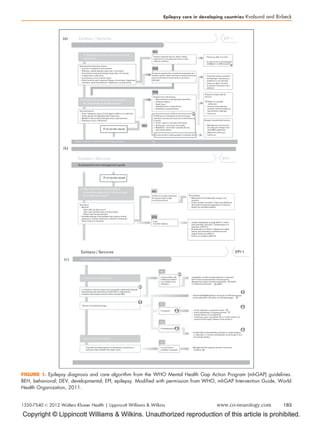
FIGURE 1. Epilepsy diagnosis and care algorithm from the WHO Mental Health Gap Action Program (mhGAP) guidelines.
BEH, behavioral; DEV, developmental; EPI, epilepsy. Modified with permission from WHO, mhGAP Intervention Guide, World
Health Organization, 2011.


1350-7540 ß 2012 Wolters Kluwer Health | Lippincott Williams  Wilkins                                                                                                                         www.co-neurology.com               183

Copyright © Lippincott Williams  Wilkins. Unauthorized reproduction of this article is prohibited.
Seizure disorders


 stocking phenobarbital altogether or have increased        4.92 (95% CI 4.0–6.1). Deaths were due to accidents
 costs to offset the additional burden of handling a        (59%), drowning (45%), sudden unexplained death
 controlled substance. Unfortunately, the remaining         in epilepsy (14%) and status epilepticus (6.9%), with
 available AEDs are largely out of the economic reach       the risk of drowning being 82 times higher in PWE
                                                                                              
 of many people in low-income settings.                     than the general population [2 ].
      Efforts to identify macrolevel factors that               Another critical yet only recently appreciated
 explain international variation in the treatment           global issue in epilepsy care is the risk of drug
 gap have determined that coming from a poorer              interactions between AEDs and antiretrovirals
 country [OR 1.55; 95% confidence interval (CI)             (ARVs), an interaction with potentially devastating
 1.32–1.82] and residing in a rural region (OR 2.10;        public health consequences if AED-induced subther-
 95% CI 1.40–2.98) are independent risk factors for a       apeutic levels of ARVs cause ARV failure, increased
                           
 higher treatment gap [33 ]. Unfortunately, temporal        HIV infectivity and the spread of ARV-resistant
 trends assessed from 1987–2007 suggest there has           forms of the HIV virus. Up to 55% of people living
 been no significant global improvement in the treat-       with HIV may require an AED for seizures or another
 ment gap over the past 20 or more years (OR 0.92; CI       indication (e.g. neuropathic pain) at some time
 0.79–1.07). Development of multitiered healthcare          during the clinical course of their disease. In January
 programs with a strong primary care base and refer-        2012, an American Academy of Neurology (AAN)–
 ral systems, increased infrastructure and models of        WHO collaboration released the following clinical
 drug distribution, as well as media campaigns to           care guidelines for the treatment of comorbid epi-
                                                                               
 increase awareness and combat prejudice and                lepsy and HIV [48 ]:
 stigma surrounding epilepsy could offer hope for
 treatment gap reduction.                                   (1) Patients receiving phenytoin may require a lopi-
                                                                navir/ritonavir dosage increase of about 50% to
 CLINICAL CARE GUIDELINES                                       maintain unchanged serum concentrations.
 Given the relative lack of support for mental health       (2) Patients receiving valproic acid may require
 sector funding and human resources, most of the                a zidovudine dosage reduction to maintain
 burden of diagnosing epilepsy falls on the primary             unchanged serum zidovudine concentrations.
 care providers in LMICs, making the optimal role of        (3) Coadministration of valproic acid and efavirenz
 the few neurologists working in such environments              may not require efavirenz dosage adjustment.
 one of advocate and educator of primary care workers       (4) Patients receiving ritonavir/atazanavir may
 [47]. The recently released WHO evidence-based                 require a lamotrigine dosage increase of about
 guidelines for epilepsy and seizure care in low-               50% to maintain unchanged lamotrigine serum
 income countries offer a multitiered framework for             concentrations.
                                         
 addressing the mental health gap [35 ] (see Fig. 1).       (5) Coadministration of raltegravir or atazanavir
 The clinical care algorithms provided in these guide-          and lamotrigine may not require lamotrigine
 lines have to be adapted to local resources and needs.         dosage adjustment.
 Facilitators’ guides to accompany the guidelines will      (6) Coadministration of raltegravir and midazolam
 be released in 2012. The development and validation            may not require midazolam dosage adjustment.
 of quality indicators for epilepsy care appropriate for    (7) Patients may be counseled that it is unclear
 use in developing countries is needed to provide               whether dosage adjustment is necessary when
 baseline estimates of care quality and facilitate evalu-       other AEDs and ARVs are combined.
 ations to determine if implementation of the Mental        (8) It may be important to avoid enzyme-inducing
 Health Gap Action Program (mhGAP) program                      AEDs in people on ARV regimens that include
 improves epilepsy care.                                        protease inhibitors or non-nucleotide reverse
     The mhGAP guidelines include recommen-                     transcriptase inhibitors, as pharmacokinetic
 dations regarding counseling and safety assessments            interactions may result in virologic failure, which
 to avoid seizure-related injuries, and the need for            has clinical implications for disease progression
 patient and family education on these matters is               and development of ARV resistance. If such regi-
 more critical than perhaps was previously appreci-             mens are required for seizure control, patients
 ated. As part of the China Demonstration Project,              may be monitored through pharmacokinetic
 population-based, proportional mortality ratios                assessments to ensure efficacy of the ARV
 (PMRs) for PWE in rural West China were obtained.              regimen.
 The findings which compared mortality rates over a
 28-month period for PWE relative to age-matched                Unfortunately, unless/until epilepsy care
 individuals under age 35 from the same region              becomes a priority for public policy makers and
 found an overall standardized mortality ratio of           global donors, enzyme-inducing AEDs will remain

 184     www.co-neurology.com                                                      Volume 25  Number 2  April 2012

Copyright © Lippincott Williams  Wilkins. Unauthorized reproduction of this article is prohibited.
Epilepsy care in developing countries Kvalsund and Birbeck

                                                                                        2. Mu J, Liu L, Zhang Q, et al. Causes of death among people with convulsive
the only treatment option in developing countries                                         epilepsy in rural West China: a prospective study. Neurology 2011; 77:132–
where monitoring of AED and/or ARV drug levels is                                           137.
                                                                                       This study, which arose from the ILAE China Demonstration Project, provides the
not an option, making these critical recommen-                                         first population-based proportional mortality data for epilepsy in a developing
dations a mute point.                                                                  country and confirms that epilepsy contributes to premature mortality.
                                                                                        3. Birbeck G, Hesdorffer D. The geography of epilepsy: a fatal disease in
                                                                                            resource-poor settings. Neurology 2011; 77:96–97.
                                                                                        4. Mental Health Atlas 2011. http://www.whqlibdoc.who.int/publications/2011/
CONCLUSION                                                                                  9799241564359_eng.pdf. [Accessed 4 November 2011]
                                                                                        5. Janca A, Aarli JA, Prilipko L, et al. WHO/WFN survey of neurological services:
New insights into the causes and consequences of                                            a worldwide perspective. J Neurol Sci 2006; 247:29–34.
                                                                                        6. Bruckner TA, Scheffler RM, Shen G, et al. The mental health workforce gap in
epilepsy in developing countries offer opportunities                                       low- and middle-income countries: a needs-based approach. Bull World
for prevention and/or improved treatment, which                                             Health Organ 2011; 89:184–194.
                                                                                       This work uses a needs-based approach to detail the deficit in healthcare workers
are complemented by recently released epilepsy                                         for epilepsy care provision in developing countries.
care guidelines for use in such a setting, but without                                  7. WHO. Global Burden of Disease 2010. http://www.who.int/healthinfo/
                                                                                            global_burden_disease/GBD_2005_study/en/index.html. [Accessed 4
substantial investments from the international                                              November 2011]
community and increased prioritization by                                               8. WHO Noncommunicable Diseases and Mental Health. Global status report
                                                                                            on noncommunicable diseases. WHO; 2011 http://www.whqlibdoc.who.int/
Ministries of Health, epilepsy will continue to be                                          publications/2011/9789240686458_eng.pdf. [Accessed 4 November
characterized as an extremely cost-effective con-                                           2011]
                                                                                        9. Birbeck GL. Where did all the other noncommunicable diseases go? BMJ
dition to treat, which, inexplicably, remains largely                                       2011; 343:d5785.
untreated.                                                                             10. Oluwole O. Incidence and risk factors of early posttraumatic seizures in
                                                                                            Nigerians. Brain Injury 2011; 25:980–988.
                                                                                       11. Benamer HT, Grosset DG. A systematic review of the epidemiology of
Acknowledgements                                                                            epilepsy in Arab countries. Epilepsia 2009; 50:2301–2304.
                                                                                       12. Singhi P. Infectious causes of seizures and epilepsy in the developing world.
We thank Vanderbilt’s Department of Neurology for                                           Dev Med Child Neurol 2011; 53:600–609.
their willingness to provide M.P.K. time to continue to                                13. Yemadje LP, Houinato D, Quet F, et al. Understanding the differences
                                                                                            in prevalence of epilepsy in tropical regions. Epilepsia 2011; 52:1376–
pursue her interest in international health and this                                        1381.
work.                                                                                  14. Muto A, Oguni H, Takahashi Y, et al. Nationwide survey (incidence, clinical
                                                                                            course, prognosis) of Rasmussen’s encephalitis. Brain Dev 2011; 32:445–
                                                                                            453.
Conflicts of interest                                                                  15. Anga G, Barnabas R, Kaminiel O, et al. The aetiology, clinical presentations
                                                                                            and outcome of febrile encephalopathy in children in Papua New Guinea. Ann
G.L.B. has received research funding from the US NIH,                                       Trop Paediatr 2011; 30:109–118.
                                                                                       16. Lee YS, Quek SC, Koay ES, et al. Chikungunya mimicking atypical Kawasaki
the Dana Foundation, the Doris Duke Charitable Fund                                         disease in an infant. Pediatr Infect Dis J 2011; 29:275–277.
and the Rockefeller Brothers fund for research addressing                              17. Nkouawa A, Sako Y, Itoh S, et al. Serological studies of neurologic helminthic
                                                                                            infections in rural areas of southwest Cameroon: toxocariasis, cysticercosis
epilepsy, seizures, and/or HIV in the African setting.                                      and paragonimiasis. PLoS Negl Trop Dis 2011; 4:e732.
None of these funding sources directly supported this                                  18. Willingham AL 3rd, Wu HW, Conlan J, et al. Combating Taenia solium
                                                                                            cysticercosis in Southeast Asia an opportunity for improving human health
work. She also serves as the Expert Team Leader for                                         and livestock production. Adv Parasitol 2011; 72:235–266.
Neurologic Disorders in the 2010 GBD Study, but did not                                19. Wu L, Wu M, Tian D, et al. Clinical and imaging characteristics of
                                                                                            cerebral schistosomiasis. Cell Biochem Biophys 2011. [Epub ahead of
accept any personal compensation for the work. She was                                      print]
an Advisor for the WHO’s development of the mhGAP                                      20. Blocher J, Schmutzhard E, Wilkins PP, et al. A cross-sectional study of people
                                                                                            with epilepsy and neurocysticercosis in Tanzania: clinical characteristics and
programme and received travel support to attending                                          diagnostic approaches. PLoS Negl Trop Dis 2011; 5:e1185.
planning meetings but accepted no personal compen-                                     21. Carabin H, Ndimubanzi PC, Budke CM, et al. Clinical manifestations asso-
                                                                                            ciated with neurocysticercosis: a systematic review. PLoS Negl Trop Dis
sation for this work. M.P.K. has received funding as a                                      2011; 5:e1152.
Fulbright Scholar and from the US NIH through the                                      22. Goel D, Dhanai JS, Agarwal A, et al. Neurocysticercosis and its impact on
                                                                                            crude prevalence rate of epilepsy in an Indian community. Neurol India 2011;
Fogarty International Center. None of these funding                                         59:37–40.
sources directly supported this work.                                                  23. Bruneau N, Szepetowski P. The role of the urokinase receptor in epilepsy, in
                                                                                            disorders of language, cognition, communication and behavior, and in the
                                                                                            central nervous system. Curr Pharm Des 2011; 17:1914–1923.
                                                                                       24. Birbeck GL, Beare N, Lewallen S, et al. Identification of malaria retinopathy
                                                                                            improves the specificity of the clinical diagnosis of cerebral malaria: findings
REFERENCES AND RECOMMENDED                                                                  from a prospective cohort study. Am J Trop Med Hyg 2010; 82:231–
READING                                                                                     234.
Papers of particular interest, published within the annual period of review, have      25. Duggan MB. Epilepsy in rural Ugandan children: seizure pattern, age of onset
been highlighted as:                                                                        and associated findings. Afr Health Sci 2011; 10:218–225.
   of special interest                                                                26. Dulac O. Cerebral malaria and epilepsy. Lancet Neurol 2011; 9:1144–
 of outstanding interest                                                                  1145.
Additional references related to this topic can also be found in the Current           27. Idro R, Kakooza-Mwesige A, Balyejjussa S, et al. Severe neurological seque-
World Literature section in this issue (p. 212).                                            lae and behaviour problems after cerebral malaria in Ugandan children. BMC
                                                                                            Res Notes 2011; 3:104.
 1. Birbeck GL, Molyneux ME, Kaplan PW, et al. Blantyre Malaria Project Epilepsy       28. Idro R, Marsh K, John CC, et al. Cerebral malaria: mechanisms of brain injury
    Study (BMPES) of neurological outcomes in retinopathy-positive paediatric              and strategies for improved neurocognitive outcome. Pediatr Res 2011;
     cerebral malaria survivors: a prospective cohort study. Lancet Neurol 2010;            68:267–274.
     9:1173–1181.                                                                      29. WHO. Severe falciparum malaria. World Health Organization, Communicable
This prospective cohort study followed 132 cerebral malaria survivors and 264               Diseases Cluster. Trans R Soc Trop Med Hyg. 2000; 94(Suppl 1):S1–S90.
age-matched controls to evaluate neurologic outcomes in cerebral malaria survi-        30. Postels DG, Birbeck GL. Children with retinopathy-negative cerebral malaria:
vors over a 3-year observation period. In addition to epilepsy, which occurred in 9%        a pathophysiologic puzzle. Pediatr Infect Dis J 2011; 30:953–956.
of survivors and none of the control children, developmental delays and behavioral     31. White VA. Malaria in Malawi: inside a research autopsy study of pediatric
disorders were more common in cerebral malaria survivors.                                   cerebral malaria. Arch Pathol Lab Med 2011; 135:220–226.


1350-7540 ß 2012 Wolters Kluwer Health | Lippincott Williams  Wilkins                                                    www.co-neurology.com                      185

Copyright © Lippincott Williams  Wilkins. Unauthorized reproduction of this article is prohibited.
Seizure disorders

 32. Beare NA, Lewallen S, Taylor TE, et al. Redefining cerebral malaria by              40. Njamnshi AK, Bissek AC, Yepnjio FN, et al. A community survey of knowledge,
    including malaria retinopathy. Future Microbiol 2011; 6:349–355.                       perceptions, and practice with respect to epilepsy among traditional healers
 This study, which correlated premorbid clinincal data with autopsy findings,                 in the Batibo Health District, Cameroon. Epilepsy Behav 2011; 17:95–
 established the value of identifying the malaria retinopathy. Malaria retinopathy           102.
 is the only premorbid assessment presently available to confirm that malaria is the     41. Osungbade KO, Siyanbade SL. Myths, misconceptions, and misunderstand-
 underlying cause to come in clinically defined cerebral malaria.                             ings about epilepsy in a Nigerian rural community: Implications for community
 33. Meyer AC, Dua T, Ma J, et al. Global disparities in the epilepsy treatment gap:         health interventions. Epilepsy Behav 2011; 21:425–429.
     a systematic review. Bull World Health Organ 2010; 88:260–266.                    42. Barennes H, Sengkhamyong K, Sambany EM, et al. Children’s access to
 This comprehensive review of the literature from 1987 to 2007 provides details on           treatment for epilepsy: experience from the Lao People’s Democratic Repub-
 the epilepsy treatment gap and explores country-level parameters that might                 lic. Arch Dis Child 2011; 96:309–313.
 explain international variations in the treatment gap.                                 43. Iyer RS, Rekha M, Kumar TS, et al. Primary care doctors’ management
 34. Birbeck G, Chomba E, Atadzhanov M, et al. Evidence-based guidelines for EEG             behavior with respect to epilepsy in Kerala, southern India. Epilepsy Behav
      utilization at the University Teaching Hospital (UTH). Med J Zambia (in press).        2011; 21:137–142.
 35. WHO. mhGAP: Scaling up care for mental, neurological, and substance use            44. Birbeck G. Ou il n’y pas de Neurologie. World Federation Neurol 2011. http://
    disorders. In: WHO, editor. 2011. http://www.who.int/mental_health/mhgap_              neurology.msu.edu/downloads/where%20there%20is%20no%20neuro
      final_english.pdf. [Accessed 4 November 2011]                                           logist_whole%20book.pdf. [Accessed 8 November 2011]
 These are the recently released evidence-based clinical care guidelines for mental,    45. Odermatt P, Ly S, Simmala C, et al. Availability and costs of antiepileptic drugs
 neurological and substance abuse disorders in low-income countries. Other                   and quality of phenobarbital in Vientiane municipality, Lao PDR. Neuro-
 neurologic disorders included are dementia and developmental disabilities.                  epidemiology 2007; 28:169–174.
 36. Chomba EN, Haworth A, Mbewe E, et al. The current availability of anti-            46. Mac TL, Le VT, Vu AN, et al. AEDs availability and professional practices in
      epileptic drugs in Zambia: implications for the ILAE/WHO ‘out of the                   delivery outlets in a city center in southern Vietnam. Epilepsia 2006; 47:330–
      shadows’ campaign. Am J Trop Med Hyg 2010; 83:571–574.                                 334.
 37. Rafael F, Houinato D, Nubukpo P, et al. Sociocultural and psychological            47. Birbeck GL. Epilepsy care in developing countries: part I of II. Epilepsy Curr
      features of perceived stigma reported by people with epilepsy in Benin.                2010; 10:75–79.
      Epilepsia 2011; 51:1061–1068.                                                     48. Birbeck G, French J, Perucca E, et al. Evidence-based guideline: antiepileptic
 38. Babikar HE, Abbas IM. Knowledge, practice and attitude toward epilepsy                 drug selection for people with HIV/AIDS. Neurology 2012; 78:139–145.
      among primary and secondary school teachers in South Gezira locality,             This publication describes jointly developed AAN–WHO guidelines for the
      Gezira State, Sudan. J Family Community Med 2011; 18:17–21.                       treatment of comorbid epilepsy and HIV. Although the guidelines may raise
 39. Cavanna AE, Cavanna S, Cavanna A. Epileptic seizures and spirit possession         awareness regarding important drug interactions, resources in most developing
      in Haitian culture: report of four cases and review of the literature. Epilepsy   countries will prevent their implementation unless a broader range of AEDs is
      Behav 2011; 19:89–91.                                                             made available.


 186          www.co-neurology.com                                                                                        Volume 25  Number 2  April 2012

Copyright © Lippincott Williams  Wilkins. Unauthorized reproduction of this article is prohibited.

Epilepsia

  • 1.
    REVIEW CURRENT OPINION Epilepsy care challenges in developing countries Michelle P. Kvalsund a and Gretchen L. Birbeck b,c Purpose of review This review discusses recent literature relevant to the diagnosis and treatment of epilepsy in developing countries with particular attention to underlying causes, natural history, and advances made toward optimizing systems of care and bridging the treatment gap. Recent findings Prospective data suggest that cerebral malaria-induced brain injury may explain the high prevalence of epilepsy in malaria-endemic regions. Population-based mortality studies support the long proposed hypothesis that seizure-related deaths contribute to excessive premature mortality. WHO guidelines have the potential to improve care, but macrolevel barriers related to pharmaceutical regulation and distribution continue to contribute to the treatment gap. Evidence-based guidelines endorsed by the WHO and American Academy of Neurology regarding the optimal management of comorbid epilepsy and HIV may raise awareness regarding critical drug interactions between antiepileptic drugs and antiretrovirals, but are also problematic as the treatment regimen and diagnostic facilities routinely available in developing countries will prevent most healthcare providers from following the recommendations. Summary New insights into the causes, natural history and best care practices for epilepsy in developing countries are available but without prioritization and action from policy makers, the present treatment gap will likely to persist. Keywords cost, developing country, drug interactions, epilepsy, HIV, mortality, pharmaceutical regulations, pharmacokinetics, public policy, treatment gap INTRODUCTION countries have drawn international attention to the Epilepsy is the most common chronic neurologic ‘treatment gap’. disorder in the developing world, wherein 80% of The epilepsy treatment gap is typically defined people with epilepsy (PWE) reside. Where available, as the proportion of people who require but are not epilepsy care in low-income countries remains receiving treatment. It has been proposed as an extremely basic and usually consists of first-gener- important parameter for access to care and quality ation antiepileptic drugs (AEDs) delivered by non- of care across health systems and populations. With physician healthcare workers who have no recourse an average gap of approximately 75% for low- to electroencephalography (EEG), neuroimaging, income countries and the poorest in Africa having serum–drug level monitoring or specialist referral. a gap of more than 90%, perhaps ‘chasm’ would be a Recent malaria research from Malawi may at least better term. Whether sufficient global political will partially explain the extremely high rates of epilepsy can be harnessed to prioritize access to epilepsy care & reported from some regions of Africa [1 ]. Findings && from the China Demonstration Project [2 ] con- a firmed the sad reality that epilepsy is a frequently Department of Neurology, Vanderbilt University Medical Center, Medical fatal condition in low-income countries, perhaps Center North, Nashville, Tennessee, bInternational Neurologic & Psychi- atric Epidemiology Program [INPEP], Michigan State University, East even when treatment is made available [3]. Such Lansing, Michigan, USA and cEpilepsy Care Team, Chikankata Hospital, advances in knowledge have provided clinicians Mazabuka, Zambia with new information regarding risk factors for Correspondence to Gretchen L. Birbeck, International Neurologic & epilepsy and emphasize the critical need for coun- Psychiatric Epidemiology Program [INPEP], Michigan State University, seling on physical safety and the prevention of #324 West Fee Hall, East Lansing, MI 48824, USA. Tel: +1 517 884 seizure-related injuries, particularly where exposure 0277; fax: +1 517 884 0275; e-mail: Birbeck@msu.edu to potential drowning or burns is probable. WHO Curr Opin Neurol 2012, 25:179–186 clinical care guidelines for epilepsy in developing DOI:10.1097/WCO.0b013e328350baf8 1350-7540 ß 2012 Wolters Kluwer Health | Lippincott Williams & Wilkins www.co-neurology.com Copyright © Lippincott Williams & Wilkins. Unauthorized reproduction of this article is prohibited.
  • 2.
    Seizure disorders WHO in conjunction with the World Federation KEY POINTS of Neurology found only 0.03–0.07 neurologists Population-based mortality data from the China per 100 000 people in Africa and South-East Asia. Demonstration project confirm that epilepsy is a Numbers were even direr for neurological nurses frequently fatal condition in developing country settings. and subspecialists such as pediatric neurologists and neurosurgeons [5]. A recent survey of 58 LMICs In malaria-endemic regions, cerebral malaria may be estimated deficits in psychiatrists, psychiatric among the most common causes of epilepsy, causing up to 135 000 new cases annually in Africa. nurses, and psychosocial support workers in 67, 95, and 79% of countries, respectively. In terms of If broadly implemented, newly released WHO epilepsy crude numbers, deficits of 11 000 psychiatrists, care guidelines could decrease the treatment gap and 128 000 nurses, and 100 000 psychosocial support improve care in low-income countries. providers were estimated [6 ]. These figures likely Where enzyme-inducing antiepileptic drugs (AEDs) are underestimate the true staffing shortfalls, given the only treatment options, and HIV prevalence is high, that survey respondents represented a convenience the co-usage of these AEDs and antiretroviral agents sample of countries willing and able to answer the presents a public health crisis that has yet to survey questions and the calculations were based on be addressed. care of eight specific conditions (including epi- lepsy), and thus do not account for the total burden of mental health disorders. In 2012, findings from the Global Burden of remains unclear, but we now know that lives clearly Diseases, Injuries and Risk Factors Study should hang in the balance. become available. This update of the seminal 1995 study includes a more objective weighting system for assigning disabilities to the Disability-Adjusted HEALTH SYSTEMS FOR EPILEPSY CARE Life Years [DALY] [7]. Tens of thousands of people IN DEVELOPING COUNTRIES worldwide ranked lay descriptions that described a Understanding the challenges of the diagnosis and person’s existence living in a particular health state treatment of epilepsy in the developing world and rank accordingly. See Table 1 for the lay descrip- requires reflection on how developing countries tions of epilepsy used. The new DALY metric may are defined and how, even within these countries, propel the global attributable burden of epilepsy parallel private and public healthcare systems exist even higher. that are distinctly disparate. For those with the Given the highly stigmatized nature of epilepsy financial capacity to access the private sector, epi- and mental health disorders, structural bias may lepsy care is comparable to care provided by many also exist. The Non-Communicable Disease (NCD) centers of excellence in developing countries. How- Alliance, which aims to garner commitments from ever, most PWE who seek care at all must do so wealthy donor countries, nongovernment organiz- through the usually underfunded public health ations and Ministries of Health in LIMCs to address sector. Public health systems in many low-income the burden of NCDs, excludes epilepsy as well as countries, particularly those in tropical climes, con- most other mental and neurologic disorders [8]. tinue to focus resources and training on the pro- Consequently, the September 2011 landmark vision of care for acute, infectious diseases. Limited United Nations General Assembly on NCDs did attention is given to the need for services appropri- not address the epilepsy treatment gap [9]. ate for the management of chronic, noncommuni- cable disorders. Furthermore, within many lower middle-income countries (LMICs), neurologic dis- UNIQUE CAUSES FOR EPILEPSY orders fall into the realm of mental health, one of Environmental and genetic factors likely play a role the most notoriously underfunded health sectors. in the relatively high prevalence and incidence The median percentage of health expenditures dedi- estimates identified in low-income, tropical cated to mental health was recently estimated at countries. Frequency estimates of specific causes 0.5% in low-income countries compared to 5.1% in of epilepsy are largely unknown in most LMICs, high-income countries [4]. but the idiopathic (genetic), neurodevelopmental, Why are mental and neurological services so and posttraumatic [10] causes of epilepsy recognized disproportionately underfunded? The dearth of in the West undoubtedly also result in epilepsy in human resources with neurologic or psychiatric developing regions [11]. clinical skills may be one key reason. A survey of Recent reviews have better characterized the key personnel in 109 countries conducted by the geographic distributions of infectious pathogens 180 www.co-neurology.com Volume 25 Number 2 April 2012 Copyright © Lippincott Williams Wilkins. Unauthorized reproduction of this article is prohibited.
  • 3.
    Epilepsy care indeveloping countries Kvalsund and Birbeck Table 1. Lay description of the epilepsy health states proposed for disability weighting in the 2010 Global Burden of Diseases Study Severe epilepsy This person has very frequent, recurrent, unpredictable and sometimes long episodes of loss of consciousness with shaking of the limbs and sometimes with bowel or bladder incontinence. Medications cause significant drowsiness and impaired concentration. Gradually, the person is having problems thinking, remembering things and concentrating on a task. Between episodes, they worry about the injuries and embarrassment associated with future episodes. The risk of injuries and death is much higher in this person because the episodes are not responding to any treatment which might be taken. Treated, seizure free This person, in the past, has had recurrent, unpredictable episodes of loss of consciousness with shaking of the limbs and sometimes with bowel or bladder incontinence. The person is currently taking medications, which cause some drowsiness and impaired concentration but are successfully preventing these episodes. The person still worries about injuries and embarrassment associated with future episodes. Treated, with recent seizures This person has recurrent, unpredictable episodes of loss of consciousness with shaking of the limbs and sometimes with bowel or bladder incontinence. Medications are making these episodes less frequent and less severe, but cause some drowsiness and impaired concentration. Between episodes, the person worries about the injuries and embarrassment associated with future episodes. Untreated, with recent seizures This person has frequent recurrent, unpredictable episodes of loss of consciousness with shaking of the limbs and sometimes with bowel or bladder incontinence. Between episodes, the person worries about the injuries and embarrassment associated with future episodes. The risk of injuries and death is much higher in this person because they are not taking any treatment for these episodes. in developing countries along with their neuro- described malaria-specific retinopathy has emerged logical manifestations and sequelae [12,13]. Central as a way to differentiate patients with coma and nervous system infectious pathogens with epilepsy- asymptomatic parasitemia from those with patho- related sequelae are more common in developing logical changes indicative of cerebral malaria at countries and include bacterial meningitis and viral autopsy as confirmed by sequestration of parasitized encephalitides, such as Japanese encephalitis [14], erythrocytes in the cerebral microvasculature [32 ]. dengue [15], and chikungunya [16]. Common trop- The presence of retinopathy in comatose children ical pathogens with associated postinfectious seizure identifies the pathological changes of cerebral disorders include tuberculosis, HIV, toxocariasis [17], malaria seen at autopsy with 95% sensitivity and paragonimiasis [17] and schistosomiasis [18,19]. 90% specificity [24,32 ,33 ]. In 2010, the first pro- Neurocysticercosis continues to contribute subs- spective cohort study of neurological outcomes in tantially to the global burden of epilepsy [20–22]. well characterized cerebral malaria survivors was Public health endeavors aimed at improving public published. Utilizing age-matched noncomatose sanitation and animal husbandry may ultimately children as controls, 12 of 132 (9%) cerebral malaria decrease neurocysticercosis infections and sub- survivors developed epilepsy within 3 years com- sequently epilepsy rates [18], but no successful inter- pared to zero of 264 controls [odds ratio (OR) ventions have been documented to date. 4.8–15.3] [1 ]. Risk factors for epilepsy following An understanding of the neurological sequelae cerebral malaria included a higher maximum of cerebral malaria is also beginning to emerge temperature and seizures during the acute infection. [23–28]. Malaria has long been thought to contrib- Careful follow-up and a low threshold for suspicion ute to the global burden of epilepsy, particularly in of epilepsy in pediatric cerebral malaria survivors are sub-Saharan Africa. However, diagnostic uncer- warranted. Neuroprotective interventions during tainty and the lack of prospective studies previously cerebral malaria to decrease long-term sequelae limited our ability to estimate its contribution. The including epilepsy also deserve consideration. WHO definition of cerebral malaria includes any patient with unexplained coma and Plasmodium falciparum parasitemia [29]. This pragmatic defi- TECHNICAL CAPACITY FOR DIAGNOSIS nition results in the over-diagnosis of cerebral Clinical history and physical examination are gen- malaria and the misattribution of postinfectious erally the only routinely available diagnostic modal- coma to the malaria parasite [30,31]. A recently ities available to clinicians in developing regions. 1350-7540 ß 2012 Wolters Kluwer Health | Lippincott Williams Wilkins www.co-neurology.com 181 Copyright © Lippincott Williams Wilkins. Unauthorized reproduction of this article is prohibited.
  • 4.
    Seizure disorders Neuroimagingis limited. Even at the tertiary care provided incentives. Given the local preference level, computerized tomography (CT) scanners are toward traditional medicine for epilepsy care in available in only 70.5% of low-income countries many such communities, the finding that 52% and MRI capacity is even more limited at 29.6% would place an object in the mouth of a person [4]. In Africa, resources were even more significantly actively convulsing and 40.2% would hold or tie the constrained at 61.8% for CT and 20.6% for MRI. EEG person, and other possible dangerous actions being capacity is similarly limited and guidelines for care identified, also speaks to the need to incorporate in developing countries explicitly recommend that traditional healers into educational programs on EEG is not to be used for routine diagnosis and epilepsy care. In Lao People’s Democratic Republic treatment [34,35 ]. Therapeutic drug monitoring (PDR), traditional concepts of health and illness availability is also low among many low-income complicate treatment of chronic illnesses like epi- regions, including Africa (45.1%) and western lepsy, and medications are discontinued after 3 days Pacific (54.6%). [42]. TREATMENT DELIVERY Healthcare worker factors The challenges of providing AEDs in developing Given that most epilepsy care in developing countries can be divided into three broad and inter- countries is delivered by nonphysician healthcare secting categories: patient-level, provider-level, and workers who may have little formal neurologic health system-based factors. training, the lack of appropriate knowledge among available clinicians is a major problem. Data from Kerala, India indicate that among 500 physician- Patient-level factors level primary care providers, only 2.6% acknow- Individual-level patient characteristics common in ledged having treated patients with focal seizures, developing countries that limit access to care suggesting many go undiagnosed. Subtherapeutic include lack of financial resources for evaluation dosing was also noted to be an issue, with or transport to a local healthcare facility, the direct 28–66% recommending doses below defined daily cost of drug [36], sociocultural beliefs about epilepsy doses [43]. Few training manuals exist that are aimed [37] and epilepsy-associated stigma [37]. The latter at preparing nonphysician healthcare workers to have not only been well documented, but persist in provide relatively independent care for people with knowledge–attitude–practice studies [38]. In some neurologic disorders, although wherein such edu- cultures, epilepsy is understood as a disease of the cational tools exist, translations into languages supernatural, a spiritual possession, evil spirits, or other than English are becoming available [44]. retribution for sin [39]. Perhaps naturally then, many patients in these cultures seek help first from traditional indigenous healers who offer psychologi- Macro-level barriers to care cal and spiritual support in a sociocultural context Among patients who overcome personal barriers to that likely exceeds their experience in medical clin- accessing epilepsy treatment and who are also for- ics [40]. Traditional healers also often exist within tunate enough to encounter a healthcare provider local communities, negating the need for travel to a with sufficient training to diagnose and prescribe an distant healthcare posts, and cost significantly less. appropriate treatment, many will encounter health For example, a study in a rural Nigerian community system limitations that further complicate treat- noted that although the nearest community health ment and AED adherence. Phenobarbital has long post was 13 km away, seven traditional healers been recognized as the most affordable and broadly existed within the community [41]. Some innova- available AED in the poorest countries, but between tive approaches have tried to incorporate traditional 2006–2009 reduced phenobarbital availability was healers into the referral system. A survey of 102 (51% reported in several countries including Vietnam, response rate) traditional healers serving a popu- Lao PDR and Zambia [36,45,46]. In Zambia, inter- lation of over 90 000 people in northwest Cameroon views with pharmacy staff directly linked this found that 95% would refer a patient with epilepsy change to increased regulatory enforcement of to hospital [40]. Traditional healers in this survey phenobarbital as a controlled substance [36]. may have been biased toward this answer given that Increased enforcement came largely as a result of surveys were conducted in person and in the pres- pharmaceutical regulatory capacity building activi- ence of medical staff, but the interest of these healers ties led by the WHO. An unintended consequence of must have been high, as participating in the study the capacity-building activities is that many phar- required trekking several kilometers without any macies in developing countries have stopped 182 www.co-neurology.com Volume 25 Number 2 April 2012 Copyright © Lippincott Williams Wilkins. Unauthorized reproduction of this article is prohibited.
  • 5.
    Epilepsy care indeveloping countries Kvalsund and Birbeck (a) Epilepsy / Seizures EPI 1 NO 1. Does the person have convulsive If person experiences 2 or fewer criteria Follow up after 3 months. seizures? suspect non-convulsive seizures or other medical condition. In case of recurrent episodes, CONSULT A SPECIALIST. Ask about the following criteria: Loss of or impaired consciousness YES Stiffness, rigidity lasting longer than 1–2 minutes Convulsive movements lasting longer than 1–2 minutes If person experiences convulsive movements and Tongue bite or self-injury 2 other criteria, these could be convulsive seizures Treat the medical condition Incontinence of urine and/or feces and could have an acute cause or be due to Antiepileptic maintenance After the abnormal movement: fatigue, drowsiness, sleepiness epilepsy treatment is not required confusion, abnormal behavior, headache or muscle aches Follow up after 3 months to assess if the person has epilepsy. YES Suspect complex febrile Suspect an acute etiology seizure. Neuroinfection (meningitis/encephalitis) 2. If convulsive seizures are present, Cerebral malaria Refer for hospital do they have an acute cause? Head injury admission. Hypoglycemia or hypontremia Look for neuroinfection Substance use/withdrawal (suspect cerebral malaria in Ask and look for: high endemic settings). Fever, headache, signs of meningeal irritation, e.g. stiff neck Follow up If they started immedieately after head injury IF YES and a child aged 6 months to 6 years Metabolic abnormality (hypoglycemia, hyponatremia) with fever and seizures have one of the following Substance use or withdrawal 3 criteria Suspect simple febrile seizure Focal – starts in one part of the body NO Prolonged – more than 15 minutes Manage fever and look for Repetitive – more than 1 episode during its cause according to the If no acute cause the current illness local IMCI guidelines. Observe for 24 hours. If none of the 3 criteria present in a febrile child Follow up. Epilepsy / Seizures Assessment and management guide 34 (b) Epilepsy / Seizures EPI1 Assessment and management guide If no acute cause 3. Has the person had at least 2 convulsive seizures in the last year NO on 2 different days? If there is no clear cause and Not epilepsy the person had a single Maintenance of antiepileptic drugs is not convulsive seizure required. Follow up after 3 months. If there are additional Ask about: abnormal movements suggestive of a seizure, Severity: assess for possible epilepsy. –How often do they occur? –How many did they have in the last year? –When was the last episode? Possible etiology of the epilepsy (any history of birth asphyxia or trauma, head injury, infection of the brain, YES family history of seizures) If yes, Initiate antiepileptic drug EPI 2.1; either consider epilepsy phenobarbital, phenytoin, carbamazepine or valproate. EPI 2.3 Educate about condition, lifestyle and safety issues, and importance of adherence and regular follow-up. EPI 3.1 Follow up regularly. EPI 2.2 Epilepsy / Seizures EPI 1 (c) Assessment and management guide YES 4. Person in special group If asssociated with If available, consider carbamazepine or valproate intellectual disabil- EPI 2.3 (avoid phenobarbital and phenytoin) ity or behavioural Manage associated intellectual disability. DEV disorders or behavioural disorder. BEH In childeren, look for presence of associated intellectual disability (see development disorders module) DEV or behavioural problems (see behavioural disorders module) BEH Advise folate (5mg/day) in all women of child bearing age. Avoid valporate in all women of child bearing age. YES Women of child bearing age If pregnant Avoid valporate in pregnant women. Avoid polytherapy in pregnant women. Advise delivery in a hospital. At delivery, give 1 mg vitamin K i.m. to the newborn to prevent hemorrhagic disease of the newborn. YES If breastfeeding Initiate either phenobarbital, phenytoin, carbamazepine or valporate, or continue antiepileptic drug therapy if this has already started. 5. Concurrent conditions YES Consider possible presence of depression, psychosis or If a concurrent Manage both the epilepsy and the concurrent self-harm (see mhGAP-IG master chart) condition is present condition. FIGURE 1. Epilepsy diagnosis and care algorithm from the WHO Mental Health Gap Action Program (mhGAP) guidelines. BEH, behavioral; DEV, developmental; EPI, epilepsy. Modified with permission from WHO, mhGAP Intervention Guide, World Health Organization, 2011. 1350-7540 ß 2012 Wolters Kluwer Health | Lippincott Williams Wilkins www.co-neurology.com 183 Copyright © Lippincott Williams Wilkins. Unauthorized reproduction of this article is prohibited.
  • 6.
    Seizure disorders stockingphenobarbital altogether or have increased 4.92 (95% CI 4.0–6.1). Deaths were due to accidents costs to offset the additional burden of handling a (59%), drowning (45%), sudden unexplained death controlled substance. Unfortunately, the remaining in epilepsy (14%) and status epilepticus (6.9%), with available AEDs are largely out of the economic reach the risk of drowning being 82 times higher in PWE of many people in low-income settings. than the general population [2 ]. Efforts to identify macrolevel factors that Another critical yet only recently appreciated explain international variation in the treatment global issue in epilepsy care is the risk of drug gap have determined that coming from a poorer interactions between AEDs and antiretrovirals country [OR 1.55; 95% confidence interval (CI) (ARVs), an interaction with potentially devastating 1.32–1.82] and residing in a rural region (OR 2.10; public health consequences if AED-induced subther- 95% CI 1.40–2.98) are independent risk factors for a apeutic levels of ARVs cause ARV failure, increased higher treatment gap [33 ]. Unfortunately, temporal HIV infectivity and the spread of ARV-resistant trends assessed from 1987–2007 suggest there has forms of the HIV virus. Up to 55% of people living been no significant global improvement in the treat- with HIV may require an AED for seizures or another ment gap over the past 20 or more years (OR 0.92; CI indication (e.g. neuropathic pain) at some time 0.79–1.07). Development of multitiered healthcare during the clinical course of their disease. In January programs with a strong primary care base and refer- 2012, an American Academy of Neurology (AAN)– ral systems, increased infrastructure and models of WHO collaboration released the following clinical drug distribution, as well as media campaigns to care guidelines for the treatment of comorbid epi- increase awareness and combat prejudice and lepsy and HIV [48 ]: stigma surrounding epilepsy could offer hope for treatment gap reduction. (1) Patients receiving phenytoin may require a lopi- navir/ritonavir dosage increase of about 50% to CLINICAL CARE GUIDELINES maintain unchanged serum concentrations. Given the relative lack of support for mental health (2) Patients receiving valproic acid may require sector funding and human resources, most of the a zidovudine dosage reduction to maintain burden of diagnosing epilepsy falls on the primary unchanged serum zidovudine concentrations. care providers in LMICs, making the optimal role of (3) Coadministration of valproic acid and efavirenz the few neurologists working in such environments may not require efavirenz dosage adjustment. one of advocate and educator of primary care workers (4) Patients receiving ritonavir/atazanavir may [47]. The recently released WHO evidence-based require a lamotrigine dosage increase of about guidelines for epilepsy and seizure care in low- 50% to maintain unchanged lamotrigine serum income countries offer a multitiered framework for concentrations. addressing the mental health gap [35 ] (see Fig. 1). (5) Coadministration of raltegravir or atazanavir The clinical care algorithms provided in these guide- and lamotrigine may not require lamotrigine lines have to be adapted to local resources and needs. dosage adjustment. Facilitators’ guides to accompany the guidelines will (6) Coadministration of raltegravir and midazolam be released in 2012. The development and validation may not require midazolam dosage adjustment. of quality indicators for epilepsy care appropriate for (7) Patients may be counseled that it is unclear use in developing countries is needed to provide whether dosage adjustment is necessary when baseline estimates of care quality and facilitate evalu- other AEDs and ARVs are combined. ations to determine if implementation of the Mental (8) It may be important to avoid enzyme-inducing Health Gap Action Program (mhGAP) program AEDs in people on ARV regimens that include improves epilepsy care. protease inhibitors or non-nucleotide reverse The mhGAP guidelines include recommen- transcriptase inhibitors, as pharmacokinetic dations regarding counseling and safety assessments interactions may result in virologic failure, which to avoid seizure-related injuries, and the need for has clinical implications for disease progression patient and family education on these matters is and development of ARV resistance. If such regi- more critical than perhaps was previously appreci- mens are required for seizure control, patients ated. As part of the China Demonstration Project, may be monitored through pharmacokinetic population-based, proportional mortality ratios assessments to ensure efficacy of the ARV (PMRs) for PWE in rural West China were obtained. regimen. The findings which compared mortality rates over a 28-month period for PWE relative to age-matched Unfortunately, unless/until epilepsy care individuals under age 35 from the same region becomes a priority for public policy makers and found an overall standardized mortality ratio of global donors, enzyme-inducing AEDs will remain 184 www.co-neurology.com Volume 25 Number 2 April 2012 Copyright © Lippincott Williams Wilkins. Unauthorized reproduction of this article is prohibited.
  • 7.
    Epilepsy care indeveloping countries Kvalsund and Birbeck 2. Mu J, Liu L, Zhang Q, et al. Causes of death among people with convulsive the only treatment option in developing countries epilepsy in rural West China: a prospective study. Neurology 2011; 77:132– where monitoring of AED and/or ARV drug levels is 137. This study, which arose from the ILAE China Demonstration Project, provides the not an option, making these critical recommen- first population-based proportional mortality data for epilepsy in a developing dations a mute point. country and confirms that epilepsy contributes to premature mortality. 3. Birbeck G, Hesdorffer D. The geography of epilepsy: a fatal disease in resource-poor settings. Neurology 2011; 77:96–97. 4. Mental Health Atlas 2011. http://www.whqlibdoc.who.int/publications/2011/ CONCLUSION 9799241564359_eng.pdf. [Accessed 4 November 2011] 5. Janca A, Aarli JA, Prilipko L, et al. WHO/WFN survey of neurological services: New insights into the causes and consequences of a worldwide perspective. J Neurol Sci 2006; 247:29–34. 6. Bruckner TA, Scheffler RM, Shen G, et al. The mental health workforce gap in epilepsy in developing countries offer opportunities low- and middle-income countries: a needs-based approach. Bull World for prevention and/or improved treatment, which Health Organ 2011; 89:184–194. This work uses a needs-based approach to detail the deficit in healthcare workers are complemented by recently released epilepsy for epilepsy care provision in developing countries. care guidelines for use in such a setting, but without 7. WHO. Global Burden of Disease 2010. http://www.who.int/healthinfo/ global_burden_disease/GBD_2005_study/en/index.html. [Accessed 4 substantial investments from the international November 2011] community and increased prioritization by 8. WHO Noncommunicable Diseases and Mental Health. Global status report on noncommunicable diseases. WHO; 2011 http://www.whqlibdoc.who.int/ Ministries of Health, epilepsy will continue to be publications/2011/9789240686458_eng.pdf. [Accessed 4 November characterized as an extremely cost-effective con- 2011] 9. Birbeck GL. Where did all the other noncommunicable diseases go? BMJ dition to treat, which, inexplicably, remains largely 2011; 343:d5785. untreated. 10. Oluwole O. Incidence and risk factors of early posttraumatic seizures in Nigerians. Brain Injury 2011; 25:980–988. 11. Benamer HT, Grosset DG. A systematic review of the epidemiology of Acknowledgements epilepsy in Arab countries. Epilepsia 2009; 50:2301–2304. 12. Singhi P. Infectious causes of seizures and epilepsy in the developing world. We thank Vanderbilt’s Department of Neurology for Dev Med Child Neurol 2011; 53:600–609. their willingness to provide M.P.K. time to continue to 13. Yemadje LP, Houinato D, Quet F, et al. Understanding the differences in prevalence of epilepsy in tropical regions. Epilepsia 2011; 52:1376– pursue her interest in international health and this 1381. work. 14. Muto A, Oguni H, Takahashi Y, et al. Nationwide survey (incidence, clinical course, prognosis) of Rasmussen’s encephalitis. Brain Dev 2011; 32:445– 453. Conflicts of interest 15. Anga G, Barnabas R, Kaminiel O, et al. The aetiology, clinical presentations and outcome of febrile encephalopathy in children in Papua New Guinea. Ann G.L.B. has received research funding from the US NIH, Trop Paediatr 2011; 30:109–118. 16. Lee YS, Quek SC, Koay ES, et al. Chikungunya mimicking atypical Kawasaki the Dana Foundation, the Doris Duke Charitable Fund disease in an infant. Pediatr Infect Dis J 2011; 29:275–277. and the Rockefeller Brothers fund for research addressing 17. Nkouawa A, Sako Y, Itoh S, et al. Serological studies of neurologic helminthic infections in rural areas of southwest Cameroon: toxocariasis, cysticercosis epilepsy, seizures, and/or HIV in the African setting. and paragonimiasis. PLoS Negl Trop Dis 2011; 4:e732. None of these funding sources directly supported this 18. Willingham AL 3rd, Wu HW, Conlan J, et al. Combating Taenia solium cysticercosis in Southeast Asia an opportunity for improving human health work. She also serves as the Expert Team Leader for and livestock production. Adv Parasitol 2011; 72:235–266. Neurologic Disorders in the 2010 GBD Study, but did not 19. Wu L, Wu M, Tian D, et al. Clinical and imaging characteristics of cerebral schistosomiasis. Cell Biochem Biophys 2011. [Epub ahead of accept any personal compensation for the work. She was print] an Advisor for the WHO’s development of the mhGAP 20. Blocher J, Schmutzhard E, Wilkins PP, et al. A cross-sectional study of people with epilepsy and neurocysticercosis in Tanzania: clinical characteristics and programme and received travel support to attending diagnostic approaches. PLoS Negl Trop Dis 2011; 5:e1185. planning meetings but accepted no personal compen- 21. Carabin H, Ndimubanzi PC, Budke CM, et al. Clinical manifestations asso- ciated with neurocysticercosis: a systematic review. PLoS Negl Trop Dis sation for this work. M.P.K. has received funding as a 2011; 5:e1152. Fulbright Scholar and from the US NIH through the 22. Goel D, Dhanai JS, Agarwal A, et al. Neurocysticercosis and its impact on crude prevalence rate of epilepsy in an Indian community. Neurol India 2011; Fogarty International Center. None of these funding 59:37–40. sources directly supported this work. 23. Bruneau N, Szepetowski P. The role of the urokinase receptor in epilepsy, in disorders of language, cognition, communication and behavior, and in the central nervous system. Curr Pharm Des 2011; 17:1914–1923. 24. Birbeck GL, Beare N, Lewallen S, et al. Identification of malaria retinopathy improves the specificity of the clinical diagnosis of cerebral malaria: findings REFERENCES AND RECOMMENDED from a prospective cohort study. Am J Trop Med Hyg 2010; 82:231– READING 234. Papers of particular interest, published within the annual period of review, have 25. Duggan MB. Epilepsy in rural Ugandan children: seizure pattern, age of onset been highlighted as: and associated findings. Afr Health Sci 2011; 10:218–225. of special interest 26. Dulac O. Cerebral malaria and epilepsy. Lancet Neurol 2011; 9:1144– of outstanding interest 1145. Additional references related to this topic can also be found in the Current 27. Idro R, Kakooza-Mwesige A, Balyejjussa S, et al. Severe neurological seque- World Literature section in this issue (p. 212). lae and behaviour problems after cerebral malaria in Ugandan children. BMC Res Notes 2011; 3:104. 1. Birbeck GL, Molyneux ME, Kaplan PW, et al. Blantyre Malaria Project Epilepsy 28. Idro R, Marsh K, John CC, et al. Cerebral malaria: mechanisms of brain injury Study (BMPES) of neurological outcomes in retinopathy-positive paediatric and strategies for improved neurocognitive outcome. Pediatr Res 2011; cerebral malaria survivors: a prospective cohort study. Lancet Neurol 2010; 68:267–274. 9:1173–1181. 29. WHO. Severe falciparum malaria. World Health Organization, Communicable This prospective cohort study followed 132 cerebral malaria survivors and 264 Diseases Cluster. Trans R Soc Trop Med Hyg. 2000; 94(Suppl 1):S1–S90. age-matched controls to evaluate neurologic outcomes in cerebral malaria survi- 30. Postels DG, Birbeck GL. Children with retinopathy-negative cerebral malaria: vors over a 3-year observation period. In addition to epilepsy, which occurred in 9% a pathophysiologic puzzle. Pediatr Infect Dis J 2011; 30:953–956. of survivors and none of the control children, developmental delays and behavioral 31. White VA. Malaria in Malawi: inside a research autopsy study of pediatric disorders were more common in cerebral malaria survivors. cerebral malaria. Arch Pathol Lab Med 2011; 135:220–226. 1350-7540 ß 2012 Wolters Kluwer Health | Lippincott Williams Wilkins www.co-neurology.com 185 Copyright © Lippincott Williams Wilkins. Unauthorized reproduction of this article is prohibited.
  • 8.
    Seizure disorders 32.Beare NA, Lewallen S, Taylor TE, et al. Redefining cerebral malaria by 40. Njamnshi AK, Bissek AC, Yepnjio FN, et al. A community survey of knowledge, including malaria retinopathy. Future Microbiol 2011; 6:349–355. perceptions, and practice with respect to epilepsy among traditional healers This study, which correlated premorbid clinincal data with autopsy findings, in the Batibo Health District, Cameroon. Epilepsy Behav 2011; 17:95– established the value of identifying the malaria retinopathy. Malaria retinopathy 102. is the only premorbid assessment presently available to confirm that malaria is the 41. Osungbade KO, Siyanbade SL. Myths, misconceptions, and misunderstand- underlying cause to come in clinically defined cerebral malaria. ings about epilepsy in a Nigerian rural community: Implications for community 33. Meyer AC, Dua T, Ma J, et al. Global disparities in the epilepsy treatment gap: health interventions. Epilepsy Behav 2011; 21:425–429. a systematic review. Bull World Health Organ 2010; 88:260–266. 42. Barennes H, Sengkhamyong K, Sambany EM, et al. Children’s access to This comprehensive review of the literature from 1987 to 2007 provides details on treatment for epilepsy: experience from the Lao People’s Democratic Repub- the epilepsy treatment gap and explores country-level parameters that might lic. Arch Dis Child 2011; 96:309–313. explain international variations in the treatment gap. 43. Iyer RS, Rekha M, Kumar TS, et al. Primary care doctors’ management 34. Birbeck G, Chomba E, Atadzhanov M, et al. Evidence-based guidelines for EEG behavior with respect to epilepsy in Kerala, southern India. Epilepsy Behav utilization at the University Teaching Hospital (UTH). Med J Zambia (in press). 2011; 21:137–142. 35. WHO. mhGAP: Scaling up care for mental, neurological, and substance use 44. Birbeck G. Ou il n’y pas de Neurologie. World Federation Neurol 2011. http:// disorders. In: WHO, editor. 2011. http://www.who.int/mental_health/mhgap_ neurology.msu.edu/downloads/where%20there%20is%20no%20neuro final_english.pdf. [Accessed 4 November 2011] logist_whole%20book.pdf. [Accessed 8 November 2011] These are the recently released evidence-based clinical care guidelines for mental, 45. Odermatt P, Ly S, Simmala C, et al. Availability and costs of antiepileptic drugs neurological and substance abuse disorders in low-income countries. Other and quality of phenobarbital in Vientiane municipality, Lao PDR. Neuro- neurologic disorders included are dementia and developmental disabilities. epidemiology 2007; 28:169–174. 36. Chomba EN, Haworth A, Mbewe E, et al. The current availability of anti- 46. Mac TL, Le VT, Vu AN, et al. AEDs availability and professional practices in epileptic drugs in Zambia: implications for the ILAE/WHO ‘out of the delivery outlets in a city center in southern Vietnam. Epilepsia 2006; 47:330– shadows’ campaign. Am J Trop Med Hyg 2010; 83:571–574. 334. 37. Rafael F, Houinato D, Nubukpo P, et al. Sociocultural and psychological 47. Birbeck GL. Epilepsy care in developing countries: part I of II. Epilepsy Curr features of perceived stigma reported by people with epilepsy in Benin. 2010; 10:75–79. Epilepsia 2011; 51:1061–1068. 48. Birbeck G, French J, Perucca E, et al. Evidence-based guideline: antiepileptic 38. Babikar HE, Abbas IM. Knowledge, practice and attitude toward epilepsy drug selection for people with HIV/AIDS. Neurology 2012; 78:139–145. among primary and secondary school teachers in South Gezira locality, This publication describes jointly developed AAN–WHO guidelines for the Gezira State, Sudan. J Family Community Med 2011; 18:17–21. treatment of comorbid epilepsy and HIV. Although the guidelines may raise 39. Cavanna AE, Cavanna S, Cavanna A. Epileptic seizures and spirit possession awareness regarding important drug interactions, resources in most developing in Haitian culture: report of four cases and review of the literature. Epilepsy countries will prevent their implementation unless a broader range of AEDs is Behav 2011; 19:89–91. made available. 186 www.co-neurology.com Volume 25 Number 2 April 2012 Copyright © Lippincott Williams Wilkins. Unauthorized reproduction of this article is prohibited.