Connecting Community to
the Delivery System
Healthier Washington is the state’s vision for transforming the health
care system to achieve better health, better care and lower costs for the
people of Washington State.
The Healthier Washington Initiative
The goals of Healthier Washington are simple:
• Healthier people and communities
• A transformed health care system that treats the whole person
• Affordable care
The Healthier Washington Initiative
• Healthier Washington is employing three overarching strategies to
achieve its transformation goals:
• Supporting multi-sector engagement
• Integrating care and social supports
• Paying for value
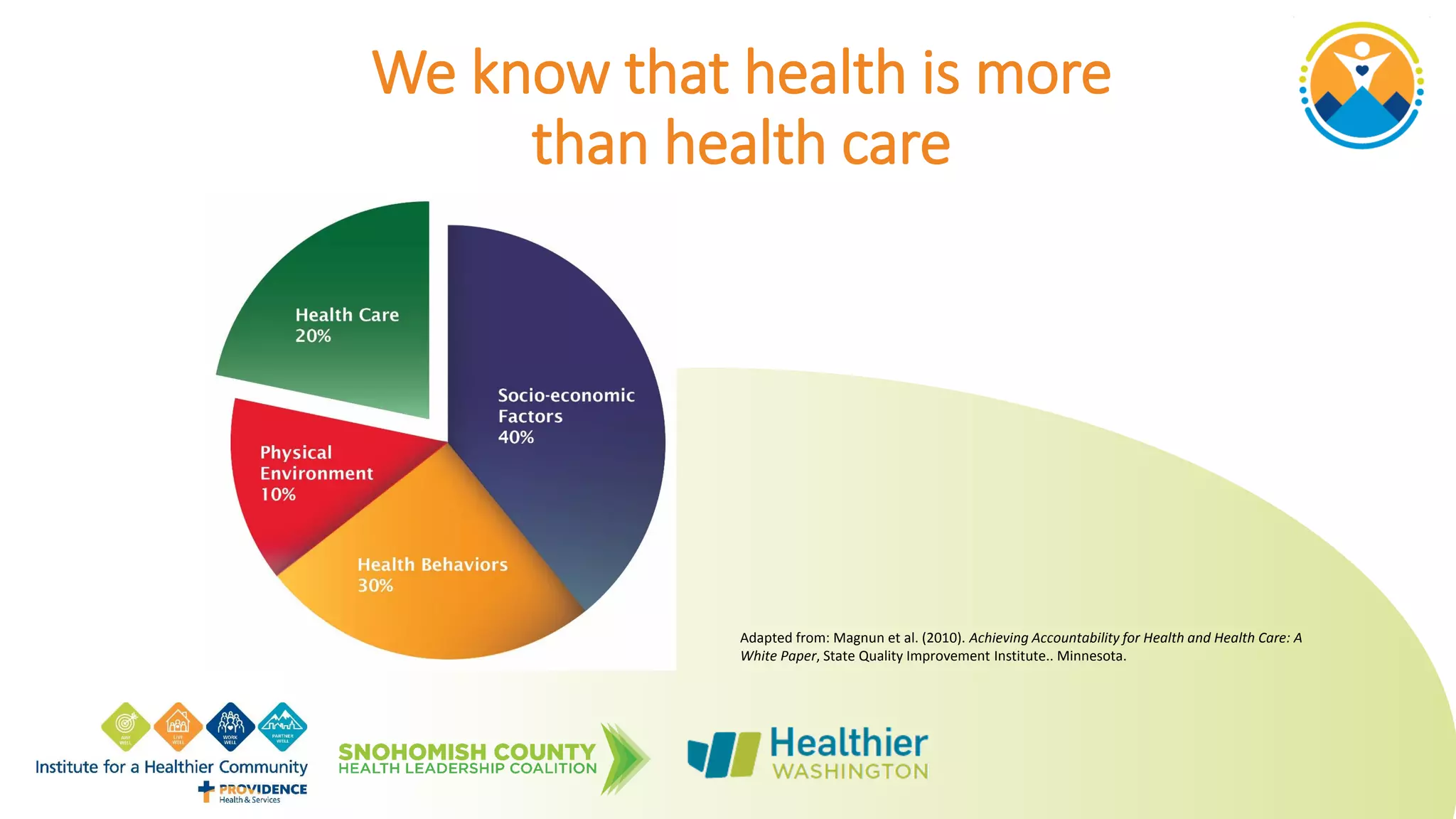
We know that health is more
than health care
Adapted from: Magnun et al. (2010). Achieving Accountability for Health and Health Care: A
White Paper, State Quality Improvement Institute.. Minnesota.
The Practice Transformation Support Hub
Goals of the “The Hub”
• Engage providers to connect to and build an integrated system of care that
addresses the needs of the whole person, including behavioral health needs
• Assist providers to respond to Value-based Payment Models
• Support providers to link to community resources for their patients
Components of The Hub
• Practice Coaching, Facilitation and Training Program
• Negotiating contract with Qualis Health
• Regional Health Connectors, a Health Extension Network
• Negotiating contract with Qualis Health
• Web-Based Resource Portal
• Led by University of Washington Primary Care Innovation Lab
Role of the Regional Connectors
• How will Connectors improve community-clinical linkages?
• An ambassador from the Community to the Providers
• A voice to the community from the Providers
• Inventory and track local resources
• Refer and connect providers to resources
• Track provider requests and needs
• Share successes and gaps in resources with the community
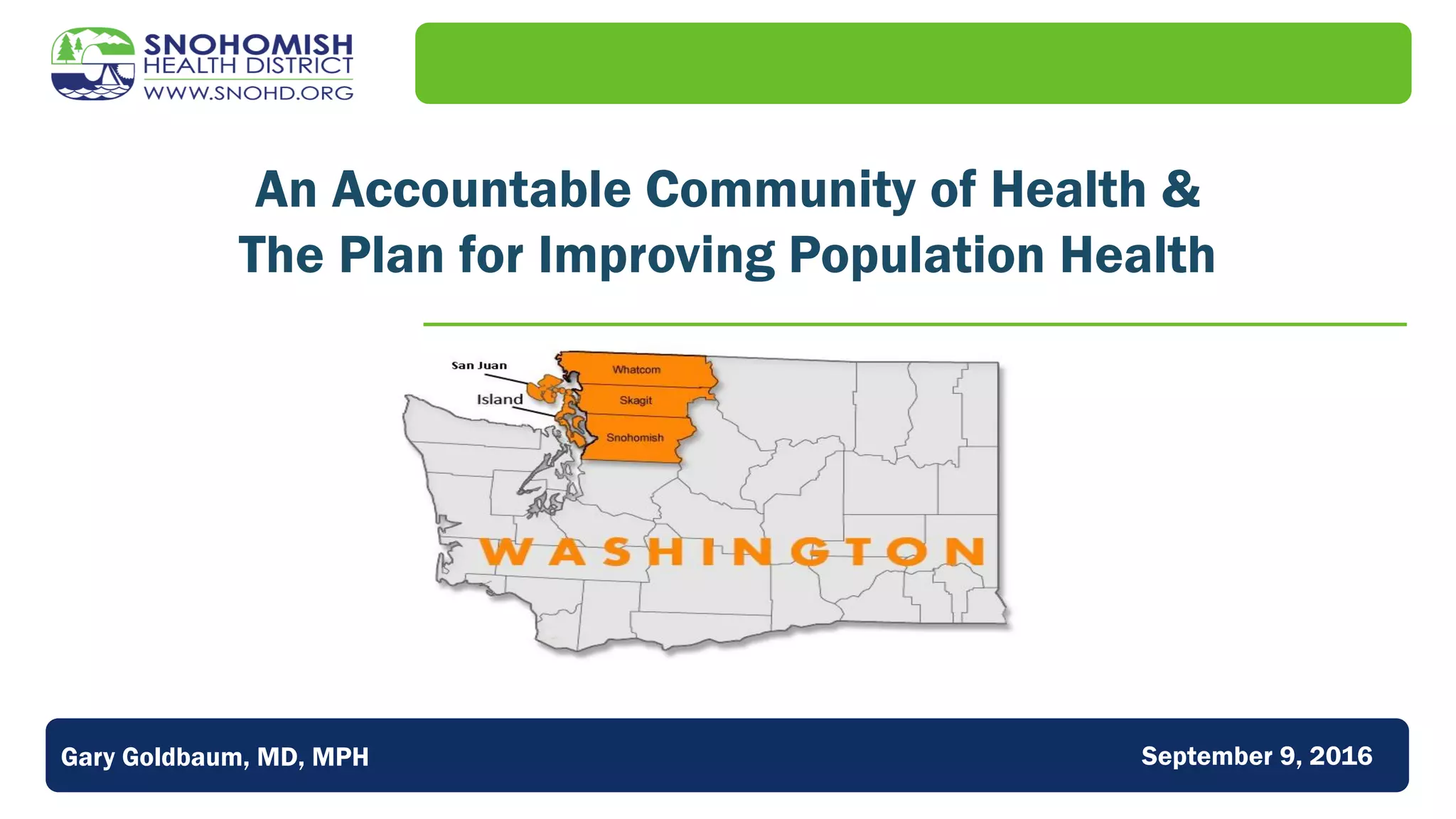
An Accountable Community of Health &
The Plan for Improving Population Health
Gary Goldbaum, MD, MPH September 9, 2016
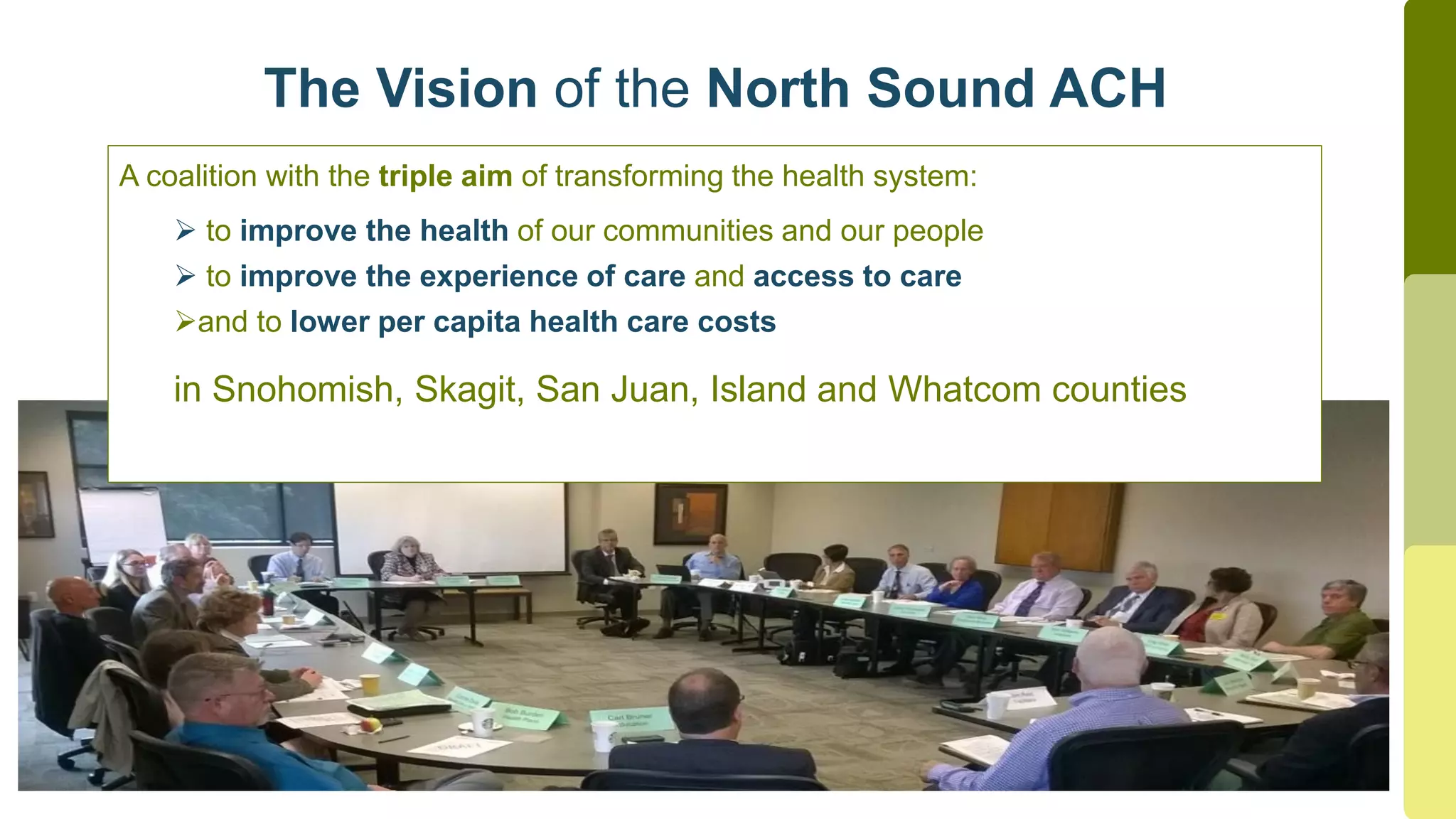
The Vision of the North Sound ACH
A coalition with the triple aim of transforming the health system:
 to improve the health of our communities and our people
 to improve the experience of care and access to care
and to lower per capita health care costs
in Snohomish, Skagit, San Juan, Island and Whatcom counties
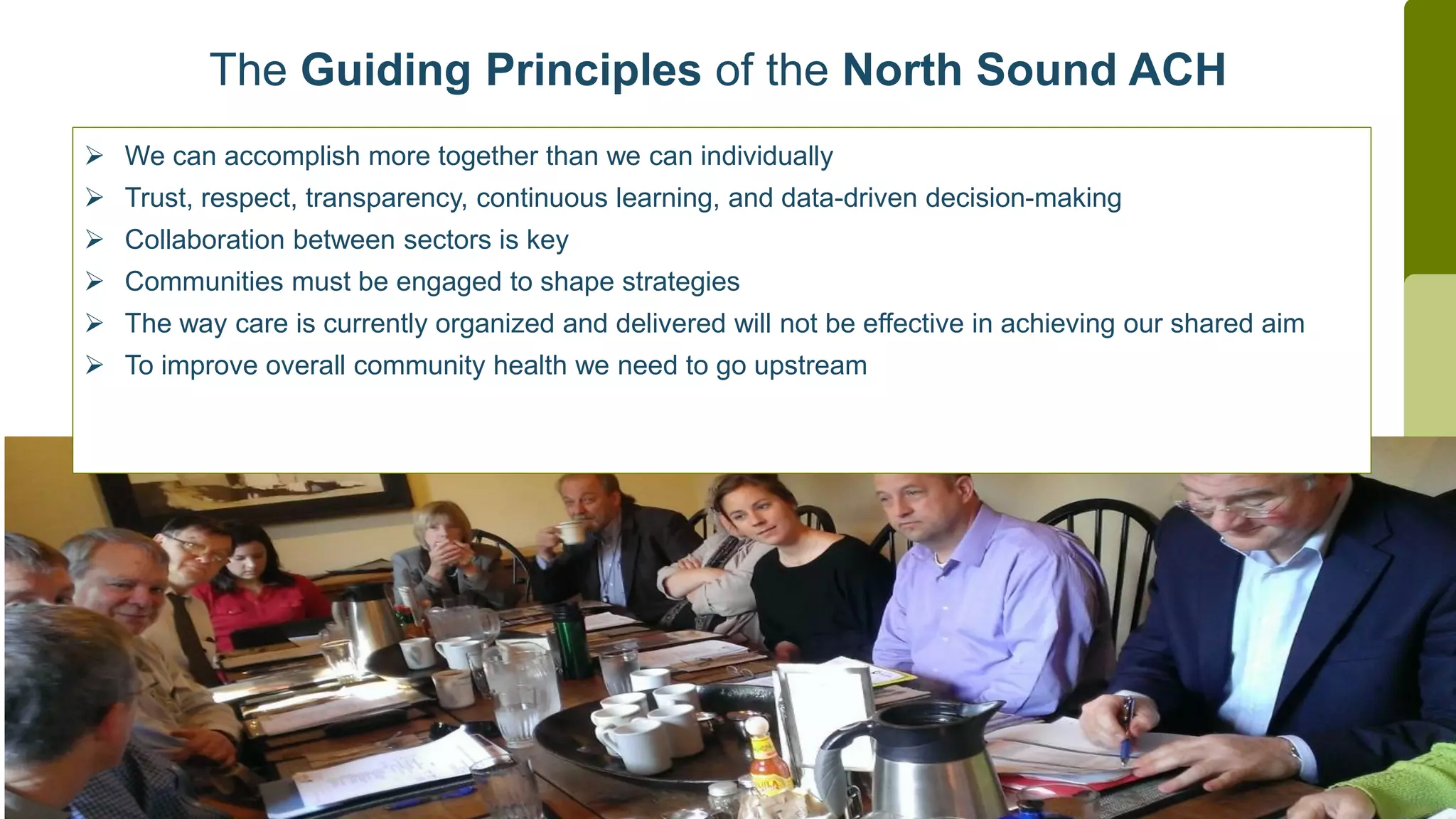
 We can accomplish more together than we can individually
 Trust, respect, transparency, continuous learning, and data-driven decision-making
 Collaboration between sectors is key
 Communities must be engaged to shape strategies
 The way care is currently organized and delivered will not be effective in achieving our shared aim
 To improve overall community health we need to go upstream
The Guiding Principles of the North Sound ACH
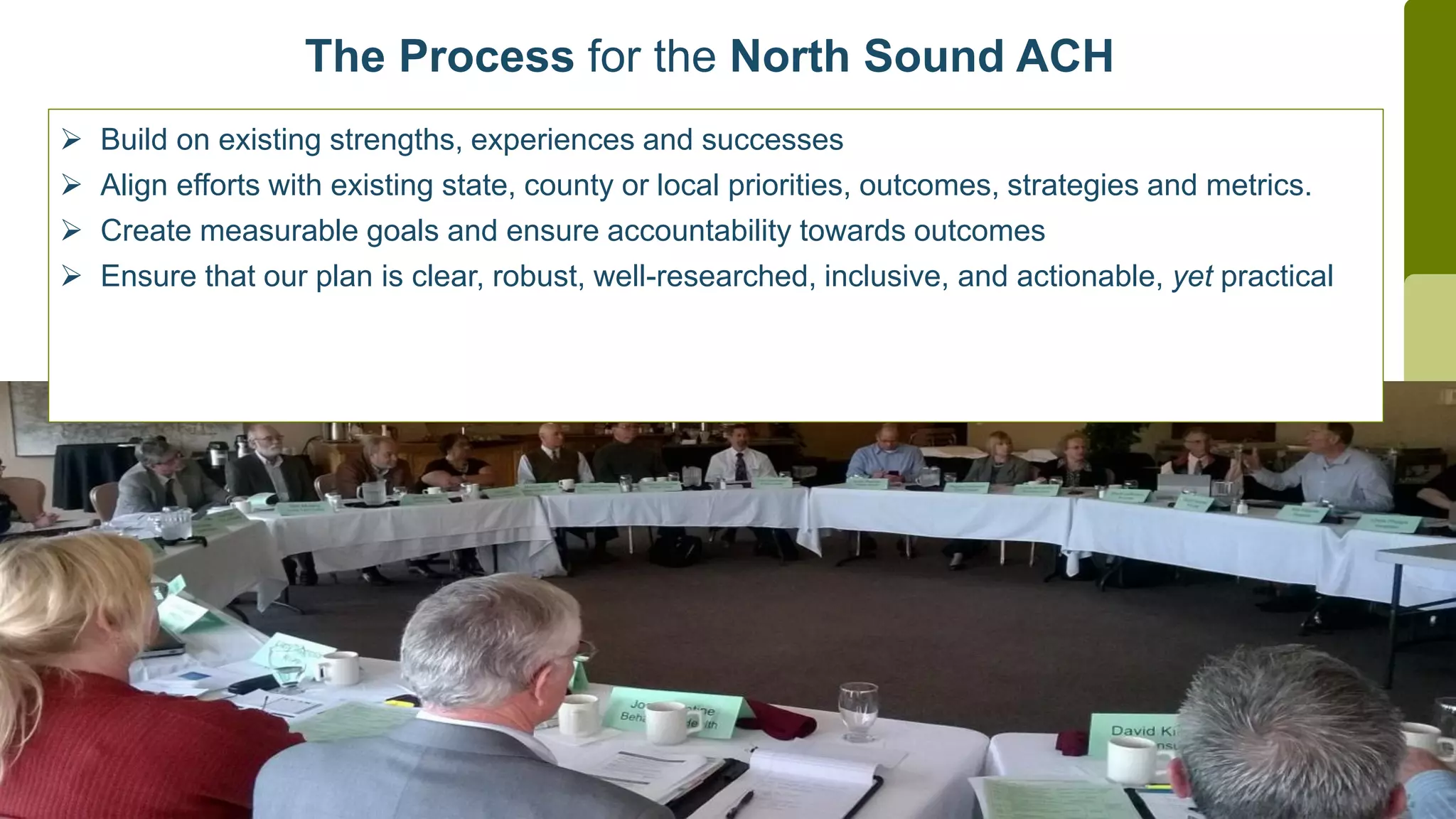
The Process for the North Sound ACH
 Build on existing strengths, experiences and successes
 Align efforts with existing state, county or local priorities, outcomes, strategies and metrics.
 Create measurable goals and ensure accountability towards outcomes
 Ensure that our plan is clear, robust, well-researched, inclusive, and actionable, yet practical
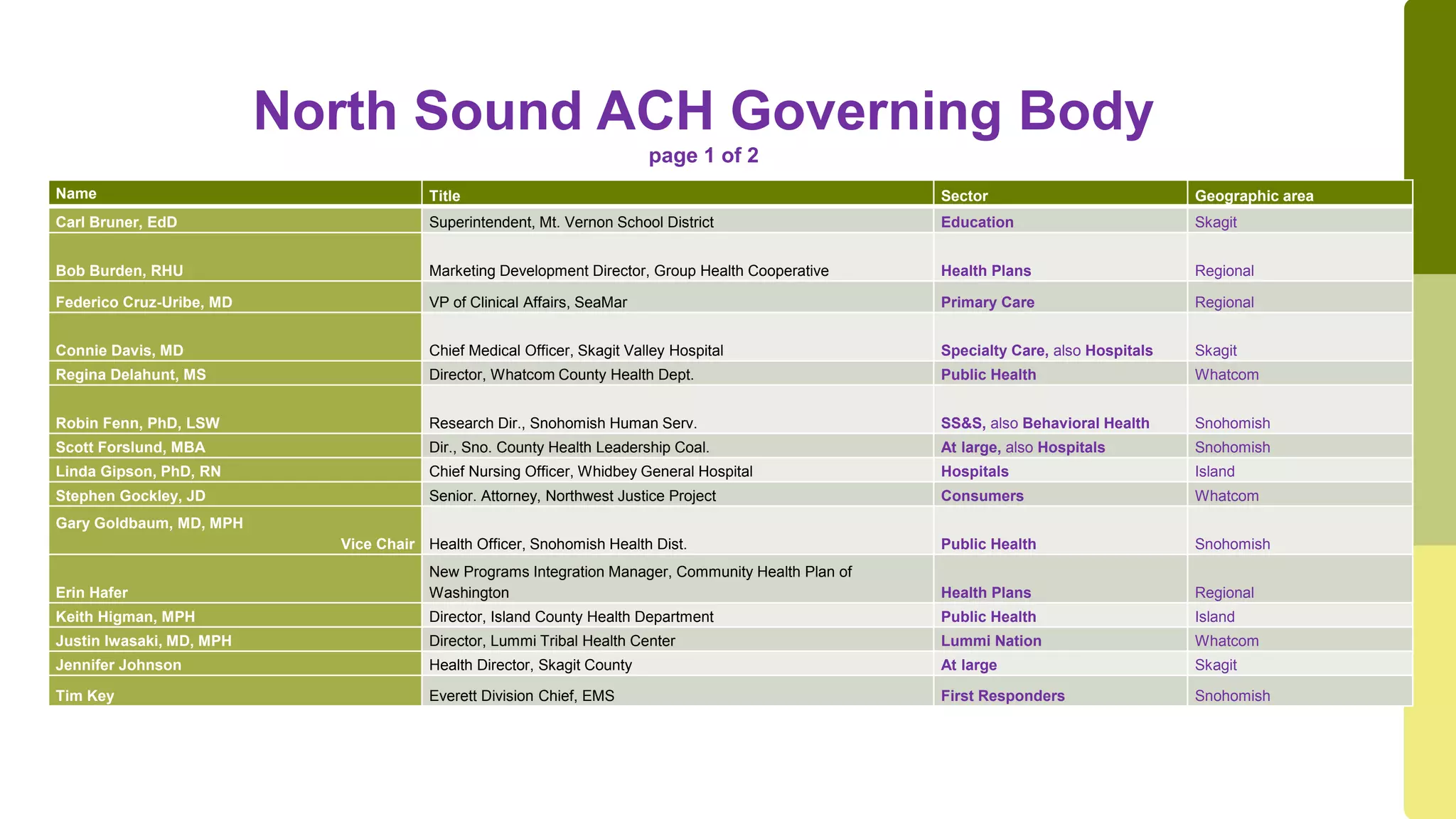
North Sound ACH Governing Body
page 1 of 2
Name Title Sector Geographic area
Carl Bruner, EdD Superintendent, Mt. Vernon School District Education Skagit
Bob Burden, RHU Marketing Development Director, Group Health Cooperative Health Plans Regional
Federico Cruz-Uribe, MD VP of Clinical Affairs, SeaMar Primary Care Regional
Connie Davis, MD Chief Medical Officer, Skagit Valley Hospital Specialty Care, also Hospitals Skagit
Regina Delahunt, MS Director, Whatcom County Health Dept. Public Health Whatcom
Robin Fenn, PhD, LSW Research Dir., Snohomish Human Serv. SS&S, also Behavioral Health Snohomish
Scott Forslund, MBA Dir., Sno. County Health Leadership Coal. At large, also Hospitals Snohomish
Linda Gipson, PhD, RN Chief Nursing Officer, Whidbey General Hospital Hospitals Island
Stephen Gockley, JD Senior. Attorney, Northwest Justice Project Consumers Whatcom
Gary Goldbaum, MD, MPH
Vice Chair Health Officer, Snohomish Health Dist. Public Health Snohomish
Erin Hafer
New Programs Integration Manager, Community Health Plan of
Washington Health Plans Regional
Keith Higman, MPH Director, Island County Health Department Public Health Island
Justin Iwasaki, MD, MPH Director, Lummi Tribal Health Center Lummi Nation Whatcom
Jennifer Johnson Health Director, Skagit County At large Skagit
Tim Key Everett Division Chief, EMS First Responders Snohomish
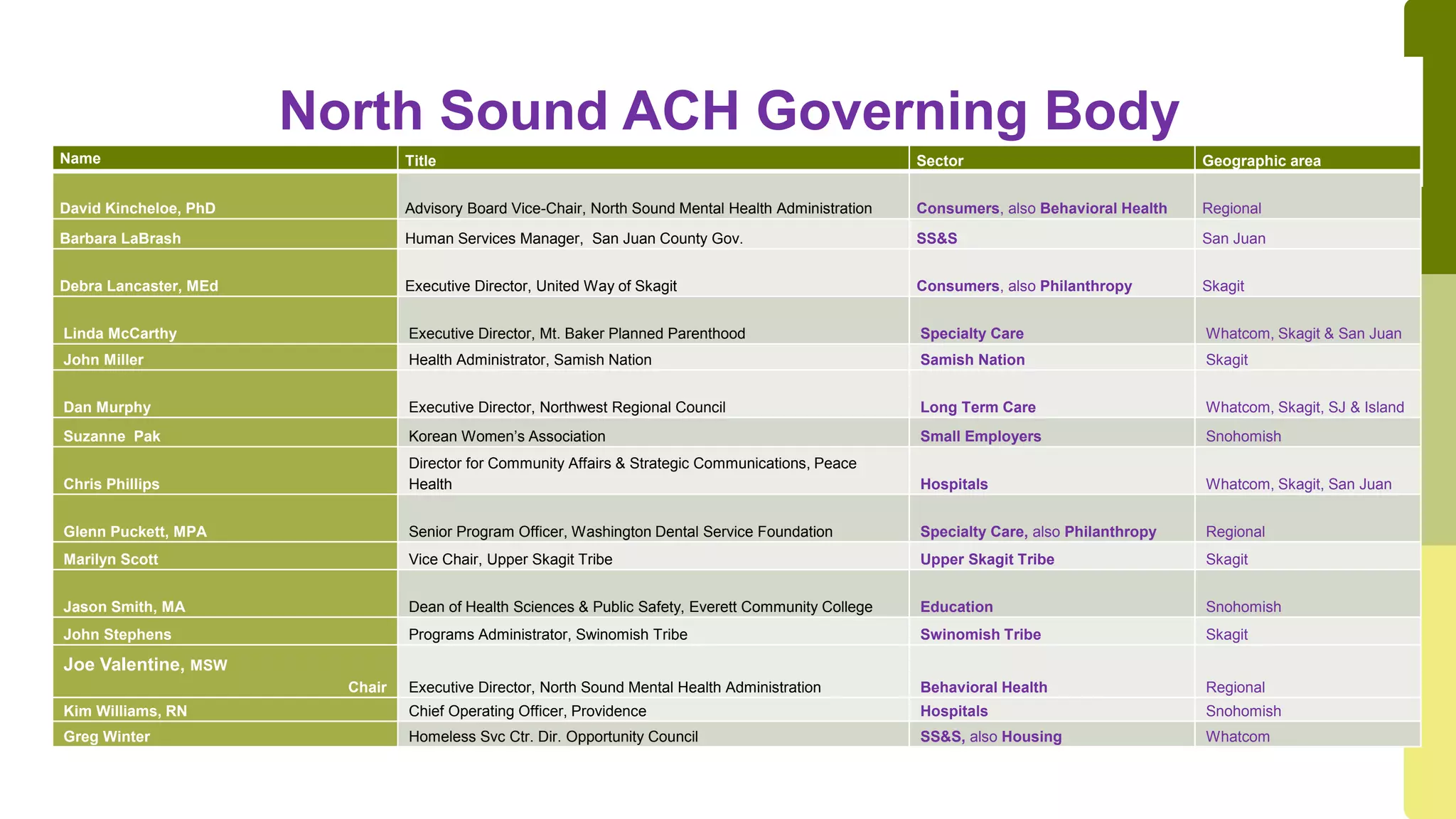
North Sound ACH Governing Body
page 2 of 2Name Title Sector Geographic area
David Kincheloe, PhD Advisory Board Vice-Chair, North Sound Mental Health Administration Consumers, also Behavioral Health Regional
Barbara LaBrash Human Services Manager, San Juan County Gov. SS&S San Juan
Debra Lancaster, MEd Executive Director, United Way of Skagit Consumers, also Philanthropy Skagit
Linda McCarthy Executive Director, Mt. Baker Planned Parenthood Specialty Care Whatcom, Skagit & San Juan
John Miller Health Administrator, Samish Nation Samish Nation Skagit
Dan Murphy Executive Director, Northwest Regional Council Long Term Care Whatcom, Skagit, SJ & Island
Suzanne Pak Korean Women’s Association Small Employers Snohomish
Chris Phillips
Director for Community Affairs & Strategic Communications, Peace
Health Hospitals Whatcom, Skagit, San Juan
Glenn Puckett, MPA Senior Program Officer, Washington Dental Service Foundation Specialty Care, also Philanthropy Regional
Marilyn Scott Vice Chair, Upper Skagit Tribe Upper Skagit Tribe Skagit
Jason Smith, MA Dean of Health Sciences & Public Safety, Everett Community College Education Snohomish
John Stephens Programs Administrator, Swinomish Tribe Swinomish Tribe Skagit
Joe Valentine, MSW
Chair Executive Director, North Sound Mental Health Administration Behavioral Health Regional
Kim Williams, RN Chief Operating Officer, Providence Hospitals Snohomish
Greg Winter Homeless Svc Ctr. Dir. Opportunity Council SS&S, also Housing Whatcom
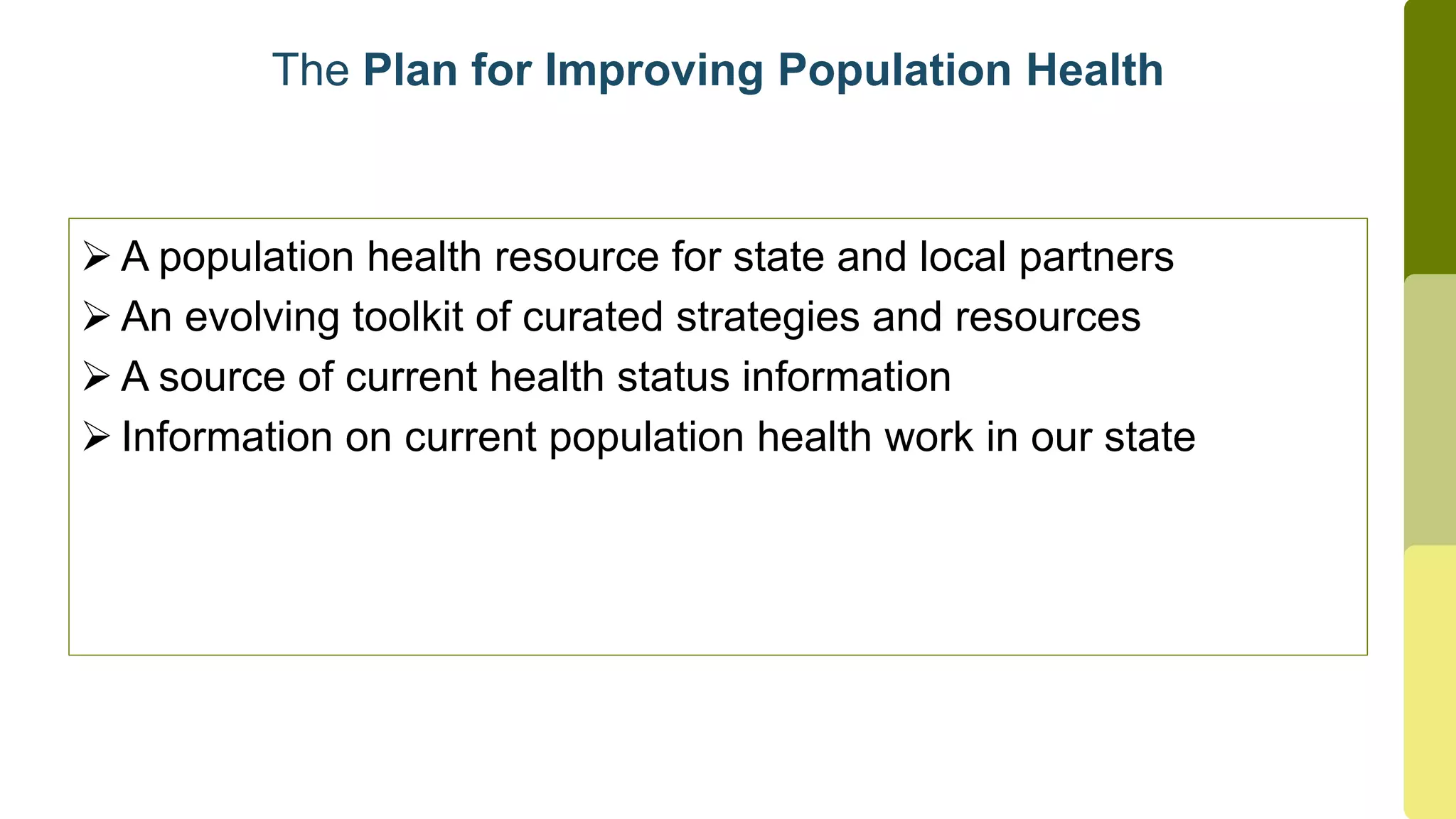
 A population health resource for state and local partners
 An evolving toolkit of curated strategies and resources
 A source of current health status information
 Information on current population health work in our state
The Plan for Improving Population Health
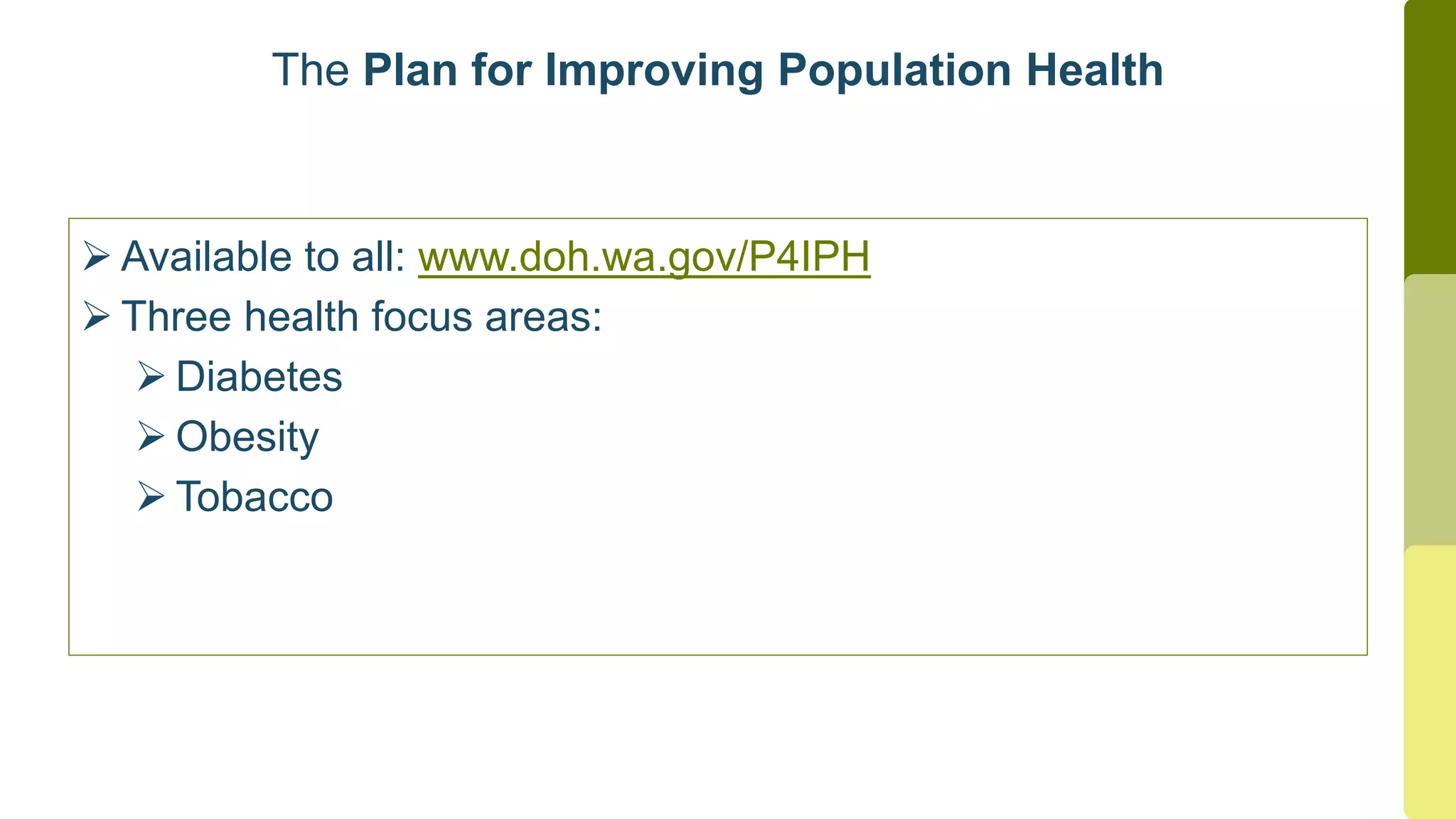
 Available to all: www.doh.wa.gov/P4IPH
 Three health focus areas:
 Diabetes
 Obesity
 Tobacco
The Plan for Improving Population Health
 Within each health focus areas:
 Current work and initiatives
 Emerging issues
 Health equity concerns
 Data and sources
 Recommended strategies
The Plan for Improving Population Health
North Sound ACH – Early Win
“Prevention” Project – LARC
Long Acting Reversible
Contraception, reducing
unintended pregnancy
Why LARC?
Up to 50% of all pregnancies
are unintended;
78% for women under 20;
70% for women 20-24
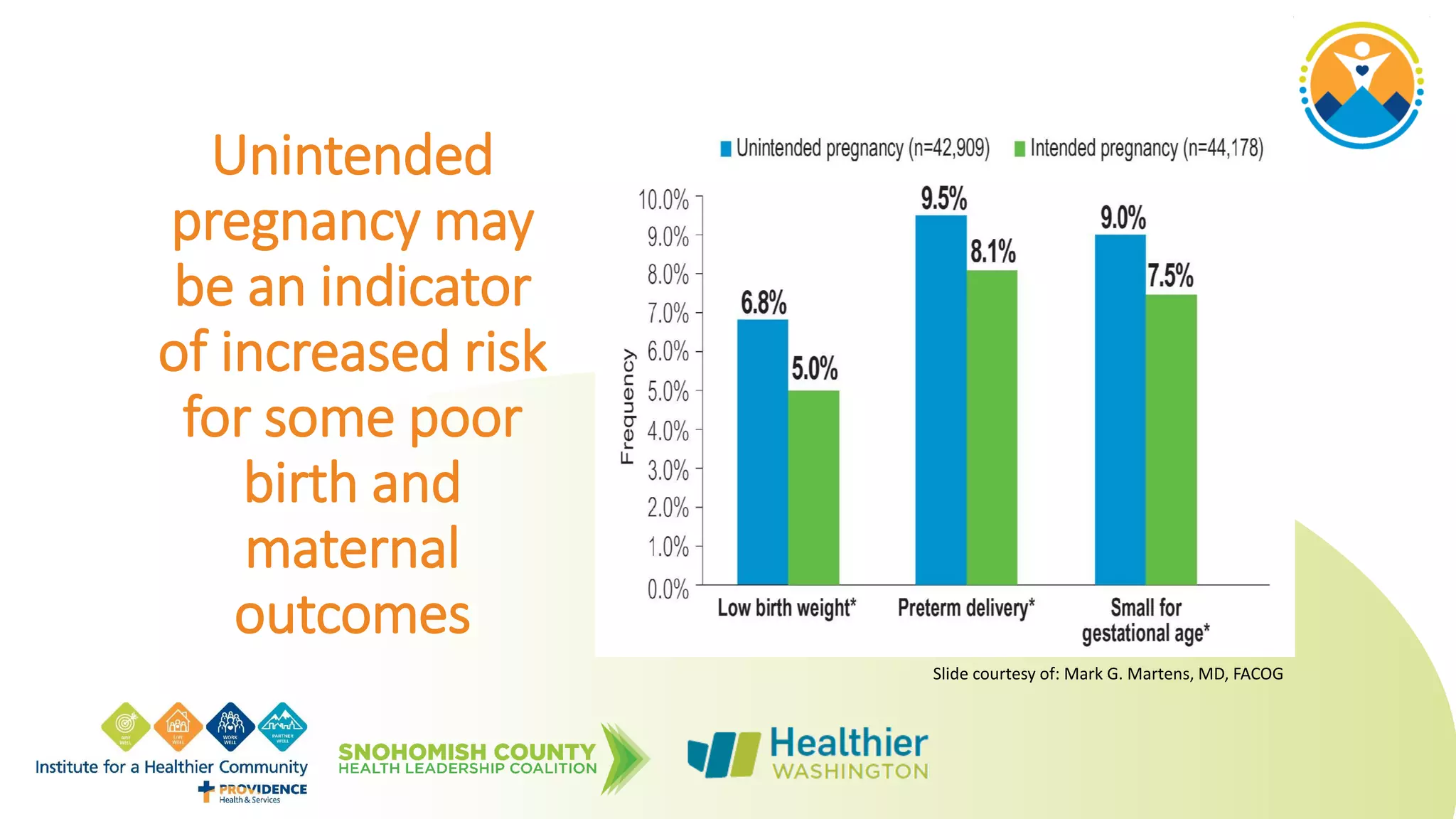
Unintended
pregnancy may
be an indicator
of increased risk
for some poor
birth and
maternal
outcomes
Slide courtesy of: Mark G. Martens, MD, FACOG
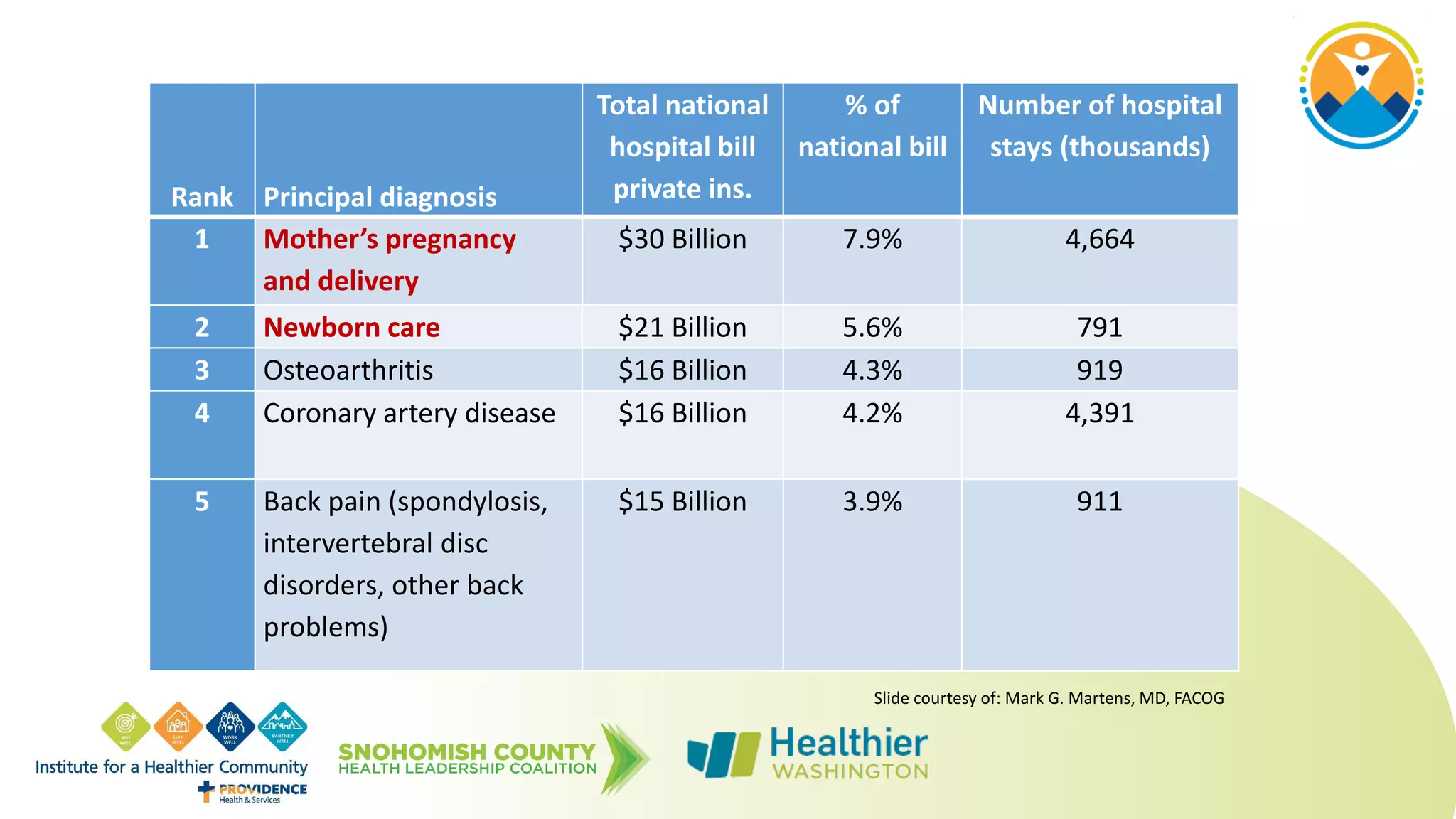
Rank Principal diagnosis
Total national
hospital bill
private ins.
% of
national bill
Number of hospital
stays (thousands)
1 Mother’s pregnancy
and delivery
$30 Billion 7.9% 4,664
2 Newborn care $21 Billion 5.6% 791
3 Osteoarthritis $16 Billion 4.3% 919
4 Coronary artery disease $16 Billion 4.2% 4,391
5 Back pain (spondylosis,
intervertebral disc
disorders, other back
problems)
$15 Billion 3.9% 911
Slide courtesy of: Mark G. Martens, MD, FACOG
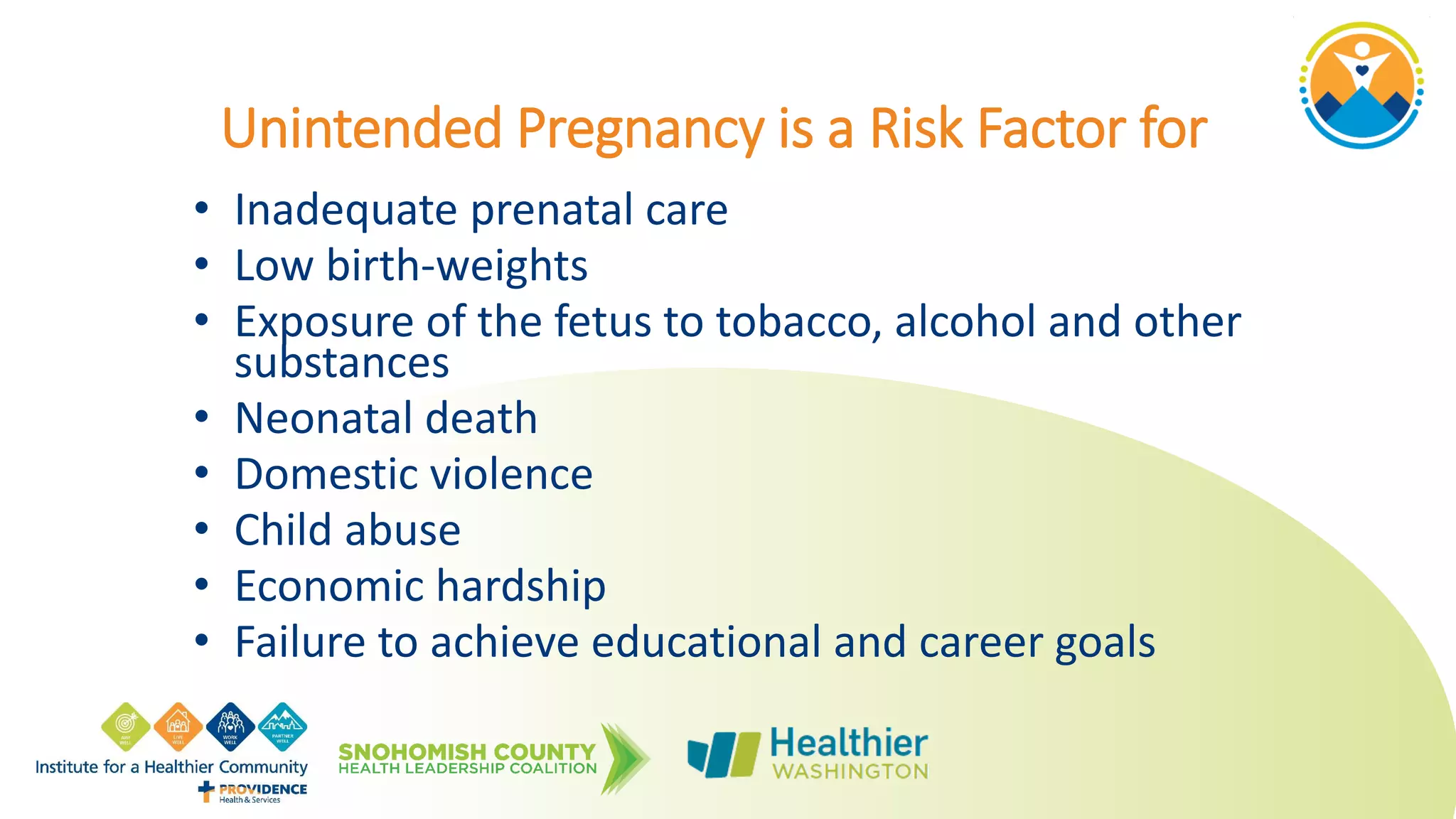
Unintended Pregnancy is a Risk Factor for
• Inadequate prenatal care
• Low birth-weights
• Exposure of the fetus to tobacco, alcohol and other
substances
• Neonatal death
• Domestic violence
• Child abuse
• Economic hardship
• Failure to achieve educational and career goals
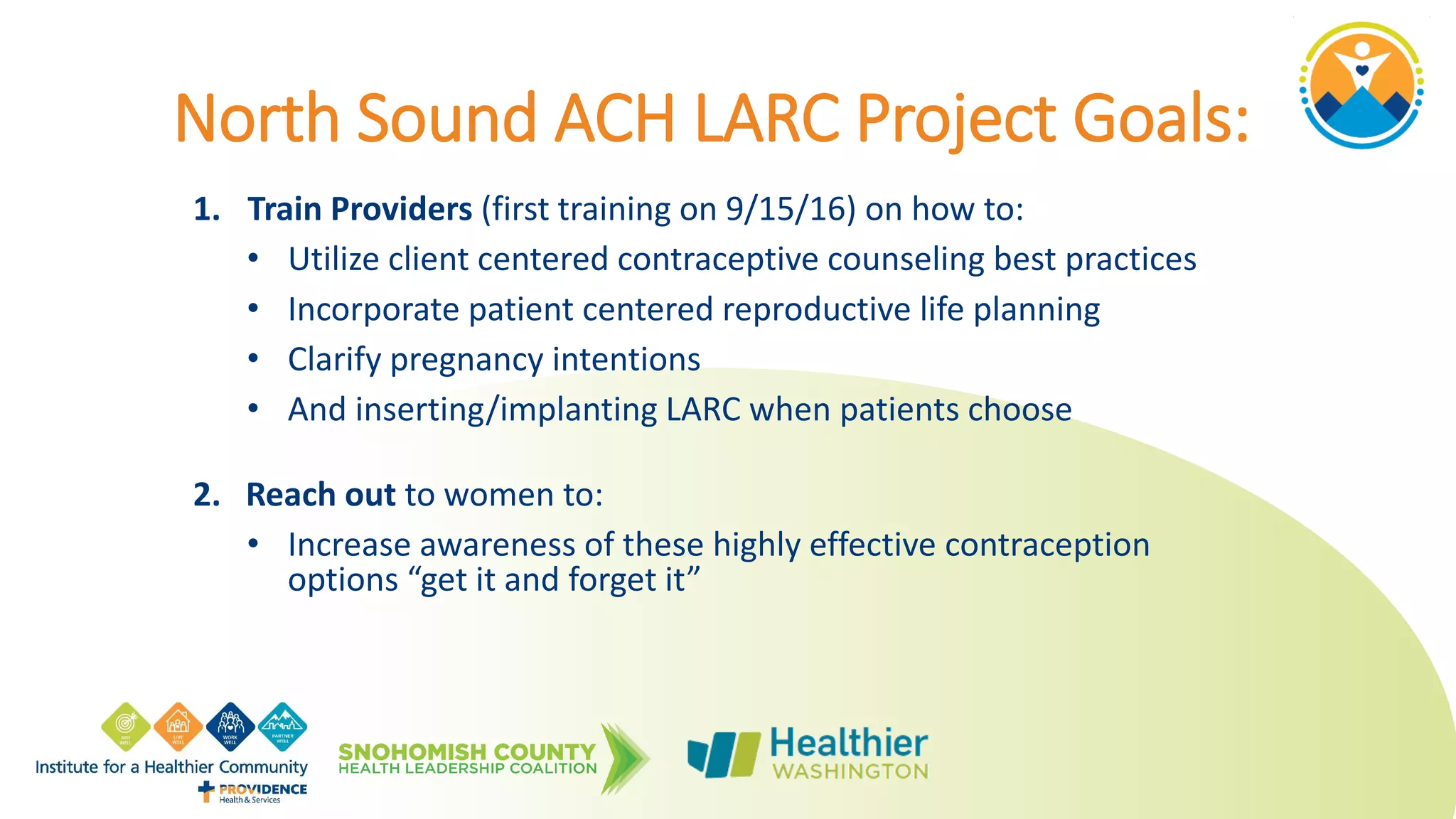
North Sound ACH LARC Project Goals:
1. Train Providers (first training on 9/15/16) on how to:
• Utilize client centered contraceptive counseling best practices
• Incorporate patient centered reproductive life planning
• Clarify pregnancy intentions
• And inserting/implanting LARC when patients choose
2. Reach out to women to:
• Increase awareness of these highly effective contraception
options “get it and forget it”
Thank you!
Questions and discussion

EOA2016: Connecting Community to the Delivery System Public

  • 1.
    Connecting Community to theDelivery System Healthier Washington is the state’s vision for transforming the health care system to achieve better health, better care and lower costs for the people of Washington State.
  • 2.
    The Healthier WashingtonInitiative The goals of Healthier Washington are simple: • Healthier people and communities • A transformed health care system that treats the whole person • Affordable care
  • 3.
    The Healthier WashingtonInitiative • Healthier Washington is employing three overarching strategies to achieve its transformation goals: • Supporting multi-sector engagement • Integrating care and social supports • Paying for value
  • 4.
    We know thathealth is more than health care Adapted from: Magnun et al. (2010). Achieving Accountability for Health and Health Care: A White Paper, State Quality Improvement Institute.. Minnesota.
  • 6.
    The Practice TransformationSupport Hub Goals of the “The Hub” • Engage providers to connect to and build an integrated system of care that addresses the needs of the whole person, including behavioral health needs • Assist providers to respond to Value-based Payment Models • Support providers to link to community resources for their patients
  • 7.
    Components of TheHub • Practice Coaching, Facilitation and Training Program • Negotiating contract with Qualis Health • Regional Health Connectors, a Health Extension Network • Negotiating contract with Qualis Health • Web-Based Resource Portal • Led by University of Washington Primary Care Innovation Lab
  • 8.
    Role of theRegional Connectors • How will Connectors improve community-clinical linkages? • An ambassador from the Community to the Providers • A voice to the community from the Providers • Inventory and track local resources • Refer and connect providers to resources • Track provider requests and needs • Share successes and gaps in resources with the community
  • 9.
    An Accountable Communityof Health & The Plan for Improving Population Health Gary Goldbaum, MD, MPH September 9, 2016
  • 10.
    The Vision ofthe North Sound ACH A coalition with the triple aim of transforming the health system:  to improve the health of our communities and our people  to improve the experience of care and access to care and to lower per capita health care costs in Snohomish, Skagit, San Juan, Island and Whatcom counties
  • 11.
     We canaccomplish more together than we can individually  Trust, respect, transparency, continuous learning, and data-driven decision-making  Collaboration between sectors is key  Communities must be engaged to shape strategies  The way care is currently organized and delivered will not be effective in achieving our shared aim  To improve overall community health we need to go upstream The Guiding Principles of the North Sound ACH
  • 12.
    The Process forthe North Sound ACH  Build on existing strengths, experiences and successes  Align efforts with existing state, county or local priorities, outcomes, strategies and metrics.  Create measurable goals and ensure accountability towards outcomes  Ensure that our plan is clear, robust, well-researched, inclusive, and actionable, yet practical
  • 13.
    North Sound ACHGoverning Body page 1 of 2 Name Title Sector Geographic area Carl Bruner, EdD Superintendent, Mt. Vernon School District Education Skagit Bob Burden, RHU Marketing Development Director, Group Health Cooperative Health Plans Regional Federico Cruz-Uribe, MD VP of Clinical Affairs, SeaMar Primary Care Regional Connie Davis, MD Chief Medical Officer, Skagit Valley Hospital Specialty Care, also Hospitals Skagit Regina Delahunt, MS Director, Whatcom County Health Dept. Public Health Whatcom Robin Fenn, PhD, LSW Research Dir., Snohomish Human Serv. SS&S, also Behavioral Health Snohomish Scott Forslund, MBA Dir., Sno. County Health Leadership Coal. At large, also Hospitals Snohomish Linda Gipson, PhD, RN Chief Nursing Officer, Whidbey General Hospital Hospitals Island Stephen Gockley, JD Senior. Attorney, Northwest Justice Project Consumers Whatcom Gary Goldbaum, MD, MPH Vice Chair Health Officer, Snohomish Health Dist. Public Health Snohomish Erin Hafer New Programs Integration Manager, Community Health Plan of Washington Health Plans Regional Keith Higman, MPH Director, Island County Health Department Public Health Island Justin Iwasaki, MD, MPH Director, Lummi Tribal Health Center Lummi Nation Whatcom Jennifer Johnson Health Director, Skagit County At large Skagit Tim Key Everett Division Chief, EMS First Responders Snohomish
  • 14.
    North Sound ACHGoverning Body page 2 of 2Name Title Sector Geographic area David Kincheloe, PhD Advisory Board Vice-Chair, North Sound Mental Health Administration Consumers, also Behavioral Health Regional Barbara LaBrash Human Services Manager, San Juan County Gov. SS&S San Juan Debra Lancaster, MEd Executive Director, United Way of Skagit Consumers, also Philanthropy Skagit Linda McCarthy Executive Director, Mt. Baker Planned Parenthood Specialty Care Whatcom, Skagit & San Juan John Miller Health Administrator, Samish Nation Samish Nation Skagit Dan Murphy Executive Director, Northwest Regional Council Long Term Care Whatcom, Skagit, SJ & Island Suzanne Pak Korean Women’s Association Small Employers Snohomish Chris Phillips Director for Community Affairs & Strategic Communications, Peace Health Hospitals Whatcom, Skagit, San Juan Glenn Puckett, MPA Senior Program Officer, Washington Dental Service Foundation Specialty Care, also Philanthropy Regional Marilyn Scott Vice Chair, Upper Skagit Tribe Upper Skagit Tribe Skagit Jason Smith, MA Dean of Health Sciences & Public Safety, Everett Community College Education Snohomish John Stephens Programs Administrator, Swinomish Tribe Swinomish Tribe Skagit Joe Valentine, MSW Chair Executive Director, North Sound Mental Health Administration Behavioral Health Regional Kim Williams, RN Chief Operating Officer, Providence Hospitals Snohomish Greg Winter Homeless Svc Ctr. Dir. Opportunity Council SS&S, also Housing Whatcom
  • 15.
     A populationhealth resource for state and local partners  An evolving toolkit of curated strategies and resources  A source of current health status information  Information on current population health work in our state The Plan for Improving Population Health
  • 16.
     Available toall: www.doh.wa.gov/P4IPH  Three health focus areas:  Diabetes  Obesity  Tobacco The Plan for Improving Population Health
  • 17.
     Within eachhealth focus areas:  Current work and initiatives  Emerging issues  Health equity concerns  Data and sources  Recommended strategies The Plan for Improving Population Health
  • 18.
    North Sound ACH– Early Win “Prevention” Project – LARC Long Acting Reversible Contraception, reducing unintended pregnancy
  • 19.
    Why LARC? Up to50% of all pregnancies are unintended; 78% for women under 20; 70% for women 20-24
  • 20.
    Unintended pregnancy may be anindicator of increased risk for some poor birth and maternal outcomes Slide courtesy of: Mark G. Martens, MD, FACOG
  • 21.
    Rank Principal diagnosis Totalnational hospital bill private ins. % of national bill Number of hospital stays (thousands) 1 Mother’s pregnancy and delivery $30 Billion 7.9% 4,664 2 Newborn care $21 Billion 5.6% 791 3 Osteoarthritis $16 Billion 4.3% 919 4 Coronary artery disease $16 Billion 4.2% 4,391 5 Back pain (spondylosis, intervertebral disc disorders, other back problems) $15 Billion 3.9% 911 Slide courtesy of: Mark G. Martens, MD, FACOG
  • 22.
    Unintended Pregnancy isa Risk Factor for • Inadequate prenatal care • Low birth-weights • Exposure of the fetus to tobacco, alcohol and other substances • Neonatal death • Domestic violence • Child abuse • Economic hardship • Failure to achieve educational and career goals
  • 23.
    North Sound ACHLARC Project Goals: 1. Train Providers (first training on 9/15/16) on how to: • Utilize client centered contraceptive counseling best practices • Incorporate patient centered reproductive life planning • Clarify pregnancy intentions • And inserting/implanting LARC when patients choose 2. Reach out to women to: • Increase awareness of these highly effective contraception options “get it and forget it”
  • 24.