Downloaded 20 times
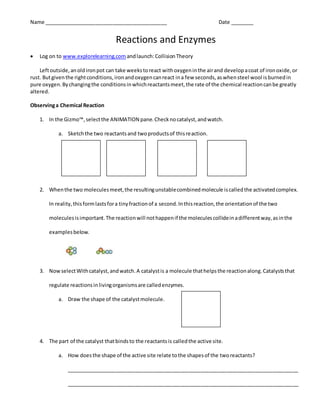
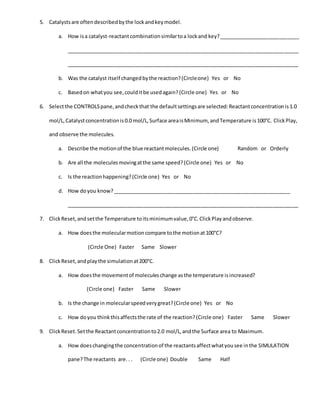
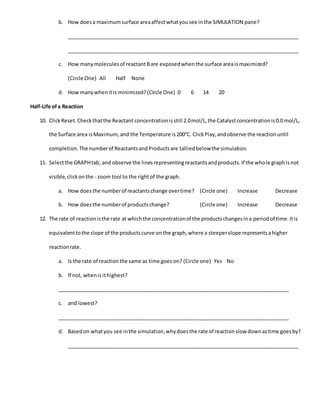

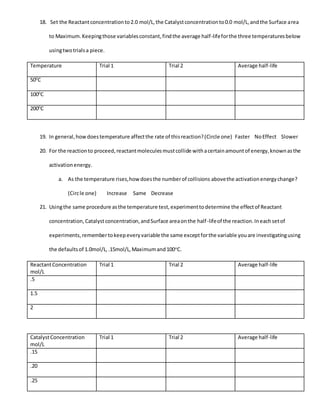
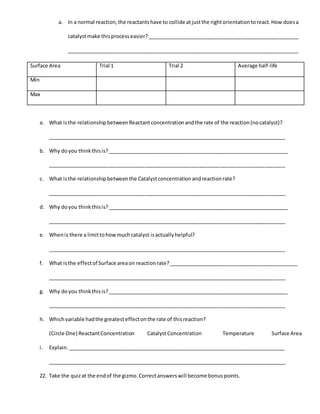

This document summarizes an online simulation exploring how temperature, concentration, surface area, and catalysts affect chemical reaction rates. The simulation models molecular collisions and shows how changing experimental conditions alters reaction rates. Key findings include: 1) Increasing temperature, concentration, or surface area increases the reaction rate by providing more opportunities for productive collisions. 2) Catalysts increase reaction rates by lowering the activation energy needed for reactions to occur. The catalyst binds to reactants and helps orient them for reaction. 3) Reaction rate decreases over time as reactant concentration decreases. The half-life concept provides a consistent way to compare reaction rates.


