Why Entrepreneurship?
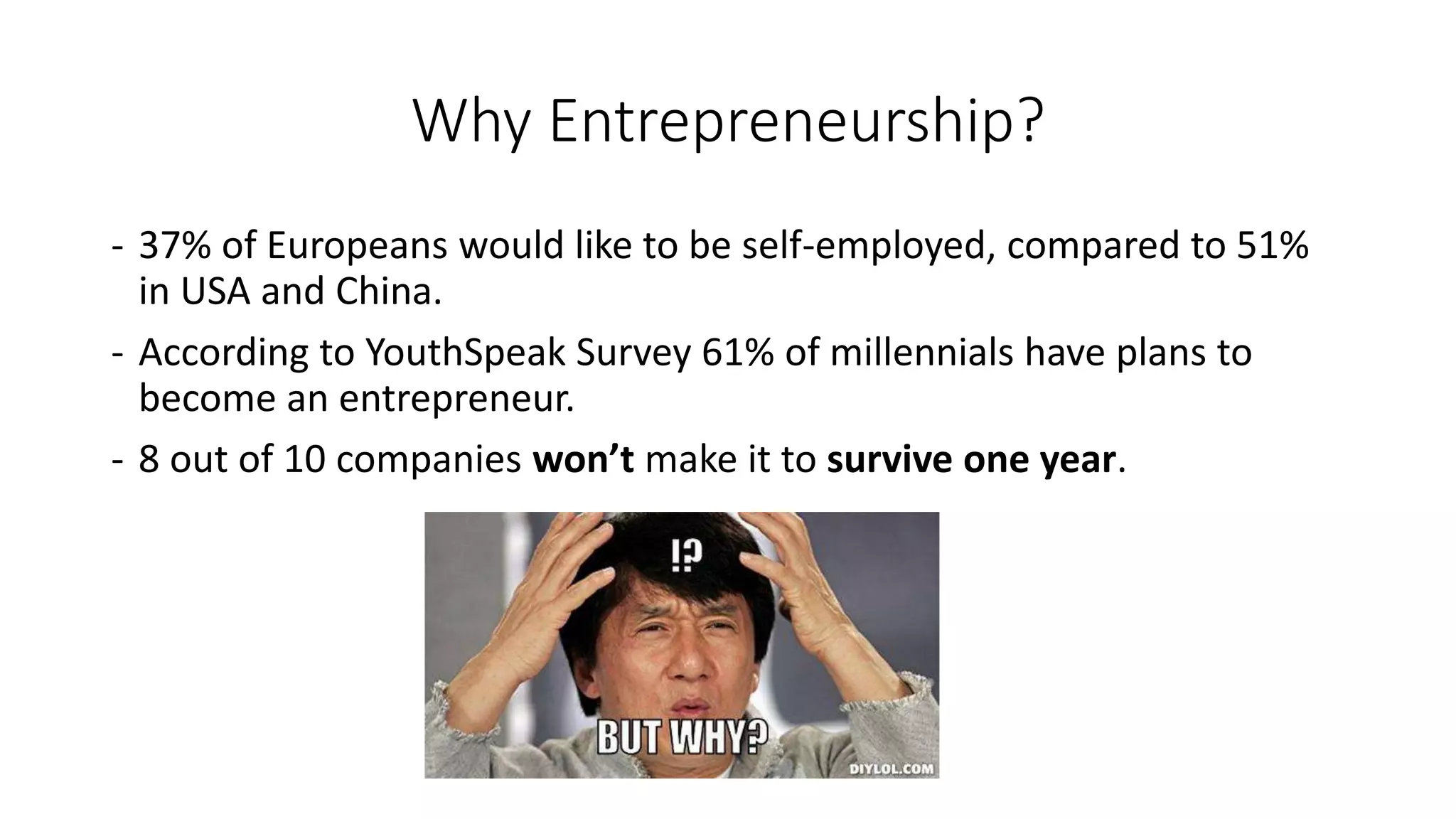
- 37% of Europeans would like to be self-employed, compared to 51%
in USA and China.
- According to YouthSpeak Survey 61% of millennials have plans to
become an entrepreneur.
- 8 out of 10 companies won’t make it to survive one year.
Mom, can I be an entrepreneur?
• Not everyone is built to be an entrepreneur.
• Not everyone can handle uncertainty
• Long hours working
• No work-life balance
• Frustration
• Failure
Entrepreneurship is the pursuit of opportunity without regard to
resources currently controlled.
The entrepreneur develops a business model, acquires the human and
other required resources, and is fully responsible for its success or
failure.
Defining Entrepreneurship
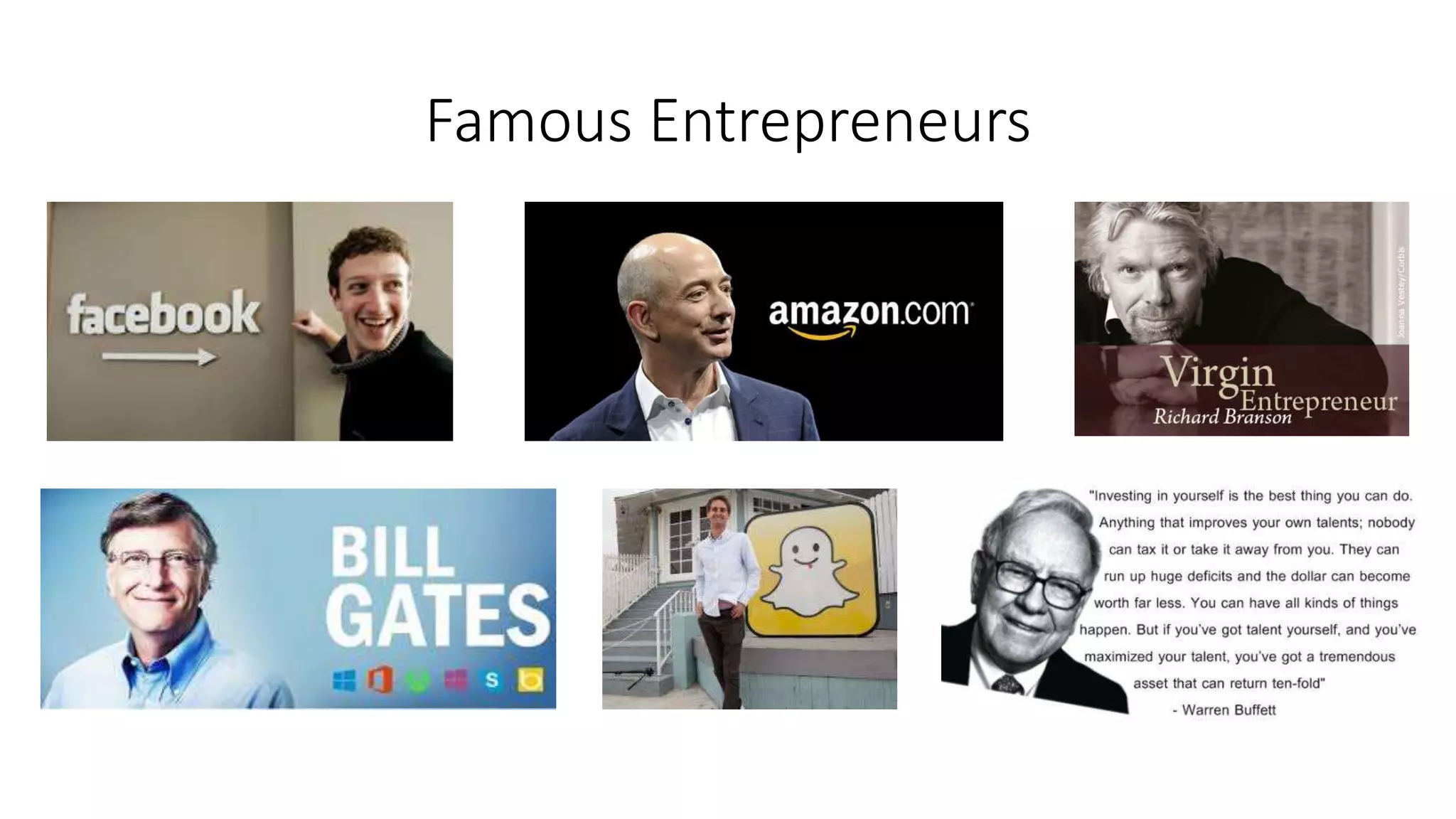
Famous Entrepreneurs
Business Model
•“A Business model describes the rationale of how
an organisation creates, delivers and captures
value”
• Business Model Generation
• Alexander Osterwalder & Yves Pigneur
Canvas, your business at a glance
• Canvas It’s a tool that help us designing and innovating our
business in a visual way.
VALUE PROPOSITION
What value do
we deliver to
the customer
segment?
What customer
problem (pain)
are we trying
to solve?
How is it going
to be?
How are you
going to reach
customers?
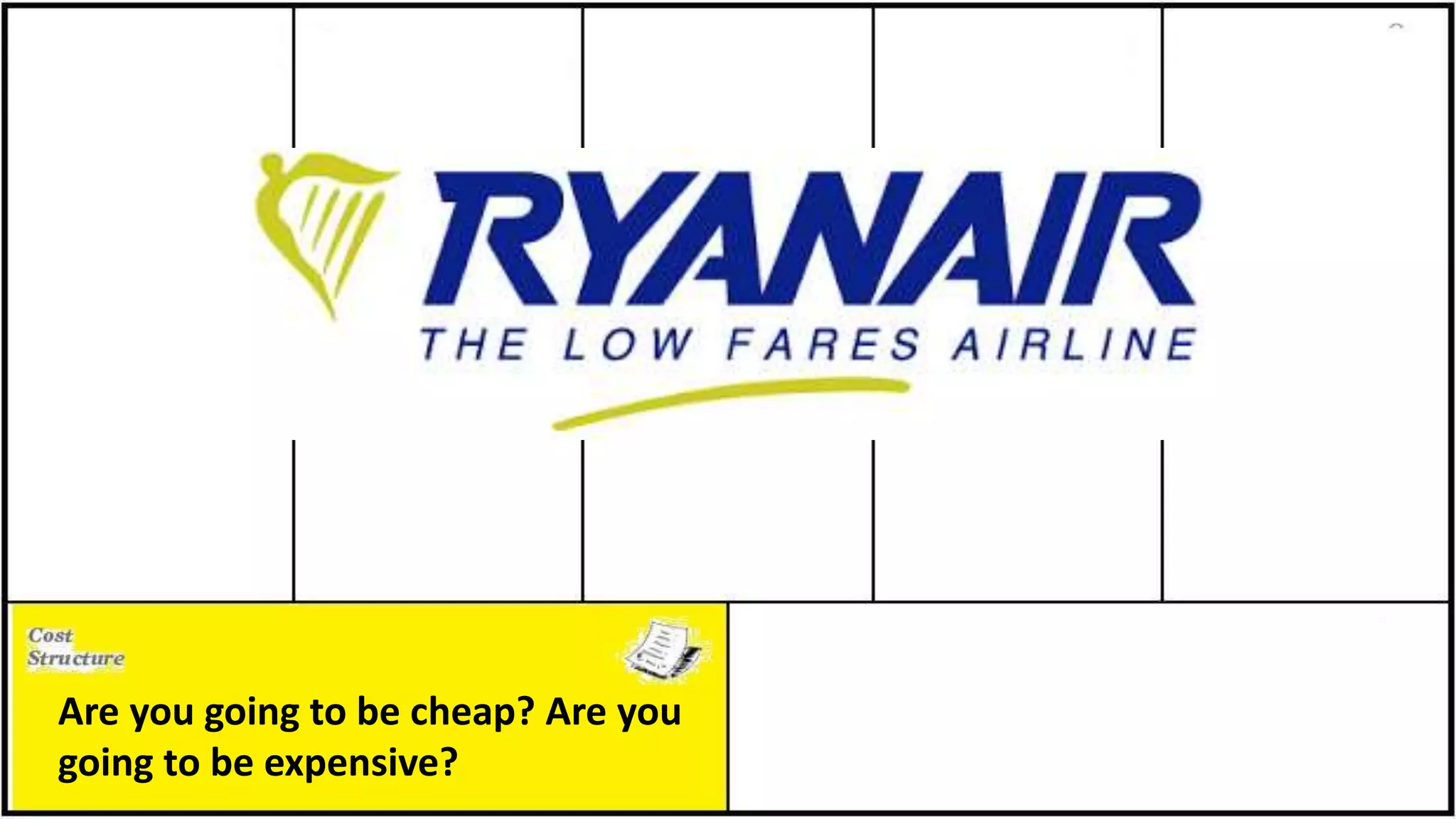
Where does the money come from?
Are you going to be cheap? Are you
going to be expensive?
What do you
need to do to
create that
value
proposition?
1.- Wider
Reach
2.-
Outsourcing
opportunitie
s
3.-Not free
Which resources
do you need to
create value?
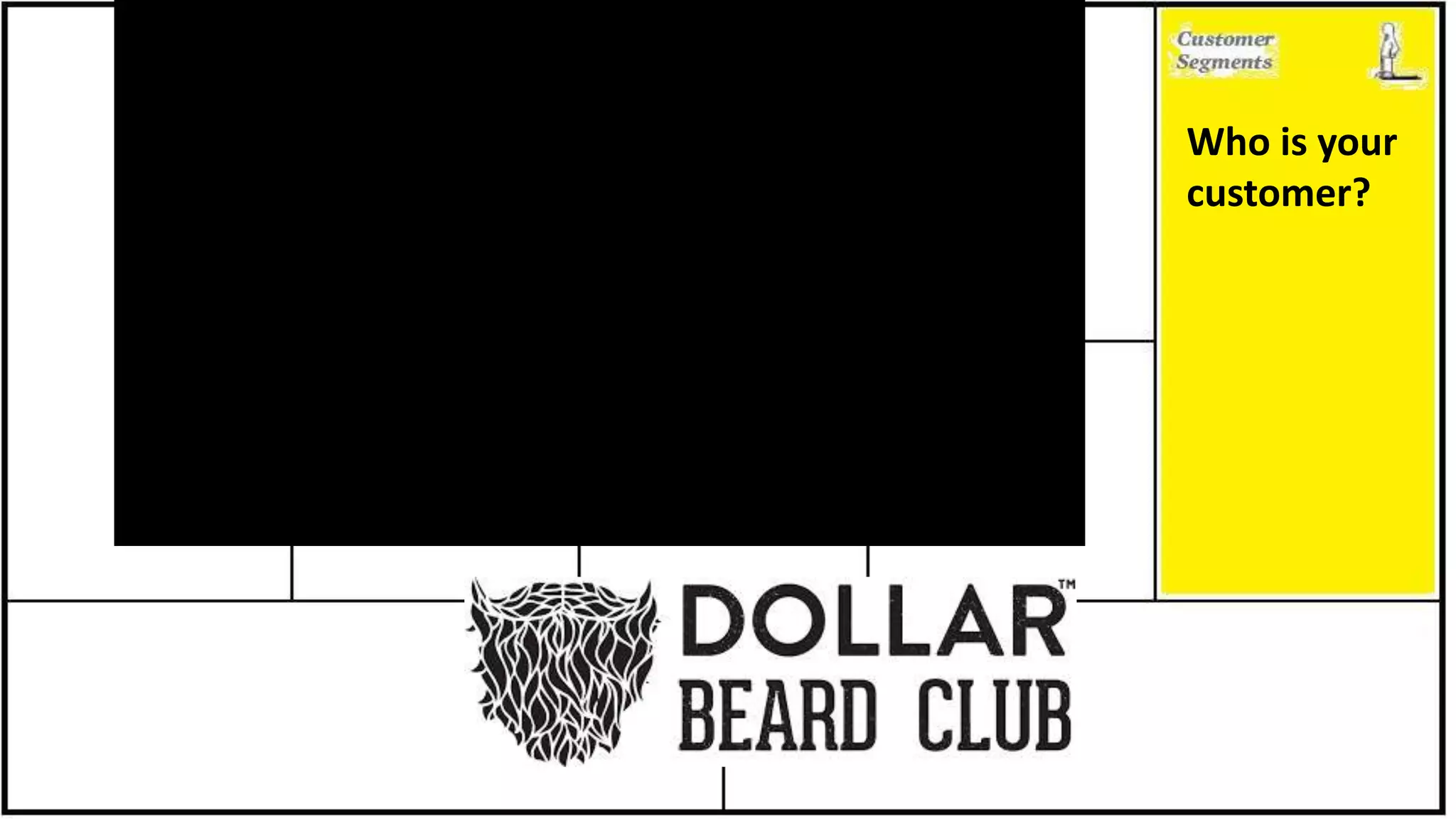
Who is your
customer?
FUNDING
CROWDLENDING
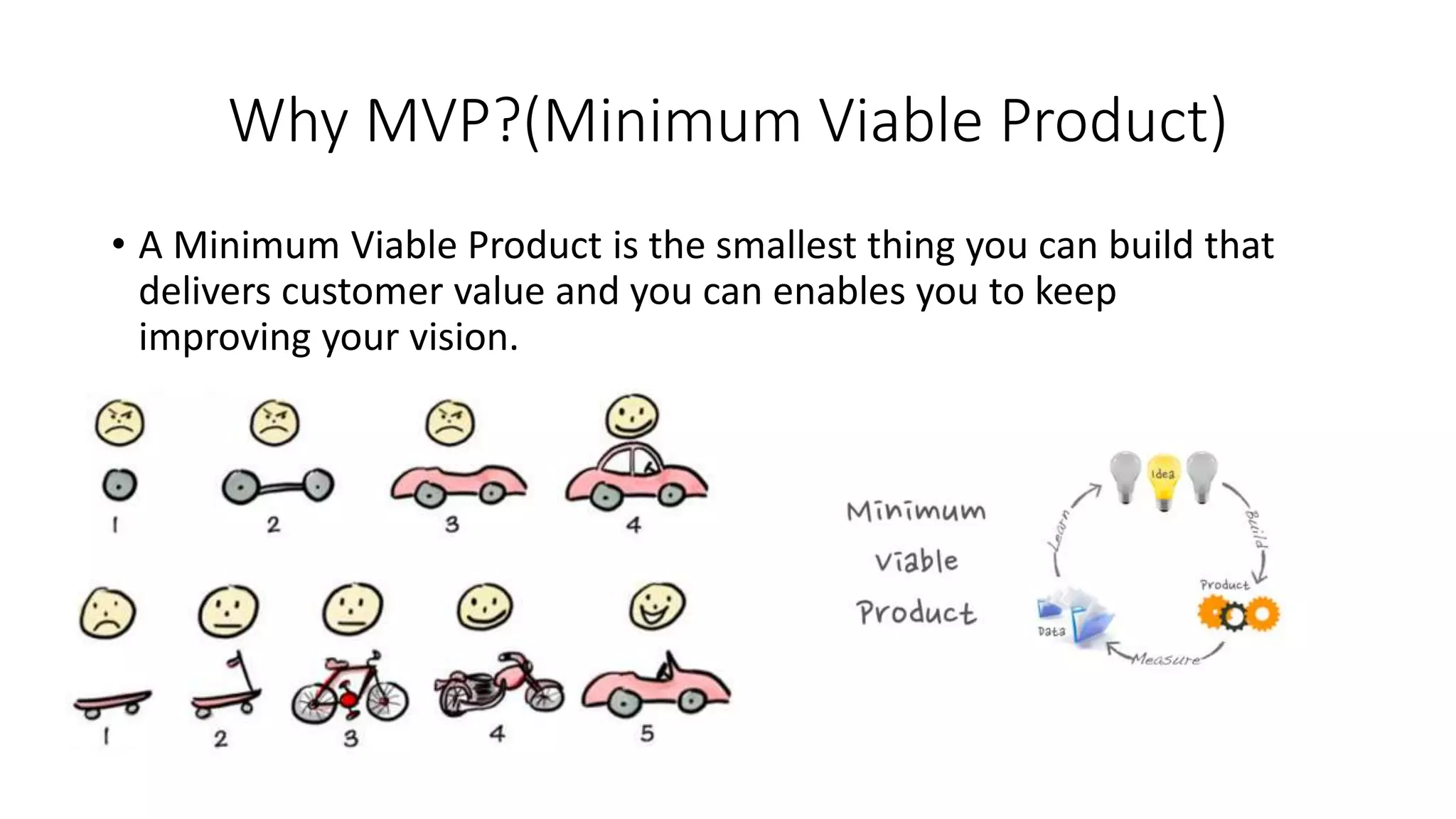
Why MVP?(Minimum Viable Product)
• A Minimum Viable Product is the smallest thing you can build that
delivers customer value and you can enables you to keep
improving your vision.
Execution is the key
Your job now !
• OPTION 1  To significantly increase access to information and
communications technology and strive to provide universal and
affordable access to the internet in least developed countries.
• OPTION 2To promote development-oriented policies that support
productive activities, decent job creation, entrepeneurship, creativity
and innovation, and ecourage the formalization and growth of micro-
small-medium sized enterprises, including through access to financial
services (The Global Goals for Sustainable Development)

Entrepreneurship event speech youthspeak

  • 2.
    Why Entrepreneurship? - 37%of Europeans would like to be self-employed, compared to 51% in USA and China. - According to YouthSpeak Survey 61% of millennials have plans to become an entrepreneur. - 8 out of 10 companies won’t make it to survive one year.
  • 4.
    Mom, can Ibe an entrepreneur? • Not everyone is built to be an entrepreneur. • Not everyone can handle uncertainty • Long hours working • No work-life balance • Frustration • Failure
  • 5.
    Entrepreneurship is thepursuit of opportunity without regard to resources currently controlled. The entrepreneur develops a business model, acquires the human and other required resources, and is fully responsible for its success or failure. Defining Entrepreneurship
  • 6.
  • 7.
    Business Model •“A Businessmodel describes the rationale of how an organisation creates, delivers and captures value” • Business Model Generation • Alexander Osterwalder & Yves Pigneur
  • 8.
    Canvas, your businessat a glance • Canvas It’s a tool that help us designing and innovating our business in a visual way.
  • 9.
    VALUE PROPOSITION What valuedo we deliver to the customer segment? What customer problem (pain) are we trying to solve?
  • 10.
    How is itgoing to be?
  • 11.
    How are you goingto reach customers?
  • 12.
    Where does themoney come from?
  • 13.
    Are you goingto be cheap? Are you going to be expensive?
  • 14.
    What do you needto do to create that value proposition?
  • 15.
  • 16.
    Which resources do youneed to create value?
  • 17.
  • 19.
  • 20.
  • 21.
    Why MVP?(Minimum ViableProduct) • A Minimum Viable Product is the smallest thing you can build that delivers customer value and you can enables you to keep improving your vision.
  • 22.
  • 24.
    Your job now! • OPTION 1  To significantly increase access to information and communications technology and strive to provide universal and affordable access to the internet in least developed countries. • OPTION 2To promote development-oriented policies that support productive activities, decent job creation, entrepeneurship, creativity and innovation, and ecourage the formalization and growth of micro- small-medium sized enterprises, including through access to financial services (The Global Goals for Sustainable Development)

Editor's Notes

  • #6 5
  • #10 Customer segments: Mass market, Niche Market, Segmented, Diversified, Multi-sided platforms Value proposition: What value do we deliver to the customer/segment? What customer problem are we trying to solve. Values may be quantitative (Price, speed of service) or qualitative (Design or customer service) Newness, Performance, Customization, “Getting the job done”, Design, Brand/Status, Price, Cost reduction, Risk reduction, Accessibility, Convenience/Usability Channels Channels to reach the customers? Channel types (Direct vs Indirect, Own vs Partner) Channel functions on the following 5 phases. Awareness Evaluation Purchase Delivery After Sales Customer Relationships Personal Assistance, Dedicated Personal assistance, Self-Service, Automated services, Communities, co-creation, Revenue Streams Asset Sale, Usage Fees, subscription fees, Lending/Renting/Leasing, Licensing, Brokerage fees, advertising Key Resources Physical, Intellectual, Human, Financial Key Activities Production, Problem Solving, Platform/Network. Key Partnerships 3 motivations for creating partnerships Optimisation and economy of scale, Reduction of risk and uncertainty, Acquisition of particular resources and activities. Cost Structure Cost-driven Value-driven Fixed Costs Variable Costs Economies of Scale Economies of Scope
  • #11 Customer segments: Mass market, Niche Market, Segmented, Diversified, Multi-sided platforms Value proposition: What value do we deliver to the customer/segment? What customer problem are we trying to solve. Values may be quantitative (Price, speed of service) or qualitative (Design or customer service) Newness, Performance, Customization, “Getting the job done”, Design, Brand/Status, Price, Cost reduction, Risk reduction, Accessibility, Convenience/Usability Channels Channels to reach the customers? Channel types (Direct vs Indirect, Own vs Partner) Channel functions on the following 5 phases. Awareness Evaluation Purchase Delivery After Sales Customer Relationships Personal Assistance, Dedicated Personal assistance, Self-Service, Automated services, Communities, co-creation, Revenue Streams Asset Sale, Usage Fees, subscription fees, Lending/Renting/Leasing, Licensing, Brokerage fees, advertising Key Resources Physical, Intellectual, Human, Financial Key Activities Production, Problem Solving, Platform/Network. Key Partnerships 3 motivations for creating partnerships Optimisation and economy of scale, Reduction of risk and uncertainty, Acquisition of particular resources and activities. Cost Structure Cost-driven Value-driven Fixed Costs Variable Costs Economies of Scale Economies of Scope