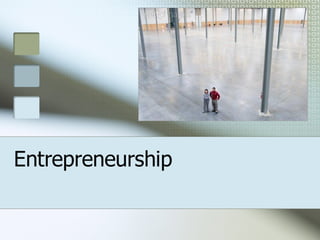
Entrepreneurship
Prepared By: Samir Saxena T.Y.Bcom Symbiosis College of Arts and Commerce
The Mindset Let’s begin with “why”: To get rich? Follow a passion? Scratch an itch? Just got laid off? To manage your own destiny? There are  lots  of valid reasons to become an entrepreneur, but you’d better know  your  reason.
What it Takes Courage Fortitude Focus Determination Passion Competitiveness Common Sense Strong Stomach CONFIDENCE And these are just the genetic factors you need to get started!
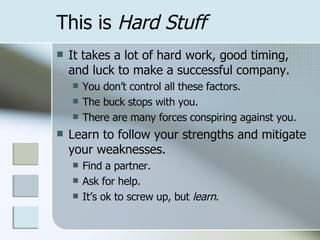
This is  Hard Stuff It takes a lot of hard work, good timing, and luck to make a successful company. You don’t control all these factors. The buck stops with you. There are many forces conspiring against you. Learn to follow your strengths and mitigate your weaknesses. Find a partner. Ask for help. It’s ok to screw up, but  learn .
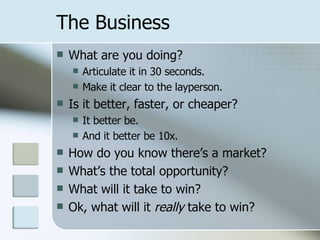
The Business What are you doing? Articulate it in 30 seconds. Make it clear to the layperson. Is it better, faster, or cheaper? It better be. And it better be 10x. How do you know there’s a market? What’s the total opportunity? What will it take to win? Ok, what will it  really  take to win?
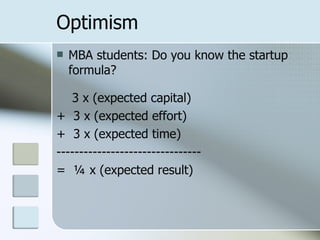
Optimism MBA students: Do you know the startup formula? 3 x (expected capital) +  3 x (expected effort) +  3 x (expected time) -------------------------------- =  ÂĽ x (expected result)
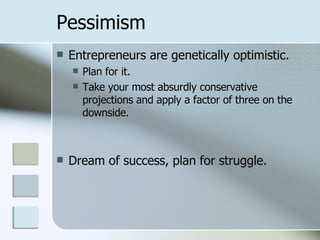
Pessimism Entrepreneurs are genetically optimistic. Plan for it. Take your most absurdly conservative projections and apply a factor of three on the downside. Dream of success, plan for struggle.
Objectives Ok, you have the genes. You have the idea. You’ve got realistic expectations. What are your objectives? Lifestyle business? World domination? Do some waterfall projections.
The Waterfall Make a five-year plan with top-line revenue goals… The walk back and figure out the drivers: How many customers added per month? How many employees? Rent? Other expenses? Do the ratios! Revenue/Employee Profit Margin Market share (…) Is your growth realistic?
The Waterfall The idea is to demonstrate what you have to do each month. Is it realistic? Are you growing faster than any company in history? Is your revenue/employee higher than Google? Maybe you should be more realistic? How does that affect your plans?
The Customer It’s amazing how many people start a business without talking to a customer. It’s not hard. They usually want to help and validate (or invalidate). This can save you a  lot  of time. Not just “will they buy?”, but How  they buy. What are the nuances? Other opportunities?
Spouse & Family If you are young and single It will never be easier… just do it. If you are not Have a supportive spouse. They will sacrifice for you – sacrifice for them. Involve them… but not too much.
The Buck If all goes well, you’ll make a lot of them. But it stops with you. Don’t expect it to be easy. It can be tough when you’re all alone. The world is unfriendly towards entrepreneurs. You must be prepared for times that will test you. Learn the difference between setback and deadend. Trust yourself. Act!  Adapt!
The Team Don’t do anything – don’t quit your job, don’t form a company, don’t think about Ferraris… Until you know your respective roles. Equal partnership? Responsibilities? Boundaries? Are you going solo? Responsibilities and boundaries had better be crystal clear.
The Help Meet with a variety of lawyers, accountants, and bankers. They’re worth the money (usually). They’ll save you time and headaches. Assemble a supportive cast. Favor those who offer flexibility to entrepreneurs Deferred payments Support Groups CED, etc. – network, network, network
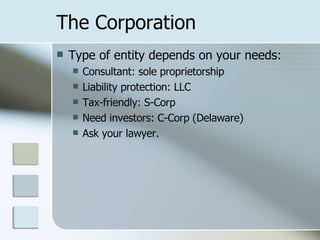
The Corporation Type of entity depends on your needs: Consultant: sole proprietorship Liability protection: LLC Tax-friendly: S-Corp Need investors: C-Corp (Delaware) Ask your lawyer.
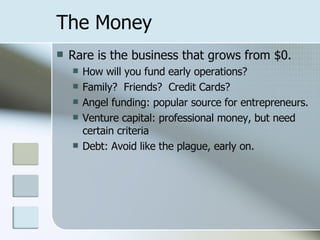
The Money Rare is the business that grows from $0. How will you fund early operations? Family?  Friends?  Credit Cards? Angel funding: popular source for entrepreneurs. Venture capital: professional money, but need certain criteria Debt: Avoid like the plague, early on.
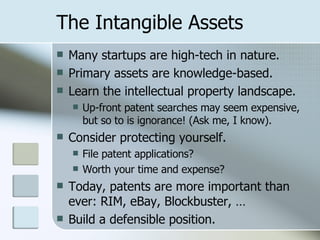
The Intangible Assets Many startups are high-tech in nature. Primary assets are knowledge-based. Learn the intellectual property landscape. Up-front patent searches may seem expensive, but so to is ignorance! (Ask me, I know). Consider protecting yourself. File patent applications? Worth your time and expense? Today, patents are more important than ever: RIM, eBay, Blockbuster, … Build a defensible position.
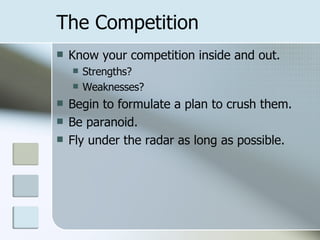
The Competition Know your competition inside and out. Strengths? Weaknesses? Begin to formulate a plan to crush them. Be paranoid. Fly under the radar as long as possible.
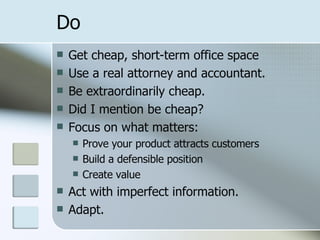
Do Get cheap, short-term office space Use a real attorney and accountant. Be extraordinarily cheap. Did I mention be cheap? Focus on what matters: Prove your product attracts customers Build a defensible position Create value Act with imperfect information. Adapt.
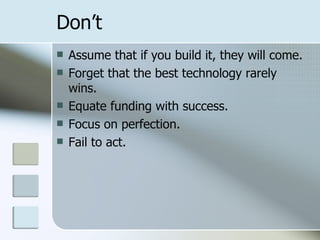
Don’t Assume that if you build it, they will come. Forget that the best technology rarely wins. Equate funding with success. Focus on perfection. Fail to act.
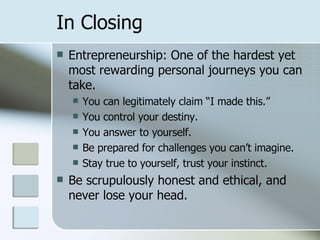
In Closing Entrepreneurship: One of the hardest yet most rewarding personal journeys you can take. You can legitimately claim “I made this.” You control your destiny. You answer to yourself. Be prepared for challenges you can’t imagine. Stay true to yourself, trust your instinct. Be scrupulously honest and ethical, and never lose your head.
Thank You

Entrepreneurship

  • 1.
  • 2.
    Prepared By: SamirSaxena T.Y.Bcom Symbiosis College of Arts and Commerce
  • 3.
    The Mindset Let’sbegin with “why”: To get rich? Follow a passion? Scratch an itch? Just got laid off? To manage your own destiny? There are lots of valid reasons to become an entrepreneur, but you’d better know your reason.
  • 4.
    What it TakesCourage Fortitude Focus Determination Passion Competitiveness Common Sense Strong Stomach CONFIDENCE And these are just the genetic factors you need to get started!
  • 5.
    This is Hard Stuff It takes a lot of hard work, good timing, and luck to make a successful company. You don’t control all these factors. The buck stops with you. There are many forces conspiring against you. Learn to follow your strengths and mitigate your weaknesses. Find a partner. Ask for help. It’s ok to screw up, but learn .
  • 6.
    The Business Whatare you doing? Articulate it in 30 seconds. Make it clear to the layperson. Is it better, faster, or cheaper? It better be. And it better be 10x. How do you know there’s a market? What’s the total opportunity? What will it take to win? Ok, what will it really take to win?
  • 7.
    Optimism MBA students:Do you know the startup formula? 3 x (expected capital) + 3 x (expected effort) + 3 x (expected time) -------------------------------- = ÂĽ x (expected result)
  • 8.
    Pessimism Entrepreneurs aregenetically optimistic. Plan for it. Take your most absurdly conservative projections and apply a factor of three on the downside. Dream of success, plan for struggle.
  • 9.
    Objectives Ok, youhave the genes. You have the idea. You’ve got realistic expectations. What are your objectives? Lifestyle business? World domination? Do some waterfall projections.
  • 10.
    The Waterfall Makea five-year plan with top-line revenue goals… The walk back and figure out the drivers: How many customers added per month? How many employees? Rent? Other expenses? Do the ratios! Revenue/Employee Profit Margin Market share (…) Is your growth realistic?
  • 11.
    The Waterfall Theidea is to demonstrate what you have to do each month. Is it realistic? Are you growing faster than any company in history? Is your revenue/employee higher than Google? Maybe you should be more realistic? How does that affect your plans?
  • 12.
    The Customer It’samazing how many people start a business without talking to a customer. It’s not hard. They usually want to help and validate (or invalidate). This can save you a lot of time. Not just “will they buy?”, but How they buy. What are the nuances? Other opportunities?
  • 13.
    Spouse & FamilyIf you are young and single It will never be easier… just do it. If you are not Have a supportive spouse. They will sacrifice for you – sacrifice for them. Involve them… but not too much.
  • 14.
    The Buck Ifall goes well, you’ll make a lot of them. But it stops with you. Don’t expect it to be easy. It can be tough when you’re all alone. The world is unfriendly towards entrepreneurs. You must be prepared for times that will test you. Learn the difference between setback and deadend. Trust yourself. Act! Adapt!
  • 15.
    The Team Don’tdo anything – don’t quit your job, don’t form a company, don’t think about Ferraris… Until you know your respective roles. Equal partnership? Responsibilities? Boundaries? Are you going solo? Responsibilities and boundaries had better be crystal clear.
  • 16.
    The Help Meetwith a variety of lawyers, accountants, and bankers. They’re worth the money (usually). They’ll save you time and headaches. Assemble a supportive cast. Favor those who offer flexibility to entrepreneurs Deferred payments Support Groups CED, etc. – network, network, network
  • 17.
    The Corporation Typeof entity depends on your needs: Consultant: sole proprietorship Liability protection: LLC Tax-friendly: S-Corp Need investors: C-Corp (Delaware) Ask your lawyer.
  • 18.
    The Money Rareis the business that grows from $0. How will you fund early operations? Family? Friends? Credit Cards? Angel funding: popular source for entrepreneurs. Venture capital: professional money, but need certain criteria Debt: Avoid like the plague, early on.
  • 19.
    The Intangible AssetsMany startups are high-tech in nature. Primary assets are knowledge-based. Learn the intellectual property landscape. Up-front patent searches may seem expensive, but so to is ignorance! (Ask me, I know). Consider protecting yourself. File patent applications? Worth your time and expense? Today, patents are more important than ever: RIM, eBay, Blockbuster, … Build a defensible position.
  • 20.
    The Competition Knowyour competition inside and out. Strengths? Weaknesses? Begin to formulate a plan to crush them. Be paranoid. Fly under the radar as long as possible.
  • 21.
    Do Get cheap,short-term office space Use a real attorney and accountant. Be extraordinarily cheap. Did I mention be cheap? Focus on what matters: Prove your product attracts customers Build a defensible position Create value Act with imperfect information. Adapt.
  • 22.
    Don’t Assume thatif you build it, they will come. Forget that the best technology rarely wins. Equate funding with success. Focus on perfection. Fail to act.
  • 23.
    In Closing Entrepreneurship:One of the hardest yet most rewarding personal journeys you can take. You can legitimately claim “I made this.” You control your destiny. You answer to yourself. Be prepared for challenges you can’t imagine. Stay true to yourself, trust your instinct. Be scrupulously honest and ethical, and never lose your head.
  • 24.