WHO IS AN ENTREPRENEUR
   An entrepreneur
    is a person who has
    possession of an
    enterprise, or
    venture, and
    assumes significant
    accountability for
    the inherent risks
    and the outcome.
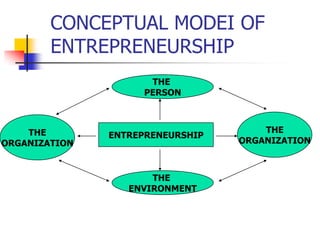
CONCEPTUAL MODEI OF
        ENTREPRENEURSHIP
                      THE
                     PERSON


    THE                               THE
               ENTREPRENEURSHIP
ORGANIZATION                      ORGANIZATION


                      THE
                  ENVIRONMENT
THE ANALYTICAL FRAMEWORK
OF ENTREPRENEURSHIP
  The person: Personality , Skills ,
Experience, Motives and
   Psychological Preferences.
  The Task: Perceiving
   opportunity, marshalling
   resources, providing leadership.
  The Environment: Availability of
   Resources, infrastructure,
   competitive pressures, social
   values, rules and regulations,
   state of technology, etc
  The Organization: structure,
   policies, rules, culture, human
   resources systems,
   communication systems.
SCHUMPETER’S VIEWS ON
ENTERPRENEURSHIP
   Creative and innovative
    activity.
   Distinction between an
    innovator and an
    inventor.
   Both wide and narrow.
   Entrepreneur is a large
    scale businessman who
    creates something new.
WALKER’S VIEWS ON
ENTREPRENEURSHIP
   Organizer and coordinator.
   Different degrees of organizational skill
    and coordinating capacity.
   True entrepreneurs are limited.
DRUCKER’S VIEWS ON
ENTREPRENEURSHIP
   Entrepreneur is one who always
    searches for change, responds to it and
    exploits it as an opportunity.
   Purposeful and systematic innovation.
   Behavior rather than personality trait.
ENTREPRENEURSHIP
Entrepreneurship

   Mainstream Economic
    Factors
       Land
       Labor
       Capital
       Entrepreneurship
Enterprise
   An enterprise may be defined as an
    undertaking or adventure involving
    uncertainty and risk and requiring
    innovation and also to the ability to
    think out and start new business.
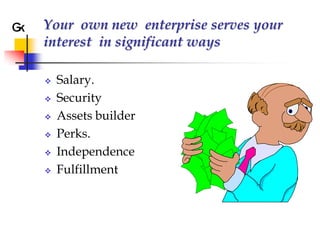
Your own new enterprise serves your
interest in significant ways

   Salary.
   Security
   Assets builder
   Perks.
   Independence
   Fulfillment
Entrepreneurs...Traits
   Self-confident and optimistic
   Able to take calculated risk
   Respond positively to changes
   Flexible and able to adapt
   Knowledgeable of markets
   Able to get along well with others
   Independent minded
Entrepreneurs...Traits II

   Energetic and diligent
   Creative, need to achieve
   Dynamic Leader
   Responsive to suggestions
   Take initiatives
   Resourceful and persevering
   Perceptive with foresight
Entrepreneurship

   Joseph Schumpeter...20th century talks
    about “creative destruction” whereby
    established ways of doing things are
    destroyed by the creation of new and
    better ways of getting things done
   Described it as a process and
    entrepreneurs as innovators who use
    process to shatter the status quo
    through new methods...
Entrepreneurship

   Is a dynamic process of creating
    incremental wealth. This wealth is
    created by individuals who assume the
    major risks in terms of equity, time and
    career commitment of providing value
    for some product or service
   The entrepreneur must somehow infuse
    value to the product or service...
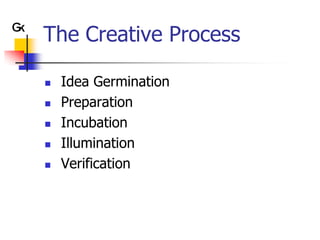
The Creative Process

   Idea Germination
   Preparation
   Incubation
   Illumination
   Verification
The difference between
invention and innovation is:
   Invention - is the creation of new
    products, processes, and technologies
    not previously known to exist.
   Innovation - is the transformation of
    creative ideas into useful applications
    by combining resources in new or
    unusual ways to provide value to
    society for or improved products,
    technology, or services.
Organizing entrepreneurship:
    Does the entrepreneur need a firm?

   Entrepreneurship as
    management : firm is the
    assets the entrepreneur
    arranges (not owns).

   Entrepreneurship as
    imagination, creativity : firm
    can contract for
    entrepreneurship.
   Entrepreneurship as innovation :
    entrepreneurship is sui generis, independent
    of the firm.

   Entrepreneurship as alertness or discovery :
    entrepreneur owns no capital (could be an
    employee or independent contractor).

   Entrepreneurship as charismatic leadership :
    firm is the entrepreneur plus the employees
    who follow him.
Advantages of
entrepreneurship
   Enormous personal financial gain

   Self-employment, offering more job
    satisfaction and flexibility of the work force

   Employment for others, often in better jobs

   Development of more industries, especially in
    rural areas or regions disadvantaged by
    economic changes, for example due to
    globalization effects
Advantages…
   Encouragement of the processing of local
    materials into finished goods for domestic
    consumption as well as for export

   Income generation and increased economic
    growth

   Healthy competition thus encourages higher
    quality products
Advantages…
   More goods and services available

   Development of new markets

   Promotion of the use of modern
    technology in small-scale manufacturing
    to enhance higher productivity
Advantages…
   Encouragement of more researches/ studies
    and development of modern machines and
    equipment for domestic consumption

   Freedom from the dependency on the jobs
    offered by others

   The ability to have great accomplishments

   Serious tax advantages
Entrepreneurship 1

Entrepreneurship 1

  • 2.
    WHO IS ANENTREPRENEUR  An entrepreneur is a person who has possession of an enterprise, or venture, and assumes significant accountability for the inherent risks and the outcome.
  • 3.
    CONCEPTUAL MODEI OF ENTREPRENEURSHIP THE PERSON THE THE ENTREPRENEURSHIP ORGANIZATION ORGANIZATION THE ENVIRONMENT
  • 4.
    THE ANALYTICAL FRAMEWORK OFENTREPRENEURSHIP  The person: Personality , Skills , Experience, Motives and Psychological Preferences.  The Task: Perceiving opportunity, marshalling resources, providing leadership.  The Environment: Availability of Resources, infrastructure, competitive pressures, social values, rules and regulations, state of technology, etc  The Organization: structure, policies, rules, culture, human resources systems, communication systems.
  • 5.
    SCHUMPETER’S VIEWS ON ENTERPRENEURSHIP  Creative and innovative activity.  Distinction between an innovator and an inventor.  Both wide and narrow.  Entrepreneur is a large scale businessman who creates something new.
  • 6.
    WALKER’S VIEWS ON ENTREPRENEURSHIP  Organizer and coordinator.  Different degrees of organizational skill and coordinating capacity.  True entrepreneurs are limited.
  • 7.
    DRUCKER’S VIEWS ON ENTREPRENEURSHIP  Entrepreneur is one who always searches for change, responds to it and exploits it as an opportunity.  Purposeful and systematic innovation.  Behavior rather than personality trait.
  • 8.
  • 9.
    Entrepreneurship  Mainstream Economic Factors  Land  Labor  Capital  Entrepreneurship
  • 10.
    Enterprise  An enterprise may be defined as an undertaking or adventure involving uncertainty and risk and requiring innovation and also to the ability to think out and start new business.
  • 11.
    Your own newenterprise serves your interest in significant ways  Salary.  Security  Assets builder  Perks.  Independence  Fulfillment
  • 12.
    Entrepreneurs...Traits  Self-confident and optimistic  Able to take calculated risk  Respond positively to changes  Flexible and able to adapt  Knowledgeable of markets  Able to get along well with others  Independent minded
  • 13.
    Entrepreneurs...Traits II  Energetic and diligent  Creative, need to achieve  Dynamic Leader  Responsive to suggestions  Take initiatives  Resourceful and persevering  Perceptive with foresight
  • 14.
    Entrepreneurship  Joseph Schumpeter...20th century talks about “creative destruction” whereby established ways of doing things are destroyed by the creation of new and better ways of getting things done  Described it as a process and entrepreneurs as innovators who use process to shatter the status quo through new methods...
  • 15.
    Entrepreneurship  Is a dynamic process of creating incremental wealth. This wealth is created by individuals who assume the major risks in terms of equity, time and career commitment of providing value for some product or service  The entrepreneur must somehow infuse value to the product or service...
  • 16.
    The Creative Process  Idea Germination  Preparation  Incubation  Illumination  Verification
  • 17.
    The difference between inventionand innovation is:  Invention - is the creation of new products, processes, and technologies not previously known to exist.  Innovation - is the transformation of creative ideas into useful applications by combining resources in new or unusual ways to provide value to society for or improved products, technology, or services.
  • 18.
    Organizing entrepreneurship: Does the entrepreneur need a firm?  Entrepreneurship as management : firm is the assets the entrepreneur arranges (not owns).  Entrepreneurship as imagination, creativity : firm can contract for entrepreneurship.
  • 19.
    Entrepreneurship as innovation : entrepreneurship is sui generis, independent of the firm.  Entrepreneurship as alertness or discovery : entrepreneur owns no capital (could be an employee or independent contractor).  Entrepreneurship as charismatic leadership : firm is the entrepreneur plus the employees who follow him.
  • 20.
    Advantages of entrepreneurship  Enormous personal financial gain  Self-employment, offering more job satisfaction and flexibility of the work force  Employment for others, often in better jobs  Development of more industries, especially in rural areas or regions disadvantaged by economic changes, for example due to globalization effects
  • 21.
    Advantages…  Encouragement of the processing of local materials into finished goods for domestic consumption as well as for export  Income generation and increased economic growth  Healthy competition thus encourages higher quality products
  • 22.
    Advantages…  More goods and services available  Development of new markets  Promotion of the use of modern technology in small-scale manufacturing to enhance higher productivity
  • 23.
    Advantages…  Encouragement of more researches/ studies and development of modern machines and equipment for domestic consumption  Freedom from the dependency on the jobs offered by others  The ability to have great accomplishments  Serious tax advantages