ENT101 
Session #6 - Product Development 
Presented On: Nov 5, 2014 
Presented By: Dave Peres & Rob Patterson
Agenda 
• Our background 
• What is product development? 
• The typical product development process 
• What am I building? 
• What and who are involved? 
• How do I do it? 
• What development model options are there? 
• Our product development experiences – for better or for worse…
Our Background 
• Dave Peres – Co-Founder of Minalytix 
• Former VP at Century Systems Software and Manager of PMO & IT/IS at 
BESTECH 
• 15 years of experience in Mining Engineering and Software Product 
Development 
• Rob Patterson – Co-Founder of Minalytix 
• Software product developer and implementation specialist at Century 
Systems, Business Analyst and Project Manager at BESTECH 
• 13 years of experience in developing and implementing software solutions
Our Company 
• Minalytix Inc. 
• Founded in 2013 
• Privately owned. 
• Located in Sudbury, Ontario, Canada 
• Software development and consulting focused on the Mining & Exploration 
Industries 
• Offering consulting services to help fund product development. 
• Developing commercial products for clients and partners. 
• All team members have experience in commercial software product 
development.
Product Development 
The process of taking an IDEA and turning it into a viable PRODUCT and 
making sure that PRODUCT aligns with that original IDEA.
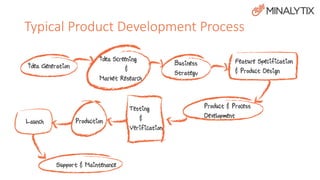
Typical Product Development Process 
Idea Generation Business 
Strategy 
Idea Screening 
& 
Market Research 
Feature Specification 
& Product Design 
Product & Process 
Development 
Testing 
& 
Verification 
Launch Production 
Support & Maintenance
Typical Product Team Roles 
• Visionary 
• Product Manager 
• Analyst 
• Designer 
• Programmer / Engineer 
• Quality Assurance 
• Sales and Marketing 
• Support and Maintenance
Idea Generation 
Who? 
• Visionary 
• This could be anyone in or outside of 
an organization that sees an 
opportunity to create or improve 
something 
• Customers, market, product manager, 
employee, suppliers, business 
partners, etc. 
What / How? 
• Write out customer needs 
• Brainstorm product issues 
• Use R&D 
• Review customer complaints 
• Research your competition 
• Know what`s out there 
• Don’t limit possibilities at this point 
• Continues through product 
development process
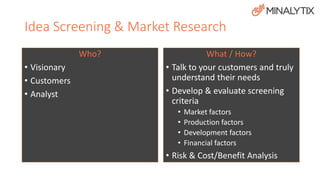
Idea Screening & Market Research 
Who? 
• Visionary 
• Customers 
• Analyst 
What / How? 
• Talk to your customers and truly 
understand their needs 
• Develop & evaluate screening 
criteria 
• Market factors 
• Production factors 
• Development factors 
• Financial factors 
• Risk & Cost/Benefit Analysis
Who? 
• Visionary 
• Analyst 
• Product Manager 
• Understands the market 
• Creates relevant documents 
• Bridge between all team roles 
What / How? 
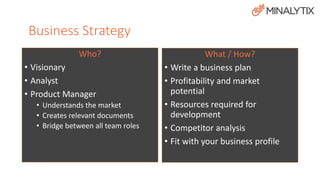
• Write a business plan 
• Profitability and market 
potential 
• Resources required for 
development 
• Competitor analysis 
• Fit with your business profile 
Business Strategy
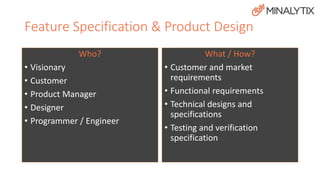
Feature Specification & Product Design 
Who? 
• Visionary 
• Customer 
• Product Manager 
• Designer 
• Programmer / Engineer 
What / How? 
• Customer and market 
requirements 
• Functional requirements 
• Technical designs and 
specifications 
• Testing and verification 
specification
A Note on Simplicity
Product & Process Development 
Who? 
• Product Manager 
• Programmer / Engineer 
What / How? 
• Build the product to the 
specifications defined 
• Adjust as necessary to meet 
reality! 
• Develop and document 
processes and procedures that 
produce the best product
Testing & Verification 
Who? 
• Product Manager 
• Quality Assurance 
What / How? 
• Confirm that product meets all 
requirements in testing and 
verification specification 
• Work with development team to 
address defects/issues
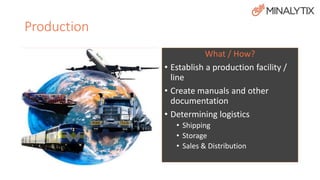
Production 
Who? 
• Product Manager 
• Analyst 
What / How? 
• Establish a production facility / 
line 
• Create manuals and other 
documentation 
• Determining logistics 
• Shipping 
• Storage 
• Sales & Distribution
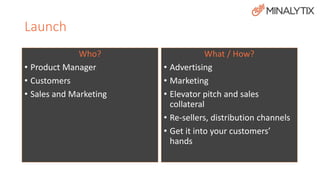
Launch 
Who? 
• Product Manager 
• Customers 
• Sales and Marketing 
What / How? 
• Advertising 
• Marketing 
• Elevator pitch and sales 
collateral 
• Re-sellers, distribution channels 
• Get it into your customers’ 
hands
Support & Maintenance 
Who? 
• Customers 
• Product Manager 
• Quality Assurance 
• Analyst 
• Engineer / Programmer 
What / How? 
• Provide avenues for customer 
feedback 
• Address customer issues 
• Inform customers of those issues 
• Identify opportunities for 
product improvement
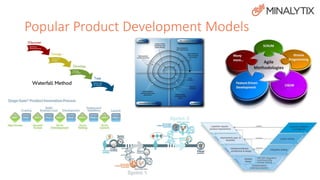
Popular Product Development Models
Our Experience 
• All of our experience in product development has been with software 
• At Century Systems, we assisted in the development and 
implementation of GeoData Management products for the mining 
and exploration industries
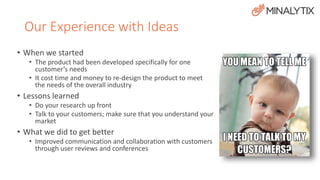
Our Experience with Ideas 
• When we started 
• The product had been developed specifically for one 
customer’s needs 
• It cost time and money to re-design the product to meet 
the needs of the overall industry 
• Lessons learned 
• Do your research up front 
• Talk to your customers; make sure that you understand your 
market 
• What we did to get better 
• Improved communication and collaboration with customers 
through user reviews and conferences
Our Experience with Design & Development 
• When we started 
• Lacked formal requirements and design specifications 
• This resulted in the wrong things being built with no way to 
determine where things went South 
• Lessons learned 
• Documentation is key. If it’s not in writing it doesn’t exist 
• It takes time to prepare it correctly but IT MUST BE DONE 
• What we did to get better 
• Introduced formal requirements and technical 
specifications templates and enforced their use
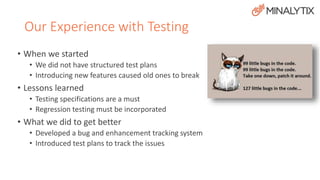
Our Experience with Testing 
• When we started 
• We did not have structured test plans 
• Introducing new features caused old ones to break 
• Lessons learned 
• Testing specifications are a must 
• Regression testing must be incorporated 
• What we did to get better 
• Developed a bug and enhancement tracking system 
• Introduced test plans to track the issues
Our Experience with Support & Maintenance 
• When we started 
• There were no standard releases – each 
customer got the latest set of features 
• SUPPORT NIGHTMARE!!! 
• Lessons learned 
• Product improvements need to be 
organized and planned 
• Future feature roadmap is important 
• What we did to get better 
• Established standard releases and service 
packs which greatly reduced support 
overhead
Our Experience – Conclusion 
• Despite some hiccups along the way, hard work and perseverance 
paid off! The effort was successful and the product was sold in over 
45 countries. 
• Do your research and planning up front, take the time to write things 
down properly, and stick to the plan!
Thank You!!

NORCAT Entrepreneurship 101 - "Product Development" featuring Dave Peres & Rob Patterson, Co-founders, Minalytix

  • 1.
    ENT101 Session #6- Product Development Presented On: Nov 5, 2014 Presented By: Dave Peres & Rob Patterson
  • 2.
    Agenda • Ourbackground • What is product development? • The typical product development process • What am I building? • What and who are involved? • How do I do it? • What development model options are there? • Our product development experiences – for better or for worse…
  • 3.
    Our Background •Dave Peres – Co-Founder of Minalytix • Former VP at Century Systems Software and Manager of PMO & IT/IS at BESTECH • 15 years of experience in Mining Engineering and Software Product Development • Rob Patterson – Co-Founder of Minalytix • Software product developer and implementation specialist at Century Systems, Business Analyst and Project Manager at BESTECH • 13 years of experience in developing and implementing software solutions
  • 4.
    Our Company •Minalytix Inc. • Founded in 2013 • Privately owned. • Located in Sudbury, Ontario, Canada • Software development and consulting focused on the Mining & Exploration Industries • Offering consulting services to help fund product development. • Developing commercial products for clients and partners. • All team members have experience in commercial software product development.
  • 5.
    Product Development Theprocess of taking an IDEA and turning it into a viable PRODUCT and making sure that PRODUCT aligns with that original IDEA.
  • 6.
    Typical Product DevelopmentProcess Idea Generation Business Strategy Idea Screening & Market Research Feature Specification & Product Design Product & Process Development Testing & Verification Launch Production Support & Maintenance
  • 7.
    Typical Product TeamRoles • Visionary • Product Manager • Analyst • Designer • Programmer / Engineer • Quality Assurance • Sales and Marketing • Support and Maintenance
  • 8.
    Idea Generation Who? • Visionary • This could be anyone in or outside of an organization that sees an opportunity to create or improve something • Customers, market, product manager, employee, suppliers, business partners, etc. What / How? • Write out customer needs • Brainstorm product issues • Use R&D • Review customer complaints • Research your competition • Know what`s out there • Don’t limit possibilities at this point • Continues through product development process
  • 9.
    Idea Screening &Market Research Who? • Visionary • Customers • Analyst What / How? • Talk to your customers and truly understand their needs • Develop & evaluate screening criteria • Market factors • Production factors • Development factors • Financial factors • Risk & Cost/Benefit Analysis
  • 10.
    Who? • Visionary • Analyst • Product Manager • Understands the market • Creates relevant documents • Bridge between all team roles What / How? • Write a business plan • Profitability and market potential • Resources required for development • Competitor analysis • Fit with your business profile Business Strategy
  • 11.
    Feature Specification &Product Design Who? • Visionary • Customer • Product Manager • Designer • Programmer / Engineer What / How? • Customer and market requirements • Functional requirements • Technical designs and specifications • Testing and verification specification
  • 12.
    A Note onSimplicity
  • 13.
    Product & ProcessDevelopment Who? • Product Manager • Programmer / Engineer What / How? • Build the product to the specifications defined • Adjust as necessary to meet reality! • Develop and document processes and procedures that produce the best product
  • 14.
    Testing & Verification Who? • Product Manager • Quality Assurance What / How? • Confirm that product meets all requirements in testing and verification specification • Work with development team to address defects/issues
  • 15.
    Production Who? •Product Manager • Analyst What / How? • Establish a production facility / line • Create manuals and other documentation • Determining logistics • Shipping • Storage • Sales & Distribution
  • 16.
    Launch Who? •Product Manager • Customers • Sales and Marketing What / How? • Advertising • Marketing • Elevator pitch and sales collateral • Re-sellers, distribution channels • Get it into your customers’ hands
  • 17.
    Support & Maintenance Who? • Customers • Product Manager • Quality Assurance • Analyst • Engineer / Programmer What / How? • Provide avenues for customer feedback • Address customer issues • Inform customers of those issues • Identify opportunities for product improvement
  • 18.
  • 19.
    Our Experience •All of our experience in product development has been with software • At Century Systems, we assisted in the development and implementation of GeoData Management products for the mining and exploration industries
  • 20.
    Our Experience withIdeas • When we started • The product had been developed specifically for one customer’s needs • It cost time and money to re-design the product to meet the needs of the overall industry • Lessons learned • Do your research up front • Talk to your customers; make sure that you understand your market • What we did to get better • Improved communication and collaboration with customers through user reviews and conferences
  • 21.
    Our Experience withDesign & Development • When we started • Lacked formal requirements and design specifications • This resulted in the wrong things being built with no way to determine where things went South • Lessons learned • Documentation is key. If it’s not in writing it doesn’t exist • It takes time to prepare it correctly but IT MUST BE DONE • What we did to get better • Introduced formal requirements and technical specifications templates and enforced their use
  • 22.
    Our Experience withTesting • When we started • We did not have structured test plans • Introducing new features caused old ones to break • Lessons learned • Testing specifications are a must • Regression testing must be incorporated • What we did to get better • Developed a bug and enhancement tracking system • Introduced test plans to track the issues
  • 23.
    Our Experience withSupport & Maintenance • When we started • There were no standard releases – each customer got the latest set of features • SUPPORT NIGHTMARE!!! • Lessons learned • Product improvements need to be organized and planned • Future feature roadmap is important • What we did to get better • Established standard releases and service packs which greatly reduced support overhead
  • 24.
    Our Experience –Conclusion • Despite some hiccups along the way, hard work and perseverance paid off! The effort was successful and the product was sold in over 45 countries. • Do your research and planning up front, take the time to write things down properly, and stick to the plan!
  • 25.

Editor's Notes

  • #10 Marketing factors:       Potential market size       Compatibility of market image with company's product lines       Relationship to competing products       Compatibility with existing or specified market channels       Access to suitable physical distribution systems       Fits into an acceptable pricing structure       Relationship to promotional methods and resources        Marketing resources needed to produce success Production factors:       Compatibility with existing product lines       Availability of processing equipment       Availability of raw materials and ingredients       Availability of technical skills to produce the product       Availability of production time       Agreement with any legal requirements       Cost and availability of new resources required Development factors:       Knowledge needed for development       Available knowledge and skills       Available time and human resources       Development funds needed and available       Compatibility with existing strengths       Development difficulties and risks of failure Financial factors:       Compatibility of development costs with financial resources       Capital investment resources needed and available       Finance needed and available for market launch and ongoing product support       Profits or returns on investment required