3
Introduction – WhyProduct Design Matters?
Every product around us was once an idea
Effective design can make or break a product
Poorly designed products often fail in the market
(example: Google Glass)
A balance of functionality, cost, and customer needs is key
3.
4
What is ProductDesign & Development?
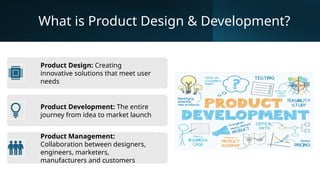
Product Design: Creating
innovative solutions that meet user
needs
Product Development: The entire
journey from idea to market launch
Product Management:
Collaboration between designers,
engineers, marketers,
manufacturers and customers
8
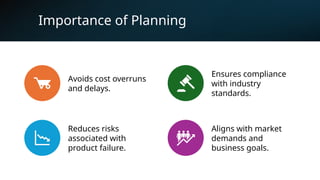
Importance of Planning
Avoidscost overruns
and delays.
Ensures compliance
with industry
standards.
Reduces risks
associated with
product failure.
Aligns with market
demands and
business goals.
8.
9
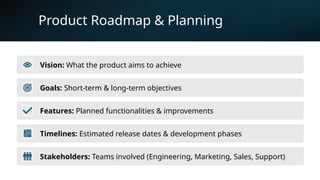
Product Roadmap &Planning
Vision: What the product aims to achieve
Goals: Short-term & long-term objectives
Features: Planned functionalities & improvements
Timelines: Estimated release dates & development phases
Stakeholders: Teams involved (Engineering, Marketing, Sales, Support)
9.
10
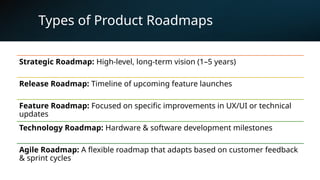
Types of ProductRoadmaps
Strategic Roadmap: High-level, long-term vision (1–5 years)
Release Roadmap: Timeline of upcoming feature launches
Feature Roadmap: Focused on specific improvements in UX/UI or technical
updates
Technology Roadmap: Hardware & software development milestones
Agile Roadmap: A flexible roadmap that adapts based on customer feedback
& sprint cycles
10.
11
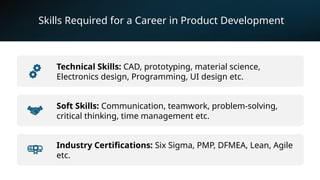
Skills Required fora Career in Product Development
Technical Skills: CAD, prototyping, material science,
Electronics design, Programming, UI design etc.
Soft Skills: Communication, teamwork, problem-solving,
critical thinking, time management etc.
Industry Certifications: Six Sigma, PMP, DFMEA, Lean, Agile
etc.
14
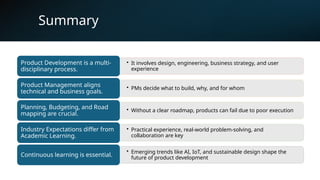
Summary
• It involvesdesign, engineering, business strategy, and user
experience
Product Development is a multi-
disciplinary process.
• PMs decide what to build, why, and for whom
Product Management aligns
technical and business goals.
• Without a clear roadmap, products can fail due to poor execution
Planning, Budgeting, and Road
mapping are crucial.
• Practical experience, real-world problem-solving, and
collaboration are key
Industry Expectations differ from
Academic Learning.
• Emerging trends like AI, IoT, and sustainable design shape the
future of product development
Continuous learning is essential.
14.
15
"Great products arenot just built—they
are strategically designed, developed,
and managed with a vision!”
Thank You!!