Bootcamp for Science
Entrepreneurs,
May 15 – 19, 2017
College of Health and Human
Development & the Smeal College of
Business
Week’s Agenda & Schedule
Today’s Agenda
1. Introductions/Team Formations
2. Introduction to Entrepreneurship
3. Creating an Entrepreneurial Mindset
4. The Lean Startup
5. Idea Generation
6. Business Model Canvas
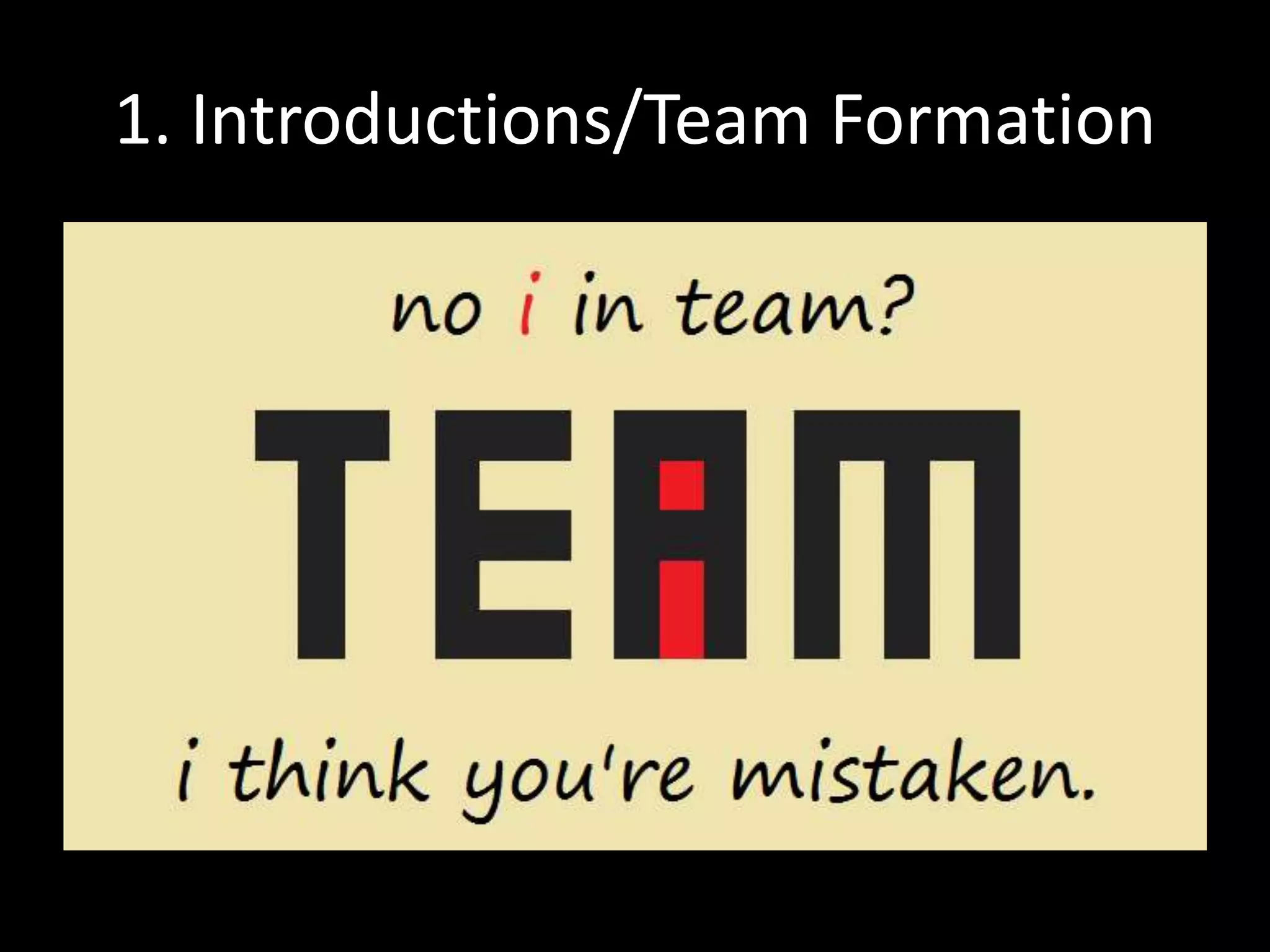
1. Introductions/Team Formation
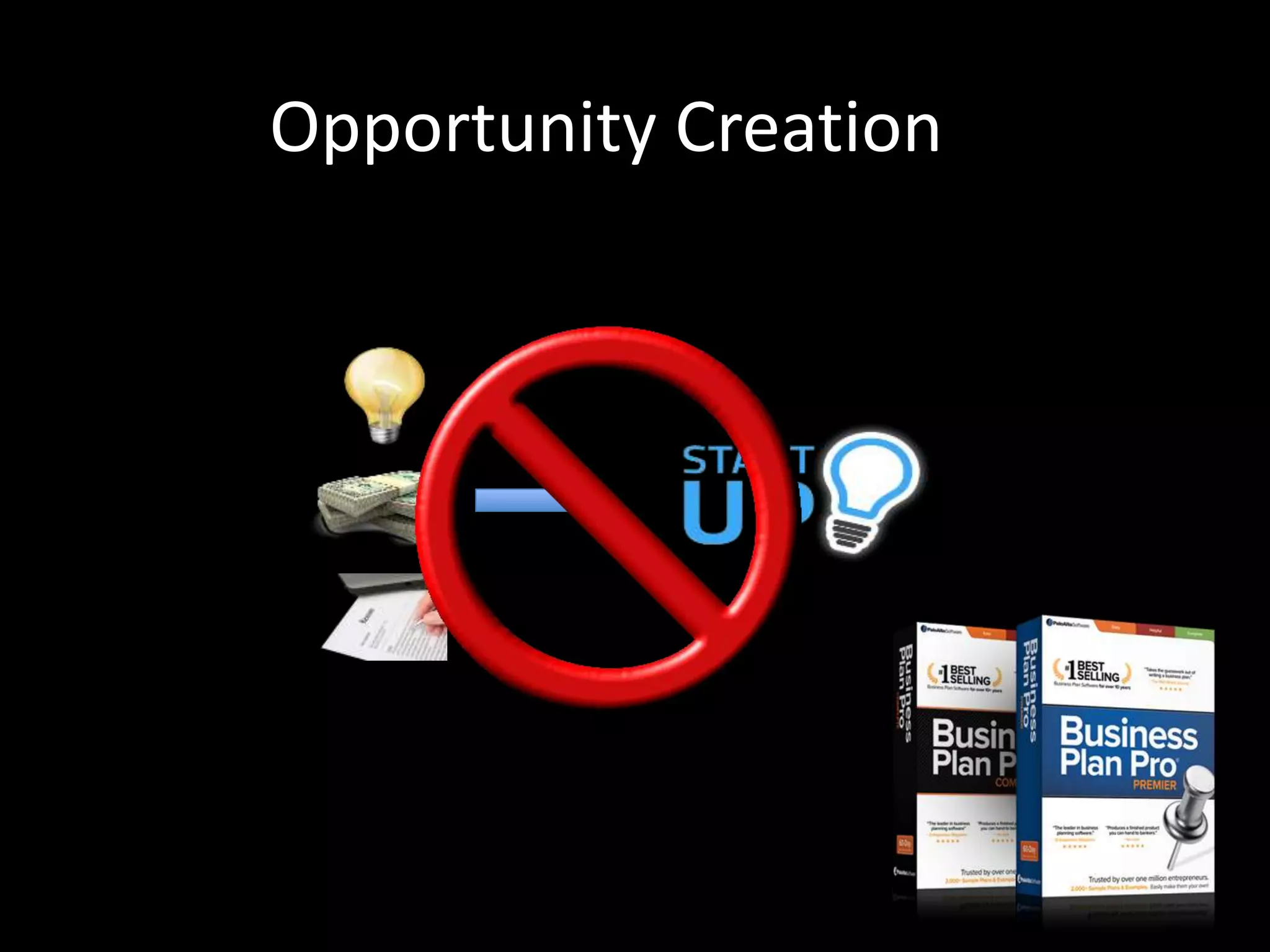
Opportunity Creation
2. Introduction to Entrepreneurship
Opportunity Creation
Versus Opportunity Discovery
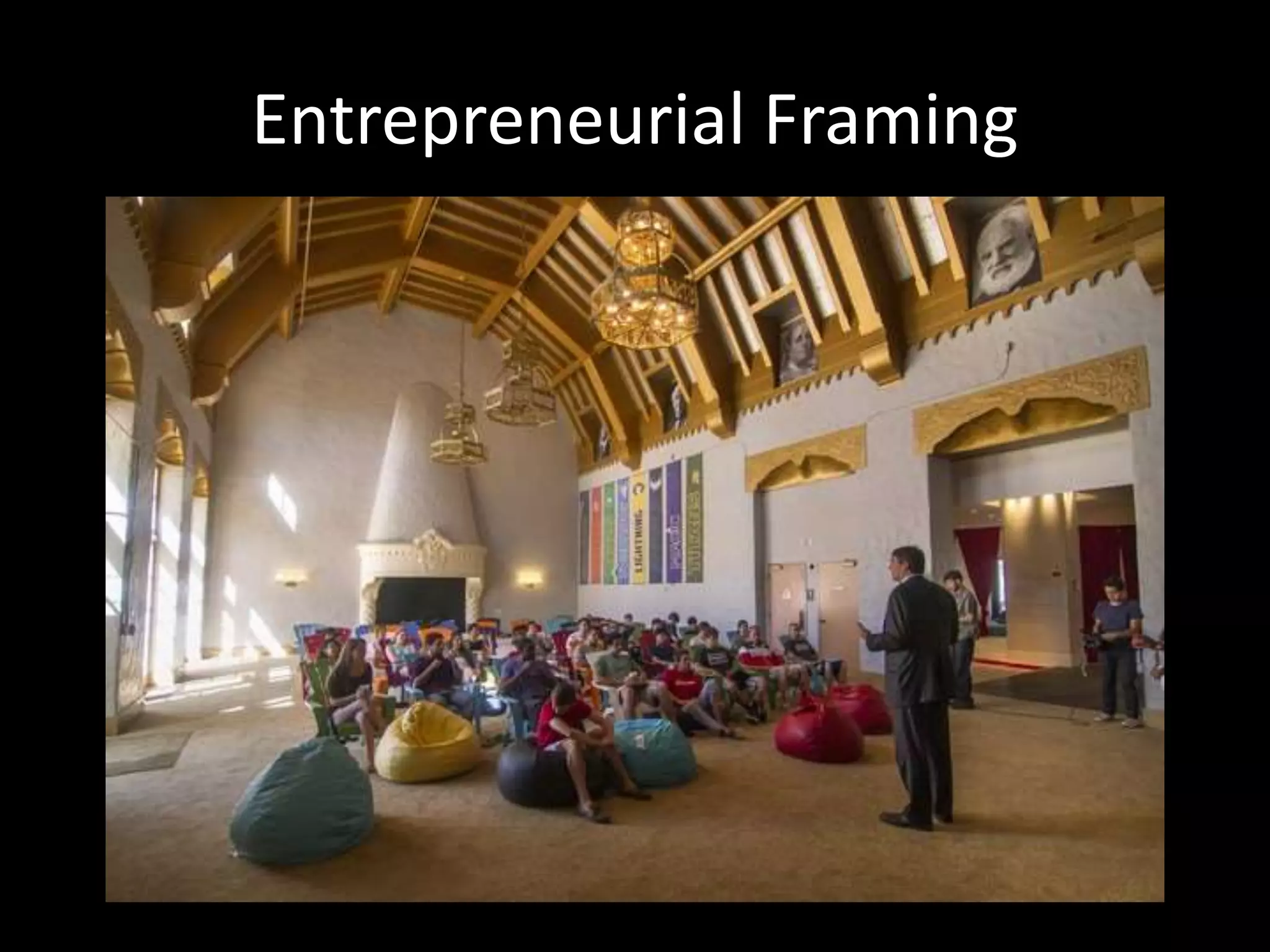
Entrepreneurial Framing
We all face limits – not just in talent, but in
opportunity. But more often than we think, our
limits are self imposed. We try, fail and conclude
we’ve bumped our heads against the ceiling of
possibility. Or maybe after taking just a few steps we
change direction. In either case, we never venture as
far as we might have.
To be gritty is to keep putting one foot in front of
the other. To be gritty is to hold fast to an interesting
and purposeful goal. To be gritty is to invest, day after
week after year, in challenging practice. To be gritty is
to fall down seven times, and rise eight.
-Angela Duckworth
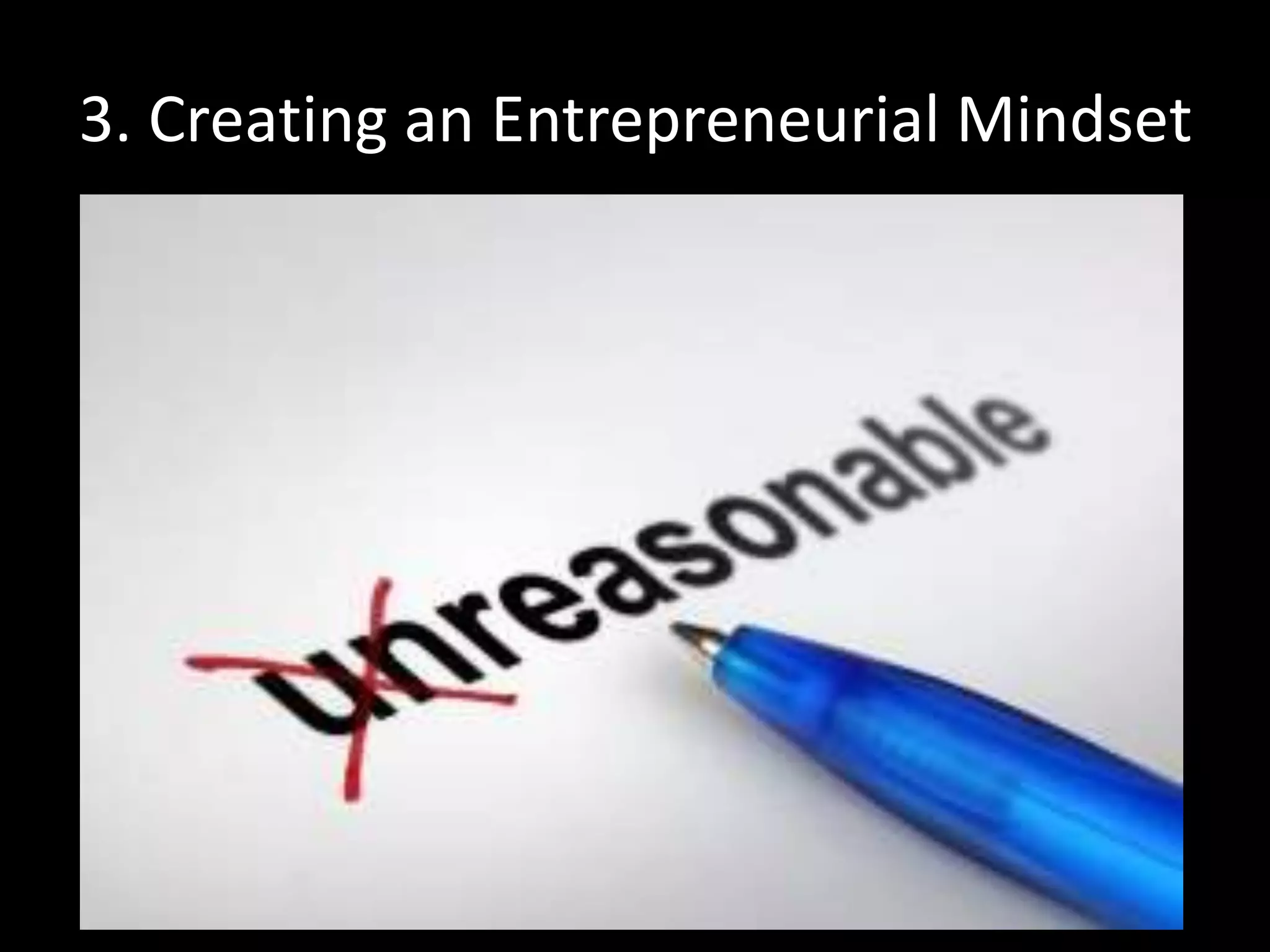
3. Creating an Entrepreneurial Mindset
Do Entrepreneurs Think Differently
Than Other People?
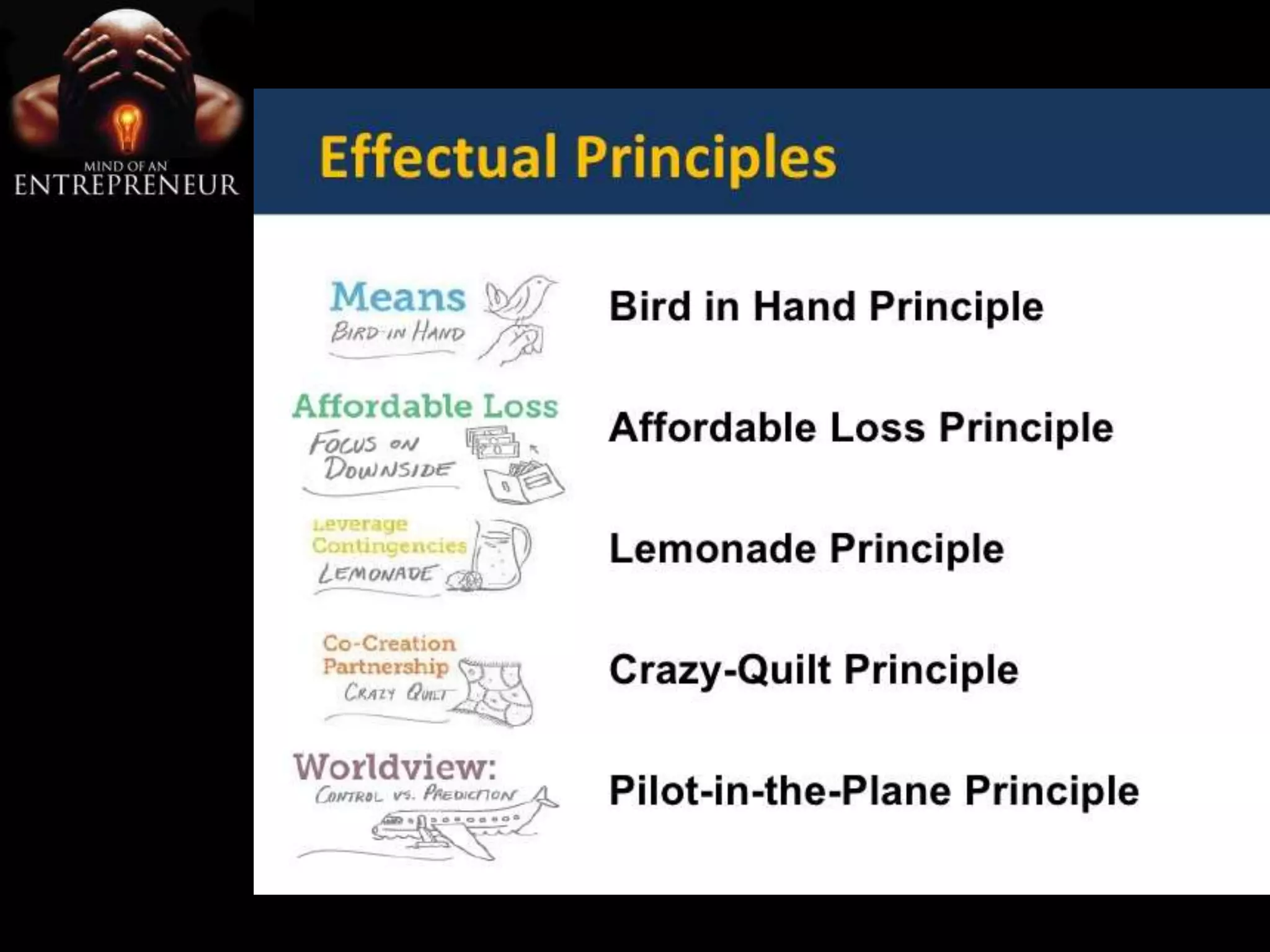
Effectuation theory
a logic of control
Creating the necessary Habits
Gratitude
Practicing Gratitude
1. Think of 3 things that you are grateful for.
2. Spend 30 seconds to a minute truly in an
emotional state of gratitude.
3. Write each one down.
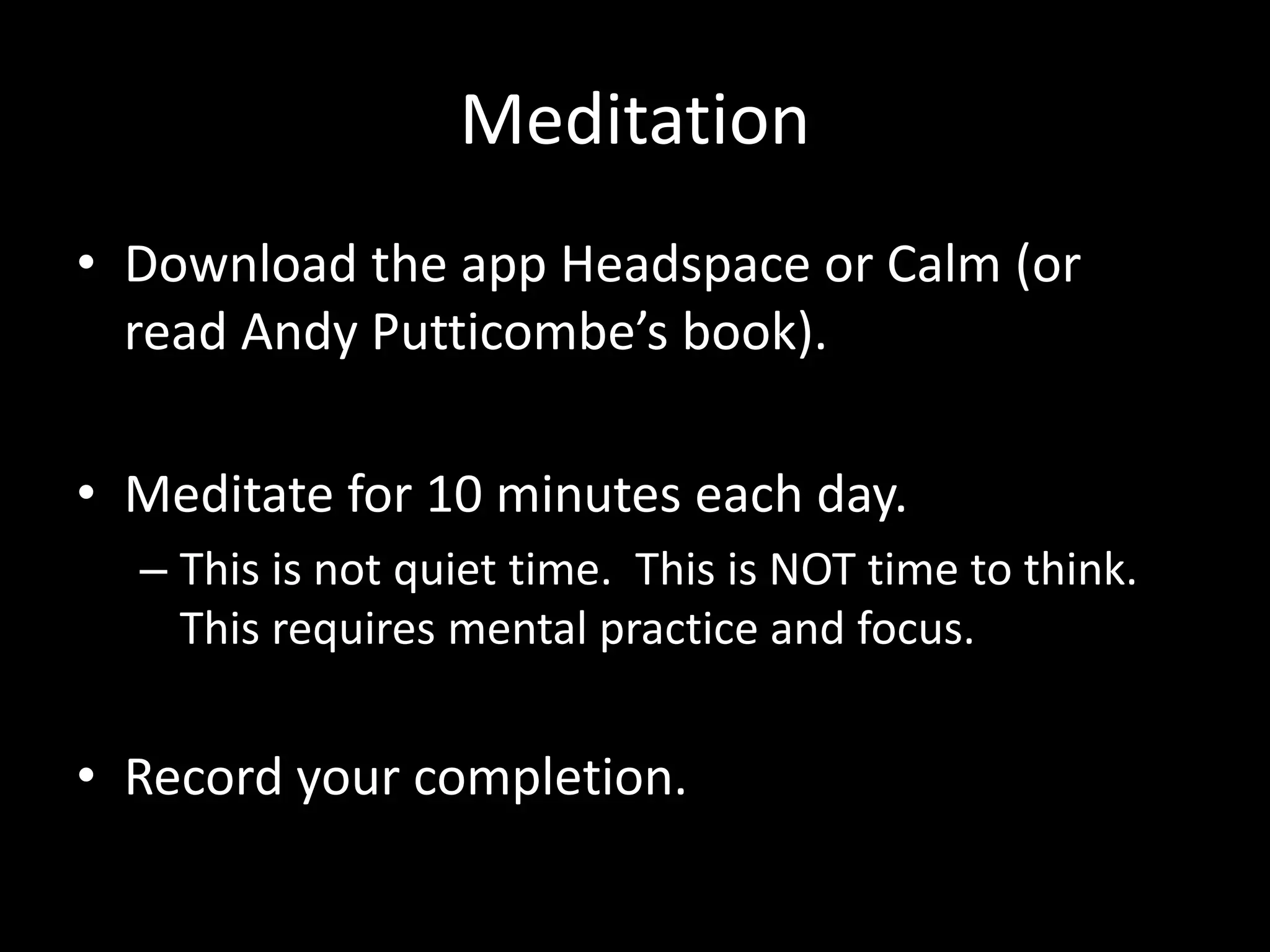
Meditation
• Download the app Headspace or Calm (or
read Andy Putticombe’s book).
• Meditate for 10 minutes each day.
– This is not quiet time. This is NOT time to think.
This requires mental practice and focus.
• Record your completion.
Complete Written Affirmations
1. Allow yourself to dream of extremely lofty
achievements.
2. Picture what it’s like to be living in that state.
3. Write down your affirmation, 15 times.
Exercise & Diet
• Focus on the process not the end objective.
• Establish simple routines that can be
measured.
• Record your successes and failures.
Practicing Random Acts of Kindness
• Look for new ways to selflessly improve your
world and those that live in it. (BEYOND YOUR
NORMAL SELF).
• Record your act and the feeling you got from
completing it.
Journaling & Reflection
• Look back on your day and your recorded
activities.
• Write down your highs and lows. What do
you want to do again and what would you do
different?
• Record themes that emerge.
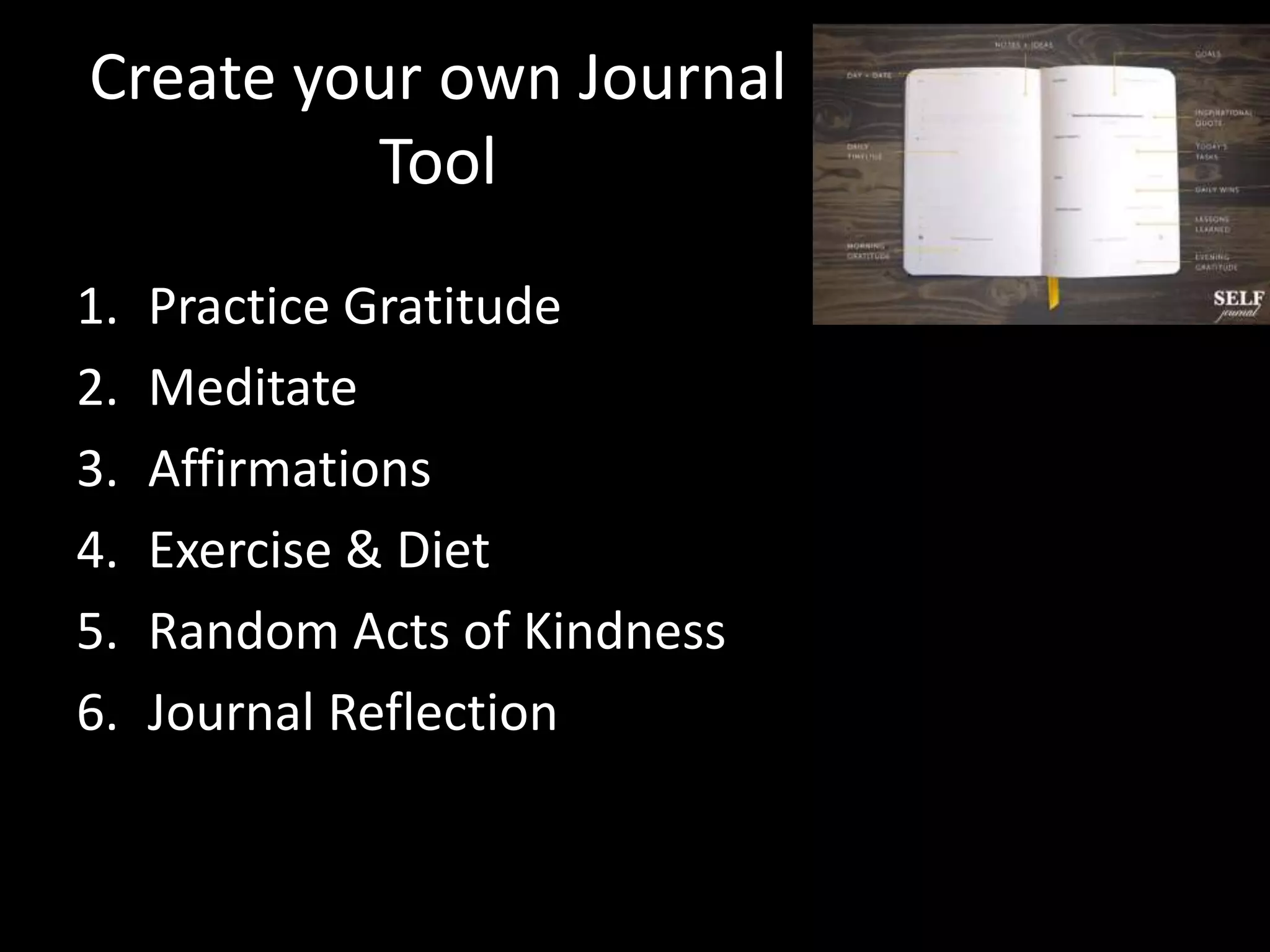
Create your own Journal
Tool
1. Practice Gratitude
2. Meditate
3. Affirmations
4. Exercise & Diet
5. Random Acts of Kindness
6. Journal Reflection
4. Idea Generation
1. Collect Raw Materials
2. Use Your Subconscious Mind
3. Separate Analyzing and Generating
4. Think and Rest
5. Generate Many Ideas
6. Have Fun
7. Believe and Desire
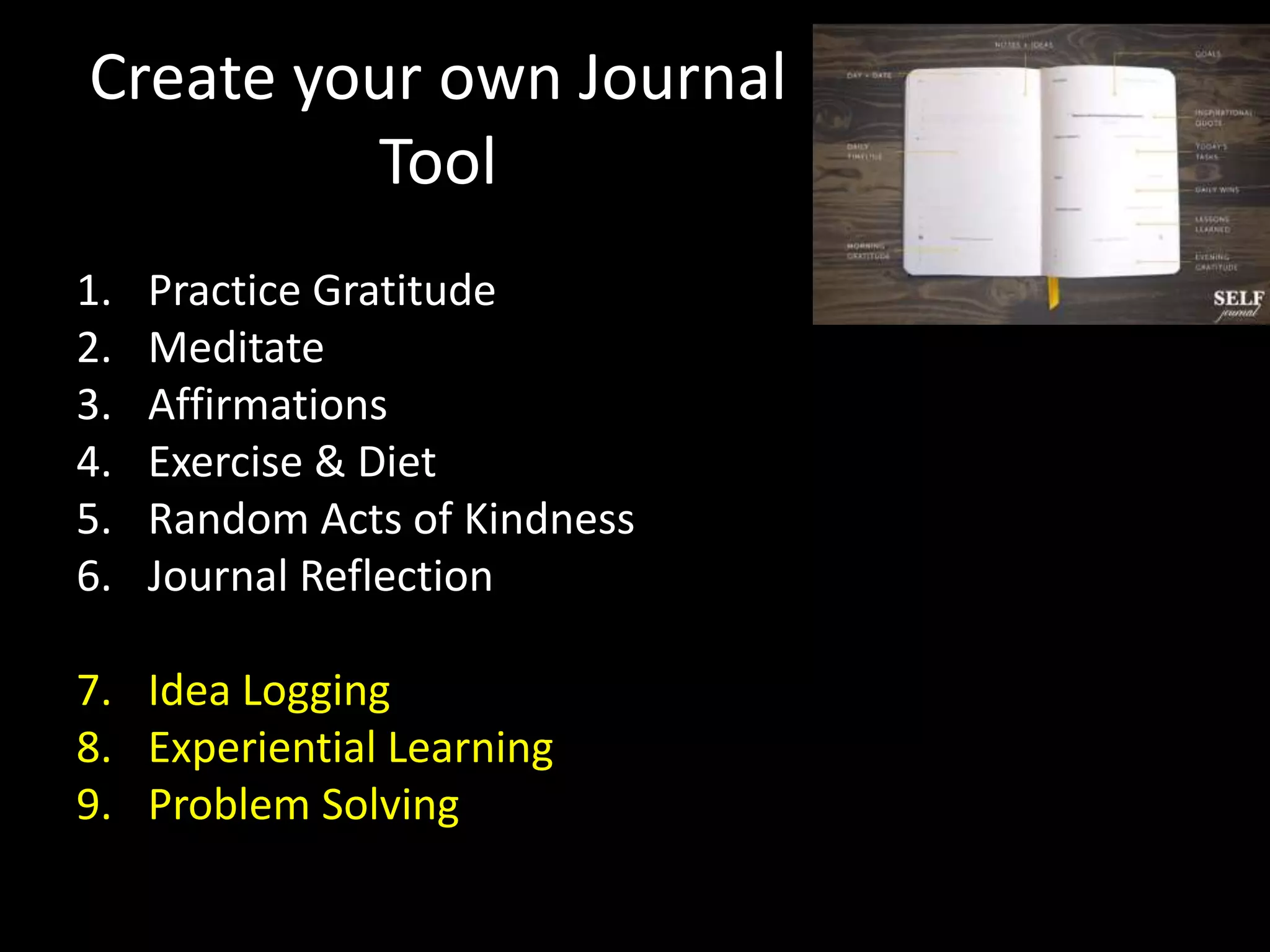
Create your own Journal
Tool
1. Practice Gratitude
2. Meditate
3. Affirmations
4. Exercise & Diet
5. Random Acts of Kindness
6. Journal Reflection
7. Idea Logging
8. Experiential Learning
9. Problem Solving
5. The Lean Startup
Success can be engineered
by following the right
process, which means it can
be learned, which means it
can be taught.
1. Startups Need to be managed differently from
established companies
2. The purpose of the
startup is to find a
sustainable business
model.
3. Find your sustainable business model through
validated learning.
4. The leap of faith
assumptions: test your value
and growth hypotheses.
6. Build, measure, learn – as fast and as often a
possible.
5. Develop a minimal viable product to test your idea.
8. To find the right business model for your
company, you usually have to pivot.
9. Every startup should usually focus on one
engine of growth.
What is a startup’s true runway?
10. Vanity metrics
are often flattering
but misleading –
they won’t help you
find a sustainable
business model.
11. Every start-up has to define its core metrics
and analyze them properly.
Business Model Canvas
What is value?
Model of Service Tranference
Based on SDL’s 4 Axioms
Value Creating
Actor
1
Value Creating
Actor
2
Market
Facing
Resources
Non Market
Facing
Resources
Non Market
Facing
Resources
timen
Value proposition
Value proposition
A3
A4
A5
A6
A7
An
SERVICE TRANSFER
Product Market Fit
A. Technology Driven start with the VP
B. Market Driven start with the Customer Segment
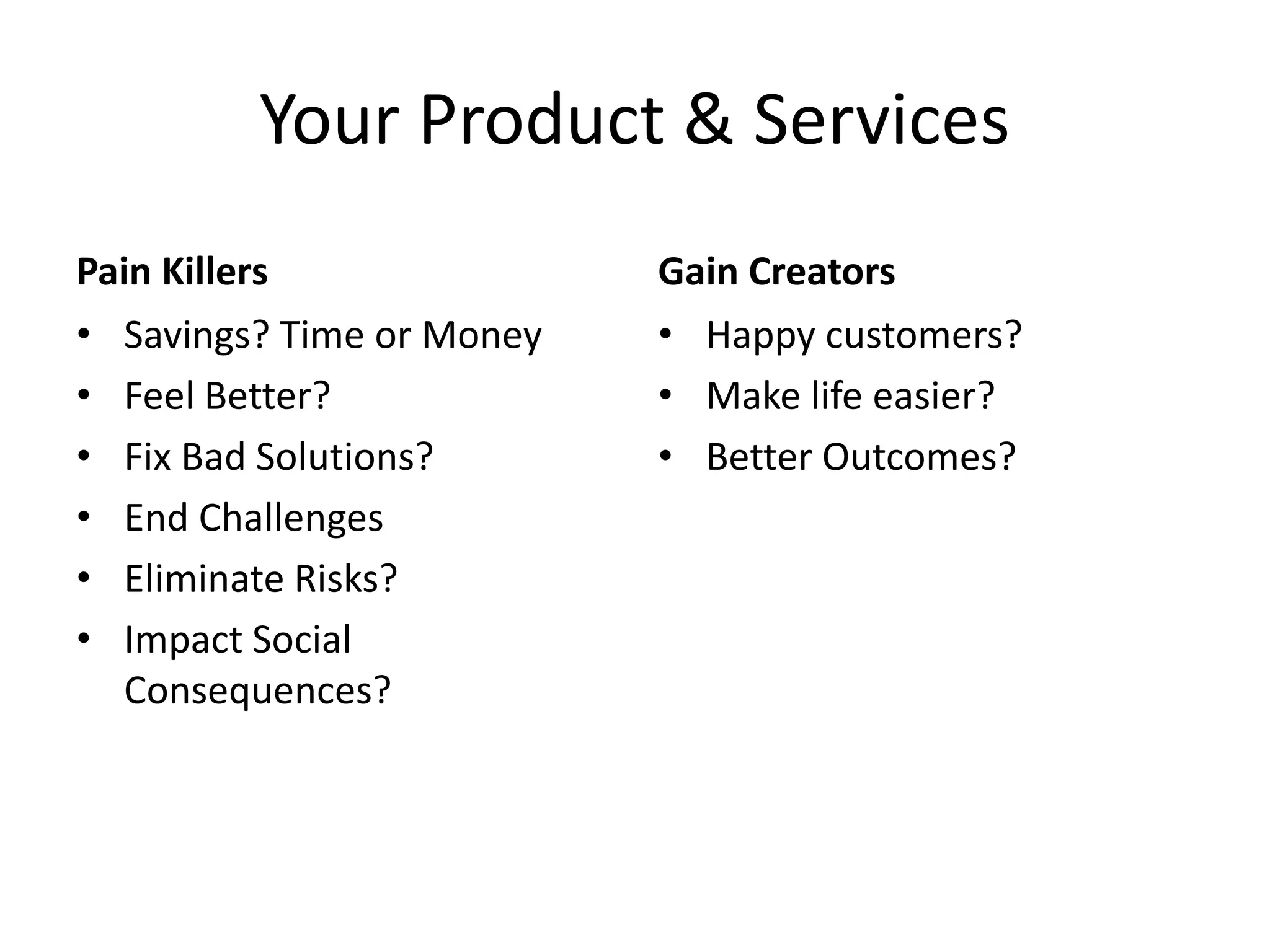
Your Product & Services
Pain Killers
• Savings? Time or Money
• Feel Better?
• Fix Bad Solutions?
• End Challenges
• Eliminate Risks?
• Impact Social
Consequences?
Gain Creators
• Happy customers?
• Make life easier?
• Better Outcomes?
Problem or Need
• Rank each pain according to INTENSITY and
FREQUENCY for your customer
Value Proposition - Common Mistakes
• Feature of someone else’s product.
• It’s nice to have instead of got to have
• Demand + Enough Customers
If you have to ask if you have PMF…. No.
Technology or Market Insights
• New scientific discoveries
– More efficient, smaller, faster, cheaper
• Value Chain Disruption
• Deregulation
• Changes in how people work, live or interact
– More convenient, better looking, design, etc.
• Where there is overlap between the two you
have a killer value proposition
Review
1. Introductions/Team Formations
2. Introduction to Entrepreneurship
3. Creating an Entrepreneurial Mindset
4. The Lean Startup
5. Idea Generation
6. Business Model Canvas
• (Product Market Fit)
Today’s Agenda
• Business Model Canvas Continued
• Customer Development Process
• Project Discussion
• Guest Speaker
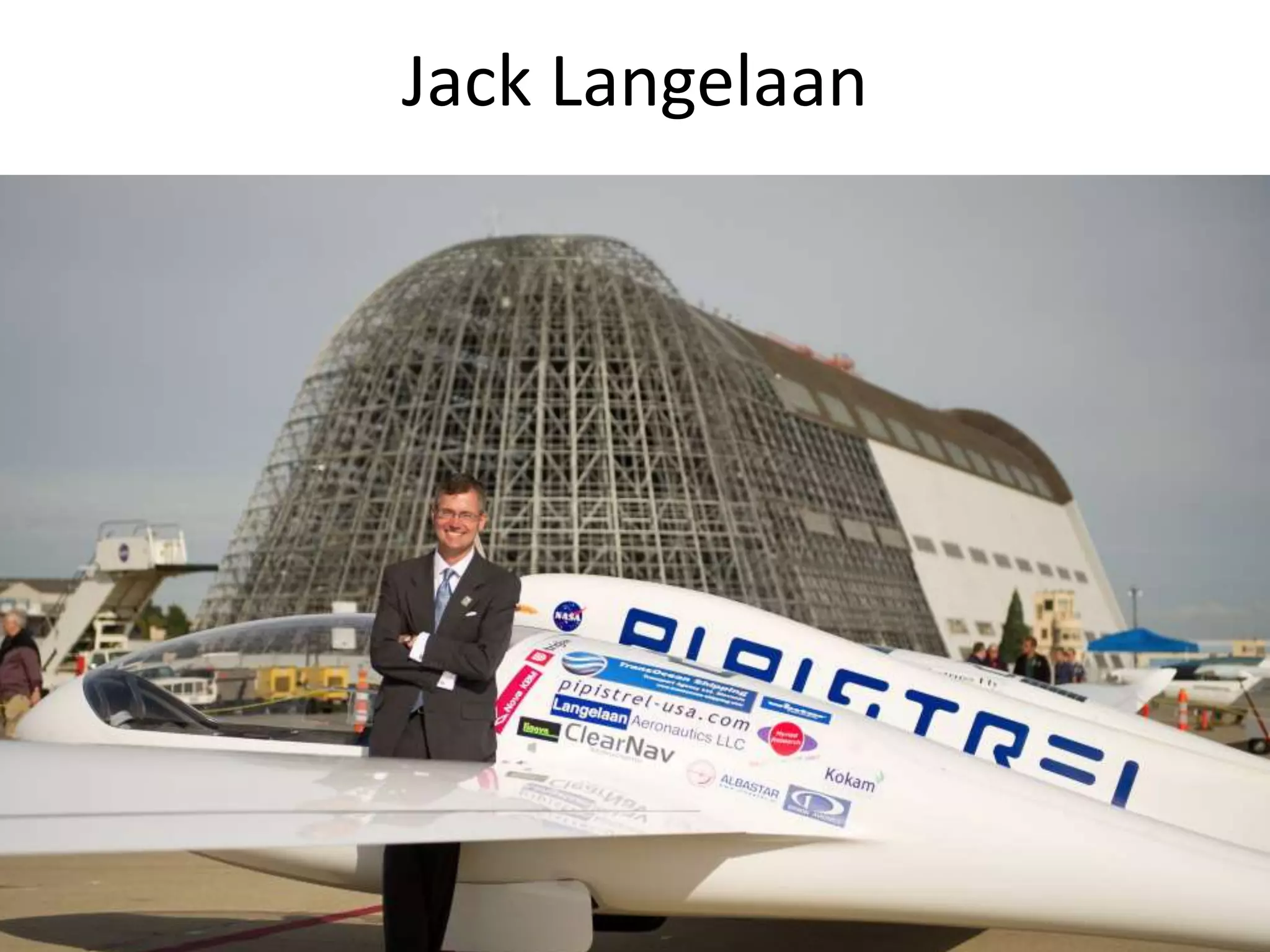
– Jack Langelaan
9 Questions
1. What value do we create?
2. For Whom do we create value?
3. How do we deliver value?
4. How do we communicate value?
5. How do we exchange value?
6. What resources do we need/have?
7. What skills do we need/have?
8. What partnerships do we need/have?
9. How much will it cost?
What value to we create?
Jobs to be done
Customer
Segments
For whom do
we create
value?
Customer Archetype
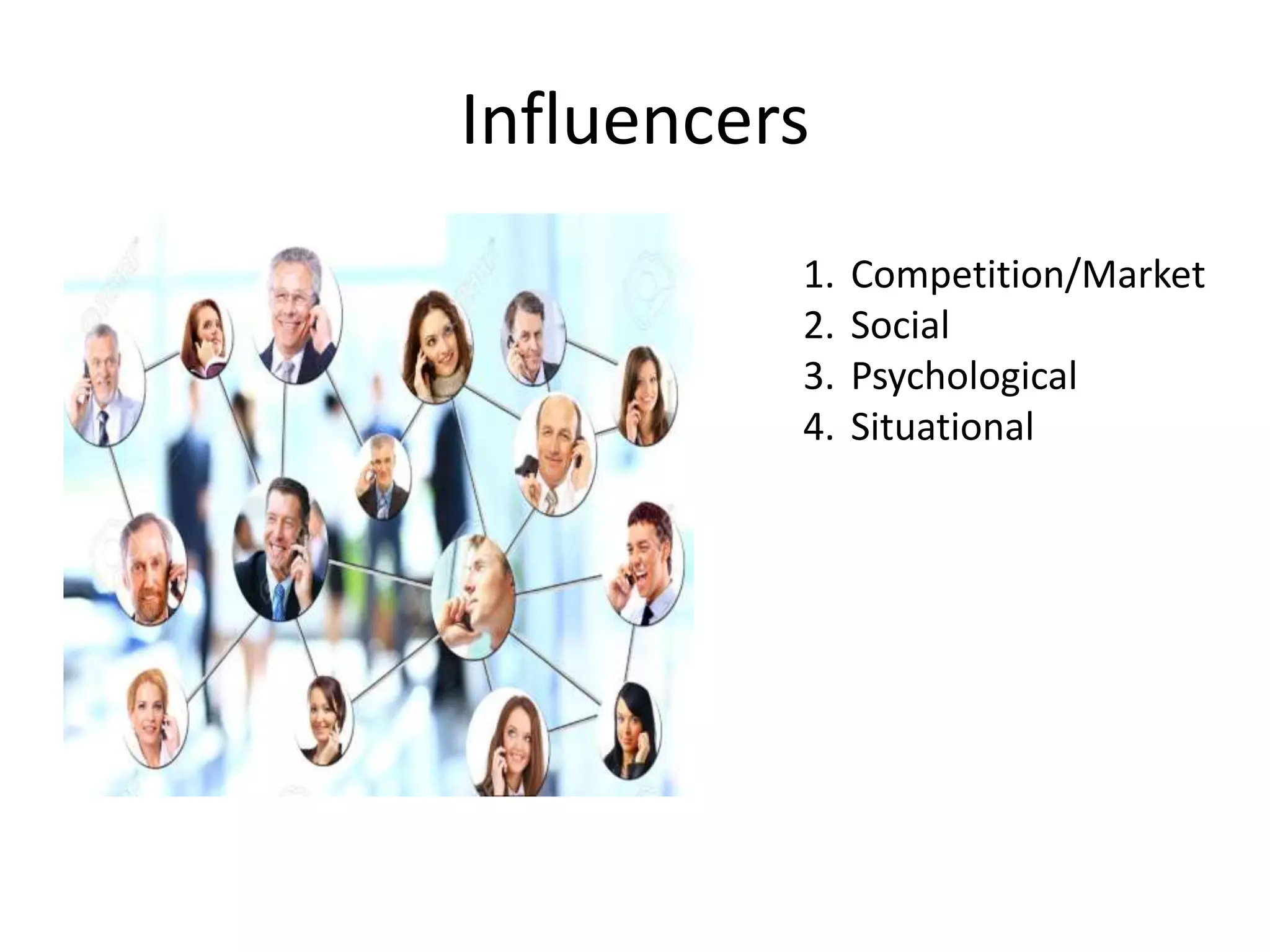
Influencers
1. Competition/Market
2. Social
3. Psychological
4. Situational
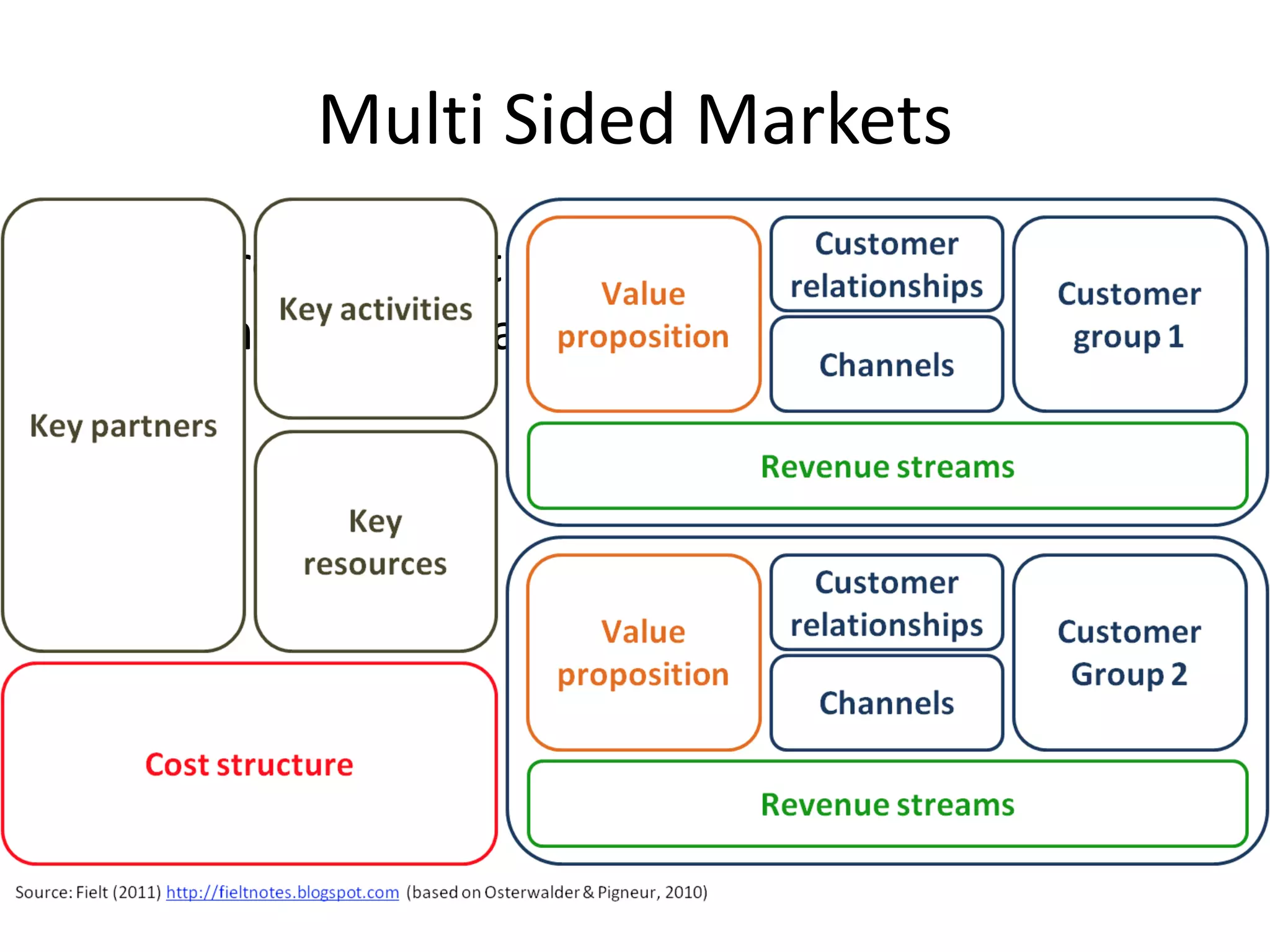
Multi Sided Markets
• Different marketing plan (v.p., c.s., ch, c.r. &
rev model) for each segment
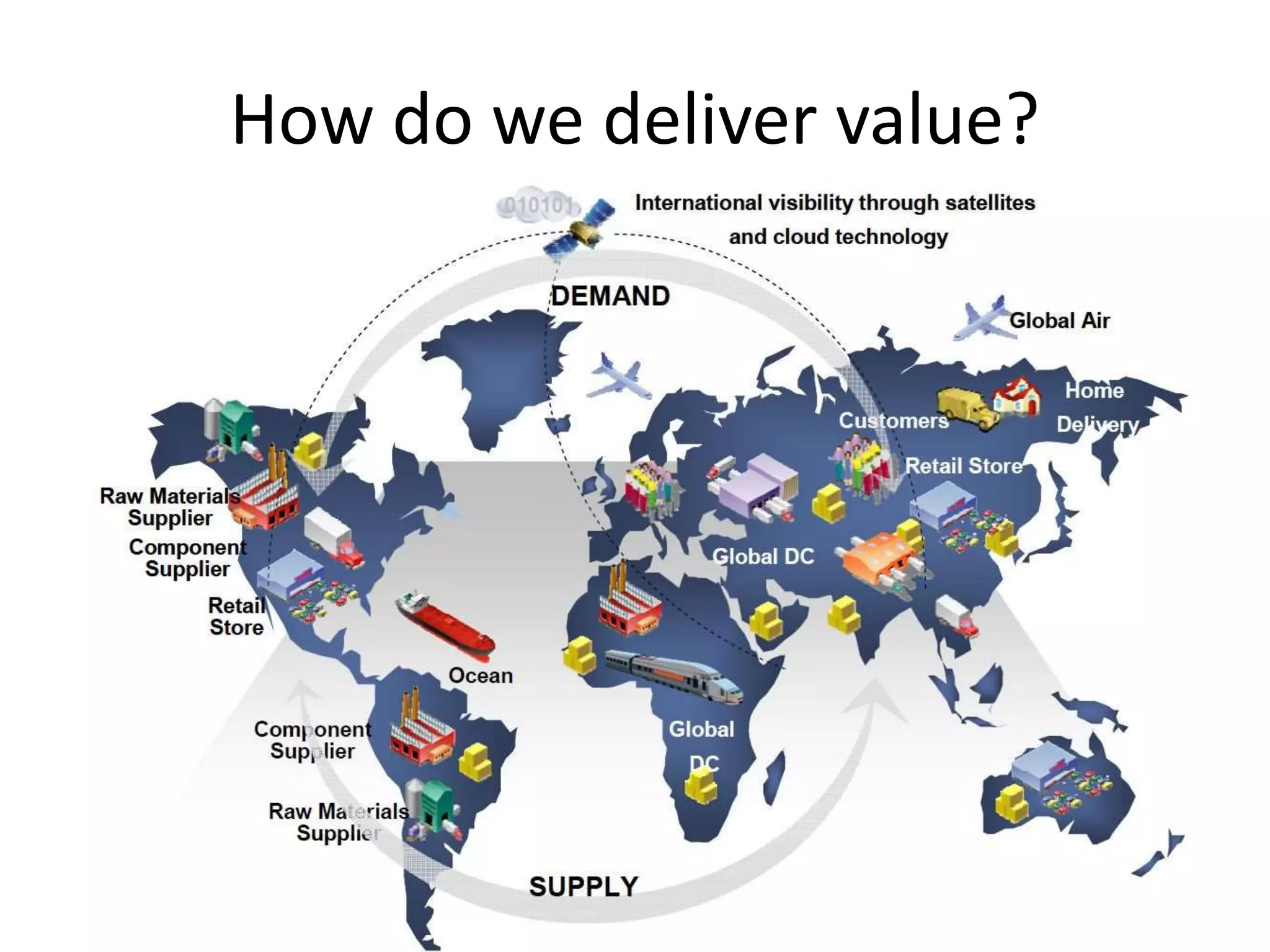
How do we deliver value?
How do we communicate value?
How do we exchange value?
What resources do we need/have?
What skills do we need/have?
“Because the purpose of business is to create a customer,
the business enterprise has two–and only two–basic
functions: marketing and innovation. Marketing and
innovation produce results; all the rest are costs.
Marketing is the distinguishing, unique function of the
business.” Peter Drucker
What partnerships do we need/have?
How much will it cost?
Customer Development
How can you create an MVP to engage
customers?
How can we test our basic value and
growth hypotheses?
DO YOU HAVE A REPEATABLE AND
SCALABLE BUSINESS MODEL?
Project Development
• Value proposition – What value have you created?
• Channel Segments – For whom have you created value?
• Supply Chains (If necessary) – How will you deliver value?
• Marketing Communications – How will you communicate value?
• Revenue Strategy – How will you exchange value?
• Resources (Intellectual Property), Partnerships & Core
Competencies (Include Management Team) – What resources do
you have/need?
• Financial Analysis – What metrics matter? Will it be profitable?
• Customer Development Plan – How can you test your assumptions
to determine if you have scalable and repeatable business model?
• Call to Action – What do you need work on next and how could
someone help you get there?
Jack Langelaan
Ent bootcamp

Ent bootcamp

  • 1.
    Bootcamp for Science Entrepreneurs, May15 – 19, 2017 College of Health and Human Development & the Smeal College of Business
  • 2.
  • 3.
    Today’s Agenda 1. Introductions/TeamFormations 2. Introduction to Entrepreneurship 3. Creating an Entrepreneurial Mindset 4. The Lean Startup 5. Idea Generation 6. Business Model Canvas
  • 4.
  • 6.
  • 7.
  • 13.
    2. Introduction toEntrepreneurship
  • 14.
  • 16.
  • 19.
    We all facelimits – not just in talent, but in opportunity. But more often than we think, our limits are self imposed. We try, fail and conclude we’ve bumped our heads against the ceiling of possibility. Or maybe after taking just a few steps we change direction. In either case, we never venture as far as we might have. To be gritty is to keep putting one foot in front of the other. To be gritty is to hold fast to an interesting and purposeful goal. To be gritty is to invest, day after week after year, in challenging practice. To be gritty is to fall down seven times, and rise eight. -Angela Duckworth
  • 20.
    3. Creating anEntrepreneurial Mindset
  • 22.
    Do Entrepreneurs ThinkDifferently Than Other People?
  • 23.
  • 25.
  • 27.
  • 28.
    Practicing Gratitude 1. Thinkof 3 things that you are grateful for. 2. Spend 30 seconds to a minute truly in an emotional state of gratitude. 3. Write each one down.
  • 30.
    Meditation • Download theapp Headspace or Calm (or read Andy Putticombe’s book). • Meditate for 10 minutes each day. – This is not quiet time. This is NOT time to think. This requires mental practice and focus. • Record your completion.
  • 32.
    Complete Written Affirmations 1.Allow yourself to dream of extremely lofty achievements. 2. Picture what it’s like to be living in that state. 3. Write down your affirmation, 15 times.
  • 34.
    Exercise & Diet •Focus on the process not the end objective. • Establish simple routines that can be measured. • Record your successes and failures.
  • 36.
    Practicing Random Actsof Kindness • Look for new ways to selflessly improve your world and those that live in it. (BEYOND YOUR NORMAL SELF). • Record your act and the feeling you got from completing it.
  • 38.
    Journaling & Reflection •Look back on your day and your recorded activities. • Write down your highs and lows. What do you want to do again and what would you do different? • Record themes that emerge.
  • 39.
    Create your ownJournal Tool 1. Practice Gratitude 2. Meditate 3. Affirmations 4. Exercise & Diet 5. Random Acts of Kindness 6. Journal Reflection
  • 40.
  • 43.
    1. Collect RawMaterials 2. Use Your Subconscious Mind 3. Separate Analyzing and Generating 4. Think and Rest 5. Generate Many Ideas 6. Have Fun 7. Believe and Desire
  • 46.
    Create your ownJournal Tool 1. Practice Gratitude 2. Meditate 3. Affirmations 4. Exercise & Diet 5. Random Acts of Kindness 6. Journal Reflection 7. Idea Logging 8. Experiential Learning 9. Problem Solving
  • 47.
    5. The LeanStartup Success can be engineered by following the right process, which means it can be learned, which means it can be taught.
  • 48.
    1. Startups Needto be managed differently from established companies
  • 49.
    2. The purposeof the startup is to find a sustainable business model.
  • 50.
    3. Find yoursustainable business model through validated learning.
  • 51.
    4. The leapof faith assumptions: test your value and growth hypotheses.
  • 52.
    6. Build, measure,learn – as fast and as often a possible.
  • 53.
    5. Develop aminimal viable product to test your idea.
  • 54.
    8. To findthe right business model for your company, you usually have to pivot.
  • 55.
    9. Every startupshould usually focus on one engine of growth.
  • 56.
    What is astartup’s true runway?
  • 57.
    10. Vanity metrics areoften flattering but misleading – they won’t help you find a sustainable business model.
  • 58.
    11. Every start-uphas to define its core metrics and analyze them properly.
  • 59.
  • 60.
  • 61.
    Model of ServiceTranference Based on SDL’s 4 Axioms Value Creating Actor 1 Value Creating Actor 2 Market Facing Resources Non Market Facing Resources Non Market Facing Resources timen Value proposition Value proposition A3 A4 A5 A6 A7 An SERVICE TRANSFER
  • 62.
    Product Market Fit A.Technology Driven start with the VP B. Market Driven start with the Customer Segment
  • 63.
    Your Product &Services Pain Killers • Savings? Time or Money • Feel Better? • Fix Bad Solutions? • End Challenges • Eliminate Risks? • Impact Social Consequences? Gain Creators • Happy customers? • Make life easier? • Better Outcomes?
  • 64.
    Problem or Need •Rank each pain according to INTENSITY and FREQUENCY for your customer
  • 65.
    Value Proposition -Common Mistakes • Feature of someone else’s product. • It’s nice to have instead of got to have • Demand + Enough Customers If you have to ask if you have PMF…. No.
  • 66.
    Technology or MarketInsights • New scientific discoveries – More efficient, smaller, faster, cheaper • Value Chain Disruption • Deregulation • Changes in how people work, live or interact – More convenient, better looking, design, etc. • Where there is overlap between the two you have a killer value proposition
  • 67.
    Review 1. Introductions/Team Formations 2.Introduction to Entrepreneurship 3. Creating an Entrepreneurial Mindset 4. The Lean Startup 5. Idea Generation 6. Business Model Canvas • (Product Market Fit)
  • 68.
    Today’s Agenda • BusinessModel Canvas Continued • Customer Development Process • Project Discussion • Guest Speaker – Jack Langelaan
  • 69.
    9 Questions 1. Whatvalue do we create? 2. For Whom do we create value? 3. How do we deliver value? 4. How do we communicate value? 5. How do we exchange value? 6. What resources do we need/have? 7. What skills do we need/have? 8. What partnerships do we need/have? 9. How much will it cost?
  • 70.
    What value towe create? Jobs to be done
  • 71.
  • 72.
  • 73.
  • 74.
    Multi Sided Markets •Different marketing plan (v.p., c.s., ch, c.r. & rev model) for each segment
  • 75.
    How do wedeliver value?
  • 76.
    How do wecommunicate value?
  • 77.
    How do weexchange value?
  • 78.
    What resources dowe need/have?
  • 79.
    What skills dowe need/have? “Because the purpose of business is to create a customer, the business enterprise has two–and only two–basic functions: marketing and innovation. Marketing and innovation produce results; all the rest are costs. Marketing is the distinguishing, unique function of the business.” Peter Drucker
  • 80.
    What partnerships dowe need/have?
  • 81.
    How much willit cost?
  • 82.
  • 83.
    How can youcreate an MVP to engage customers?
  • 84.
    How can wetest our basic value and growth hypotheses?
  • 85.
    DO YOU HAVEA REPEATABLE AND SCALABLE BUSINESS MODEL?
  • 86.
    Project Development • Valueproposition – What value have you created? • Channel Segments – For whom have you created value? • Supply Chains (If necessary) – How will you deliver value? • Marketing Communications – How will you communicate value? • Revenue Strategy – How will you exchange value? • Resources (Intellectual Property), Partnerships & Core Competencies (Include Management Team) – What resources do you have/need? • Financial Analysis – What metrics matter? Will it be profitable? • Customer Development Plan – How can you test your assumptions to determine if you have scalable and repeatable business model? • Call to Action – What do you need work on next and how could someone help you get there?
  • 87.

Editor's Notes

  • #73 What are the jobs that customers want you to do? Understand in enough detail that you could draw a customer persona of your ideal customer on the wall.