Enhancing Occupational Therapy Education Outcomes:
Intentional Introduction of a Curriculum Model Graphic
Cynthia Bell, PhD, OTR/L & Megan Edwards PhD, OTR/L
References
Feinberg School of Medicine (2014). Curricular Threads. Northwestern University Feinberg School of Medicine website. Retrieved on January 12, 2015 from
http://www.feinberg.northwestern.edu/education/curriculum/model/threads/index.html
Law, M,. Cooper, B, Strong, S., Stewart, D., Rigby, P. & Letts, L. (1996). The person-environment-occupation model: A transactional approach to occupational performance.
Canadian Journal of Occupational Therapy. 63(1) 9-2.
DO NOT COPY WITHOUT PERMISSION FROM THE AUTHORS. Contact bellcs@wssu.edu for requests.
Background:
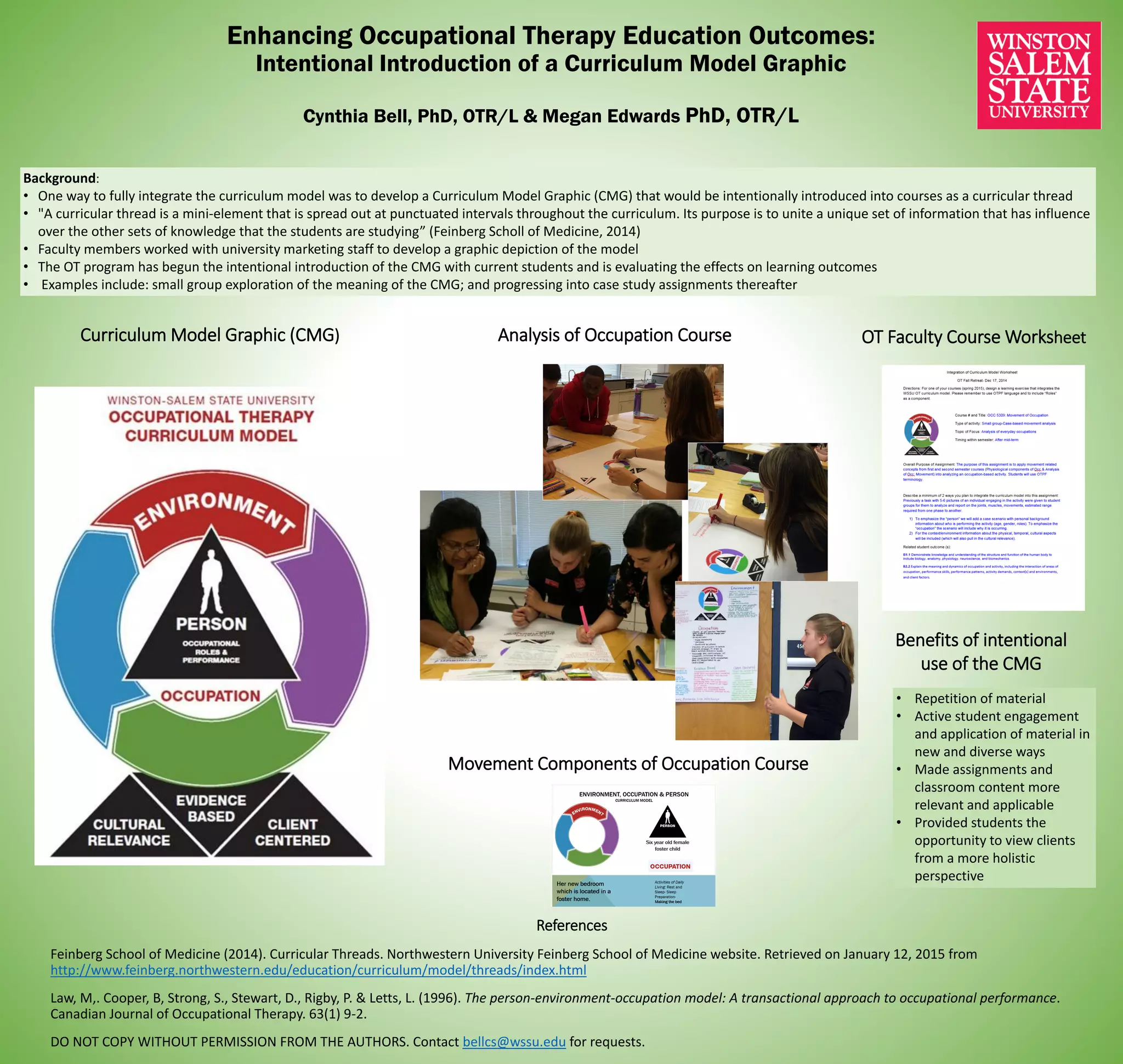
• One way to fully integrate the curriculum model was to develop a Curriculum Model Graphic (CMG) that would be intentionally introduced into courses as a curricular thread
• "A curricular thread is a mini-element that is spread out at punctuated intervals throughout the curriculum. Its purpose is to unite a unique set of information that has influence
over the other sets of knowledge that the students are studying” (Feinberg Scholl of Medicine, 2014)
• Faculty members worked with university marketing staff to develop a graphic depiction of the model
• The OT program has begun the intentional introduction of the CMG with current students and is evaluating the effects on learning outcomes
• Examples include: small group exploration of the meaning of the CMG; and progressing into case study assignments thereafter
Movement Components of Occupation Course
Analysis of Occupation Course OT Faculty Course Worksheet
Benefits of intentional
use of the CMG
• Repetition of material
• Active student engagement
and application of material in
new and diverse ways
• Made assignments and
classroom content more
relevant and applicable
• Provided students the
opportunity to view clients
from a more holistic
perspective
Curriculum Model Graphic (CMG)

Enhancing occupational therapy education outcomes

  • 1.
    Enhancing Occupational TherapyEducation Outcomes: Intentional Introduction of a Curriculum Model Graphic Cynthia Bell, PhD, OTR/L & Megan Edwards PhD, OTR/L References Feinberg School of Medicine (2014). Curricular Threads. Northwestern University Feinberg School of Medicine website. Retrieved on January 12, 2015 from http://www.feinberg.northwestern.edu/education/curriculum/model/threads/index.html Law, M,. Cooper, B, Strong, S., Stewart, D., Rigby, P. & Letts, L. (1996). The person-environment-occupation model: A transactional approach to occupational performance. Canadian Journal of Occupational Therapy. 63(1) 9-2. DO NOT COPY WITHOUT PERMISSION FROM THE AUTHORS. Contact bellcs@wssu.edu for requests. Background: • One way to fully integrate the curriculum model was to develop a Curriculum Model Graphic (CMG) that would be intentionally introduced into courses as a curricular thread • "A curricular thread is a mini-element that is spread out at punctuated intervals throughout the curriculum. Its purpose is to unite a unique set of information that has influence over the other sets of knowledge that the students are studying” (Feinberg Scholl of Medicine, 2014) • Faculty members worked with university marketing staff to develop a graphic depiction of the model • The OT program has begun the intentional introduction of the CMG with current students and is evaluating the effects on learning outcomes • Examples include: small group exploration of the meaning of the CMG; and progressing into case study assignments thereafter Movement Components of Occupation Course Analysis of Occupation Course OT Faculty Course Worksheet Benefits of intentional use of the CMG • Repetition of material • Active student engagement and application of material in new and diverse ways • Made assignments and classroom content more relevant and applicable • Provided students the opportunity to view clients from a more holistic perspective Curriculum Model Graphic (CMG)