:EN5LC-IIc-3.19,
EN5RC-IIc-3.2.1,
EN5OL – IIc-1.3.1,
EN5A-IIc-17
I. Objectives
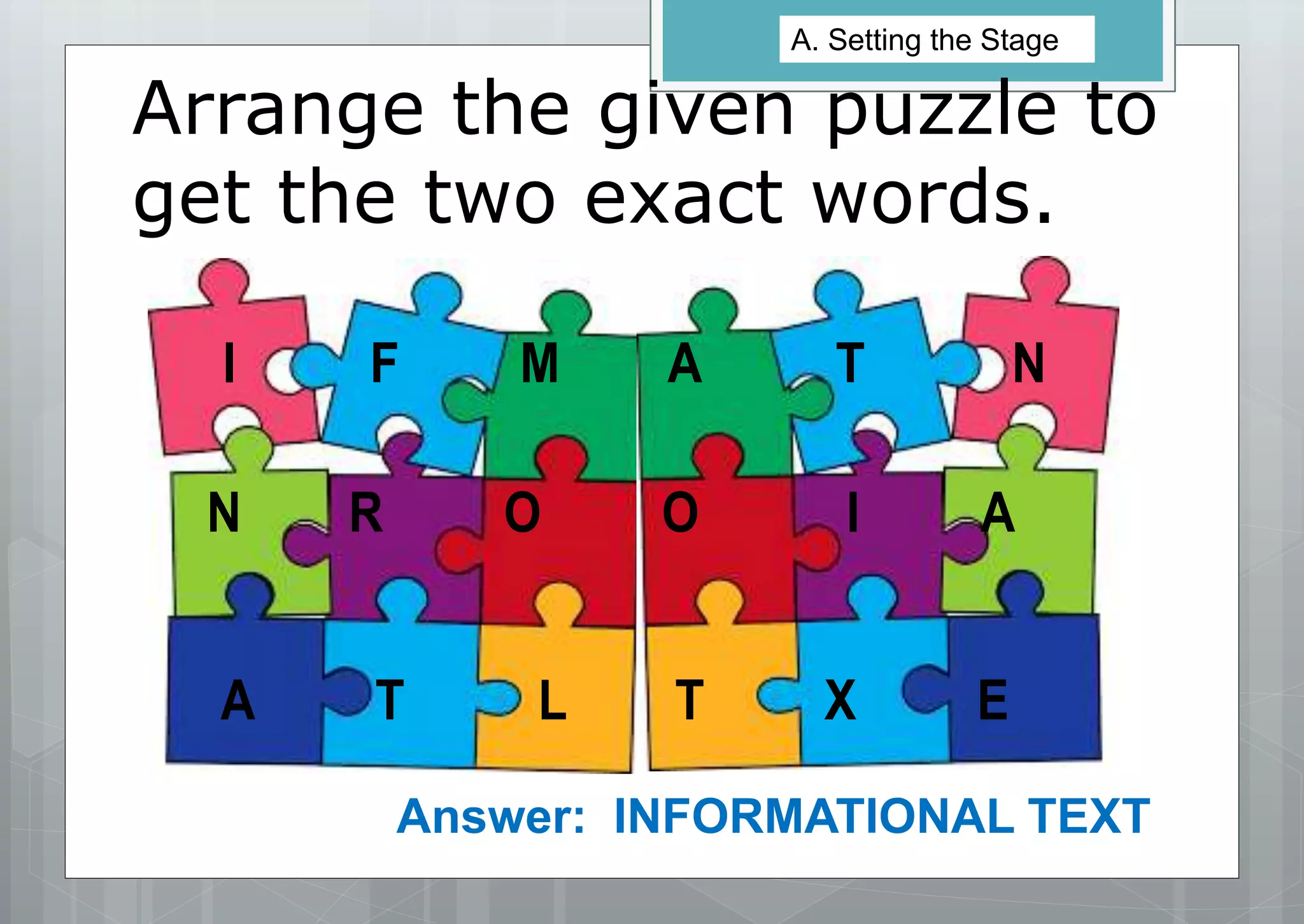
Arrange the given puzzle to
get the two exact words.
A. Setting the Stage
I F M A T N
N R O O I A
A T L T X E
Answer: INFORMATIONAL TEXT
B. Explaining the Student What to do
Description- Sensory and descriptive
details that help the reader visualize
information. Ask yourself: what specific
person, place, thing, or idea is being
described. Description shares the who,
what, when, where, why or how of a
topic/subject. Clue words are such as, for
instance, in addition, also, specifically.
Types:
• Sequence- Presents events in a
sequence from beginning to end, or
organizes how-to text in a series of
directions. Look for steps or references to
time such as dates. Clue words are first,
second, third, then, next, before, after, and
finally.
• Compare and Contrast-
Comparisons are used to describe ideas.
Ask yourself: what is being compared?
Clue words are similar, same, alike,
unlike, and different.
• Cause and Effect- Descriptions of
events and the reasons (causes) for why
the event happened. Ask yourself: What
happened and why did it happen? Clue
words are since, because, if, due to, as a
result of , causes, leads to, and therefore.
• Problem and Solution-The text
introduces a problem and presents one or
more solutions. Ask yourself: What is the
problem and what is the solution? Clue
words are problem, issue, since, as a
result, and idea.
C. Modeling
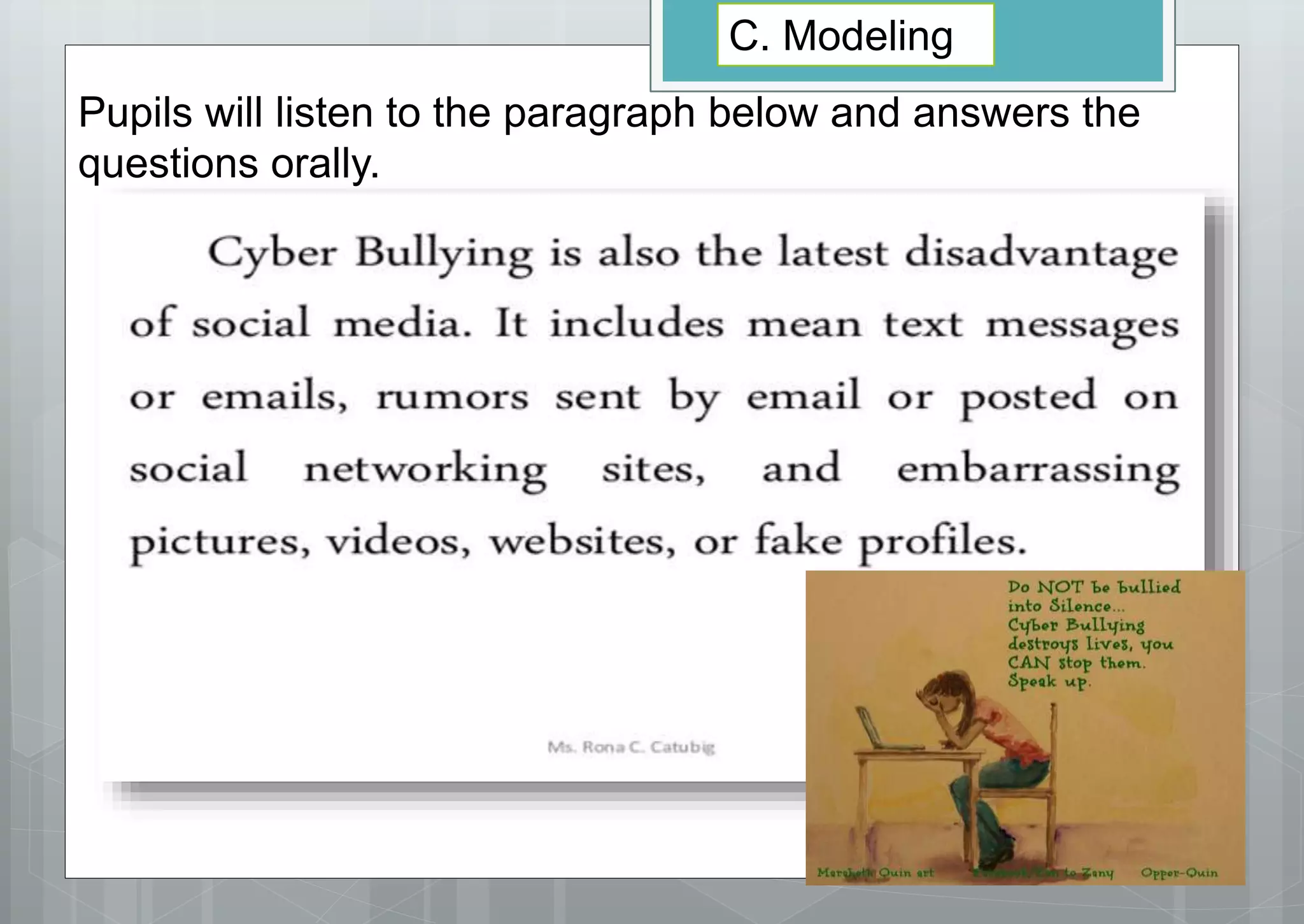
Pupils will listen to the paragraph below and answers the
questions orally.
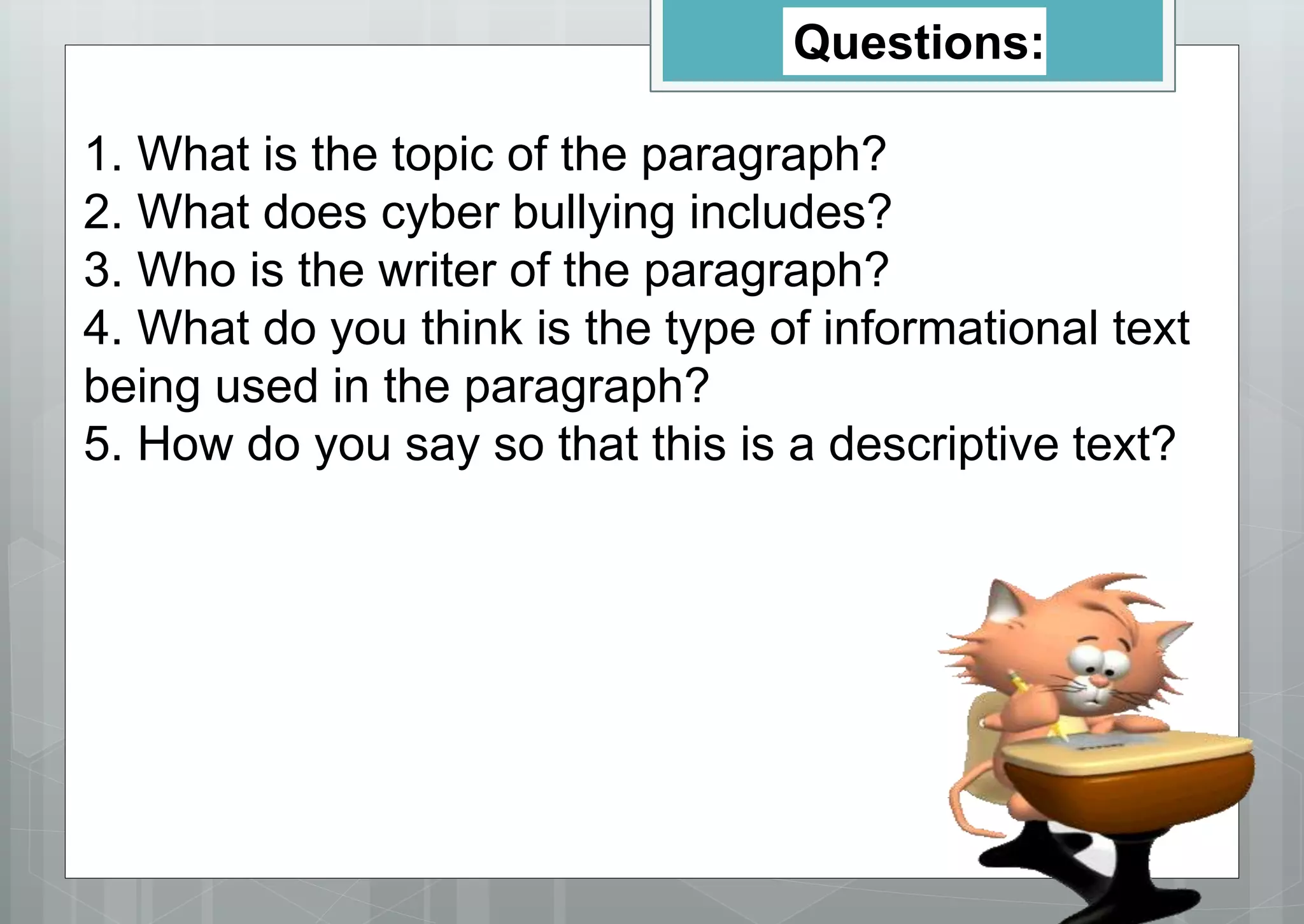
1. What is the topic of the paragraph?
2. What does cyber bullying includes?
3. Who is the writer of the paragraph?
4. What do you think is the type of informational text
being used in the paragraph?
5. How do you say so that this is a descriptive text?
Questions:
In order to easily identify the types of
informational text, take note of the diagram below.
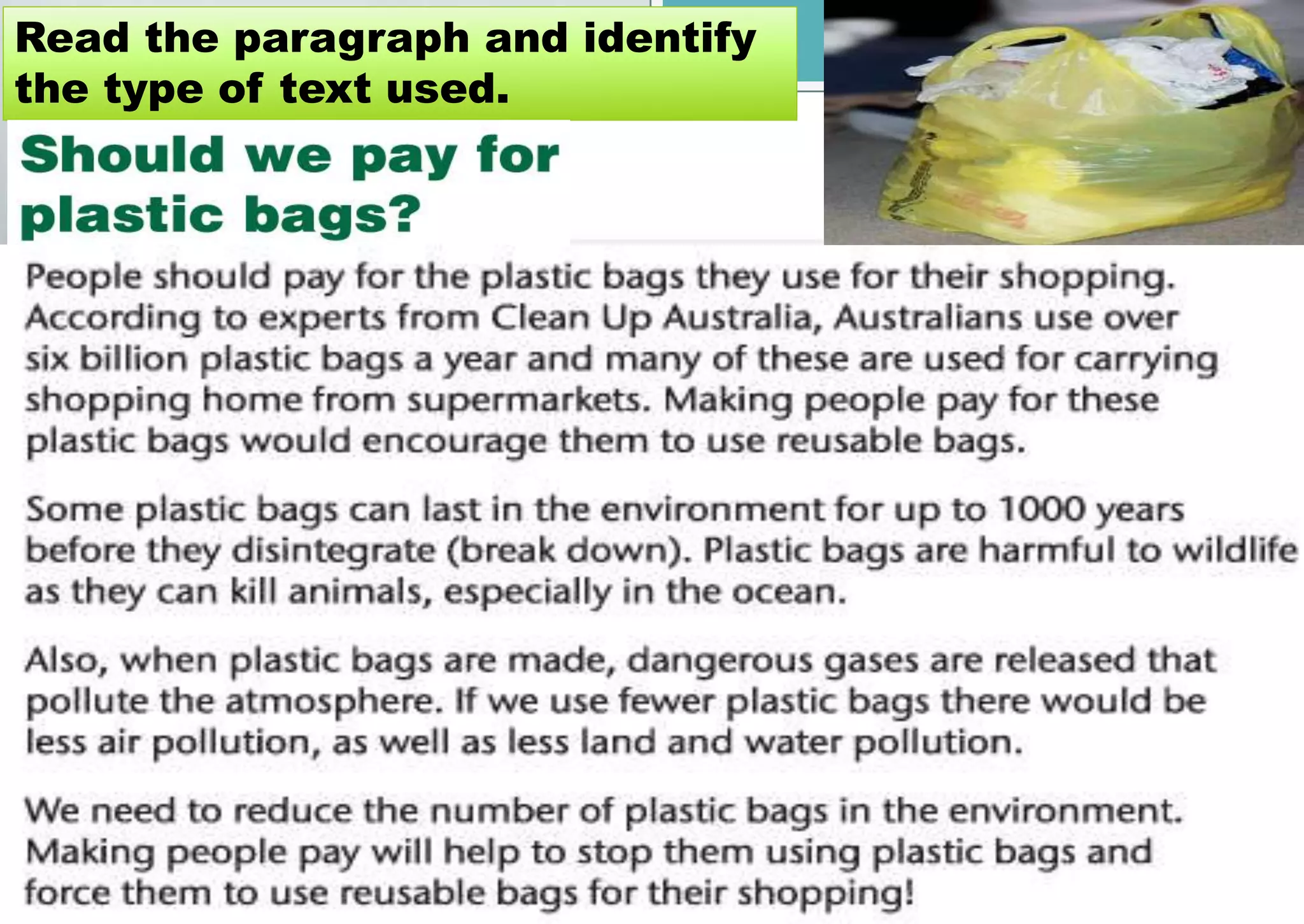
Read the paragraph and identify
the type of text used.
In Northern areas, the
weather is too cold to
grow crops all year long.
But some farmers have
found a way to grow food
all year. A greenhouse is
a special building that
stays warm in the winter.
Crops like lettuce and
basil can grow well in the
greenhouse, even when
the weather is cold.
E.Independent Practice
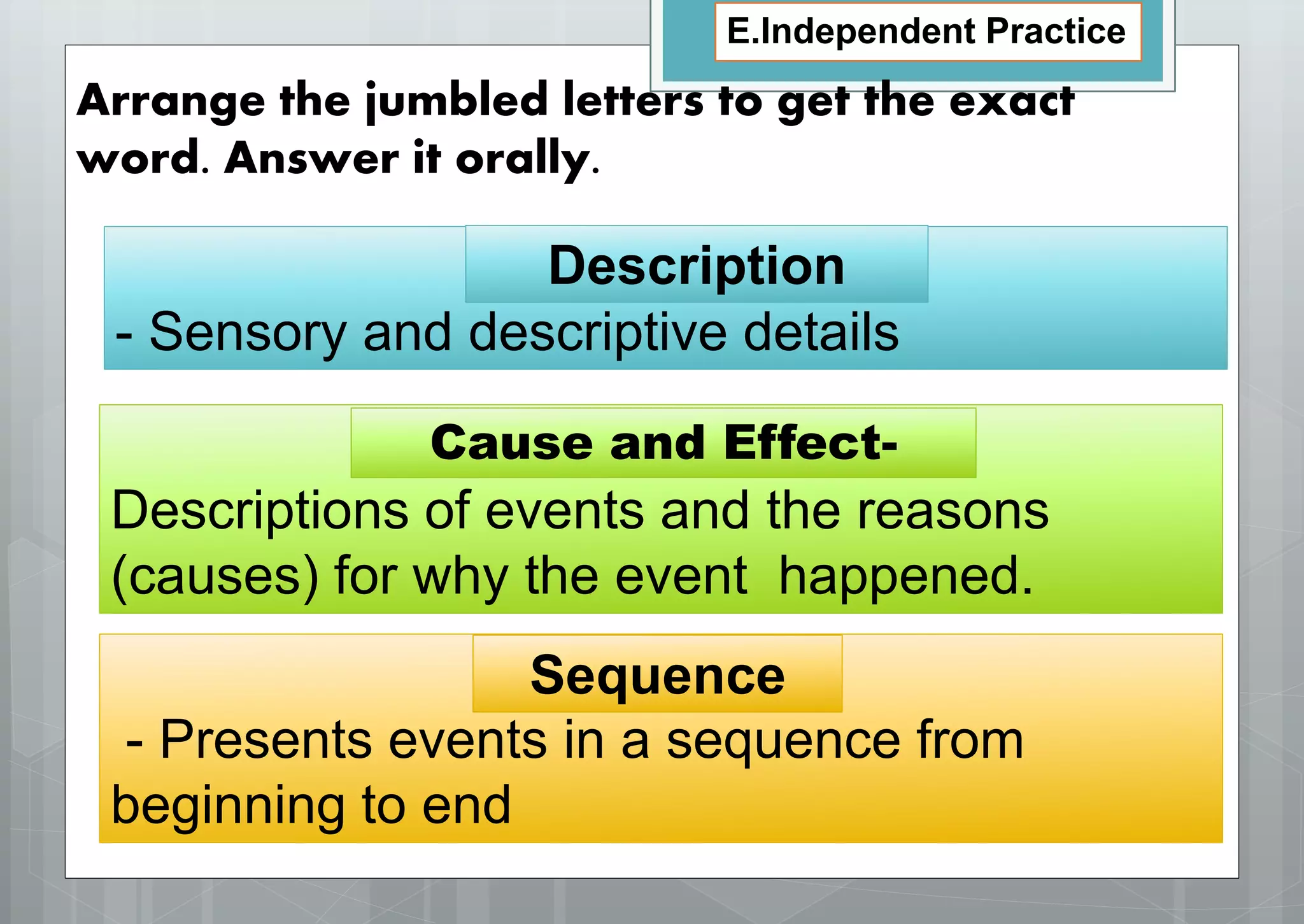
USECA NDA FECFET
Descriptions of events and the reasons
(causes) for why the event happened.
QESUECEN
- Presents events in a sequence from
beginning to end
SDPCTNEIIOR
- Sensory and descriptive details
Cause and Effect-
Description
Sequence
Arrange the jumbled letters to get the exact
word. Answer it orally.
What is informational text?
What are the types of
informational text?
F. Closure
I. Evaluation
A.Listen to the ff. And tell the types of
informational text being used.
Apples and Orange
Alike
1.Both fruits
2.Have skin
3.Healthy
Different
1.Orange have
more acid.
2.Apple has thinner
skin
B. Read the descriptions and identify the
type of informational text.
English 5-q2-w3-informational-text-types-by-sir-rei-marasigan-1

English 5-q2-w3-informational-text-types-by-sir-rei-marasigan-1

  • 1.
  • 2.
  • 3.
    Arrange the givenpuzzle to get the two exact words. A. Setting the Stage I F M A T N N R O O I A A T L T X E Answer: INFORMATIONAL TEXT
  • 4.
    B. Explaining theStudent What to do
  • 5.
    Description- Sensory anddescriptive details that help the reader visualize information. Ask yourself: what specific person, place, thing, or idea is being described. Description shares the who, what, when, where, why or how of a topic/subject. Clue words are such as, for instance, in addition, also, specifically. Types:
  • 6.
    • Sequence- Presentsevents in a sequence from beginning to end, or organizes how-to text in a series of directions. Look for steps or references to time such as dates. Clue words are first, second, third, then, next, before, after, and finally.
  • 7.
    • Compare andContrast- Comparisons are used to describe ideas. Ask yourself: what is being compared? Clue words are similar, same, alike, unlike, and different.
  • 8.
    • Cause andEffect- Descriptions of events and the reasons (causes) for why the event happened. Ask yourself: What happened and why did it happen? Clue words are since, because, if, due to, as a result of , causes, leads to, and therefore.
  • 9.
    • Problem andSolution-The text introduces a problem and presents one or more solutions. Ask yourself: What is the problem and what is the solution? Clue words are problem, issue, since, as a result, and idea.
  • 10.
    C. Modeling Pupils willlisten to the paragraph below and answers the questions orally.
  • 11.
    1. What isthe topic of the paragraph? 2. What does cyber bullying includes? 3. Who is the writer of the paragraph? 4. What do you think is the type of informational text being used in the paragraph? 5. How do you say so that this is a descriptive text? Questions:
  • 12.
    In order toeasily identify the types of informational text, take note of the diagram below.
  • 13.
    Read the paragraphand identify the type of text used.
  • 14.
    In Northern areas,the weather is too cold to grow crops all year long. But some farmers have found a way to grow food all year. A greenhouse is a special building that stays warm in the winter. Crops like lettuce and basil can grow well in the greenhouse, even when the weather is cold.
  • 15.
    E.Independent Practice USECA NDAFECFET Descriptions of events and the reasons (causes) for why the event happened. QESUECEN - Presents events in a sequence from beginning to end SDPCTNEIIOR - Sensory and descriptive details Cause and Effect- Description Sequence Arrange the jumbled letters to get the exact word. Answer it orally.
  • 16.
    What is informationaltext? What are the types of informational text? F. Closure
  • 17.
    I. Evaluation A.Listen tothe ff. And tell the types of informational text being used. Apples and Orange Alike 1.Both fruits 2.Have skin 3.Healthy Different 1.Orange have more acid. 2.Apple has thinner skin
  • 19.
    B. Read thedescriptions and identify the type of informational text.