1
Engineering Mechanics
(Statics)
 Instructor
 Lect. Naqash Afzal
 (Lecture - 1)
School of Mechanical and Manufacturing
Engineering
Chapter 1
General Principles
National University of Sciences & Technology
2
Course Introduction
Course Credits: 3-0
Monday: 11:00-1:00
Wednesday: 9:00 – 10:00
Textbook: Engineering Statics by: R.C Hibbler
Reference Books:
1.Engineering Statics by J.L. Marium
2.Engineering Statics by Beer & Johnstan
Contact: malik.naqash.afza@gmail.com
+92-51-90856089
Office: First Floor 210F
3
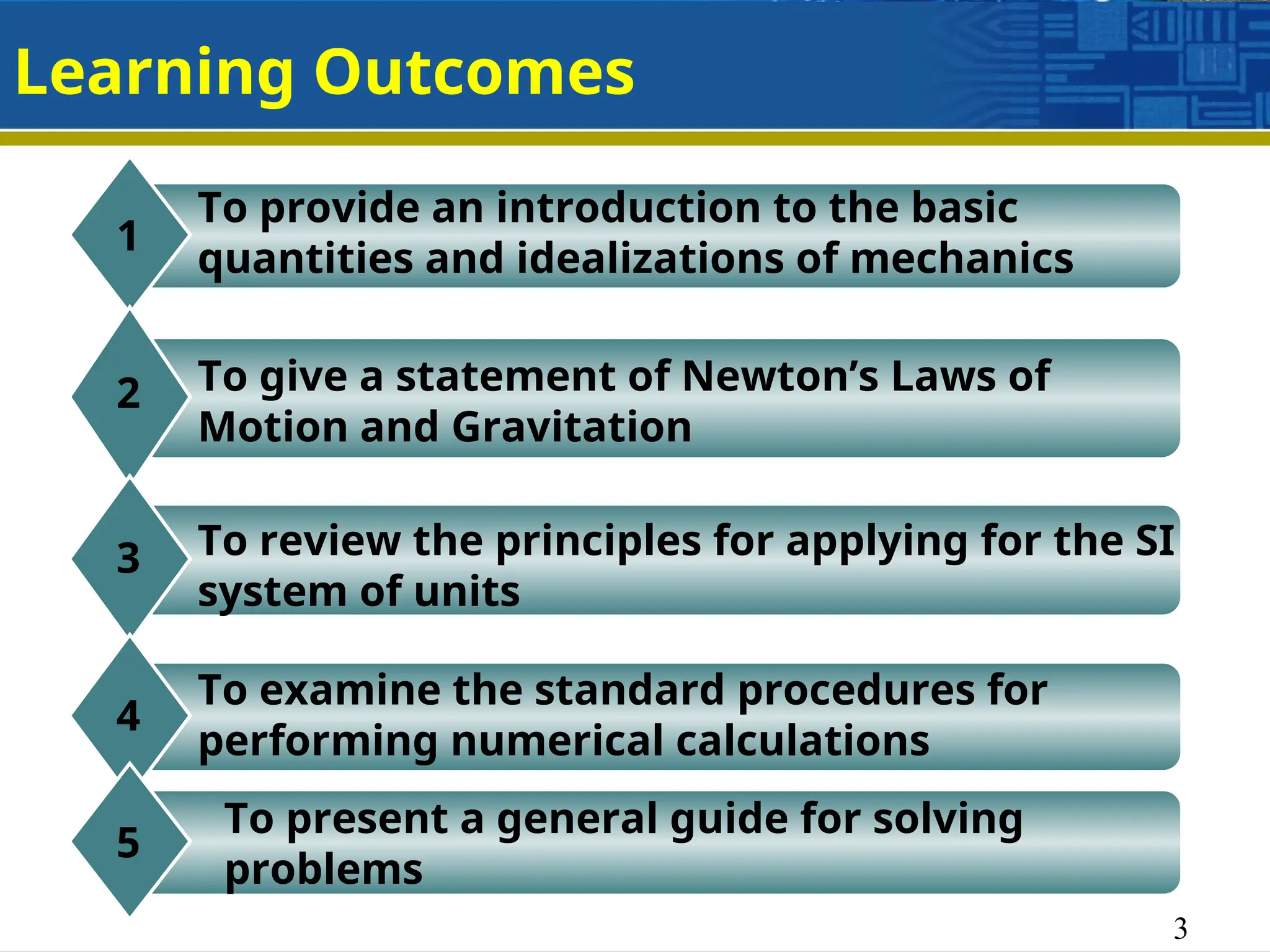
Learning Outcomes
To provide an introduction to the basic
quantities and idealizations of mechanics
1
To give a statement of Newton’s Laws of
Motion and Gravitation
2
To review the principles for applying for the SI
system of units
3
To examine the standard procedures for
performing numerical calculations
4
To present a general guide for solving
problems
5
4
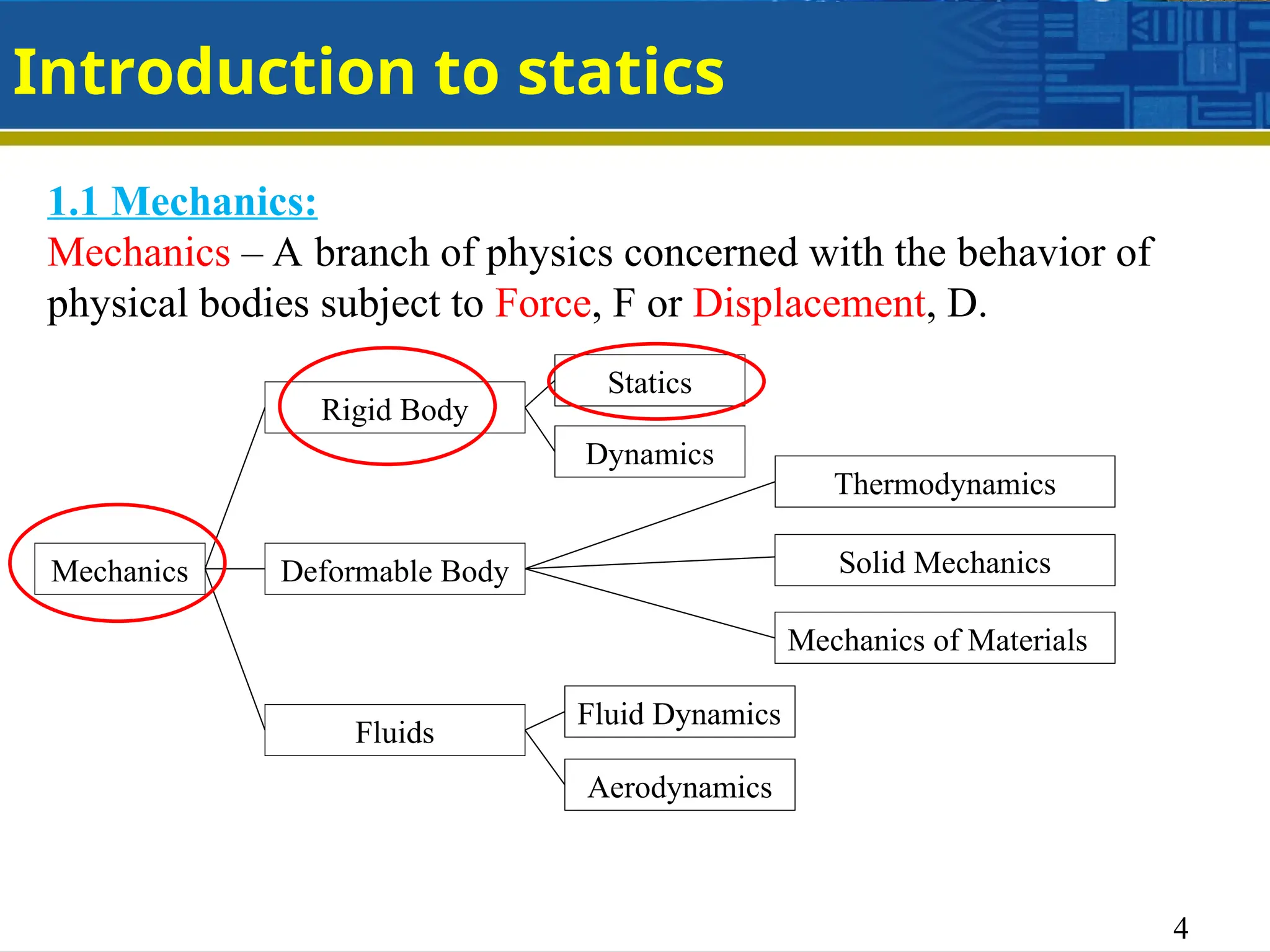
Introduction to statics
1.1 Mechanics:
Mechanics – A branch of physics concerned with the behavior of
physical bodies subject to Force, F or Displacement, D.
Mechanics
Rigid Body
Deformable Body
Fluids
Statics
Dynamics
Thermodynamics
Solid Mechanics
Mechanics of Materials
Aerodynamics
Fluid Dynamics
5
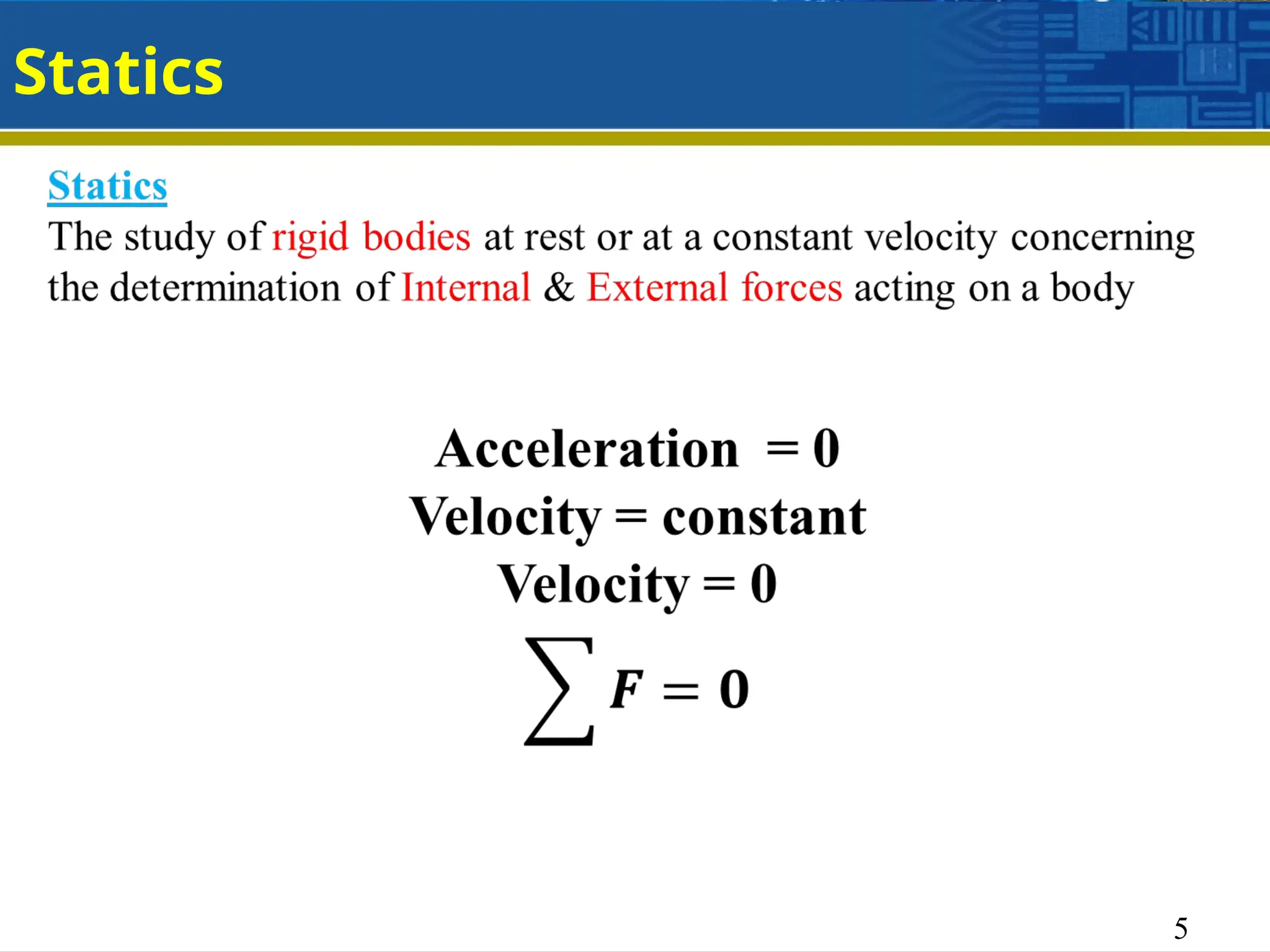
Statics
6
Examples
7
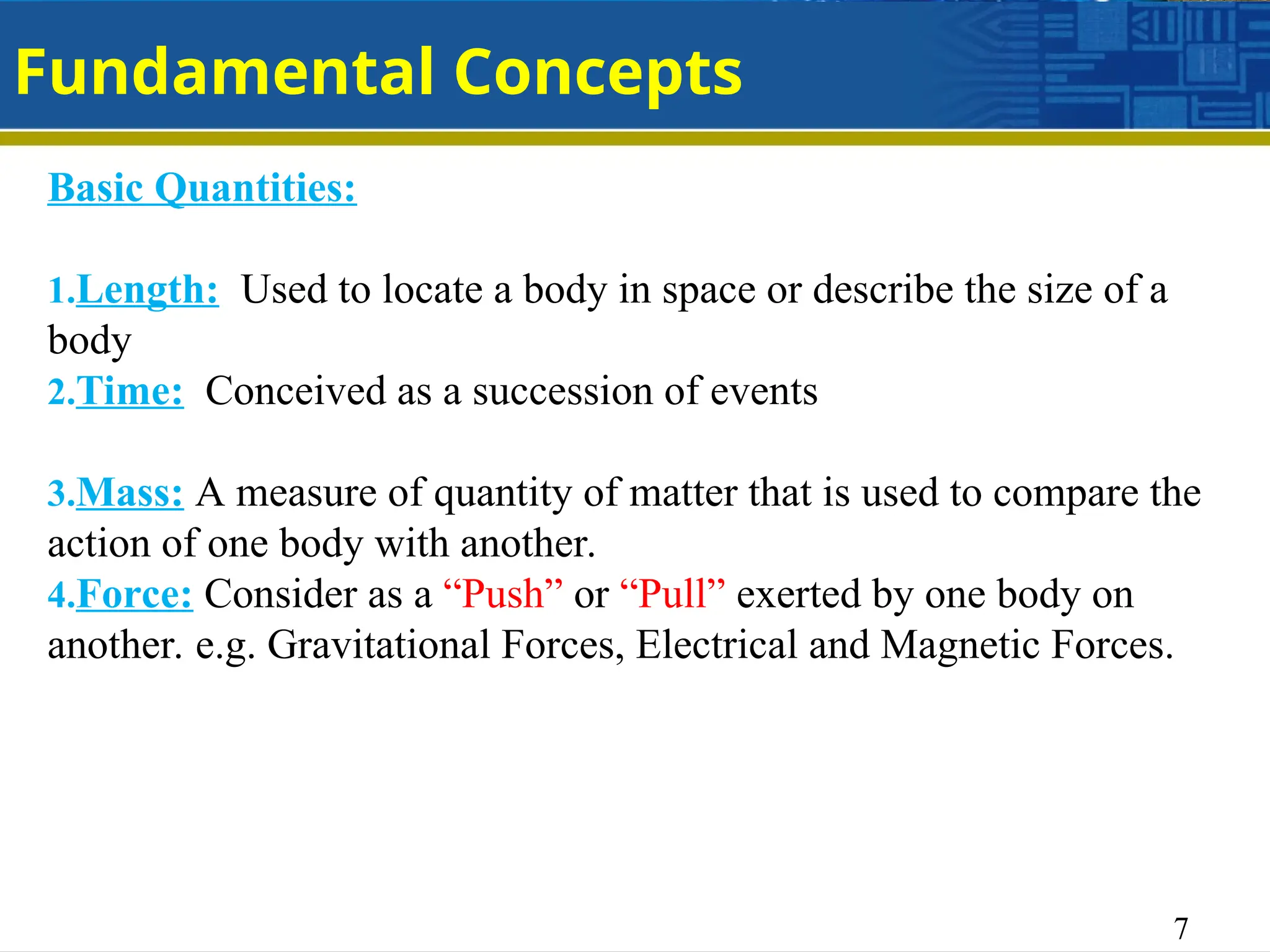
Fundamental Concepts
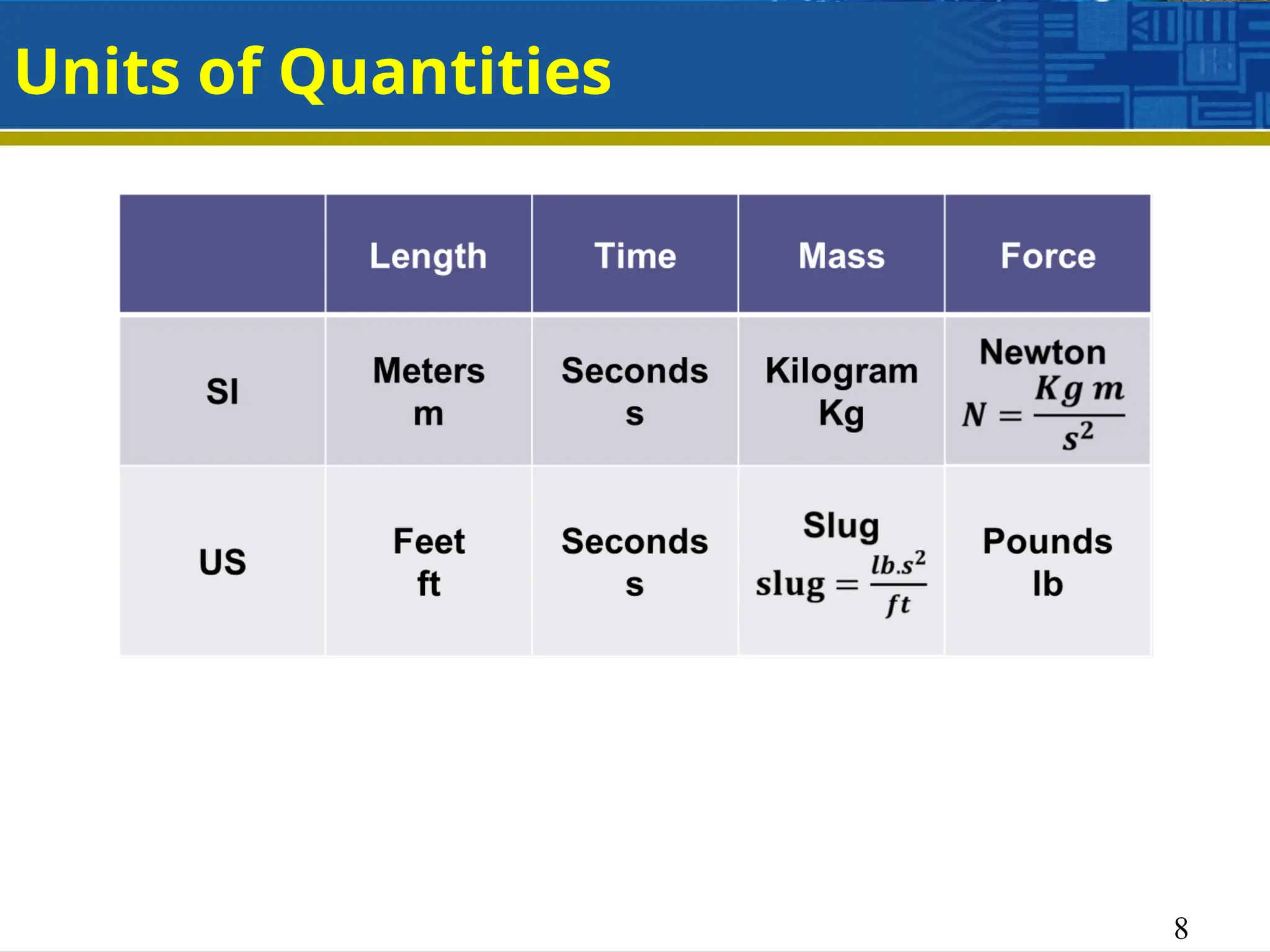
Basic Quantities:
1.Length: Used to locate a body in space or describe the size of a
body
2.Time: Conceived as a succession of events
3.Mass: A measure of quantity of matter that is used to compare the
action of one body with another.
4.Force: Consider as a “Push” or “Pull” exerted by one body on
another. e.g. Gravitational Forces, Electrical and Magnetic Forces.
8
Units of Quantities
9
Idealizations
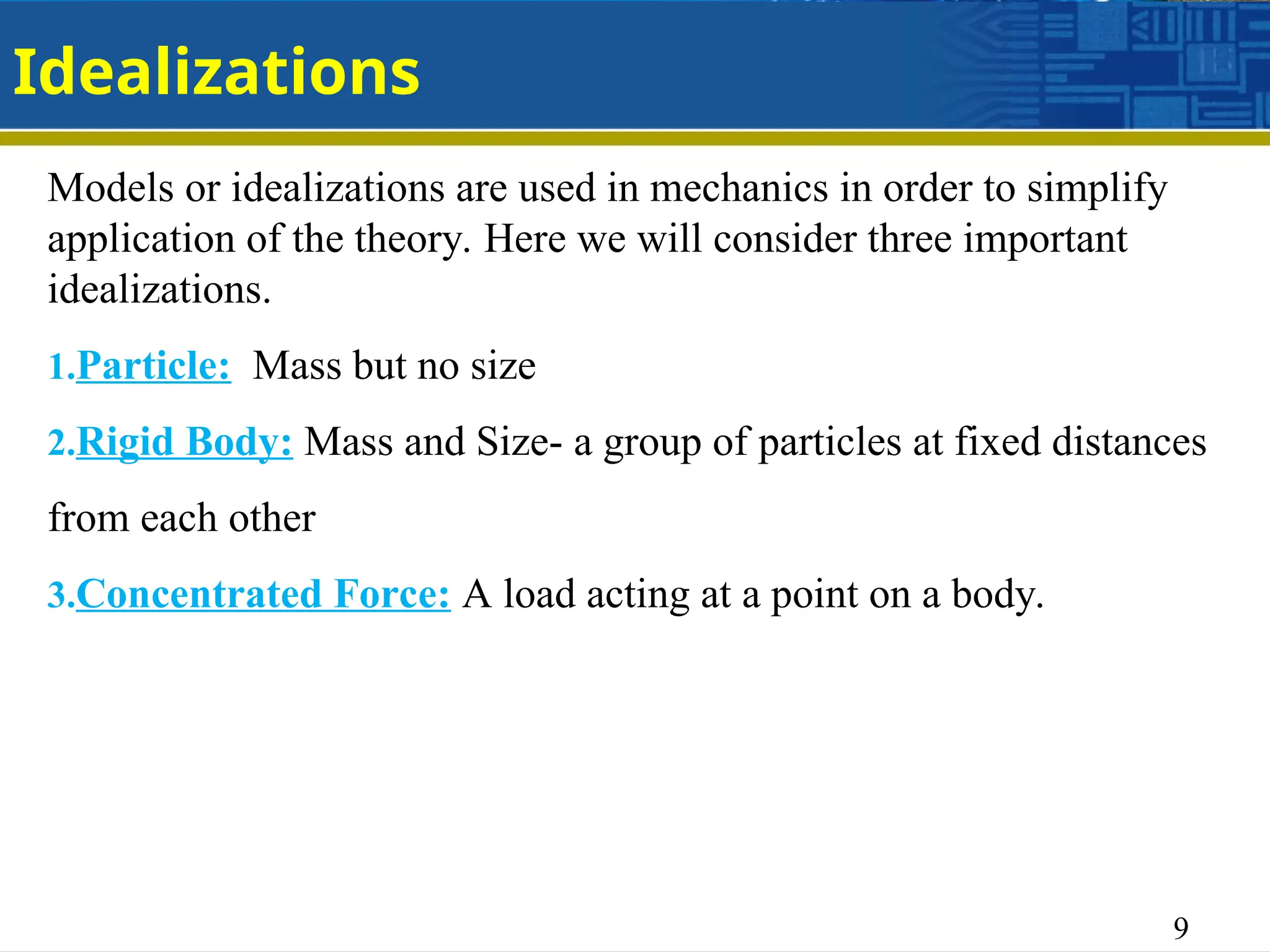
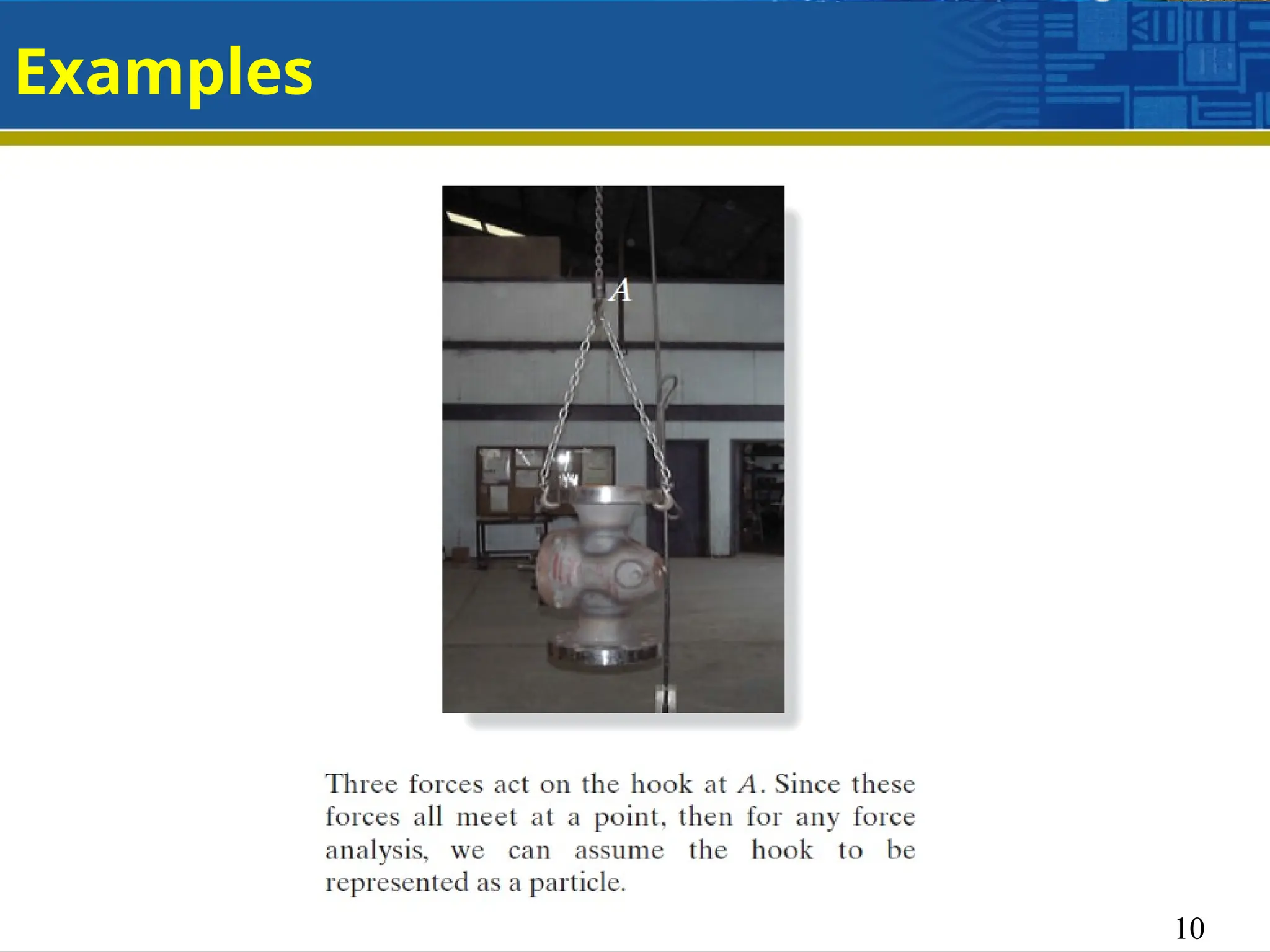
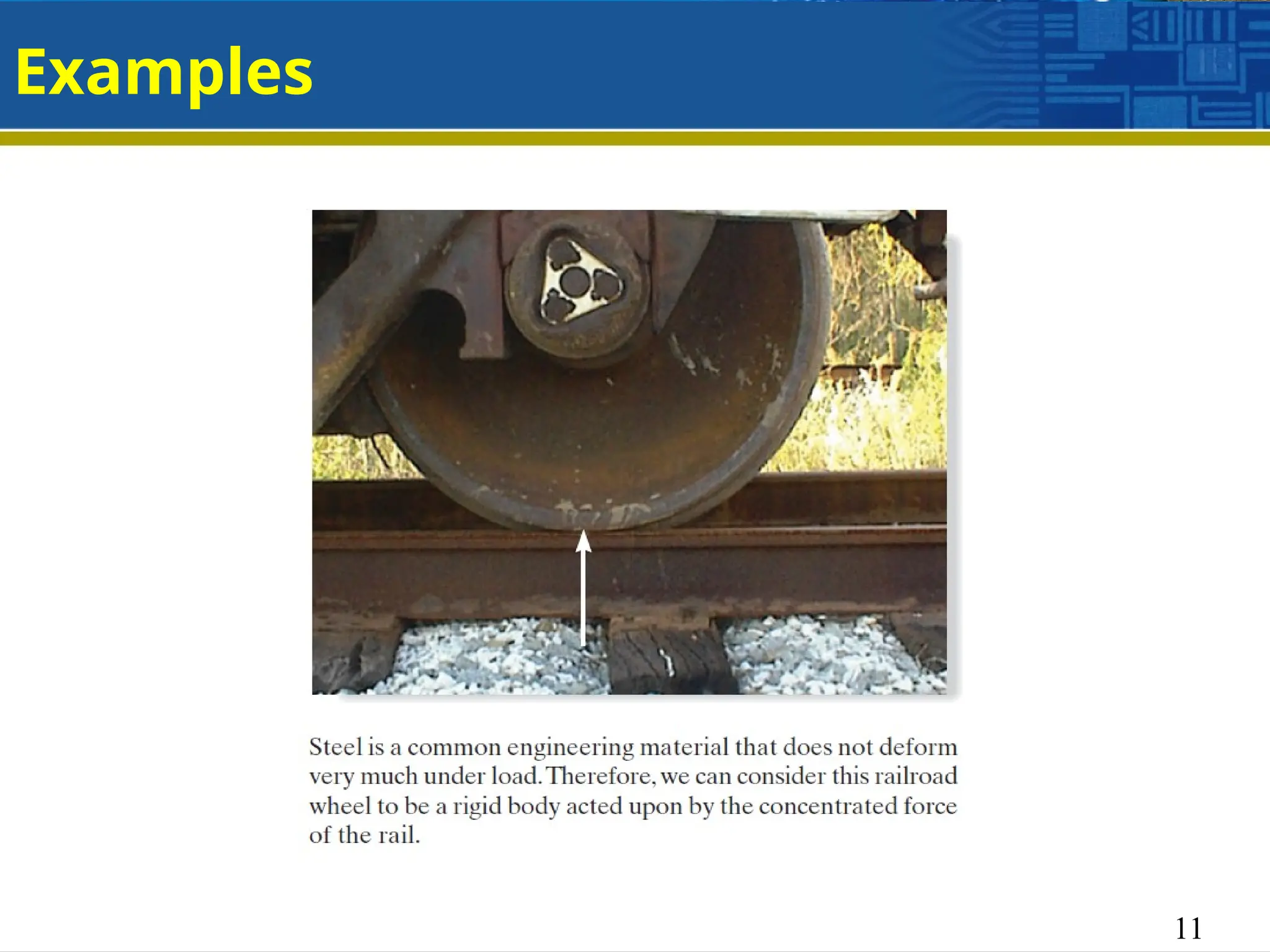
Models or idealizations are used in mechanics in order to simplify
application of the theory. Here we will consider three important
idealizations.
1.Particle: Mass but no size
2.Rigid Body: Mass and Size- a group of particles at fixed distances
from each other
3.Concentrated Force: A load acting at a point on a body.
10
Examples
11
Examples
12
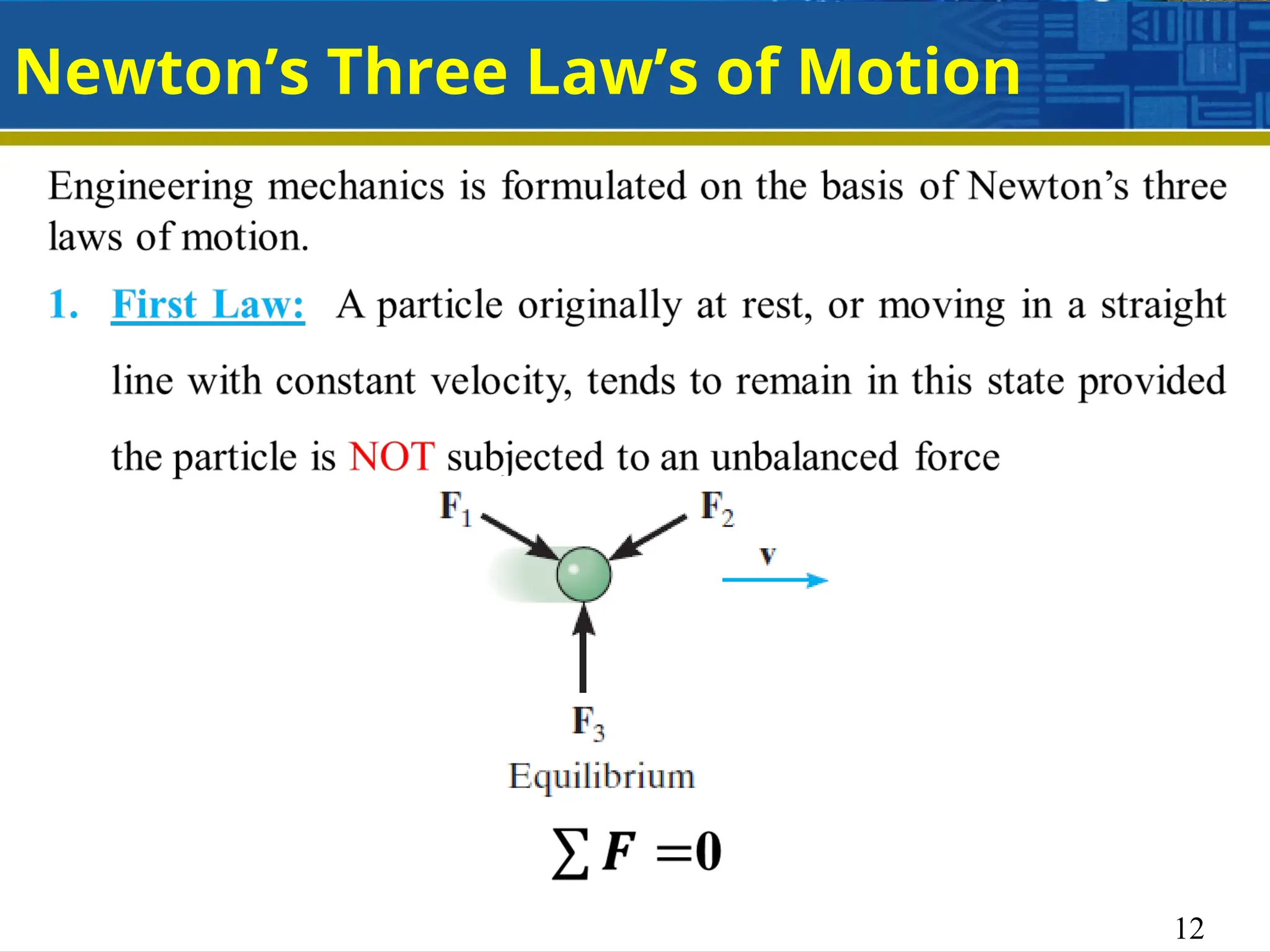
Newton’s Three Law’s of Motion
13
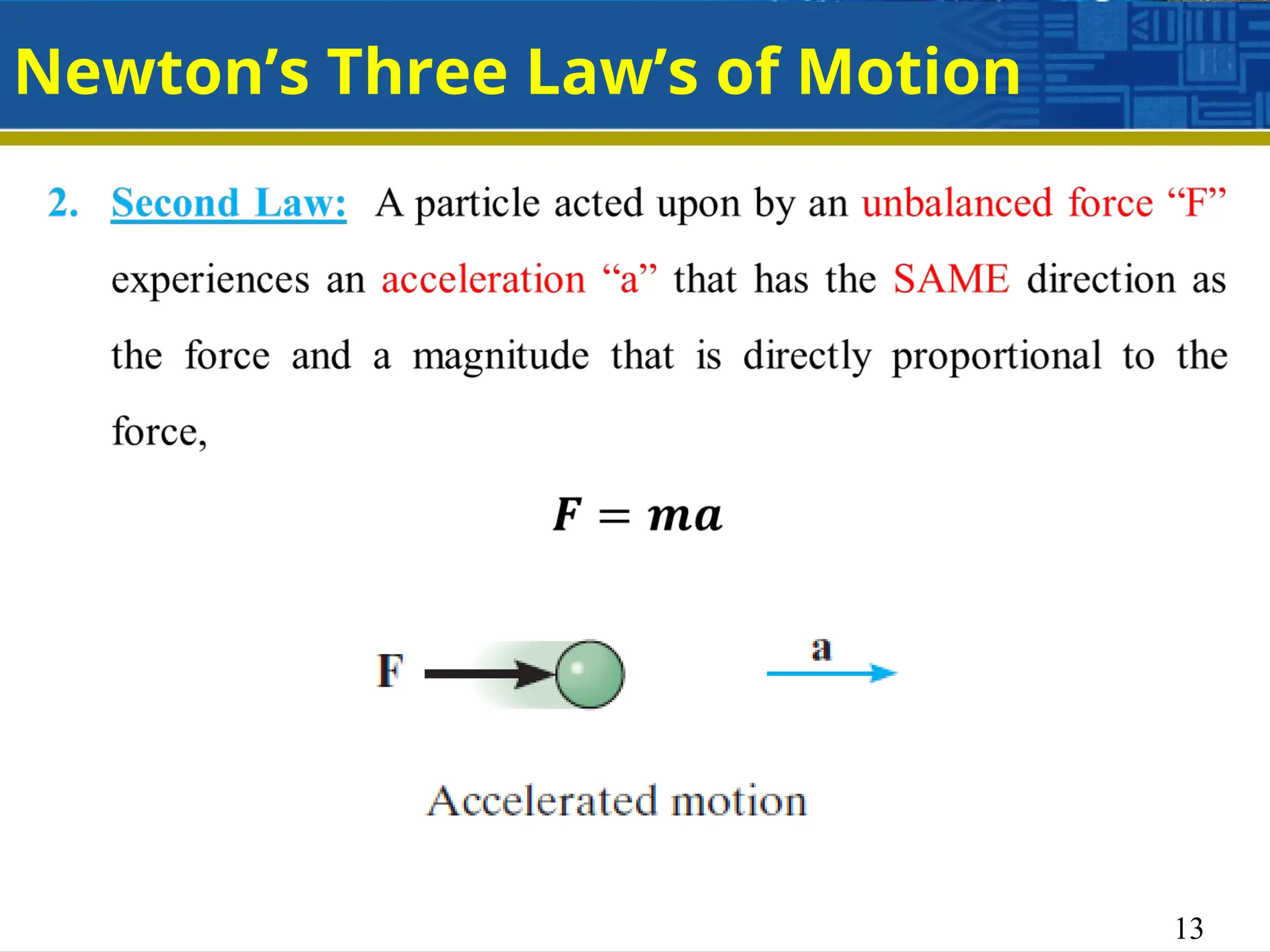
Newton’s Three Law’s of Motion
14
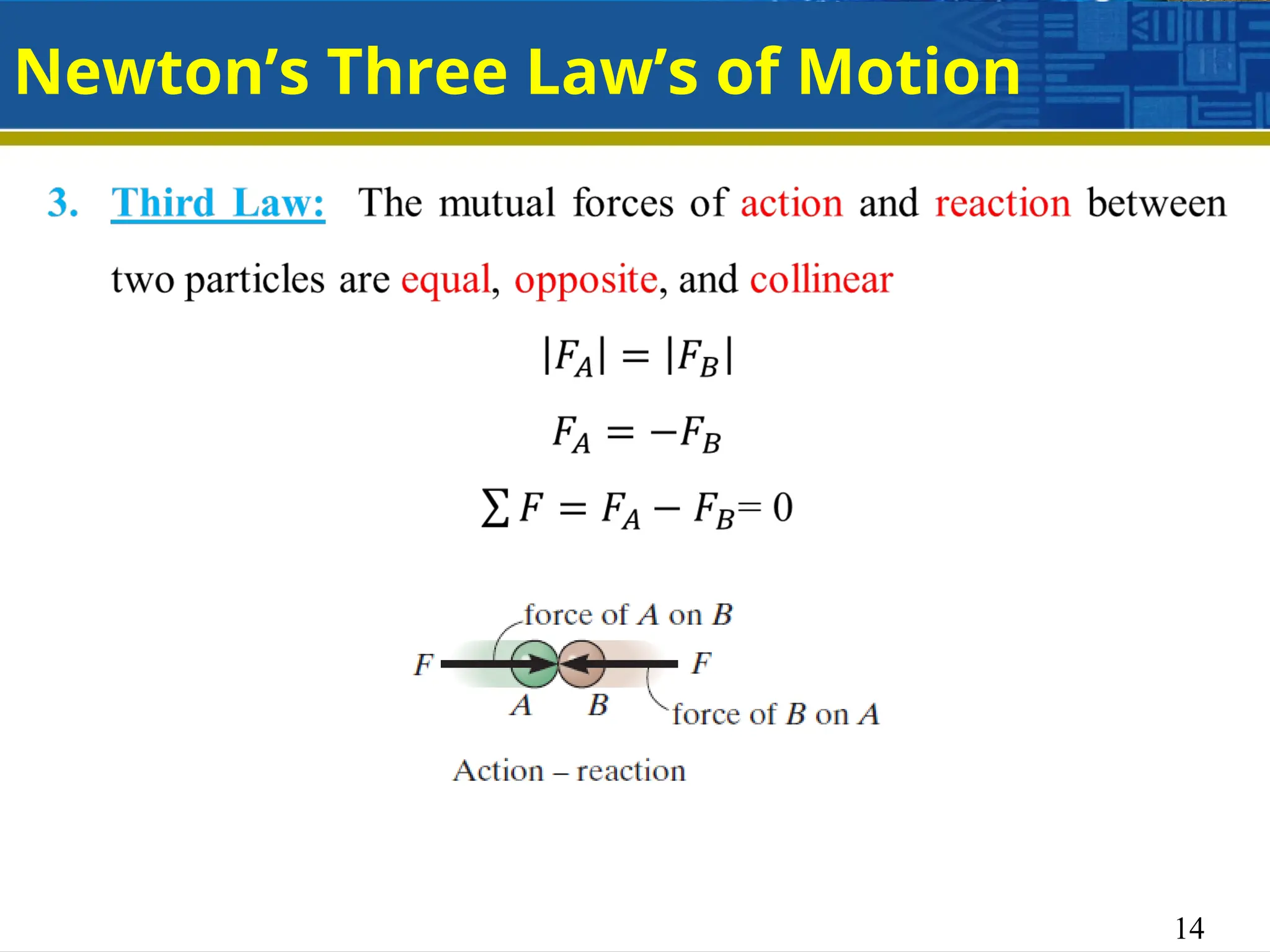
Newton’s Three Law’s of Motion
15
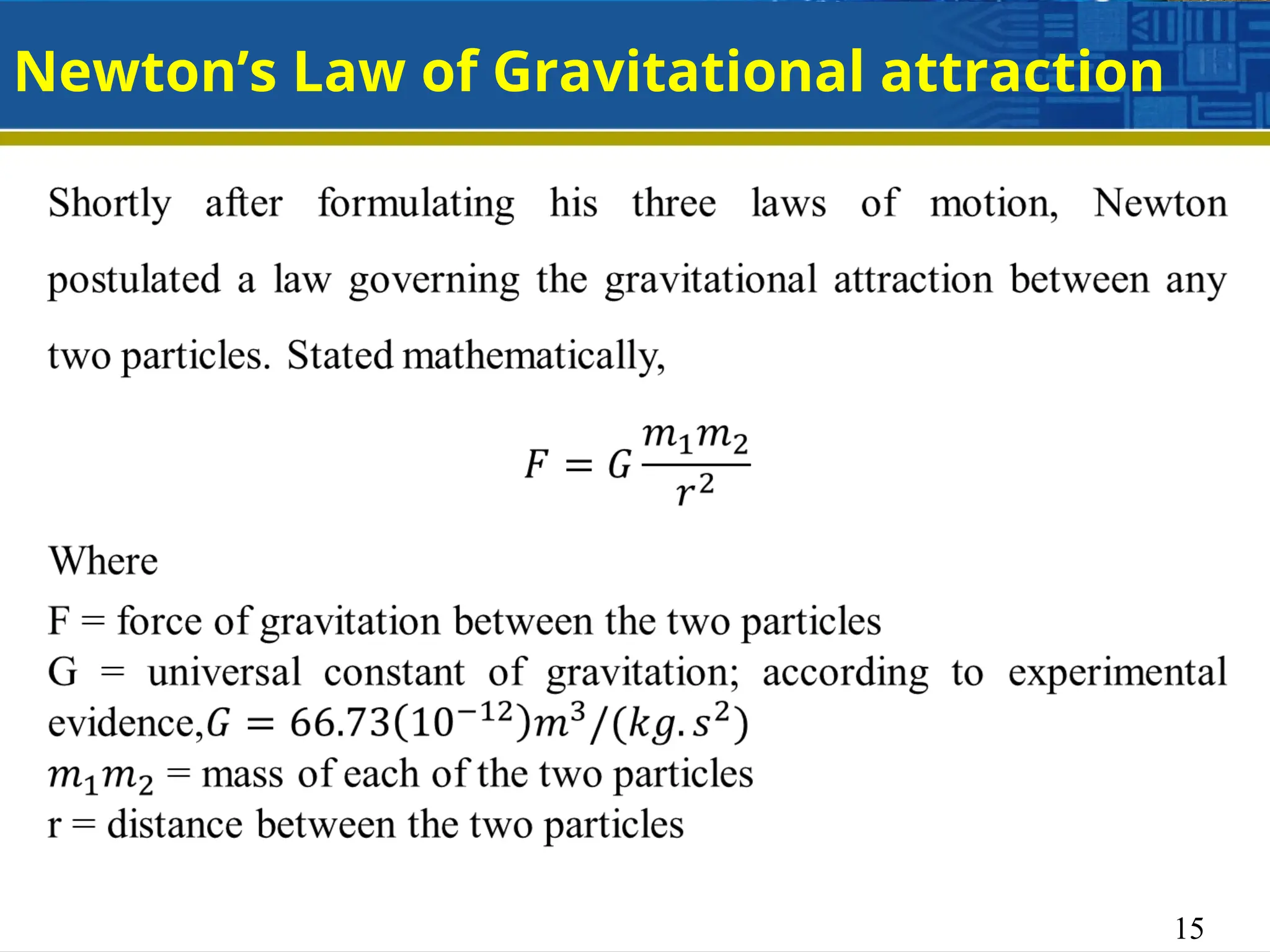
Newton’s Law of Gravitational attraction
16
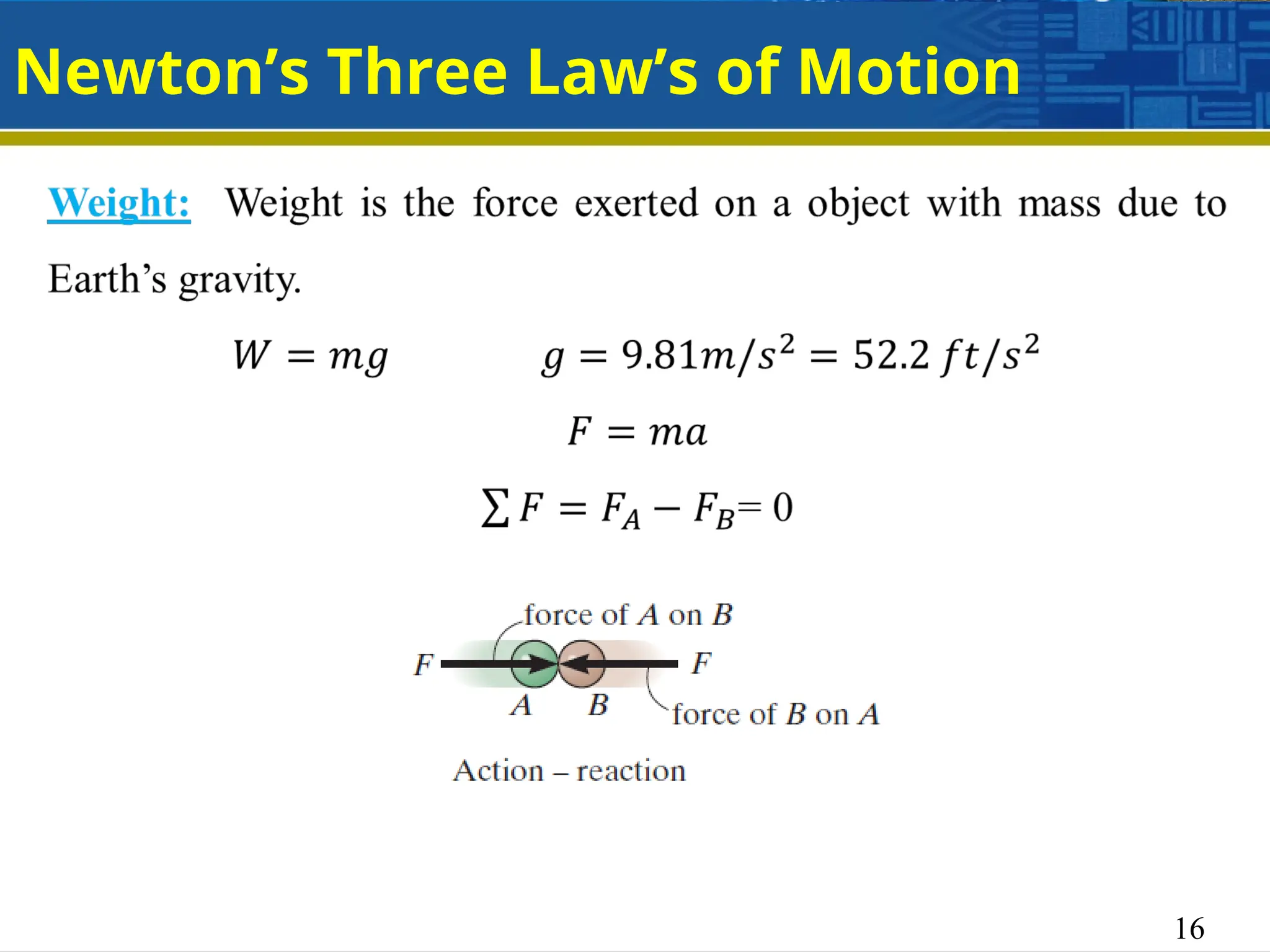
Newton’s Three Law’s of Motion
17
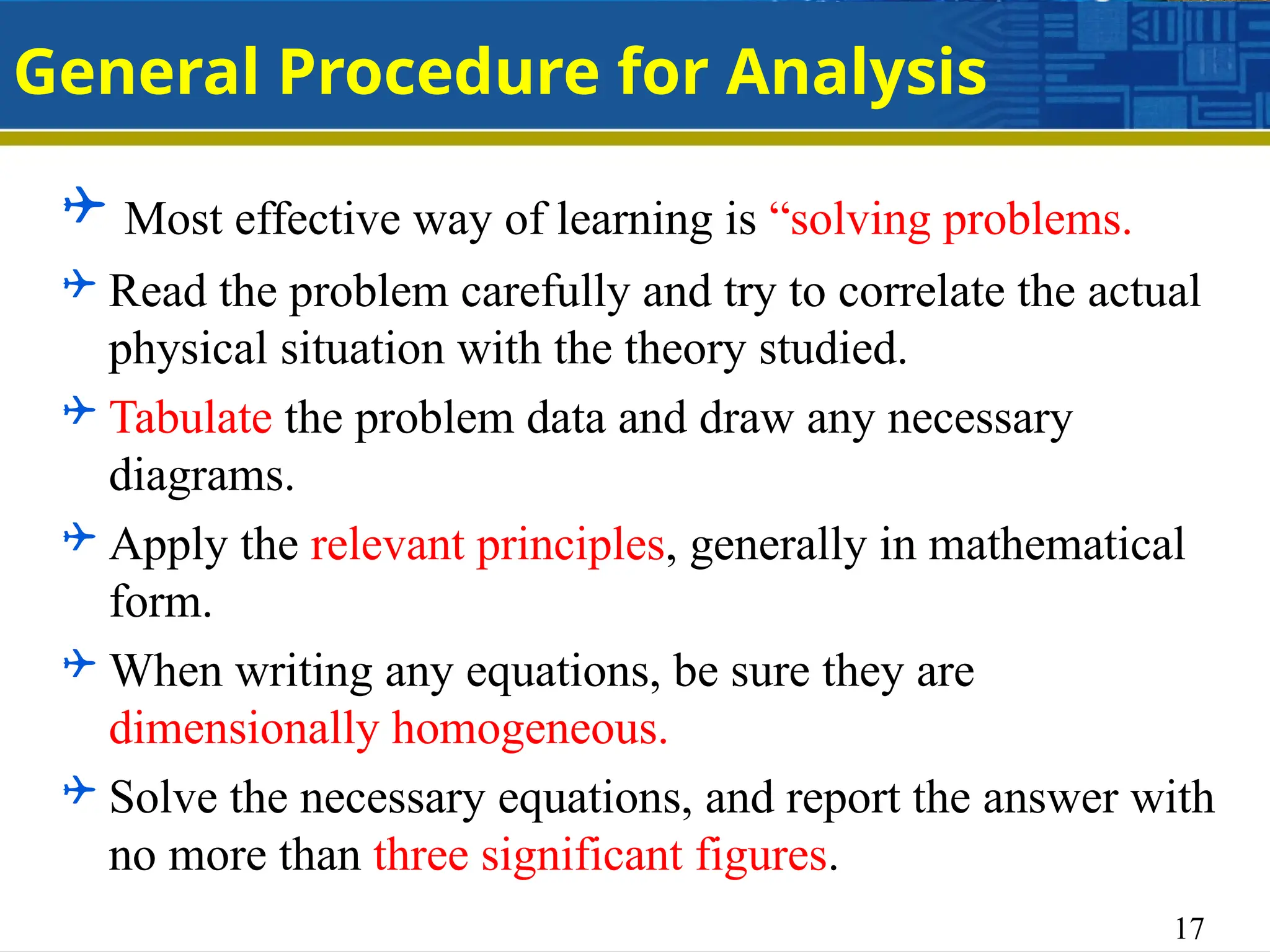
General Procedure for Analysis
 Most effective way of learning is “solving problems.
 Read the problem carefully and try to correlate the actual
physical situation with the theory studied.
 Tabulate the problem data and draw any necessary
diagrams.
 Apply the relevant principles, generally in mathematical
form.
 When writing any equations, be sure they are
dimensionally homogeneous.
 Solve the necessary equations, and report the answer with
no more than three significant figures.
18
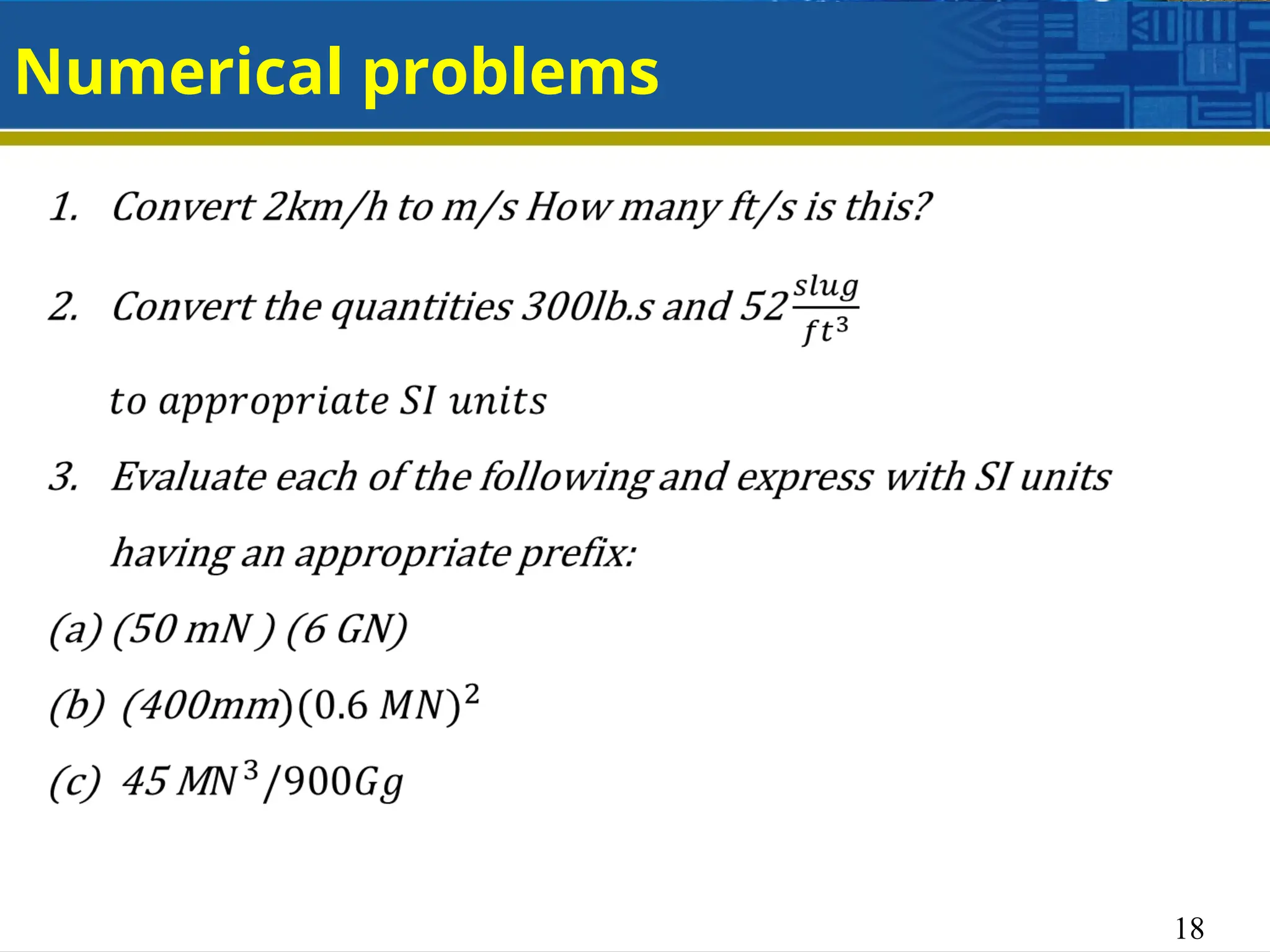
Numerical problems
19
Assignment
20
Assignment
Problems:
1-1, 1-2, 1-3, 1-4, 1-5, 1-17,1-18,1-19,1-20
21
Message of the day
“Our greatest weakness lies in giving up.
The most certain way to succeed is always
to try just one more time”
22
Fourier slice theorem (FST)
23

Engineering Statics basic principles in detail

  • 1.
    1 Engineering Mechanics (Statics)  Instructor Lect. Naqash Afzal  (Lecture - 1) School of Mechanical and Manufacturing Engineering Chapter 1 General Principles National University of Sciences & Technology National University of Sciences & Technology
  • 2.
    2 Course Introduction Course Credits:3-0 Monday: 11:00-1:00 Wednesday: 9:00 – 10:00 Textbook: Engineering Statics by: R.C Hibbler Reference Books: 1.Engineering Statics by J.L. Marium 2.Engineering Statics by Beer & Johnstan Contact: malik.naqash.afza@gmail.com +92-51-90856089 Office: First Floor 210F
  • 3.
    3 Learning Outcomes To providean introduction to the basic quantities and idealizations of mechanics 1 To give a statement of Newton’s Laws of Motion and Gravitation 2 To review the principles for applying for the SI system of units 3 To examine the standard procedures for performing numerical calculations 4 To present a general guide for solving problems 5
  • 4.
    4 Introduction to statics 1.1Mechanics: Mechanics – A branch of physics concerned with the behavior of physical bodies subject to Force, F or Displacement, D. Mechanics Rigid Body Deformable Body Fluids Statics Dynamics Thermodynamics Solid Mechanics Mechanics of Materials Aerodynamics Fluid Dynamics
  • 5.
  • 6.
  • 7.
    7 Fundamental Concepts Basic Quantities: 1.Length:Used to locate a body in space or describe the size of a body 2.Time: Conceived as a succession of events 3.Mass: A measure of quantity of matter that is used to compare the action of one body with another. 4.Force: Consider as a “Push” or “Pull” exerted by one body on another. e.g. Gravitational Forces, Electrical and Magnetic Forces.
  • 8.
  • 9.
    9 Idealizations Models or idealizationsare used in mechanics in order to simplify application of the theory. Here we will consider three important idealizations. 1.Particle: Mass but no size 2.Rigid Body: Mass and Size- a group of particles at fixed distances from each other 3.Concentrated Force: A load acting at a point on a body.
  • 10.
  • 11.
  • 12.
  • 13.
  • 14.
  • 15.
    15 Newton’s Law ofGravitational attraction
  • 16.
  • 17.
    17 General Procedure forAnalysis  Most effective way of learning is “solving problems.  Read the problem carefully and try to correlate the actual physical situation with the theory studied.  Tabulate the problem data and draw any necessary diagrams.  Apply the relevant principles, generally in mathematical form.  When writing any equations, be sure they are dimensionally homogeneous.  Solve the necessary equations, and report the answer with no more than three significant figures.
  • 18.
  • 19.
  • 20.
    20 Assignment Problems: 1-1, 1-2, 1-3,1-4, 1-5, 1-17,1-18,1-19,1-20
  • 21.
    21 Message of theday “Our greatest weakness lies in giving up. The most certain way to succeed is always to try just one more time”
  • 22.
  • 23.