Engineering a Global Movement in Social ResponsibilityThe Role of the Young Engineer36th NSBE Annual Convention and Career FairToronto, Canada   ●  March  31 – April 4, 2010
Welcome & IntroductionPresentersFeola Odeyemi, Engineer II, Virginia Beach VAJeffrey Mills, Training Manager, Walnut Creek CAAngela Waggett, HR Manager, Atlanta GACompany Brown and Caldwell, Walnut Creek CAEnvironmental Engineering and ConsultingMeeting ParticipantsIntroduction
Pairs ActivityPartner up in twosEach partner to do the following(2 mins)Introduction:  including Name, Hometown, SchoolBriefly describe future plansWhat do you expect from today’s session?Listen carefullyIntroduce your partner to group
A conscious effort to promote the public goodEncouraging the growth and development of communitiesStewardship of the environment and natural resourcesThe Concept of Social ResponsibilitySupport Corporate Social Responsibility
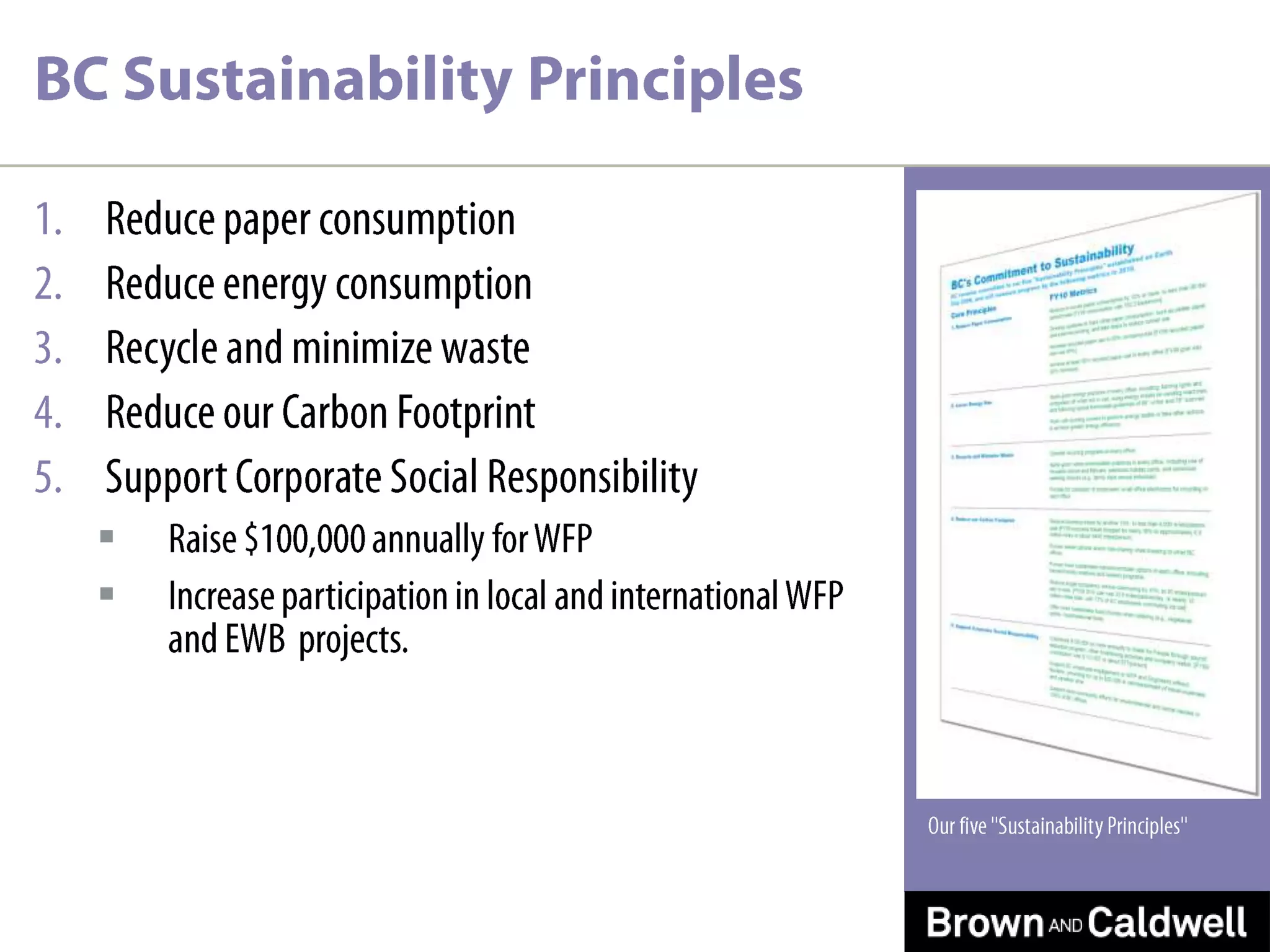
Reduce paper consumptionReduce energy consumptionRecycle and minimize wasteReduce our Carbon FootprintSupport Corporate Social ResponsibilityRaise $100,000 annually for WFPIncrease participation in local and international WFP and EWB  projects.BC Sustainability PrinciplesOur five "Sustainability Principles"
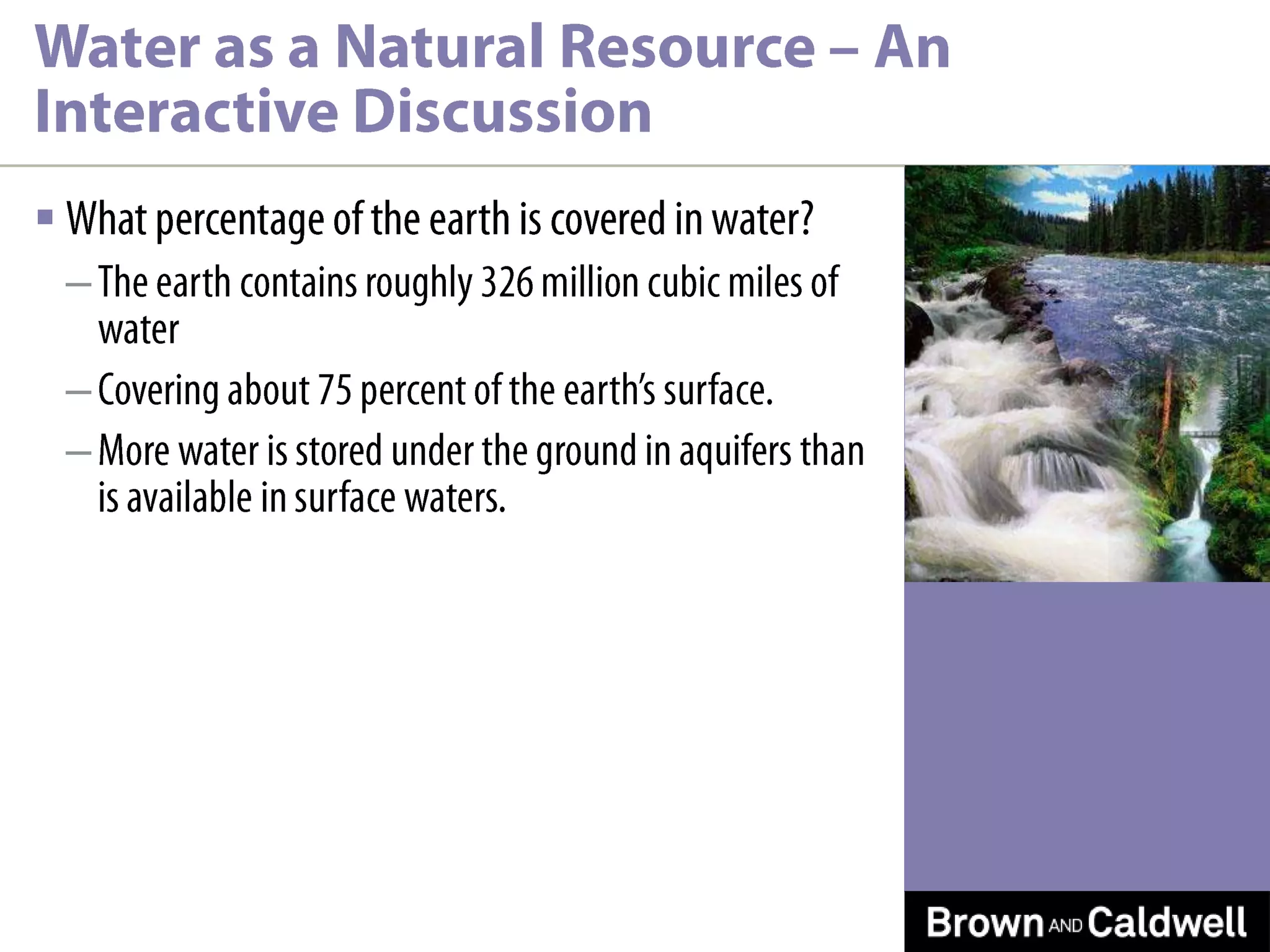
What percentage of the earth is covered in water?The earth contains roughly 326 million cubic miles of waterCovering about 75 percent of the earth’s surface. More water is stored under the ground in aquifers than is available in surface waters.Water as a Natural Resource – An Interactive Discussion
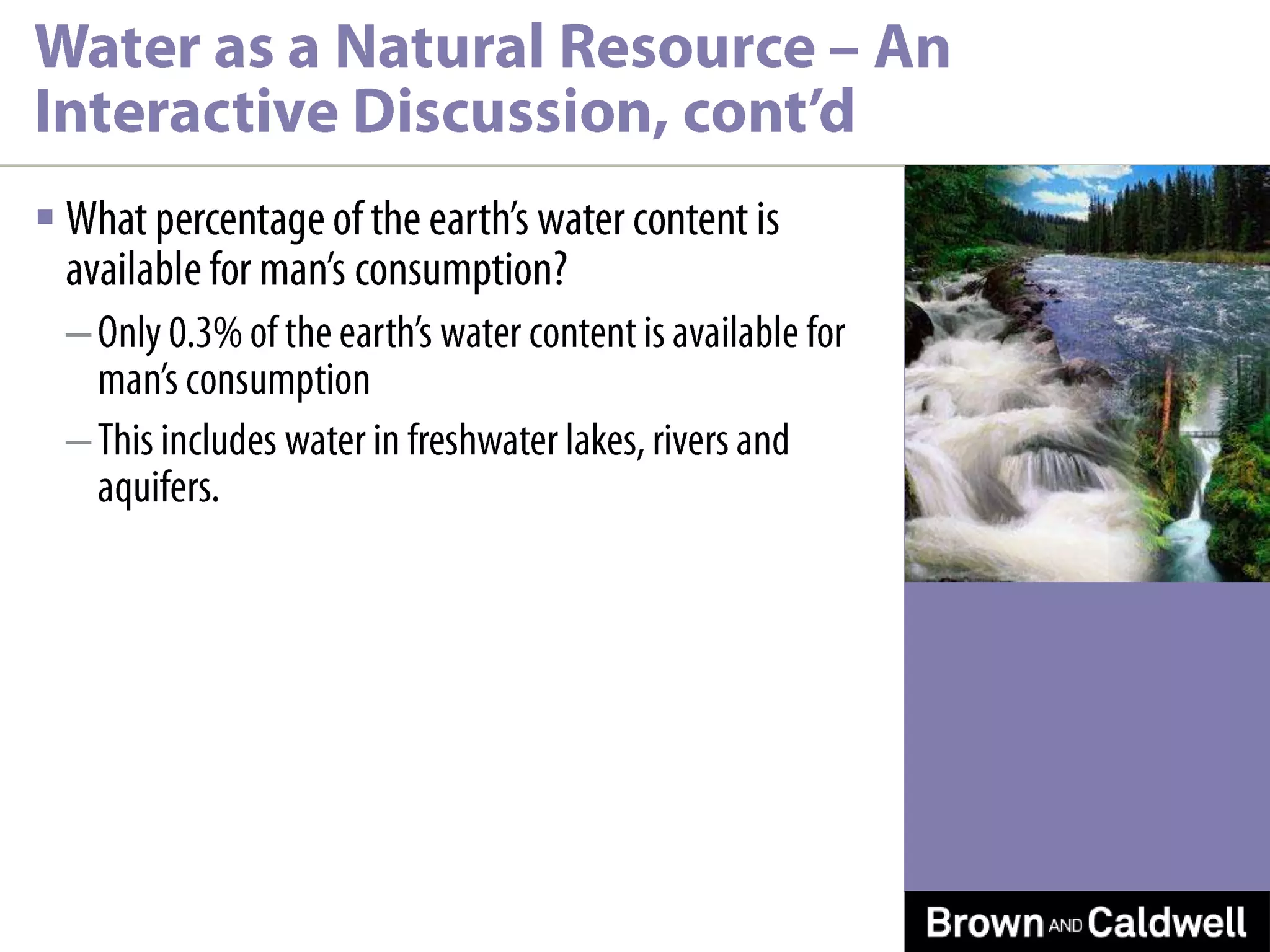
What percentage of the earth’s water content is available for man’s consumption?Only 0.3% of the earth’s water content is available for man’s consumptionThis includes water in freshwater lakes, rivers and aquifers.Water as a Natural Resource – An Interactive Discussion, cont’d
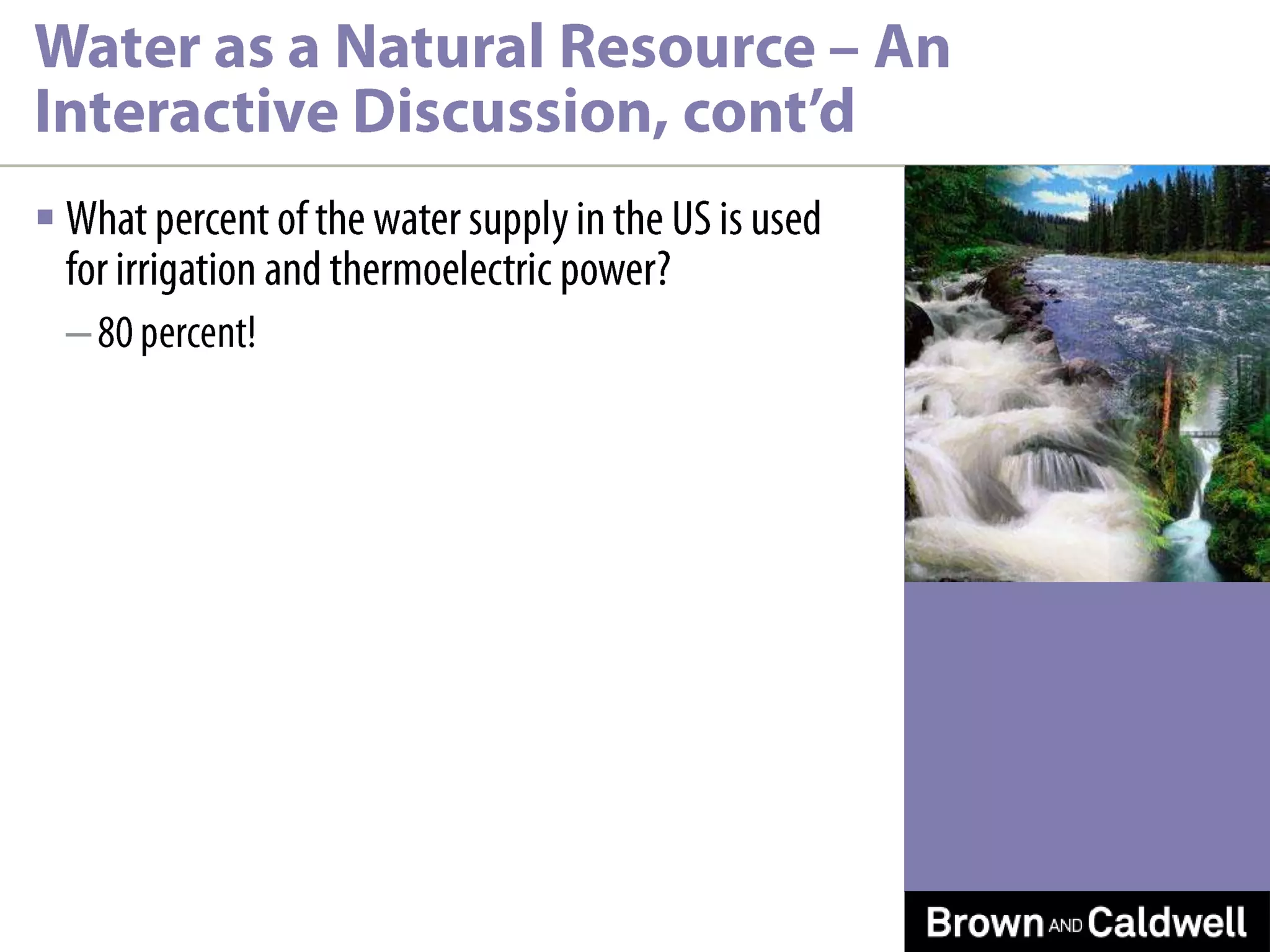
What percent of the water supply in the US is used for irrigation and thermoelectric power?80 percent!Water as a Natural Resource – An Interactive Discussion, cont’d
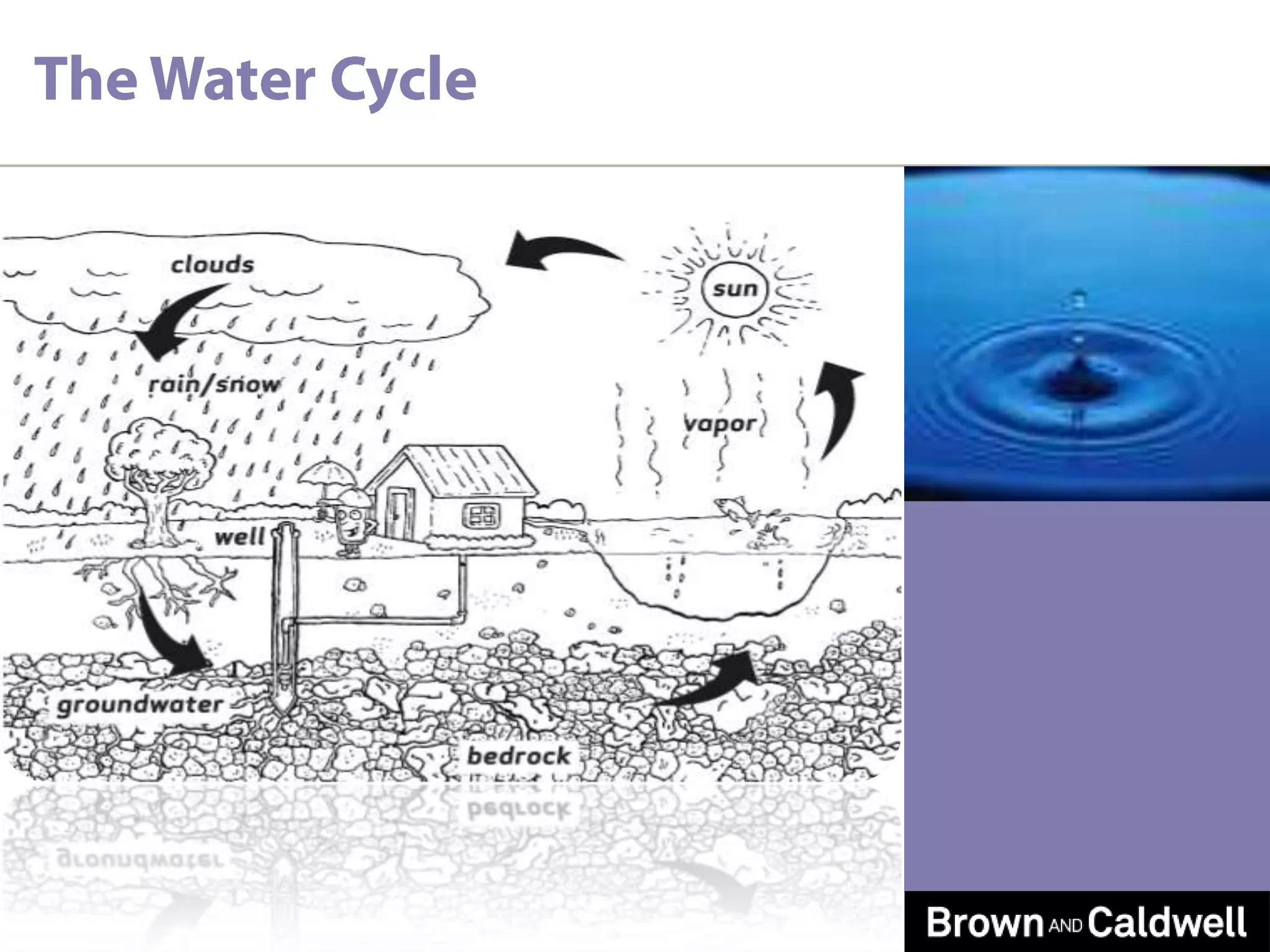
The Water Cycle
Social Responsibility in Water & Wastewater IssuesResponsible use of Potable WaterWater Resource ConservationPollution PreventionEducation
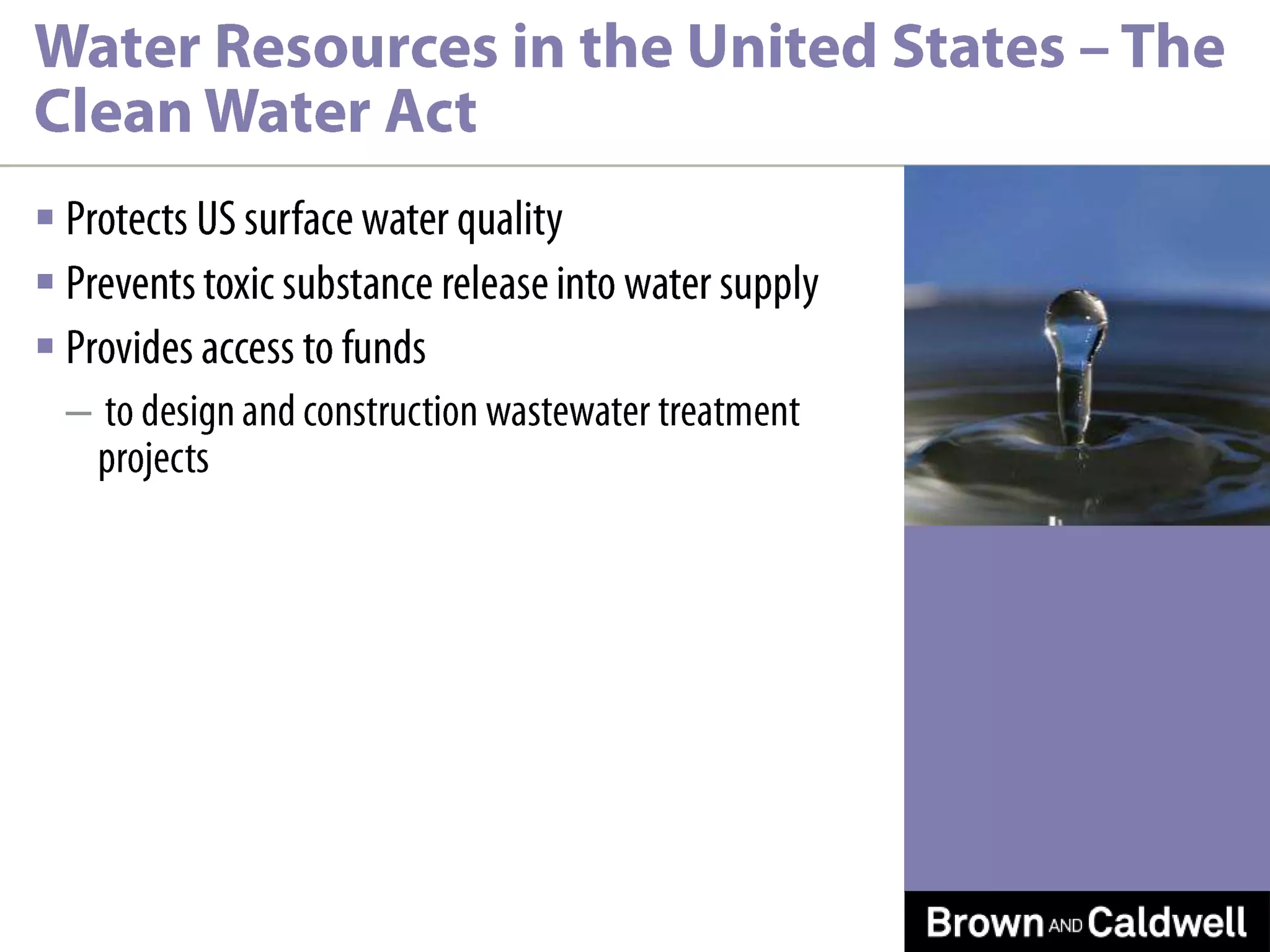
Water Resources in the United States – The Clean Water ActProtects US surface water qualityPrevents toxic substance release into water supplyProvides access to funds to design and construction wastewater treatment projects
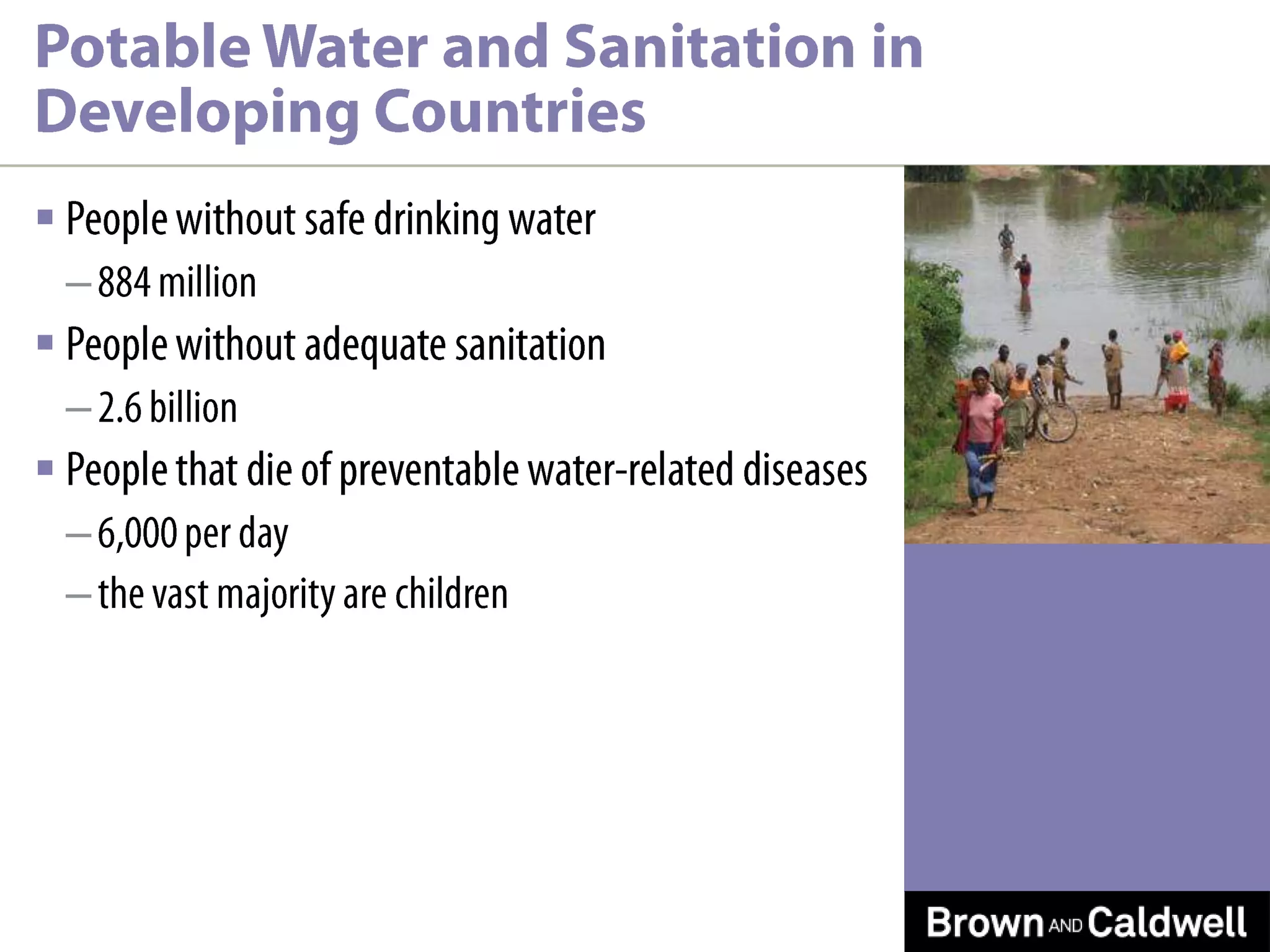
Potable Water and Sanitation in Developing CountriesPeople without safe drinking water884 millionPeople without adequate sanitation 2.6 billionPeople that die of preventable water-related diseases6,000 per daythe vast majority are children
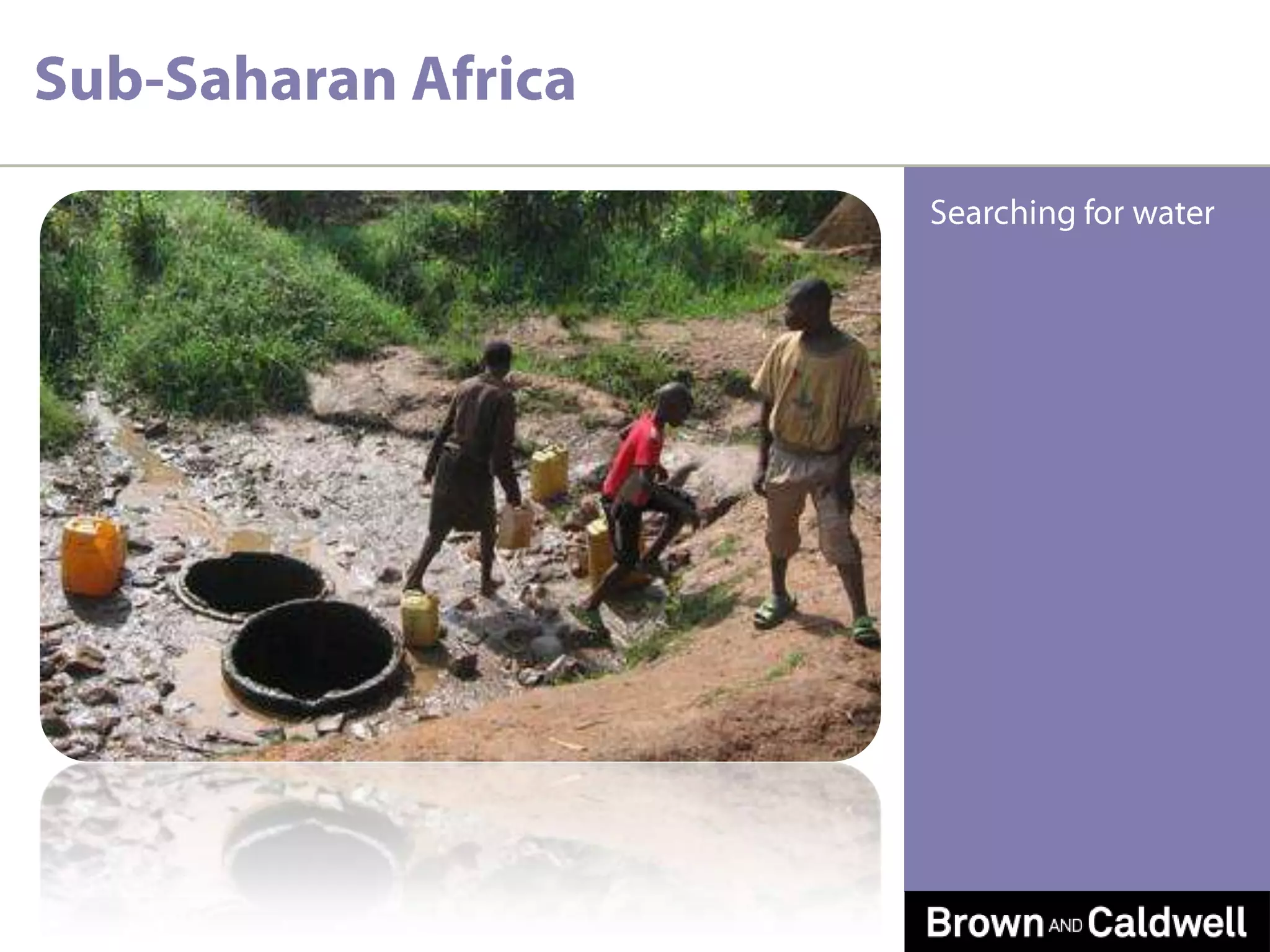
Sub-Saharan AfricaSearching for water
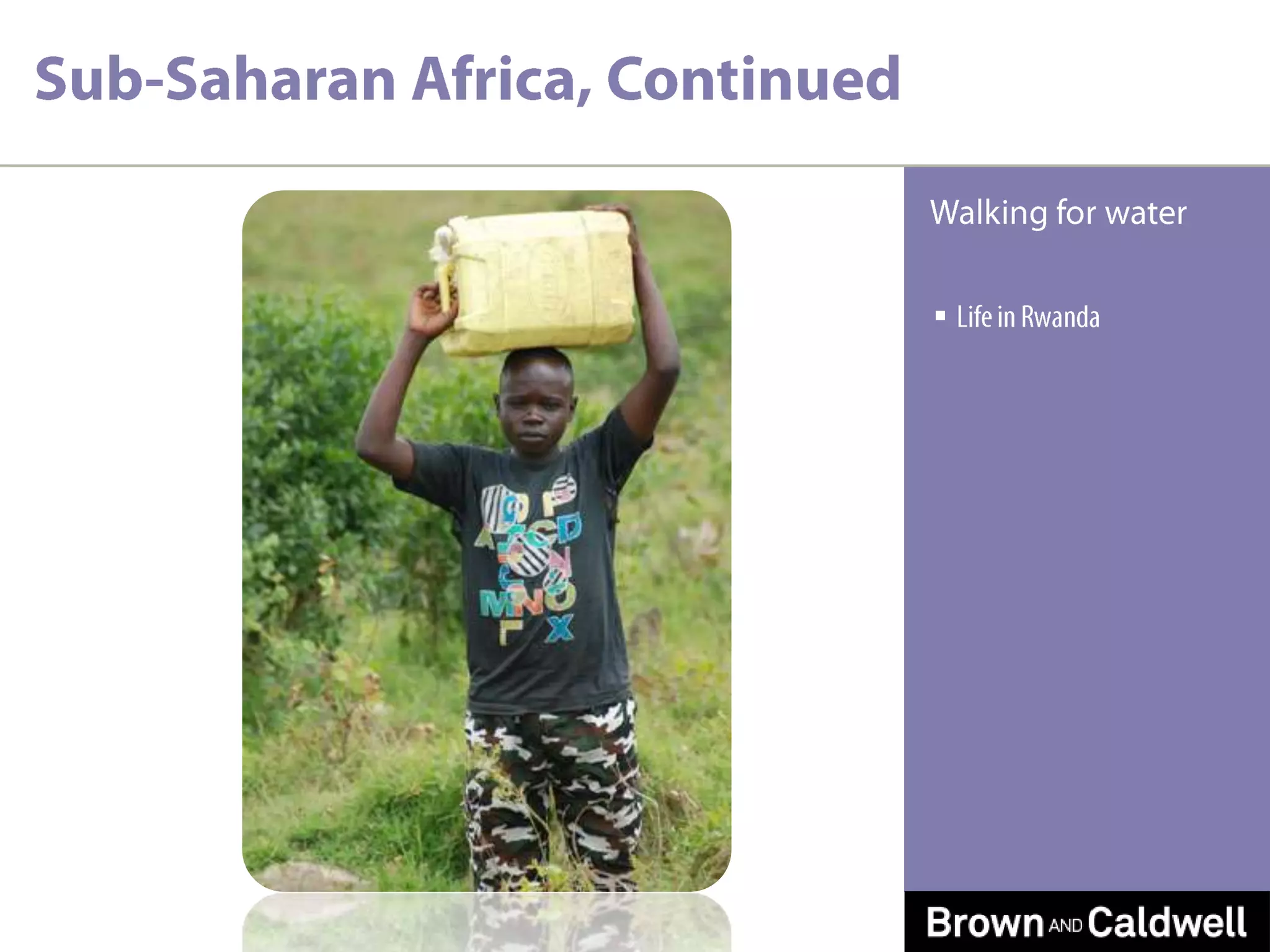
Sub-Saharan Africa, ContinuedLife in RwandaWalking for water
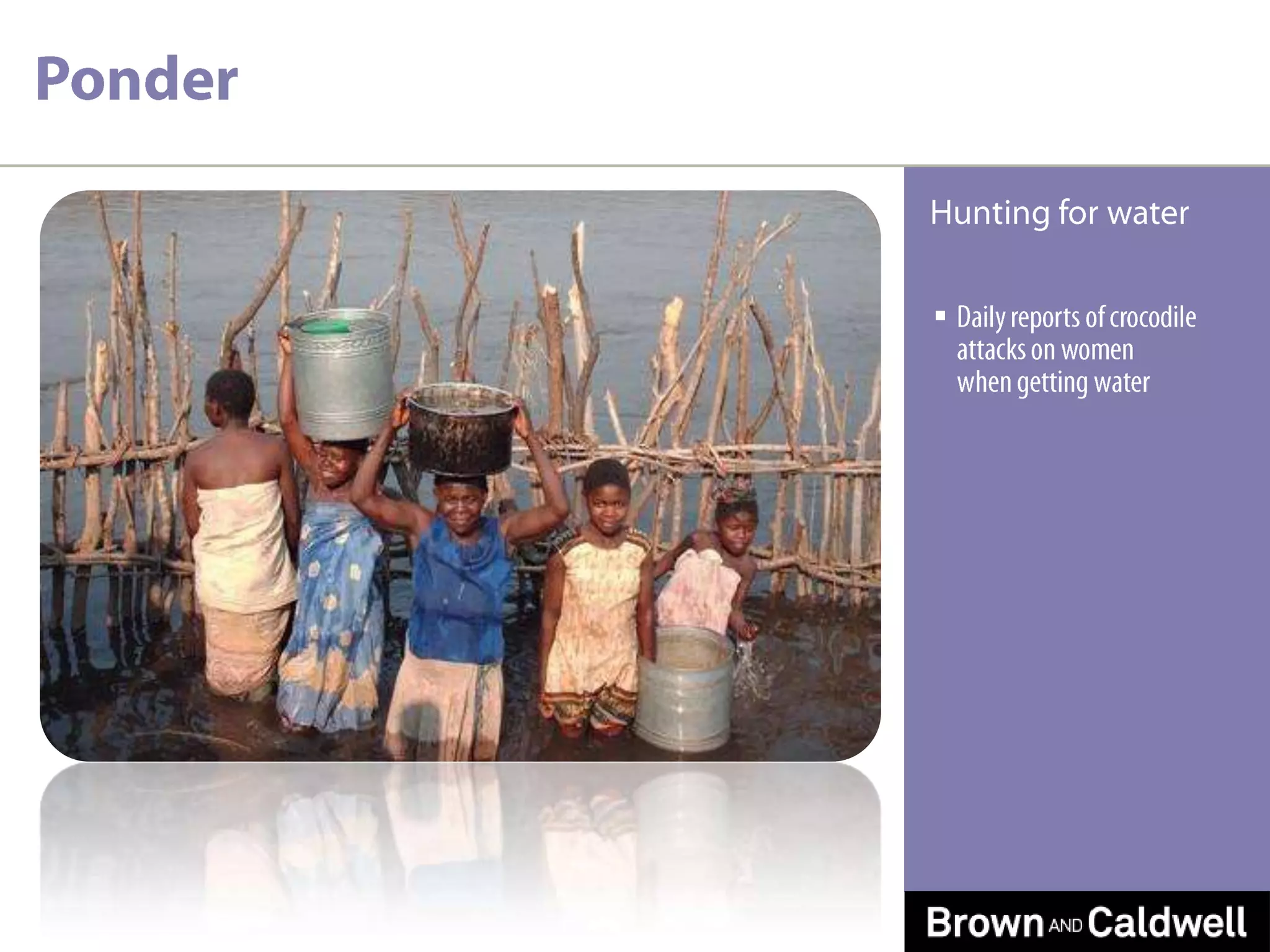
PonderDaily reports of crocodile  attacks on women when getting waterHunting for water
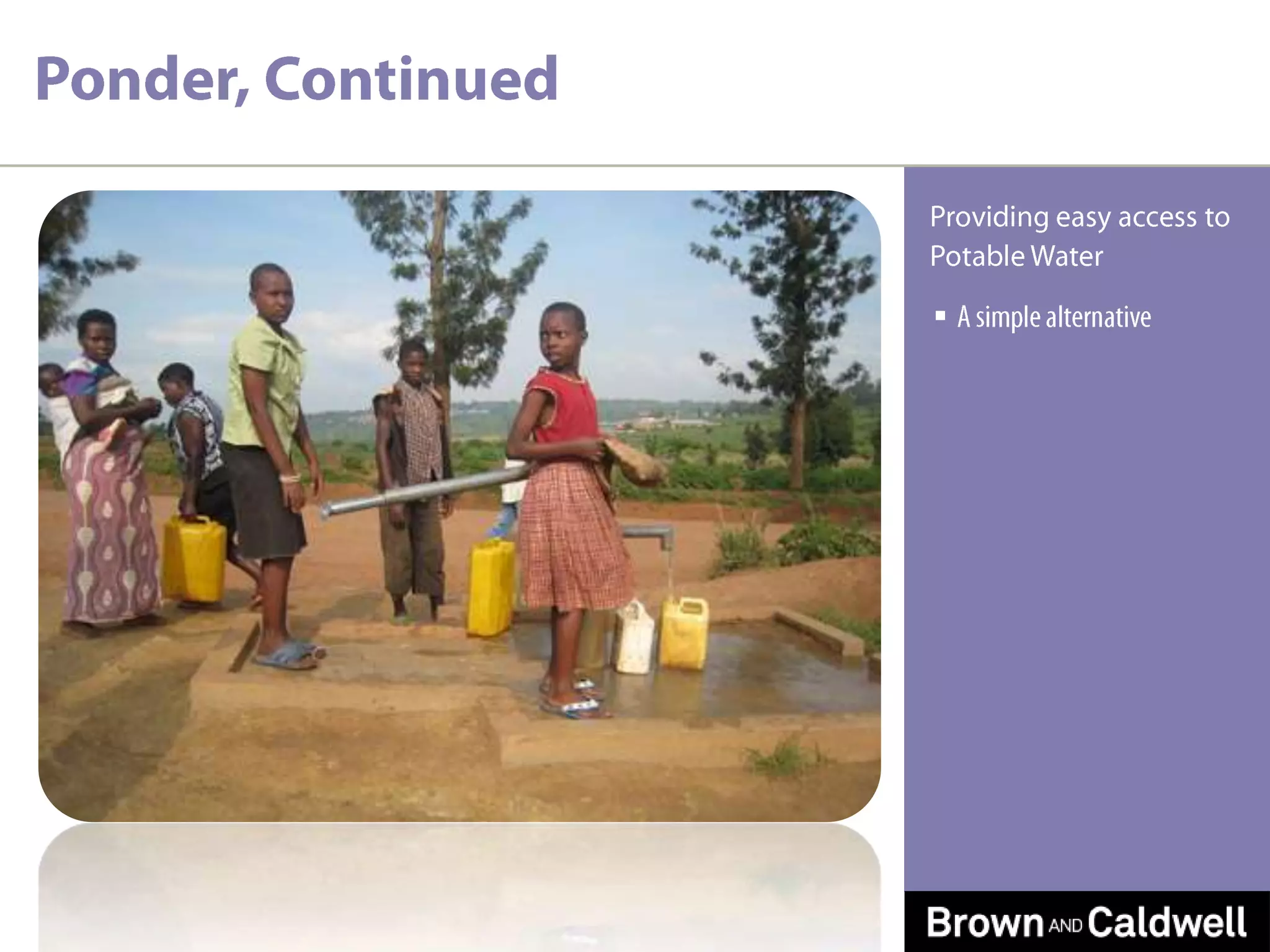
Ponder, ContinuedA simple alternativeProviding easy access to Potable Water
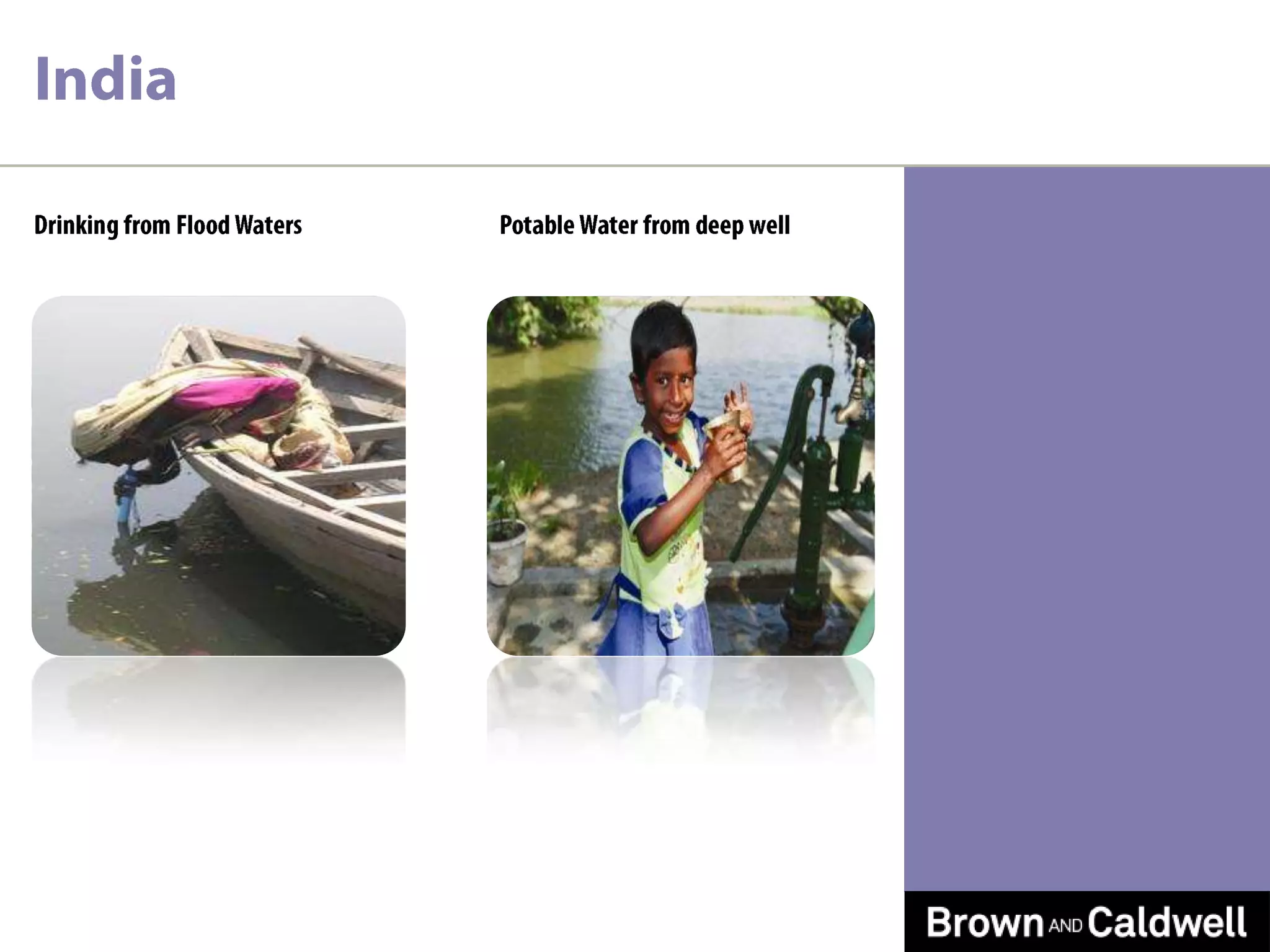
IndiaDrinking from Flood WatersPotable Water from deep well
The Way ForwardVolunteerismEducationInnovation
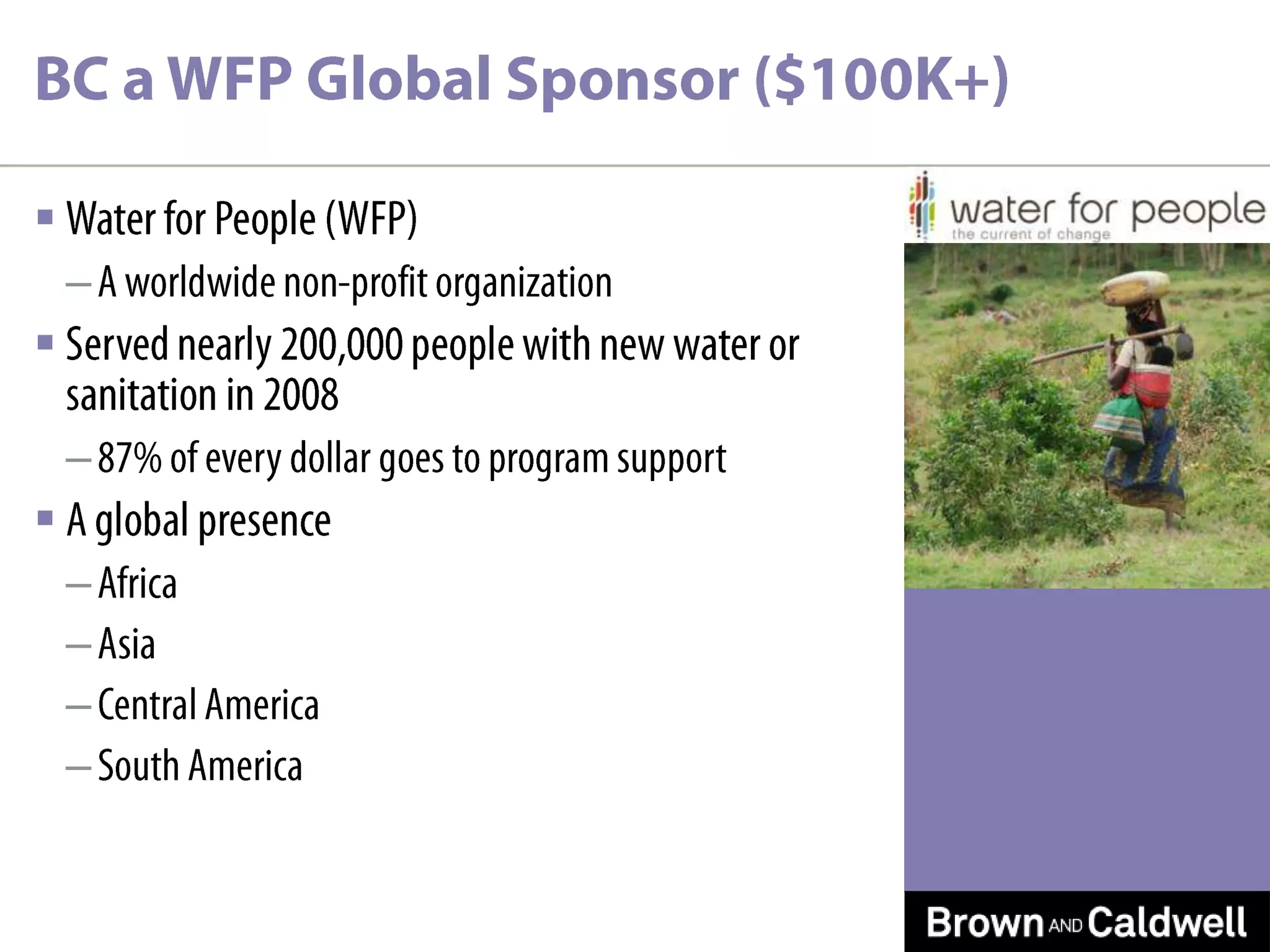
BC a WFP Global Sponsor ($100K+)Water for People (WFP)A worldwide non-profit organizationServed nearly 200,000 people with new water or sanitation in 200887% of every dollar goes to program support A global presenceAfricaAsiaCentral AmericaSouth America
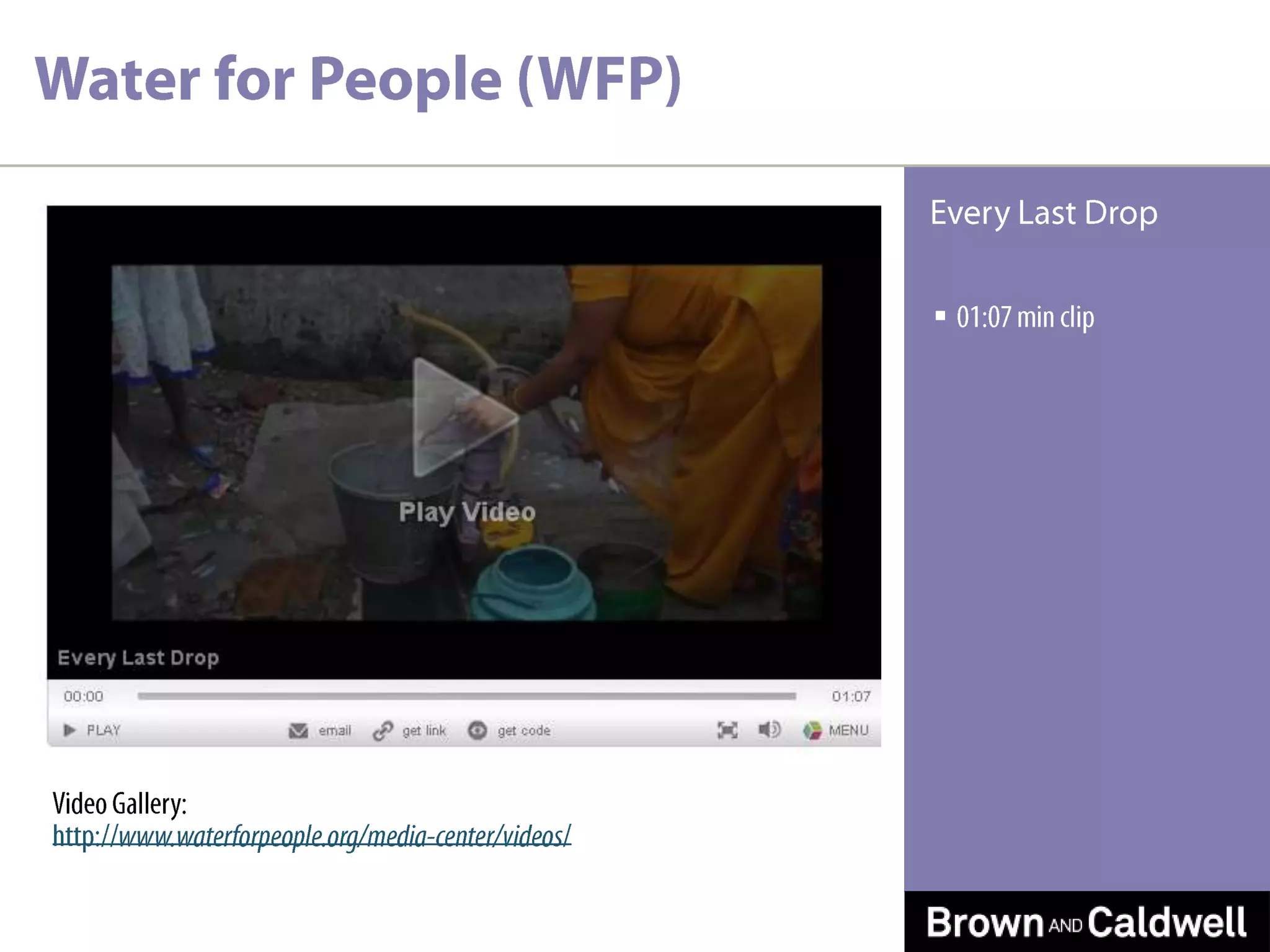
Video Gallery:http://www.waterforpeople.org/media-center/videos/Water for People (WFP)01:07 min clipEvery Last Drop
Engineers Without Borders (EWB-USA)EWB addresses basic human needs around the globe by providing necessities such as clean water, power, sanitation and more250+ US chapters on 180 college campuses in the United StatesHands-on involvement in selected projects, from fundraising to actual construction.
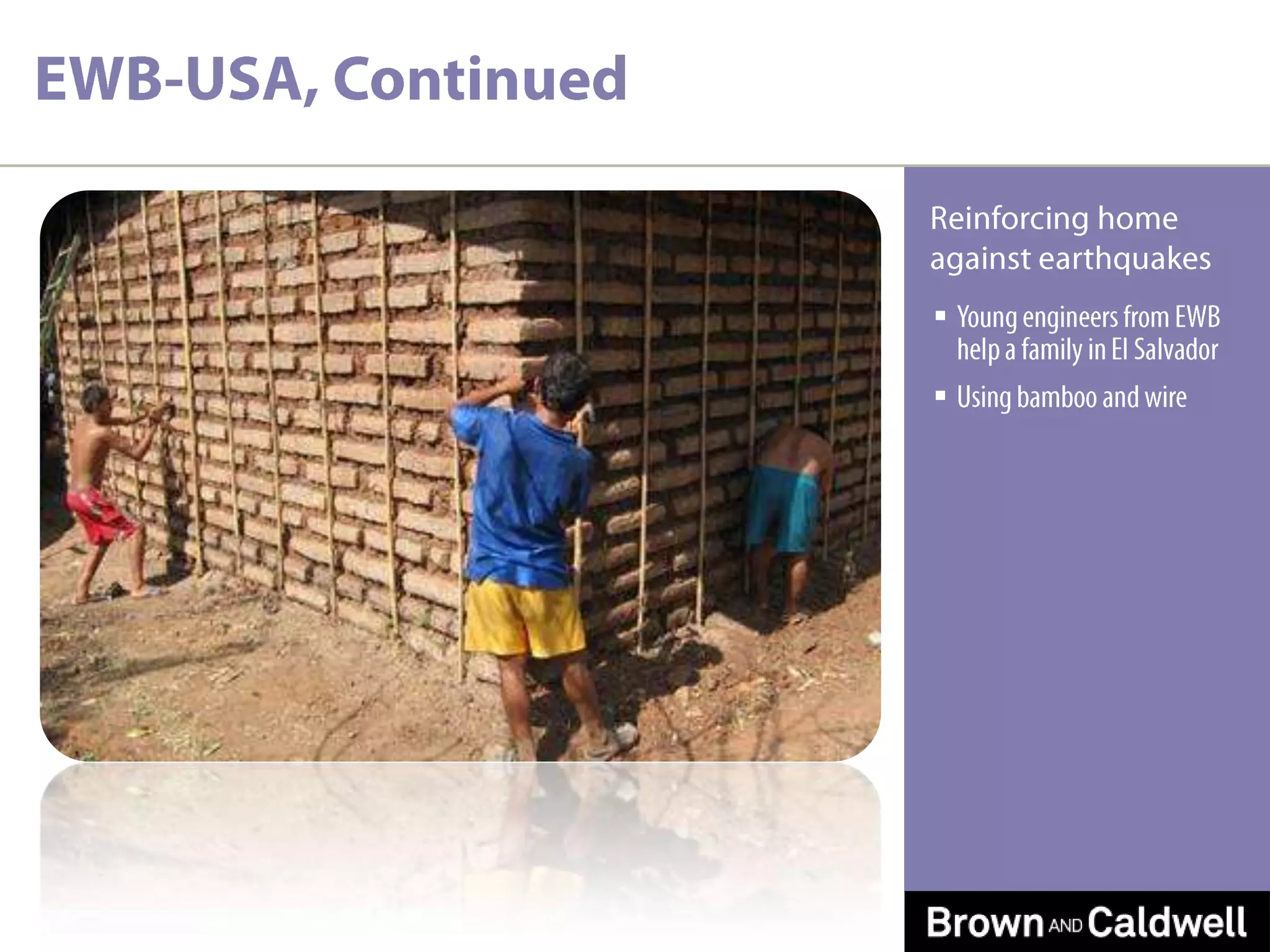
EWB-USA, ContinuedReinforcing home against earthquakesYoung engineers from EWB help a family in El Salvador Using bamboo and wire
Join WFP and EWBFacebook, Twitter and LinkedInhttp://twitter.com/waterforpeoplewww.facebook.com/waterforpeopleSocial Networking for Change
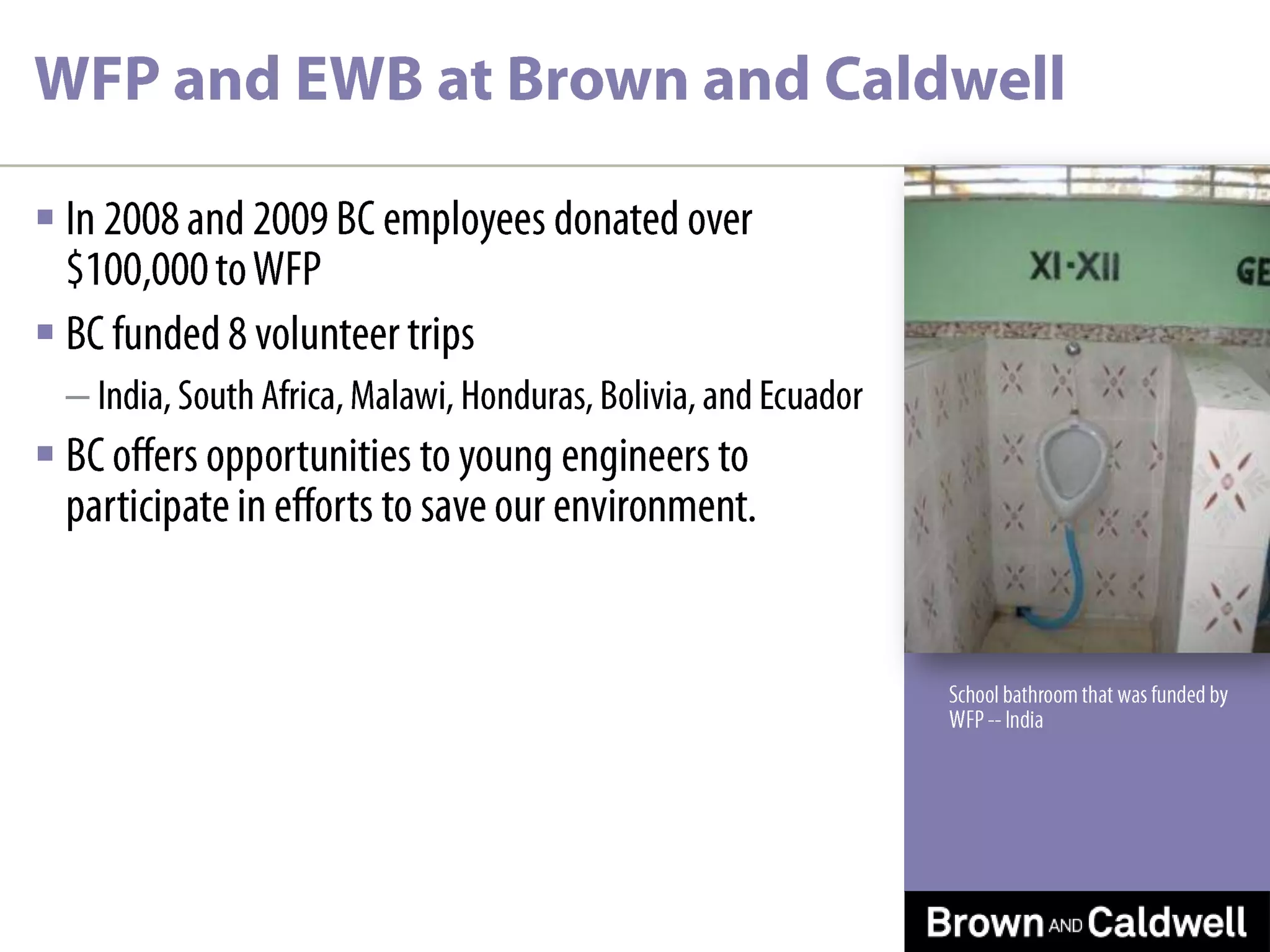
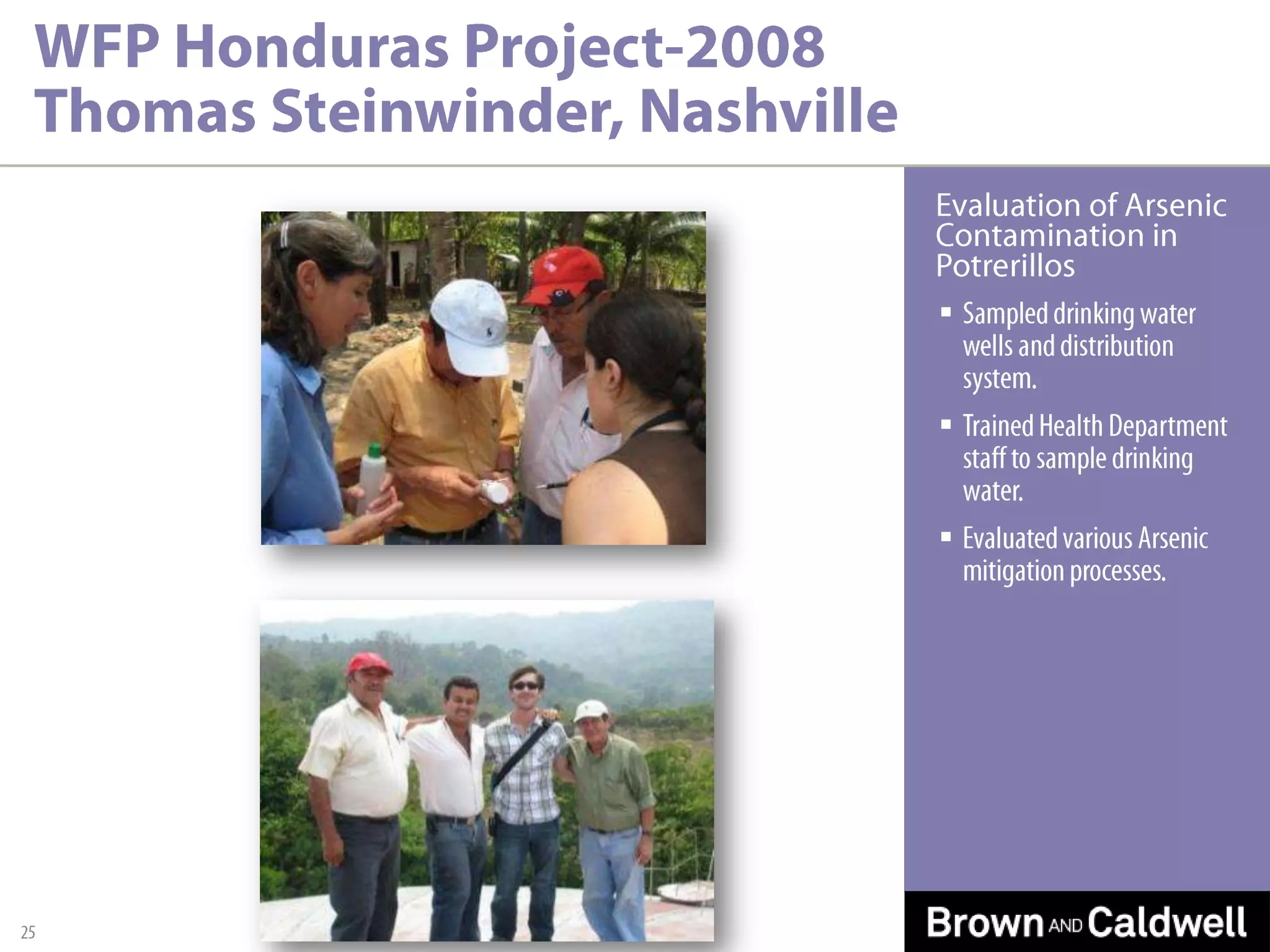
WFP and EWB at Brown and CaldwellIn 2008 and 2009 BC employees donated over $100,000 to WFPBC funded 8 volunteer tripsIndia, South Africa, Malawi, Honduras, Bolivia, and EcuadorBC offers opportunities to young engineers to participate in efforts to save our environment.School bathroom that was funded by WFP -- IndiaWFP Honduras Project-2008 Thomas Steinwinder, Nashville25Evaluation of Arsenic Contamination in PotrerillosSampled drinking water wells and distribution system.Trained Health Department staff to sample drinking water.Evaluated various Arsenic mitigation processes.
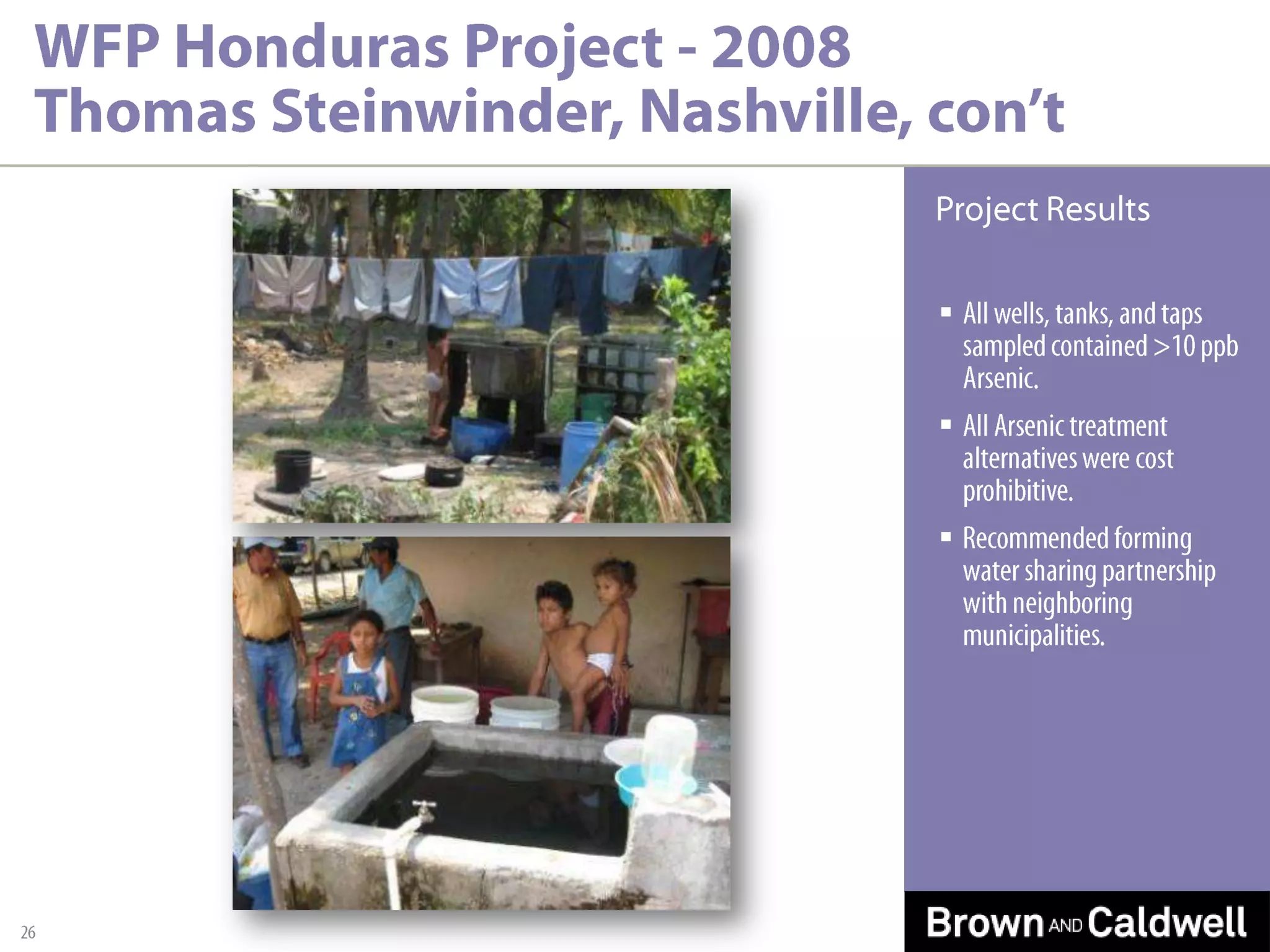
WFP Honduras Project - 2008 Thomas Steinwinder, Nashville, con’t26Project ResultsAll wells, tanks, and taps sampled contained >10 ppb Arsenic.All Arsenic treatment alternatives were cost prohibitive.Recommended forming water sharing partnership with neighboring municipalities.
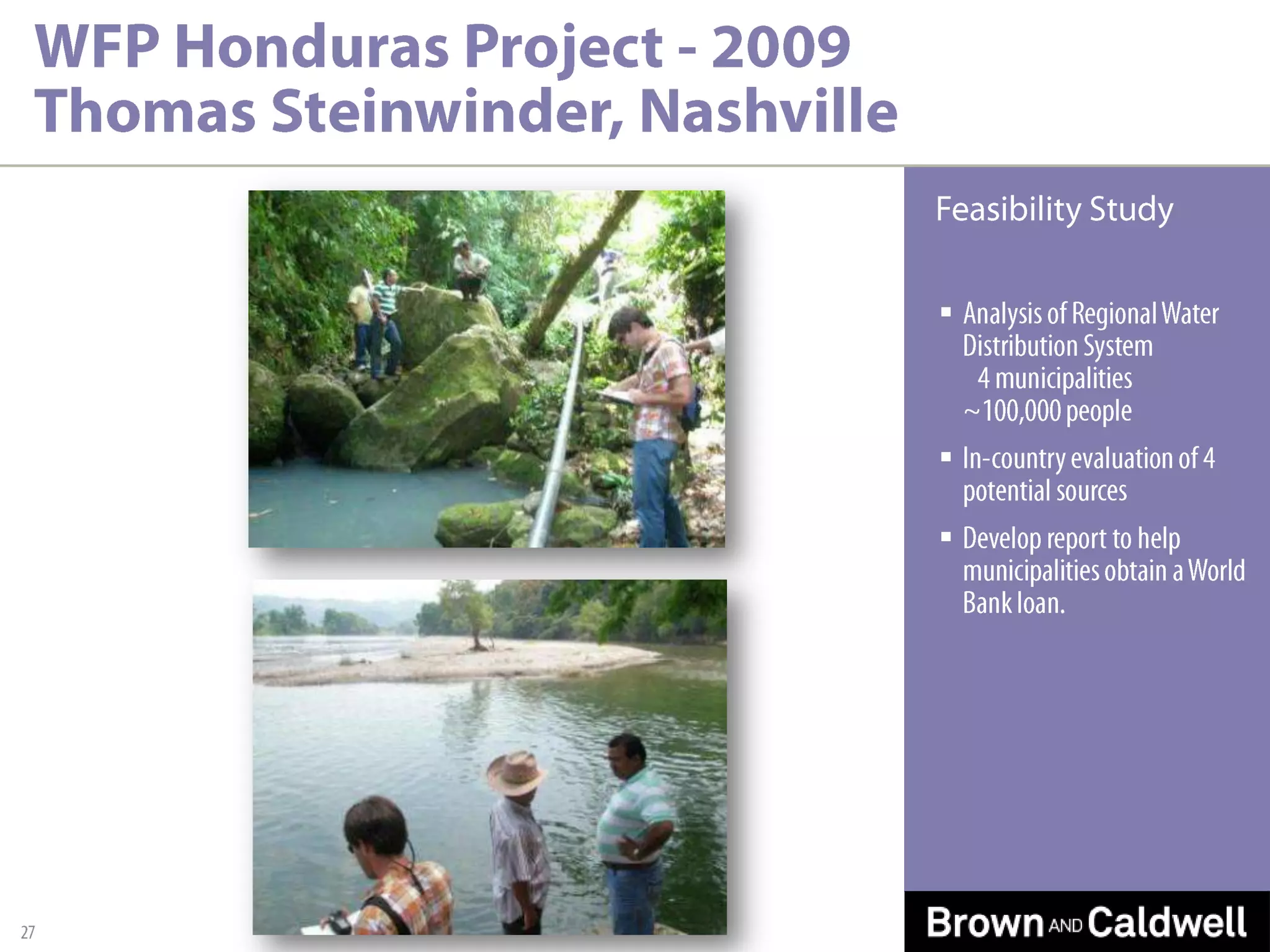
WFP Honduras Project - 2009Thomas Steinwinder, Nashville27Feasibility StudyAnalysis of Regional Water Distribution System    4 municipalities~100,000 peopleIn-country evaluation of 4 potential sourcesDevelop report to help municipalities obtain a World Bank loan.
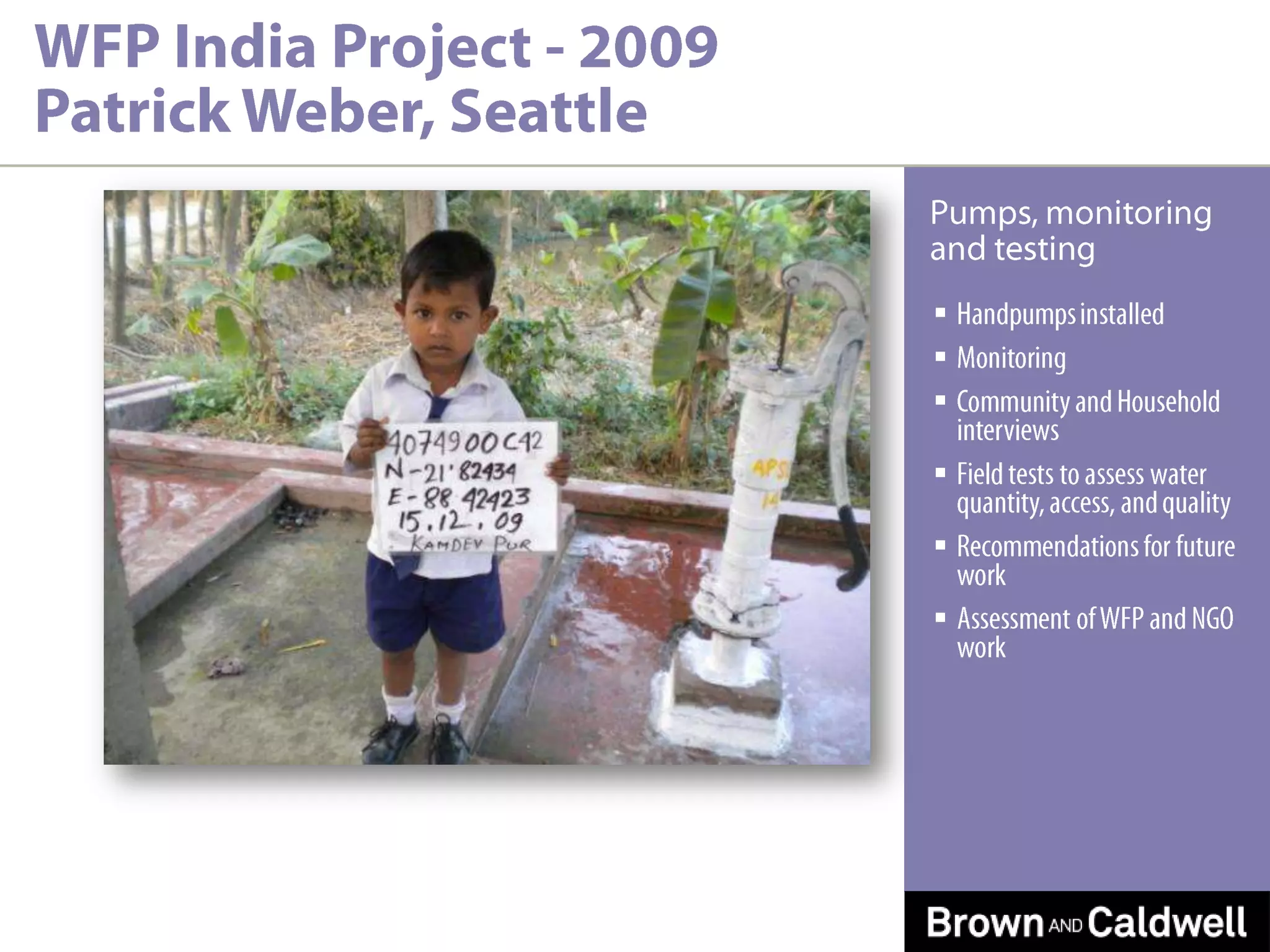
WFP India Project - 2009Patrick Weber, SeattleHandpumps installedMonitoringCommunity and Household interviewsField tests to assess water quantity, access, and qualityRecommendations for future workAssessment of WFP and NGO workPumps, monitoring and testing
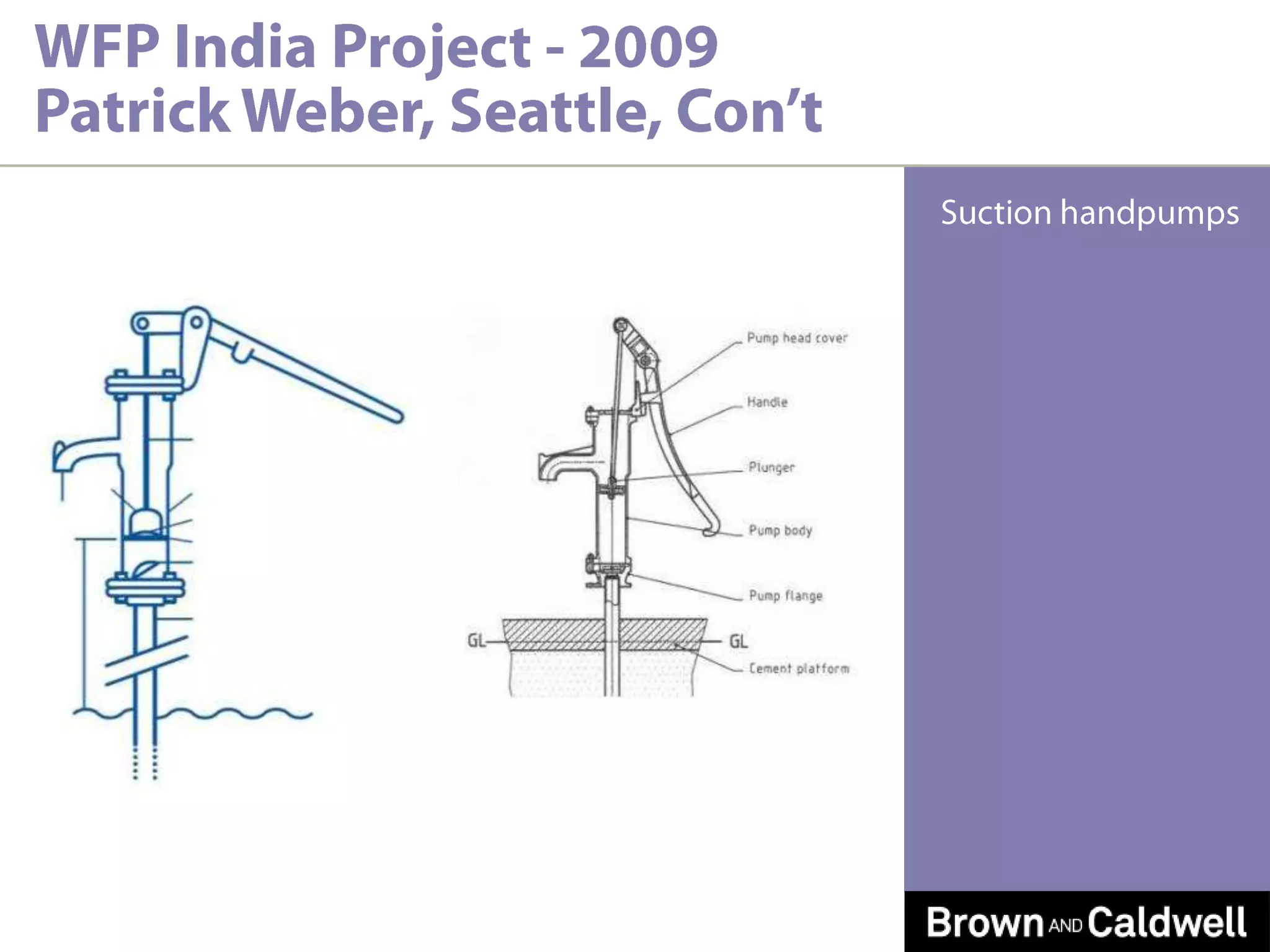
WFP India Project - 2009Patrick Weber, Seattle, Con’tSuction handpumps
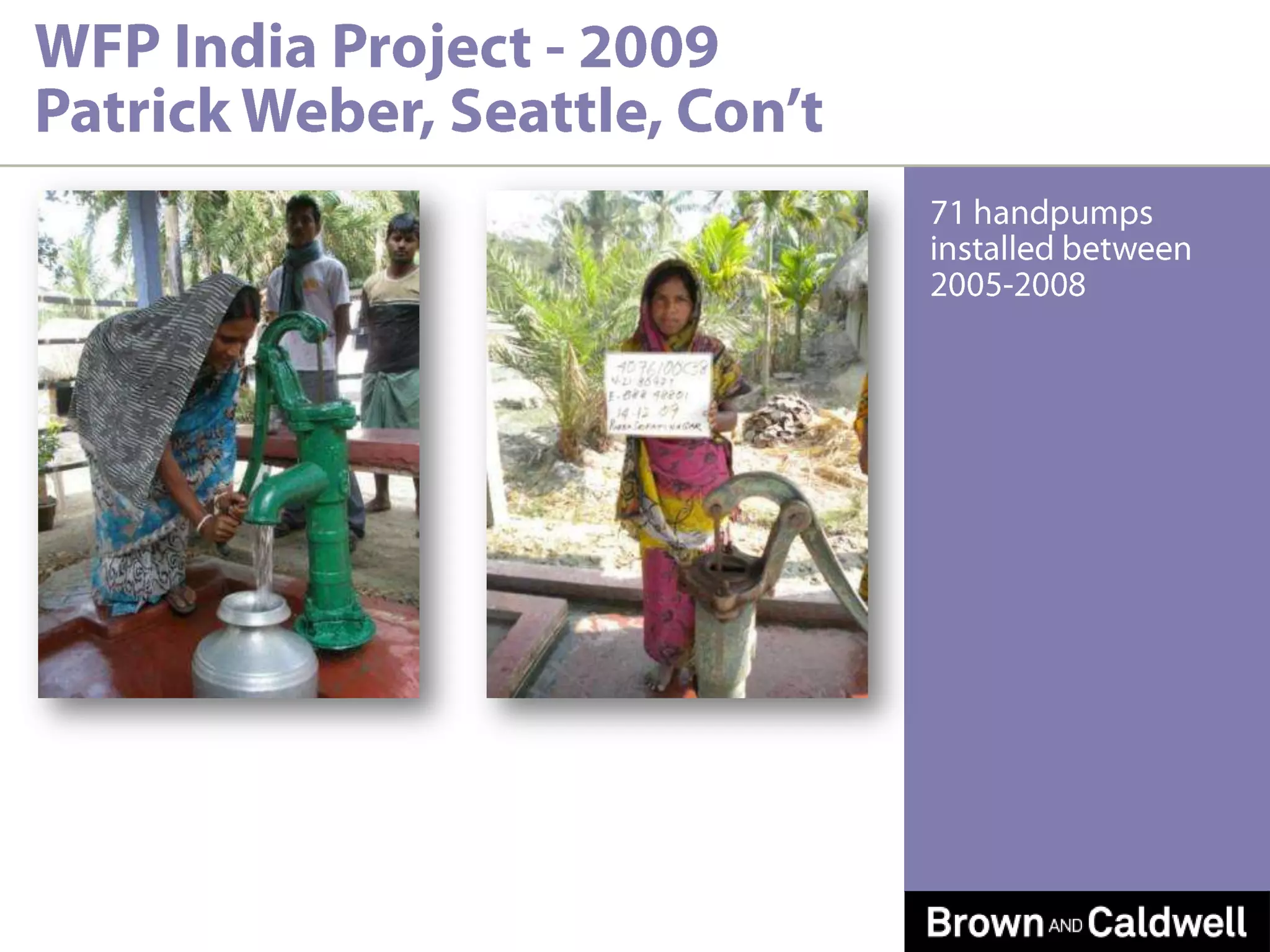
WFP India Project - 2009Patrick Weber, Seattle, Con’t71 handpumps installed between 2005-2008
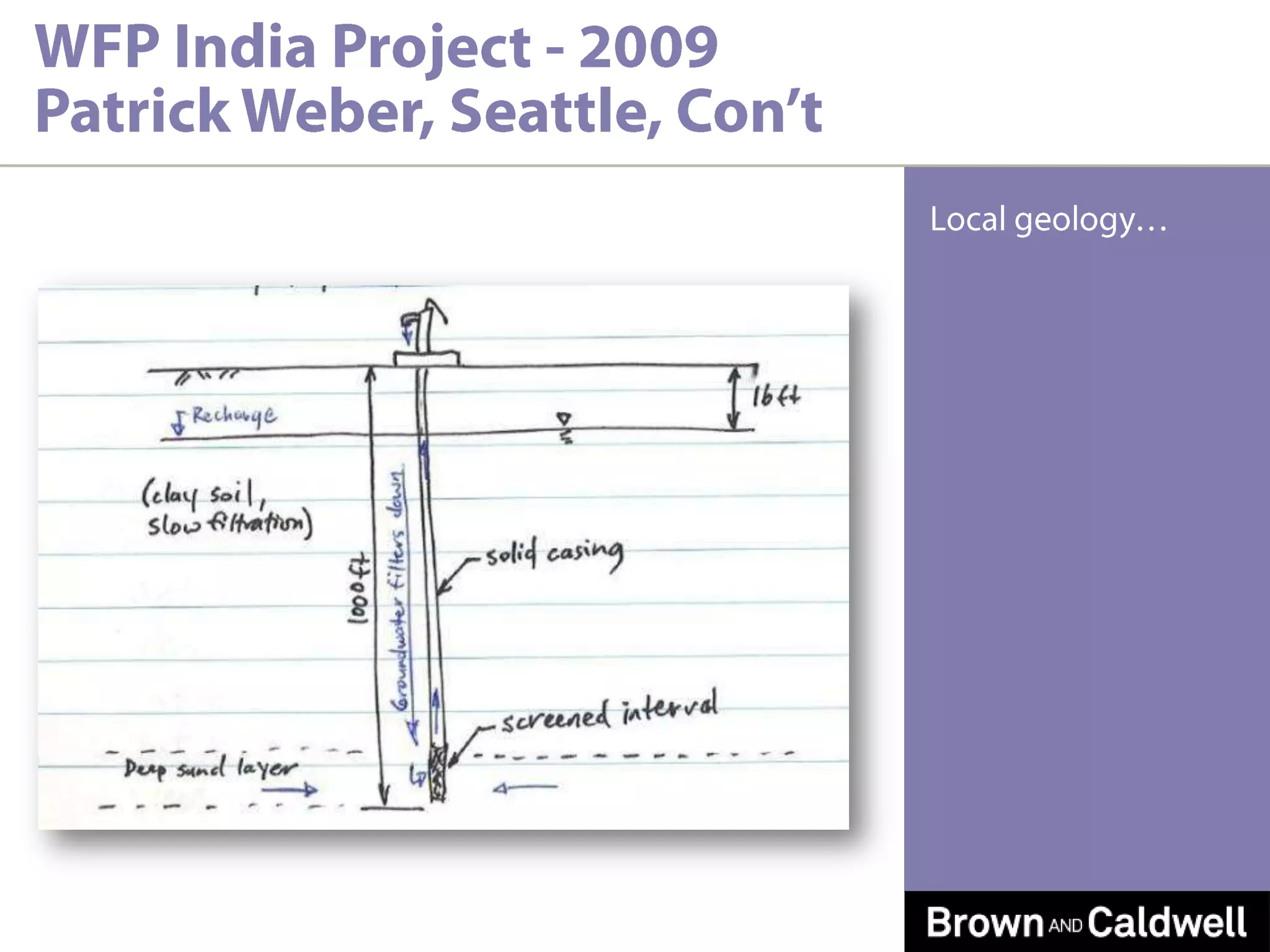
WFP India Project - 2009Patrick Weber, Seattle, Con’tLocal geology…
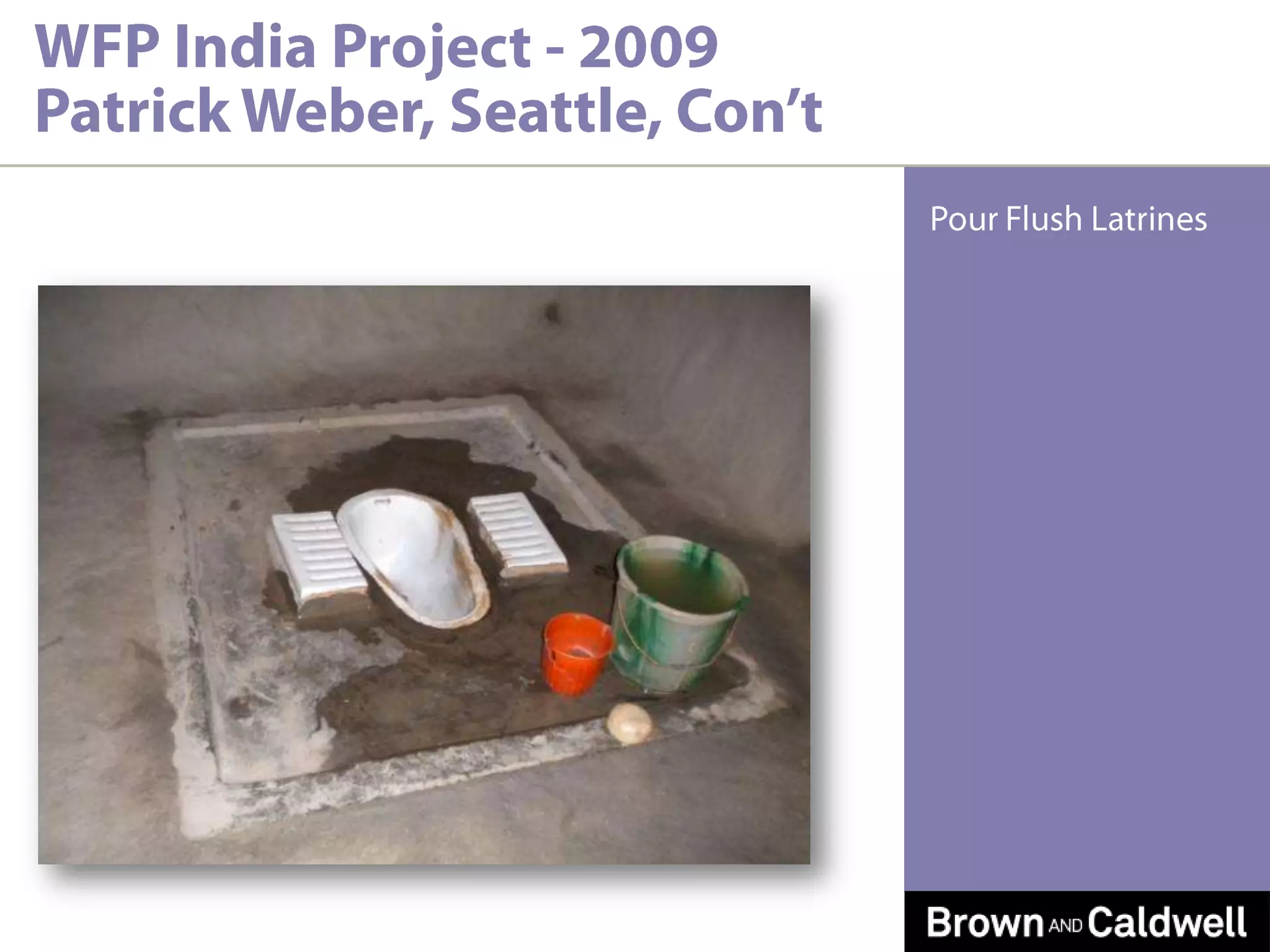
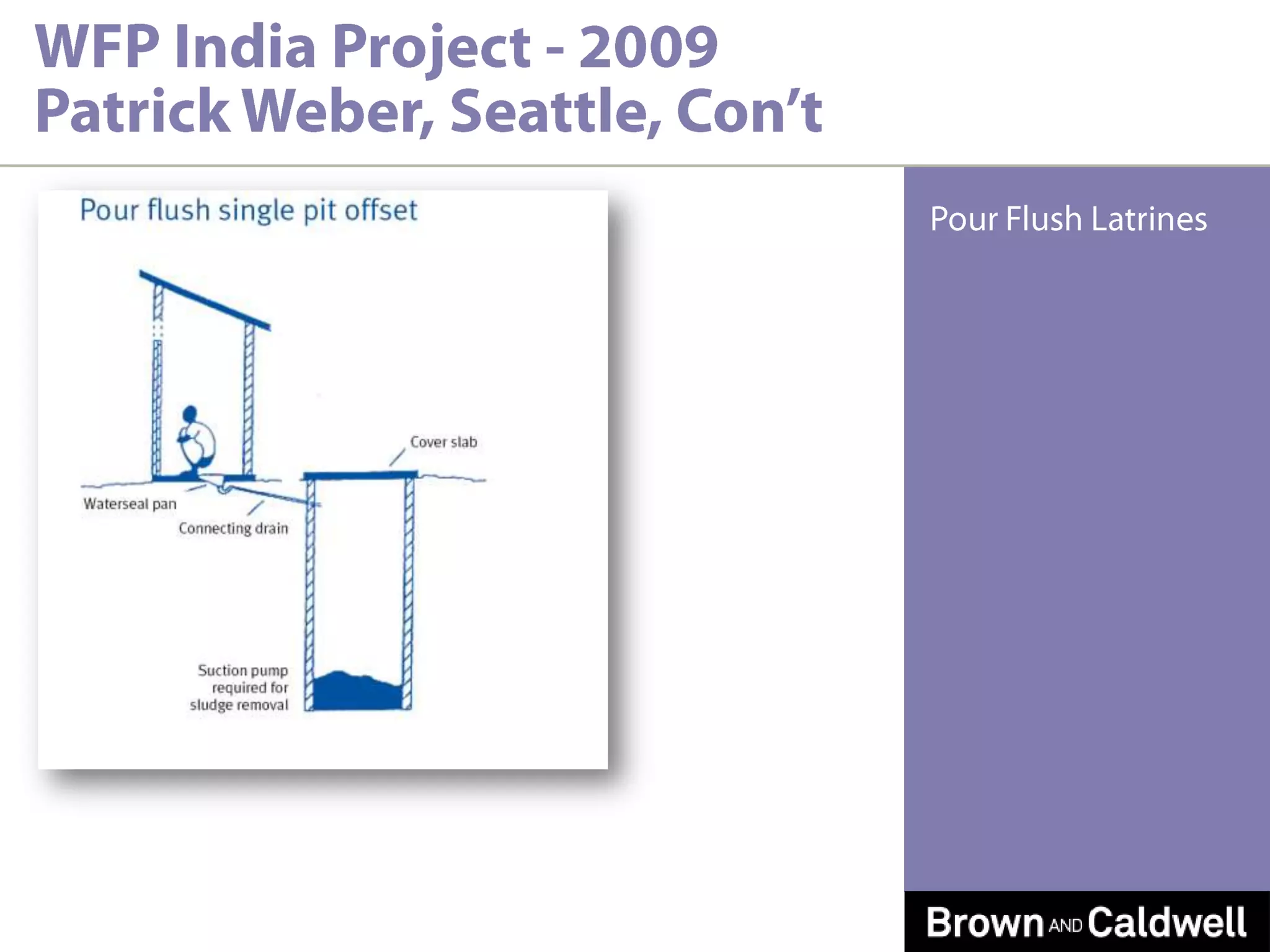
WFP India Project - 2009Patrick Weber, Seattle, Con’tPour Flush Latrines
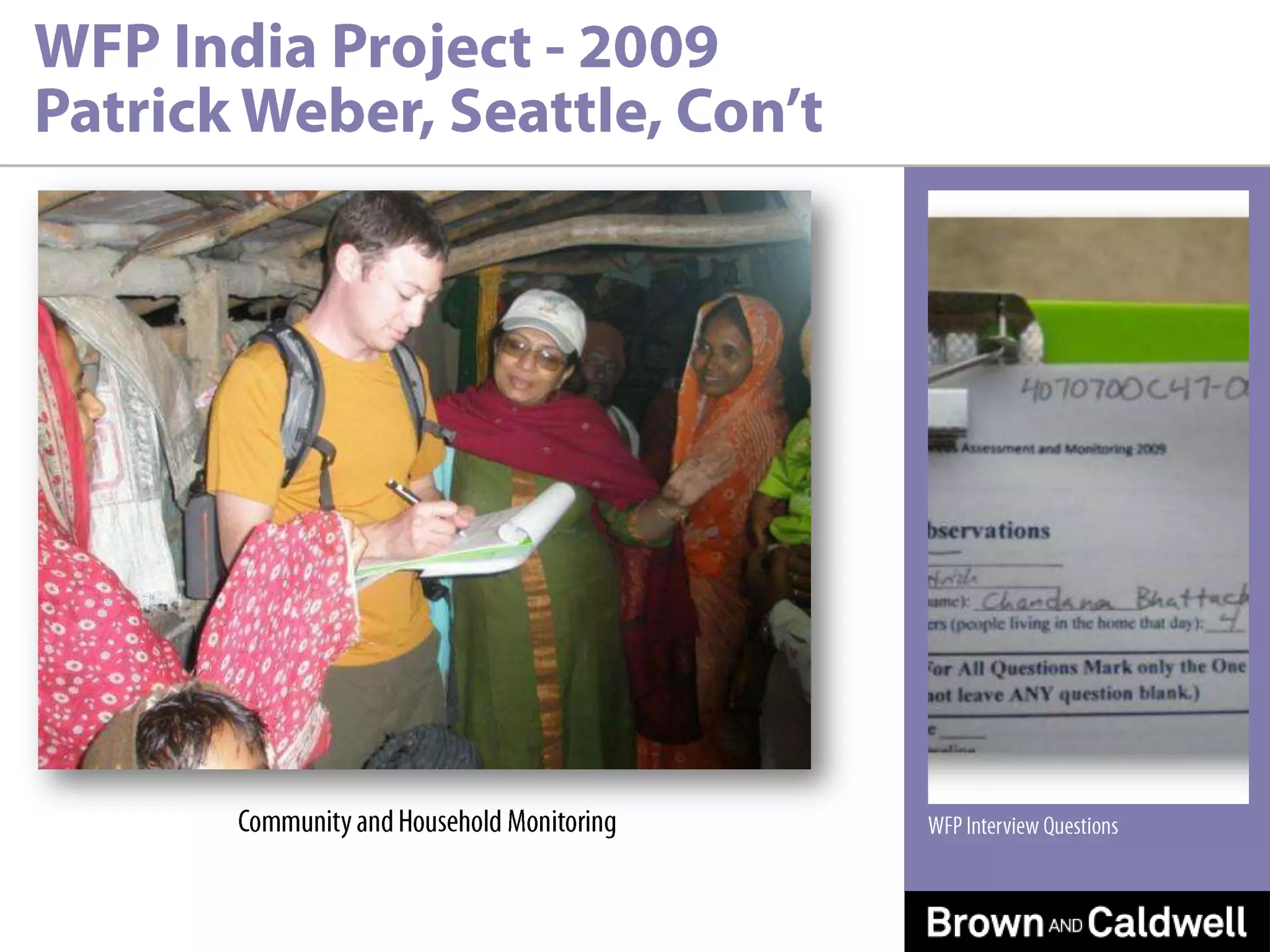
WFP India Project - 2009Patrick Weber, Seattle, Con’tWFP Interview QuestionsCommunity and Household Monitoring
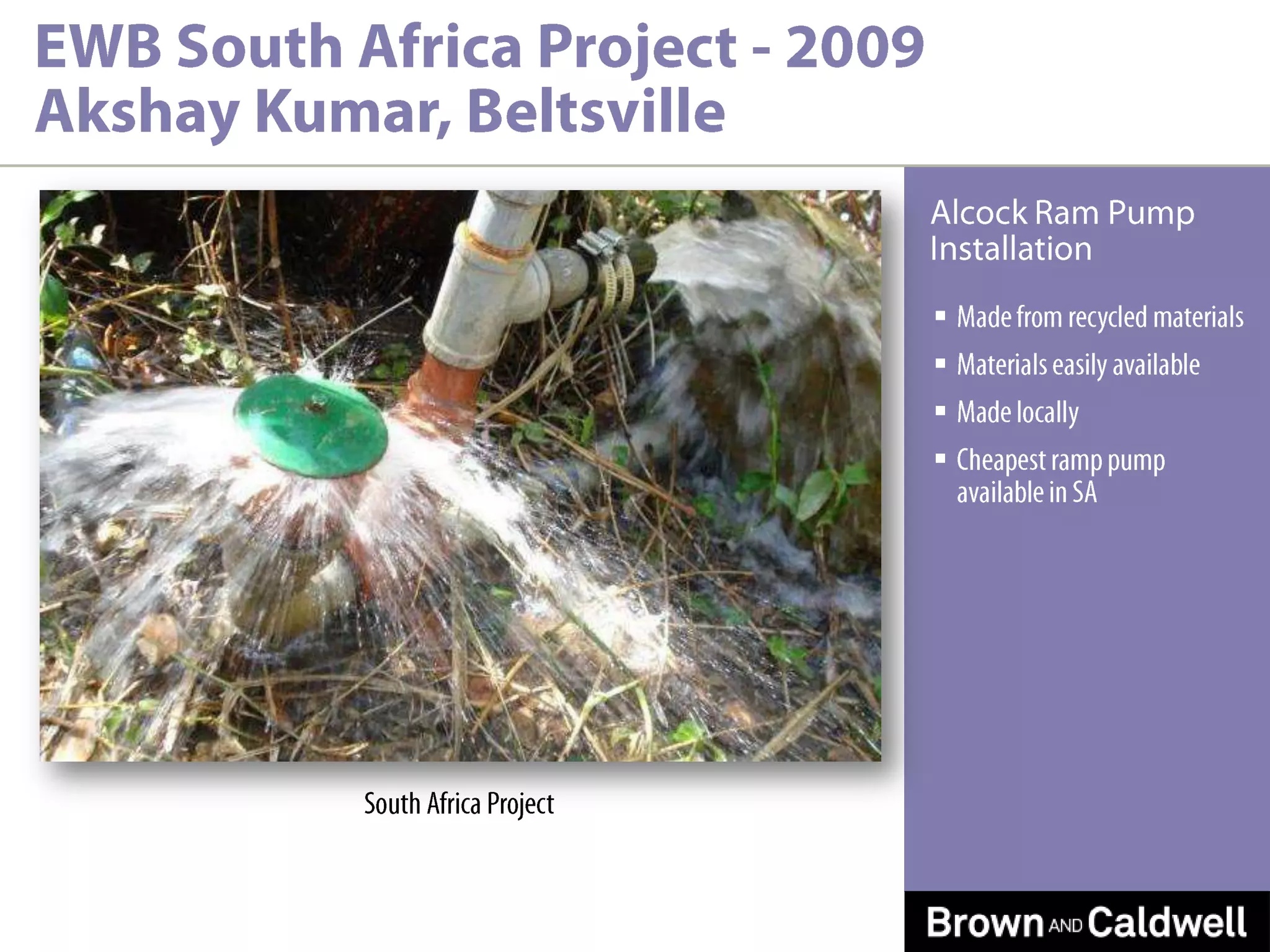
South Africa ProjectEWB South Africa Project - 2009Akshay Kumar, BeltsvilleMade from recycled materialsMaterials easily availableMade locallyCheapest ramp pump available in SAAlcock Ram Pump Installation
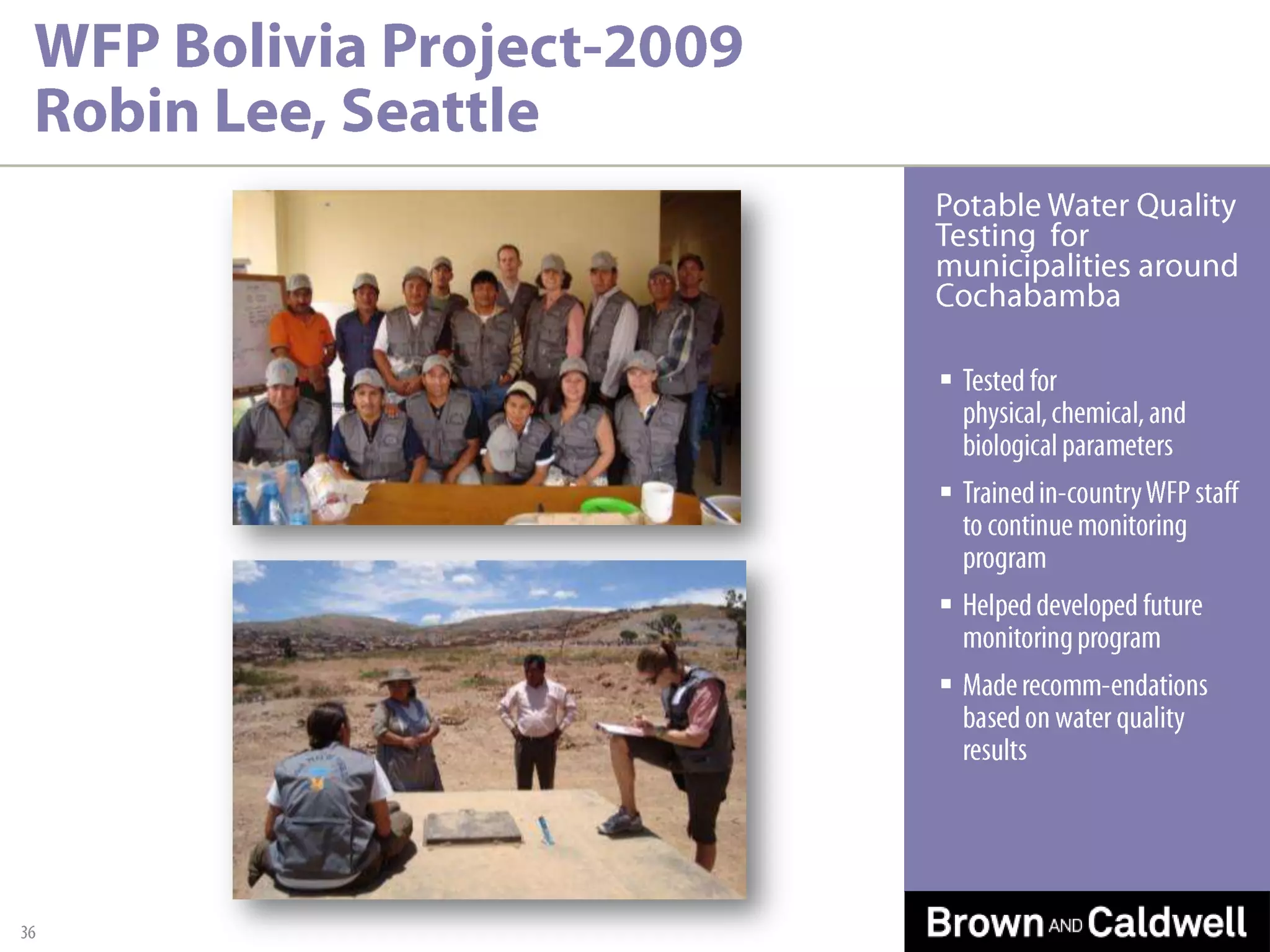
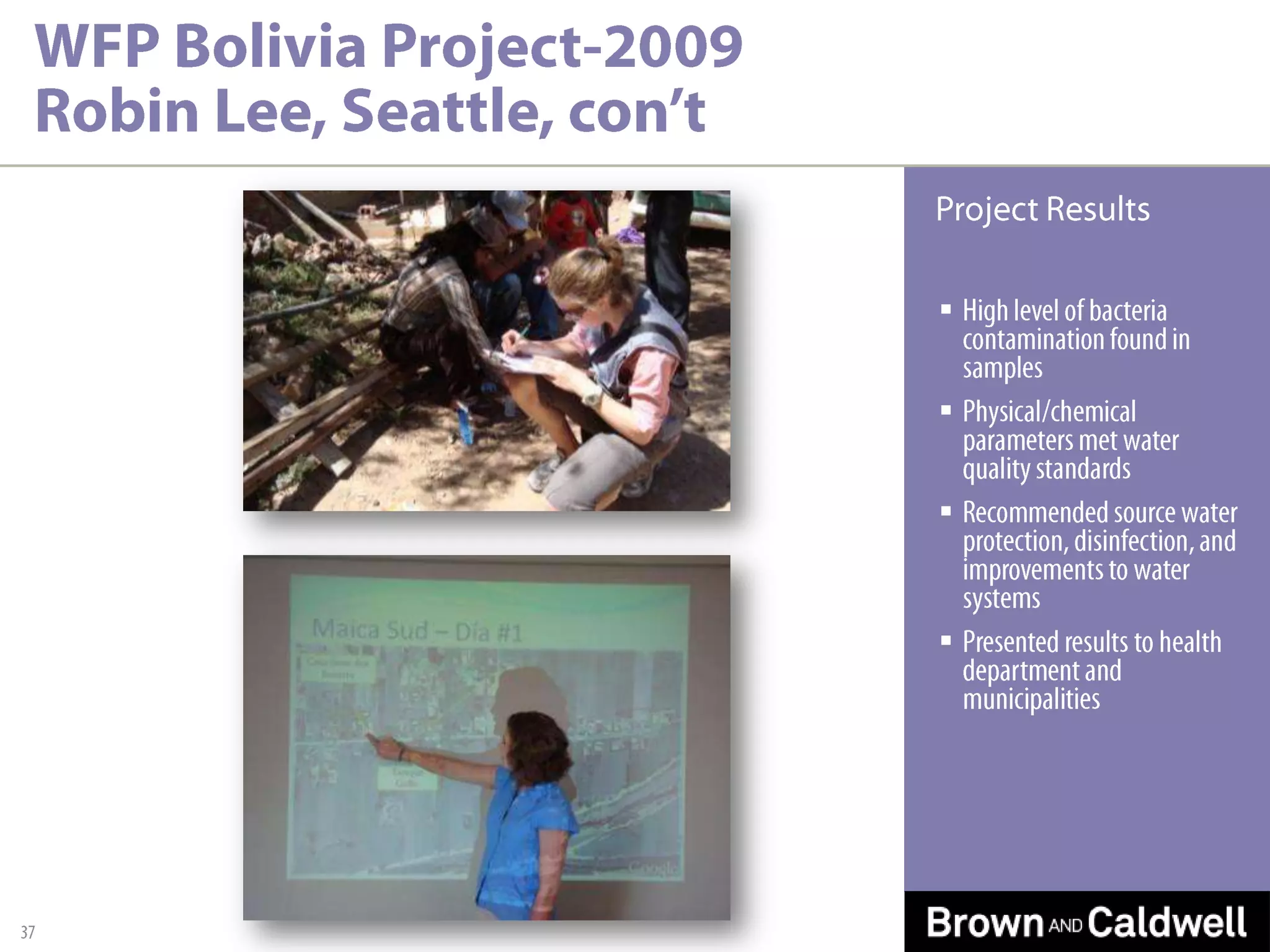
WFP Bolivia Project-2009 Robin Lee, Seattle36Potable Water Quality Testing  for municipalities around CochabambaTested for physical, chemical, and biological parametersTrained in-country WFP staff to continue monitoring programHelped developed future monitoring programMade recomm-endations based on water quality results
WFP Bolivia Project-2009 Robin Lee, Seattle, con’t37Project ResultsHigh level of bacteria contamination found in samplesPhysical/chemical parameters met water quality standardsRecommended source water protection, disinfection, and improvements to water systemsPresented results to health department and municipalities
EWB Marcala, Honduras Project-2009 Grant Sharpe, Phoenix38Assessment of non-functioning Imhoff tank in town with population =15000Collected influent flow data, tank measurementsCommunity work to understand their current treatment needsLagoon treatment system – alligator in secondary lagoon
EWB Marcala, Honduras Project-2009 Grant Sharpe, Phoenix, con’t39Project ResultsNow working with neighboring communities Plan to design a replicable rainwater catchment system for large roofed school houses An assessment trip is being scheduled for May 2010
QuestionsThe Role of the Young Engineer
 The Role of the Young EngineerBryan H. Fortson, Ph.D., PMPProgram Manager, Battelle
Social responsibilityCommunity involvementGood financial stewardshipHealthy livingEnvironmentally-sustainable lifestyleDiversity awarenessPersonal philanthropyBfortson.ae90@gtalumni.org
Community involvement discussionYou are a young engineer starting out in your first job.  You want to perform in a manner that reflects well upon yourself and your community and will allow you to advance.Your local NSBE Alumni Chapter needs a Secretary.Your house of worship has excellent services and a shortage of ushers.You’ve become aware of a fantastic inner-city tutoring program that needs volunteers.You believe in staying fit.You like to party.What choices would you make, and why?
Thank you for your time, energy and effort!The Role of the Young Engineer
Engineering A Global Movement In Social Responsibility Ver3

Engineering A Global Movement In Social Responsibility Ver3

  • 1.
    Engineering a GlobalMovement in Social ResponsibilityThe Role of the Young Engineer36th NSBE Annual Convention and Career FairToronto, Canada ● March 31 – April 4, 2010
  • 2.
    Welcome & IntroductionPresentersFeolaOdeyemi, Engineer II, Virginia Beach VAJeffrey Mills, Training Manager, Walnut Creek CAAngela Waggett, HR Manager, Atlanta GACompany Brown and Caldwell, Walnut Creek CAEnvironmental Engineering and ConsultingMeeting ParticipantsIntroduction
  • 3.
    Pairs ActivityPartner upin twosEach partner to do the following(2 mins)Introduction: including Name, Hometown, SchoolBriefly describe future plansWhat do you expect from today’s session?Listen carefullyIntroduce your partner to group
  • 4.
    A conscious effortto promote the public goodEncouraging the growth and development of communitiesStewardship of the environment and natural resourcesThe Concept of Social ResponsibilitySupport Corporate Social Responsibility
  • 5.
    Reduce paper consumptionReduceenergy consumptionRecycle and minimize wasteReduce our Carbon FootprintSupport Corporate Social ResponsibilityRaise $100,000 annually for WFPIncrease participation in local and international WFP and EWB projects.BC Sustainability PrinciplesOur five "Sustainability Principles"
  • 6.
    What percentage ofthe earth is covered in water?The earth contains roughly 326 million cubic miles of waterCovering about 75 percent of the earth’s surface. More water is stored under the ground in aquifers than is available in surface waters.Water as a Natural Resource – An Interactive Discussion
  • 7.
    What percentage ofthe earth’s water content is available for man’s consumption?Only 0.3% of the earth’s water content is available for man’s consumptionThis includes water in freshwater lakes, rivers and aquifers.Water as a Natural Resource – An Interactive Discussion, cont’d
  • 8.
    What percent ofthe water supply in the US is used for irrigation and thermoelectric power?80 percent!Water as a Natural Resource – An Interactive Discussion, cont’d
  • 9.
  • 10.
    Social Responsibility inWater & Wastewater IssuesResponsible use of Potable WaterWater Resource ConservationPollution PreventionEducation
  • 11.
    Water Resources inthe United States – The Clean Water ActProtects US surface water qualityPrevents toxic substance release into water supplyProvides access to funds to design and construction wastewater treatment projects
  • 12.
    Potable Water andSanitation in Developing CountriesPeople without safe drinking water884 millionPeople without adequate sanitation 2.6 billionPeople that die of preventable water-related diseases6,000 per daythe vast majority are children
  • 13.
  • 14.
    Sub-Saharan Africa, ContinuedLifein RwandaWalking for water
  • 15.
    PonderDaily reports of crocodile attacks on women when getting waterHunting for water
  • 16.
    Ponder, ContinuedA simplealternativeProviding easy access to Potable Water
  • 17.
    IndiaDrinking from FloodWatersPotable Water from deep well
  • 18.
  • 19.
    BC a WFPGlobal Sponsor ($100K+)Water for People (WFP)A worldwide non-profit organizationServed nearly 200,000 people with new water or sanitation in 200887% of every dollar goes to program support A global presenceAfricaAsiaCentral AmericaSouth America
  • 20.
  • 21.
    Engineers Without Borders(EWB-USA)EWB addresses basic human needs around the globe by providing necessities such as clean water, power, sanitation and more250+ US chapters on 180 college campuses in the United StatesHands-on involvement in selected projects, from fundraising to actual construction.
  • 22.
    EWB-USA, ContinuedReinforcing homeagainst earthquakesYoung engineers from EWB help a family in El Salvador Using bamboo and wire
  • 23.
    Join WFP andEWBFacebook, Twitter and LinkedInhttp://twitter.com/waterforpeoplewww.facebook.com/waterforpeopleSocial Networking for Change
  • 24.
    WFP and EWBat Brown and CaldwellIn 2008 and 2009 BC employees donated over $100,000 to WFPBC funded 8 volunteer tripsIndia, South Africa, Malawi, Honduras, Bolivia, and EcuadorBC offers opportunities to young engineers to participate in efforts to save our environment.School bathroom that was funded by WFP -- IndiaWFP Honduras Project-2008 Thomas Steinwinder, Nashville25Evaluation of Arsenic Contamination in PotrerillosSampled drinking water wells and distribution system.Trained Health Department staff to sample drinking water.Evaluated various Arsenic mitigation processes.
  • 25.
    WFP Honduras Project- 2008 Thomas Steinwinder, Nashville, con’t26Project ResultsAll wells, tanks, and taps sampled contained >10 ppb Arsenic.All Arsenic treatment alternatives were cost prohibitive.Recommended forming water sharing partnership with neighboring municipalities.
  • 26.
    WFP Honduras Project- 2009Thomas Steinwinder, Nashville27Feasibility StudyAnalysis of Regional Water Distribution System 4 municipalities~100,000 peopleIn-country evaluation of 4 potential sourcesDevelop report to help municipalities obtain a World Bank loan.
  • 27.
    WFP India Project- 2009Patrick Weber, SeattleHandpumps installedMonitoringCommunity and Household interviewsField tests to assess water quantity, access, and qualityRecommendations for future workAssessment of WFP and NGO workPumps, monitoring and testing
  • 28.
    WFP India Project- 2009Patrick Weber, Seattle, Con’tSuction handpumps
  • 29.
    WFP India Project- 2009Patrick Weber, Seattle, Con’t71 handpumps installed between 2005-2008
  • 30.
    WFP India Project- 2009Patrick Weber, Seattle, Con’tLocal geology…
  • 31.
    WFP India Project- 2009Patrick Weber, Seattle, Con’tPour Flush Latrines
  • 32.
    WFP India Project- 2009Patrick Weber, Seattle, Con’tPour Flush Latrines
  • 33.
    WFP India Project- 2009Patrick Weber, Seattle, Con’tWFP Interview QuestionsCommunity and Household Monitoring
  • 34.
    South Africa ProjectEWBSouth Africa Project - 2009Akshay Kumar, BeltsvilleMade from recycled materialsMaterials easily availableMade locallyCheapest ramp pump available in SAAlcock Ram Pump Installation
  • 35.
    WFP Bolivia Project-2009Robin Lee, Seattle36Potable Water Quality Testing for municipalities around CochabambaTested for physical, chemical, and biological parametersTrained in-country WFP staff to continue monitoring programHelped developed future monitoring programMade recomm-endations based on water quality results
  • 36.
    WFP Bolivia Project-2009Robin Lee, Seattle, con’t37Project ResultsHigh level of bacteria contamination found in samplesPhysical/chemical parameters met water quality standardsRecommended source water protection, disinfection, and improvements to water systemsPresented results to health department and municipalities
  • 37.
    EWB Marcala, HondurasProject-2009 Grant Sharpe, Phoenix38Assessment of non-functioning Imhoff tank in town with population =15000Collected influent flow data, tank measurementsCommunity work to understand their current treatment needsLagoon treatment system – alligator in secondary lagoon
  • 38.
    EWB Marcala, HondurasProject-2009 Grant Sharpe, Phoenix, con’t39Project ResultsNow working with neighboring communities Plan to design a replicable rainwater catchment system for large roofed school houses An assessment trip is being scheduled for May 2010
  • 39.
    QuestionsThe Role ofthe Young Engineer
  • 40.
    The Roleof the Young EngineerBryan H. Fortson, Ph.D., PMPProgram Manager, Battelle
  • 41.
    Social responsibilityCommunity involvementGoodfinancial stewardshipHealthy livingEnvironmentally-sustainable lifestyleDiversity awarenessPersonal philanthropyBfortson.ae90@gtalumni.org
  • 42.
    Community involvement discussionYouare a young engineer starting out in your first job. You want to perform in a manner that reflects well upon yourself and your community and will allow you to advance.Your local NSBE Alumni Chapter needs a Secretary.Your house of worship has excellent services and a shortage of ushers.You’ve become aware of a fantastic inner-city tutoring program that needs volunteers.You believe in staying fit.You like to party.What choices would you make, and why?
  • 43.
    Thank you foryour time, energy and effort!The Role of the Young Engineer

Editor's Notes

  • #29 71 handpumps installed between 2005-2008“Monitoring” – to go back and assess work already completedConduct Community and Household interviews to collect information on water use, sanitation, and hygiene practicesPerform field tests to assess water quantity, access, and quality by various metricsProvide recommendations for future work based on field results and other indicators from interviewsProvide an outside assessment of WFP and NGO work
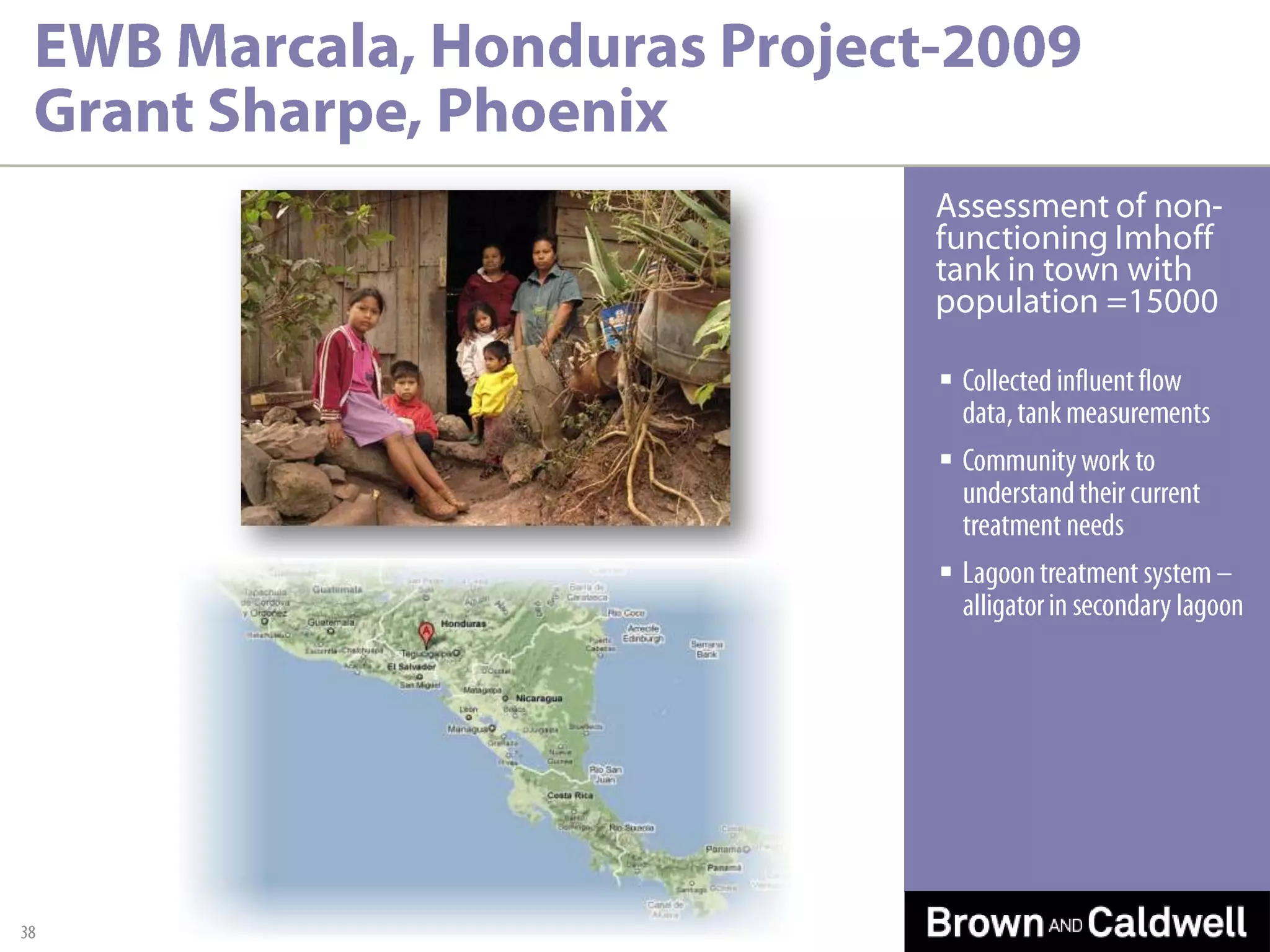
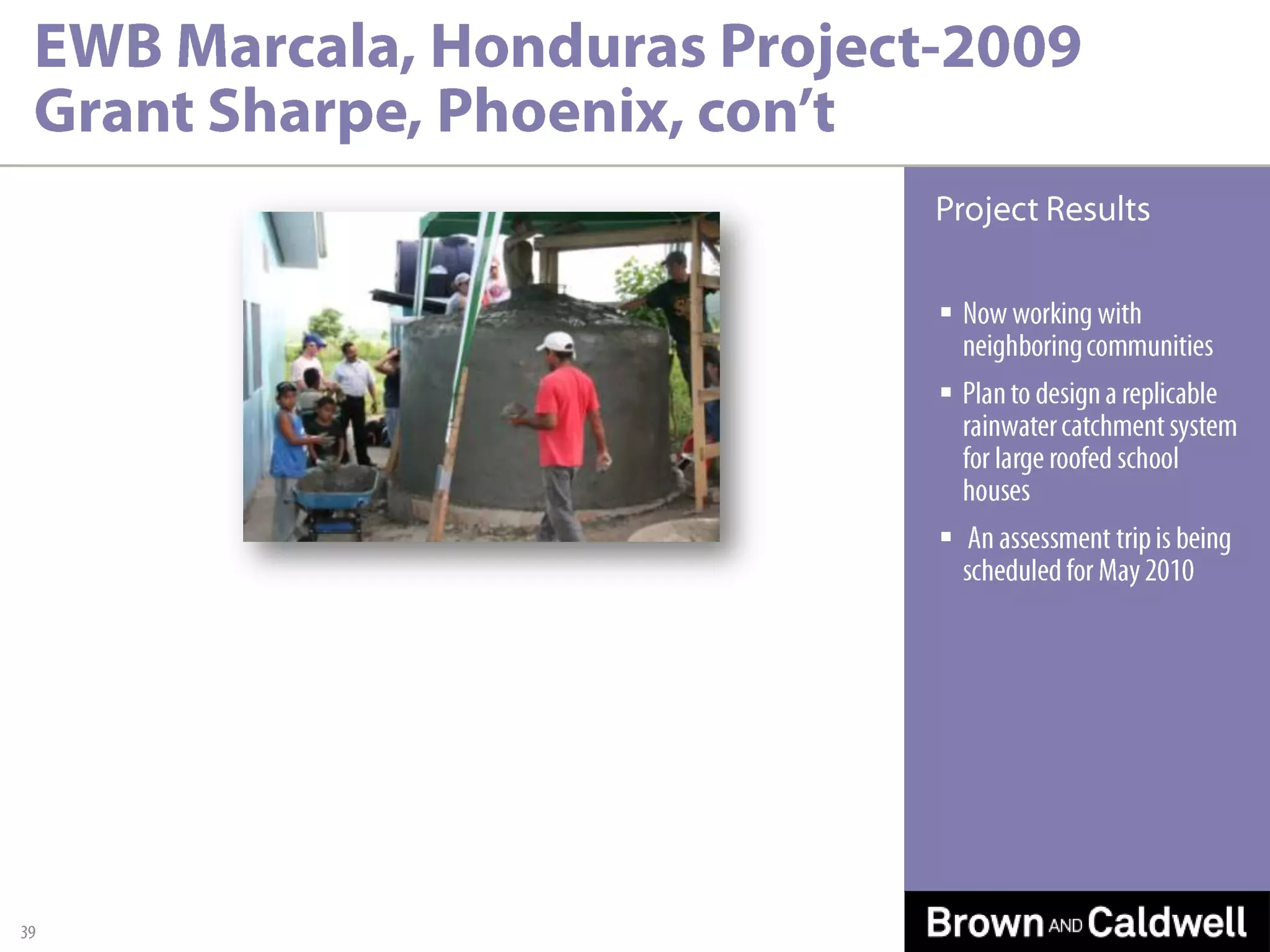
  • #39 Project Description: In November of 2008 The Phoenix Professional Chapter of EWB sent 3 members, one of whom was Grant Sharpe of the Phoenix office, on an assessment trip to the town of Marcala, Honduras.  The town of 15,000 currently has a non-functioning Imhoff tank which is need of both repair and expansion.  The team worked to collected influent flow data, tank measurements, and worked with the community to better understand their current treatment needs.  The team also visited a lagoon treatment system in northern Honduras where a live alligator was seen hissing in the middle of the secondary lagoon.  Working in the developing world is always an adventure.Due to changes in the political climate last summer, the Phoenix Professionals are now working with neighboring communities to design a replicable rainwater catchment system for the numerous large roofed school houses spread throughout the region.  An assessment trip is being scheduled for May 2010. How’s that work?  If I manage to find another copy of the photos in the group, I’ll be sure to send them along.  Thanks Jeff!Grant Sharpe, EIT