9th OECD Conference
Breakout Session 2
Engaging stakeholders effectively
for a targeted approach in evaluation
Sara Piller
European Commission
Secretariat General – Unit C1
Evaluation, Regulatory Fitness & Performance
Better Regulation: key policy under
priority 'Democratic Change'
2
BR Package 2015 - Evaluation
• Evidence based judgement of the extent to which a
policy has:
• Been effective and efficient
• Been relevant given the needs and its objectives
• Been coherent with other EU policies
• Achieved EU added value
• Assess all significant economic, social &
environmental impacts
• Identify potential to:
• Reduce inefficiencies & regulatory burden
• Simplify
Consulting more, listening better….
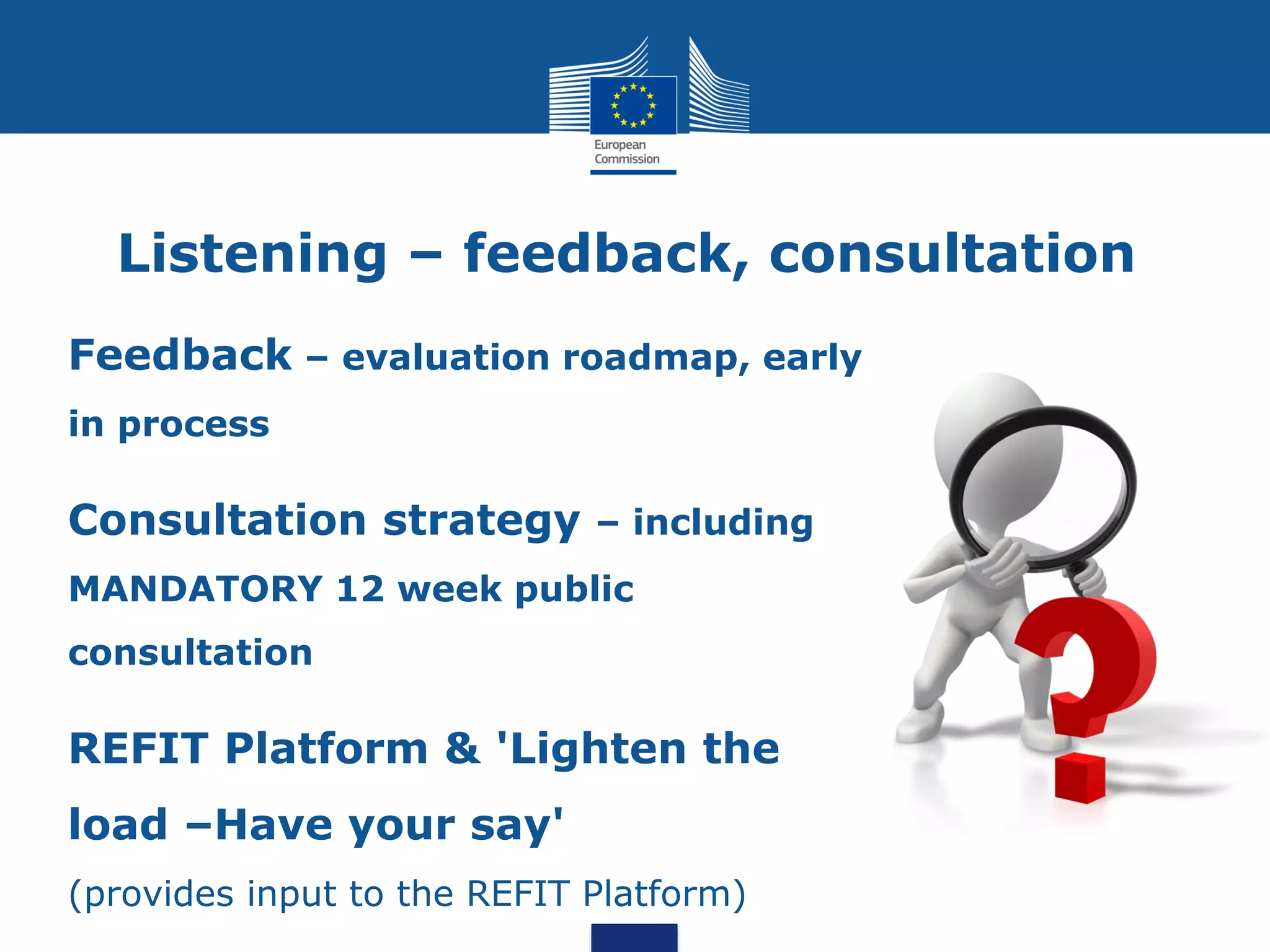
Listening – feedback, consultation
Feedback – evaluation roadmap, early
in process
Consultation strategy – including
MANDATORY 12 week public
consultation
REFIT Platform & 'Lighten the
load –Have your say'
(provides input to the REFIT Platform)
The Consultation Strategy
6
1. Define scope & objectives
of consultation
2. Identify and map
stakeholders
3. Select consultation
activities & their
sequences
4. Communicate on your
consultation website
[plus LANGUAGE regime]
Use & Reporting
Main report:
• Answer evaluation questions using MIX of
data/sources
• Clearly identify input from stakeholders
Annex / Synopsis report
• Qualitative report of stakeholder constributions
• Summarises stakeholder views, identifies points of
agreement/conflict
Factual summaries
Questions to discuss:
 How can effective stakeholder engagement help
target scarce resources for evaluation exercises
where they yield highest benefits?
 Which tools & methods of engagement can ensure
stakeholders' inputs are effectively taken into account
when laws and regulations are being reviewed,
whilst avoiding consultation fatigue?
 What are realistic objectives for stakeholder's
contribution to the evaluation process?
 What are the limits?
 How can transparency help ensure better policy
outcomes?

Engaging stakeholders effectively for a targeted approach in evaluation

  • 1.
    9th OECD Conference BreakoutSession 2 Engaging stakeholders effectively for a targeted approach in evaluation Sara Piller European Commission Secretariat General – Unit C1 Evaluation, Regulatory Fitness & Performance
  • 2.
    Better Regulation: keypolicy under priority 'Democratic Change' 2
  • 3.
    BR Package 2015- Evaluation • Evidence based judgement of the extent to which a policy has: • Been effective and efficient • Been relevant given the needs and its objectives • Been coherent with other EU policies • Achieved EU added value • Assess all significant economic, social & environmental impacts • Identify potential to: • Reduce inefficiencies & regulatory burden • Simplify
  • 4.
  • 5.
    Listening – feedback,consultation Feedback – evaluation roadmap, early in process Consultation strategy – including MANDATORY 12 week public consultation REFIT Platform & 'Lighten the load –Have your say' (provides input to the REFIT Platform)
  • 6.
    The Consultation Strategy 6 1.Define scope & objectives of consultation 2. Identify and map stakeholders 3. Select consultation activities & their sequences 4. Communicate on your consultation website [plus LANGUAGE regime]
  • 7.
    Use & Reporting Mainreport: • Answer evaluation questions using MIX of data/sources • Clearly identify input from stakeholders Annex / Synopsis report • Qualitative report of stakeholder constributions • Summarises stakeholder views, identifies points of agreement/conflict Factual summaries
  • 8.
    Questions to discuss: How can effective stakeholder engagement help target scarce resources for evaluation exercises where they yield highest benefits?  Which tools & methods of engagement can ensure stakeholders' inputs are effectively taken into account when laws and regulations are being reviewed, whilst avoiding consultation fatigue?  What are realistic objectives for stakeholder's contribution to the evaluation process?  What are the limits?  How can transparency help ensure better policy outcomes?