PRESENTATION OF RECOMMENDATIONS
ENGAGING CHINA PROJECT
&
UNIVERSITY OF TECHNOLOGY SYDNEY
MANAGEMENT CONSULTING & UTS SHOPFRONT

UTS TEAM:
DAVID GULLO
AHMG KIBRIA
ANNA KIRKPATRICK
LALITHA THAKUR

2 NOVEMBER 2013
PRESENTATION OF RECOMMENDATIONS
In Scope Objectives
Research Methodology
Objective 1 – Insights, Recommendations &
Implementation
Objective 2 – Insights, Recommendations &
Implementation
Objective 3 – Insights, Recommendations &
Implementation
IN SCOPE OBJECTIVES
OBJECTIVE 1 – Articulate a revenue development
strategy with accompanying high-level
implementation plan for a period of 3 years to ensure
financial sustainability
OBJECTIVE 2 – Present insights into the effectiveness of
ECP internal communications to enable the ECP to
streamline communications across state
management and ambassadors
OBJECTIVE 3 – Provide strategy to recruit and retain
ambassadors to enable ECP to scale up operations
RESEARCH METHODOLOGY
We watched, we listened & we got involved…
- Interviews with internal & external stakeholders
- Internal surveys
- Participative research through workshop facilitation
- Observational research
RESEARCH METHODOLOGY
We read, we examined & we ran the numbers…
- Analysis of internal ECP resources
- Analysis of social media and other communication media
- Analysis of industry & market data
- Analysis of relevant academic research
OBJECTIVE 1

Articulate a revenue development strategy with
accompanying high-level implementation
plan for a period of 3 years to ensure
financial sustainability
OBJECTIVE 1
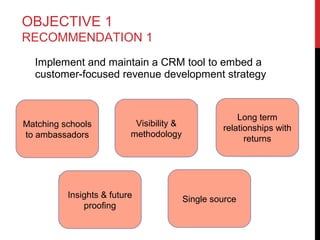
RECOMMENDATION 1
Implement and maintain a CRM tool to embed a
customer-focused revenue development strategy

Matching schools
to ambassadors

Visibility &
methodology

Insights & future
proofing

Long term
relationships with
returns

Single source
OBJECTIVE 1
INSIGHTS
Customer Relationship management currently not integrated
with the ECP business model
No central tracking of Customer Relationship status
Minimal data on cost of maintaining and investing in key
customer relationships
Value Proposition  no tangible methodology to activate the
ECP value proposition
Customer Segmentation  opportunity to perform market
research on customer segments to identify and match the needs
of differentiated segments
OBJECTIVE 1
IMPLEMENTATION FOR RECOMMENDATION 1
OBJECTIVE 1
RECOMMENDATION 2
Increase investment to 8% of Cash Inflow (2014-2016)
Funds available to ensure market competitiveness
Lower levels of maintenance investment once relationships
established and value creation via the ECP workshops has
been delivered over time.
What schools to target? (ABS 2012)
Primary
Secondary
Combined
Special
TOTAL

NSW
2113
515
303
151
3082

VIC
1561
342
235
95
2233

QLD
1153
253
246
63
1715

SA
496
87
146
21
750

WA
662
105
222
77
1066

TAS
156
43
57
6
262

NT
71
24
90
6
191

ACT
78
23
22
5
128

TOTAL
6290
1392
1321
424
9427
OBJECTIVE 1
RECOMMENDATION 2
Boost marketing activities to increase awareness of
ECP’s mission and value creation potential for
targeted secondary schools
Marketing and Advertising costs < 1% of total Cash Inflow
Key trends from ABS data
•Long term rise in combined schools with +25% growth since 2001
•7% growth in student numbers in Australia since 2001 made up of:
37% increase in independent student numbers
11% increase in Catholic schools
1% increase in government schools
OBJECTIVE 1
RECOMMENDATION 3
Repackage Workshops to maximise revenue
generating opportunities

Research Findings
- Content of workshops is not structured
- Workshop delivery is not consistent
OBJECTIVE 1
RECOMMENDATION 3

Benefits for ECP repackaging workshops
- More revenue stream with existing customers
- Less cost in acquiring new customers
- More structured learning content for students
- Consistent workshop delivery
OBJECTIVE 1
IMPLEMENTATION FOR RECOMMENDATION 3

• 4-stage workshop for delivery each school term
• Structure workshop contents
• Consistent workshop delivery
• 1 ambassador for each school
• Give Certificates at the end of final workshop
OBJECTIVE 1
IMPLEMENTATION FOR RECOMMENDATION 3
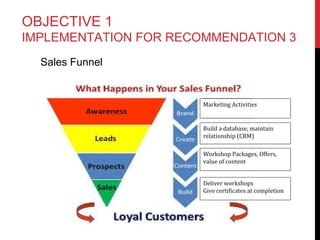
Sales Funnel

Marketing Activities

Build a database, maintain
relationship (CRM)
Workshop Packages, Offers,
value of content
Deliver workshops
Give certificates at completion
OBJECTIVE 1
IMPLEMENTATION FOR RECOMMENDATION 3
Example:
Sales Funnel Targets:
Awareness (target schools)

500

Leads (schools)

150

Prospect (schools)

100

Sales (schools)

50

4 workshops x 50 schools

200 workshops

Target Revenue:
Target # Workshops

200

Price per Workshop

$100

Target Revenue

$20,000
OBJECTIVE 2

Present insights into the effectiveness of ECP
internal communications to enable the ECP
to streamline communications across state
management and ambassadors
OBJECTIVE 2
INSIGHTS

ECP internal communications are ineffective with
potentially severe long-term implications to ECP’s
organisational success
Currently:
- Creating unnecessary strain on ambassadors, state managers
and the National Director
- Risking the reputation of ECP and the quality of its core product,
its workshops
- Underutilising its potential human resources
OBJECTIVE 2
RECOMMENDATIONS
Recommendation 1 – Project-Based Matrix Teams
-

Develop & implement innovative & cross-functional crossgeographic projects
Reduce strain on National Director & State Managers
Utilise human resources of organisation

Recommendation 2 - Ambassador Team Leaders
-

Reduce strain on State Managers
Utilise human resources of organisation

Recommendation 3 – ECP Knowledge Community
-

Improve the quality of core product, workshops
Protect & strengthen reputation of ECP
Reduce strain on State Managers
Utilise human resources of organisation
OBJECTIVE 2
RECOMMENDATION 1

Project-Based Matrix Teams
OBJECTIVE 2
RECOMMENDATION 1
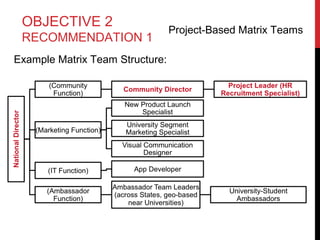
Example Matrix Team Structure:

Project-Based Matrix Teams
OBJECTIVE 2
RECOMMENDATION 2

Ambassador Team Leaders
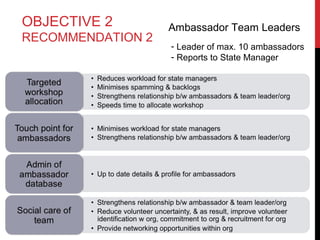
- Leader of max. 10 ambassadors
- Reports to State Manager
OBJECTIVE 2
RECOMMENDATION 3

ECP Knowledge Community

Addresses the lack of communication’s structure &
processes for knowledge sharing & collaboration
among ambassadors
- Familiarise & equip ambassadors on initial & ongoing basis
- Reduce volunteer uncertainty
- Increasing quality & reputation control
- Improving future recruitment potential via ambassadors
- Empower ambassadors to self-direct workshops
- Build relevant & valuable organisational knowledge
OBJECTIVE 2
IMPLEMENTATION
OBJECTIVE 2
IMPLEMENTATION
OBJECTIVE 2
IMPLEMENTATION
OBJECTIVE 3

Provide strategy to recruit and retain
ambassadors to enable ECP to scale up
operations
OBJECTIVE 3
RECOMMENDATIONS
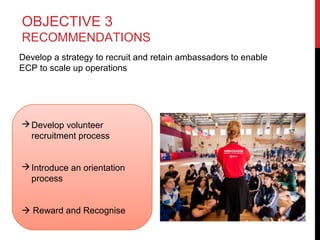
Develop a strategy to recruit and retain ambassadors to enable
ECP to scale up operations

 Develop volunteer
recruitment process
 Introduce an orientation
process
 Reward and Recognise
OBJECTIVE 3
KEY ACTIONS

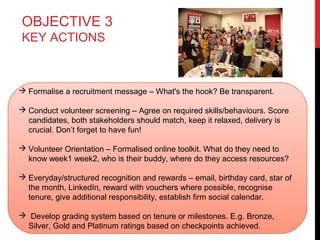
 Formalise a recruitment message – What's the hook? Be transparent.
 Conduct volunteer screening – Agree on required skills/behaviours. Score
candidates, both stakeholders should match, keep it relaxed, delivery is
crucial. Don’t forget to have fun!
 Volunteer Orientation – Formalised online toolkit. What do they need to
know week1 week2, who is their buddy, where do they access resources?
 Everyday/structured recognition and rewards – email, birthday card, star of
the month, LinkedIn, reward with vouchers where possible, recognise
tenure, give additional responsibility, establish firm social calendar.
 Develop grading system based on tenure or milestones. E.g. Bronze,
Silver, Gold and Platinum ratings based on checkpoints achieved.
OBJECTIVE 3
IMPLEMENTATION
THANK YOU.
XIE XIE.

Engaging China Project & UTS consulting presentation

  • 1.
    PRESENTATION OF RECOMMENDATIONS ENGAGINGCHINA PROJECT & UNIVERSITY OF TECHNOLOGY SYDNEY MANAGEMENT CONSULTING & UTS SHOPFRONT UTS TEAM: DAVID GULLO AHMG KIBRIA ANNA KIRKPATRICK LALITHA THAKUR 2 NOVEMBER 2013
  • 2.
    PRESENTATION OF RECOMMENDATIONS InScope Objectives Research Methodology Objective 1 – Insights, Recommendations & Implementation Objective 2 – Insights, Recommendations & Implementation Objective 3 – Insights, Recommendations & Implementation
  • 3.
    IN SCOPE OBJECTIVES OBJECTIVE1 – Articulate a revenue development strategy with accompanying high-level implementation plan for a period of 3 years to ensure financial sustainability OBJECTIVE 2 – Present insights into the effectiveness of ECP internal communications to enable the ECP to streamline communications across state management and ambassadors OBJECTIVE 3 – Provide strategy to recruit and retain ambassadors to enable ECP to scale up operations
  • 4.
    RESEARCH METHODOLOGY We watched,we listened & we got involved… - Interviews with internal & external stakeholders - Internal surveys - Participative research through workshop facilitation - Observational research
  • 5.
    RESEARCH METHODOLOGY We read,we examined & we ran the numbers… - Analysis of internal ECP resources - Analysis of social media and other communication media - Analysis of industry & market data - Analysis of relevant academic research
  • 6.
    OBJECTIVE 1 Articulate arevenue development strategy with accompanying high-level implementation plan for a period of 3 years to ensure financial sustainability
  • 7.
    OBJECTIVE 1 RECOMMENDATION 1 Implementand maintain a CRM tool to embed a customer-focused revenue development strategy Matching schools to ambassadors Visibility & methodology Insights & future proofing Long term relationships with returns Single source
  • 8.
    OBJECTIVE 1 INSIGHTS Customer Relationshipmanagement currently not integrated with the ECP business model No central tracking of Customer Relationship status Minimal data on cost of maintaining and investing in key customer relationships Value Proposition  no tangible methodology to activate the ECP value proposition Customer Segmentation  opportunity to perform market research on customer segments to identify and match the needs of differentiated segments
  • 9.
  • 10.
    OBJECTIVE 1 RECOMMENDATION 2 Increaseinvestment to 8% of Cash Inflow (2014-2016) Funds available to ensure market competitiveness Lower levels of maintenance investment once relationships established and value creation via the ECP workshops has been delivered over time. What schools to target? (ABS 2012) Primary Secondary Combined Special TOTAL NSW 2113 515 303 151 3082 VIC 1561 342 235 95 2233 QLD 1153 253 246 63 1715 SA 496 87 146 21 750 WA 662 105 222 77 1066 TAS 156 43 57 6 262 NT 71 24 90 6 191 ACT 78 23 22 5 128 TOTAL 6290 1392 1321 424 9427
  • 11.
    OBJECTIVE 1 RECOMMENDATION 2 Boostmarketing activities to increase awareness of ECP’s mission and value creation potential for targeted secondary schools Marketing and Advertising costs < 1% of total Cash Inflow Key trends from ABS data •Long term rise in combined schools with +25% growth since 2001 •7% growth in student numbers in Australia since 2001 made up of: 37% increase in independent student numbers 11% increase in Catholic schools 1% increase in government schools
  • 12.
    OBJECTIVE 1 RECOMMENDATION 3 RepackageWorkshops to maximise revenue generating opportunities Research Findings - Content of workshops is not structured - Workshop delivery is not consistent
  • 13.
    OBJECTIVE 1 RECOMMENDATION 3 Benefitsfor ECP repackaging workshops - More revenue stream with existing customers - Less cost in acquiring new customers - More structured learning content for students - Consistent workshop delivery
  • 14.
    OBJECTIVE 1 IMPLEMENTATION FORRECOMMENDATION 3 • 4-stage workshop for delivery each school term • Structure workshop contents • Consistent workshop delivery • 1 ambassador for each school • Give Certificates at the end of final workshop
  • 15.
    OBJECTIVE 1 IMPLEMENTATION FORRECOMMENDATION 3 Sales Funnel Marketing Activities Build a database, maintain relationship (CRM) Workshop Packages, Offers, value of content Deliver workshops Give certificates at completion
  • 16.
    OBJECTIVE 1 IMPLEMENTATION FORRECOMMENDATION 3 Example: Sales Funnel Targets: Awareness (target schools) 500 Leads (schools) 150 Prospect (schools) 100 Sales (schools) 50 4 workshops x 50 schools 200 workshops Target Revenue: Target # Workshops 200 Price per Workshop $100 Target Revenue $20,000
  • 17.
    OBJECTIVE 2 Present insightsinto the effectiveness of ECP internal communications to enable the ECP to streamline communications across state management and ambassadors
  • 18.
    OBJECTIVE 2 INSIGHTS ECP internalcommunications are ineffective with potentially severe long-term implications to ECP’s organisational success Currently: - Creating unnecessary strain on ambassadors, state managers and the National Director - Risking the reputation of ECP and the quality of its core product, its workshops - Underutilising its potential human resources
  • 19.
    OBJECTIVE 2 RECOMMENDATIONS Recommendation 1– Project-Based Matrix Teams - Develop & implement innovative & cross-functional crossgeographic projects Reduce strain on National Director & State Managers Utilise human resources of organisation Recommendation 2 - Ambassador Team Leaders - Reduce strain on State Managers Utilise human resources of organisation Recommendation 3 – ECP Knowledge Community - Improve the quality of core product, workshops Protect & strengthen reputation of ECP Reduce strain on State Managers Utilise human resources of organisation
  • 20.
  • 21.
    OBJECTIVE 2 RECOMMENDATION 1 ExampleMatrix Team Structure: Project-Based Matrix Teams
  • 22.
    OBJECTIVE 2 RECOMMENDATION 2 AmbassadorTeam Leaders - Leader of max. 10 ambassadors - Reports to State Manager
  • 23.
    OBJECTIVE 2 RECOMMENDATION 3 ECPKnowledge Community Addresses the lack of communication’s structure & processes for knowledge sharing & collaboration among ambassadors - Familiarise & equip ambassadors on initial & ongoing basis - Reduce volunteer uncertainty - Increasing quality & reputation control - Improving future recruitment potential via ambassadors - Empower ambassadors to self-direct workshops - Build relevant & valuable organisational knowledge
  • 24.
  • 25.
  • 26.
  • 27.
    OBJECTIVE 3 Provide strategyto recruit and retain ambassadors to enable ECP to scale up operations
  • 28.
    OBJECTIVE 3 RECOMMENDATIONS Develop astrategy to recruit and retain ambassadors to enable ECP to scale up operations  Develop volunteer recruitment process  Introduce an orientation process  Reward and Recognise
  • 29.
    OBJECTIVE 3 KEY ACTIONS Formalise a recruitment message – What's the hook? Be transparent.  Conduct volunteer screening – Agree on required skills/behaviours. Score candidates, both stakeholders should match, keep it relaxed, delivery is crucial. Don’t forget to have fun!  Volunteer Orientation – Formalised online toolkit. What do they need to know week1 week2, who is their buddy, where do they access resources?  Everyday/structured recognition and rewards – email, birthday card, star of the month, LinkedIn, reward with vouchers where possible, recognise tenure, give additional responsibility, establish firm social calendar.  Develop grading system based on tenure or milestones. E.g. Bronze, Silver, Gold and Platinum ratings based on checkpoints achieved.
  • 30.
  • 31.