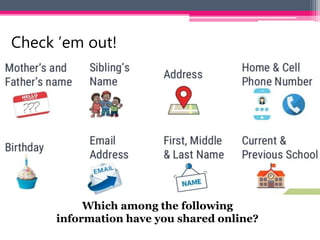
Which among the following
information have you shared online?
Check ’em out!
Online Safety,
Security, Ethics,
and Etiquette
Learning Competencies/
Objectives
Apply online safety, security, ethics, and etiquette
standards and practice in the use of ICTs as it
would relate to their specific professional tracks.
CS_ICT11/12-ICTPT-Ia-b-2
Unpacked
• name the various online threats;
• identify the online safety measures; and
• apply the online safety and security in using the
internet
Guess the word.
Guess the word.
Guess the word.
Guess the word.
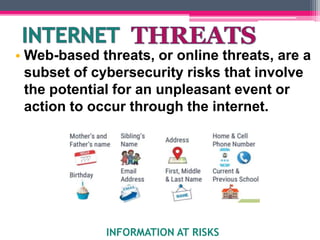
• Web-based threats, or online threats, are a
subset of cybersecurity risks that involve
the potential for an unpleasant event or
action to occur through the internet.
INFORMATION AT RISKS
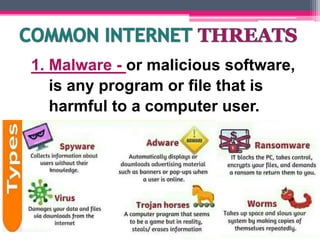
1. Malware - or malicious software,
is any program or file that is
harmful to a computer user.
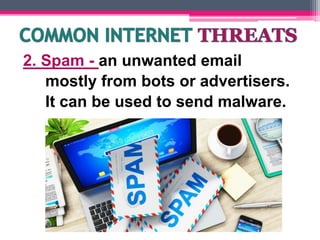
2. Spam - an unwanted email
mostly from bots or advertisers.
It can be used to send malware.
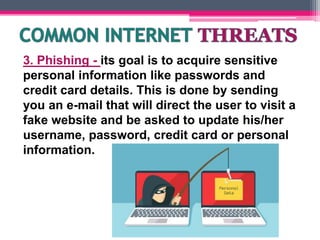
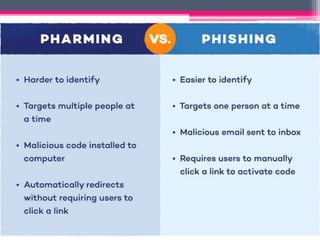
3. Phishing - its goal is to acquire sensitive
personal information like passwords and
credit card details. This is done by sending
you an e-mail that will direct the user to visit a
fake website and be asked to update his/her
username, password, credit card or personal
information.
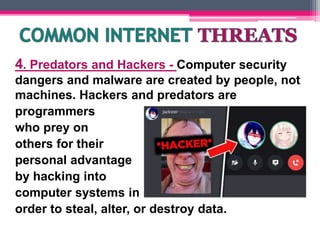
4. Predators and Hackers - Computer security
dangers and malware are created by people, not
machines. Hackers and predators are
programmers
who prey on
others for their
personal advantage
by hacking into
computer systems in
order to steal, alter, or destroy data.
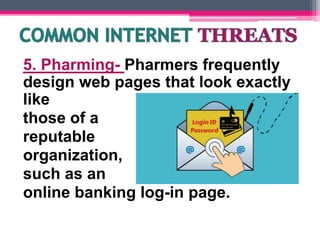
5. Pharming- Pharmers frequently
design web pages that look exactly
like
those of a
reputable
organization,
such as an
online banking log-in page.
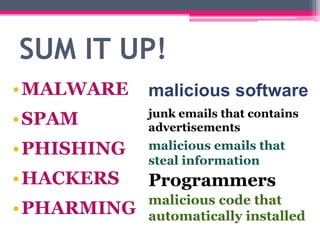
SUM IT UP!
•MALWARE
•SPAM
•PHISHING
•HACKERS
•PHARMING
malicious software
junk emails that contains
advertisements
malicious emails that
steal information
Programmers
malicious code that
automatically installed
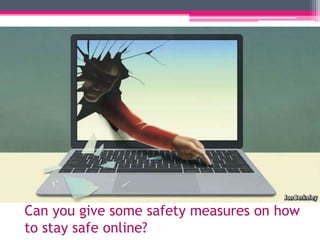
Can you give some safety measures on how
to stay safe online?

EMPOWERMENT TECHNOLOGIES Q3 W2.pptx

  • 1.
    Which among thefollowing information have you shared online? Check ’em out!
  • 2.
  • 3.
    Learning Competencies/ Objectives Apply onlinesafety, security, ethics, and etiquette standards and practice in the use of ICTs as it would relate to their specific professional tracks. CS_ICT11/12-ICTPT-Ia-b-2 Unpacked • name the various online threats; • identify the online safety measures; and • apply the online safety and security in using the internet
  • 5.
  • 6.
  • 7.
  • 8.
  • 9.
    • Web-based threats,or online threats, are a subset of cybersecurity risks that involve the potential for an unpleasant event or action to occur through the internet. INFORMATION AT RISKS
  • 10.
    1. Malware -or malicious software, is any program or file that is harmful to a computer user.
  • 11.
    2. Spam -an unwanted email mostly from bots or advertisers. It can be used to send malware.
  • 12.
    3. Phishing -its goal is to acquire sensitive personal information like passwords and credit card details. This is done by sending you an e-mail that will direct the user to visit a fake website and be asked to update his/her username, password, credit card or personal information.
  • 13.
    4. Predators andHackers - Computer security dangers and malware are created by people, not machines. Hackers and predators are programmers who prey on others for their personal advantage by hacking into computer systems in order to steal, alter, or destroy data.
  • 14.
    5. Pharming- Pharmersfrequently design web pages that look exactly like those of a reputable organization, such as an online banking log-in page.
  • 16.
    SUM IT UP! •MALWARE •SPAM •PHISHING •HACKERS •PHARMING malicioussoftware junk emails that contains advertisements malicious emails that steal information Programmers malicious code that automatically installed
  • 17.
    Can you givesome safety measures on how to stay safe online?