Employee
Separation
and its types
.
Employee separation & Its types
Employee Employee Separation is the
process of ensuring that an employee who
quits the company is exited in a
structured and orderly manner. The
process of employee separation is taken
quite seriously by many firms and there is
a dedicated department to handle
employee exits from the company. In this
slides we will discuss the process of
employee separation
What are the four kinds of employee separation?
Some organizations may outline many more than four types of employee
separations, but generally, it can be divided into these categories:
● Voluntary separation : An employee decides to leave their job for another
one.
● Retirement: A person chooses to remove themselves from the workforce.
● Involuntary separation : A company ends a person’s employment, usually
on a long-term or permanent basis.
● Layoff: A company ends a person’s employment, potentially on a temporary
basis.
Voluntary Separation
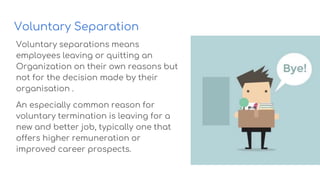
Voluntary separations means
employees leaving or quitting an
Organization on their own reasons but
not for the decision made by their
organisation .
An especially common reason for
voluntary termination is leaving for a
new and better job, typically one that
offers higher remuneration or
improved career prospects.
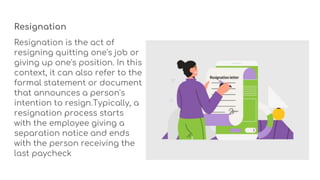
Resignation
Resignation is the act of
resigning quitting one's job or
giving up one's position. In this
context, it can also refer to the
formal statement or document
that announces a person's
intention to resign.Typically, a
resignation process starts
with the employee giving a
separation notice and ends
with the person receiving the
last paycheck
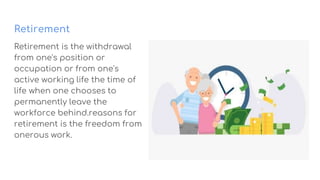
Retirement
Retirement is the withdrawal
from one's position or
occupation or from one's
active working life the time of
life when one chooses to
permanently leave the
workforce behind.reasons for
retirement is the freedom from
onerous work.
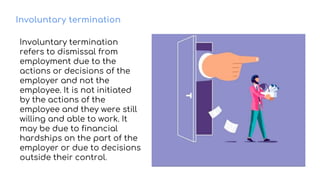
Involuntary termination
refers to dismissal from
employment due to the
actions or decisions of the
employer and not the
employee. It is not initiated
by the actions of the
employee and they were still
willing and able to work. It
may be due to financial
hardships on the part of the
employer or due to decisions
outside their control.
Here are some more notes to take into consideration when conducting an
involuntary termination process:
Documentation period: Whether a person is being terminated for bad behavior
or poor performance, their supervisor, department head and HR department
should take time to document the reasons for termination
Employee is fired: Firing should be done in person and at the beginning of the
employee’s shift so that they do not feel that they’ve wasted an entire day of
work at a job they were going to be fired from anyway.
Employee returns keys, keycards, ID cards and equipment: Ensure that a
company representative is near the terminated employee until they leave the
premises and that they have returned any items before they depart.
Logins and emails are cut off: Depending on the circumstances surrounding
the person’s termination, it may be wise to cut off their access to crucial
systems before they are fired or while they are being fired.
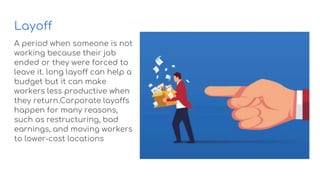
Layoff
A period when someone is not
working because their job
ended or they were forced to
leave it. long layoff can help a
budget but it can make
workers less productive when
they return.Corporate layoffs
happen for many reasons,
such as restructuring, bad
earnings, and moving workers
to lower-cost locations
How to Lay Off Employees
Considered a part of involuntary
termination ,layoffs happen
when a company terminates a
person’s employment either
temporarily or permanently,for
reasons related to the business.
Here’s how a typically layoff
process look like
Deliberation period
Layoffs are rarely sudden decisions, and at most companies, they are done
for financial reasons. While company leaders may have a sense they need to
do layoffs, it's not always known the exact person or people who will be laid off
until shortly before it happens.
Employee is laid off
Some layoffs are permanent, but some may be temporary. For this reason, it's
usually wise to conduct layoffs as soon as possible so that laid-off employees
do not feel their time has been wasted.
Employee returns keys, keycards, ID cards and equipment
Laid-off employees should be given privacy to gather their personal effects
from their desks, but a company representative should remain nearby.
Logins and emails are cut off
Terminate laid-off employees' access to email and critical systems.
What are the benefits of employee separation?
It’s natural to think of employee separation as negative, but it can have many benefits. A
poorly performing employee can drag down an entire department, as the work they
produce is subpar, which puts a burden on others. And even when a good worker wants to
leave, if you make it difficult for them to move on, they will grow resentful and may not give
you adequate notice.
What is the separation process in HR?
Employee separation is an important process in HR that establishes the procedures and
steps involved in ending a person’s tenure at a company, cutting off their access to crucial
systems, determining how and when they will receive their last check and more.

Employee Separation and its types.pptx

  • 1.
  • 2.
    Employee separation &Its types Employee Employee Separation is the process of ensuring that an employee who quits the company is exited in a structured and orderly manner. The process of employee separation is taken quite seriously by many firms and there is a dedicated department to handle employee exits from the company. In this slides we will discuss the process of employee separation
  • 3.
    What are thefour kinds of employee separation? Some organizations may outline many more than four types of employee separations, but generally, it can be divided into these categories: ● Voluntary separation : An employee decides to leave their job for another one. ● Retirement: A person chooses to remove themselves from the workforce. ● Involuntary separation : A company ends a person’s employment, usually on a long-term or permanent basis. ● Layoff: A company ends a person’s employment, potentially on a temporary basis.
  • 4.
    Voluntary Separation Voluntary separationsmeans employees leaving or quitting an Organization on their own reasons but not for the decision made by their organisation . An especially common reason for voluntary termination is leaving for a new and better job, typically one that offers higher remuneration or improved career prospects.
  • 5.
    Resignation Resignation is theact of resigning quitting one's job or giving up one's position. In this context, it can also refer to the formal statement or document that announces a person's intention to resign.Typically, a resignation process starts with the employee giving a separation notice and ends with the person receiving the last paycheck
  • 6.
    Retirement Retirement is thewithdrawal from one's position or occupation or from one's active working life the time of life when one chooses to permanently leave the workforce behind.reasons for retirement is the freedom from onerous work.
  • 7.
    Involuntary termination Involuntary termination refersto dismissal from employment due to the actions or decisions of the employer and not the employee. It is not initiated by the actions of the employee and they were still willing and able to work. It may be due to financial hardships on the part of the employer or due to decisions outside their control.
  • 8.
    Here are somemore notes to take into consideration when conducting an involuntary termination process: Documentation period: Whether a person is being terminated for bad behavior or poor performance, their supervisor, department head and HR department should take time to document the reasons for termination Employee is fired: Firing should be done in person and at the beginning of the employee’s shift so that they do not feel that they’ve wasted an entire day of work at a job they were going to be fired from anyway. Employee returns keys, keycards, ID cards and equipment: Ensure that a company representative is near the terminated employee until they leave the premises and that they have returned any items before they depart. Logins and emails are cut off: Depending on the circumstances surrounding the person’s termination, it may be wise to cut off their access to crucial systems before they are fired or while they are being fired.
  • 9.
    Layoff A period whensomeone is not working because their job ended or they were forced to leave it. long layoff can help a budget but it can make workers less productive when they return.Corporate layoffs happen for many reasons, such as restructuring, bad earnings, and moving workers to lower-cost locations
  • 10.
    How to LayOff Employees Considered a part of involuntary termination ,layoffs happen when a company terminates a person’s employment either temporarily or permanently,for reasons related to the business. Here’s how a typically layoff process look like
  • 11.
    Deliberation period Layoffs arerarely sudden decisions, and at most companies, they are done for financial reasons. While company leaders may have a sense they need to do layoffs, it's not always known the exact person or people who will be laid off until shortly before it happens. Employee is laid off Some layoffs are permanent, but some may be temporary. For this reason, it's usually wise to conduct layoffs as soon as possible so that laid-off employees do not feel their time has been wasted. Employee returns keys, keycards, ID cards and equipment Laid-off employees should be given privacy to gather their personal effects from their desks, but a company representative should remain nearby. Logins and emails are cut off Terminate laid-off employees' access to email and critical systems.
  • 14.
    What are thebenefits of employee separation? It’s natural to think of employee separation as negative, but it can have many benefits. A poorly performing employee can drag down an entire department, as the work they produce is subpar, which puts a burden on others. And even when a good worker wants to leave, if you make it difficult for them to move on, they will grow resentful and may not give you adequate notice. What is the separation process in HR? Employee separation is an important process in HR that establishes the procedures and steps involved in ending a person’s tenure at a company, cutting off their access to crucial systems, determining how and when they will receive their last check and more.