Emotional Intelligence
in business
communication
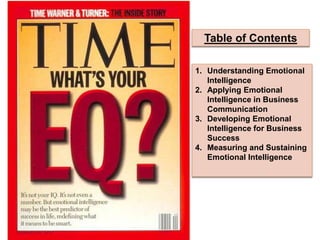
Table of Contents
1. Understanding Emotional
Intelligence
2. Applying Emotional
Intelligence in Business
Communication
3. Developing Emotional
Intelligence for Business
Success
4. Measuring and Sustaining
Emotional Intelligence
Emotional Intelligence (EI)
Defined
Emotional
intelligence (EI)
refers to the ability
to recognize,
understand, and
manage one's own
emotions and the
emotions of others
in a business
context.
EI plays a crucial
role in effective
communication,
conflict resolution,
and leadership
within
organizations.
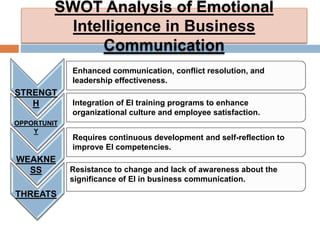
SWOT Analysis of Emotional
Intelligence in Business
Communication
STRENGT
H
OPPORTUNIT
Y
WEAKNE
SS
THREATS
Enhanced communication, conflict resolution, and
leadership effectiveness.
Requires continuous development and self-reflection to
improve EI competencies.
Resistance to change and lack of awareness about the
significance of EI in business communication.
Integration of EI training programs to enhance
organizational culture and employee satisfaction.
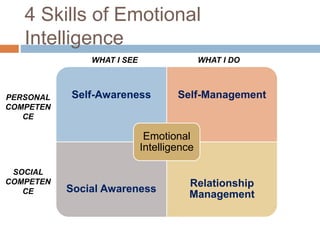
4 Skills of Emotional
Intelligence
Self-Awareness Self-Management
Social Awareness
Relationship
Management
Emotional
Intelligence
WHAT I SEE WHAT I DO
PERSONAL
COMPETEN
CE
SOCIAL
COMPETEN
CE
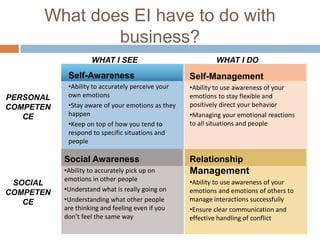
What does EI have to do with
business?
Self-Management
•Ability to use awareness of your
emotions to stay flexible and
positively direct your behavior
•Managing your emotional reactions
to all situations and people
Social Awareness
•Ability to accurately pick up on
emotions in other people
•Understand what is really going on
•Understanding what other people
are thinking and feeling even if you
don’t feel the same way
Self-Awareness
•Ability to accurately perceive your
own emotions
•Stay aware of your emotions as they
happen
•Keep on top of how you tend to
respond to specific situations and
people
Relationship
Management
•Ability to use awareness of your
emotions and emotions of others to
manage interactions successfully
•Ensure clear communication and
effective handling of conflict
PERSONAL
COMPETEN
CE
SOCIAL
COMPETEN
CE
WHAT I SEE WHAT I DO
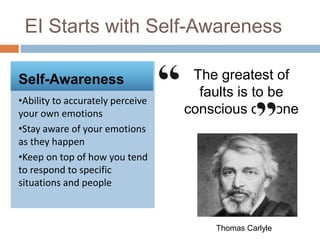
EI Starts with Self-Awareness
Self-Awareness
•Ability to accurately perceive
your own emotions
•Stay aware of your emotions
as they happen
•Keep on top of how you tend
to respond to specific
situations and people
The greatest of
faults is to be
conscious of none
Thomas Carlyle
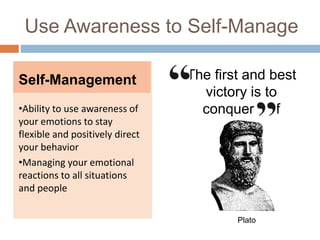
Use Awareness to Self-Manage
Self-Management
•Ability to use awareness of
your emotions to stay
flexible and positively direct
your behavior
•Managing your emotional
reactions to all situations
and people
The first and best
victory is to
conquer self
Plato
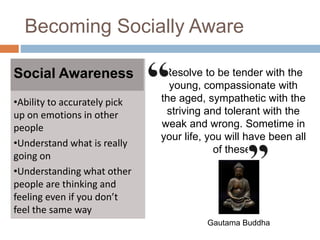
Becoming Socially Aware
Social Awareness
•Ability to accurately pick
up on emotions in other
people
•Understand what is really
going on
•Understanding what other
people are thinking and
feeling even if you don’t
feel the same way
Resolve to be tender with the
young, compassionate with
the aged, sympathetic with the
striving and tolerant with the
weak and wrong. Sometime in
your life, you will have been all
of these.
Gautama Buddha
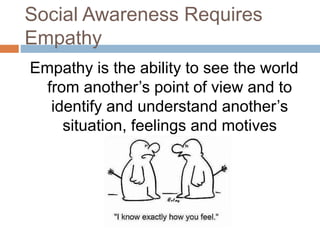
Social Awareness Requires
Empathy
Empathy is the ability to see the world
from another’s point of view and to
identify and understand another’s
situation, feelings and motives
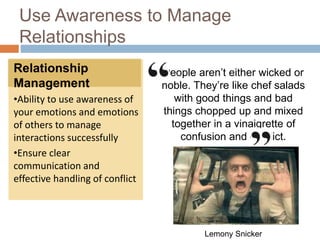
Use Awareness to Manage
Relationships
Relationship
Management
•Ability to use awareness of
your emotions and emotions
of others to manage
interactions successfully
•Ensure clear
communication and
effective handling of conflict
People aren’t either wicked or
noble. They’re like chef salads
with good things and bad
things chopped up and mixed
together in a vinaigrette of
confusion and conflict.
Lemony Snicker
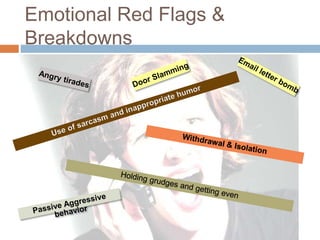
Emotional Red Flags &
Breakdowns
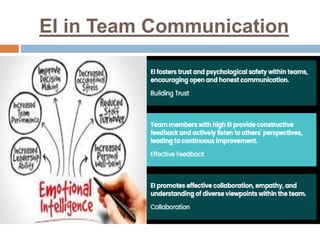
EI in Team Communication
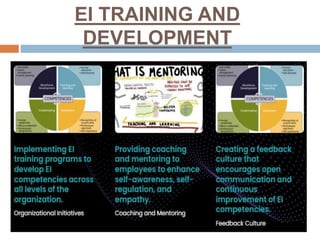
EI TRAINING AND
DEVELOPMENT
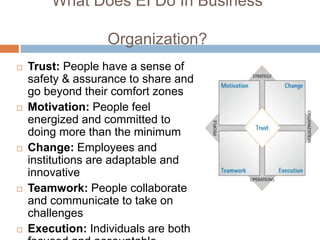
What Does EI Do In Business
Organization?
 Trust: People have a sense of
safety & assurance to share and
go beyond their comfort zones
 Motivation: People feel
energized and committed to
doing more than the minimum
 Change: Employees and
institutions are adaptable and
innovative
 Teamwork: People collaborate
and communicate to take on
challenges
 Execution: Individuals are both
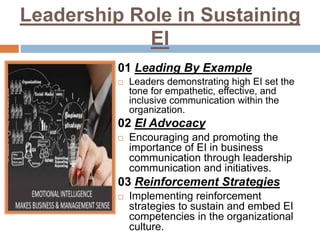
Leadership Role in Sustaining
EI
01 Leading By Example
 Leaders demonstrating high EI set the
tone for empathetic, effective, and
inclusive communication within the
organization.
02 EI Advocacy
 Encouraging and promoting the
importance of EI in business
communication through leadership
communication and initiatives.
03 Reinforcement Strategies
 Implementing reinforcement
strategies to sustain and embed EI
competencies in the organizational
culture.
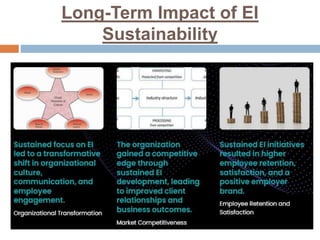
Long-Term Impact of EI
Sustainability
THANKING YOU

Emotional_Intelligence_Presentation.pptx

  • 1.
  • 2.
    Table of Contents 1.Understanding Emotional Intelligence 2. Applying Emotional Intelligence in Business Communication 3. Developing Emotional Intelligence for Business Success 4. Measuring and Sustaining Emotional Intelligence
  • 3.
    Emotional Intelligence (EI) Defined Emotional intelligence(EI) refers to the ability to recognize, understand, and manage one's own emotions and the emotions of others in a business context. EI plays a crucial role in effective communication, conflict resolution, and leadership within organizations.
  • 4.
    SWOT Analysis ofEmotional Intelligence in Business Communication STRENGT H OPPORTUNIT Y WEAKNE SS THREATS Enhanced communication, conflict resolution, and leadership effectiveness. Requires continuous development and self-reflection to improve EI competencies. Resistance to change and lack of awareness about the significance of EI in business communication. Integration of EI training programs to enhance organizational culture and employee satisfaction.
  • 5.
    4 Skills ofEmotional Intelligence Self-Awareness Self-Management Social Awareness Relationship Management Emotional Intelligence WHAT I SEE WHAT I DO PERSONAL COMPETEN CE SOCIAL COMPETEN CE
  • 6.
    What does EIhave to do with business? Self-Management •Ability to use awareness of your emotions to stay flexible and positively direct your behavior •Managing your emotional reactions to all situations and people Social Awareness •Ability to accurately pick up on emotions in other people •Understand what is really going on •Understanding what other people are thinking and feeling even if you don’t feel the same way Self-Awareness •Ability to accurately perceive your own emotions •Stay aware of your emotions as they happen •Keep on top of how you tend to respond to specific situations and people Relationship Management •Ability to use awareness of your emotions and emotions of others to manage interactions successfully •Ensure clear communication and effective handling of conflict PERSONAL COMPETEN CE SOCIAL COMPETEN CE WHAT I SEE WHAT I DO
  • 7.
    EI Starts withSelf-Awareness Self-Awareness •Ability to accurately perceive your own emotions •Stay aware of your emotions as they happen •Keep on top of how you tend to respond to specific situations and people The greatest of faults is to be conscious of none Thomas Carlyle
  • 8.
    Use Awareness toSelf-Manage Self-Management •Ability to use awareness of your emotions to stay flexible and positively direct your behavior •Managing your emotional reactions to all situations and people The first and best victory is to conquer self Plato
  • 9.
    Becoming Socially Aware SocialAwareness •Ability to accurately pick up on emotions in other people •Understand what is really going on •Understanding what other people are thinking and feeling even if you don’t feel the same way Resolve to be tender with the young, compassionate with the aged, sympathetic with the striving and tolerant with the weak and wrong. Sometime in your life, you will have been all of these. Gautama Buddha
  • 10.
    Social Awareness Requires Empathy Empathyis the ability to see the world from another’s point of view and to identify and understand another’s situation, feelings and motives
  • 11.
    Use Awareness toManage Relationships Relationship Management •Ability to use awareness of your emotions and emotions of others to manage interactions successfully •Ensure clear communication and effective handling of conflict People aren’t either wicked or noble. They’re like chef salads with good things and bad things chopped up and mixed together in a vinaigrette of confusion and conflict. Lemony Snicker
  • 12.
    Emotional Red Flags& Breakdowns
  • 13.
    EI in TeamCommunication
  • 14.
  • 15.
    What Does EIDo In Business Organization?  Trust: People have a sense of safety & assurance to share and go beyond their comfort zones  Motivation: People feel energized and committed to doing more than the minimum  Change: Employees and institutions are adaptable and innovative  Teamwork: People collaborate and communicate to take on challenges  Execution: Individuals are both
  • 16.
    Leadership Role inSustaining EI 01 Leading By Example  Leaders demonstrating high EI set the tone for empathetic, effective, and inclusive communication within the organization. 02 EI Advocacy  Encouraging and promoting the importance of EI in business communication through leadership communication and initiatives. 03 Reinforcement Strategies  Implementing reinforcement strategies to sustain and embed EI competencies in the organizational culture.
  • 17.
    Long-Term Impact ofEI Sustainability
  • 18.

Editor's Notes

  • #7 Go box by box Importance of empathy Relationship management What is fundamental to any relationship, which low EI could compromise: Trust Do you think low EI in supervisors, managers or others could be correlated to employee concerns? (many of the issues we receive are because of what someone said or did and how it was perceived)