Emotional Intelligence
Emotional Labour
Introduction
We all feel; one minute we’re happy,
another minute we’re sad, the next, who
knows??
As we go through a countless number of
feelings on any given day. These feelings
change depending on our experiences and
are further affected by our personality,
culture, gender, socialization, and many
other factors of emotional intelligence.
As a result, our default is to become
reactive to our circumstances.
This is what we are seeing in today's
world!
What is Emotional
Intelligence?
how you handle yourself, get along with people,
work in teams, leadership
5 key components
It’s another way of being smart
how we manage ourselves and relate to those
around us. What is new is the data and it’s
grounded in neuroscience
It’s not about “letting it all hang out”. It
means managing feelings, so they are expressed
appropriately and effectively
Someone may be highly empathetic but lack some
abilities to handle their own distress; others
may be aware of the subtlest shift in their own
moods, yet be inept socially
Leverage Emotional
Intelligence for Work And
Personal Life
 Distinguish between thoughts and
feelings.
 Use your feelings to help guide
decision-making.
 Take more responsibility for your
feelings.
 Show respect for and validate other
people’s feelings.
 Show you care and build trust by
displaying sensitivity and concern.
 Listen twice as much as you speak.
 Feel energized, not angry.
 Look for the lesson in challenging
Link for Reference
Signs of High Emotional Intelligence
• Self-aware
• Empathetic
• Present-Focused
• Strong Interpersonal
Skills
• Self Motivated
• Receptive
• Exercise Integrity
Link for reference
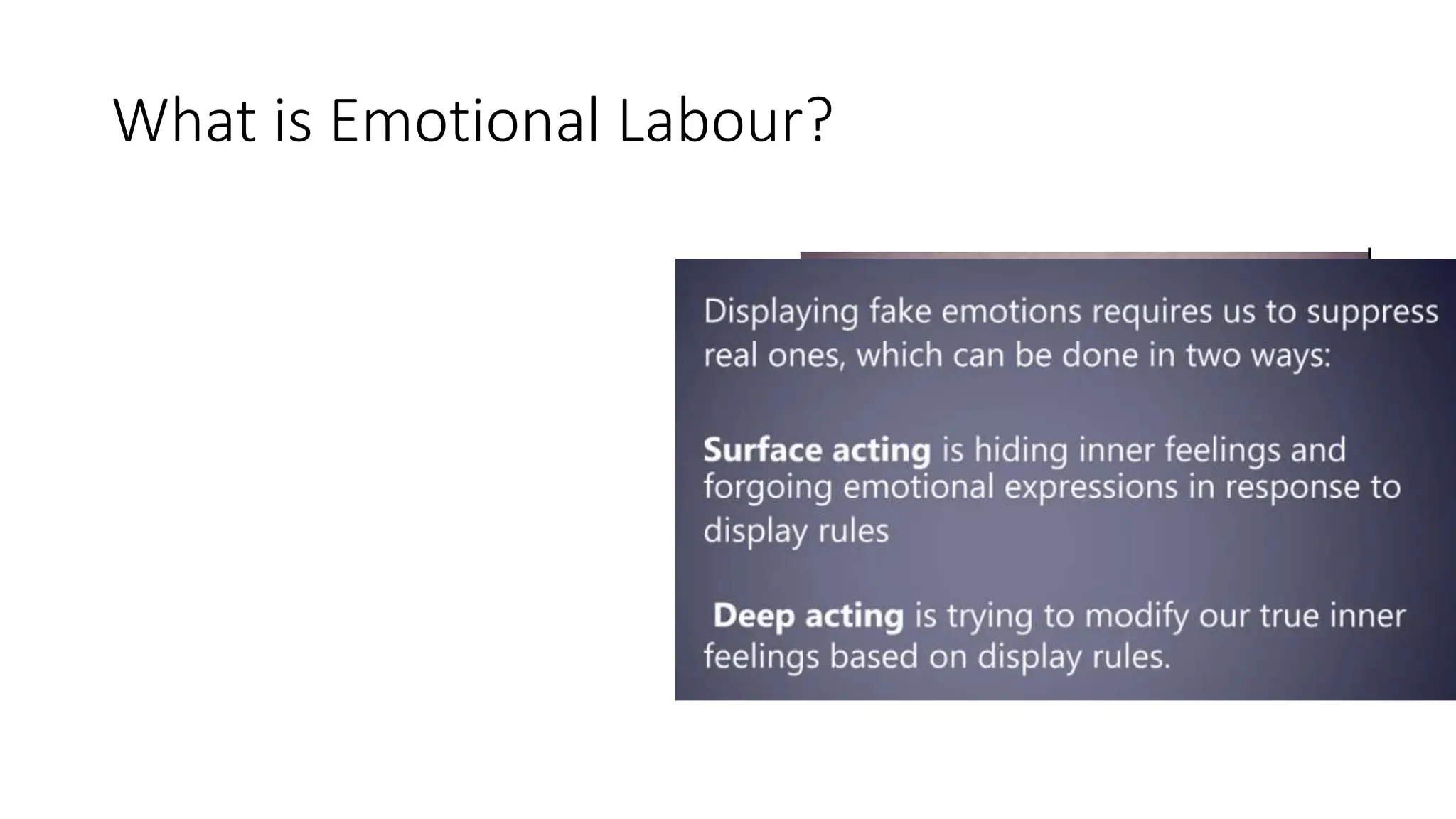
Emotional Labour
What is Emotional Labour?
Emotional Intelligence and  Emotional Labour.pptx

Emotional Intelligence and Emotional Labour.pptx

  • 1.
  • 2.
    Introduction We all feel;one minute we’re happy, another minute we’re sad, the next, who knows?? As we go through a countless number of feelings on any given day. These feelings change depending on our experiences and are further affected by our personality, culture, gender, socialization, and many other factors of emotional intelligence. As a result, our default is to become reactive to our circumstances. This is what we are seeing in today's world!
  • 3.
    What is Emotional Intelligence? howyou handle yourself, get along with people, work in teams, leadership 5 key components It’s another way of being smart how we manage ourselves and relate to those around us. What is new is the data and it’s grounded in neuroscience It’s not about “letting it all hang out”. It means managing feelings, so they are expressed appropriately and effectively Someone may be highly empathetic but lack some abilities to handle their own distress; others may be aware of the subtlest shift in their own moods, yet be inept socially
  • 4.
    Leverage Emotional Intelligence forWork And Personal Life  Distinguish between thoughts and feelings.  Use your feelings to help guide decision-making.  Take more responsibility for your feelings.  Show respect for and validate other people’s feelings.  Show you care and build trust by displaying sensitivity and concern.  Listen twice as much as you speak.  Feel energized, not angry.  Look for the lesson in challenging Link for Reference
  • 5.
    Signs of HighEmotional Intelligence • Self-aware • Empathetic • Present-Focused • Strong Interpersonal Skills • Self Motivated • Receptive • Exercise Integrity Link for reference
  • 6.
  • 7.

Editor's Notes

  • #3 Often, this can have adverse effects on our lives. Well thankfully, it doesn’t have to be that way. Here you’ll learn how to streamline your emotions to encourage positive life experiences. The first step is to understand what exactly emotional intelligence is and why it is important, then to be able to identify the signs of emotional intelligence.