Presentor: Yi Fang Emily Chao Instructor : Dr. Pi-Ying Teresa Hsu Date:  December 22, 2010
Devesa, M., Laguna, M., & Palacios, A. (2009). The role of motivation in visitor satisfaction: Empirical evidence in rural tourism.  Tourism Management, 31, (2010),  547-552.
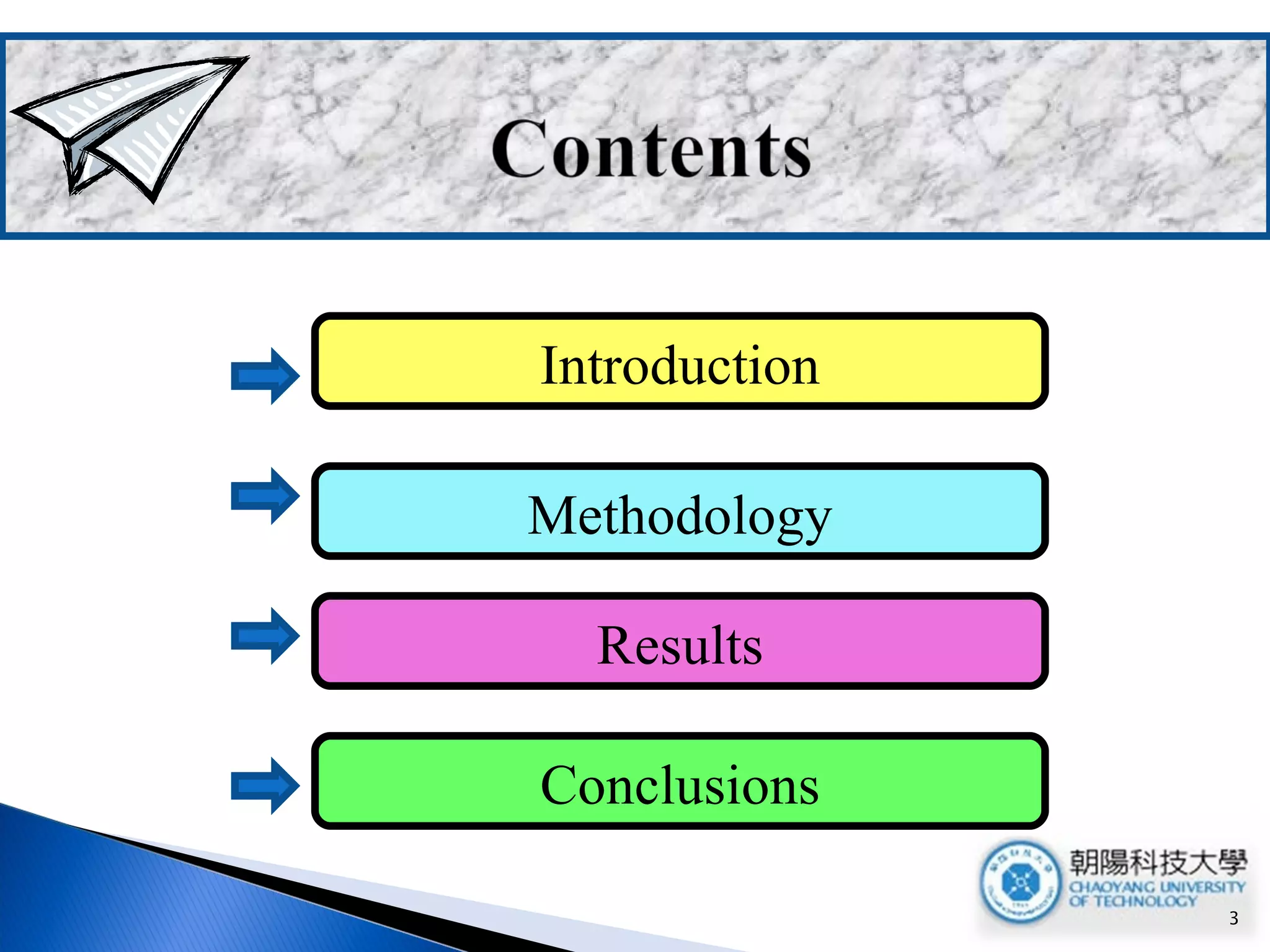
Introduction Methodology Results Conclusions
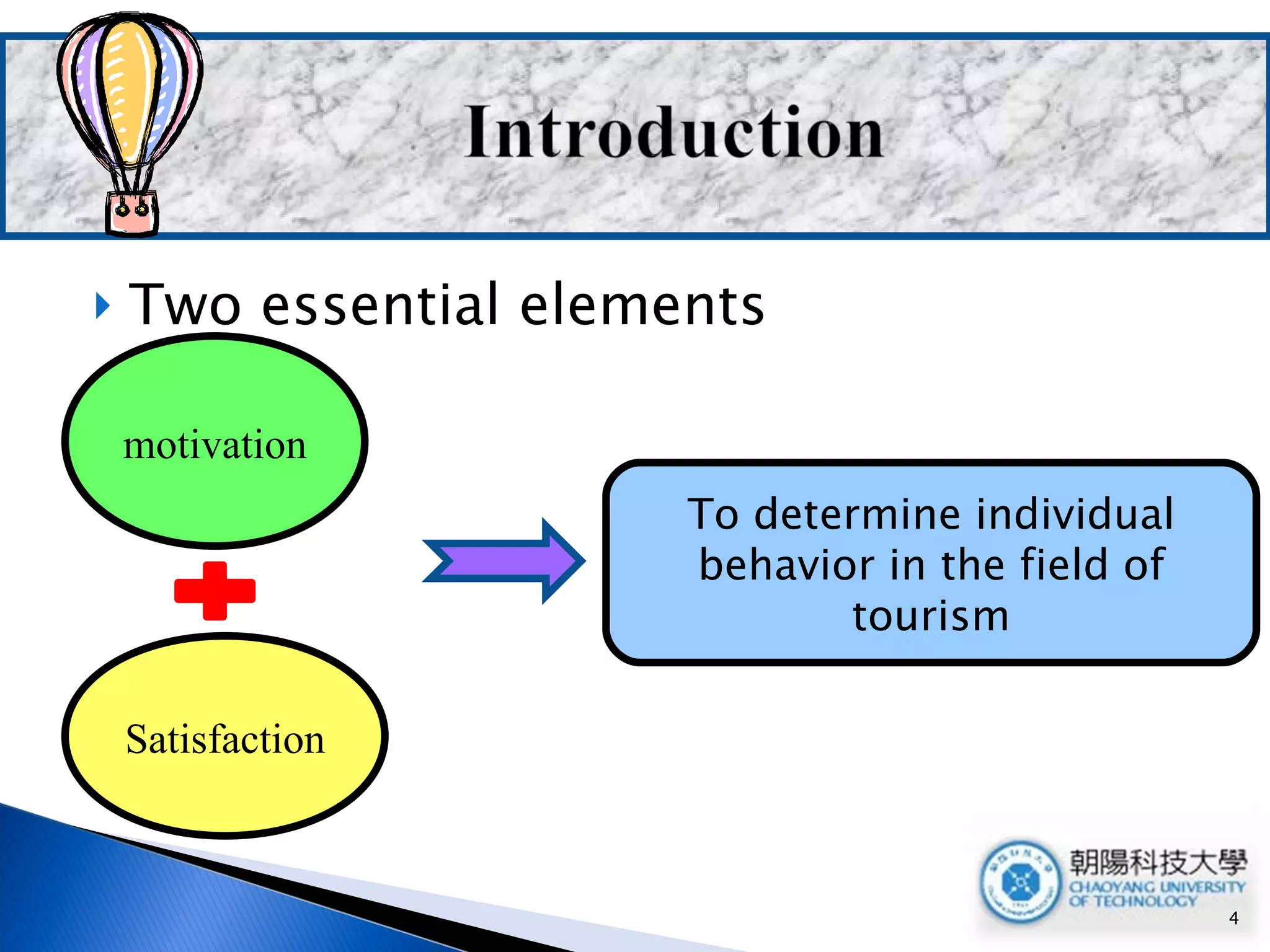
Two essential elements motivation Satisfaction To determine individual behavior in the field of tourism
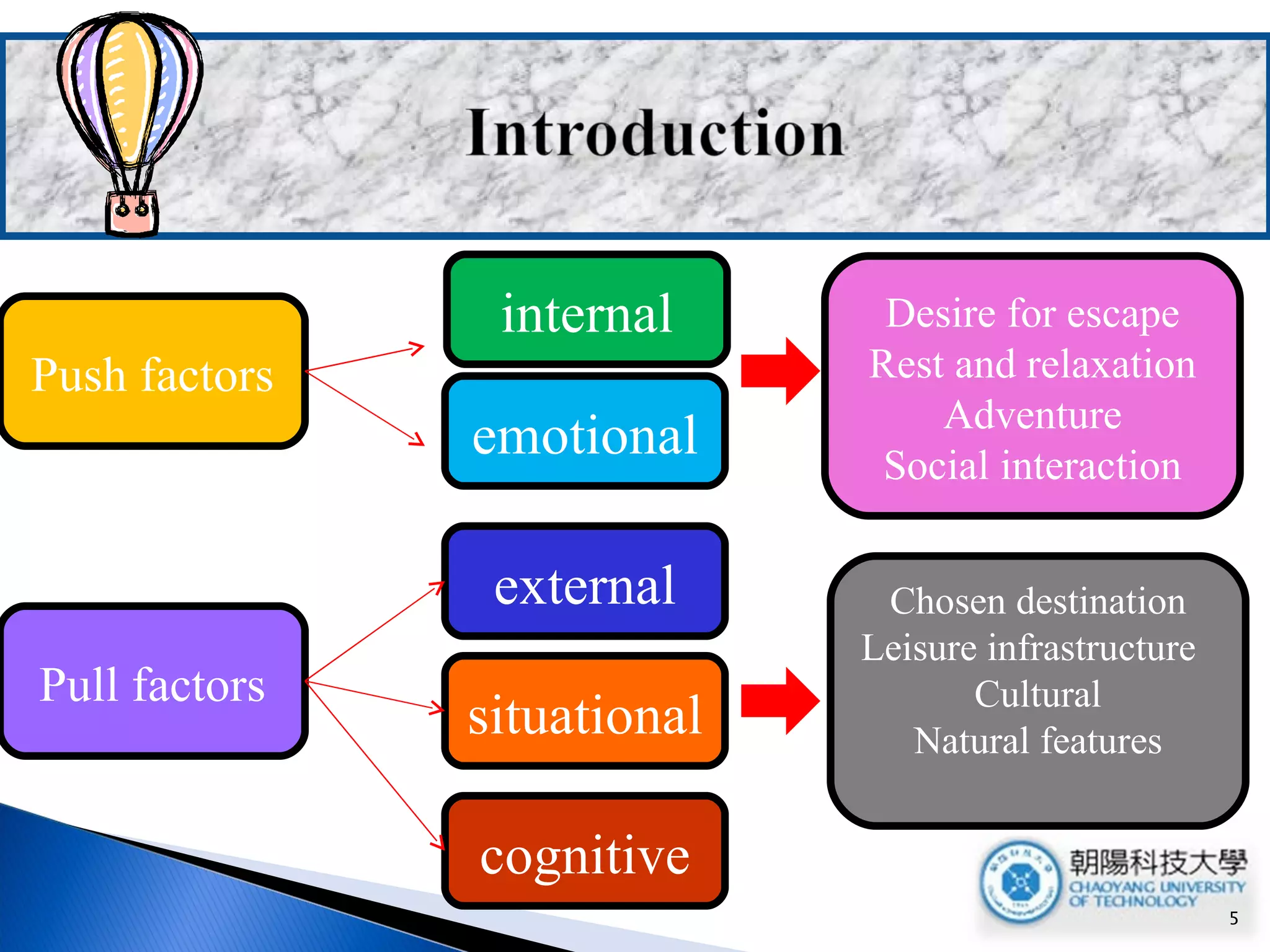
Push factors internal emotional Desire for escape Rest and relaxation Adventure Social interaction Pull factors external situational cognitive Chosen destination Leisure infrastructure  Cultural Natural features
Motivation has become a meta-concept that functions as a trigger for travel behavior and determines different aspects of tourist activity, in respect of  (Castan˜ o, Moreno, Garcı’a, & Crego,2003). (i) the reasons for travelling or why (ii) the specific destination or where (iii) and the results obtained or overall satisfaction with the trip
Roma’ n, Recio, and Martı’n (2000) point out that the current demand trend towards greater segmentation can be mostly explained because of the diversification of visitor motivation.  Therefore, diversification is a very valuable element when directing the expansion of emerging tourism products such as rural tourism.

To investigate  the relationship  between motivation and visitor satisfaction. The object of this research is to analyze the relation existing between motivation and satisfaction obtained by visitors in the rural tourism sector.
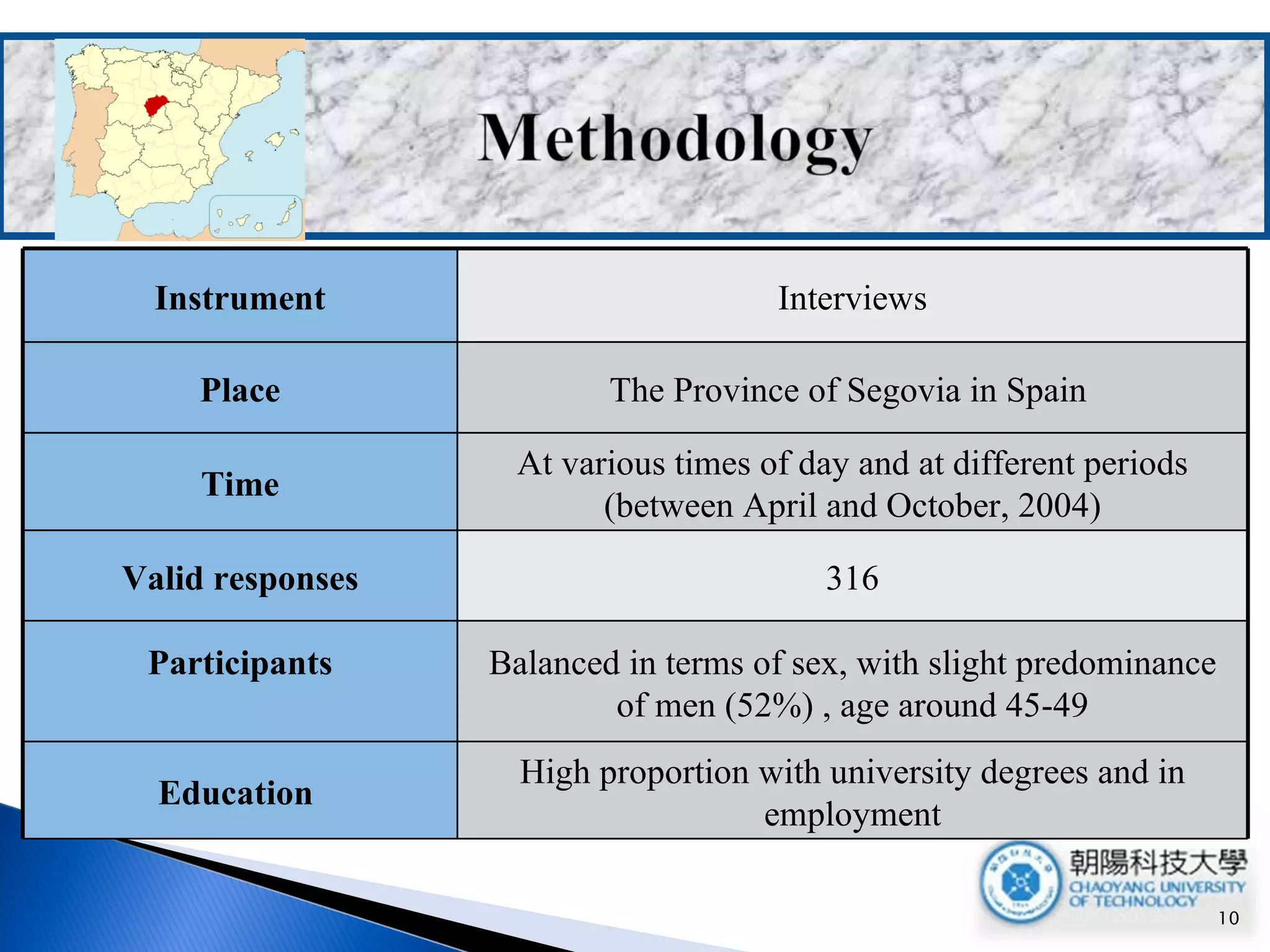
Instrument Interviews Place The Province of Segovia in Spain  Time At various times of day and at different periods (between April and October, 2004) Valid responses 316 Participants Balanced in terms of sex, with slight predominance of men (52%) , age around 45-49 Education  High proportion with university degrees and in employment
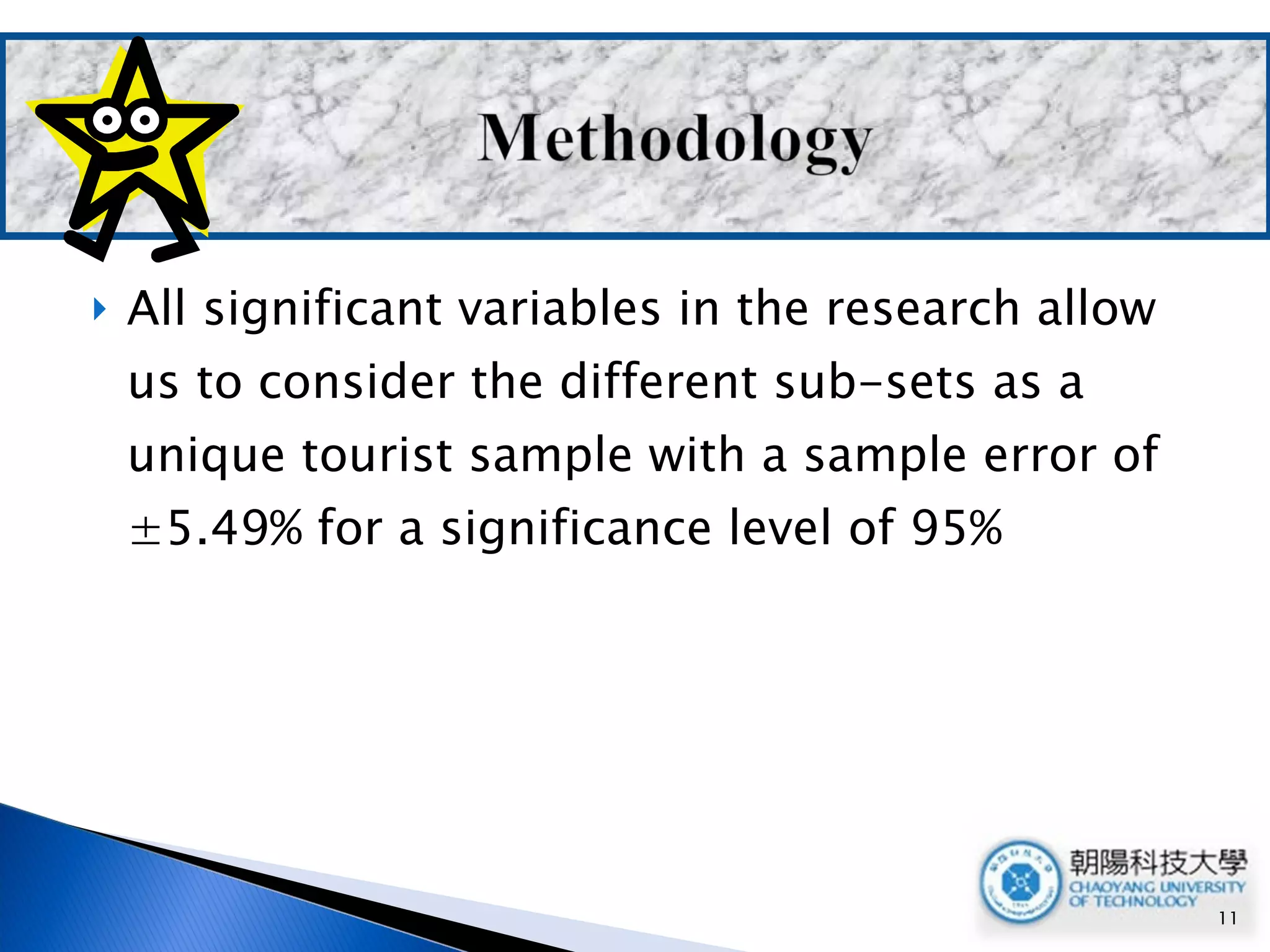
All significant variables in the research allow us to consider the different sub-sets as a unique tourist sample with a sample error of ±5.49% for a significance level of 95%
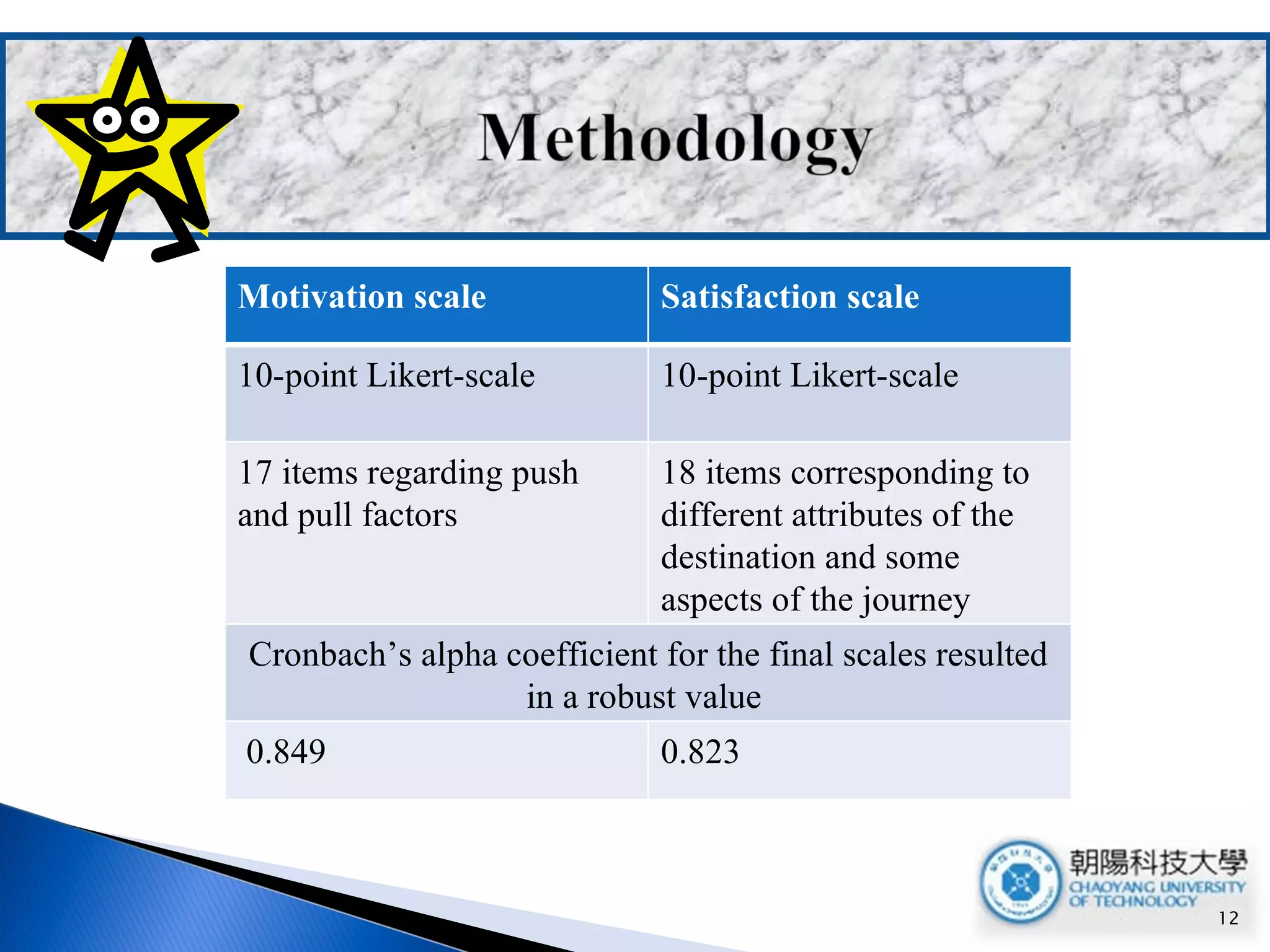
Motivation scale Satisfaction scale 10-point Likert-scale 10-point Likert-scale 17 items regarding push and pull factors 18 items corresponding to different attributes of the destination and some aspects of the journey Cronbach’s alpha coefficient for the final scales resulted in a robust value  0.849 0.823
Confirmatory Factor Analysis (CFA, 驗證性因素分析 ) was carried out with the survey’s items as a complement to evaluate the validity of the study on both motivation and satisfaction scales. Polychoric correlation matrices and unweighted least squares (ULS, 未加權最小平方法 ) were used as algorithms ( 演算法 ) to perform the calculations, as this strategy allow the establishment of consistent estimations without needing to assume multi normality( 常態 ) in the variables.   (Ruiz, 2000)
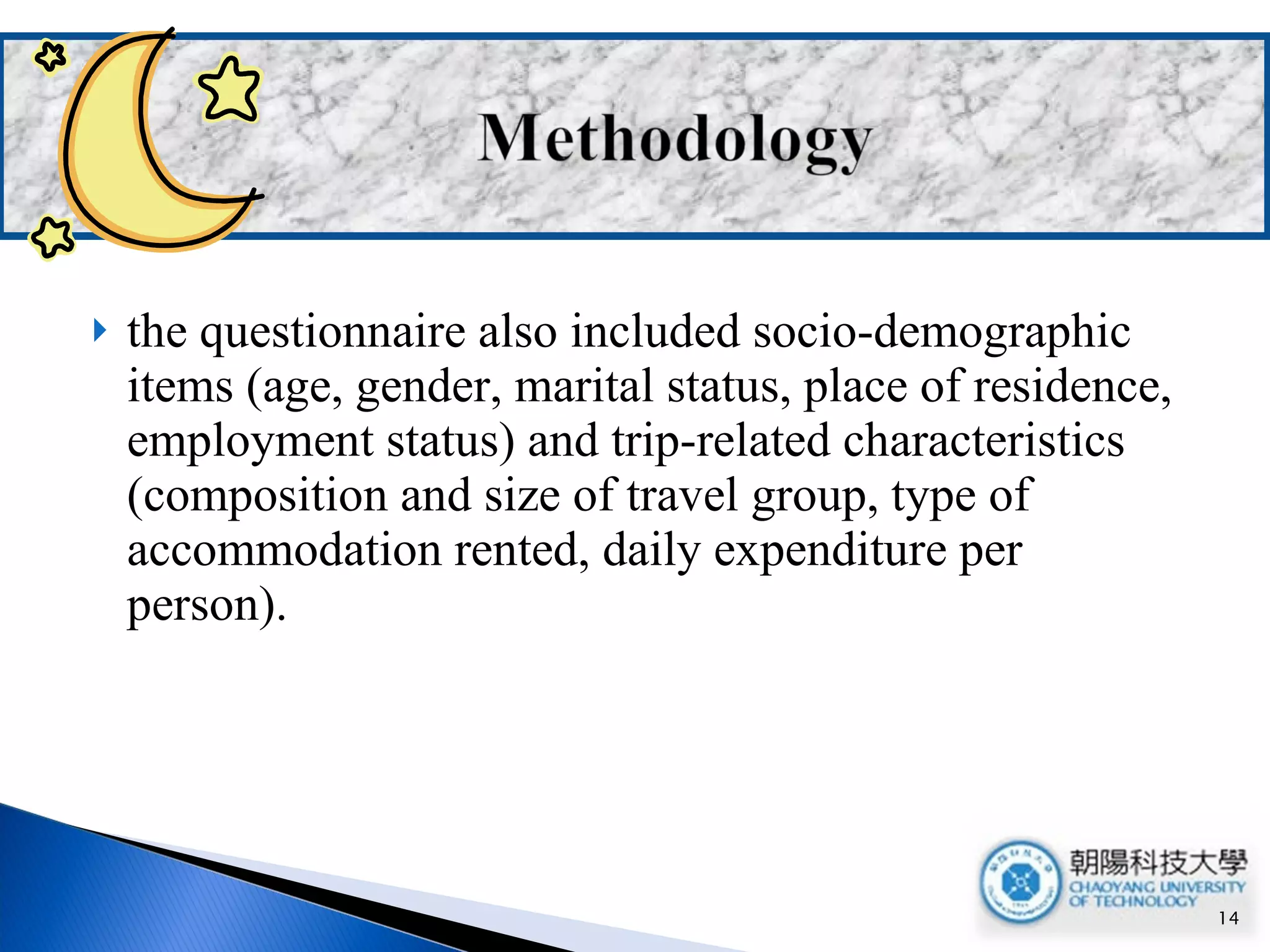
the questionnaire also included socio-demographic items (age, gender, marital status, place of residence, employment status) and trip-related characteristics (composition and size of travel group, type of accommodation rented, daily expenditure per person).
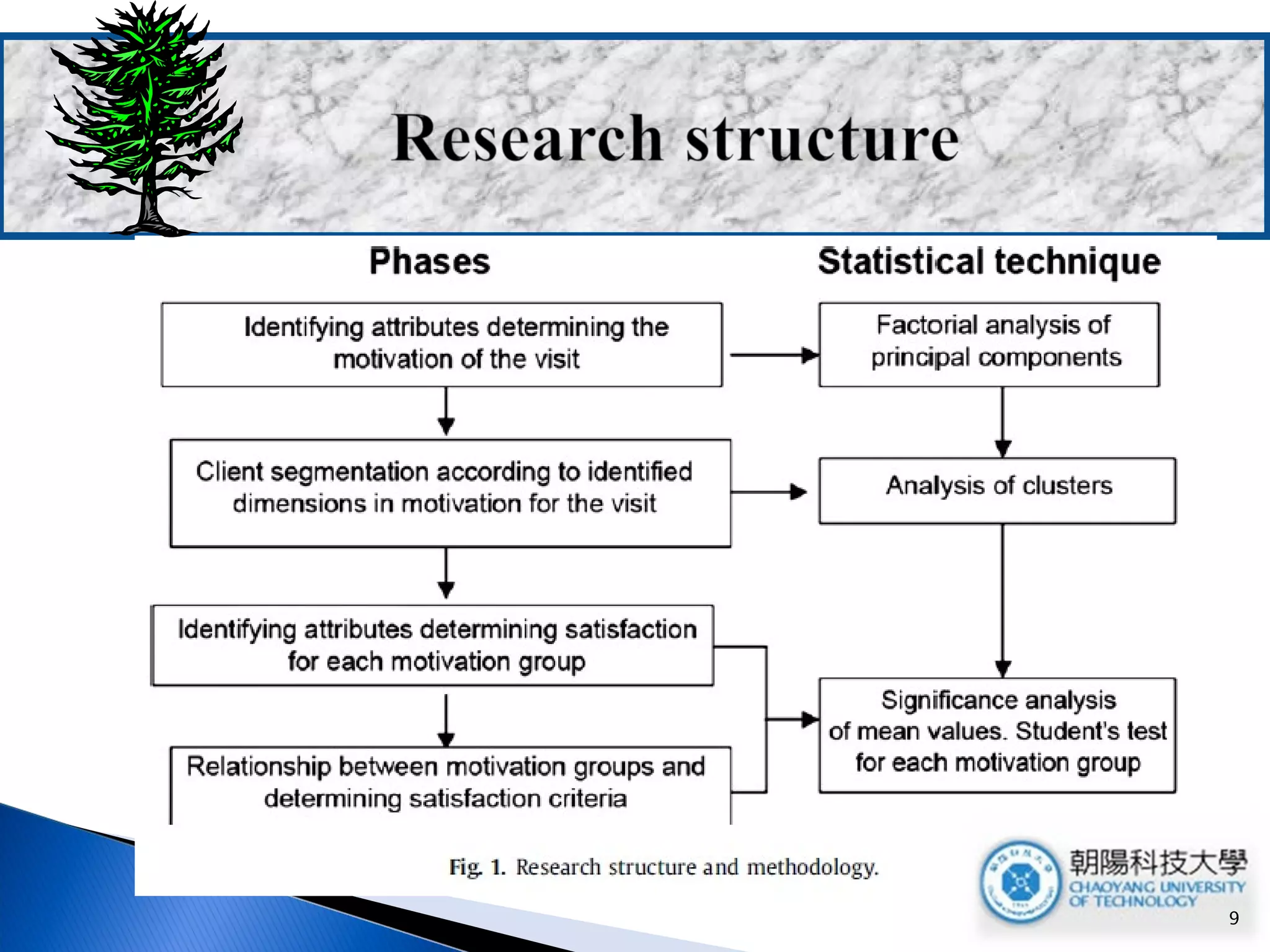
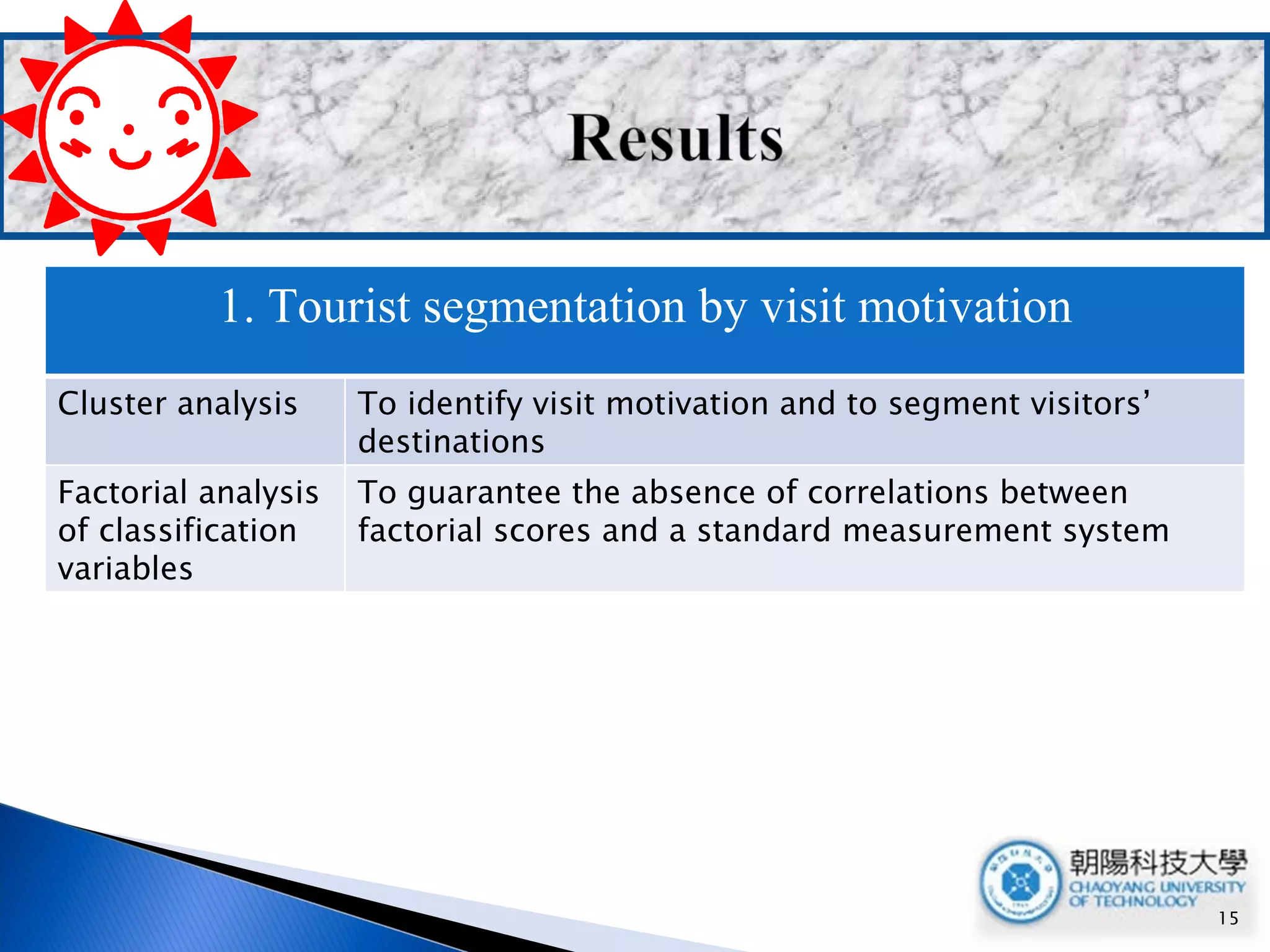
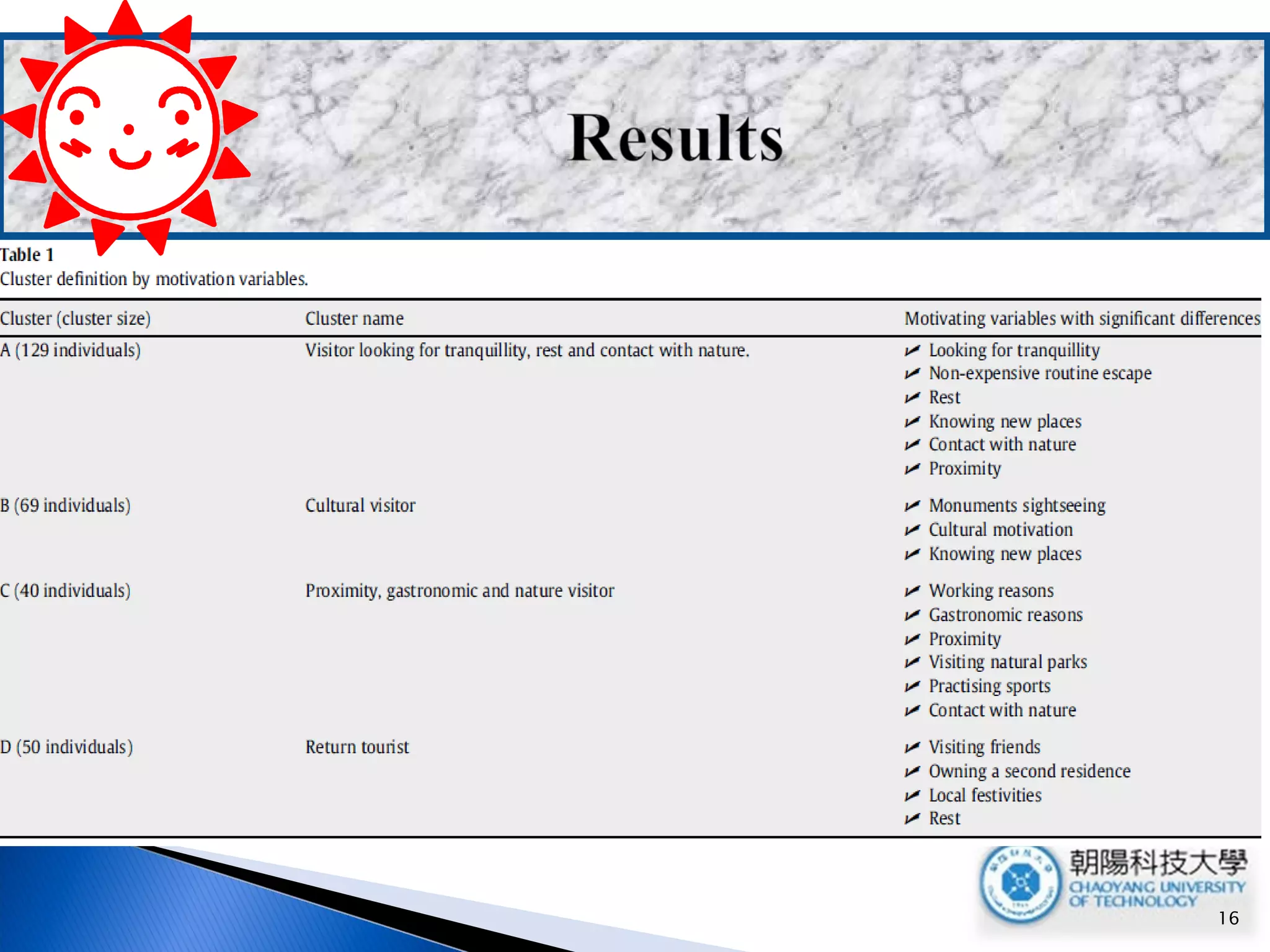
1. Tourist segmentation by visit motivation Cluster analysis To identify visit motivation and to segment visitors’ destinations Factorial analysis of classification variables To guarantee the absence of correlations between factorial scores and a standard measurement system
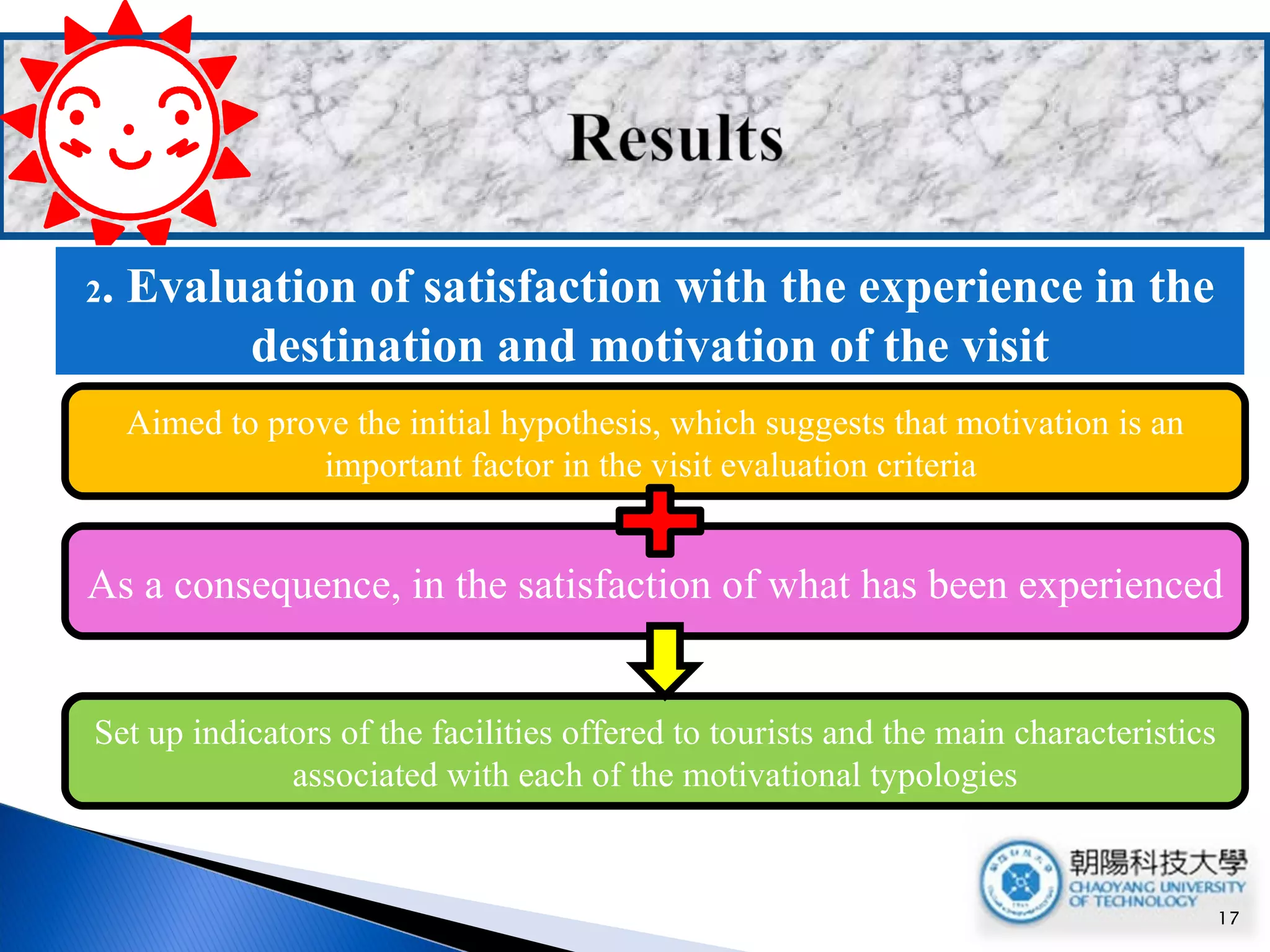
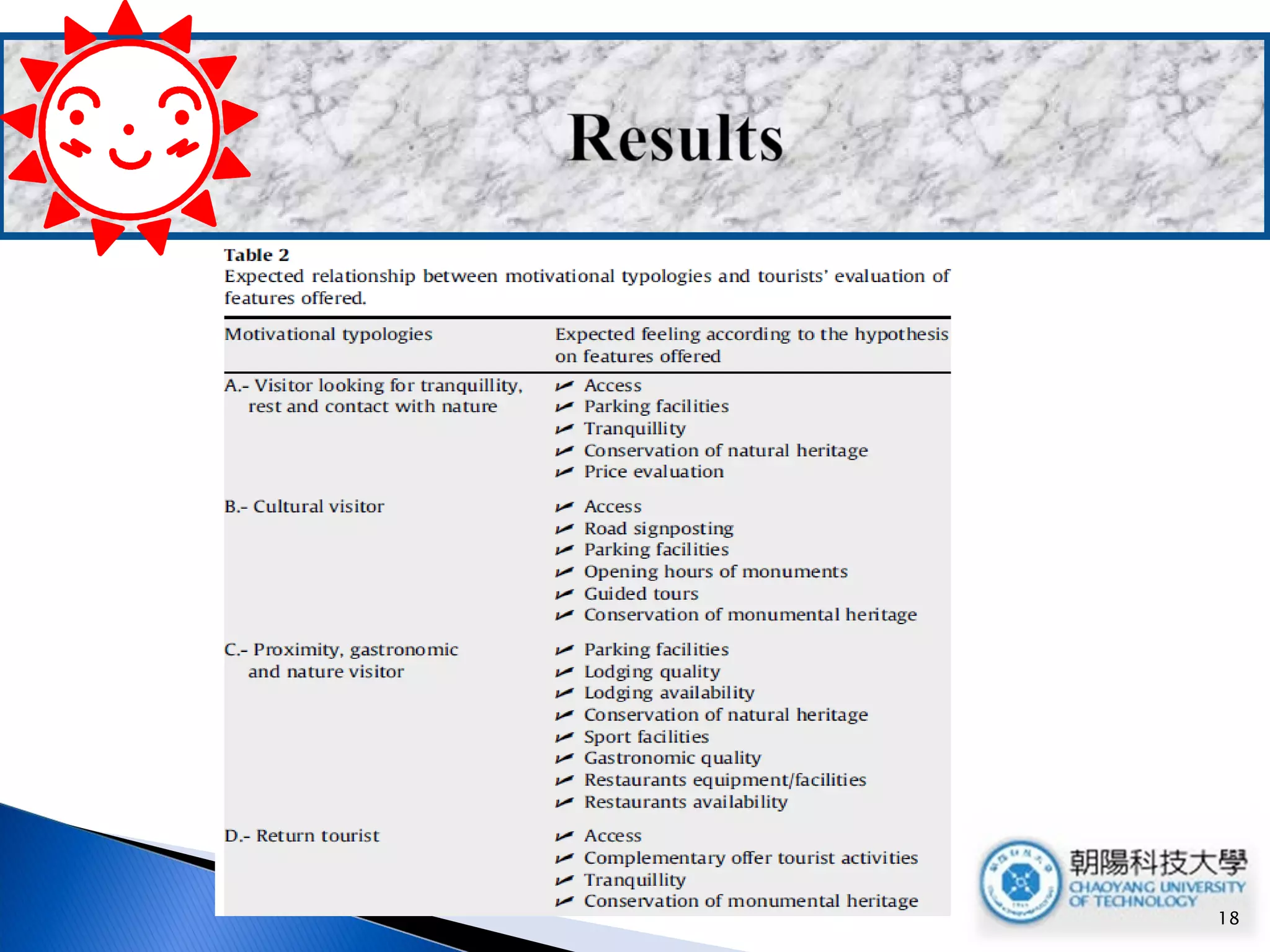
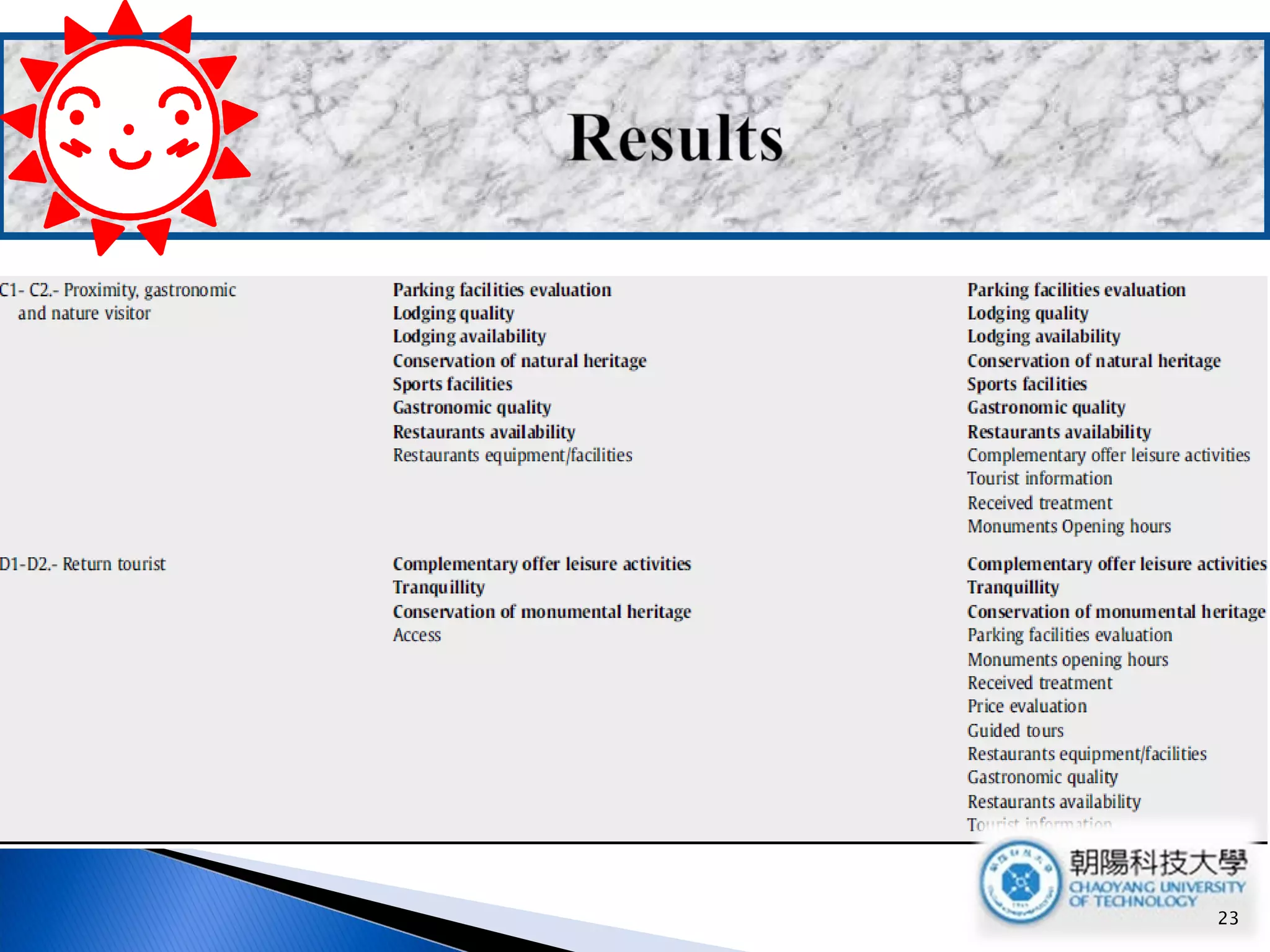
Aimed to prove the initial hypothesis, which suggests that motivation is an important factor in the visit evaluation criteria  As a consequence, in the satisfaction of what has been experienced Set up indicators of the facilities offered to tourists and the main characteristics associated with each of the motivational typologies 2 . Evaluation of satisfaction with the experience in the destination and motivation of the visit
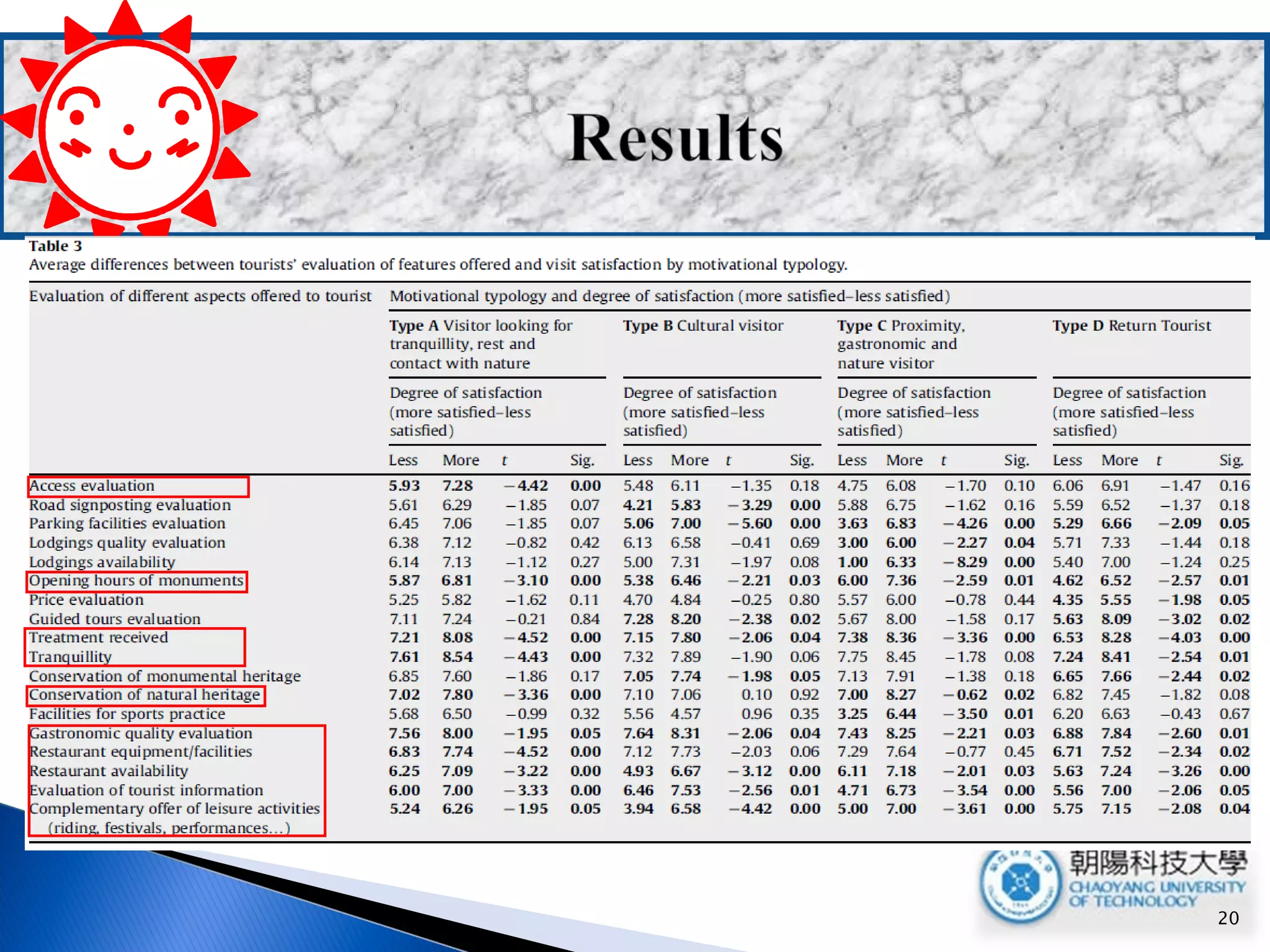
To compare the evaluations of those indicators associated with each motivation. Even so, the study have defined more satisfied tourists as those whose general satisfaction is above average and less satisfied tourists as those whose general satisfaction is below average.
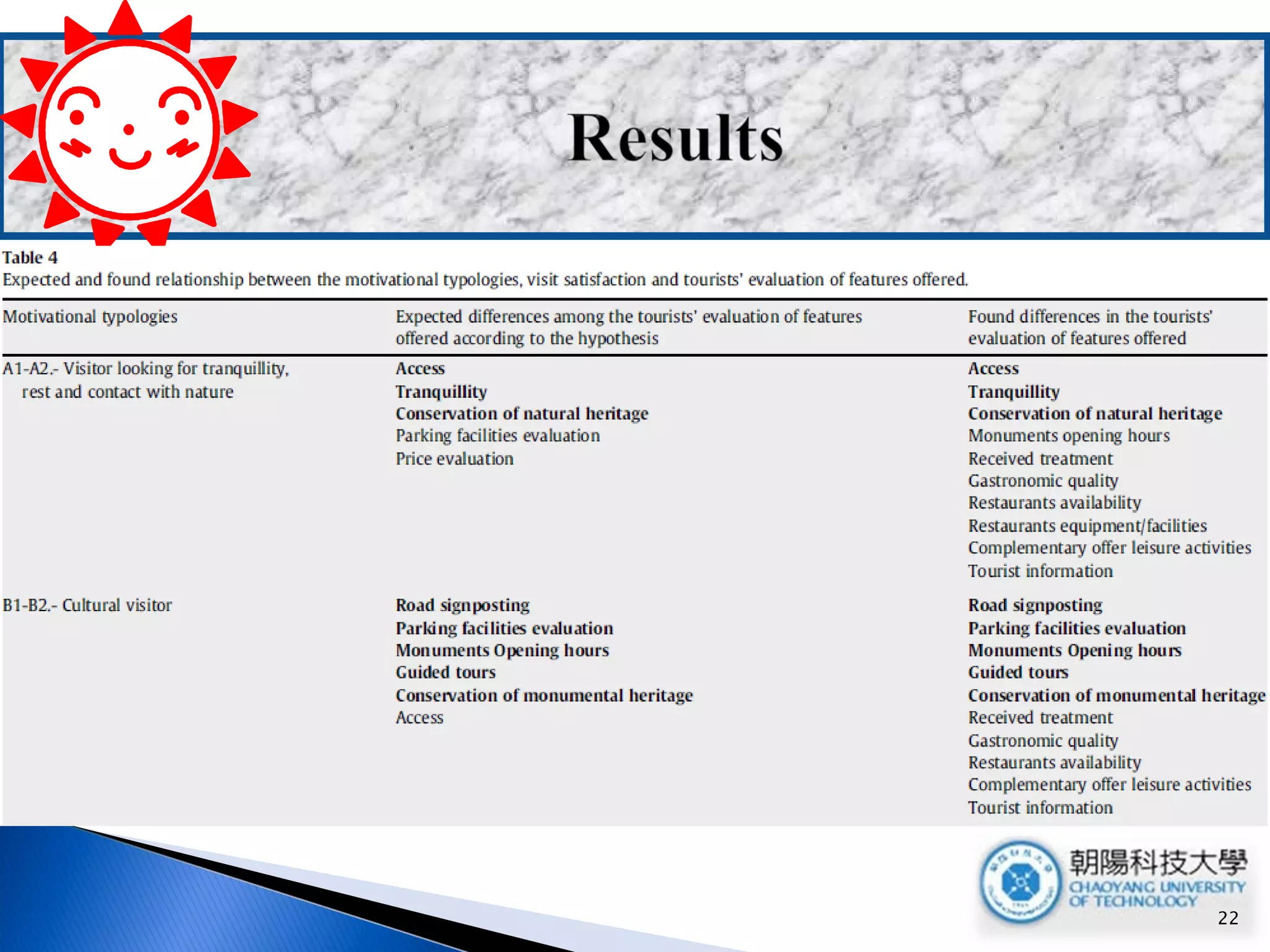
In all cases, a lower evaluation is closely related to lower satisfaction levels and vice versa. These are all independent satisfaction elements with no links to motivation and can, therefore, be considered factors of general satisfaction.
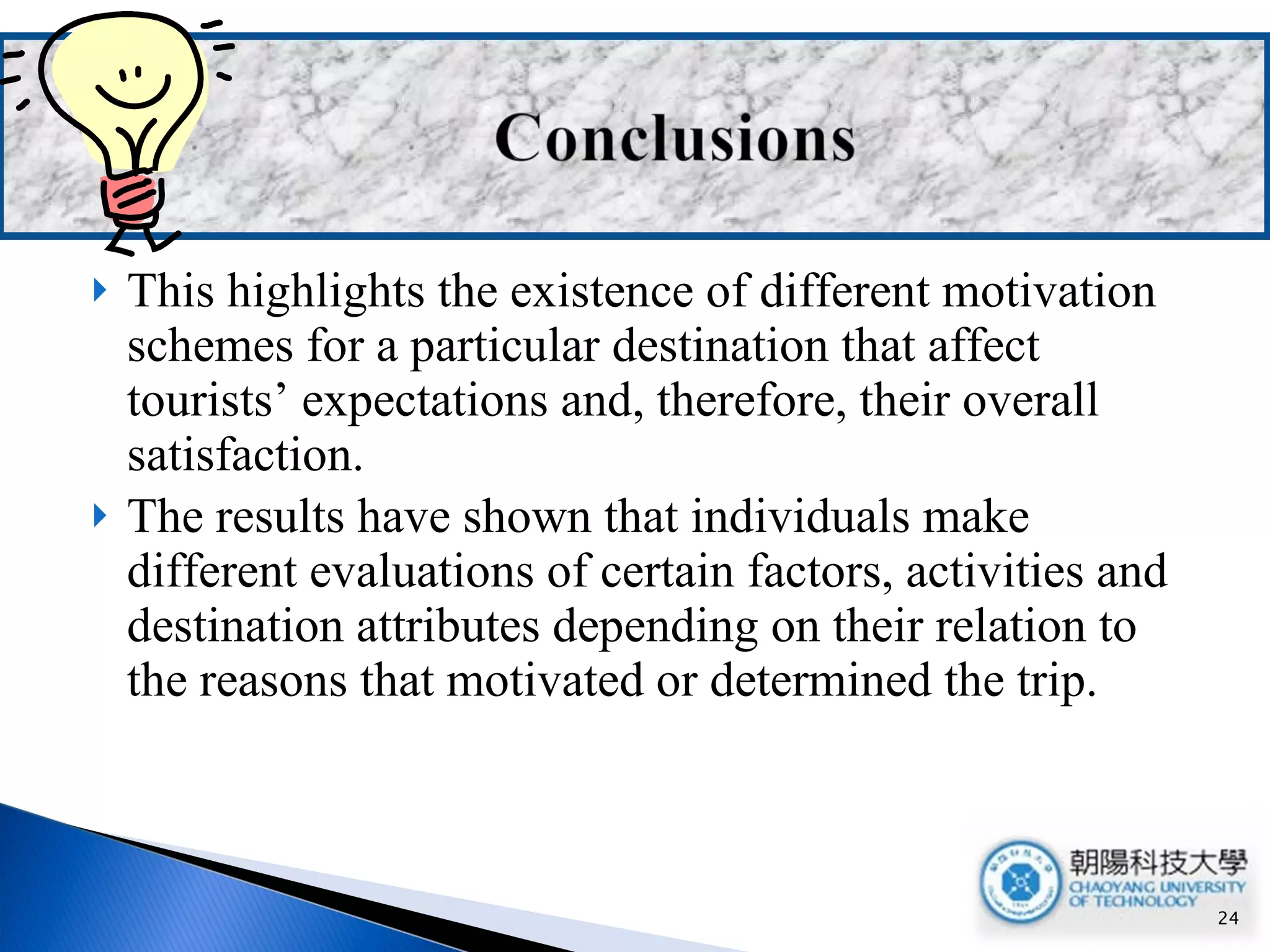
This highlights the existence of different motivation schemes for a particular destination that affect tourists’ expectations and, therefore, their overall satisfaction. The results have shown that individuals make different evaluations of certain factors, activities and destination attributes depending on their relation to the reasons that motivated or determined the trip.
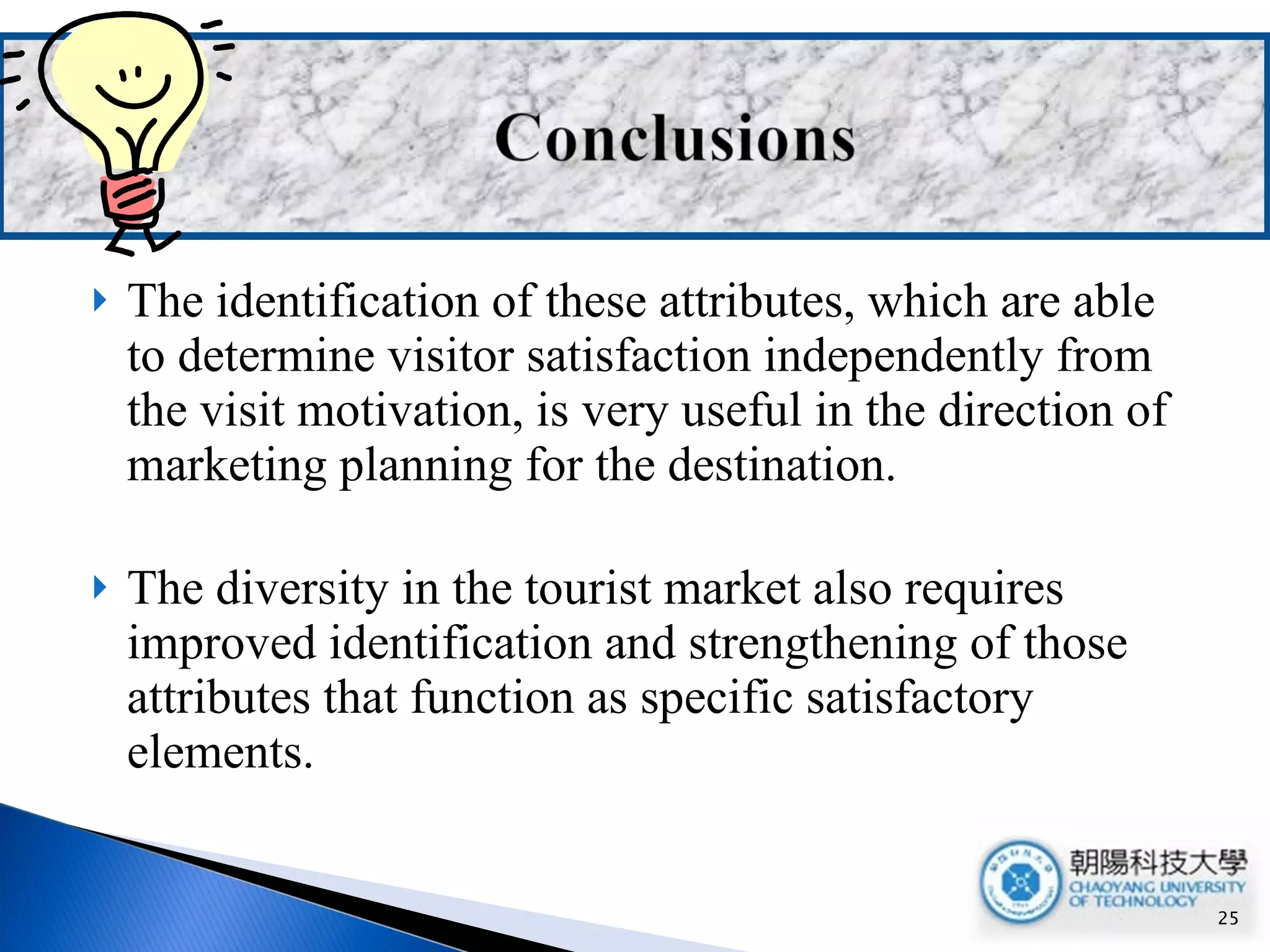
The identification of these attributes, which are able to determine visitor satisfaction independently from the visit motivation, is very useful in the direction of marketing planning for the destination. The diversity in the tourist market also requires improved identification and strengthening of those attributes that function as specific satisfactory elements.
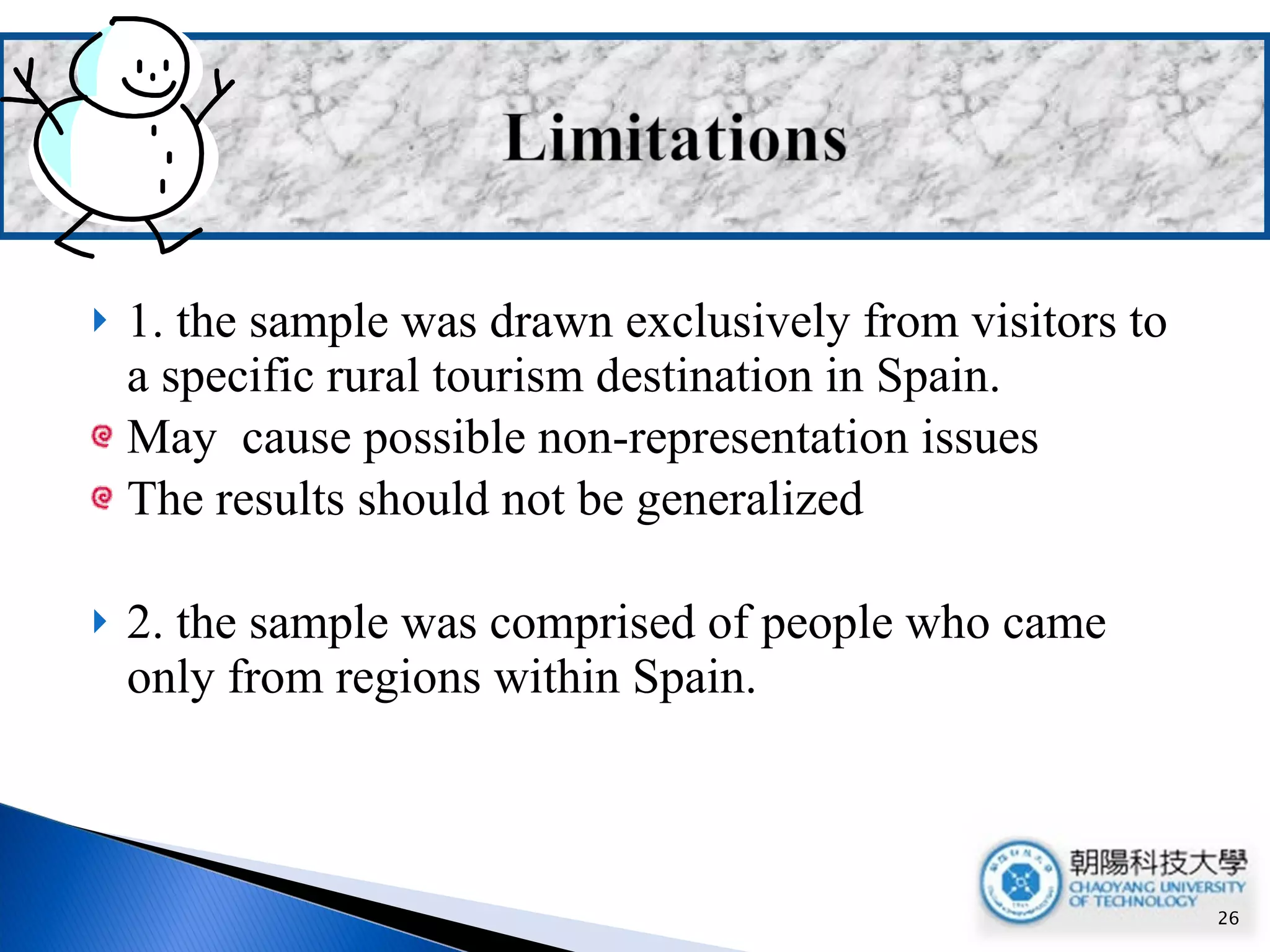
1. the sample was drawn exclusively from visitors to a specific rural tourism destination in Spain. May  cause possible non-representation issues  The results should not be generalized 2. the sample was comprised of people who came only from regions within Spain.
It could be interesting, as a future line of research, to replicate the study with a questionnaire adapted to international tourists as different cultural values may affect both service delivery and visitor experience.
Emily 論文報告ppt_1st version

Emily 論文報告ppt_1st version

  • 1.
    Presentor: Yi FangEmily Chao Instructor : Dr. Pi-Ying Teresa Hsu Date: December 22, 2010
  • 2.
    Devesa, M., Laguna,M., & Palacios, A. (2009). The role of motivation in visitor satisfaction: Empirical evidence in rural tourism. Tourism Management, 31, (2010), 547-552.
  • 3.
  • 4.
    Two essential elementsmotivation Satisfaction To determine individual behavior in the field of tourism
  • 5.
    Push factors internalemotional Desire for escape Rest and relaxation Adventure Social interaction Pull factors external situational cognitive Chosen destination Leisure infrastructure Cultural Natural features
  • 6.
    Motivation has becomea meta-concept that functions as a trigger for travel behavior and determines different aspects of tourist activity, in respect of (Castan˜ o, Moreno, Garcı’a, & Crego,2003). (i) the reasons for travelling or why (ii) the specific destination or where (iii) and the results obtained or overall satisfaction with the trip
  • 7.
    Roma’ n, Recio,and Martı’n (2000) point out that the current demand trend towards greater segmentation can be mostly explained because of the diversification of visitor motivation. Therefore, diversification is a very valuable element when directing the expansion of emerging tourism products such as rural tourism.
  • 8.
    To investigate the relationship between motivation and visitor satisfaction. The object of this research is to analyze the relation existing between motivation and satisfaction obtained by visitors in the rural tourism sector.
  • 10.
    Instrument Interviews PlaceThe Province of Segovia in Spain Time At various times of day and at different periods (between April and October, 2004) Valid responses 316 Participants Balanced in terms of sex, with slight predominance of men (52%) , age around 45-49 Education High proportion with university degrees and in employment
  • 11.
    All significant variablesin the research allow us to consider the different sub-sets as a unique tourist sample with a sample error of ±5.49% for a significance level of 95%
  • 12.
    Motivation scale Satisfactionscale 10-point Likert-scale 10-point Likert-scale 17 items regarding push and pull factors 18 items corresponding to different attributes of the destination and some aspects of the journey Cronbach’s alpha coefficient for the final scales resulted in a robust value 0.849 0.823
  • 13.
    Confirmatory Factor Analysis(CFA, 驗證性因素分析 ) was carried out with the survey’s items as a complement to evaluate the validity of the study on both motivation and satisfaction scales. Polychoric correlation matrices and unweighted least squares (ULS, 未加權最小平方法 ) were used as algorithms ( 演算法 ) to perform the calculations, as this strategy allow the establishment of consistent estimations without needing to assume multi normality( 常態 ) in the variables. (Ruiz, 2000)
  • 14.
    the questionnaire alsoincluded socio-demographic items (age, gender, marital status, place of residence, employment status) and trip-related characteristics (composition and size of travel group, type of accommodation rented, daily expenditure per person).
  • 15.
    1. Tourist segmentationby visit motivation Cluster analysis To identify visit motivation and to segment visitors’ destinations Factorial analysis of classification variables To guarantee the absence of correlations between factorial scores and a standard measurement system
  • 17.
    Aimed to provethe initial hypothesis, which suggests that motivation is an important factor in the visit evaluation criteria As a consequence, in the satisfaction of what has been experienced Set up indicators of the facilities offered to tourists and the main characteristics associated with each of the motivational typologies 2 . Evaluation of satisfaction with the experience in the destination and motivation of the visit
  • 19.
    To compare theevaluations of those indicators associated with each motivation. Even so, the study have defined more satisfied tourists as those whose general satisfaction is above average and less satisfied tourists as those whose general satisfaction is below average.
  • 21.
    In all cases,a lower evaluation is closely related to lower satisfaction levels and vice versa. These are all independent satisfaction elements with no links to motivation and can, therefore, be considered factors of general satisfaction.
  • 24.
    This highlights theexistence of different motivation schemes for a particular destination that affect tourists’ expectations and, therefore, their overall satisfaction. The results have shown that individuals make different evaluations of certain factors, activities and destination attributes depending on their relation to the reasons that motivated or determined the trip.
  • 25.
    The identification ofthese attributes, which are able to determine visitor satisfaction independently from the visit motivation, is very useful in the direction of marketing planning for the destination. The diversity in the tourist market also requires improved identification and strengthening of those attributes that function as specific satisfactory elements.
  • 26.
    1. the samplewas drawn exclusively from visitors to a specific rural tourism destination in Spain. May cause possible non-representation issues The results should not be generalized 2. the sample was comprised of people who came only from regions within Spain.
  • 27.
    It could beinteresting, as a future line of research, to replicate the study with a questionnaire adapted to international tourists as different cultural values may affect both service delivery and visitor experience.