KONGUNADU COLLEGE OF ENGINEERING AND TECHNOLOGY
(AUTONOMOUS)
NAMAKKAL- TRICHY MAIN ROAD, THOTTIAM, TRICHY
DEPARTMENT OF ELECTRONICS AND COMMUNICATION
ENGINEERING
EMBEDDED SYSTEMS
Presented by,
D.Arirasu,
621322106010
II YEAR A SEC.
1
What Is Embedded Systems ?
A COMBINATION OF BOTH HARDWARE AND
SOFTWARE.
PART OF A LARGER UNIT.
PROVIDES DEDICATED SERVICE TO THAT UNIT.
2
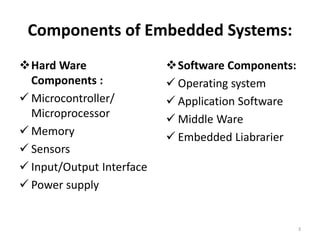
Components of Embedded Systems:
Hard Ware
Components :
 Microcontroller/
Microprocessor
 Memory
 Sensors
 Input/Output Interface
 Power supply
Software Components:
 Operating system
 Application Software
 Middle Ware
 Embedded Liabrarier
3
Applications
SPECIFIC FUNCTIONALITY
CUSTOMIZABLE AND LOW COST
LOW POWER CONSUMPTION
REAL TIME OPERATION
RELIABILITY, SECURITY, LONG LIFE CYCLE ,
DEDICATED HARDWARE
 Embedded systems provide a tailored solution
for applications that demand efficiency,
reliability, and specific functionality,
4
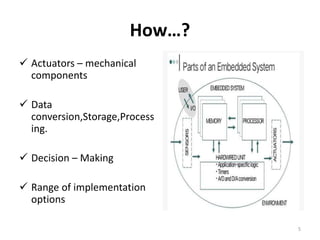
How…?
 Actuators – mechanical
components
 Data
conversion,Storage,Process
ing.
 Decision – Making
 Range of implementation
options
5
Heart of An Embedded System
MiCROPROCESSOR
SINGLE CHIP CONTAINS MILLIONS OF
TRANSISTOR
MINATURE ELECTRONIC DEVICE
CONTAINS BOTH COMBINATIONAL LOGIC
AND SEQUENTIAL DIGITAL LOGIC.
6
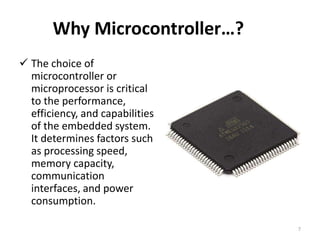
Why Microcontroller…?
 The choice of
microcontroller or
microprocessor is critical
to the performance,
efficiency, and capabilities
of the embedded system.
It determines factors such
as processing speed,
memory capacity,
communication
interfaces, and power
consumption.
7
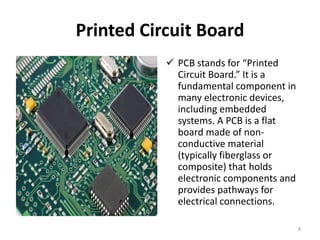
Printed Circuit Board
 PCB stands for “Printed
Circuit Board.” It is a
fundamental component in
many electronic devices,
including embedded
systems. A PCB is a flat
board made of non-
conductive material
(typically fiberglass or
composite) that holds
electronic components and
provides pathways for
electrical connections.
8
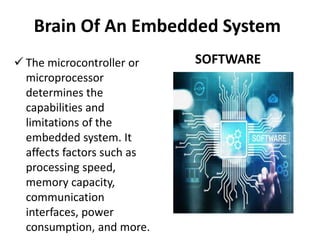
Brain Of An Embedded System
 The microcontroller or
microprocessor
determines the
capabilities and
limitations of the
embedded system. It
affects factors such as
processing speed,
memory capacity,
communication
interfaces, power
consumption, and more.
SOFTWARE
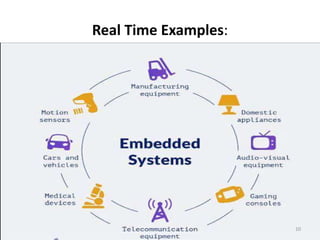
Real Time Examples:
10
Conclusion:
Embedded systems are the unsung heroes behind
the devices we use daily. They combine hardware
and software to perform specific tasks efficiently,
from controlling household appliances to running
critical medical equipment. These systems play a
crucial role in various industries, adapting to new
technologies and driving innovation. As
technology advances, embedded systems
continue to shape the way we interact with our
environment and the devices that make our lives
easier.
11

EMBEDDED SYSTEMS.pptx

  • 1.
    KONGUNADU COLLEGE OFENGINEERING AND TECHNOLOGY (AUTONOMOUS) NAMAKKAL- TRICHY MAIN ROAD, THOTTIAM, TRICHY DEPARTMENT OF ELECTRONICS AND COMMUNICATION ENGINEERING EMBEDDED SYSTEMS Presented by, D.Arirasu, 621322106010 II YEAR A SEC. 1
  • 2.
    What Is EmbeddedSystems ? A COMBINATION OF BOTH HARDWARE AND SOFTWARE. PART OF A LARGER UNIT. PROVIDES DEDICATED SERVICE TO THAT UNIT. 2
  • 3.
    Components of EmbeddedSystems: Hard Ware Components :  Microcontroller/ Microprocessor  Memory  Sensors  Input/Output Interface  Power supply Software Components:  Operating system  Application Software  Middle Ware  Embedded Liabrarier 3
  • 4.
    Applications SPECIFIC FUNCTIONALITY CUSTOMIZABLE ANDLOW COST LOW POWER CONSUMPTION REAL TIME OPERATION RELIABILITY, SECURITY, LONG LIFE CYCLE , DEDICATED HARDWARE  Embedded systems provide a tailored solution for applications that demand efficiency, reliability, and specific functionality, 4
  • 5.
    How…?  Actuators –mechanical components  Data conversion,Storage,Process ing.  Decision – Making  Range of implementation options 5
  • 6.
    Heart of AnEmbedded System MiCROPROCESSOR SINGLE CHIP CONTAINS MILLIONS OF TRANSISTOR MINATURE ELECTRONIC DEVICE CONTAINS BOTH COMBINATIONAL LOGIC AND SEQUENTIAL DIGITAL LOGIC. 6
  • 7.
    Why Microcontroller…?  Thechoice of microcontroller or microprocessor is critical to the performance, efficiency, and capabilities of the embedded system. It determines factors such as processing speed, memory capacity, communication interfaces, and power consumption. 7
  • 8.
    Printed Circuit Board PCB stands for “Printed Circuit Board.” It is a fundamental component in many electronic devices, including embedded systems. A PCB is a flat board made of non- conductive material (typically fiberglass or composite) that holds electronic components and provides pathways for electrical connections. 8
  • 9.
    Brain Of AnEmbedded System  The microcontroller or microprocessor determines the capabilities and limitations of the embedded system. It affects factors such as processing speed, memory capacity, communication interfaces, power consumption, and more. SOFTWARE
  • 10.
  • 11.
    Conclusion: Embedded systems arethe unsung heroes behind the devices we use daily. They combine hardware and software to perform specific tasks efficiently, from controlling household appliances to running critical medical equipment. These systems play a crucial role in various industries, adapting to new technologies and driving innovation. As technology advances, embedded systems continue to shape the way we interact with our environment and the devices that make our lives easier. 11