Bilingual Strategy Instruction for
     the School Community
                Presented by:
    Community Consolidated School District 146
                    ELL Team
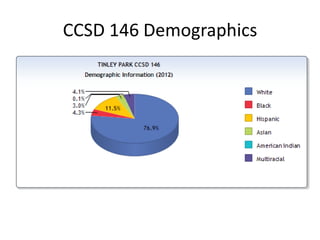
CCSD 146 Demographics
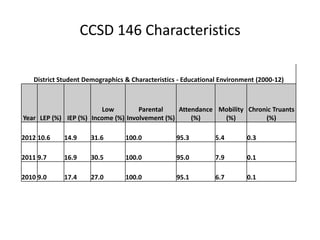
CCSD 146 Characteristics

   District Student Demographics & Characteristics - Educational Environment (2000-12)


                        Low         Parental    Attendance Mobility Chronic Truants
Year LEP (%) IEP (%) Income (%) Involvement (%)     (%)     (%)          (%)

2012 10.6    14.9    31.6        100.0            95.3         5.4       0.3

2011 9.7     16.9    30.5        100.0            95.0         7.9       0.1

2010 9.0     17.4    27.0        100.0            95.1         6.7       0.1
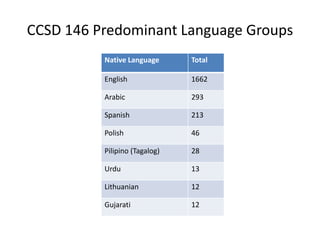
CCSD 146 Predominant Language Groups
          Native Language      Total

          English              1662

          Arabic               293

          Spanish              213

          Polish               46

          Pilipino (Tagalog)   28

          Urdu                 13

          Lithuanian           12

          Gujarati             12
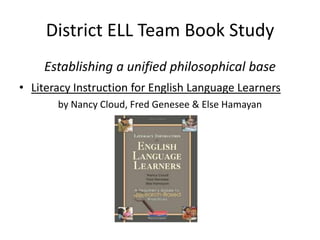
District ELL Team Book Study
    Establishing a unified philosophical base
• Literacy Instruction for English Language Learners
       by Nancy Cloud, Fred Genesee & Else Hamayan
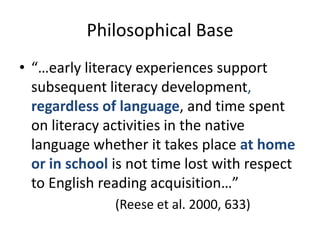
Philosophical Base
• “…early literacy experiences support
  subsequent literacy development,
  regardless of language, and time spent
  on literacy activities in the native
  language whether it takes place at home
  or in school is not time lost with respect
  to English reading acquisition…”
               (Reese et al. 2000, 633)
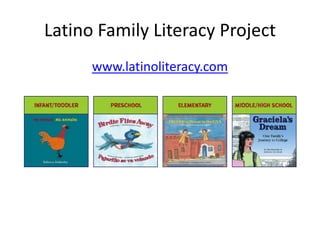
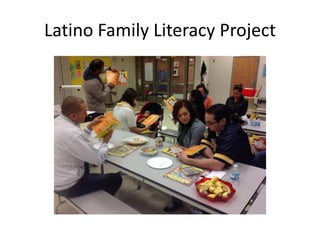
Latino Family Literacy Project
      www.latinoliteracy.com
Latino Family Literacy Project
Arabic Family Literacy Project

Books chosen based on the following criteria:

•   Dual language
•   Culturally relevant
•   Authentic literature
•   Fortify the family bond
•   Foster vocabulary development
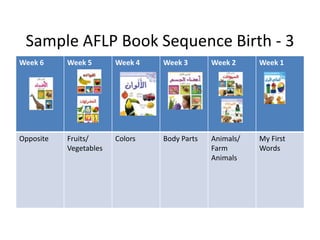
Sample AFLP Book Sequence Birth - 3
Week 6     Week 5       Week 4   Week 3       Week 2     Week 1


Opposite   Fruits/      Colors   Body Parts   Animals/   My First
           Vegetables                         Farm       Words
                                              Animals
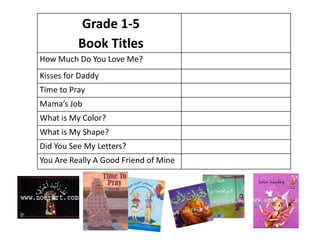
Grade 1-5
          Book Titles
How Much Do You Love Me?
Kisses for Daddy
Time to Pray
Mama’s Job
What is My Color?
What is My Shape?
Did You See My Letters?
You Are Really A Good Friend of Mine
Resource for books in Arabic:


       http://www.noorart.com
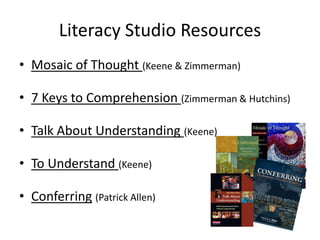
Literacy Studio Resources
• Mosaic of Thought (Keene & Zimmerman)

• 7 Keys to Comprehension (Zimmerman & Hutchins)

• Talk About Understanding (Keene)

• To Understand (Keene)

• Conferring (Patrick Allen)
Metacognition
In her essay on the essence of understanding
in reading, Ellin Oliver Keene (2007, 37)
describes metacognition as…


“Listening to the voice in
 your mind that speaks
 while you read.”
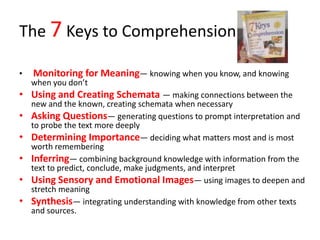
The 7 Keys to Comprehension

•   Monitoring for Meaning— knowing when you know, and knowing
    when you don’t
• Using and Creating Schemata — making connections between the
    new and the known, creating schemata when necessary
•   Asking Questions— generating questions to prompt interpretation and
    to probe the text more deeply
•   Determining Importance— deciding what matters most and is most
    worth remembering
•   Inferring— combining background knowledge with information from the
    text to predict, conclude, make judgments, and interpret
•   Using Sensory and Emotional Images— using images to deepen and
    stretch meaning
•   Synthesis— integrating understanding with knowledge from other texts
    and sources.
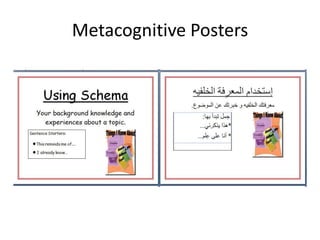
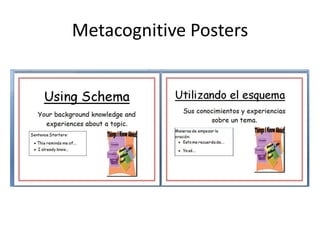
Metacognitive Posters
Research Supporting Strategy Videos

In Learning from Latino Families by Susan Auerbach…


–Informal learning activities at home
–Validate families’ cultures
–Nurture parent voice
–Keep it small
Homework Strategy Videos

“When educators offer smaller-scale parent activities and

infuse personal touches and authentic interaction into

outreach immigrant parents feel less intimidated, and

they respond with more open participation.”
                                                (Delgado-Gaitan, 2004)
Parent Testimony
“[Estos vídeos] me sirven a mí, a mi esposa y a mis
niños. [También] estoy yendo a la escuela y [los
vídeos] me están ayudando. Entre nosotros nos
ayudamos—yo y los niños.”

“[These videos] serve me, my wife and my children. I
am [also] going to school and [the videos] are
helping me. Amongst ourselves we help each
other—the children and I.”

      ~ Pablo Merino
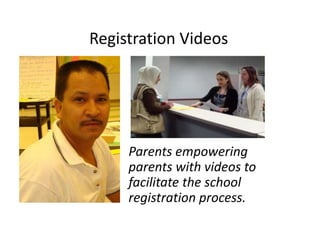
Registration Videos


     Parents empowering
     parents with videos to
     facilitate the school
     registration process.
Implementing RTI with
ENGLISH LEARNERS      1. Clearly defined purpose
Fisher, Frey and          2.   Models
Rothenberg (2011)         3.   Interaction
describe nine key
elements of effective     4.   Guided instruction
instruction for English   5.   Focus on language
learners:
                          6.   Culturally responsive curriculum
                          7.   Meaningful & challenging tasks
                          8.   Metacognition
                          9.   Student Choice
CCSD 146 Link for Presentation


www.district146.org
Click: Special Services Office
Click: English Language Learning

ELL Conference Presentation 2012

  • 1.
    Bilingual Strategy Instructionfor the School Community Presented by: Community Consolidated School District 146 ELL Team
  • 2.
  • 3.
    CCSD 146 Characteristics District Student Demographics & Characteristics - Educational Environment (2000-12) Low Parental Attendance Mobility Chronic Truants Year LEP (%) IEP (%) Income (%) Involvement (%) (%) (%) (%) 2012 10.6 14.9 31.6 100.0 95.3 5.4 0.3 2011 9.7 16.9 30.5 100.0 95.0 7.9 0.1 2010 9.0 17.4 27.0 100.0 95.1 6.7 0.1
  • 4.
    CCSD 146 PredominantLanguage Groups Native Language Total English 1662 Arabic 293 Spanish 213 Polish 46 Pilipino (Tagalog) 28 Urdu 13 Lithuanian 12 Gujarati 12
  • 5.
    District ELL TeamBook Study Establishing a unified philosophical base • Literacy Instruction for English Language Learners by Nancy Cloud, Fred Genesee & Else Hamayan
  • 6.
    Philosophical Base • “…earlyliteracy experiences support subsequent literacy development, regardless of language, and time spent on literacy activities in the native language whether it takes place at home or in school is not time lost with respect to English reading acquisition…” (Reese et al. 2000, 633)
  • 7.
    Latino Family LiteracyProject www.latinoliteracy.com
  • 8.
  • 9.
    Arabic Family LiteracyProject Books chosen based on the following criteria: • Dual language • Culturally relevant • Authentic literature • Fortify the family bond • Foster vocabulary development
  • 10.
    Sample AFLP BookSequence Birth - 3 Week 6 Week 5 Week 4 Week 3 Week 2 Week 1 Opposite Fruits/ Colors Body Parts Animals/ My First Vegetables Farm Words Animals
  • 11.
    Grade 1-5 Book Titles How Much Do You Love Me? Kisses for Daddy Time to Pray Mama’s Job What is My Color? What is My Shape? Did You See My Letters? You Are Really A Good Friend of Mine
  • 12.
    Resource for booksin Arabic: http://www.noorart.com
  • 13.
    Literacy Studio Resources •Mosaic of Thought (Keene & Zimmerman) • 7 Keys to Comprehension (Zimmerman & Hutchins) • Talk About Understanding (Keene) • To Understand (Keene) • Conferring (Patrick Allen)
  • 14.
    Metacognition In her essayon the essence of understanding in reading, Ellin Oliver Keene (2007, 37) describes metacognition as… “Listening to the voice in your mind that speaks while you read.”
  • 15.
    The 7 Keysto Comprehension • Monitoring for Meaning— knowing when you know, and knowing when you don’t • Using and Creating Schemata — making connections between the new and the known, creating schemata when necessary • Asking Questions— generating questions to prompt interpretation and to probe the text more deeply • Determining Importance— deciding what matters most and is most worth remembering • Inferring— combining background knowledge with information from the text to predict, conclude, make judgments, and interpret • Using Sensory and Emotional Images— using images to deepen and stretch meaning • Synthesis— integrating understanding with knowledge from other texts and sources.
  • 16.
  • 17.
  • 18.
    Research Supporting StrategyVideos In Learning from Latino Families by Susan Auerbach… –Informal learning activities at home –Validate families’ cultures –Nurture parent voice –Keep it small
  • 19.
    Homework Strategy Videos “Wheneducators offer smaller-scale parent activities and infuse personal touches and authentic interaction into outreach immigrant parents feel less intimidated, and they respond with more open participation.” (Delgado-Gaitan, 2004)
  • 20.
    Parent Testimony “[Estos vídeos]me sirven a mí, a mi esposa y a mis niños. [También] estoy yendo a la escuela y [los vídeos] me están ayudando. Entre nosotros nos ayudamos—yo y los niños.” “[These videos] serve me, my wife and my children. I am [also] going to school and [the videos] are helping me. Amongst ourselves we help each other—the children and I.” ~ Pablo Merino
  • 21.
    Registration Videos Parents empowering parents with videos to facilitate the school registration process.
  • 22.
    Implementing RTI with ENGLISHLEARNERS 1. Clearly defined purpose Fisher, Frey and 2. Models Rothenberg (2011) 3. Interaction describe nine key elements of effective 4. Guided instruction instruction for English 5. Focus on language learners: 6. Culturally responsive curriculum 7. Meaningful & challenging tasks 8. Metacognition 9. Student Choice
  • 23.
    CCSD 146 Linkfor Presentation www.district146.org Click: Special Services Office Click: English Language Learning

Editor's Notes

  • #2 Nicolette: timekeeper
  • #3 Denise
  • #4 Denise
  • #5 Denise
  • #6 Denise & Anne: Arabic & Spanish Family Literacy Programs
  • #7 Anne: Discovering literacy opportunities in our community throughReady for K!/Home Visits/Family Reading Nights/PAC
  • #8 Julie
  • #9 Julie
  • #10 Huwaida & Hedaia
  • #11 Huwaida & Hedaia
  • #12 Huwaida & Hedaia
  • #13 Huwaida & Hedaia
  • #14 Anne
  • #15 Beisanne & Liza Quote from: Keene, Ellin Oliver (2007). The essence of understanding. In Adolescent literacy: Turning promise into practice. Portsmouth, NH: Heinemann. pp. 27-38.
  • #16 Beisanne & LizaResource: http://www.edugains.ca/resourcesLIT/CoreResources/MetaGuide-June4%202009.pdf
  • #17 Beisanne & Liza
  • #18 Beisanne & Liza
  • #19 Julie & Genny
  • #20 Julie & Genny
  • #22 Julie & Anne
  • #23 Huwaida & Anne
  • #24 Denise