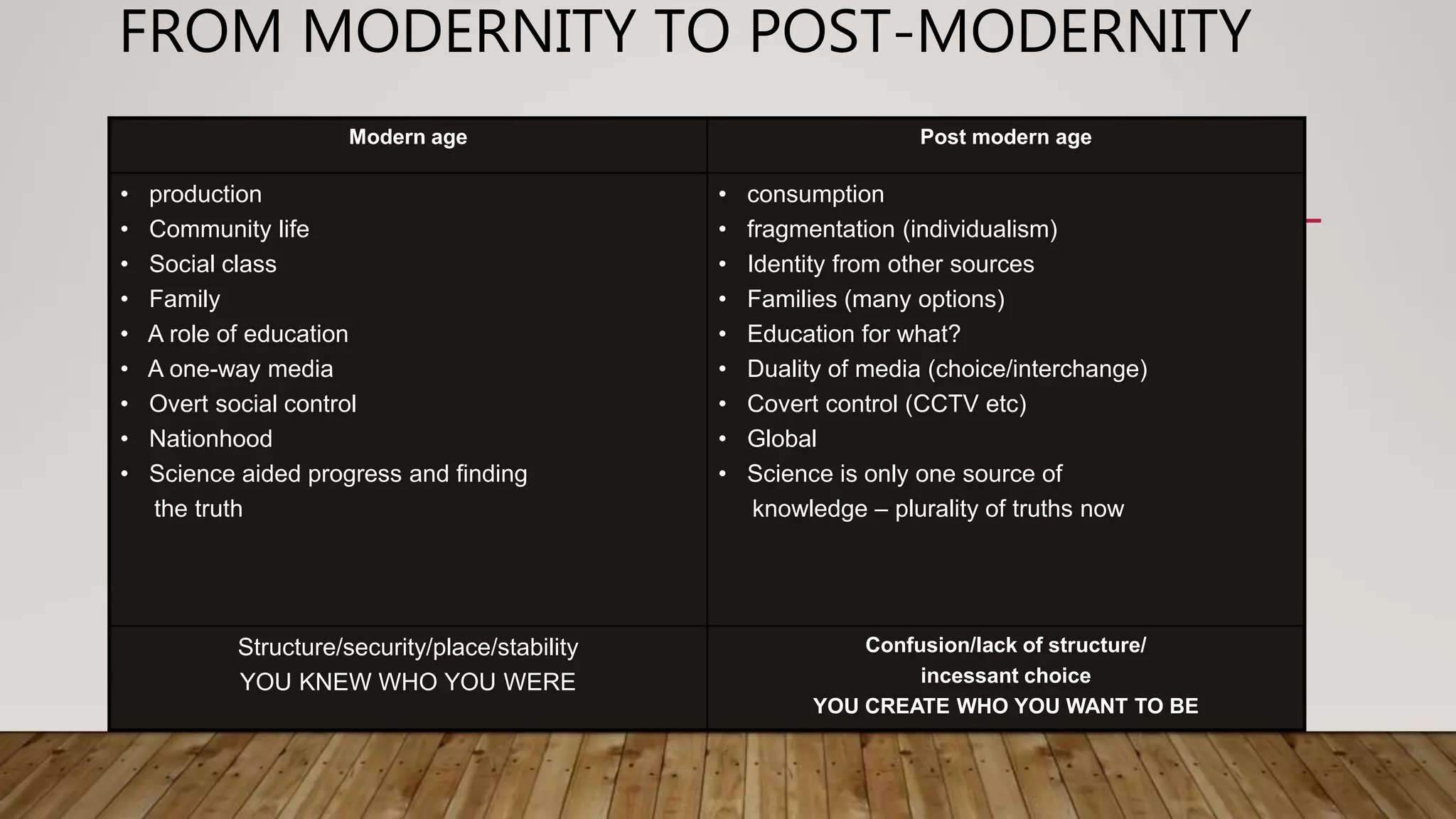
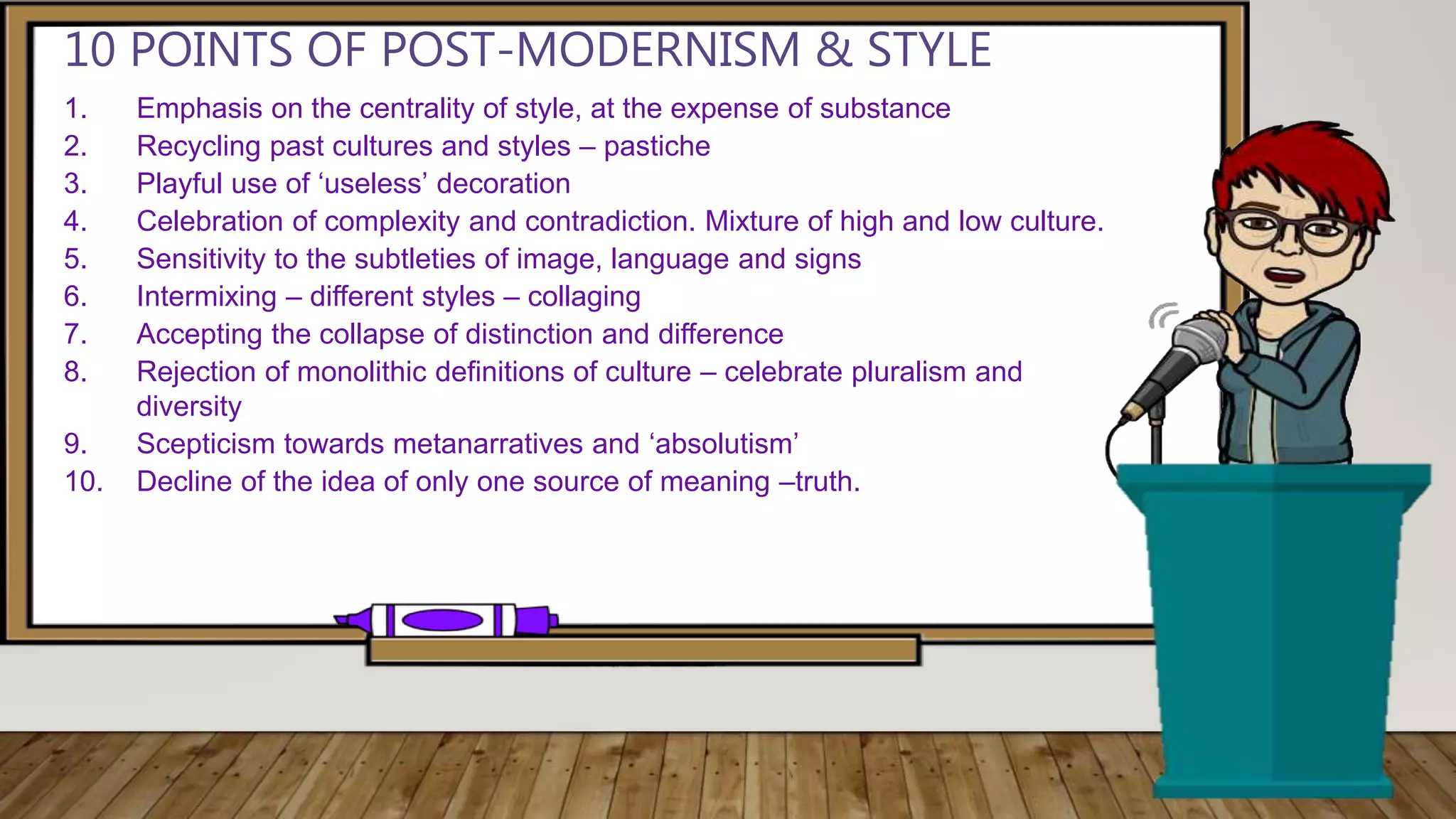
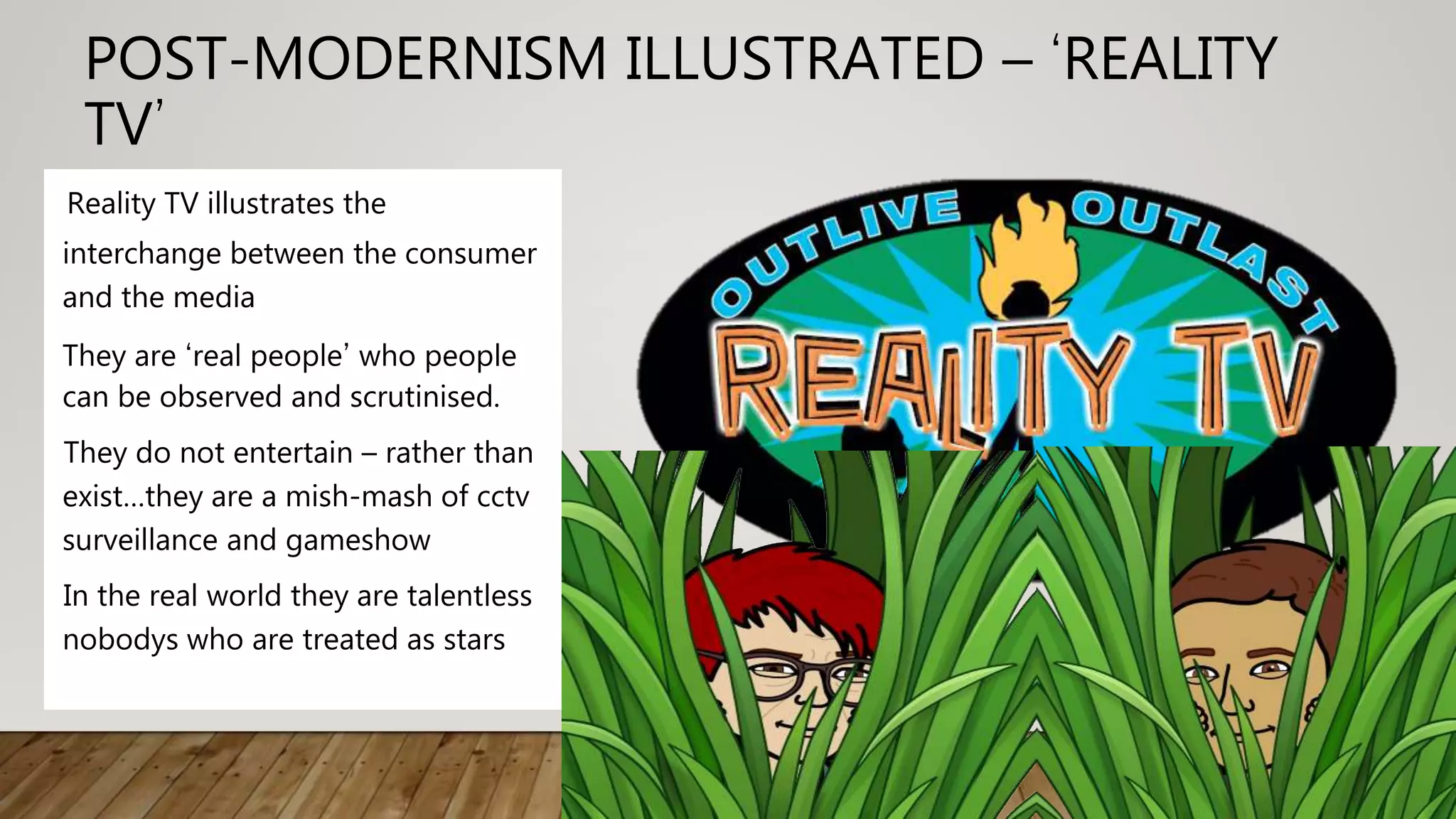
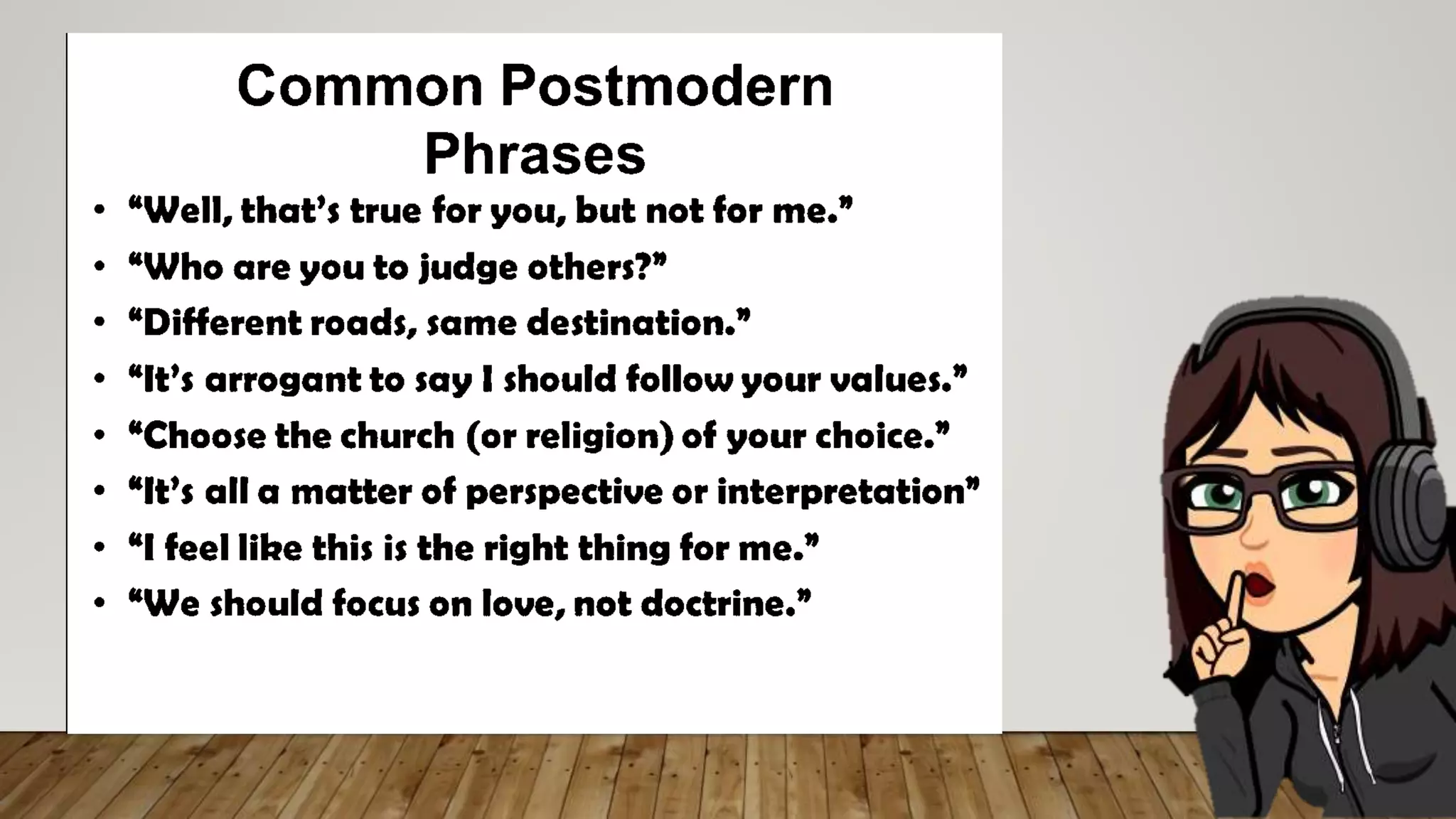
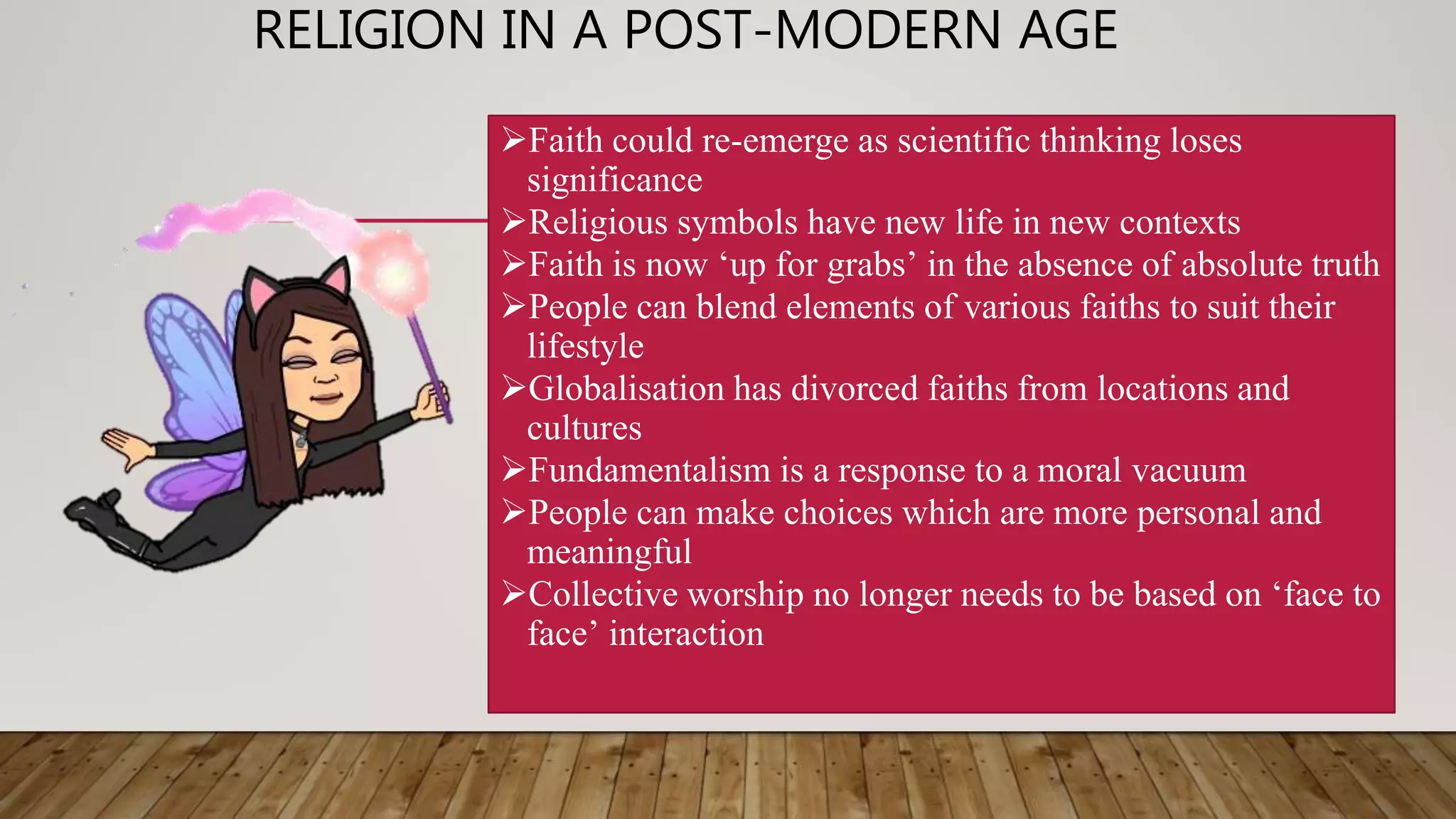
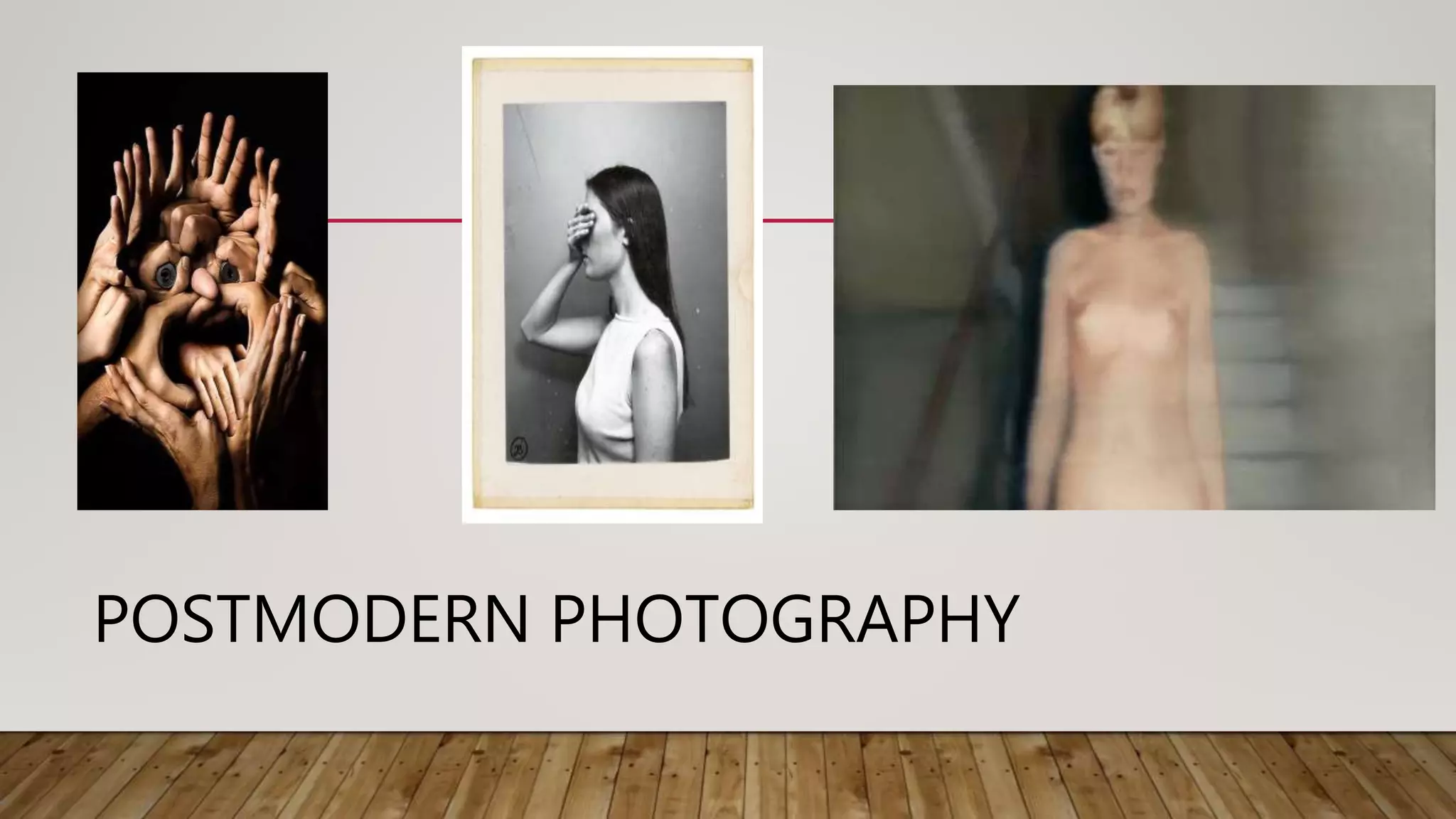
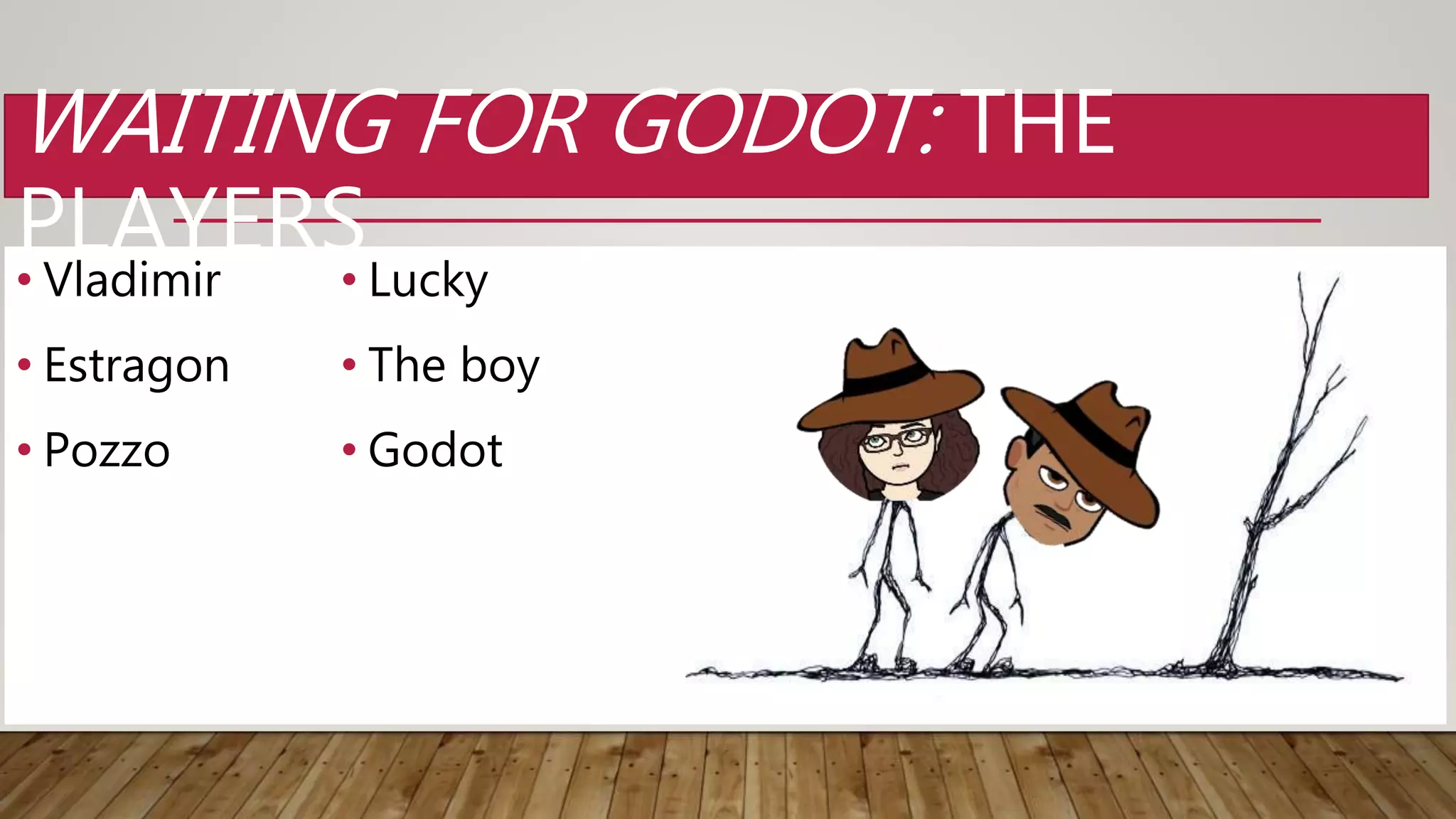
This document discusses postmodernism and the theater of the absurd. It provides context on how World War II led to the development of the theater of the absurd genre, which focuses on the philosophy that all human efforts to find meaning are useless. Key features of postmodernism discussed include an emphasis on style over substance, pastiche, mixing of high and low culture, skepticism of absolute truths, and the decline of metanarratives. Examples used to illustrate postmodern concepts are reality television, which blurs the line between surveillance and entertainment, and Disneyland, which substitutes simulated reality for authentic experiences. The document also addresses how religion and art have adapted in a postmodern age.




![HOW DOES CLARISSA FEEL ABOUT WOMEN?
“She could not resist sometimes yielding to the charm of a woman […], she did
undoubtedly feel what men felt. Only for a moment, but it was enough. It was a
sudden revelation, a tinge like the blush which one tried to check and then, as it
spread, one yielded to its expansion, and rushed to the farthest verge and there
quivered and felt the world come closer, swollen with some astonishing significance,
some pressure of rapture, which split its thin skin and gushed and poured with an
extraordinary alleviation over the cracks and sores! Then, for that moment, she had
seen an illumination; a match burning in a crocus; an inner meaning almost
expressed. But the close withdrew; the hard softened. It was over — the moment.
Against such moments (with women too) there contrasted (as she laid her hat down)
the bed and Baron Marbot and the candle half-burnt.” (2173)](https://image.slidesharecdn.com/elit46cclass21-171204134427/75/Elit-46-c-class-21-9-2048.jpg)