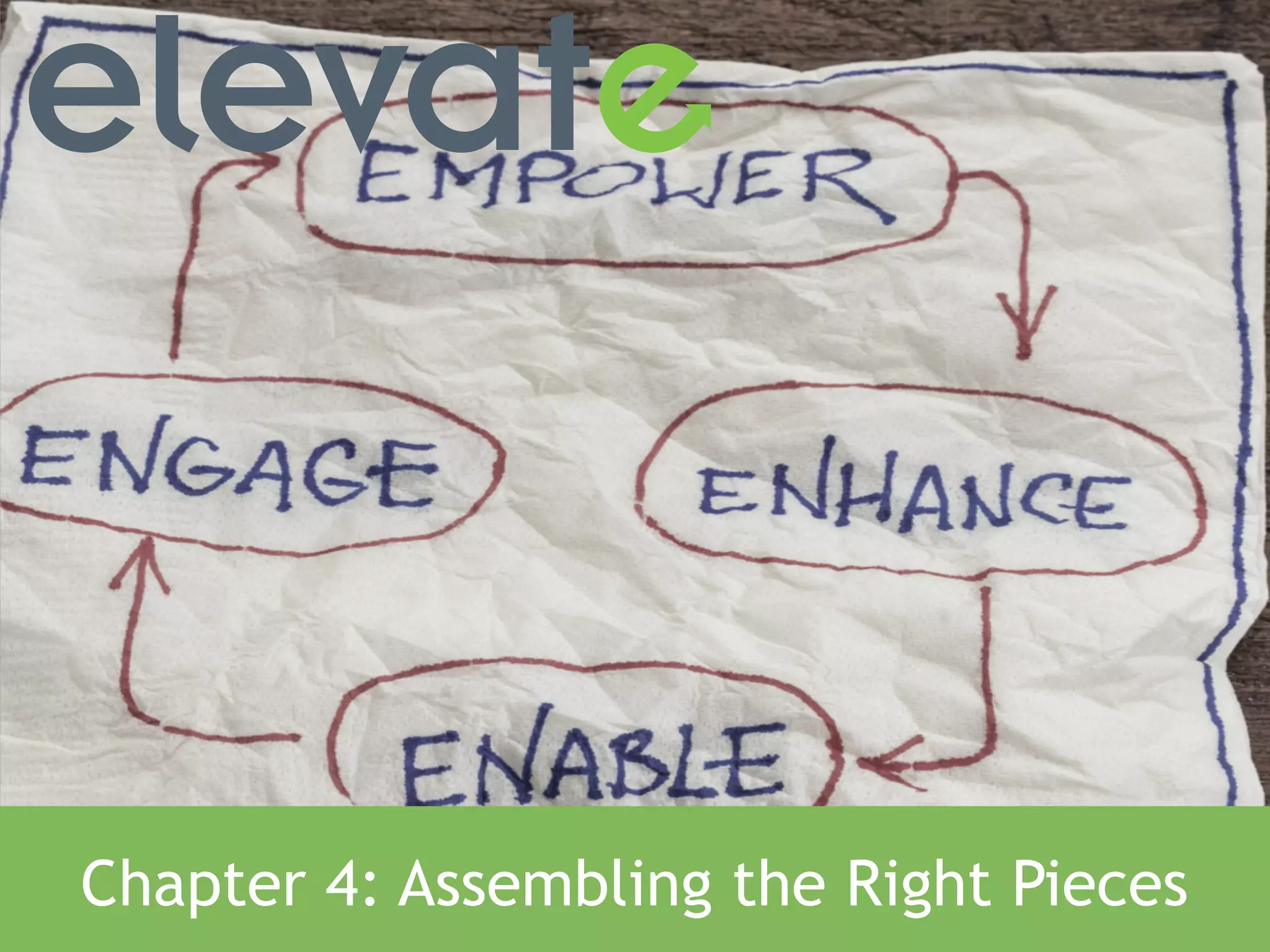
Chapter 4: Assembling the Right Pieces
In the last three chapters of our playbook, we covered why 
customer feedback is important, how to write questions to 
maximize the impact of that feedback, and how to get 
customers to provide feedback. For the fourth chapter, we’re 
going to discuss how to assemble all the pieces of your 
business to achieve success. It’s important that everyone 
within your organization is set up to act on the data you’re 
receiving as part of your customer feedback program. 
We’ll dig into having a champion, establishing the right culture, 
aligning with current processes of your organization, and how 
to motivate employees, from hourly to upper management to 
create a successful program. 
Enjoy! 
2 
Let’s create a better experience 
What we’ll explore: 
ü Establishing the right culture 
ü Aligning with current 
programs and processes 
ü Motivating for Success 
-Joe Stanton 
CEO - Elevate 
Sole property of Elevate | October 2014
3 
The Importance of a Champion 
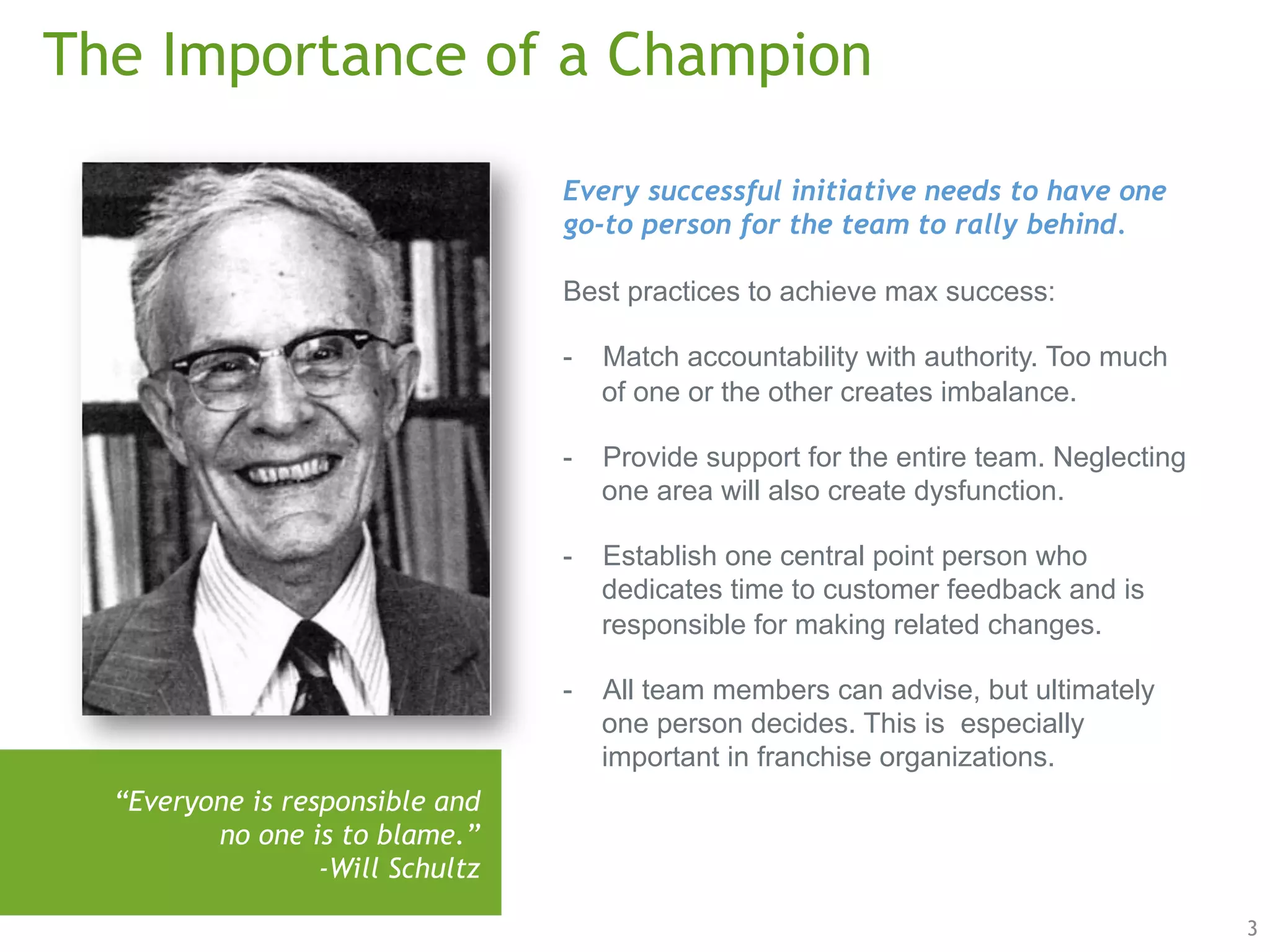
“Everyone is responsible and 
no one is to blame.” 
-Will Schultz 
Every successful initiative needs to have one 
go-to person for the team to rally behind. 
Best practices to achieve max success: 
- Match accountability with authority. Too much 
of one or the other creates imbalance. 
- Provide support for the entire team. Neglecting 
one area will also create dysfunction. 
- Establish one central point person who 
dedicates time to customer feedback and is 
responsible for making related changes. 
- All team members can advise, but ultimately 
one person decides. This is especially 
important in franchise organizations.
4 
Establishing the Right Culture
Establishing the Right Culture 
5 
Messages Must Come From the Top Down 
Top-down communication ensures success. 
Encourage communication throughout the 
organization by: 
- Scheduling kick-off announcements and 
specify individual expectations. 
- Composing personal notes to recognize 
exceptional performers, even down to the 
store level. You can even implement 
feedback scores into employee recognition 
and reward programs. 
- Using automated communication for 
efficiency and consistency. 
- Telling stories, sharing comments and 
utilizing data to develop a foundation for 
consistent communication. 
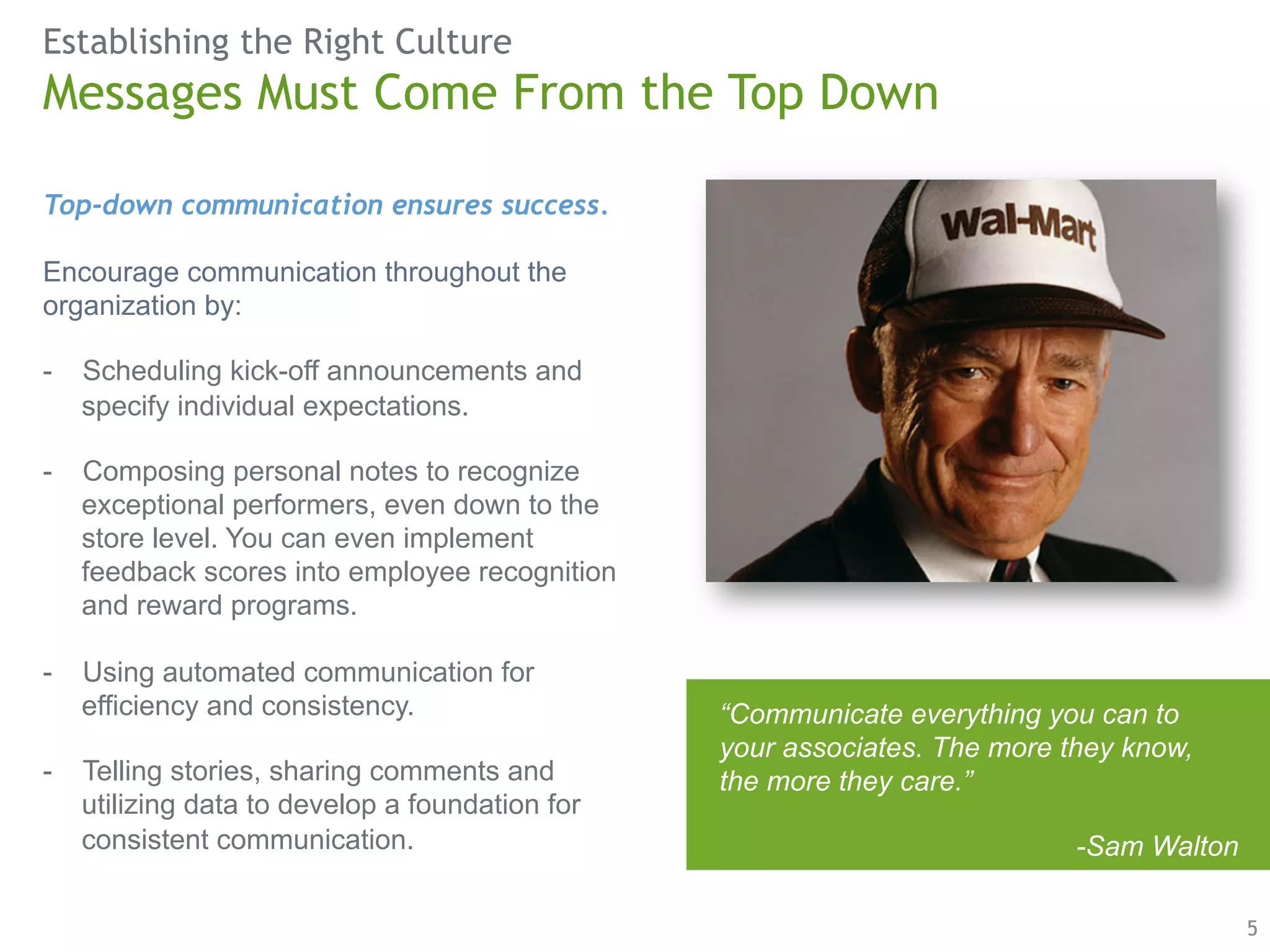
“Communicate everything you can to 
your associates. The more they know, 
the more they care.” 
-Sam Walton
Establishing the Right Culture 
6 
Ingrained in Business 
Put customer feedback to work. Use 
feedback in team meetings so everyone 
has the opportunity to listen and 
participate. 
- Weekly team meetings: Discuss 
comments from customers– both good 
and bad- to determine what needs 
improvement. 
- Monthly manager meetings: Track 
your team’s progress against its goals. 
Are you allowing your employees to 
perform their best work? 
- Quarterly business reviews: Set your 
goals. Measure your performance. Re-evaluate 
when necessary.
Establishing the Right Culture 
Stop focusing on internal issues and start viewing your organization like a customer does. 
7 
Decision Making 
- Refrain from using the phrase “I think.” 
Instead, say “we know” because your 
team is aware of the issue and 
understands how a customer would 
feel in the situation. 
- The facts always win. Use data to 
understand how people perceive your 
business, regardless of inside biases. 
- Customer comments shape a story. 
Use them to make change and pave 
the way forward in your organization.
8 
Aligning with Current Programs and 
Processes
Aligning with Current Programs and Processes 
9 
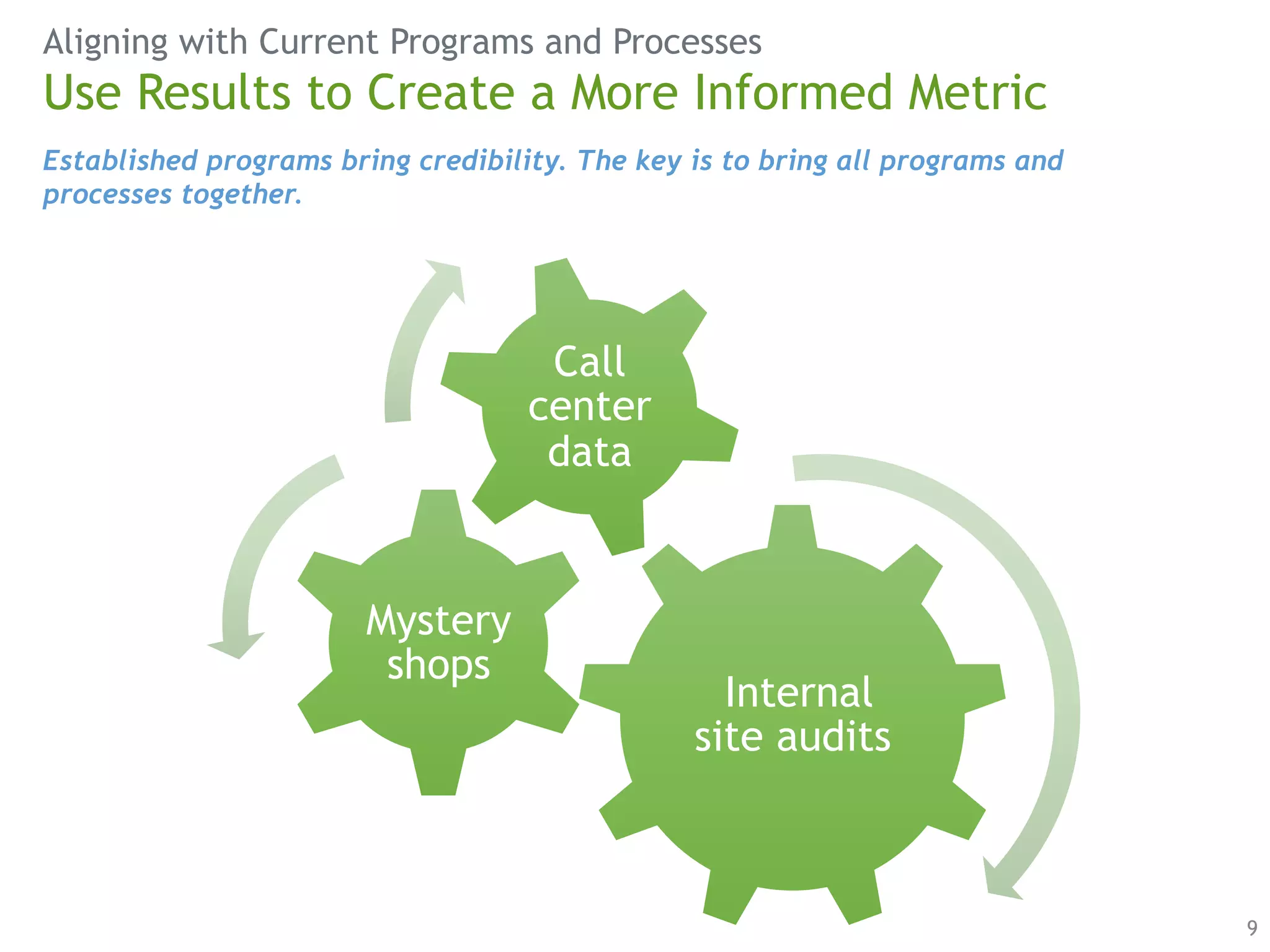
Use Results to Create a More Informed Metric 
Established programs bring credibility. The key is to bring all programs and 
processes together.
Aligning with Current Programs and Processes 
10 
Use Data to Support Other Business Areas 
Data isn’t just helpful for customer service. 
For example, you can: 
- Mine customer comments for 
potential compliance problems to 
avoid messy legal issues. 
- Understand questions consumers 
may have regarding new products 
or services. 
- Better understand where the focus 
should lie in employee field training.
11 
Motivating for Success
Motivating for success 
12 
Reward Behaviors You Want to See 
Some leaders make the mistake of only rewarding end results. It’s important 
not to overlook the positive behavior that leads to those desirable outcomes. 
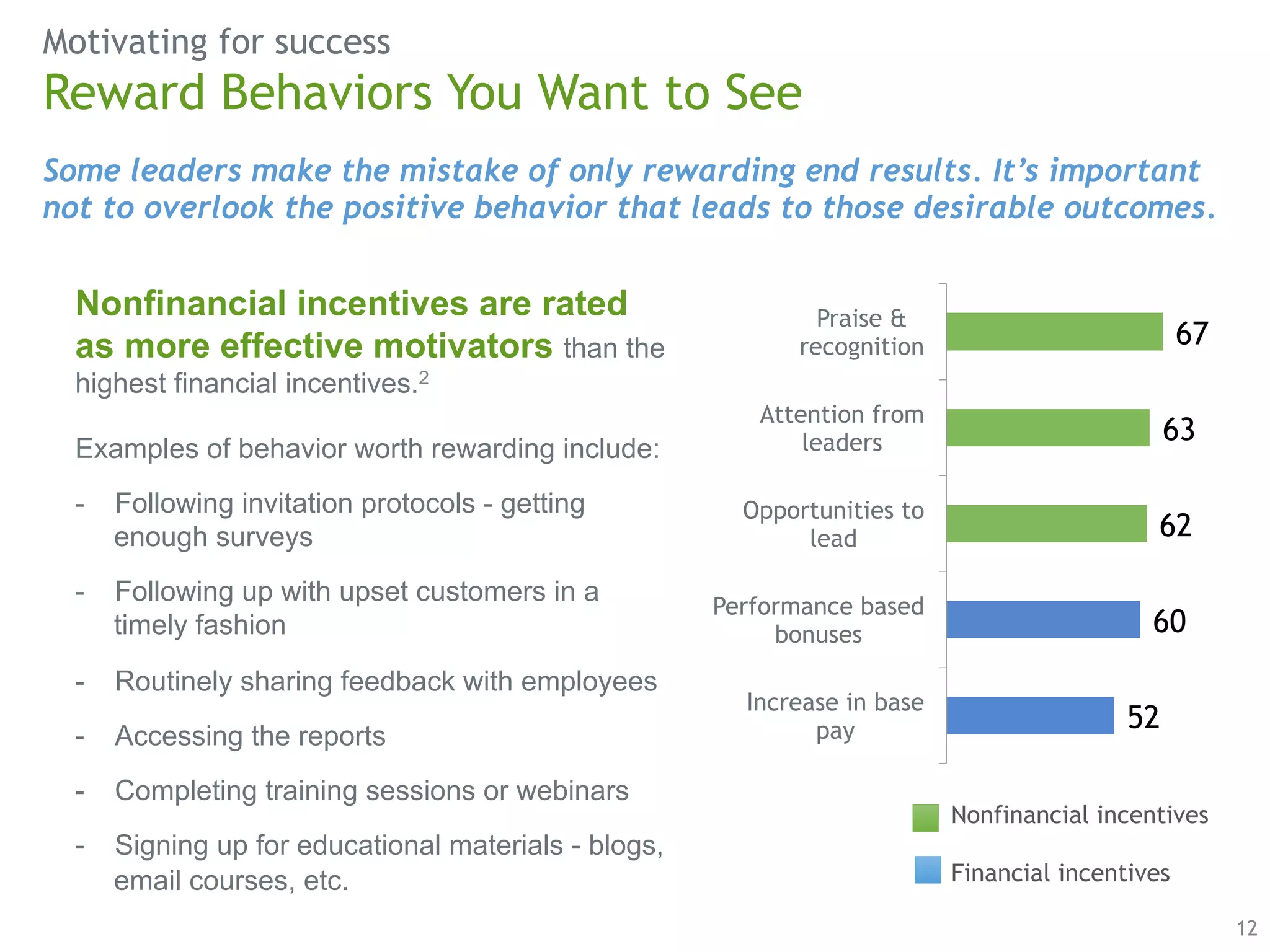
Nonfinancial incentives are rated 
as more effective motivators than the 
highest financial incentives.2 
Examples of behavior worth rewarding include: 
- Following invitation protocols - getting 
enough surveys 
- Following up with upset customers in a 
timely fashion 
- Routinely sharing feedback with employees 
- Accessing the reports 
- Completing training sessions or webinars 
- Signing up for educational materials - blogs, 
email courses, etc. 
67 
62 
60 
52 
63 
Praise & 
recognition 
Attention from 
leaders 
Opportunities to 
lead 
Performance based 
bonuses 
Increase in base 
pay 
Nonfinancial incentives 
Financial incentives
13 
Coming Next 
In Chapter 5, we’ll explore … 
ü Customer feedback as a way of life 
ü It’s all about routine 
ü Data driven decision making 
ü Business planning from the customer’s 
perspective 
ü Integrate with other tools for deeper 
understanding 
Chapter 5 coming soon!
14 
Learn more about Elevate… 
Sources: 
1. Elevate Customer Data 
2. McKinsey & Company 
Elevate is the easiest and most affordable way for restaurants and 
retailers to survey customers who recently dined in one of their 
restaurants or shopped in one of their stores. It allows all sizes of 
restaurants and retailers to: 
- Get immediate feedback from real customers; 
- Follow up with upset customers to get them to come back; and 
- Have better conversations about performance. 
- Channel feedback into the organization versus onto review sites. 
Start your free 30 day trial today. It takes less than 10 minutes to get 
signed up. There are no setup fees and no contracts. 
Learn more about Elevate by visiting www.elevateresearch.com. 
Connect with us: 
Sole property of Elevate | November 2014
let’s create a better experience 
15

Chapter 4: Assembling the Right Pieces

  • 1.
    Chapter 4: Assemblingthe Right Pieces
  • 2.
    In the lastthree chapters of our playbook, we covered why customer feedback is important, how to write questions to maximize the impact of that feedback, and how to get customers to provide feedback. For the fourth chapter, we’re going to discuss how to assemble all the pieces of your business to achieve success. It’s important that everyone within your organization is set up to act on the data you’re receiving as part of your customer feedback program. We’ll dig into having a champion, establishing the right culture, aligning with current processes of your organization, and how to motivate employees, from hourly to upper management to create a successful program. Enjoy! 2 Let’s create a better experience What we’ll explore: ü Establishing the right culture ü Aligning with current programs and processes ü Motivating for Success -Joe Stanton CEO - Elevate Sole property of Elevate | October 2014
  • 3.
    3 The Importanceof a Champion “Everyone is responsible and no one is to blame.” -Will Schultz Every successful initiative needs to have one go-to person for the team to rally behind. Best practices to achieve max success: - Match accountability with authority. Too much of one or the other creates imbalance. - Provide support for the entire team. Neglecting one area will also create dysfunction. - Establish one central point person who dedicates time to customer feedback and is responsible for making related changes. - All team members can advise, but ultimately one person decides. This is especially important in franchise organizations.
  • 4.
    4 Establishing theRight Culture
  • 5.
    Establishing the RightCulture 5 Messages Must Come From the Top Down Top-down communication ensures success. Encourage communication throughout the organization by: - Scheduling kick-off announcements and specify individual expectations. - Composing personal notes to recognize exceptional performers, even down to the store level. You can even implement feedback scores into employee recognition and reward programs. - Using automated communication for efficiency and consistency. - Telling stories, sharing comments and utilizing data to develop a foundation for consistent communication. “Communicate everything you can to your associates. The more they know, the more they care.” -Sam Walton
  • 6.
    Establishing the RightCulture 6 Ingrained in Business Put customer feedback to work. Use feedback in team meetings so everyone has the opportunity to listen and participate. - Weekly team meetings: Discuss comments from customers– both good and bad- to determine what needs improvement. - Monthly manager meetings: Track your team’s progress against its goals. Are you allowing your employees to perform their best work? - Quarterly business reviews: Set your goals. Measure your performance. Re-evaluate when necessary.
  • 7.
    Establishing the RightCulture Stop focusing on internal issues and start viewing your organization like a customer does. 7 Decision Making - Refrain from using the phrase “I think.” Instead, say “we know” because your team is aware of the issue and understands how a customer would feel in the situation. - The facts always win. Use data to understand how people perceive your business, regardless of inside biases. - Customer comments shape a story. Use them to make change and pave the way forward in your organization.
  • 8.
    8 Aligning withCurrent Programs and Processes
  • 9.
    Aligning with CurrentPrograms and Processes 9 Use Results to Create a More Informed Metric Established programs bring credibility. The key is to bring all programs and processes together.
  • 10.
    Aligning with CurrentPrograms and Processes 10 Use Data to Support Other Business Areas Data isn’t just helpful for customer service. For example, you can: - Mine customer comments for potential compliance problems to avoid messy legal issues. - Understand questions consumers may have regarding new products or services. - Better understand where the focus should lie in employee field training.
  • 11.
  • 12.
    Motivating for success 12 Reward Behaviors You Want to See Some leaders make the mistake of only rewarding end results. It’s important not to overlook the positive behavior that leads to those desirable outcomes. Nonfinancial incentives are rated as more effective motivators than the highest financial incentives.2 Examples of behavior worth rewarding include: - Following invitation protocols - getting enough surveys - Following up with upset customers in a timely fashion - Routinely sharing feedback with employees - Accessing the reports - Completing training sessions or webinars - Signing up for educational materials - blogs, email courses, etc. 67 62 60 52 63 Praise & recognition Attention from leaders Opportunities to lead Performance based bonuses Increase in base pay Nonfinancial incentives Financial incentives
  • 13.
    13 Coming Next In Chapter 5, we’ll explore … ü Customer feedback as a way of life ü It’s all about routine ü Data driven decision making ü Business planning from the customer’s perspective ü Integrate with other tools for deeper understanding Chapter 5 coming soon!
  • 14.
    14 Learn moreabout Elevate… Sources: 1. Elevate Customer Data 2. McKinsey & Company Elevate is the easiest and most affordable way for restaurants and retailers to survey customers who recently dined in one of their restaurants or shopped in one of their stores. It allows all sizes of restaurants and retailers to: - Get immediate feedback from real customers; - Follow up with upset customers to get them to come back; and - Have better conversations about performance. - Channel feedback into the organization versus onto review sites. Start your free 30 day trial today. It takes less than 10 minutes to get signed up. There are no setup fees and no contracts. Learn more about Elevate by visiting www.elevateresearch.com. Connect with us: Sole property of Elevate | November 2014
  • 15.
    let’s create abetter experience 15