Magnetic Circuits
Review of Previous Class
Voltage (V) - Force that acts on the electrons to make them
move
Current (A) - Rate of flow of electrons in a conductor
Electrical power (W) - Rate at which energy is being used
or generated
Energy (J)- rate at which work is being done
Direct Current (DC) - does not change direction
Alternating Current (AC) - charges continually change
direction
2
Magnetic Circuit
 Electromagnetism - relays, solenoids, inductors,
chokes, coils, loudspeakers, motors, generators,
transformers, and electricity meters etc
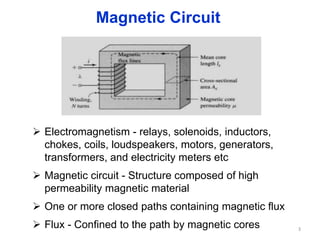
 Magnetic circuit - Structure composed of high
permeability magnetic material
 One or more closed paths containing magnetic flux
 Flux - Confined to the path by magnetic cores 3
 Flux - Generated by permanent magnets or
electromagnets
 Consisting of ferromagnetic materials like iron
 May include air gaps or other materials
 Current passes through a conductor magnetic field is set
up around the conductor
 The quantity of the magnetic field is proportion to the
current
 “North” and “South” poles being determined by the
direction of the current flowing through the conductor
 Direction of the magnetic field is found by Right Hand
Rule or Max well's corkscrew rule
Magnetic Circuit
4
Magnetic Material
• Magnetic materials - classified based permeability
1. Dia Magnetic Materials
µ < 1, repelled by magnet
Ex. Lead, gold, copper, glass, mercury
2. Para Magnetic Materials
µ > 1, Force of attraction by a magnet is low
Ex.: Copper Sulphate, Platinum, Aluminum 3.
3. Ferro Magnetic Materials
µ > > 1, Very much attracted by the magnet
Ex. Iron, Cobalt, Nickel
5
Types of Magnet
Temporary magnets
 magnetized in the presence of a magnetic field
 lose their magnetism gradually, when the magnetic field is removed
 Ex.: Some irons and iron alloys, as well as paper clips and nails
Permanent magnets
 Retain the magnetic property at all times permanently, do not easily
lose their magnetism
 Naturally-occurring (“rare-earth”) elements, or chemical compounds
• Ex.: Alnico (an alloy of aluminum, nickel, and cobalt) and ferrites
(ceramic-like material made from a mix of iron oxides with nickel,
strontium, or cobalt)
Electro Magnet
 Insulated wire wound on a bobbin in many turns and layers in which
current is flowing and a soft iron piece placed in the bobbin is called
electromagnet
 Made up of aluminum, nickel, iron, cobalt steel (ALNICO)
6
F - Magnetomotive force (mmf) in AT/m
B – Flux Density in Tesla or wb/m2
Φ - Total flux in weber
N - Number of turns
I - Current in amperes
S – Reluctance in ampere - turns per weber
µ0 - Permeability of free space in henries per meter (H/m)
µr - Relative permeability
a - Magnetic path cross-sectional area in m2
l - Lengh of magnetic path in m
Magnetic Circuit Parameters
7
8
Magnetic Circuit Definitions
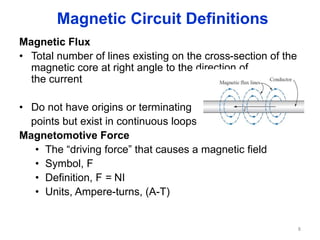
Magnetic Flux
• Total number of lines existing on the cross-section of the
magnetic core at right angle to the direction of
the current
• Do not have origins or terminating
points but exist in continuous loops
Magnetomotive Force
• The “driving force” that causes a magnetic field
• Symbol, F
• Definition, F = NI
• Units, Ampere-turns, (A-T)
9
Magnetic Field Intensity
– mmf gradient, or mmf per unit length
– Symbol, H
– Definition, H = F/l = NI/l
– Units, (A-t/m)
Flux Density
– The concentration of the lines of force in a magnetic circuit
– Symbol, B
– Definition, B = Φ/A
– Units, (Wb/m2), or T (Tesla)
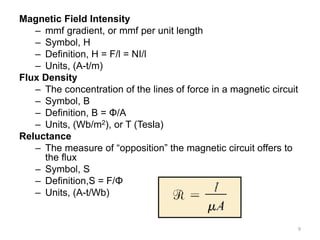
Reluctance
– The measure of “opposition” the magnetic circuit offers to
the flux
– Symbol, S
– Definition,S = F/Φ
– Units, (A-t/Wb)
10
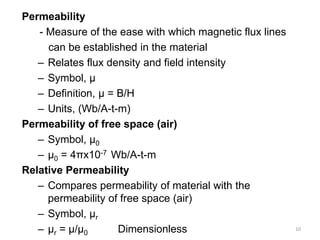
Permeability
- Measure of the ease with which magnetic flux lines
can be established in the material
– Relates flux density and field intensity
– Symbol, μ
– Definition, μ = B/H
– Units, (Wb/A-t-m)
Permeability of free space (air)
– Symbol, μ0
– μ0 = 4πx10-7 Wb/A-t-m
Relative Permeability
– Compares permeability of material with the
permeability of free space (air)
– Symbol, μr
– μr = μ/μ0 Dimensionless
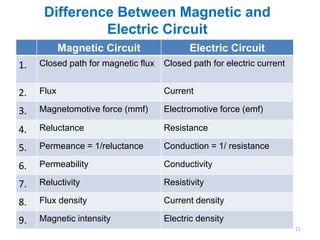
Difference Between Magnetic and
Electric Circuit
Magnetic Circuit Electric Circuit
1. Closed path for magnetic flux Closed path for electric current
2. Flux Current
3. Magnetomotive force (mmf) Electromotive force (emf)
4. Reluctance Resistance
5. Permeance = 1/reluctance Conduction = 1/ resistance
6. Permeability Conductivity
7. Reluctivity Resistivity
8. Flux density Current density
9. Magnetic intensity Electric density
11
12

electro Magnetic circuits and their parameters

  • 1.
  • 2.
    Review of PreviousClass Voltage (V) - Force that acts on the electrons to make them move Current (A) - Rate of flow of electrons in a conductor Electrical power (W) - Rate at which energy is being used or generated Energy (J)- rate at which work is being done Direct Current (DC) - does not change direction Alternating Current (AC) - charges continually change direction 2
  • 3.
    Magnetic Circuit  Electromagnetism- relays, solenoids, inductors, chokes, coils, loudspeakers, motors, generators, transformers, and electricity meters etc  Magnetic circuit - Structure composed of high permeability magnetic material  One or more closed paths containing magnetic flux  Flux - Confined to the path by magnetic cores 3
  • 4.
     Flux -Generated by permanent magnets or electromagnets  Consisting of ferromagnetic materials like iron  May include air gaps or other materials  Current passes through a conductor magnetic field is set up around the conductor  The quantity of the magnetic field is proportion to the current  “North” and “South” poles being determined by the direction of the current flowing through the conductor  Direction of the magnetic field is found by Right Hand Rule or Max well's corkscrew rule Magnetic Circuit 4
  • 5.
    Magnetic Material • Magneticmaterials - classified based permeability 1. Dia Magnetic Materials µ < 1, repelled by magnet Ex. Lead, gold, copper, glass, mercury 2. Para Magnetic Materials µ > 1, Force of attraction by a magnet is low Ex.: Copper Sulphate, Platinum, Aluminum 3. 3. Ferro Magnetic Materials µ > > 1, Very much attracted by the magnet Ex. Iron, Cobalt, Nickel 5
  • 6.
    Types of Magnet Temporarymagnets  magnetized in the presence of a magnetic field  lose their magnetism gradually, when the magnetic field is removed  Ex.: Some irons and iron alloys, as well as paper clips and nails Permanent magnets  Retain the magnetic property at all times permanently, do not easily lose their magnetism  Naturally-occurring (“rare-earth”) elements, or chemical compounds • Ex.: Alnico (an alloy of aluminum, nickel, and cobalt) and ferrites (ceramic-like material made from a mix of iron oxides with nickel, strontium, or cobalt) Electro Magnet  Insulated wire wound on a bobbin in many turns and layers in which current is flowing and a soft iron piece placed in the bobbin is called electromagnet  Made up of aluminum, nickel, iron, cobalt steel (ALNICO) 6
  • 7.
    F - Magnetomotiveforce (mmf) in AT/m B – Flux Density in Tesla or wb/m2 Φ - Total flux in weber N - Number of turns I - Current in amperes S – Reluctance in ampere - turns per weber µ0 - Permeability of free space in henries per meter (H/m) µr - Relative permeability a - Magnetic path cross-sectional area in m2 l - Lengh of magnetic path in m Magnetic Circuit Parameters 7
  • 8.
    8 Magnetic Circuit Definitions MagneticFlux • Total number of lines existing on the cross-section of the magnetic core at right angle to the direction of the current • Do not have origins or terminating points but exist in continuous loops Magnetomotive Force • The “driving force” that causes a magnetic field • Symbol, F • Definition, F = NI • Units, Ampere-turns, (A-T)
  • 9.
    9 Magnetic Field Intensity –mmf gradient, or mmf per unit length – Symbol, H – Definition, H = F/l = NI/l – Units, (A-t/m) Flux Density – The concentration of the lines of force in a magnetic circuit – Symbol, B – Definition, B = Φ/A – Units, (Wb/m2), or T (Tesla) Reluctance – The measure of “opposition” the magnetic circuit offers to the flux – Symbol, S – Definition,S = F/Φ – Units, (A-t/Wb)
  • 10.
    10 Permeability - Measure ofthe ease with which magnetic flux lines can be established in the material – Relates flux density and field intensity – Symbol, μ – Definition, μ = B/H – Units, (Wb/A-t-m) Permeability of free space (air) – Symbol, μ0 – μ0 = 4πx10-7 Wb/A-t-m Relative Permeability – Compares permeability of material with the permeability of free space (air) – Symbol, μr – μr = μ/μ0 Dimensionless
  • 11.
    Difference Between Magneticand Electric Circuit Magnetic Circuit Electric Circuit 1. Closed path for magnetic flux Closed path for electric current 2. Flux Current 3. Magnetomotive force (mmf) Electromotive force (emf) 4. Reluctance Resistance 5. Permeance = 1/reluctance Conduction = 1/ resistance 6. Permeability Conductivity 7. Reluctivity Resistivity 8. Flux density Current density 9. Magnetic intensity Electric density 11
  • 12.