ENERGY PAST PRESENT
AND FUTURE
ELECTRICITY GENERATION
BY
SHU’AIBU MUSA
20122215
COURSE CODE:-ENR 501
DATE:-14-12-2012
CONTENTS
















INTRODUCTION
MAINBODY
Electricity generation
Types of source
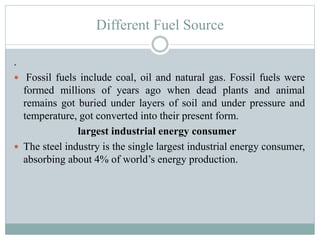
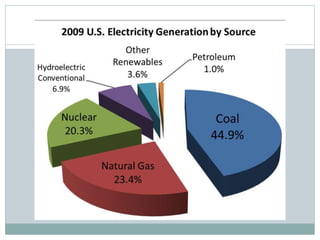
Different fuel source
Annual variation
Cost
Production
Consumption sectors
Percentages
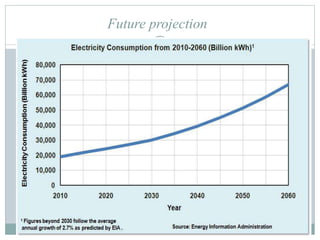
Future projection
Environmental impact
CONCLUSION
REFERENCES
INTRODUCTION
 Electricity generation is the process of

generating electric power from sources of energy
 The fundamental principles of electricity generation
were discovered during the 1820s and early 1830s by the
British scientist Michael Faraday .
Types of sources

 Fossil fuels are the oldest and one of the most widely used

sources of electricity. However, renewable energy like wind,
water, sun and biomass to name a few, are also another alternate
sources for producing electricity
Different Fuel Source
.
 Fossil fuels include coal, oil and natural gas. Fossil fuels were

formed millions of years ago when dead plants and animal
remains got buried under layers of soil and under pressure and
temperature, got converted into their present form.
largest industrial energy consumer
 The steel industry is the single largest industrial energy consumer,
absorbing about 4% of world’s energy production.
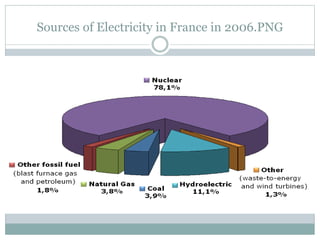
Sources of Electricity in France in 2006.PNG
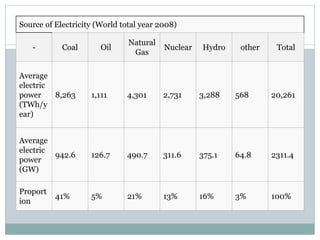
Source of Electricity (World total year 2008)
-

Coal

Oil

Natural
Gas

Nuclear

Hydro

other

Total

Average
electric
power
8,263
(TWh/y
ear)

1,111

4,301

2,731

3,288

568

20,261

Average
electric
942.6
power
(GW)

126.7

490.7

311.6

375.1

64.8

2311.4

Proport
ion

5%

21%

13%

16%

3%

100%

41%
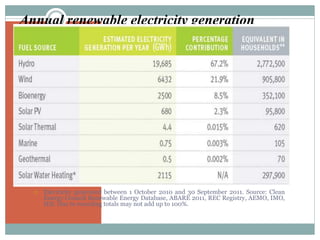
Annual renewable electricity generation



Electricity generated between 1 October 2010 and 30 September 2011. Source: Clean
Energy Council Renewable Energy Database, ABARE 2011, REC Registry, AEMO, IMO,
IES. Due to rounding totals may not add up to 100%.
Seasonality of Demand
 Demand for electricity also varies according to seasons.

Demand from the domestic sector generally peaks during
summer and subsides during monsoon
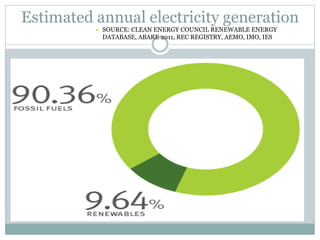
Estimated annual electricity generation
• SOURCE: CLEAN ENERGY COUNCIL RENEWABLE ENERGY

DATABASE, ABARE 2011, REC REGISTRY, AEMO, IMO, IES
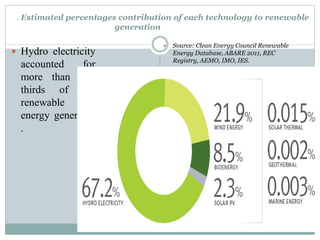
. Estimated percentages contribution of each technology to renewable
generation

 Hydro electricity

accounted
for
more than two
thirds of the
renewable
energy generated
.





Source: Clean Energy Council Renewable
Energy Database, ABARE 2011, REC
Registry, AEMO, IMO, IES.
Due to rounding figures may not add up to
100%
Consumption Pattern/Consumer Profile
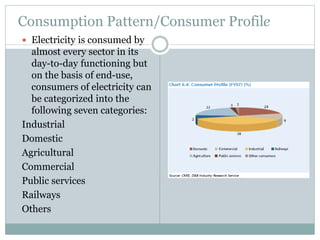
 Electricity is consumed by

almost every sector in its
day-to-day functioning but
on the basis of end-use,
consumers of electricity can
be categorized into the
following seven categories:
Industrial
Domestic
Agricultural
Commercial
Public services
Railways
Others
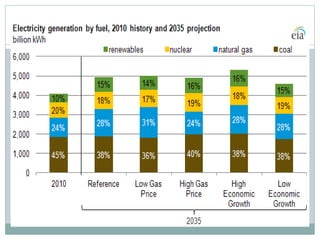
Future projection
The environmental impact of electricity generation
 Is significant because modern society uses large amounts

of electrical power. This power is
normally generated at power plants that convert some
other kind of energy into electrical power. Each system has
advantages and disadvantages, but many of them pose
environmental concerns.
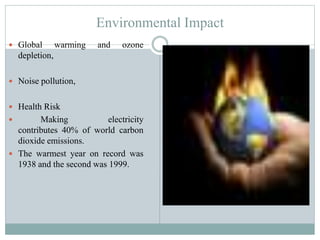
Environmental Impact
 Global

warming

and

ozone

depletion,
 Noise pollution,
 Health Risk


Making
electricity
contributes 40% of world carbon
dioxide emissions.
 The warmest year on record was
1938 and the second was 1999.
CONCLUSION
 Electricity is now a necessity for mankind. An hour of power
cut can make our lives go hay-wire. Depending on the source
of production, electricity can be renewable or non-renewable.
Now, thanks to development in science, electricity is mostly
renewable form of energy
 Electricity (Renewable Energy)

Electricity (Renewable Energy)

  • 1.
    ENERGY PAST PRESENT ANDFUTURE ELECTRICITY GENERATION BY SHU’AIBU MUSA 20122215 COURSE CODE:-ENR 501 DATE:-14-12-2012
  • 2.
    CONTENTS               INTRODUCTION MAINBODY Electricity generation Types ofsource Different fuel source Annual variation Cost Production Consumption sectors Percentages Future projection Environmental impact CONCLUSION REFERENCES
  • 3.
    INTRODUCTION  Electricity generationis the process of generating electric power from sources of energy  The fundamental principles of electricity generation were discovered during the 1820s and early 1830s by the British scientist Michael Faraday .
  • 4.
    Types of sources Fossil fuels are the oldest and one of the most widely used sources of electricity. However, renewable energy like wind, water, sun and biomass to name a few, are also another alternate sources for producing electricity
  • 5.
    Different Fuel Source . Fossil fuels include coal, oil and natural gas. Fossil fuels were formed millions of years ago when dead plants and animal remains got buried under layers of soil and under pressure and temperature, got converted into their present form. largest industrial energy consumer  The steel industry is the single largest industrial energy consumer, absorbing about 4% of world’s energy production.
  • 7.
    Sources of Electricityin France in 2006.PNG
  • 9.
    Source of Electricity(World total year 2008) - Coal Oil Natural Gas Nuclear Hydro other Total Average electric power 8,263 (TWh/y ear) 1,111 4,301 2,731 3,288 568 20,261 Average electric 942.6 power (GW) 126.7 490.7 311.6 375.1 64.8 2311.4 Proport ion 5% 21% 13% 16% 3% 100% 41%
  • 10.
    Annual renewable electricitygeneration  Electricity generated between 1 October 2010 and 30 September 2011. Source: Clean Energy Council Renewable Energy Database, ABARE 2011, REC Registry, AEMO, IMO, IES. Due to rounding totals may not add up to 100%.
  • 13.
    Seasonality of Demand Demand for electricity also varies according to seasons. Demand from the domestic sector generally peaks during summer and subsides during monsoon
  • 14.
    Estimated annual electricitygeneration • SOURCE: CLEAN ENERGY COUNCIL RENEWABLE ENERGY DATABASE, ABARE 2011, REC REGISTRY, AEMO, IMO, IES
  • 15.
    . Estimated percentagescontribution of each technology to renewable generation  Hydro electricity accounted for more than two thirds of the renewable energy generated .   Source: Clean Energy Council Renewable Energy Database, ABARE 2011, REC Registry, AEMO, IMO, IES. Due to rounding figures may not add up to 100%
  • 16.
    Consumption Pattern/Consumer Profile Electricity is consumed by almost every sector in its day-to-day functioning but on the basis of end-use, consumers of electricity can be categorized into the following seven categories: Industrial Domestic Agricultural Commercial Public services Railways Others
  • 17.
  • 18.
    The environmental impactof electricity generation  Is significant because modern society uses large amounts of electrical power. This power is normally generated at power plants that convert some other kind of energy into electrical power. Each system has advantages and disadvantages, but many of them pose environmental concerns.
  • 19.
    Environmental Impact  Global warming and ozone depletion, Noise pollution,  Health Risk  Making electricity contributes 40% of world carbon dioxide emissions.  The warmest year on record was 1938 and the second was 1999.
  • 20.
    CONCLUSION  Electricity isnow a necessity for mankind. An hour of power cut can make our lives go hay-wire. Depending on the source of production, electricity can be renewable or non-renewable. Now, thanks to development in science, electricity is mostly renewable form of energy