Estate Planning/Elder Law and
 Technology for Independent
            Living
              February 4, 2010


           Attorney Terry L. Campbell
       Moertl, Wilkins & Campbell, S.C.
     Suite 1017, 330 East Kilbourn Avenue
      Milwaukee, Wisconsin 53202-3163
                 (414) 276-4366

              www.lawmwc.com
Hostility toward the legal profession is a
 widespread phenomenon.


The legal profession was abolished in
 France in 1789 and complaints about too
 many lawyers are common today in the
 United States.


The Devil's Dictionary defined lawyer as
 “one skilled in circumvention of the law”.
The estate planner or elder law attorney is
 often spared this criticism.


Often still viewed as a “family advisor”.
Not all estate planners are elder law
 attorneys and vice versa.


The traditional estate planner:
    −   Wills and Trusts

    −   Powers of Attorney

    −   Probate
The elder law attorney's legal services often
 include:
    −   Medicaid Planning
    −   Medicare/VA Benefit Issues
    −   Powers of Attorney (perhaps from another
        viewpoint)


Our firm concentrates in estate planning and
 elder law.
The previous slides listed the role of the
 attorney in legal matters. The fact is that
 the role of an attorney in these areas goes
 beyond providing legal advice.


    −   The Dysfunction Factor
    −   Loss of independence
    −   Caregivers
    −   Financial Planning and Assistance
Dysfunction

1. Scattering of Families

2. Changing Values

3. Divorce Rate

4. Lack of Communication

5. Greed and Abuse
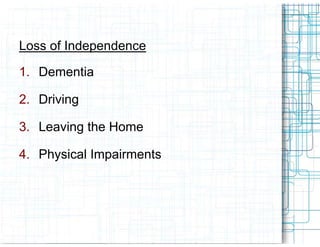
Loss of Independence

1. Dementia

2. Driving

3. Leaving the Home

4. Physical Impairments
Caregivers

   Who

   How and

   Where
Financial Matters

1. Assistance With Investments

2. Paying Bills

3. Organizing and Maintaining Records
Law Offices Are Changing

1.Simple Changes
       Becoming a Resource Center
              Facilities
              Advisors
              Caregivers
              Case Managers
              Billpaying Department
Law Offices Are Changing

1.Dramatic Changes
      Hiring non-attorney professionals such as
      geriatric case managers
      Offering comprehensive life plans – not
      just estate plans. A long-term road map
      for total care. A plan to maximize
      independent living for as long as possible
      and examines how long-term care,
      financial, physical and psychological
      needs will be met.
Technology is a tool that will often allow a
 client to accomplish his or her goals.


Technology is an appropriate spend down
 item for Medicaid.
Technology can ease family tensions and
 the burdens of the member of the family
 assuming the bulk of the responsibilities.


An out-of-state child can check in and be
 assured all is well.
A watch system can aid or get rid of an
  investigation by the Department of Aging.
  This would help in a guardianship action or
  assist in dismissing one.
Focus is always on remaining independent
 and staying at home. To serve our clients,
 we need to be aware of the ways
 technology can better the lives of our aging
 or disabled clients.
Technology can provide the boost to remain
 independent and also remove some of the
 fear of being alone.
Medication Management

Products and services now available that:
       Dispense medications at prescribed
       quantities and times.
       Reminder alarm when medication is
       dispensed.
       Reminder alarm if medication is not
       retrieved.

Medication management at home.
Social Connection and Health Assessments

Web-based communications:
        Allow tele-caregivers ability to check in.
        Family members can use system to chat
        face-to-face with loved one anywhere in
        the world.
        Review medication and wellness
        monitoring.

Goal continues to allow the client to be cared
 for in the least restrictive environment to
 live life as independently as possible.
Emergency Assistance
 Alerts to seek help – 24-hour emergency help.

 Seniors who live alone are twice as likely to
 have a fall than those living with a spouse or
 friend.

 At least one service combines this with safety-
 medication monitoring services.
Adaptive Devices
 Bracelets allow people to keep track of dementia
 wanderers via radio signals.

 Shoes that contain GPS technology.

 Tracking devices for vehicles.

 Special easy-to-use cell phones.
Elder law and estate planning involve more
  than just drafting documents and discussing
  wills and trusts, Medicaid and probate.


Infirmities of aging and the loss of loved ones
  bring fear of the loss of independence.
  Alleviating these fears and helping our
  clients remain independent for as long as
  possible requires us to be aware of options
  and available services, many of which are
  offered by technological advances.

Elder Law Presentation [Read Only]

  • 1.
    Estate Planning/Elder Lawand Technology for Independent Living February 4, 2010 Attorney Terry L. Campbell Moertl, Wilkins & Campbell, S.C. Suite 1017, 330 East Kilbourn Avenue Milwaukee, Wisconsin 53202-3163 (414) 276-4366 www.lawmwc.com
  • 2.
    Hostility toward thelegal profession is a widespread phenomenon. The legal profession was abolished in France in 1789 and complaints about too many lawyers are common today in the United States. The Devil's Dictionary defined lawyer as “one skilled in circumvention of the law”.
  • 3.
    The estate planneror elder law attorney is often spared this criticism. Often still viewed as a “family advisor”.
  • 4.
    Not all estateplanners are elder law attorneys and vice versa. The traditional estate planner: − Wills and Trusts − Powers of Attorney − Probate
  • 5.
    The elder lawattorney's legal services often include: − Medicaid Planning − Medicare/VA Benefit Issues − Powers of Attorney (perhaps from another viewpoint) Our firm concentrates in estate planning and elder law.
  • 6.
    The previous slideslisted the role of the attorney in legal matters. The fact is that the role of an attorney in these areas goes beyond providing legal advice. − The Dysfunction Factor − Loss of independence − Caregivers − Financial Planning and Assistance
  • 7.
    Dysfunction 1. Scattering ofFamilies 2. Changing Values 3. Divorce Rate 4. Lack of Communication 5. Greed and Abuse
  • 8.
    Loss of Independence 1.Dementia 2. Driving 3. Leaving the Home 4. Physical Impairments
  • 9.
    Caregivers Who How and Where
  • 10.
    Financial Matters 1. AssistanceWith Investments 2. Paying Bills 3. Organizing and Maintaining Records
  • 11.
    Law Offices AreChanging 1.Simple Changes Becoming a Resource Center Facilities Advisors Caregivers Case Managers Billpaying Department
  • 12.
    Law Offices AreChanging 1.Dramatic Changes Hiring non-attorney professionals such as geriatric case managers Offering comprehensive life plans – not just estate plans. A long-term road map for total care. A plan to maximize independent living for as long as possible and examines how long-term care, financial, physical and psychological needs will be met.
  • 13.
    Technology is atool that will often allow a client to accomplish his or her goals. Technology is an appropriate spend down item for Medicaid.
  • 14.
    Technology can easefamily tensions and the burdens of the member of the family assuming the bulk of the responsibilities. An out-of-state child can check in and be assured all is well.
  • 15.
    A watch systemcan aid or get rid of an investigation by the Department of Aging. This would help in a guardianship action or assist in dismissing one.
  • 16.
    Focus is alwayson remaining independent and staying at home. To serve our clients, we need to be aware of the ways technology can better the lives of our aging or disabled clients.
  • 17.
    Technology can providethe boost to remain independent and also remove some of the fear of being alone.
  • 18.
    Medication Management Products andservices now available that: Dispense medications at prescribed quantities and times. Reminder alarm when medication is dispensed. Reminder alarm if medication is not retrieved. Medication management at home.
  • 19.
    Social Connection andHealth Assessments Web-based communications: Allow tele-caregivers ability to check in. Family members can use system to chat face-to-face with loved one anywhere in the world. Review medication and wellness monitoring. Goal continues to allow the client to be cared for in the least restrictive environment to live life as independently as possible.
  • 20.
    Emergency Assistance Alertsto seek help – 24-hour emergency help. Seniors who live alone are twice as likely to have a fall than those living with a spouse or friend. At least one service combines this with safety- medication monitoring services.
  • 21.
    Adaptive Devices Braceletsallow people to keep track of dementia wanderers via radio signals. Shoes that contain GPS technology. Tracking devices for vehicles. Special easy-to-use cell phones.
  • 22.
    Elder law andestate planning involve more than just drafting documents and discussing wills and trusts, Medicaid and probate. Infirmities of aging and the loss of loved ones bring fear of the loss of independence. Alleviating these fears and helping our clients remain independent for as long as possible requires us to be aware of options and available services, many of which are offered by technological advances.