EUROPEAN JOURNAL
                    OF INFORMATION SYSTEMS


John, Nourin, Tibletse

                Current Editors:
                Dov Te'eni
                Frantz Rowe
INTRODUCTION
The Professional Source:


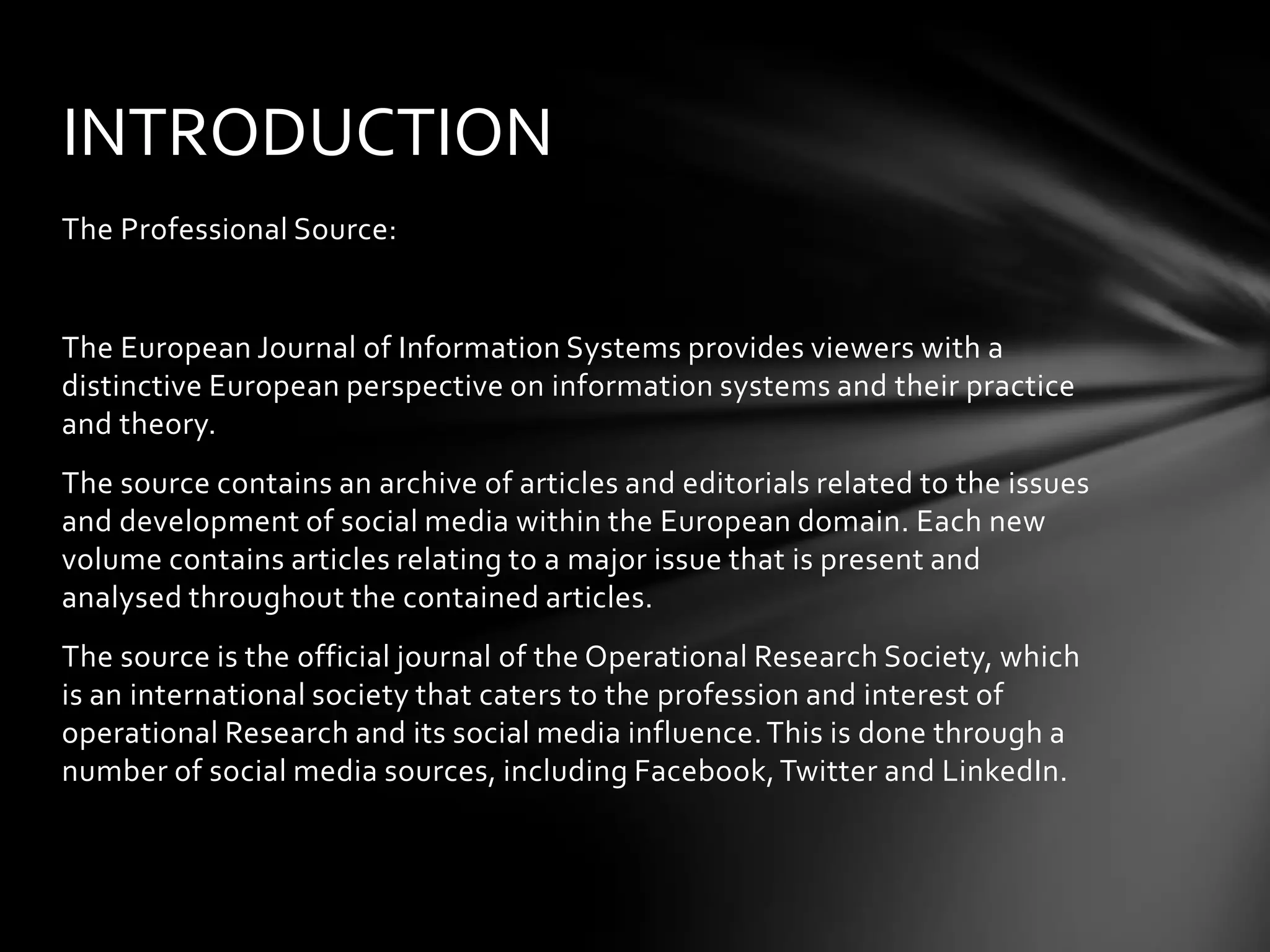
The European Journal of Information Systems provides viewers with a
distinctive European perspective on information systems and their practice
and theory.
The source contains an archive of articles and editorials related to the issues
and development of social media within the European domain. Each new
volume contains articles relating to a major issue that is present and
analysed throughout the contained articles.
The source is the official journal of the Operational Research Society, which
is an international society that caters to the profession and interest of
operational Research and its social media influence. This is done through a
number of social media sources, including Facebook, Twitter and LinkedIn.
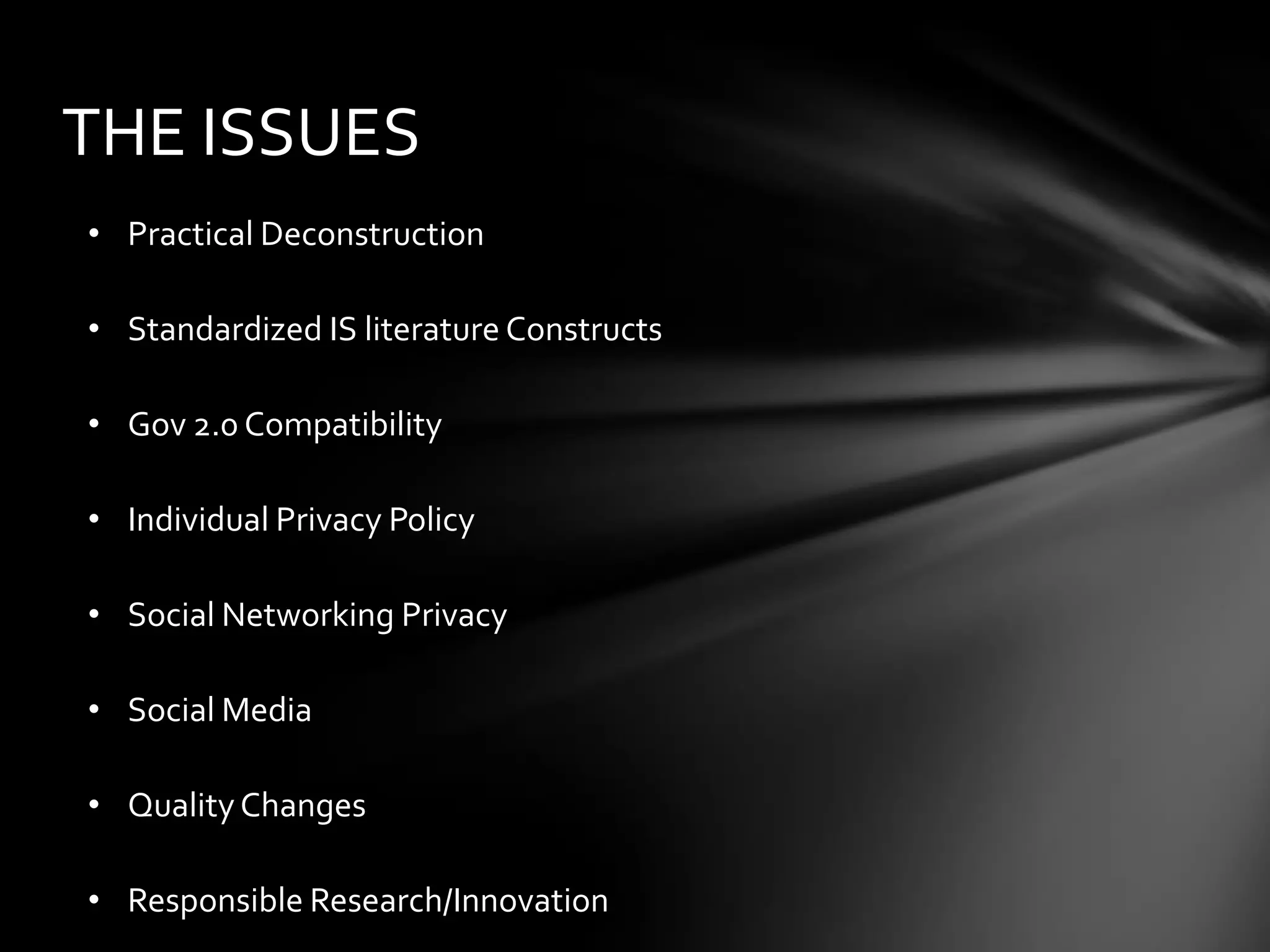
THE ISSUES
• Practical Deconstruction

• Standardized IS literature Constructs

• Gov 2.0 Compatibility

• Individual Privacy Policy

• Social Networking Privacy

• Social Media

• Quality Changes

• Responsible Research/Innovation
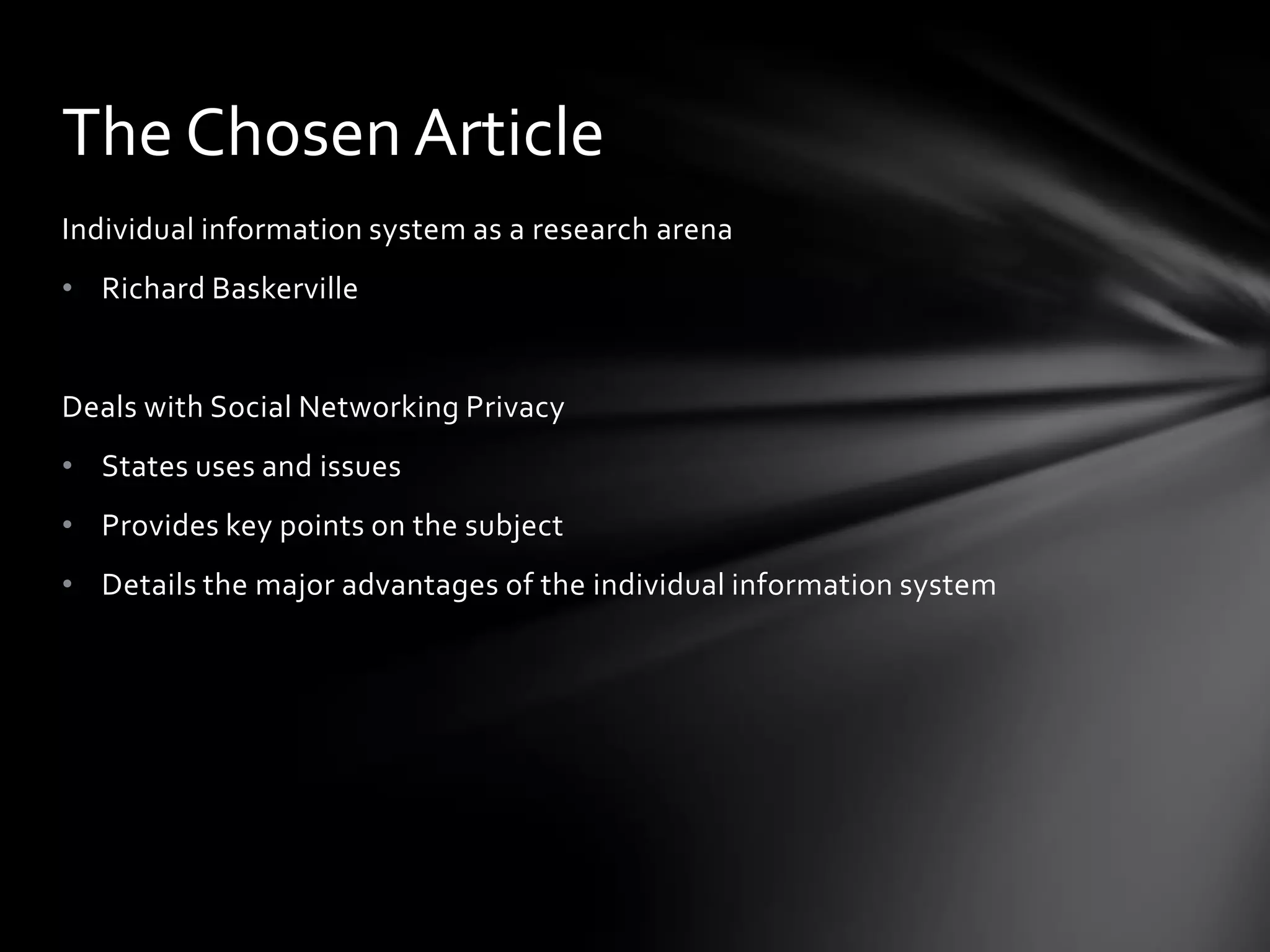
The Chosen Article
Individual information system as a research arena
• Richard Baskerville


Deals with Social Networking Privacy
• States uses and issues
• Provides key points on the subject
• Details the major advantages of the individual information system
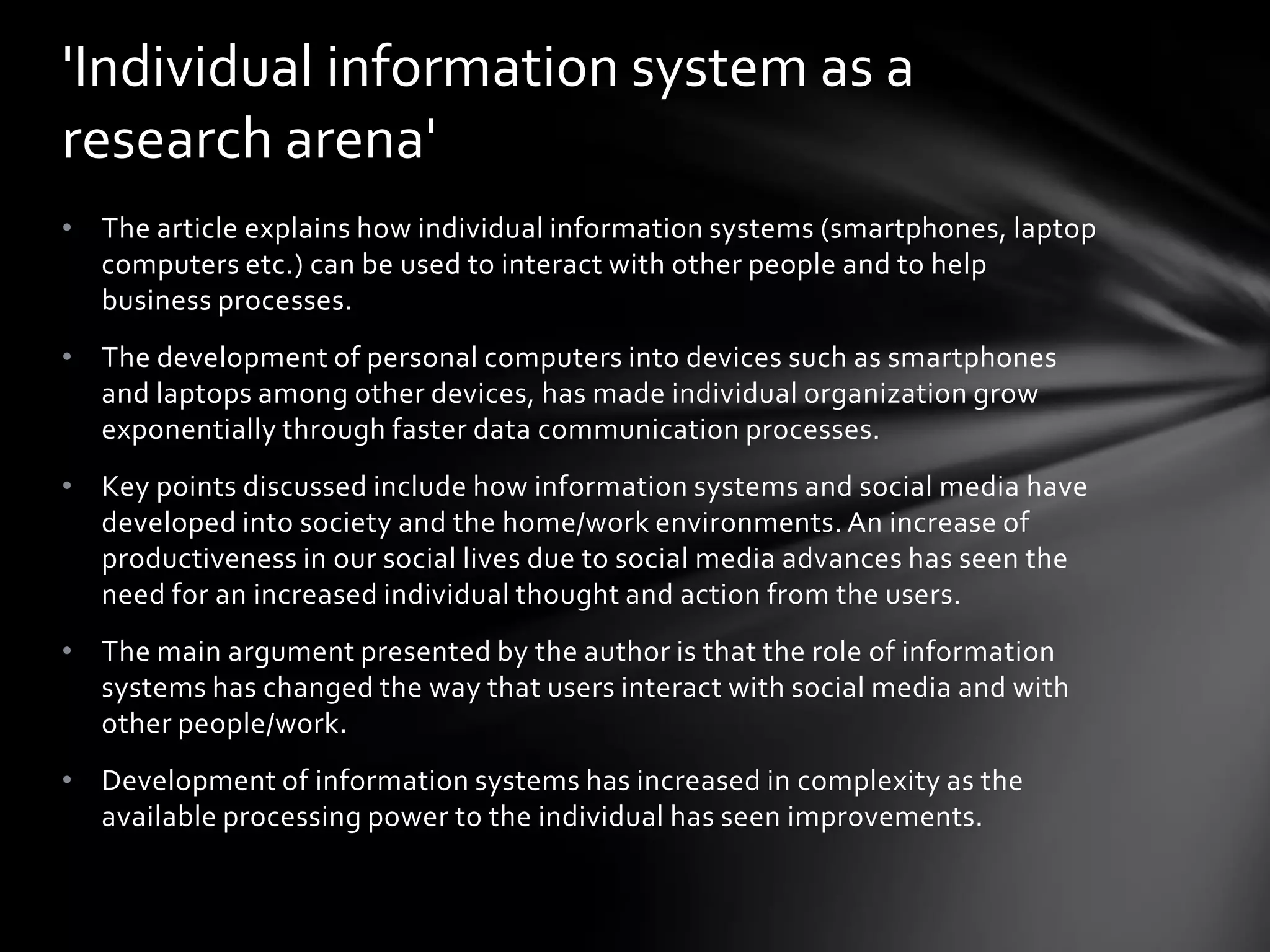
'Individual information system as a
research arena'
• The article explains how individual information systems (smartphones, laptop
  computers etc.) can be used to interact with other people and to help
  business processes.
• The development of personal computers into devices such as smartphones
  and laptops among other devices, has made individual organization grow
  exponentially through faster data communication processes.
• Key points discussed include how information systems and social media have
  developed into society and the home/work environments. An increase of
  productiveness in our social lives due to social media advances has seen the
  need for an increased individual thought and action from the users.
• The main argument presented by the author is that the role of information
  systems has changed the way that users interact with social media and with
  other people/work.
• Development of information systems has increased in complexity as the
  available processing power to the individual has seen improvements.
The Issue
• Social Networking Privacy
• The article describes the increasing danger of privacy and security
  relating to our interaction with information systems and social media.
• Personal information and secure data is at risk of being taken by
  unauthorized users.
• Communication between businesses and employees may result in
  classified data being posted over non-secure social media sources.
• GPS on smartphone photos
• General hacking or unsecured sources and accounts may lead to personal
  information being released.
• Most businesses/organizations utilize social media (Facebook, Twitter) in
  some way
• Identity Theft
Social Networking Privacy


Brandon Roudebush - 2009
Critical Analysis
• Gov 2.0 – Digital Business
 •   Aiming to have more businesses operating online
 •   Increased international competitiveness
 •   Engaging the online client


• In relation to the goals of the Gov 2.0 Digital Business Plan, the issues
  raised in the article regarding privacy and social media use, present a
  clear risk in the deployment of the plan.
• An increase in online business communication/interaction may lead to
  users not familiar with social media policies/procedures posting secure
  and personal information on a non-secure source. This will lead to the
  theft of that data, resulting in identity theft or business record tampering.
Critical Analysis
• Government interactions and social media set-ups may see private
  information being viewed and exploited for personal gain by
  unauthorized users present in social media sources.
• Identity theft of government employees may result in hackers obtaining
  secure documents etc.
• A lack of awareness of privacy dangers in social media among the users
  may lead to inappropriate use of social media sources and the
  exploitation of users by hackers.
• The article makes a good point to be aware of the growing dangers of
  individual privacy policy.
• Individual information systems must be secured to ensure sensitive data
  is not taken or viewed by unauthorized users.
References
Video – Copyright Brandon Roudebush

•   http://www.youtube.com/watch?v=ki5xxqpFNLg


Articles

•   Mike Chiasson, 2011, ‘Reconsidering Deconstruction in Information Systems Research’, EJIS, 21, pp. 192 -206.

•   Rob Kling, 1994, ‘Reading "All About" Computerization: How Genre Conventions Shape Non-Fiction Social
    Analysis’, The Information Society, 10, pp. 147.172.

•   Kumar, Krishan, 1987, ‘Utopia and Anti-Utopia in Modern Times’, New York: Basil Blackwell.

•   Jones, 2003, ‘In Organization Theory and Postmodern Thought’, Sage Publications, pp34 -69.

•   Cooper, 1989, ‘Modernism, post modernism and organizational analysis’, Organization Studies, 4, pp. 479 –502.

•   Greta Polites, 2012, ‘Conceptualizing models using multidimensional constructs: a review and guidelines for their
    use’, EJIS, 21, pp. 22-48.

•   Richard Baskerville, 2011, 'Individual information system as a research arena', EJIs, 20, pp. 251-254.

•   Dov Ten'eni, (2011)'What is communication got to do with IT', EJIS, 21, pp 341-344.

•   Steve Sawyer, and Andrea Tapia, 2007, 'From Finding to Theories: Institutionalizing Social Informatics', The
    Information Society, 23, pp. 263-275

•   Bernd Carsten Stahl, 2012, ‘Responsible Research And Innovation In Information Systems’, EJIS, 21, pp. 207-211.

•   Ray J. Paul, 2011, ‘Quality Changes’, EJIS, 20, pp. 625-628.

Ejis Analysis

  • 1.
    EUROPEAN JOURNAL OF INFORMATION SYSTEMS John, Nourin, Tibletse Current Editors: Dov Te'eni Frantz Rowe
  • 2.
    INTRODUCTION The Professional Source: TheEuropean Journal of Information Systems provides viewers with a distinctive European perspective on information systems and their practice and theory. The source contains an archive of articles and editorials related to the issues and development of social media within the European domain. Each new volume contains articles relating to a major issue that is present and analysed throughout the contained articles. The source is the official journal of the Operational Research Society, which is an international society that caters to the profession and interest of operational Research and its social media influence. This is done through a number of social media sources, including Facebook, Twitter and LinkedIn.
  • 3.
    THE ISSUES • PracticalDeconstruction • Standardized IS literature Constructs • Gov 2.0 Compatibility • Individual Privacy Policy • Social Networking Privacy • Social Media • Quality Changes • Responsible Research/Innovation
  • 4.
    The Chosen Article Individualinformation system as a research arena • Richard Baskerville Deals with Social Networking Privacy • States uses and issues • Provides key points on the subject • Details the major advantages of the individual information system
  • 5.
    'Individual information systemas a research arena' • The article explains how individual information systems (smartphones, laptop computers etc.) can be used to interact with other people and to help business processes. • The development of personal computers into devices such as smartphones and laptops among other devices, has made individual organization grow exponentially through faster data communication processes. • Key points discussed include how information systems and social media have developed into society and the home/work environments. An increase of productiveness in our social lives due to social media advances has seen the need for an increased individual thought and action from the users. • The main argument presented by the author is that the role of information systems has changed the way that users interact with social media and with other people/work. • Development of information systems has increased in complexity as the available processing power to the individual has seen improvements.
  • 6.
    The Issue • SocialNetworking Privacy • The article describes the increasing danger of privacy and security relating to our interaction with information systems and social media. • Personal information and secure data is at risk of being taken by unauthorized users. • Communication between businesses and employees may result in classified data being posted over non-secure social media sources. • GPS on smartphone photos • General hacking or unsecured sources and accounts may lead to personal information being released. • Most businesses/organizations utilize social media (Facebook, Twitter) in some way • Identity Theft
  • 7.
  • 8.
    Critical Analysis • Gov2.0 – Digital Business • Aiming to have more businesses operating online • Increased international competitiveness • Engaging the online client • In relation to the goals of the Gov 2.0 Digital Business Plan, the issues raised in the article regarding privacy and social media use, present a clear risk in the deployment of the plan. • An increase in online business communication/interaction may lead to users not familiar with social media policies/procedures posting secure and personal information on a non-secure source. This will lead to the theft of that data, resulting in identity theft or business record tampering.
  • 9.
    Critical Analysis • Governmentinteractions and social media set-ups may see private information being viewed and exploited for personal gain by unauthorized users present in social media sources. • Identity theft of government employees may result in hackers obtaining secure documents etc. • A lack of awareness of privacy dangers in social media among the users may lead to inappropriate use of social media sources and the exploitation of users by hackers. • The article makes a good point to be aware of the growing dangers of individual privacy policy. • Individual information systems must be secured to ensure sensitive data is not taken or viewed by unauthorized users.
  • 10.
    References Video – CopyrightBrandon Roudebush • http://www.youtube.com/watch?v=ki5xxqpFNLg Articles • Mike Chiasson, 2011, ‘Reconsidering Deconstruction in Information Systems Research’, EJIS, 21, pp. 192 -206. • Rob Kling, 1994, ‘Reading "All About" Computerization: How Genre Conventions Shape Non-Fiction Social Analysis’, The Information Society, 10, pp. 147.172. • Kumar, Krishan, 1987, ‘Utopia and Anti-Utopia in Modern Times’, New York: Basil Blackwell. • Jones, 2003, ‘In Organization Theory and Postmodern Thought’, Sage Publications, pp34 -69. • Cooper, 1989, ‘Modernism, post modernism and organizational analysis’, Organization Studies, 4, pp. 479 –502. • Greta Polites, 2012, ‘Conceptualizing models using multidimensional constructs: a review and guidelines for their use’, EJIS, 21, pp. 22-48. • Richard Baskerville, 2011, 'Individual information system as a research arena', EJIs, 20, pp. 251-254. • Dov Ten'eni, (2011)'What is communication got to do with IT', EJIS, 21, pp 341-344. • Steve Sawyer, and Andrea Tapia, 2007, 'From Finding to Theories: Institutionalizing Social Informatics', The Information Society, 23, pp. 263-275 • Bernd Carsten Stahl, 2012, ‘Responsible Research And Innovation In Information Systems’, EJIS, 21, pp. 207-211. • Ray J. Paul, 2011, ‘Quality Changes’, EJIS, 20, pp. 625-628.