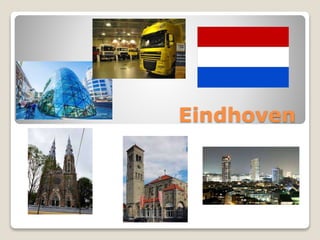
Eindhoven
Overview
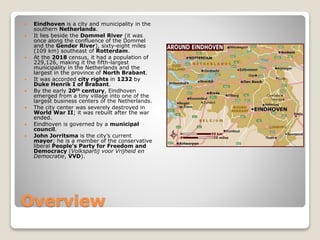
 Eindhoven is a city and municipality in the
southern Netherlands.
 It lies beside the Dommel River (it was
once along the confluence of the Dommel
and the Gender River), sixty-eight miles
(109 km) southeast of Rotterdam.
 At the 2018 census, it had a population of
229,126, making it the fifth-largest
municipality in the Netherlands and the
largest in the province of North Brabant.
 It was accorded city rights in 1232 by
Duke Henrik I of Brabant.
 By the early 20th century, Eindhoven
emerged from a tiny village into one of the
largest business centers of the Netherlands.
 The city center was severely destroyed in
World War II; it was rebuilt after the war
ended.
 Eindhoven is governed by a municipal
council.
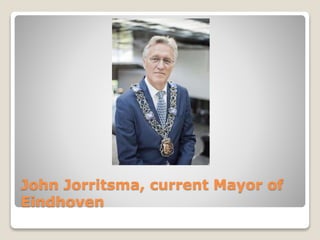
 John Jorritsma is the city’s current
mayor; he is a member of the conservative
liberal People’s Party for Freedom and
Democracy (Volkspartij voor Vrijheid en
Democratie, VVD).
John Jorritsma, current Mayor of
Eindhoven
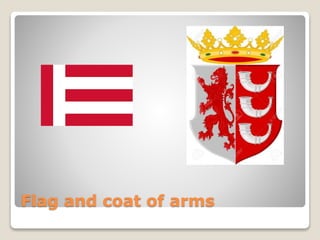
Flag and coat of arms
Developments in the 20th century
 In 1920, five adjacent municipalities were
annexed; Eindhoven’s population thus
increased from 6,000 to 45,000, massively
increasing its area.
 Its population has more than quadrupled
since.
 A great deal of this expansion was
attributable to N. V. Philips’
Gloeilampenfabrieken, a major Dutch
electronics company that was founded in
Eindhoven in 1891 and constructed
numerous factories there.
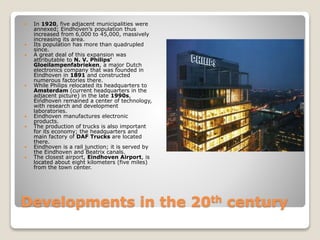
 While Philips relocated its headquarters to
Amsterdam (current headquarters in the
adjacent picture) in the late 1990s,
Eindhoven remained a center of technology,
with research and development
laboratories.
 Eindhoven manufactures electronic
products.
 The production of trucks is also important
for its economy; the headquarters and
main factory of DAF Trucks are located
there.
 Eindhoven is a rail junction; it is served by
the Eindhoven and Beatrix canals.
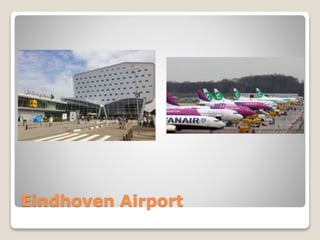
 The closest airport, Eindhoven Airport, is
located about eight kilometers (five miles)
from the town center.
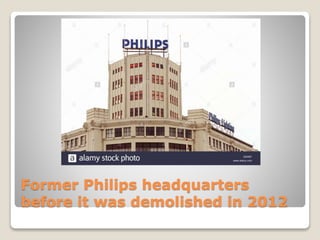
Former Philips headquarters
before it was demolished in 2012
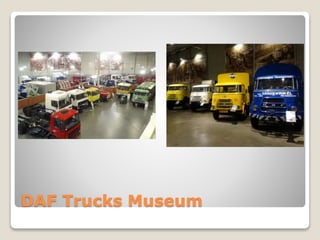
DAF Trucks Museum
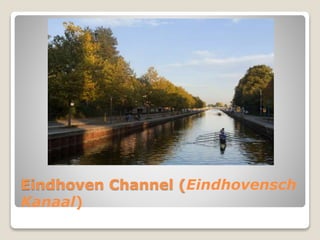
Eindhoven Channel (Eindhovensch
Kanaal)
Eindhoven Airport
Education and culture
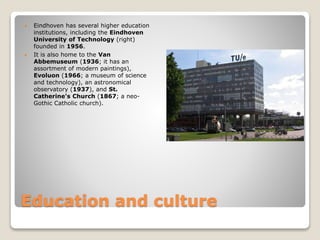
 Eindhoven has several higher education
institutions, including the Eindhoven
University of Technology (right)
founded in 1956.
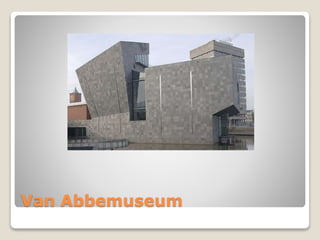
 It is also home to the Van
Abbemuseum (1936; it has an
assortment of modern paintings),
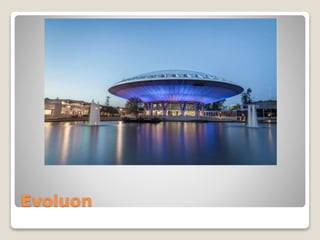
Evoluon (1966; a museum of science
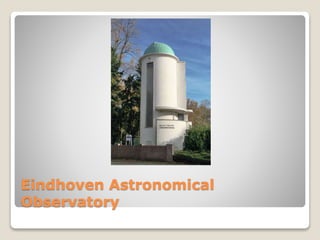
and technology), an astronomical
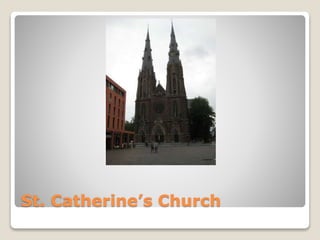
observatory (1937), and St.
Catherine's Church (1867; a neo-
Gothic Catholic church).
Van Abbemuseum
Evoluon
Eindhoven Astronomical
Observatory
St. Catherine’s Church
Sources
 https://www.britannica.com/place/Eindhoven
 https://en.wikipedia.org/wiki/Eindhoven
 https://en.wikipedia.org/wiki/DAF_Trucks

Eindhoven

  • 1.
  • 2.
    Overview  Eindhoven isa city and municipality in the southern Netherlands.  It lies beside the Dommel River (it was once along the confluence of the Dommel and the Gender River), sixty-eight miles (109 km) southeast of Rotterdam.  At the 2018 census, it had a population of 229,126, making it the fifth-largest municipality in the Netherlands and the largest in the province of North Brabant.  It was accorded city rights in 1232 by Duke Henrik I of Brabant.  By the early 20th century, Eindhoven emerged from a tiny village into one of the largest business centers of the Netherlands.  The city center was severely destroyed in World War II; it was rebuilt after the war ended.  Eindhoven is governed by a municipal council.  John Jorritsma is the city’s current mayor; he is a member of the conservative liberal People’s Party for Freedom and Democracy (Volkspartij voor Vrijheid en Democratie, VVD).
  • 3.
    John Jorritsma, currentMayor of Eindhoven
  • 4.
  • 5.
    Developments in the20th century  In 1920, five adjacent municipalities were annexed; Eindhoven’s population thus increased from 6,000 to 45,000, massively increasing its area.  Its population has more than quadrupled since.  A great deal of this expansion was attributable to N. V. Philips’ Gloeilampenfabrieken, a major Dutch electronics company that was founded in Eindhoven in 1891 and constructed numerous factories there.  While Philips relocated its headquarters to Amsterdam (current headquarters in the adjacent picture) in the late 1990s, Eindhoven remained a center of technology, with research and development laboratories.  Eindhoven manufactures electronic products.  The production of trucks is also important for its economy; the headquarters and main factory of DAF Trucks are located there.  Eindhoven is a rail junction; it is served by the Eindhoven and Beatrix canals.  The closest airport, Eindhoven Airport, is located about eight kilometers (five miles) from the town center.
  • 6.
    Former Philips headquarters beforeit was demolished in 2012
  • 7.
  • 8.
  • 9.
  • 10.
    Education and culture Eindhoven has several higher education institutions, including the Eindhoven University of Technology (right) founded in 1956.  It is also home to the Van Abbemuseum (1936; it has an assortment of modern paintings), Evoluon (1966; a museum of science and technology), an astronomical observatory (1937), and St. Catherine's Church (1867; a neo- Gothic Catholic church).
  • 11.
  • 12.
  • 13.
  • 14.
  • 15.