EIDM and the 6S Pyramid 
NURS 1G03 
Laura Banfield 
School of Nursing Librarian 
January 2012
Learning Objectives 
• Review the definition and model of Evidence 
Informed Decision Making 
• Become familiar with the components of the 
6S Pyramid 
• Practice searching resources from the 6S 
Pyramid
EIDM was originally called Evidence- 
Based Practice (EBP) 
EBP is: 
“The integration of best research evidence 
with clinical expertise and patient values 
to facilitate clinical decision making” 
(Sackett et al., 2000)
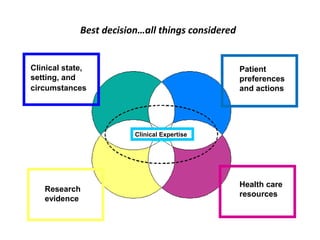
Best decision…all things considered 
Clinical state, 
setting, and 
circumstances 
Patient 
preferences 
and actions 
Research 
evidence 
Health care 
resources 
CCllininiiccaall E Exxppeerrttiissee
Steps of EIDM 
1. Construct a relevant, answerable question from 
a clinical case. *clinical uncertainty* 
2. Search the literature to retrieve the best 
evidence. 
3. Critically appraise the literature (evidence) for 
validity and applicability. 
4. Apply the evidence to your clinical practice. 
5. Evaluate the outcome or performance. 
*From: Flemming, K. (1998). Asking answerable questions. Evidence-Based Nursing, 1(2), 
36-7.
Sample foreground question 
Are silver dressings more 
effective than standard 
gauze dressings for 
promoting healing of leg 
ulcers in an elderly woman?
Clinical questions ????? 
• Background questions 
• Need to be answered first 
• Can be answered by books or general 
Websites 
• Foreground questions (use 6S pyramid) 
• Need to be very focused 
• Can be answered by research published in 
journal articles
Learn to love PICO
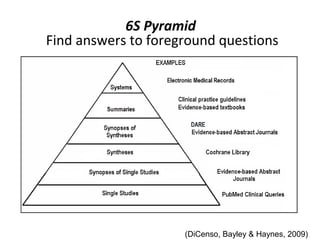
6S Pyramid 
Find answers to foreground questions 
(DiCenso, Bayley & Haynes, 2009)
Systems 
“Support clinical decision making through linking all 
relevant best research evidence about a clinical 
situation directly to a patient’s record.” 
(Haynes 2008) 
Sources of Systems 
• Integrative Electronic Patient Records 
*Note: We will not be using Systems.
Summaries 
“Summaries integrate best available evidence from 
lower layers … to provide a full range of evidence 
concerning management options for a given 
health problem.” 
(Haynes, 2007) 
Sources of Summaries 
• Clinical Practice Guidelines 
• Evidence Based Texts
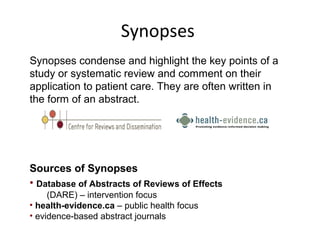
Synopses 
Synopses condense and highlight the key points of a 
study or systematic review and comment on their 
application to patient care. They are often written in 
the form of an abstract. 
Sources of Synopses 
• Database of Abstracts of Reviews of Effects 
(DARE) – intervention focus 
• health-evidence.ca – public health focus 
• evidence-based abstract journals
Syntheses: 
Systematic Reviews 
Consolidate the literature on a specific topic: 
• comprehensive identification of best studies 
• review of study relevance 
• evaluation of quality of research methodology 
• extraction and analysis of data 
• draw conclusions 
Sources of Syntheses: 
• The Cochrane Library (the “gold” standard) 
• Health care journals
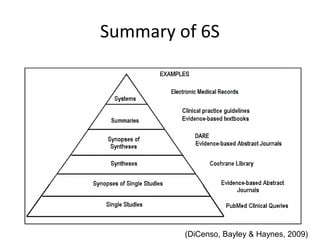
Summary of 6S 
(DiCenso, Bayley & Haynes, 2009)
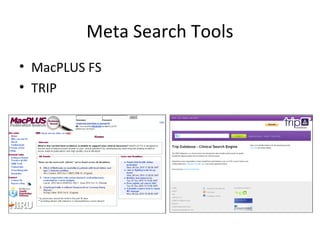
Meta Search Tools 
• MacPLUS FS 
• TRIP

Eidm level1 fall2014mm

  • 1.
    EIDM and the6S Pyramid NURS 1G03 Laura Banfield School of Nursing Librarian January 2012
  • 2.
    Learning Objectives •Review the definition and model of Evidence Informed Decision Making • Become familiar with the components of the 6S Pyramid • Practice searching resources from the 6S Pyramid
  • 3.
    EIDM was originallycalled Evidence- Based Practice (EBP) EBP is: “The integration of best research evidence with clinical expertise and patient values to facilitate clinical decision making” (Sackett et al., 2000)
  • 4.
    Best decision…all thingsconsidered Clinical state, setting, and circumstances Patient preferences and actions Research evidence Health care resources CCllininiiccaall E Exxppeerrttiissee
  • 5.
    Steps of EIDM 1. Construct a relevant, answerable question from a clinical case. *clinical uncertainty* 2. Search the literature to retrieve the best evidence. 3. Critically appraise the literature (evidence) for validity and applicability. 4. Apply the evidence to your clinical practice. 5. Evaluate the outcome or performance. *From: Flemming, K. (1998). Asking answerable questions. Evidence-Based Nursing, 1(2), 36-7.
  • 6.
    Sample foreground question Are silver dressings more effective than standard gauze dressings for promoting healing of leg ulcers in an elderly woman?
  • 7.
    Clinical questions ????? • Background questions • Need to be answered first • Can be answered by books or general Websites • Foreground questions (use 6S pyramid) • Need to be very focused • Can be answered by research published in journal articles
  • 8.
  • 9.
    6S Pyramid Findanswers to foreground questions (DiCenso, Bayley & Haynes, 2009)
  • 10.
    Systems “Support clinicaldecision making through linking all relevant best research evidence about a clinical situation directly to a patient’s record.” (Haynes 2008) Sources of Systems • Integrative Electronic Patient Records *Note: We will not be using Systems.
  • 11.
    Summaries “Summaries integratebest available evidence from lower layers … to provide a full range of evidence concerning management options for a given health problem.” (Haynes, 2007) Sources of Summaries • Clinical Practice Guidelines • Evidence Based Texts
  • 12.
    Synopses Synopses condenseand highlight the key points of a study or systematic review and comment on their application to patient care. They are often written in the form of an abstract. Sources of Synopses • Database of Abstracts of Reviews of Effects (DARE) – intervention focus • health-evidence.ca – public health focus • evidence-based abstract journals
  • 13.
    Syntheses: Systematic Reviews Consolidate the literature on a specific topic: • comprehensive identification of best studies • review of study relevance • evaluation of quality of research methodology • extraction and analysis of data • draw conclusions Sources of Syntheses: • The Cochrane Library (the “gold” standard) • Health care journals
  • 14.
    Summary of 6S (DiCenso, Bayley & Haynes, 2009)
  • 15.
    Meta Search Tools • MacPLUS FS • TRIP

Editor's Notes

  • #6 Discuss the steps of EIDM. Emphasis on the first two. Consider reflective practice and where EIDM fits.
  • #11 All of the patient’s information, demographics (age, gender, etc), details regarding their condition/s, information from current visit (symptoms, HR. BP etc), combined with information to support clinical decision making about their case.
  • #12 Provides the best evidence for an entire clinical topic (e.g. childhood asthma)
  • #15 Refer back to other levels and their relevance, but do not go into detail! e.g. We’ve just discussed the upper levels of the 6S pyramid which deal more with what we call pre-appraised evidence. Some of these resources have been purposely produced for clinical application and hence most of the work of determining whether or not they contain sound information has been done. However, it is up to you to still check these things, but also, to make sure that what you find in these resources does apply to your clinical setting or scenario (e.g. something which talks about managing fevers in elderly people may not apply to managing fevers in toddlers). The two remaining levels in the pyramid which we haven’t looked at, synopses of single studies and single studies, will be covered in a later course. For these two levels, you need to know a little more about critical appraisal, statistics and research design. It is possible that for some of your other courses you may have to use resources from these levels to find single studies – perhaps in psychology or biology.
  • #16 Advantages Search multiple levels of evidence at the same time Fewer results Disadvantages Reduced set of resources being searched Reliance on what others consider as best/criteria and vocabulary not as transparent Information may exist on your topic, but not be found Decreased power in searching