e-Governance in Bhutan
An ICT-Enabled, Knowledge-Society as a Foundation for Gross
National Happiness.
Suraj Katwal
MCA III
Date: 2022-03-14
Contents
● Bhutan At Glance
● Development Ideology
● e-Governance Objectives
● Digitization Journey
● e-Governance Policy Statements
● e-Governance Infrastructure
● Things to Learn from Bhutan
● References
2
Bhutan At Glance
Area: 38,394 km²
Population: 771,612 (2020)
GDP Per Capita: 3,122.28 USD (2020)
National Flag of Bhutan
Total Districts: 20
Gewogs: 205
Currency: Ngultrum
National Language: Dzongkha
Democratic Constitutional Monarchy
3
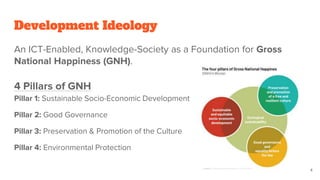
Development Ideology
An ICT-Enabled, Knowledge-Society as a Foundation for Gross
National Happiness (GNH).
4 Pillars of GNH
Pillar 1: Sustainable Socio-Economic Development
Pillar 2: Good Governance
Pillar 3: Preservation & Promotion of the Culture
Pillar 4: Environmental Protection
4
e-Governance Objectives
1) Ensure all government services are made online, where possible, to transition
from a conventional paper based to a more convenient paperless environment;
2) Ensure online government services are accessible to all individuals, including
people with disabilities; efficient; secure; and sustainable;
3) Ensure robust delivery of online public services through a holistic approach to
reduce redundancy of ICT initiatives through consolidation and reuse;
4) Ensure adoption of ICT Standards and enable the use of emerging
technologies;
5) Ensure confidentiality and privacy of citizens are protected to increase trust in
online services.
5
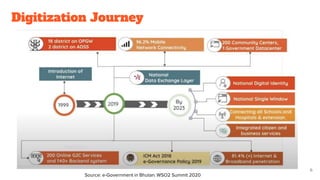
Digitization Journey
Source: e-Government in Bhutan, WSO2 Summit 2020
6
e-Governance Policy Statements
1. Digital by default
2. Shared ICT Assets
3. Single Source of Truth
4. Information Security and Privacy
5. Need Driven Initiatives
6. Sustainability
7
e-Governance Infrastructure
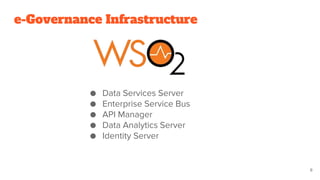
● Data Services Server
● Enterprise Service Bus
● API Manager
● Data Analytics Server
● Identity Server
8
Things to Learn from Bhutan
● DIGITAL IDENTITY SERVICE - One pass for citizens to available online
services.
● A single source of truth.
● Centralized Infrastructure to Improve Efficiency.
● Improved transparency.
● Improved productivity and faster service delivery times.
● E-Government Policy of Bhutan is citizen centric.
● E-Government Development Index - Rank 103 of 193
● E-Participation Index - Rank 82 of 193
9
(publicadministration.un.org - 2020)
References
1. https://www.mfa.gov.bt/wp-content/uploads/2021/03/Bhutan-at-a-glance-2020-
1.pdf
2. https://www.moic.gov.bt/wp-content/uploads/2021/12/e-Governance-Policy-
Amednment-2021.pdf
3. https://wso2.com/blogs/thesource/2019/07/a-citizen-centric-e-government-
journey-from-bhutan/
10
Thank You
11

E-governance in Bhutan

  • 1.
    e-Governance in Bhutan AnICT-Enabled, Knowledge-Society as a Foundation for Gross National Happiness. Suraj Katwal MCA III Date: 2022-03-14
  • 2.
    Contents ● Bhutan AtGlance ● Development Ideology ● e-Governance Objectives ● Digitization Journey ● e-Governance Policy Statements ● e-Governance Infrastructure ● Things to Learn from Bhutan ● References 2
  • 3.
    Bhutan At Glance Area:38,394 km² Population: 771,612 (2020) GDP Per Capita: 3,122.28 USD (2020) National Flag of Bhutan Total Districts: 20 Gewogs: 205 Currency: Ngultrum National Language: Dzongkha Democratic Constitutional Monarchy 3
  • 4.
    Development Ideology An ICT-Enabled,Knowledge-Society as a Foundation for Gross National Happiness (GNH). 4 Pillars of GNH Pillar 1: Sustainable Socio-Economic Development Pillar 2: Good Governance Pillar 3: Preservation & Promotion of the Culture Pillar 4: Environmental Protection 4
  • 5.
    e-Governance Objectives 1) Ensureall government services are made online, where possible, to transition from a conventional paper based to a more convenient paperless environment; 2) Ensure online government services are accessible to all individuals, including people with disabilities; efficient; secure; and sustainable; 3) Ensure robust delivery of online public services through a holistic approach to reduce redundancy of ICT initiatives through consolidation and reuse; 4) Ensure adoption of ICT Standards and enable the use of emerging technologies; 5) Ensure confidentiality and privacy of citizens are protected to increase trust in online services. 5
  • 6.
    Digitization Journey Source: e-Governmentin Bhutan, WSO2 Summit 2020 6
  • 7.
    e-Governance Policy Statements 1.Digital by default 2. Shared ICT Assets 3. Single Source of Truth 4. Information Security and Privacy 5. Need Driven Initiatives 6. Sustainability 7
  • 8.
    e-Governance Infrastructure ● DataServices Server ● Enterprise Service Bus ● API Manager ● Data Analytics Server ● Identity Server 8
  • 9.
    Things to Learnfrom Bhutan ● DIGITAL IDENTITY SERVICE - One pass for citizens to available online services. ● A single source of truth. ● Centralized Infrastructure to Improve Efficiency. ● Improved transparency. ● Improved productivity and faster service delivery times. ● E-Government Policy of Bhutan is citizen centric. ● E-Government Development Index - Rank 103 of 193 ● E-Participation Index - Rank 82 of 193 9 (publicadministration.un.org - 2020)
  • 10.
  • 11.