EFFECTIVE WRITTEN
COMMUNICATION
WRITTEN COMMNUICATION
 Meaning
 Types
 Importance
 Advantages
 Disadvantages
 Process
 Difference between verbal and written communication
1. Written communication involves any type of message
that makes use of the written word.
2. Written communication is the most important
and the most effective of any mode of business
communication.
3. Written communication is very common business
situations, so it’s important for everyone in an
organization, from the employee to the chief Executive
Office, to develop effective written communication
skills.
To be effective written communication
should be:
 Completeness
 Clarity
 Correctness
 Conciseness
 Courtesy
 Consideration
 Concreteness
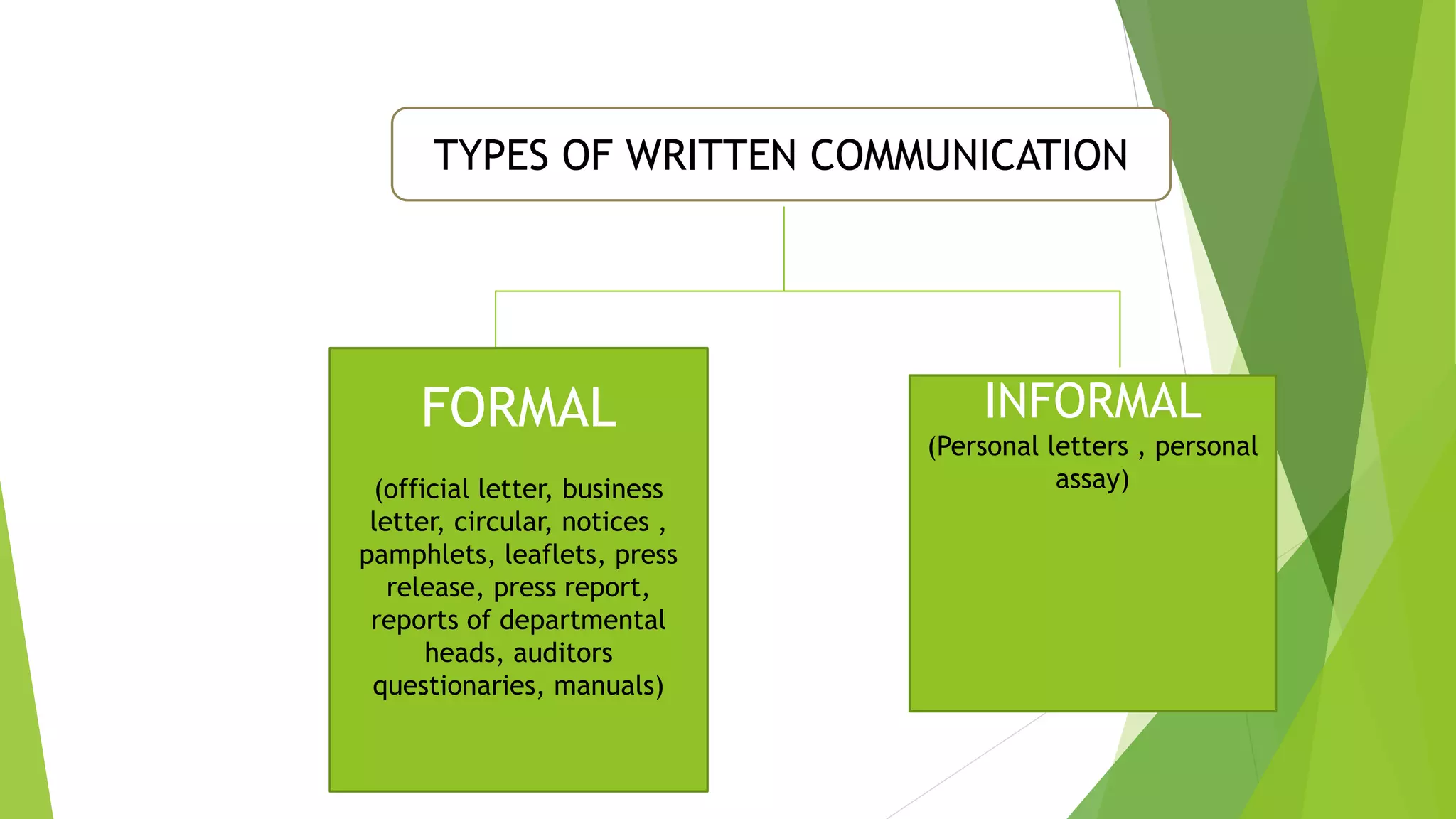
TYPES OF WRITTEN COMMUNICATION
FORMAL
(official letter, business
letter, circular, notices ,
pamphlets, leaflets, press
release, press report,
reports of departmental
heads, auditors
questionaries, manuals)
INFORMAL
(Personal letters , personal
assay)
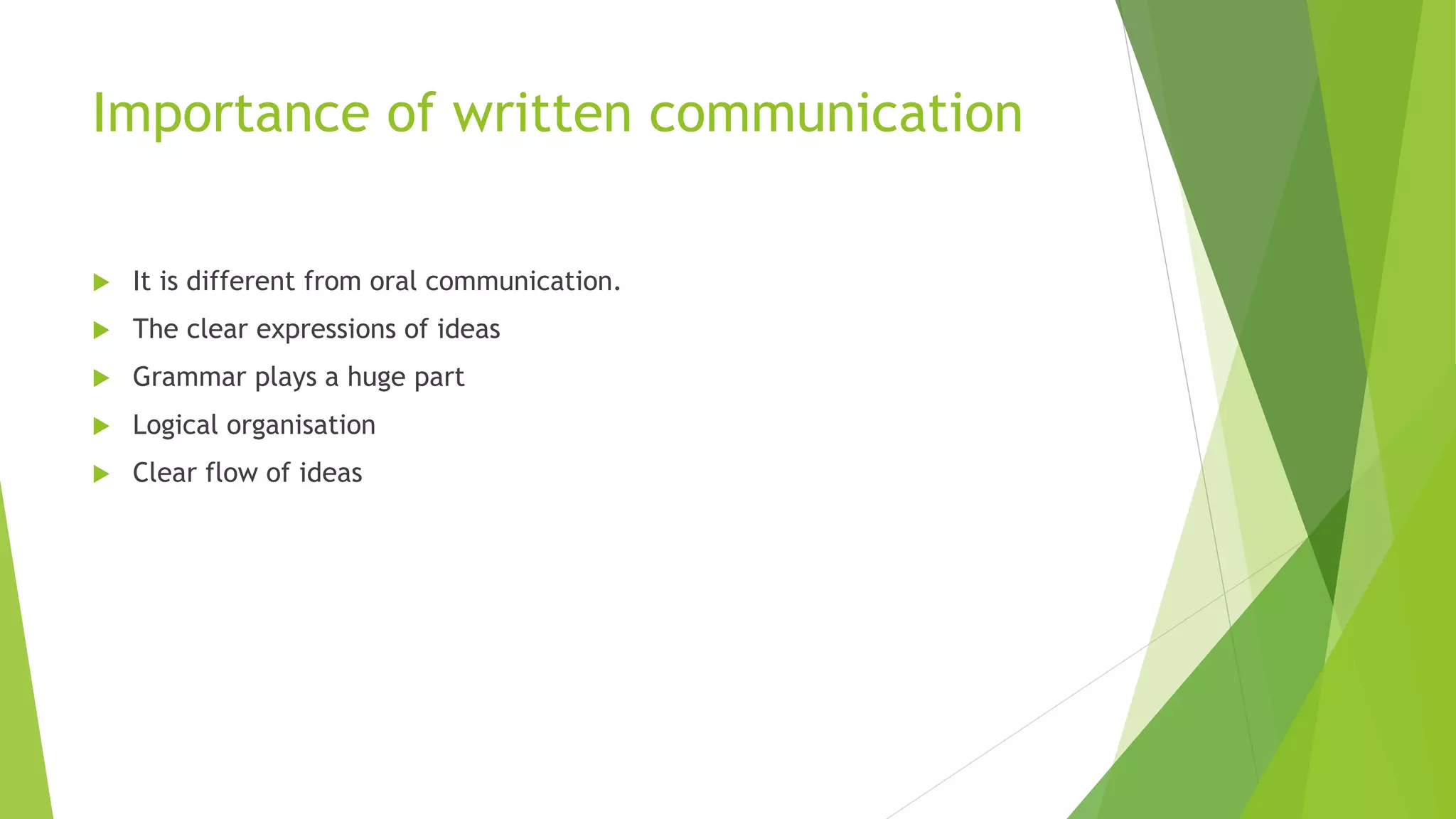
Importance of written communication
 It is different from oral communication.
 The clear expressions of ideas
 Grammar plays a huge part
 Logical organisation
 Clear flow of ideas
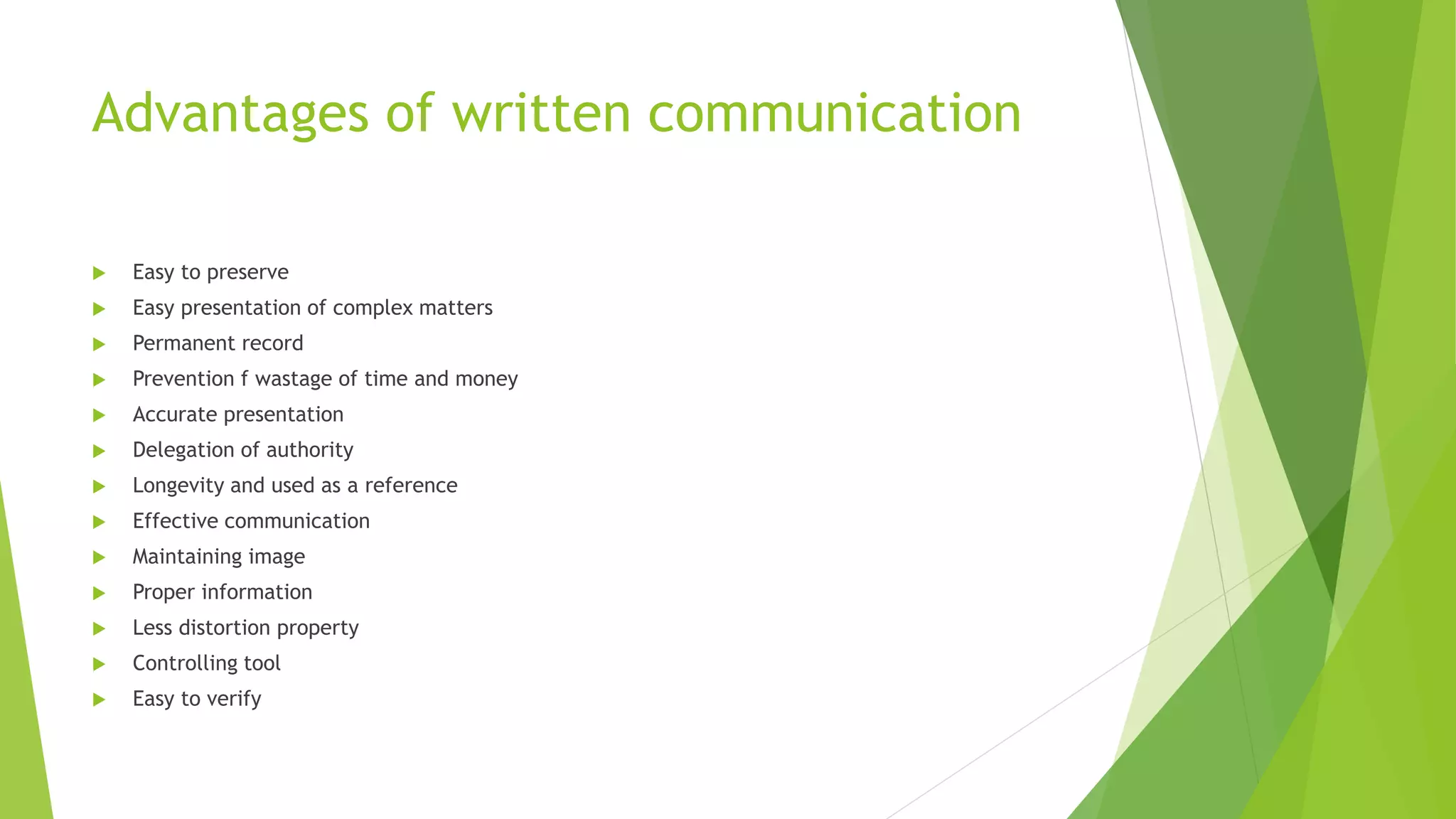
Advantages of written communication
 Easy to preserve
 Easy presentation of complex matters
 Permanent record
 Prevention f wastage of time and money
 Accurate presentation
 Delegation of authority
 Longevity and used as a reference
 Effective communication
 Maintaining image
 Proper information
 Less distortion property
 Controlling tool
 Easy to verify
Disadvantages of written communication
 Expensive
 Time consuming
 Useless for illiterate persons
 Difficult to maintain secrecy
 Delay in response and decision making
 Complex words
 Lack of direct relation
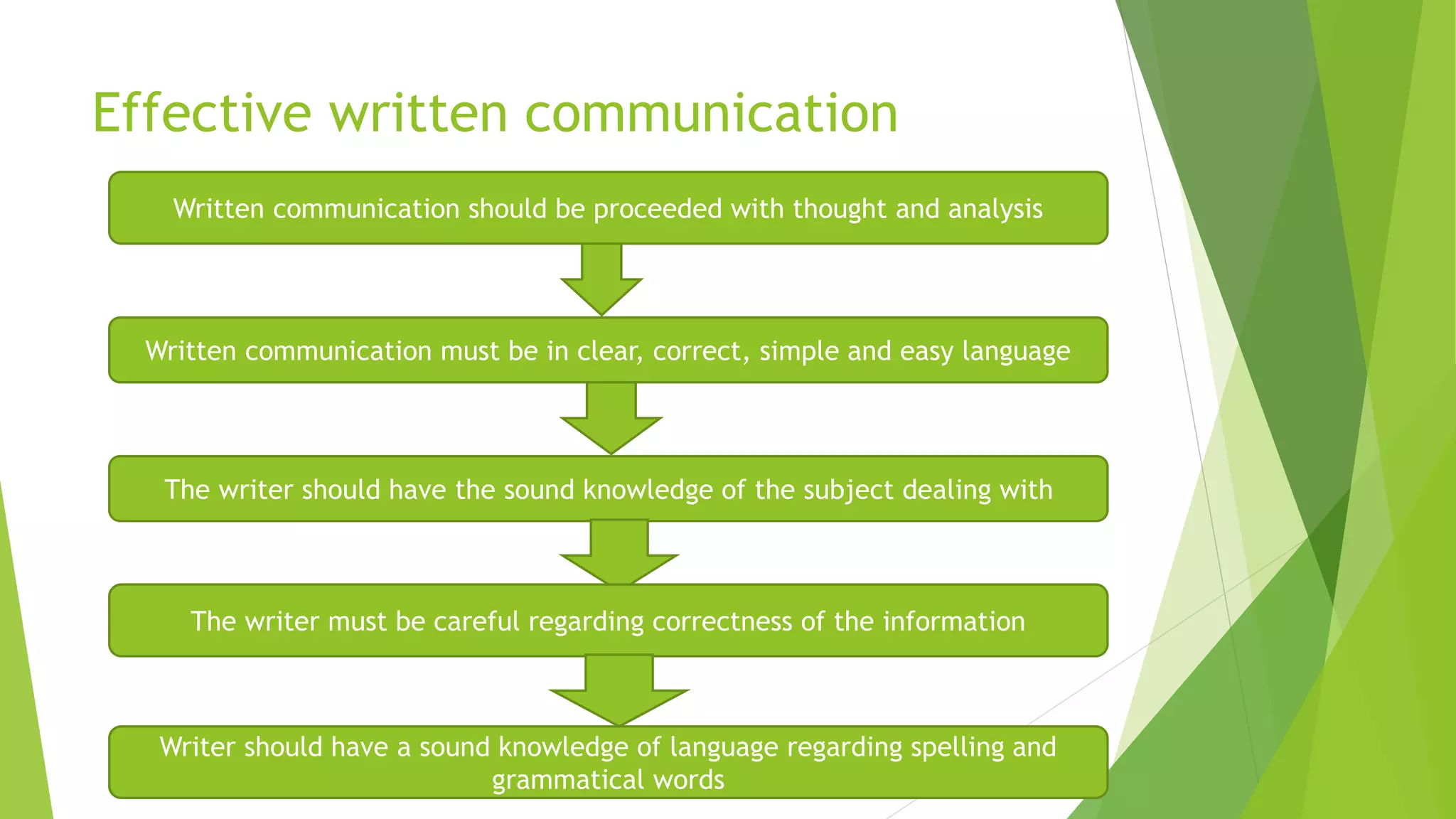
Effective written communication
Written communication should be proceeded with thought and analysis
Written communication must be in clear, correct, simple and easy language
The writer should have the sound knowledge of the subject dealing with
The writer must be careful regarding correctness of the information
Writer should have a sound knowledge of language regarding spelling and
grammatical words
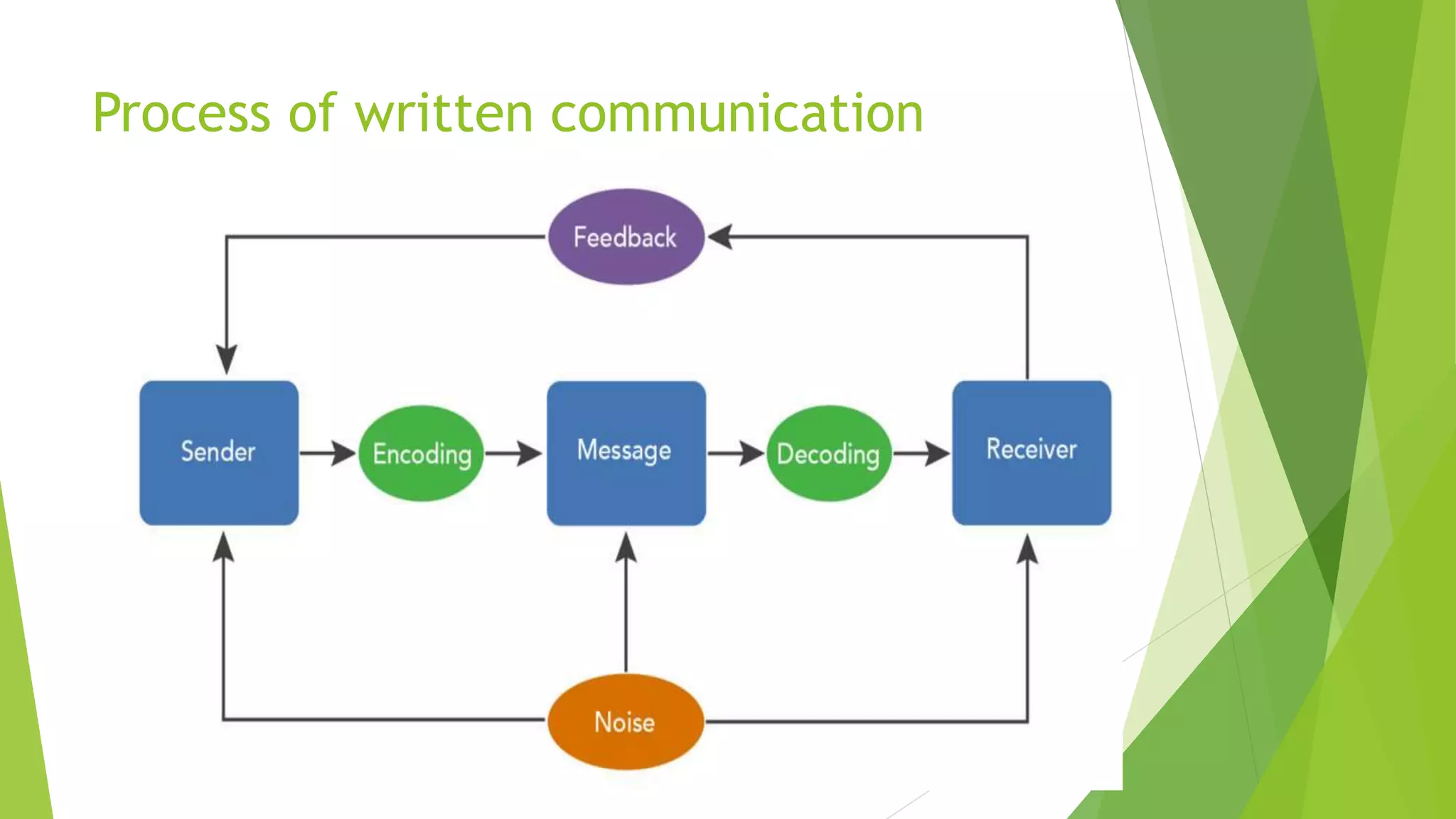
Process of written communication
Why is writing so
important
All holy books, ither Geeta, Koran or bible, they were
written 1000’s of year ago but still widely followed
and read.
That’s the power of written communication!
Why did Shrimad. Valmiki read
before writing the great Indian epic
till date RAMAYANA. ?
Writing requires good skills, passion and interest. Passionate
writers had changed so many lives. Where I would like to
quote some examples…
EFFECTIVE WRITTEN COMMUNICATION.pptx

EFFECTIVE WRITTEN COMMUNICATION.pptx

  • 1.
  • 2.
    WRITTEN COMMNUICATION  Meaning Types  Importance  Advantages  Disadvantages  Process  Difference between verbal and written communication
  • 3.
    1. Written communicationinvolves any type of message that makes use of the written word. 2. Written communication is the most important and the most effective of any mode of business communication. 3. Written communication is very common business situations, so it’s important for everyone in an organization, from the employee to the chief Executive Office, to develop effective written communication skills.
  • 4.
    To be effectivewritten communication should be:  Completeness  Clarity  Correctness  Conciseness  Courtesy  Consideration  Concreteness
  • 5.
    TYPES OF WRITTENCOMMUNICATION FORMAL (official letter, business letter, circular, notices , pamphlets, leaflets, press release, press report, reports of departmental heads, auditors questionaries, manuals) INFORMAL (Personal letters , personal assay)
  • 6.
    Importance of writtencommunication  It is different from oral communication.  The clear expressions of ideas  Grammar plays a huge part  Logical organisation  Clear flow of ideas
  • 7.
    Advantages of writtencommunication  Easy to preserve  Easy presentation of complex matters  Permanent record  Prevention f wastage of time and money  Accurate presentation  Delegation of authority  Longevity and used as a reference  Effective communication  Maintaining image  Proper information  Less distortion property  Controlling tool  Easy to verify
  • 8.
    Disadvantages of writtencommunication  Expensive  Time consuming  Useless for illiterate persons  Difficult to maintain secrecy  Delay in response and decision making  Complex words  Lack of direct relation
  • 9.
    Effective written communication Writtencommunication should be proceeded with thought and analysis Written communication must be in clear, correct, simple and easy language The writer should have the sound knowledge of the subject dealing with The writer must be careful regarding correctness of the information Writer should have a sound knowledge of language regarding spelling and grammatical words
  • 10.
    Process of writtencommunication
  • 12.
    Why is writingso important All holy books, ither Geeta, Koran or bible, they were written 1000’s of year ago but still widely followed and read. That’s the power of written communication!
  • 13.
    Why did Shrimad.Valmiki read before writing the great Indian epic till date RAMAYANA. ? Writing requires good skills, passion and interest. Passionate writers had changed so many lives. Where I would like to quote some examples…