SYED SAJJAD MBA(HHCM).
COMMUNICATION
Definition:-
It is a process by which two or more
persons exchange or share ideas ,facts, feelings
or impressions.
PURPOSES:-
 To collect assessment data
 To initiate intervention
 To evaluate outcome of intervention
 To initiate change which help in promoting health
 To analyze factors affecting the health team
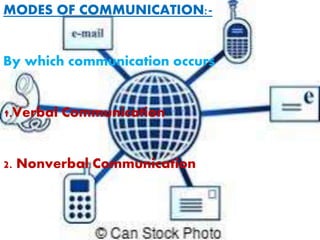
MODES OF COMMUNICATION:-
By which communication occurs
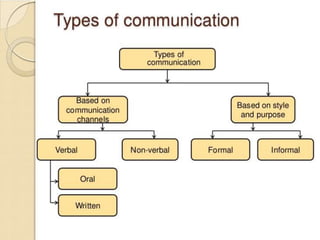
1.Verbal Communication
2. Nonverbal Communication
Definition:
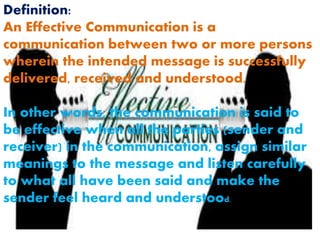
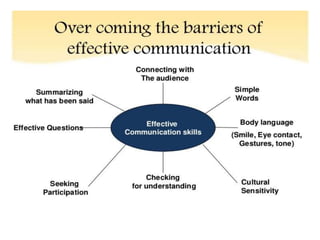
An Effective Communication is a
communication between two or more persons
wherein the intended message is successfully
delivered, received and understood.
In other words, the communication is said to
be effective when all the parties (sender and
receiver) in the communication, assign similar
meanings to the message and listen carefully
to what all have been said and make the
sender feel heard and understood.
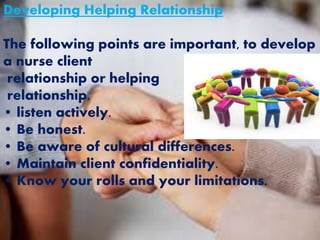
Developing Helping Relationship
The following points are important, to develop
a nurse client
relationship or helping
relationship.
• listen actively.
• Be honest.
• Be aware of cultural differences.
• Maintain client confidentiality.
• Know your rolls and your limitations.
Small things make a big
difference In Patient safety
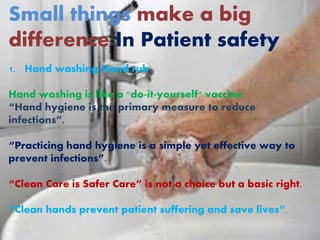
1. Hand washing/Hand rub
Hand washing is like a "do-it-yourself" vaccine
“Hand hygiene is the primary measure to reduce
infections”.
“Practicing hand hygiene is a simple yet effective way to
prevent infections”.
“Clean Care is Safer Care” is not a choice but a basic right.
“Clean hands prevent patient suffering and save lives”.
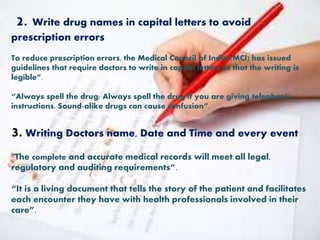
2. Write drug names in capital letters to avoid
prescription errors
To reduce prescription errors, the Medical Council of India (MCI) has issued
guidelines that require doctors to write in capital letters to that the writing is
legible”.
“Always spell the drug: Always spell the drug if you are giving telephonic
instructions. Sound-alike drugs can cause confusion”.
3. Writing Doctors name, Date and Time and every event
“The complete and accurate medical records will meet all legal,
regulatory and auditing requirements”.
“It is a living document that tells the story of the patient and facilitates
each encounter they have with health professionals involved in their
care”.
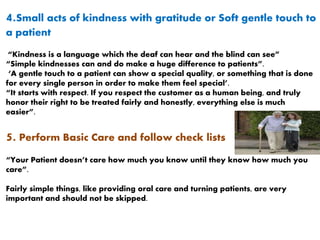
4.Small acts of kindness with gratitude or Soft gentle touch to
a patient
“Kindness is a language which the deaf can hear and the blind can see”
“Simple kindnesses can and do make a huge difference to patients”.
‘A gentle touch to a patient can show a special quality, or something that is done
for every single person in order to make them feel special’.
“It starts with respect. If you respect the customer as a human being, and truly
honor their right to be treated fairly and honestly, everything else is much
easier”.
5. Perform Basic Care and follow check lists
“Your Patient doesn’t care how much you know until they know how much you
care”.
Fairly simple things, like providing oral care and turning patients, are very
important and should not be skipped.
6.Think Before you dispose
“Proper dispose can prevent many communicable diseases, obnoxious
conditions and biosphere as whole”
“Improper dispose of waste leads to spread of communicable diseases
causes obnoxious conditions and spoils biosphere as whole”
7.Support a culture of safety
“Accountability to patients and families is a hallmark of a culture of safety”
Improving the culture of safety within health care is an essential component
of preventing or reducing errors and improving overall health care quality
8. Effective Communication
“It’s all about communication and collaboration,”
“Effective communication increases patient motivation to comply’’.
“Handoffs are definitely an area where risks are high,”
9. Team work
Can teamwork enhance patient safety.?
Yes teamwork can improve patient safety.
“Researchers and medical professionals agree that patient treatment and
safety is improved trough interdisciplinary teamwork “.
Prevents medical errors:
10. Engage your patients and improve
outcomes
“There is no question; better patient engagement improves the safety of
care,”
“The more you engage with Patient the clearer things become and the
easier it is to determine what you should be doing”.
11. Helping patients with their personal
hygiene
These tasks are not complicated, but they are very important.
“Good personal hygiene helps the patient maintain a sense of dignity and
independence”.
12. Patient Education
Improve understanding of medical condition, diagnosis, disease,
or disability’’.
“Patient education and Effective communication increases patient
motivation to comply’’.
“Patients more likely to respond well to their treatment plan –
fewer complications”.
“Patients feel you've provided the information they need”.
“Patients more likely to stay with your practice and refer other
patients”.
13. Learn from incidents and near
misses
“To prevent errors, we need to understand what causes them,”
Learning from the incidents and near misses helps us to
understand the various causes which can be preventable and can
increase the patient safety
“Your best teacher is your last mistake”
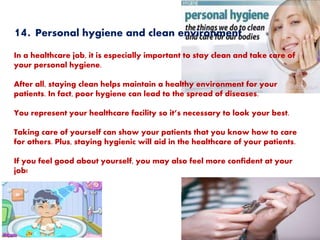
14. Personal hygiene and clean environment
In a healthcare job, it is especially important to stay clean and take care of
your personal hygiene.
After all, staying clean helps maintain a healthy environment for your
patients. In fact, poor hygiene can lead to the spread of diseases.
You represent your healthcare facility so it’s necessary to look your best.
Taking care of yourself can show your patients that you know how to care
for others. Plus, staying hygienic will aid in the healthcare of your patients.
If you feel good about yourself, you may also feel more confident at your
job!
Effective Communication

Effective Communication

  • 1.
  • 2.
    COMMUNICATION Definition:- It is aprocess by which two or more persons exchange or share ideas ,facts, feelings or impressions. PURPOSES:-  To collect assessment data  To initiate intervention  To evaluate outcome of intervention  To initiate change which help in promoting health  To analyze factors affecting the health team
  • 3.
    MODES OF COMMUNICATION:- Bywhich communication occurs 1.Verbal Communication 2. Nonverbal Communication
  • 6.
    Definition: An Effective Communicationis a communication between two or more persons wherein the intended message is successfully delivered, received and understood. In other words, the communication is said to be effective when all the parties (sender and receiver) in the communication, assign similar meanings to the message and listen carefully to what all have been said and make the sender feel heard and understood.
  • 10.
    Developing Helping Relationship Thefollowing points are important, to develop a nurse client relationship or helping relationship. • listen actively. • Be honest. • Be aware of cultural differences. • Maintain client confidentiality. • Know your rolls and your limitations.
  • 11.
    Small things makea big difference In Patient safety 1. Hand washing/Hand rub Hand washing is like a "do-it-yourself" vaccine “Hand hygiene is the primary measure to reduce infections”. “Practicing hand hygiene is a simple yet effective way to prevent infections”. “Clean Care is Safer Care” is not a choice but a basic right. “Clean hands prevent patient suffering and save lives”.
  • 12.
    2. Write drugnames in capital letters to avoid prescription errors To reduce prescription errors, the Medical Council of India (MCI) has issued guidelines that require doctors to write in capital letters to that the writing is legible”. “Always spell the drug: Always spell the drug if you are giving telephonic instructions. Sound-alike drugs can cause confusion”. 3. Writing Doctors name, Date and Time and every event “The complete and accurate medical records will meet all legal, regulatory and auditing requirements”. “It is a living document that tells the story of the patient and facilitates each encounter they have with health professionals involved in their care”.
  • 13.
    4.Small acts ofkindness with gratitude or Soft gentle touch to a patient “Kindness is a language which the deaf can hear and the blind can see” “Simple kindnesses can and do make a huge difference to patients”. ‘A gentle touch to a patient can show a special quality, or something that is done for every single person in order to make them feel special’. “It starts with respect. If you respect the customer as a human being, and truly honor their right to be treated fairly and honestly, everything else is much easier”. 5. Perform Basic Care and follow check lists “Your Patient doesn’t care how much you know until they know how much you care”. Fairly simple things, like providing oral care and turning patients, are very important and should not be skipped.
  • 14.
    6.Think Before youdispose “Proper dispose can prevent many communicable diseases, obnoxious conditions and biosphere as whole” “Improper dispose of waste leads to spread of communicable diseases causes obnoxious conditions and spoils biosphere as whole” 7.Support a culture of safety “Accountability to patients and families is a hallmark of a culture of safety” Improving the culture of safety within health care is an essential component of preventing or reducing errors and improving overall health care quality 8. Effective Communication “It’s all about communication and collaboration,” “Effective communication increases patient motivation to comply’’. “Handoffs are definitely an area where risks are high,”
  • 15.
    9. Team work Canteamwork enhance patient safety.? Yes teamwork can improve patient safety. “Researchers and medical professionals agree that patient treatment and safety is improved trough interdisciplinary teamwork “. Prevents medical errors: 10. Engage your patients and improve outcomes “There is no question; better patient engagement improves the safety of care,” “The more you engage with Patient the clearer things become and the easier it is to determine what you should be doing”. 11. Helping patients with their personal hygiene These tasks are not complicated, but they are very important. “Good personal hygiene helps the patient maintain a sense of dignity and independence”.
  • 16.
    12. Patient Education Improveunderstanding of medical condition, diagnosis, disease, or disability’’. “Patient education and Effective communication increases patient motivation to comply’’. “Patients more likely to respond well to their treatment plan – fewer complications”. “Patients feel you've provided the information they need”. “Patients more likely to stay with your practice and refer other patients”. 13. Learn from incidents and near misses “To prevent errors, we need to understand what causes them,” Learning from the incidents and near misses helps us to understand the various causes which can be preventable and can increase the patient safety “Your best teacher is your last mistake”
  • 17.
    14. Personal hygieneand clean environment In a healthcare job, it is especially important to stay clean and take care of your personal hygiene. After all, staying clean helps maintain a healthy environment for your patients. In fact, poor hygiene can lead to the spread of diseases. You represent your healthcare facility so it’s necessary to look your best. Taking care of yourself can show your patients that you know how to care for others. Plus, staying hygienic will aid in the healthcare of your patients. If you feel good about yourself, you may also feel more confident at your job!