1
INTRODUCTION
 Main pathogens are
 Virus
 Bacteria
 Fungi
 Physiological functions
 Photosynthesis
 Respiration
 Permeability of cell membrane
 Translocation of water and nutrients
 Transcription and translation
1/1/2017
2
PHOTOSYNTHESIS
 Interfere by chlorosis, necrosis, and reduced
growth and yield
 Reduce amount of photosynthetic surface
 Produce toxins that inhibit enzymes involved
 Stomata remains unpartially closed
 chlorophyll is reduced
 photosynthesis stops
1/1/2017
3
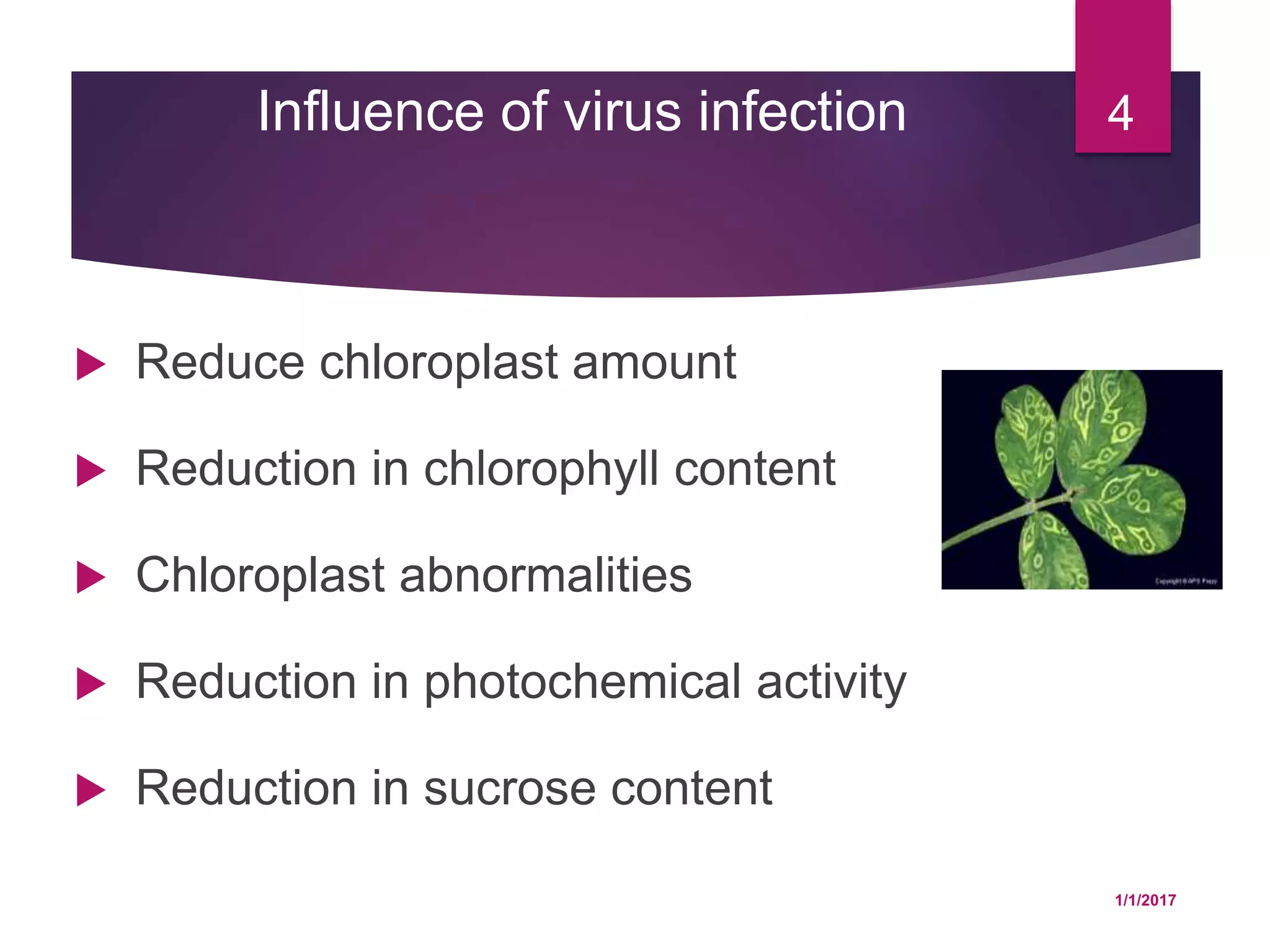
Influence of virus infection
 Reduce chloroplast amount
 Reduction in chlorophyll content
 Chloroplast abnormalities
 Reduction in photochemical activity
 Reduction in sucrose content
1/1/2017
4
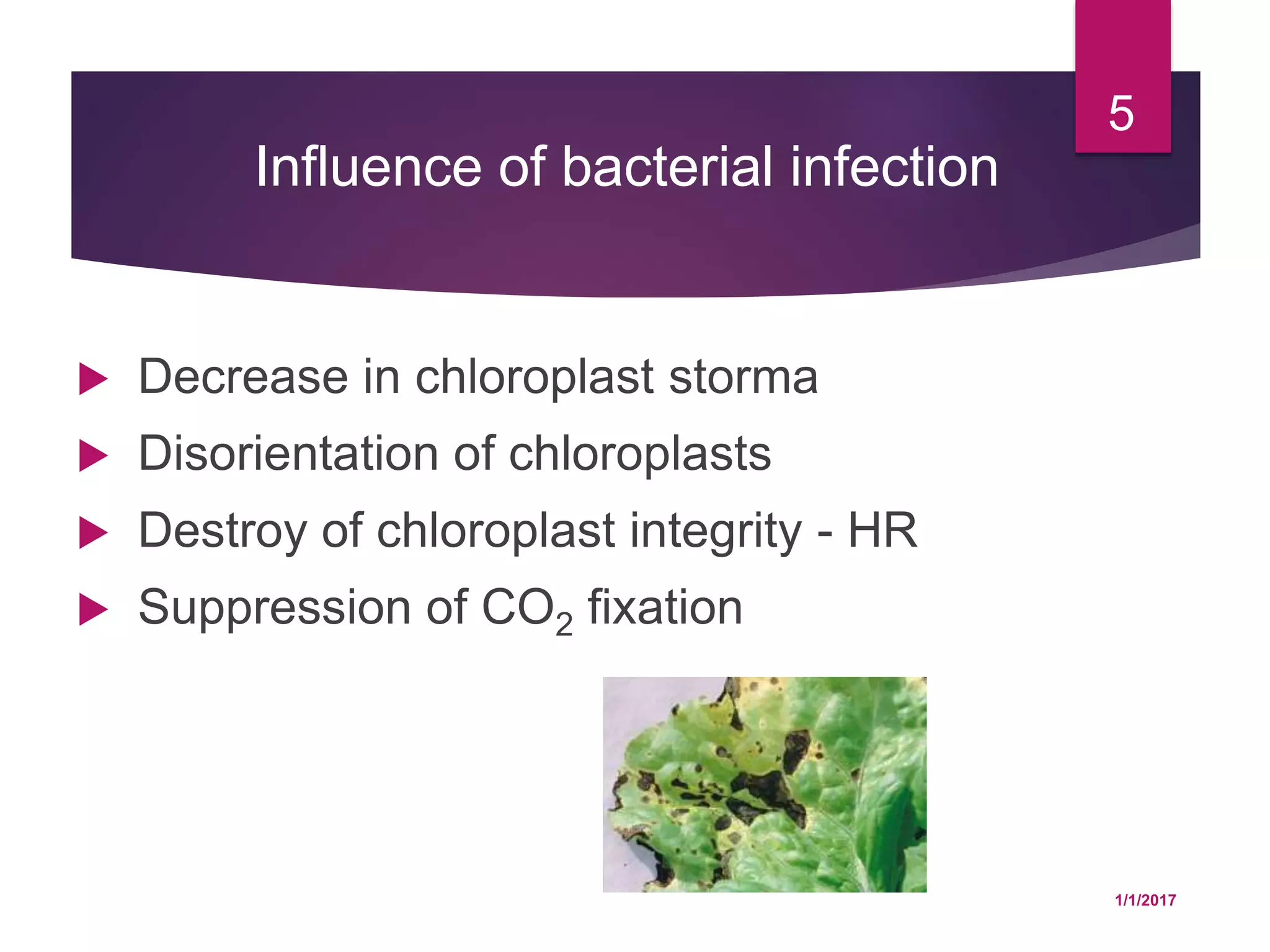
Influence of bacterial infection
 Decrease in chloroplast storma
 Disorientation of chloroplasts
 Destroy of chloroplast integrity - HR
 Suppression of CO2 fixation
1/1/2017
5
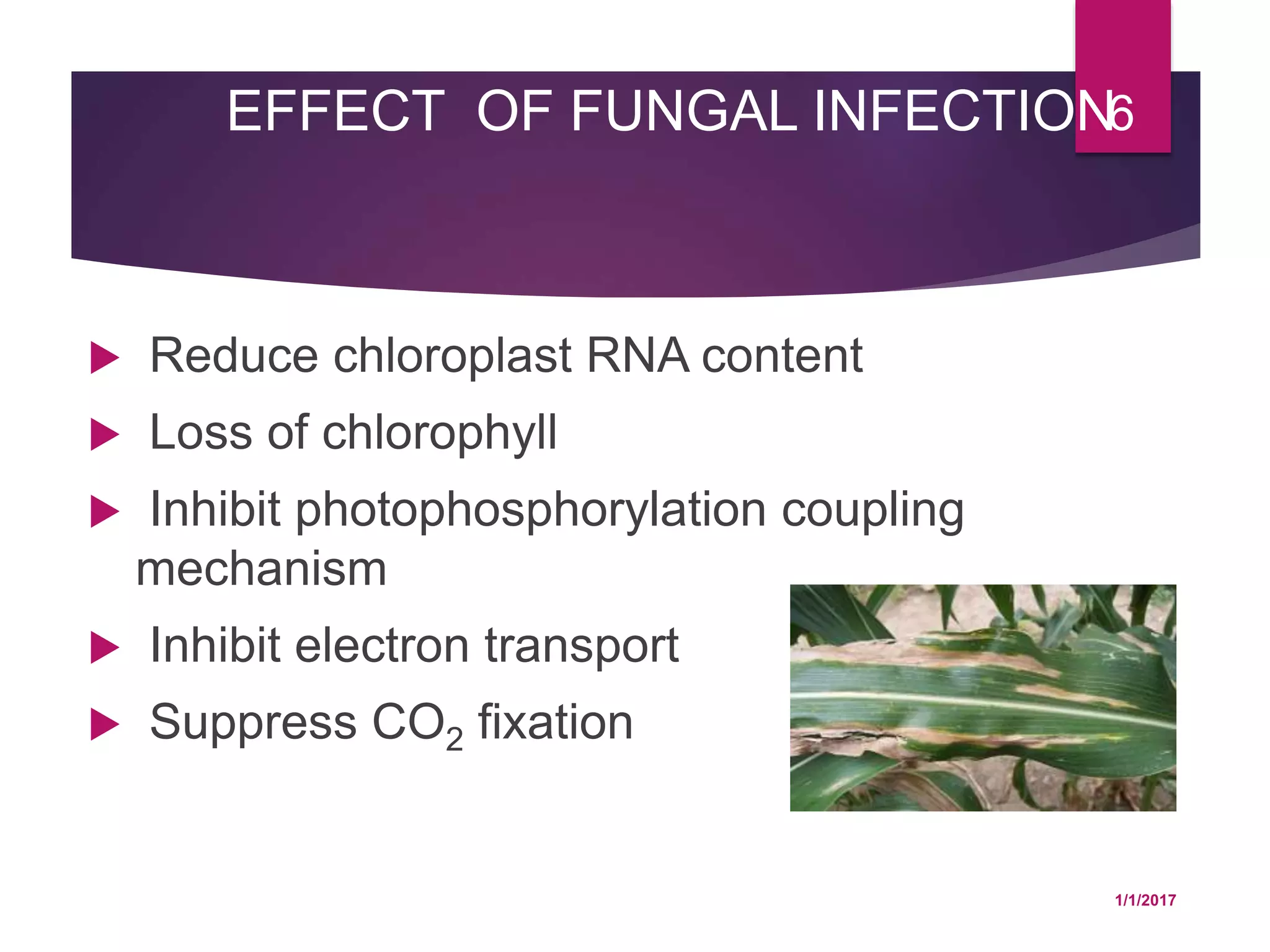
EFFECT OF FUNGAL INFECTION
 Reduce chloroplast RNA content
 Loss of chlorophyll
 Inhibit photophosphorylation coupling
mechanism
 Inhibit electron transport
 Suppress CO2 fixation
1/1/2017
6
RESPIRATION
 Respiration increases during pathogen attack
 Rate Continues to Rise during Multiplication and
Sporulation of the Pathogen
 Declines to Normal or below-Normal Levels
 Rate Increases more Rapidly in Resistant Varieties
 Increased Respiration Depletes Plant’s Reserves
 Changes Metabolism
1/1/2017
7
Effect of viruses
 Non hypersensitive hosts
 Slightly increase in respiration rate of
inoculated leaves
 Hypersensitive hosts
 A much more considerable increase in
respiration activity than systemic hosts
1/1/2017
8
EFFECT OF BACTERIA
 Resistant tissue :Immediate increase in O2
consumption
 Susceptible tissue : Do not reflect an increase in
respiration until about 30 hours after inoculation
eg : pepper – Xanthomonas vesicatoria
1/1/2017
9
Effect of fungi
 Respiration rate is usually increased in diseased
plants
 In the early stage of disease, synthetic processes
induce high rates of respiration
 In the late stages injury and decomposition of
tissues lead to increase respiration.
1/1/2017
10
MEMBRANE PERMEABILITY
 Pathogens change the permeability by
 Mechanical injury
 Enzymatic degradation
 Toxins
 First detectable responses of cells
 Leakage of electrolytes
 Occur when host-pathogen interaction is
incompatible
1/1/2017
11
TRANSLOCATION OF WATER AND
NUTRIENTS
 Affect the function of root
- absorb less water
 Growth in xylem vessels interfering with
translocation
 Interfere with water economy of plant by causing
excessive transpiration
 Eg :Fusarium crown rot 1/1/2017
12
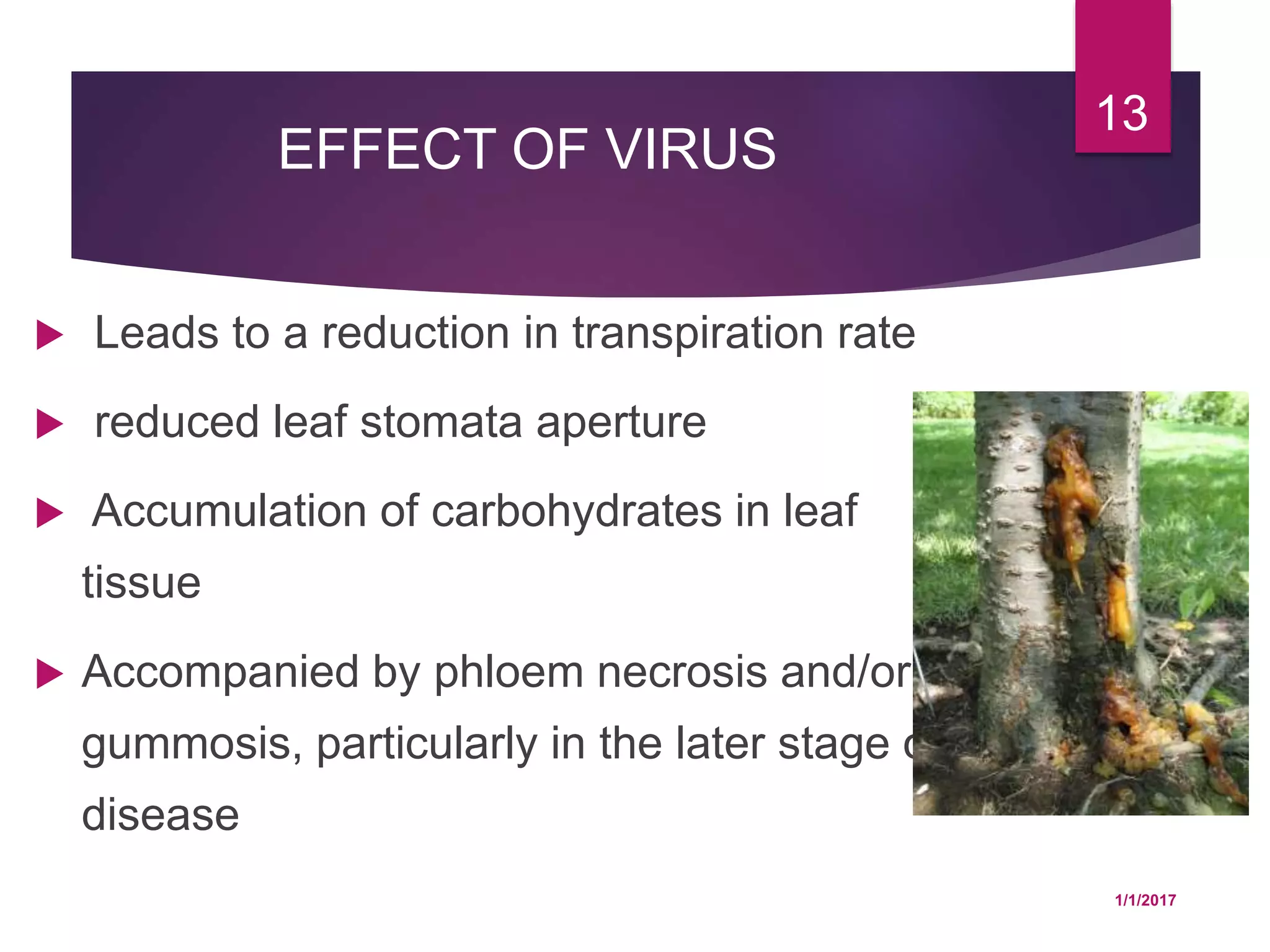
EFFECT OF VIRUS
 Leads to a reduction in transpiration rate
 reduced leaf stomata aperture
 Accumulation of carbohydrates in leaf
tissue
 Accompanied by phloem necrosis and/or
gummosis, particularly in the later stage of
disease
1/1/2017
13
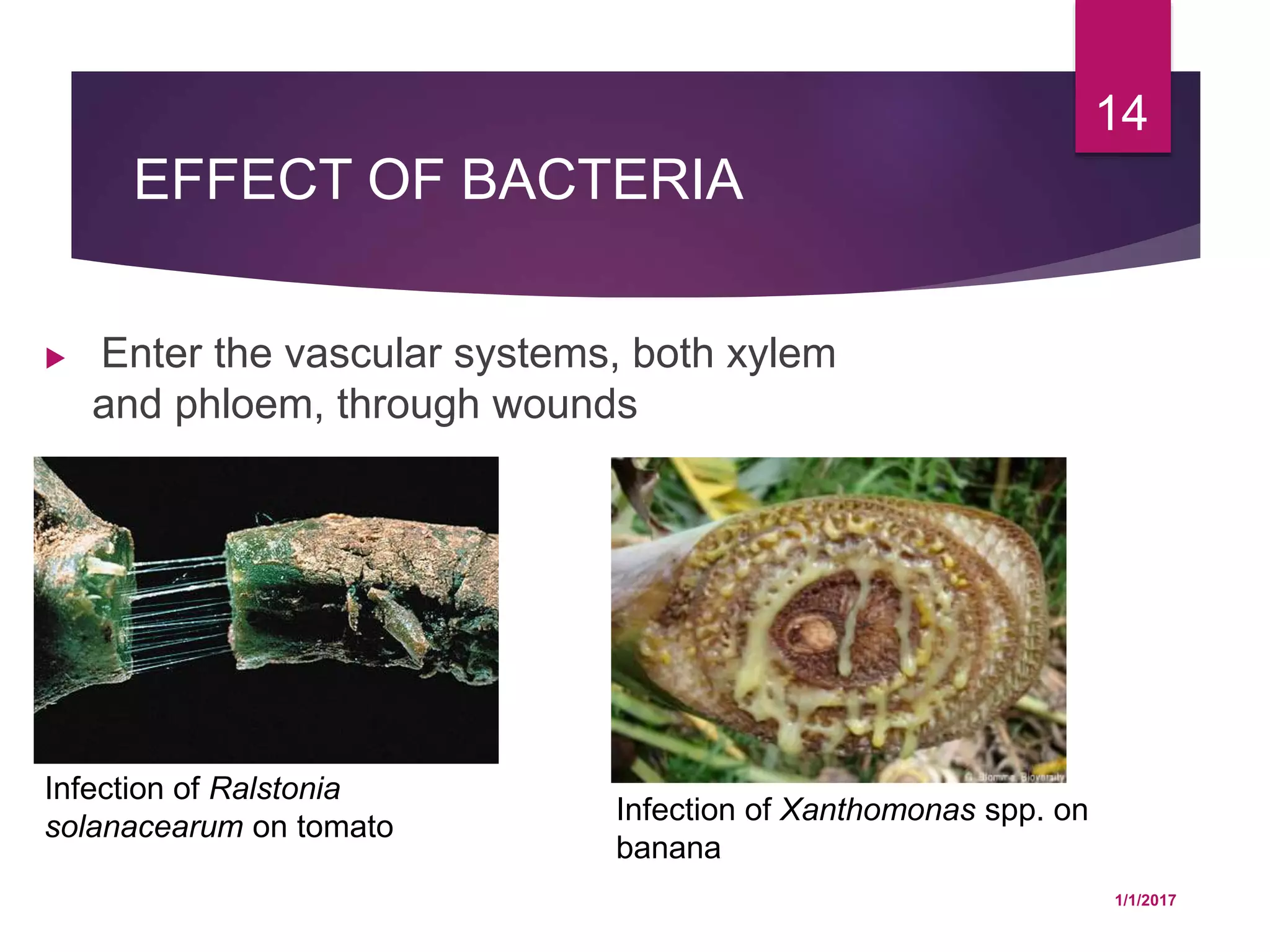
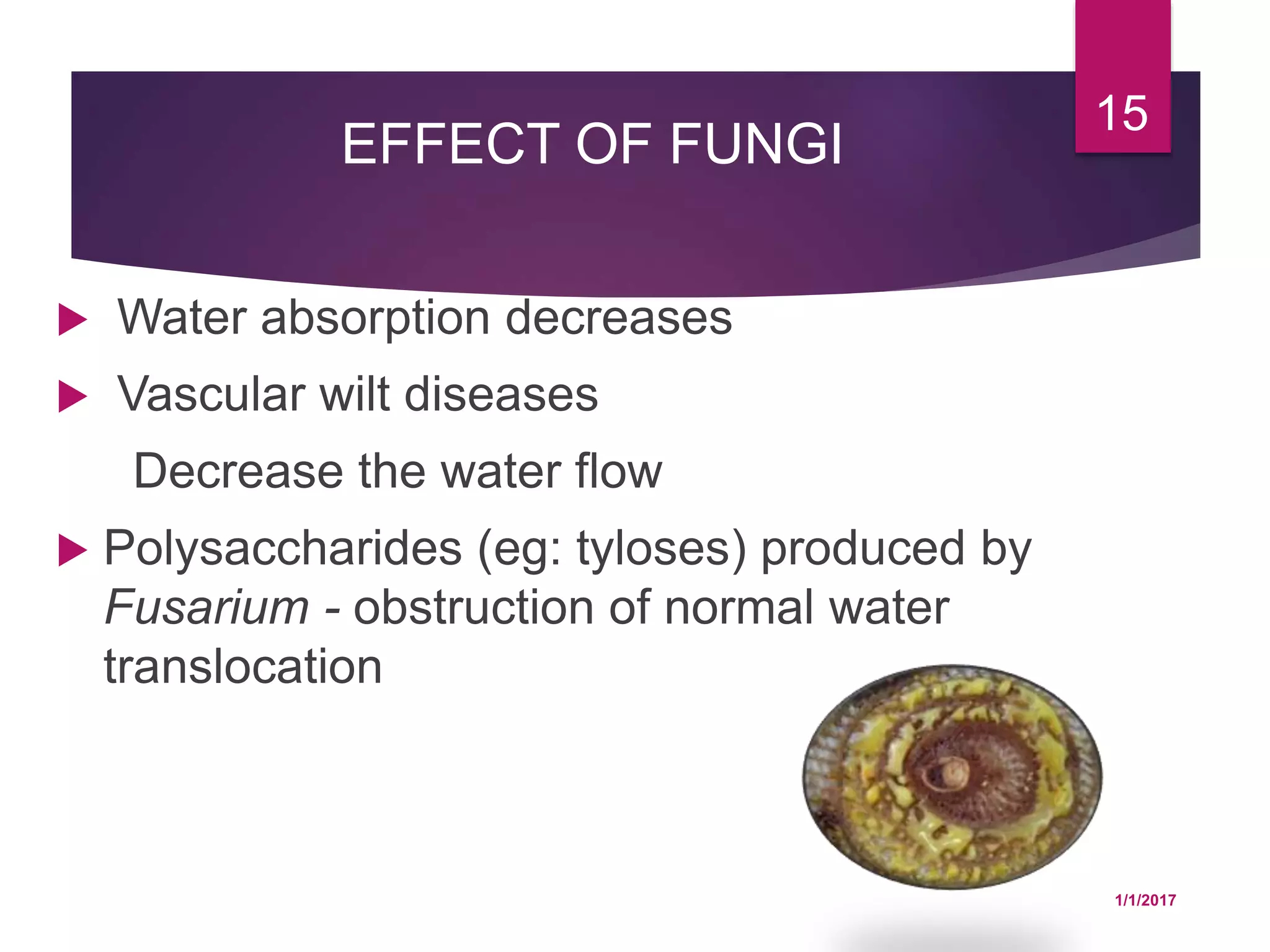
EFFECT OF BACTERIA
 Enter the vascular systems, both xylem
and phloem, through wounds
1/1/2017
14
Infection of Ralstonia
solanacearum on tomato
Infection of Xanthomonas spp. on
banana
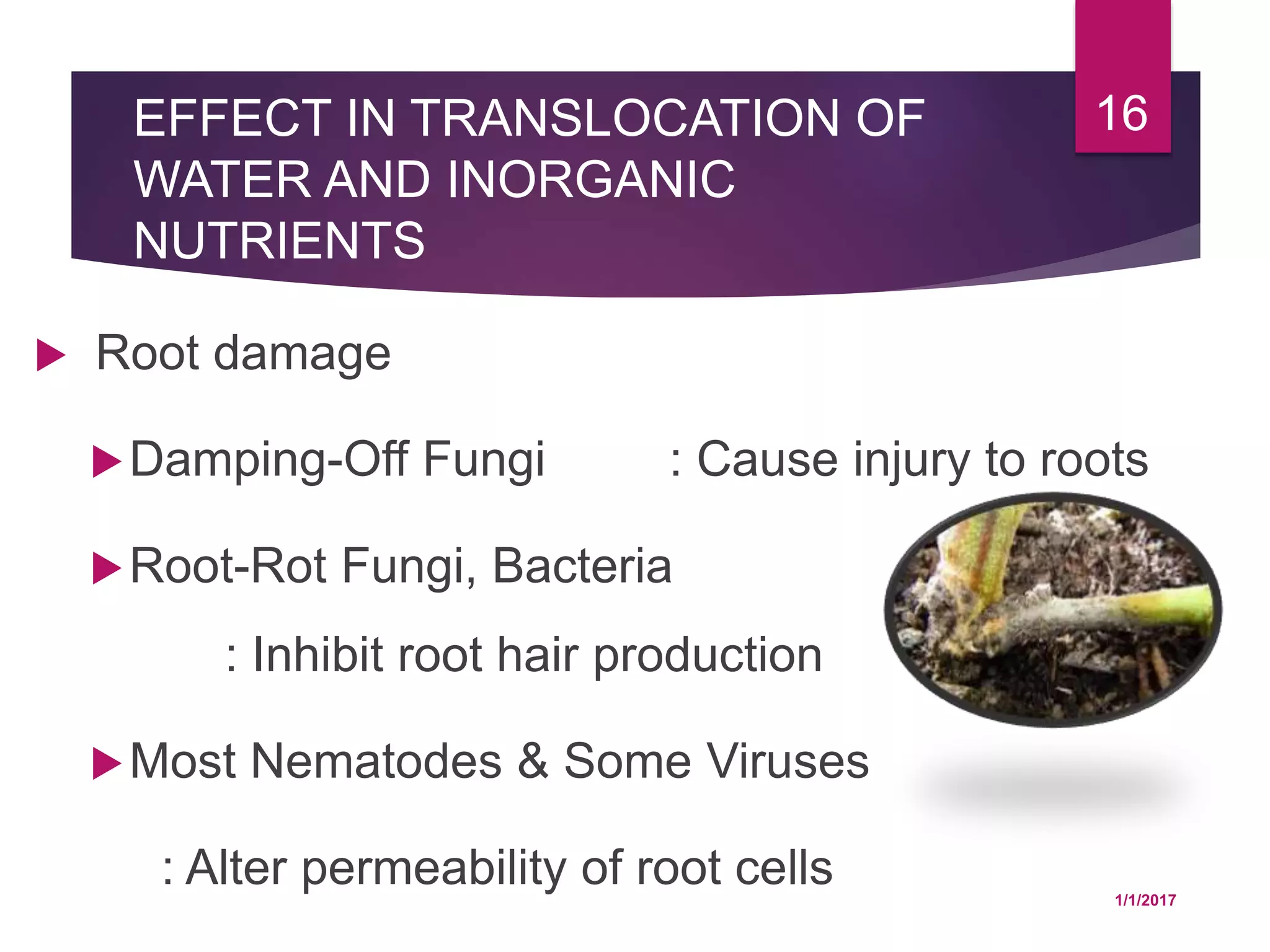
EFFECT OF FUNGI
 Water absorption decreases
 Vascular wilt diseases
Decrease the water flow
 Polysaccharides (eg: tyloses) produced by
Fusarium - obstruction of normal water
translocation
1/1/2017
15
EFFECT IN TRANSLOCATION OF
WATER AND INORGANIC
NUTRIENTS
 Root damage
Damping-Off Fungi : Cause injury to roots
Root-Rot Fungi, Bacteria
: Inhibit root hair production
Most Nematodes & Some Viruses
: Alter permeability of root cells 1/1/2017
16
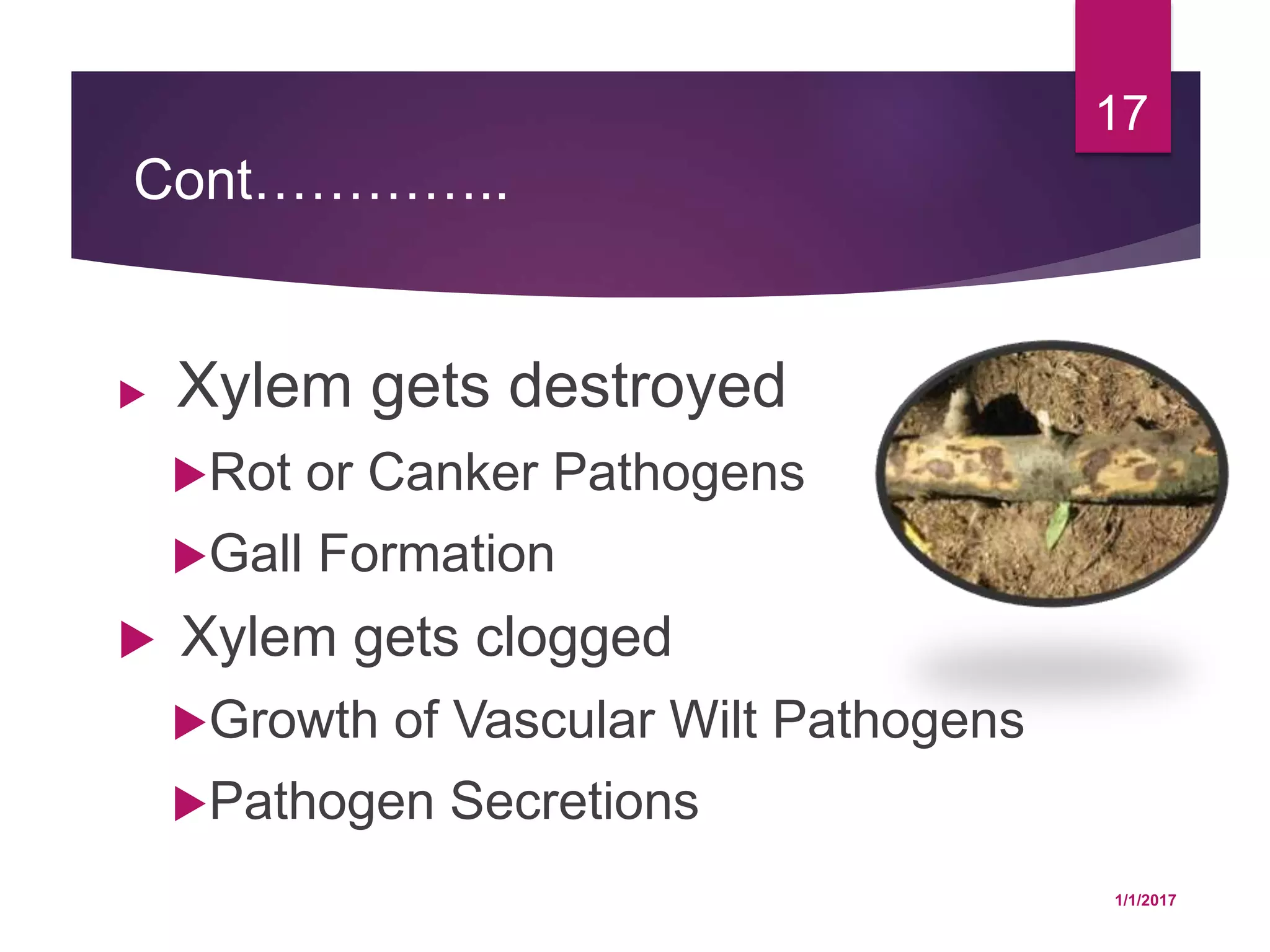
Cont…………..
 Xylem gets destroyed
Rot or Canker Pathogens
Gall Formation
 Xylem gets clogged
Growth of Vascular Wilt Pathogens
Pathogen Secretions
1/1/2017
17
Effect in translocation of phloem
 Obligate fungal parasites
Respiration increase
 Photosynthesis decrease
Photosynthetic Products Accumulate in Invaded
Areas
 Nutrients from Uninfected Areas are translocated
toward the Infected Areas
1/1/2017
18
CONT……………
 Viruses
Death of phloem
Inhibit Enzymes that Break Down Starch
into Smaller, Translocatable Molecules
1/1/2017
19
TRANSCRIPTION AND
TRANSLATION
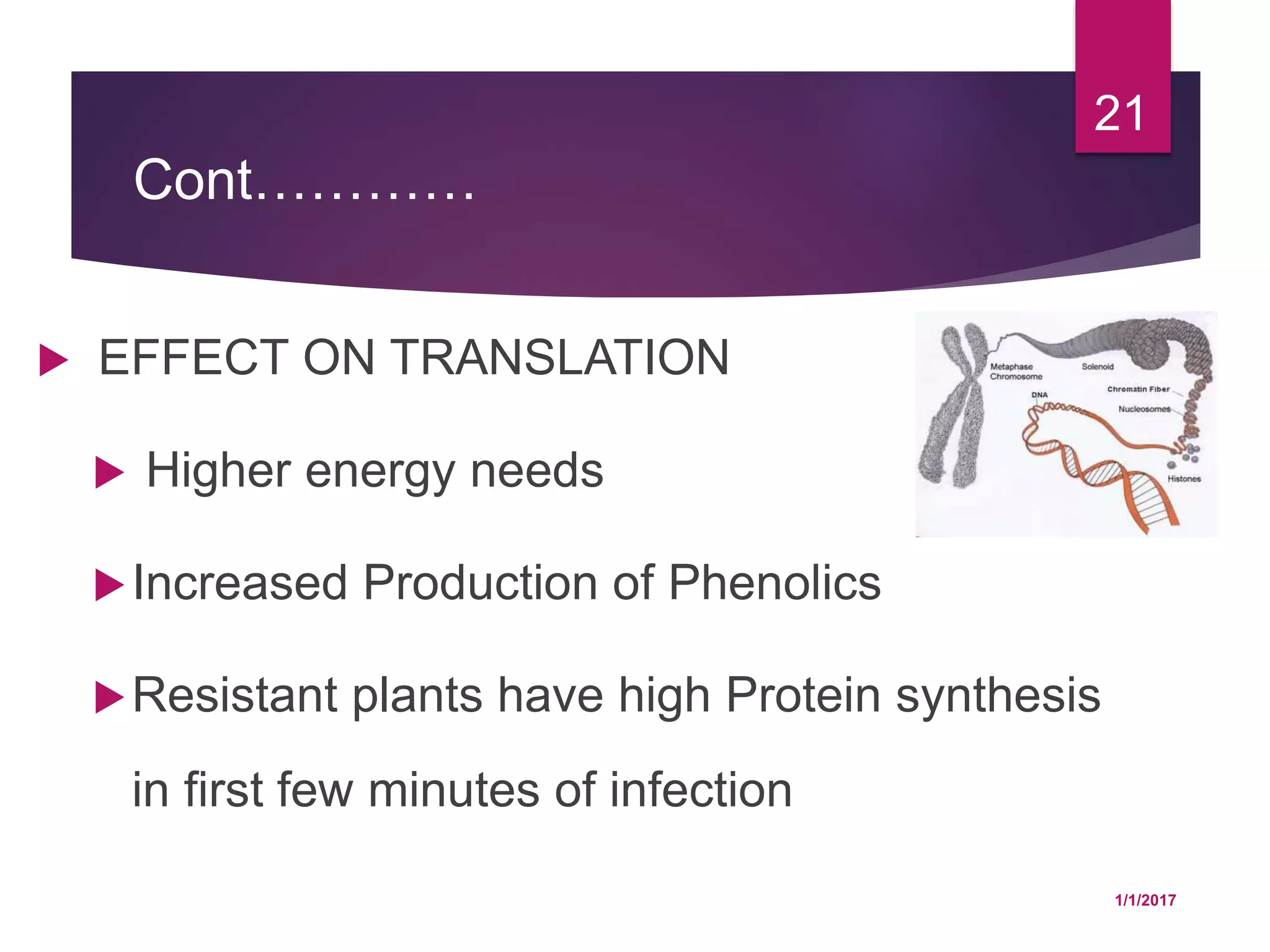
 Effect on transcription
Change Composition, Structure or Function of
Chromatin Associated with Cell DNA
Increase in the activity of Enzymes that Break
Down RNA
1/1/2017
20
Cont…………
 EFFECT ON TRANSLATION
 Higher energy needs
Increased Production of Phenolics
Resistant plants have high Protein synthesis
in first few minutes of infection
1/1/2017
21
SUMMARY
 Main pathogens are bacteria, fungi and virus
 Pathogens mainly affect the following physiological
functions in plants
 Photosynthesis
 Respiration
 Permeability of cell membrane
 Translocation of water and nutrients
 Transcription and translation 1/1/2017
22
1/1/2017
23

Effect of plant pathogens in plant physiologicalfunction

  • 1.
  • 2.
    INTRODUCTION  Main pathogensare  Virus  Bacteria  Fungi  Physiological functions  Photosynthesis  Respiration  Permeability of cell membrane  Translocation of water and nutrients  Transcription and translation 1/1/2017 2
  • 3.
    PHOTOSYNTHESIS  Interfere bychlorosis, necrosis, and reduced growth and yield  Reduce amount of photosynthetic surface  Produce toxins that inhibit enzymes involved  Stomata remains unpartially closed  chlorophyll is reduced  photosynthesis stops 1/1/2017 3
  • 4.
    Influence of virusinfection  Reduce chloroplast amount  Reduction in chlorophyll content  Chloroplast abnormalities  Reduction in photochemical activity  Reduction in sucrose content 1/1/2017 4
  • 5.
    Influence of bacterialinfection  Decrease in chloroplast storma  Disorientation of chloroplasts  Destroy of chloroplast integrity - HR  Suppression of CO2 fixation 1/1/2017 5
  • 6.
    EFFECT OF FUNGALINFECTION  Reduce chloroplast RNA content  Loss of chlorophyll  Inhibit photophosphorylation coupling mechanism  Inhibit electron transport  Suppress CO2 fixation 1/1/2017 6
  • 7.
    RESPIRATION  Respiration increasesduring pathogen attack  Rate Continues to Rise during Multiplication and Sporulation of the Pathogen  Declines to Normal or below-Normal Levels  Rate Increases more Rapidly in Resistant Varieties  Increased Respiration Depletes Plant’s Reserves  Changes Metabolism 1/1/2017 7
  • 8.
    Effect of viruses Non hypersensitive hosts  Slightly increase in respiration rate of inoculated leaves  Hypersensitive hosts  A much more considerable increase in respiration activity than systemic hosts 1/1/2017 8
  • 9.
    EFFECT OF BACTERIA Resistant tissue :Immediate increase in O2 consumption  Susceptible tissue : Do not reflect an increase in respiration until about 30 hours after inoculation eg : pepper – Xanthomonas vesicatoria 1/1/2017 9
  • 10.
    Effect of fungi Respiration rate is usually increased in diseased plants  In the early stage of disease, synthetic processes induce high rates of respiration  In the late stages injury and decomposition of tissues lead to increase respiration. 1/1/2017 10
  • 11.
    MEMBRANE PERMEABILITY  Pathogenschange the permeability by  Mechanical injury  Enzymatic degradation  Toxins  First detectable responses of cells  Leakage of electrolytes  Occur when host-pathogen interaction is incompatible 1/1/2017 11
  • 12.
    TRANSLOCATION OF WATERAND NUTRIENTS  Affect the function of root - absorb less water  Growth in xylem vessels interfering with translocation  Interfere with water economy of plant by causing excessive transpiration  Eg :Fusarium crown rot 1/1/2017 12
  • 13.
    EFFECT OF VIRUS Leads to a reduction in transpiration rate  reduced leaf stomata aperture  Accumulation of carbohydrates in leaf tissue  Accompanied by phloem necrosis and/or gummosis, particularly in the later stage of disease 1/1/2017 13
  • 14.
    EFFECT OF BACTERIA Enter the vascular systems, both xylem and phloem, through wounds 1/1/2017 14 Infection of Ralstonia solanacearum on tomato Infection of Xanthomonas spp. on banana
  • 15.
    EFFECT OF FUNGI Water absorption decreases  Vascular wilt diseases Decrease the water flow  Polysaccharides (eg: tyloses) produced by Fusarium - obstruction of normal water translocation 1/1/2017 15
  • 16.
    EFFECT IN TRANSLOCATIONOF WATER AND INORGANIC NUTRIENTS  Root damage Damping-Off Fungi : Cause injury to roots Root-Rot Fungi, Bacteria : Inhibit root hair production Most Nematodes & Some Viruses : Alter permeability of root cells 1/1/2017 16
  • 17.
    Cont…………..  Xylem getsdestroyed Rot or Canker Pathogens Gall Formation  Xylem gets clogged Growth of Vascular Wilt Pathogens Pathogen Secretions 1/1/2017 17
  • 18.
    Effect in translocationof phloem  Obligate fungal parasites Respiration increase  Photosynthesis decrease Photosynthetic Products Accumulate in Invaded Areas  Nutrients from Uninfected Areas are translocated toward the Infected Areas 1/1/2017 18
  • 19.
    CONT……………  Viruses Death ofphloem Inhibit Enzymes that Break Down Starch into Smaller, Translocatable Molecules 1/1/2017 19
  • 20.
    TRANSCRIPTION AND TRANSLATION  Effecton transcription Change Composition, Structure or Function of Chromatin Associated with Cell DNA Increase in the activity of Enzymes that Break Down RNA 1/1/2017 20
  • 21.
    Cont…………  EFFECT ONTRANSLATION  Higher energy needs Increased Production of Phenolics Resistant plants have high Protein synthesis in first few minutes of infection 1/1/2017 21
  • 22.
    SUMMARY  Main pathogensare bacteria, fungi and virus  Pathogens mainly affect the following physiological functions in plants  Photosynthesis  Respiration  Permeability of cell membrane  Translocation of water and nutrients  Transcription and translation 1/1/2017 22
  • 23.