WHY IT IS IMPORTANT FOR USTO GO
BACK AND RECALLTHE PAST
ACTS/EDUCATION OFTHE
PHILIPPINES?
•It gives us a glimpse of the past.
•We could learn from it.
•It will help you understand how the past
events or laws shaped the present acts,
education system, and theories.
•It will help you appreciate the law today.
EDUCATION DURINGTHE RE-COLONIAL
PERIOD
• Education was informal and unstructured, decentralized. Father
taught their sons how to look for food and other means of
livelihood. Mothers taught their girls to do the household
chores.
• This education basically prepared their children to be good
husband and wives.
• Children were provided more vocational training but lesser
academics.Teacher were tribal tutor Babaylan or Katalonan
EDUCATION DURINGTHE SPANISH ERA
•Education was formal and organized. It was
authoritarian in nature.Tribal tutor of the
pre-Spanish period were replaced by Spanish
missionaries.
THE EDUCATIONAL DECREE OF 1863
•This law give Filipinos a complete system of
education from elementary to collegiate
level.The law provided for the establishment
of the elementary in all municipalities in the
country.
EDUCATION DURINGTHE AMERICAN
REGIME 1898-1946
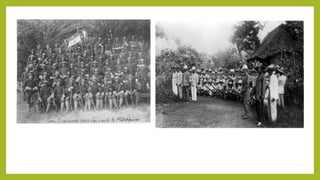
• Americans promoted democratic ideals and the democratic way of life.The
schools maintained by the Spaniards for more than three centuries were closed
but reopened on august 29,1898 by the secretary of interior. A system is free and
compulsory elementary education was establish by the Malolos constitutions
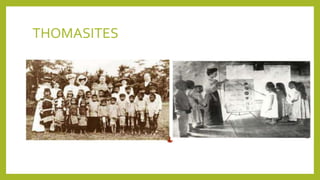
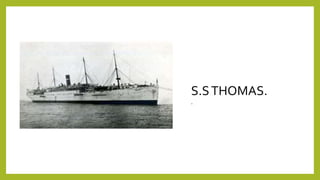
THOMASITES
S.STHOMAS.
.
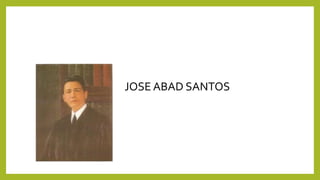
JOSE ABAD SANTOS
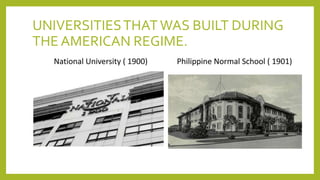
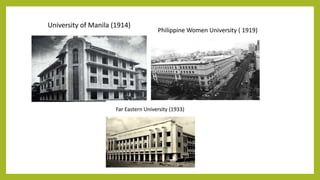
UNIVERSITIESTHATWAS BUILT DURING
THE AMERICAN REGIME.
THE COMMONWEALTH PERIOD 1935-1942
• Free education in public schools was provided all over the country, in accordance
with 1935 Constitution.
• Vocation education and some household activities like sewing, cooking, and
farming were also given importance.
• Education also emphasized nationalism so the students were taught about the life
of the Filipino heroes .
• Vocational education and some household activities were also given importance.
Good manners and discipline were also taught to the students.
• The institute of private education was established in order to observe private
school.
• Formal adult education was also given.
• Executive order No.134 designatingTagalog as our National Language.
• Executive Order No.217 otherwise known as the Quezon Code of Ethics was
taught in school.
• Executive Order No.263 required the teaching of the Filipino, national language in
the senior year of all high schools and all years in the normal schools.
• The Education Act of 1940 was approved by the Philippine Assembly on August 7,
1940 which provided with the following;
-Reduction of the 7 year elementary course to 6 years
-Fixing the school entrance age 7
-National support for elementary education
Thank you!

Education in Pre-colonial period

  • 1.
    WHY IT ISIMPORTANT FOR USTO GO BACK AND RECALLTHE PAST ACTS/EDUCATION OFTHE PHILIPPINES?
  • 2.
    •It gives usa glimpse of the past. •We could learn from it. •It will help you understand how the past events or laws shaped the present acts, education system, and theories. •It will help you appreciate the law today.
  • 3.
    EDUCATION DURINGTHE RE-COLONIAL PERIOD •Education was informal and unstructured, decentralized. Father taught their sons how to look for food and other means of livelihood. Mothers taught their girls to do the household chores. • This education basically prepared their children to be good husband and wives. • Children were provided more vocational training but lesser academics.Teacher were tribal tutor Babaylan or Katalonan
  • 4.
    EDUCATION DURINGTHE SPANISHERA •Education was formal and organized. It was authoritarian in nature.Tribal tutor of the pre-Spanish period were replaced by Spanish missionaries.
  • 5.
    THE EDUCATIONAL DECREEOF 1863 •This law give Filipinos a complete system of education from elementary to collegiate level.The law provided for the establishment of the elementary in all municipalities in the country.
  • 6.
    EDUCATION DURINGTHE AMERICAN REGIME1898-1946 • Americans promoted democratic ideals and the democratic way of life.The schools maintained by the Spaniards for more than three centuries were closed but reopened on august 29,1898 by the secretary of interior. A system is free and compulsory elementary education was establish by the Malolos constitutions
  • 8.
  • 9.
  • 10.
  • 11.
  • 13.
    THE COMMONWEALTH PERIOD1935-1942 • Free education in public schools was provided all over the country, in accordance with 1935 Constitution. • Vocation education and some household activities like sewing, cooking, and farming were also given importance. • Education also emphasized nationalism so the students were taught about the life of the Filipino heroes . • Vocational education and some household activities were also given importance. Good manners and discipline were also taught to the students. • The institute of private education was established in order to observe private school. • Formal adult education was also given.
  • 14.
    • Executive orderNo.134 designatingTagalog as our National Language. • Executive Order No.217 otherwise known as the Quezon Code of Ethics was taught in school. • Executive Order No.263 required the teaching of the Filipino, national language in the senior year of all high schools and all years in the normal schools. • The Education Act of 1940 was approved by the Philippine Assembly on August 7, 1940 which provided with the following; -Reduction of the 7 year elementary course to 6 years -Fixing the school entrance age 7 -National support for elementary education
  • 15.