Effect of Globalization on Education:
How Technoscapes are Channeled to
Create a Constructive Learning
Environment

Educ 102: Social Dimensions of
Education Case Study

Roddy Clark C. Soco
BSED Physics-Chemistry 3
Introduction: Why did I conduct the
study?

• Awareness of the inevitable effects of
  globalization

• Inquiry on how technoscapes can be channeled
  to optimize learning

• Reflection on the possible implications brought
  about by using technology in education
The Problems
• What forms of technological advancements are
  used in a certain school to ensure student
  learning?

• How are technoscapes channeled by the teachers
  and what are their effects?

• What are the attitudes of both learners as
  teachers towards using technoscapes in the
  teaching-learning process?
Methodology
• Venue: St. Joseph’s Academy- Mandaue City
        ▫ S.B. Cabahug St., Centro, Mandaue City


• Date: March 4-5, 2013


• Approach: Ethnography
Methodology: Ethnography
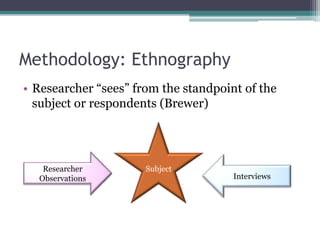
• Researcher “sees” from the standpoint of the
  subject or respondents (Brewer)


   Researcher         Subject
  Observations                        Interviews
Scope and Limitations
• Only one specific parameter influenced by
  globalization: Technoscapes

• Case study in nature, focusing on only one
  subject and avenue: St. Joseph’s Academy

• Results do not necessarily reflect the conditions
  experienced by other schools both public and
  private
Scope and Limitations
• Due to time-constraint, only two methods were
  used: observation and interview


• Responses generated barely have the tendency to
  be treated statistically.
Review of Related Literature
• “Education in the New Milieu” by Dr. Vega, Dr.
  Carreon, and Prof. Prieto in their book, “Social
  Dimensions of Education”

• The Education Week Online Journal

• “Filipino Students Experience “Technological
  Shock” When They Venture Abroad” by Andrea
  Wong ( The Philippine Daily Inquirer)
Data Gathered: Observation
• White board sandwiched in two black board
  partitions

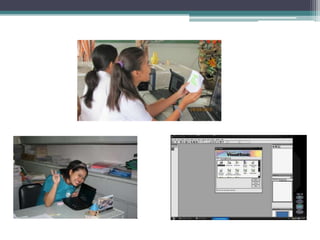
• Laptops and LCD Projectors

• Power point Presentations during discussions

• Improved Computer Laboratory
Data Gathered: Observation
• Learning Soft wares

• Genyo E-Learning Room

• Simulations and interactive games

• Digital Laboratory Equipment
Data Gathered: Interviews
• 3 students and 2 teachers

• Interviews done during recess time

• Standardized questions, but of different
  emphasis for students and teachers

• Identities and names of respondents are kept
  confidential
Student Interview

• First Question: What technological gadgets are
  found in your school? Please describe briefly.
  Do you think they are geared for learning?
Sample Response…

• Student Y: “Computers (Genyo E-learning). We
  use it for our exams, activities, and learning new
  lessons or topic. Naa puy projector in every
  classroom. We use it so that the teachers can
  easily teach us the new way without writing in a
  manila paper unlike before.”
Student Interview

• Second Question: Are you motivated to use
  technology in studying? Please cite some
  examples of instances which make you say
  such.
Sample Response…
• Student Z: “Yes, I am motivated to use
  technology in studying. In our school, we already
  take digital exams in which computers are used
  instead of test papers. With this, we get more
  accurate test results faster. It also helps us save
  time and because of that we can have more time
  to deal with other matters to learn more things.”
Student Interview

• Third Question: What do you think are the
  positive and negative effects of using
  technology in the classroom?
Sample Response…

• Student Y: “Positive: We can learn easily.
  Creative way of Learning. Faster During exams
  and results can be seen after you submit.
  Negative kay addiction, Less time for sleep and
  rest. And we neglect manual studying.”
Teacher Interview

• First Question: How do you channel technology
  in teaching?
Sample Response…
• Teacher Q: There are a lot of ways. Like sa akong
  music, instead of performance test nga usual
  buhaton..., music video nay ilang buhaton ron.
  sometimes akong mga review exercises I have it
  in a form of interactive game sa computer. When
  I give assignments, I ask them to listen to
  different selections sa net...I just give them the
  links.
Teacher Interview

• Second Question: What do you think are the
  positive and negative effects of using
  technology in the classroom?
Sample Response…
• Teacher S: “ Nah, mag sige nalang na sila ug
  plagiarize. Usahay pud mas ma-engross sila sa
  games within the computers kay sa sa concepts that
  I’m trying to teach. Daun mas tapulan na ang mga
  bata. Sauna the skill of experimenting manually is
  really developed. Karon usa nalang ka click nana ang
  measurement, gawas na. Mao nang mudiminish pud
  ang skills gamay especially when it comes to
  measurement. However, dili na nuon kayo hago ang
  mga students. It makes life easier both for the
  students and the teacher.”
Data Analysis
• St. Joseph’s Academy has emerged from a
  traditional chalk and board method of teaching
  to a more holistic and interactive approach
  which employs the use of different technoscapes

• Technoscapes are employed to aid in the
  teaching-learning process
Data Analysis
• Technoscapes in education both have promising
  and not so good effects.


• There is a need to properly channel the
  technoscapes in creating a constructive learning
  environment.
Conclusion
• It is affirmed that globalization greatly affects
  the education sector.

• Examples of technoscapes are
  computers, laptops, and LCD projectors as well
  as the Genyo E-Learning Room

• Traditional teaching methods are slowly
  changing into more interactive ones
Conclusion
• A positive attitude towards using technoscapes is
  prevalent

• Technoscapes in the classroom is a means of
  coping up with the challenge to exist in a
  globally competitive environment
Recommendations
• Ample time given for the study to be conducted.

• Other ethnographic approaches must be employed such
  as surveys.

• Adequate sampling must be done.

• Studies about concrete classroom practices that
  exemplify proper channeling of technoscapes must be
  conducted.

• Studies about “glocalizing” the use of technoscapes must
  be conducted.
Bibliography
• Vega, Violeta A., Prieto, Neila G., and
  Carreon, Myrna L., “Education in the New Milieu”.
     Social Dimensions of Education. Quezon City:
  Lorimar Publsihing Inc. p. 154. Print.


• Education Week. “ Technology in Education”.
  Education Week Research Center. September
  1, 2011. Web. 09 March, 2013.
< http://www.edweek.org/ew/issues/technology-in-
  education/>
Bibliography
• Wong, Andrea Chloe. “Filipino Students Experience
  Technological Shock Abroad”. The Philippine Daily
  Inquirer. October 23, 2011. Web. 09 March, 2013.
http://globalnation.inquirer.net/16167/filipino-
  students-experience-%E2%80%98technological-
  shock%E2%80%99-abroad

• Brewer, John. “Ethnography”. Staff Pages. Web. 10
  March 2013.
http://www.abdn.ac.uk/staffpages/uploads/soc197/E
  thnography.pdf

Educ presentation 102

  • 1.
    Effect of Globalizationon Education: How Technoscapes are Channeled to Create a Constructive Learning Environment Educ 102: Social Dimensions of Education Case Study Roddy Clark C. Soco BSED Physics-Chemistry 3
  • 2.
    Introduction: Why didI conduct the study? • Awareness of the inevitable effects of globalization • Inquiry on how technoscapes can be channeled to optimize learning • Reflection on the possible implications brought about by using technology in education
  • 3.
    The Problems • Whatforms of technological advancements are used in a certain school to ensure student learning? • How are technoscapes channeled by the teachers and what are their effects? • What are the attitudes of both learners as teachers towards using technoscapes in the teaching-learning process?
  • 4.
    Methodology • Venue: St.Joseph’s Academy- Mandaue City ▫ S.B. Cabahug St., Centro, Mandaue City • Date: March 4-5, 2013 • Approach: Ethnography
  • 5.
    Methodology: Ethnography • Researcher“sees” from the standpoint of the subject or respondents (Brewer) Researcher Subject Observations Interviews
  • 6.
    Scope and Limitations •Only one specific parameter influenced by globalization: Technoscapes • Case study in nature, focusing on only one subject and avenue: St. Joseph’s Academy • Results do not necessarily reflect the conditions experienced by other schools both public and private
  • 7.
    Scope and Limitations •Due to time-constraint, only two methods were used: observation and interview • Responses generated barely have the tendency to be treated statistically.
  • 8.
    Review of RelatedLiterature • “Education in the New Milieu” by Dr. Vega, Dr. Carreon, and Prof. Prieto in their book, “Social Dimensions of Education” • The Education Week Online Journal • “Filipino Students Experience “Technological Shock” When They Venture Abroad” by Andrea Wong ( The Philippine Daily Inquirer)
  • 9.
    Data Gathered: Observation •White board sandwiched in two black board partitions • Laptops and LCD Projectors • Power point Presentations during discussions • Improved Computer Laboratory
  • 10.
    Data Gathered: Observation •Learning Soft wares • Genyo E-Learning Room • Simulations and interactive games • Digital Laboratory Equipment
  • 12.
    Data Gathered: Interviews •3 students and 2 teachers • Interviews done during recess time • Standardized questions, but of different emphasis for students and teachers • Identities and names of respondents are kept confidential
  • 13.
    Student Interview • FirstQuestion: What technological gadgets are found in your school? Please describe briefly. Do you think they are geared for learning?
  • 14.
    Sample Response… • StudentY: “Computers (Genyo E-learning). We use it for our exams, activities, and learning new lessons or topic. Naa puy projector in every classroom. We use it so that the teachers can easily teach us the new way without writing in a manila paper unlike before.”
  • 15.
    Student Interview • SecondQuestion: Are you motivated to use technology in studying? Please cite some examples of instances which make you say such.
  • 16.
    Sample Response… • StudentZ: “Yes, I am motivated to use technology in studying. In our school, we already take digital exams in which computers are used instead of test papers. With this, we get more accurate test results faster. It also helps us save time and because of that we can have more time to deal with other matters to learn more things.”
  • 17.
    Student Interview • ThirdQuestion: What do you think are the positive and negative effects of using technology in the classroom?
  • 18.
    Sample Response… • StudentY: “Positive: We can learn easily. Creative way of Learning. Faster During exams and results can be seen after you submit. Negative kay addiction, Less time for sleep and rest. And we neglect manual studying.”
  • 19.
    Teacher Interview • FirstQuestion: How do you channel technology in teaching?
  • 20.
    Sample Response… • TeacherQ: There are a lot of ways. Like sa akong music, instead of performance test nga usual buhaton..., music video nay ilang buhaton ron. sometimes akong mga review exercises I have it in a form of interactive game sa computer. When I give assignments, I ask them to listen to different selections sa net...I just give them the links.
  • 21.
    Teacher Interview • SecondQuestion: What do you think are the positive and negative effects of using technology in the classroom?
  • 22.
    Sample Response… • TeacherS: “ Nah, mag sige nalang na sila ug plagiarize. Usahay pud mas ma-engross sila sa games within the computers kay sa sa concepts that I’m trying to teach. Daun mas tapulan na ang mga bata. Sauna the skill of experimenting manually is really developed. Karon usa nalang ka click nana ang measurement, gawas na. Mao nang mudiminish pud ang skills gamay especially when it comes to measurement. However, dili na nuon kayo hago ang mga students. It makes life easier both for the students and the teacher.”
  • 23.
    Data Analysis • St.Joseph’s Academy has emerged from a traditional chalk and board method of teaching to a more holistic and interactive approach which employs the use of different technoscapes • Technoscapes are employed to aid in the teaching-learning process
  • 24.
    Data Analysis • Technoscapesin education both have promising and not so good effects. • There is a need to properly channel the technoscapes in creating a constructive learning environment.
  • 25.
    Conclusion • It isaffirmed that globalization greatly affects the education sector. • Examples of technoscapes are computers, laptops, and LCD projectors as well as the Genyo E-Learning Room • Traditional teaching methods are slowly changing into more interactive ones
  • 26.
    Conclusion • A positiveattitude towards using technoscapes is prevalent • Technoscapes in the classroom is a means of coping up with the challenge to exist in a globally competitive environment
  • 27.
    Recommendations • Ample timegiven for the study to be conducted. • Other ethnographic approaches must be employed such as surveys. • Adequate sampling must be done. • Studies about concrete classroom practices that exemplify proper channeling of technoscapes must be conducted. • Studies about “glocalizing” the use of technoscapes must be conducted.
  • 28.
    Bibliography • Vega, VioletaA., Prieto, Neila G., and Carreon, Myrna L., “Education in the New Milieu”. Social Dimensions of Education. Quezon City: Lorimar Publsihing Inc. p. 154. Print. • Education Week. “ Technology in Education”. Education Week Research Center. September 1, 2011. Web. 09 March, 2013. < http://www.edweek.org/ew/issues/technology-in- education/>
  • 29.
    Bibliography • Wong, AndreaChloe. “Filipino Students Experience Technological Shock Abroad”. The Philippine Daily Inquirer. October 23, 2011. Web. 09 March, 2013. http://globalnation.inquirer.net/16167/filipino- students-experience-%E2%80%98technological- shock%E2%80%99-abroad • Brewer, John. “Ethnography”. Staff Pages. Web. 10 March 2013. http://www.abdn.ac.uk/staffpages/uploads/soc197/E thnography.pdf