Ed-Tech Market Landscape 1
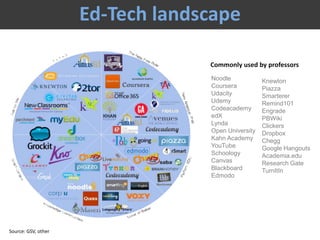
Ed-Tech landscape
Commonly used by professors
Noodle
Coursera
Udacity
Udemy
Codeacademy
edX
Lynda
Open University
Kahn Academy
YouTube
Schoology
Canvas
Blackboard
Edmodo
Knewton
Piazza
Smarterer
Remind101
Engrade
PBWiki
Clickers
Dropbox
Chegg
Google Hangouts
Academia.edu
Research Gate
TurnItIn
Source: GSV, other
3
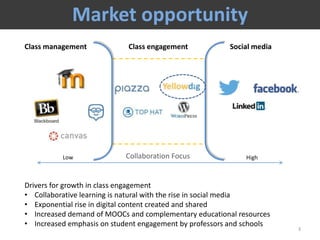
Market opportunity
Class management Social mediaClass engagement
Low Collaboration Focus High
Drivers for growth in class engagement
• Collaborative learning is natural with the rise in social media
• Exponential rise in digital content created and shared
• Increased demand of MOOCs and complementary educational resources
• Increased emphasis on student engagement by professors and schools
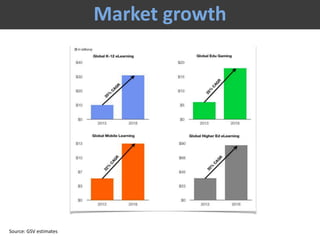
Market growth
Source: GSV estimates
5
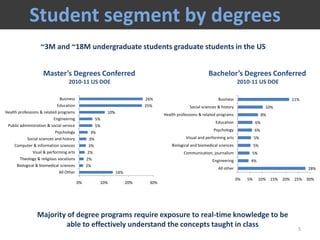
Student segment by degrees
14%
2%
2%
2%
3%
3%
3%
5%
5%
10%
25%
26%
0% 10% 20% 30%
All Other
Biological & biomedical sciences
Theology & religious vocations
Viual & performing arts
Computer & information sciences
Social sciences and history
Psychology
Public administration & social service
Engineering
Health professions & related programs
Education
Business
28%
4%
5%
5%
5%
6%
6%
8%
10%
21%
0% 5% 10% 15% 20% 25% 30%
All other
Engineering
Communication, journalism
Biological and biomedical sciences
Visual and performing arts
Psychology
Education
Health professions & related programs
Social sciences & history
Business
Master’s Degrees Conferred
2010-11 US DOE
Bachelor’s Degrees Conferred
2010-11 US DOE
~3M and ~18M undergraduate students graduate students in the US
Majority of degree programs require exposure to real-time knowledge to be
able to effectively understand the concepts taught in class

Ed tech market landscape

  • 1.
  • 2.
    Ed-Tech landscape Commonly usedby professors Noodle Coursera Udacity Udemy Codeacademy edX Lynda Open University Kahn Academy YouTube Schoology Canvas Blackboard Edmodo Knewton Piazza Smarterer Remind101 Engrade PBWiki Clickers Dropbox Chegg Google Hangouts Academia.edu Research Gate TurnItIn Source: GSV, other
  • 3.
    3 Market opportunity Class managementSocial mediaClass engagement Low Collaboration Focus High Drivers for growth in class engagement • Collaborative learning is natural with the rise in social media • Exponential rise in digital content created and shared • Increased demand of MOOCs and complementary educational resources • Increased emphasis on student engagement by professors and schools
  • 4.
  • 5.
    5 Student segment bydegrees 14% 2% 2% 2% 3% 3% 3% 5% 5% 10% 25% 26% 0% 10% 20% 30% All Other Biological & biomedical sciences Theology & religious vocations Viual & performing arts Computer & information sciences Social sciences and history Psychology Public administration & social service Engineering Health professions & related programs Education Business 28% 4% 5% 5% 5% 6% 6% 8% 10% 21% 0% 5% 10% 15% 20% 25% 30% All other Engineering Communication, journalism Biological and biomedical sciences Visual and performing arts Psychology Education Health professions & related programs Social sciences & history Business Master’s Degrees Conferred 2010-11 US DOE Bachelor’s Degrees Conferred 2010-11 US DOE ~3M and ~18M undergraduate students graduate students in the US Majority of degree programs require exposure to real-time knowledge to be able to effectively understand the concepts taught in class