Management of Assessment Resources in a Federated Repository of Educational ResourcesIsrael GutiérrezDerickLeonyAndrés FrancoRaquel M. CrespoAbelardoPardoCarlos Delgado Kloos
MotivationFocus on the teacherEuropean Space for Higher EducationCreation of new coursesLearning outcomesAssessment as a key process
Advantages of the usage of standards
Objective: Gather and develop best practices about interoperable content as support to higher education and learning outcome oriented
Results:
ICOPER Reference Model
Gathering of recommendations
New specifications and extensions to existing ones
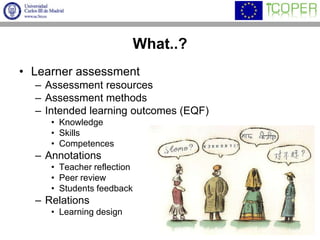
Open ICOPER Content SpaceWhat..?Learner assessmentAssessment resourcesAssessment methodsIntended learning outcomes (EQF)KnowledgeSkillsCompetencesAnnotationsTeacher reflectionPeer reviewStudents feedbackRelationsLearning design
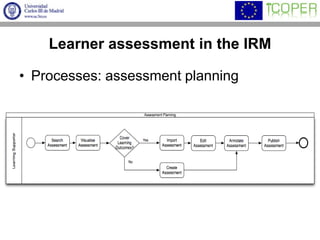
Learner assessment in the IRMProcesses: assessment planning
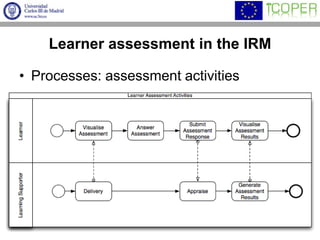
Learner assessment in the IRMProcesses: assessment activities
Learner assessment in the IRMServicesSearch and retrieval of assessment resourcesPublication of assessment resourcesUpdating learner’s outcome profile
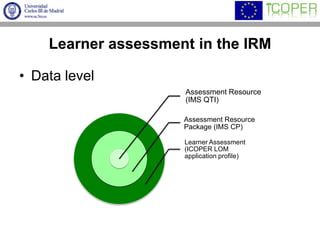
Learner assessment in the IRMData level
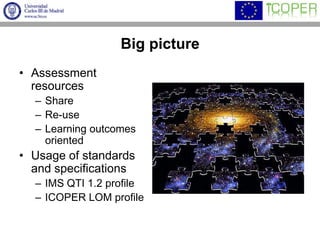
Big pictureAssessment resourcesShareRe-useLearning outcomes orientedUsage of standards and specificationsIMS QTI 1.2 profileICOPER LOM profile
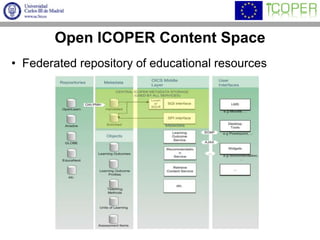
Open ICOPER Content SpaceFederated repository of educational resourcesICOPER-assessment applicationAssessment use casesSearch for assessment resources in a repositoryFilter by intended learning outcomes and assessment methodsImport/re-use of assessment resourcesPublish/share assessment resourcesUpdate learner’s profileStakeholdersFaculty membersCourse developers
ICOPER-assessment applicationVirtual Learning EnvironmentDesign of mock-upsUsage of the OICS middle layer APIService level requirements
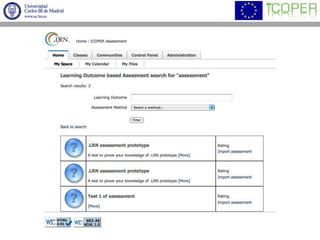
Step 1: Search and re-use of assessment resourcesSearch of assessment resourcesFilter by intended learning outcomesFilter by assessment methodsImport resources into a courseRe-use/editing of resources
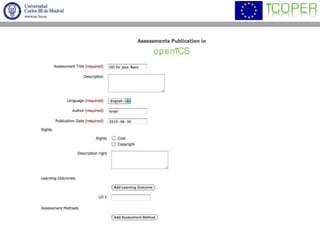
Step 2: Publication of assessment resourcesPublication of created/remixed resourcesFill out required metadata for publicationAnnotation of resourcesPeer review of the resources of a peer before its actual usage
Step 3: Deployment into a courseStudent viewUse of the resources created by the teachers of other courseTeacher viewReflections about the performance of the resources (teacher reflection)Update resources in the repository
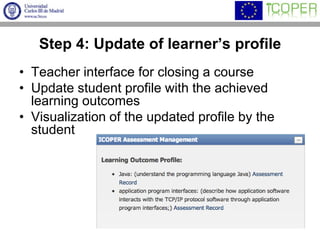
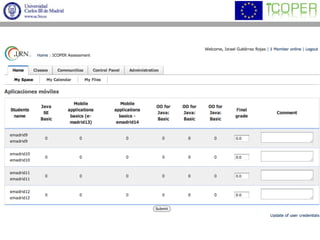
Step 4: Update of learner’s profileTeacher interface for closing a course
Update student profile with the achieved learning outcomes

Management of Assessment Resources in a Federated Repository of Educational Resources

  • 1.
    Management of AssessmentResources in a Federated Repository of Educational ResourcesIsrael GutiérrezDerickLeonyAndrés FrancoRaquel M. CrespoAbelardoPardoCarlos Delgado Kloos
  • 2.
    MotivationFocus on theteacherEuropean Space for Higher EducationCreation of new coursesLearning outcomesAssessment as a key process
  • 3.
    Advantages of theusage of standards
  • 4.
    Objective: Gather anddevelop best practices about interoperable content as support to higher education and learning outcome oriented
  • 5.
  • 6.
  • 7.
  • 8.
    New specifications andextensions to existing ones
  • 9.
    Open ICOPER ContentSpaceWhat..?Learner assessmentAssessment resourcesAssessment methodsIntended learning outcomes (EQF)KnowledgeSkillsCompetencesAnnotationsTeacher reflectionPeer reviewStudents feedbackRelationsLearning design
  • 10.
    Learner assessment inthe IRMProcesses: assessment planning
  • 11.
    Learner assessment inthe IRMProcesses: assessment activities
  • 12.
    Learner assessment inthe IRMServicesSearch and retrieval of assessment resourcesPublication of assessment resourcesUpdating learner’s outcome profile
  • 13.
    Learner assessment inthe IRMData level
  • 14.
    Big pictureAssessment resourcesShareRe-useLearningoutcomes orientedUsage of standards and specificationsIMS QTI 1.2 profileICOPER LOM profile
  • 15.
    Open ICOPER ContentSpaceFederated repository of educational resourcesICOPER-assessment applicationAssessment use casesSearch for assessment resources in a repositoryFilter by intended learning outcomes and assessment methodsImport/re-use of assessment resourcesPublish/share assessment resourcesUpdate learner’s profileStakeholdersFaculty membersCourse developers
  • 16.
    ICOPER-assessment applicationVirtual LearningEnvironmentDesign of mock-upsUsage of the OICS middle layer APIService level requirements
  • 17.
    Step 1: Searchand re-use of assessment resourcesSearch of assessment resourcesFilter by intended learning outcomesFilter by assessment methodsImport resources into a courseRe-use/editing of resources
  • 19.
    Step 2: Publicationof assessment resourcesPublication of created/remixed resourcesFill out required metadata for publicationAnnotation of resourcesPeer review of the resources of a peer before its actual usage
  • 21.
    Step 3: Deploymentinto a courseStudent viewUse of the resources created by the teachers of other courseTeacher viewReflections about the performance of the resources (teacher reflection)Update resources in the repository
  • 22.
    Step 4: Updateof learner’s profileTeacher interface for closing a course
  • 23.
    Update student profilewith the achieved learning outcomes