Download to read offline

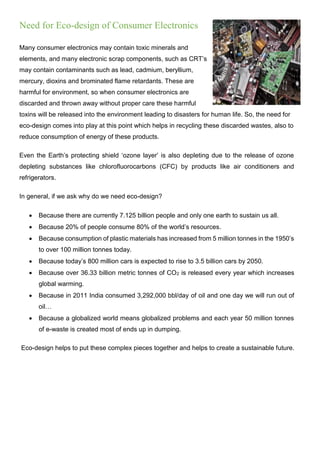

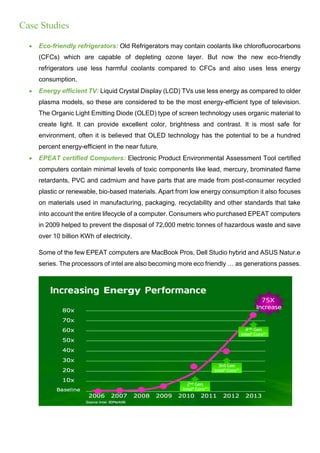

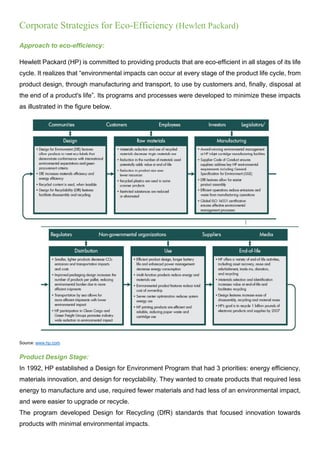


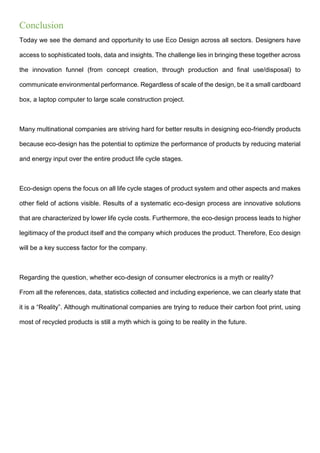


This document discusses eco-design of consumer electronics. It begins with acknowledging the professor who encouraged the study and thanking sources. The abstract indicates it will discuss eco-design, why it is needed, steps to take, case studies and corporate strategies. It then defines eco-design and consumer electronics. It explains the need for eco-design is to avoid toxic waste and elements entering the environment. Steps for eco-design include material selection, manufacturing process changes, reducing energy consumption and improving recycling. Case studies on eco-friendly refrigerators, TVs, computers and air conditioners are provided. Corporate strategies for HP to achieve eco-efficiency throughout the product lifecycle are outlined. Some myths about eco-design are addressed. The


