According to Hector
Ceballos Lascurain:
“ Ecotourism is a type of tourism
that consist of traveling to
relatively undisturbed or
uncontaminated natural areas with
the specific objective of studying,
admiring and enjoying the scenery
and its wild plants and animals, as
well as any existing cultural
manifestations , both past and
present, found in this areas”
If tourism is not properly planned
and implemented, it can:
 destroy vegetation;
 create congestion;
 pollute beaches;
 cause housing problems;
 litter tourist areas;
 Ignore the needs of local
community;
 An important economic activity in natural
areas
 Give economic value to ecosystem services
 Generate direct income for the conservation
of protected areas
 Generate direct and indirect income for local
stakeholders
 Promote sustainable use of natural resources
 Reduce threats to biodiversity
 A low impact, environmentally-
sound and community-
participatory tourism activity in a
given natural environment that
enhance the conservation of bio-
physical and cultural diversity,
promotes environmental
understanding and education,
and yields socio-economic
benefits to the concerned
community.
 Identified portion of the land and
water set aside by reason of their
unique physical and biological
significance, managed to enhance
biological diversity and protected
against destructive human
exploitation.
 The variety and variability among
living organisms and ecological
complexes in which said
organisms occur.
 Modern form of economic
development that is designed to
improve the quality of life of the
host community, provide a high
quality of experience for the
visitors, and maintain the quality
of the environment which on
which both the community and
the visitors depend.
 Areas of high recreational,
tourism, educational and/or
environmental values where
ecotourism could be allowed.
 Areas that remain relatively
undisturbed by human activities
and remain in their natural site
thus maintaining biodiversity and
ecological processes.
 Ecotourism is usually centered on activities
related to nature. Before ecotourism was
introduced, these activities were called
special interest, nature tourism, and green
tourism.
 Some ecotourism activities have been
identified as possible for the Philippines and
are currently undergoing development. These
are: mountaineering/trekking, birdwatching,
photo safari, scuba diving, spelunking, and
whale and dolphin watching.
 Among all ecotourism activities,
mountaineering and trekking are perhaps the
most famous.
 In 1996, the Philippines attracted a total of
2,049,367 tourists.
 The Philippines has 34 national parks, 23 of
which are located in mountain areas.
1. If there is an established trail, walk in a
single line.
2. Do not take anything from the forests as
souvenir.
3. Avoid disturbing wildlife.
4. Never leave garbage along the trail or at the
campsite.
5. For human waste, each climber can dig his
own “TOILET”.
6. Bring along camping equipment
7. Do not bathe or wash dishes along the river.
8. Learn the locals’ culture
9. Be sensitive to the values of local people.
10. Avoid the old practice of digging trenches.
11. Do not buy souvenir items made from rare
animal or plant species.
12. Find out the maximum capacity of the
trekking area.
13. Always register.
14. Avoid giving money or token candies to the
children in areas visited.
15. Make sure that health measures are taken
into account.
16. Always hire a guide.
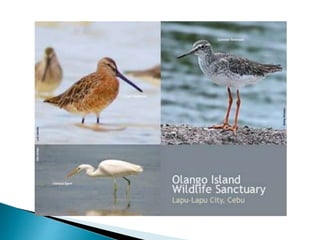
 The Philippines treasures about 557 species
of birds and about 300-400 subspecies
distributed throughout the archipelago.
 The species and subspecies together
comprise about 950 kinds of birds.
 Of this total 800 are residents and 150 are
migrants or irregular visitors.
1. Olango Island (Off Mactan island Cebu)
2. Philippine Eagle Nature Research Center
(Malagos, Davao City)
3. Calauit Island (Northern Palawan)
4. Mt. Makiling (Los Banos, Laguna)
 Deemed the most successful ecotourism
activity in the country because of the
hundreds of establishments directly and
indirectly involved in business of scuba
diving.
 The main factor is simple– the Philippines has
one of the most diverse marine life in the
world.
 Diving has been one of the reasons why coral
reef areas survived total damage from
destructive fishing.
 Although hailed as a true ecotourism activity,
scuba diving can also damage the marine
resources on which it is based. This has
resulted in complex environment ethics
issues affecting the diving community. Some
of these are:
1. Spearfishing
2. Feeding
3. Touching
4. Agitating
5. Playing
 1. Anilao (Batangas)
 2. Puerto Galera (Mindoro Oriental)
 3. El Nido (Northern Palawan)
 4. Moalboal (Cebu)
 5. Balicasag Island (Bohol)
 Until 1993, very few people realize that whale
and dolphin watching is possible in the
Philippines.
 For a long time, and with the most
destructive consequences, whales and
dolphins have been killed in waters around
the world, both intentionally and
“accidentally” by catch.
 ......Documents_the grind_ (stranding and
slaughter of pilot whales) Torshavn, Faeroe
Islands.mp4
 ......DocumentsPilot Whale Hunt Faroes
June 2012.mp4
 Caving is one sport where one will have to be
really careful not to make any damage to the
delicate limestone formations.
 One of the most dangerous sports to have if
one does not take into consideration all the
safety procedures before and during the
exploration of caves.
 Light is the most important tool.
 Never enter a cave alone.
 Never enter a cave without proper equipment,
especially in sport caving.
 Always tell somebody where the team will go
and what time it is expected to be back.
 Look for tell-tale signs of flash-flooding, like
mud on the wall
 Unless the team is composed of professional
cave explorers, never enter a cave without a
competent guide.
 Never touch an animal inside a cave.
 Never touch delicate limestone formation.
 Do not leave anything on the cave even
biodegradable wastes.
 Never write or vandalize the cave formations
on the wall.
 Never take anything, however small, as
souvenir.

Ecotourism (Introduction)

  • 2.
    According to Hector CeballosLascurain: “ Ecotourism is a type of tourism that consist of traveling to relatively undisturbed or uncontaminated natural areas with the specific objective of studying, admiring and enjoying the scenery and its wild plants and animals, as well as any existing cultural manifestations , both past and present, found in this areas”
  • 4.
    If tourism isnot properly planned and implemented, it can:  destroy vegetation;  create congestion;  pollute beaches;  cause housing problems;  litter tourist areas;  Ignore the needs of local community;
  • 5.
     An importanteconomic activity in natural areas  Give economic value to ecosystem services  Generate direct income for the conservation of protected areas  Generate direct and indirect income for local stakeholders  Promote sustainable use of natural resources  Reduce threats to biodiversity
  • 6.
     A lowimpact, environmentally- sound and community- participatory tourism activity in a given natural environment that enhance the conservation of bio- physical and cultural diversity, promotes environmental understanding and education, and yields socio-economic benefits to the concerned community.
  • 7.
     Identified portionof the land and water set aside by reason of their unique physical and biological significance, managed to enhance biological diversity and protected against destructive human exploitation.
  • 12.
     The varietyand variability among living organisms and ecological complexes in which said organisms occur.
  • 15.
     Modern formof economic development that is designed to improve the quality of life of the host community, provide a high quality of experience for the visitors, and maintain the quality of the environment which on which both the community and the visitors depend.
  • 16.
     Areas ofhigh recreational, tourism, educational and/or environmental values where ecotourism could be allowed.
  • 20.
     Areas thatremain relatively undisturbed by human activities and remain in their natural site thus maintaining biodiversity and ecological processes.
  • 21.
     Ecotourism isusually centered on activities related to nature. Before ecotourism was introduced, these activities were called special interest, nature tourism, and green tourism.  Some ecotourism activities have been identified as possible for the Philippines and are currently undergoing development. These are: mountaineering/trekking, birdwatching, photo safari, scuba diving, spelunking, and whale and dolphin watching.
  • 23.
     Among allecotourism activities, mountaineering and trekking are perhaps the most famous.  In 1996, the Philippines attracted a total of 2,049,367 tourists.  The Philippines has 34 national parks, 23 of which are located in mountain areas.
  • 25.
    1. If thereis an established trail, walk in a single line. 2. Do not take anything from the forests as souvenir. 3. Avoid disturbing wildlife. 4. Never leave garbage along the trail or at the campsite. 5. For human waste, each climber can dig his own “TOILET”.
  • 26.
    6. Bring alongcamping equipment 7. Do not bathe or wash dishes along the river. 8. Learn the locals’ culture 9. Be sensitive to the values of local people. 10. Avoid the old practice of digging trenches. 11. Do not buy souvenir items made from rare animal or plant species.
  • 27.
    12. Find outthe maximum capacity of the trekking area. 13. Always register. 14. Avoid giving money or token candies to the children in areas visited. 15. Make sure that health measures are taken into account. 16. Always hire a guide.
  • 28.
     The Philippinestreasures about 557 species of birds and about 300-400 subspecies distributed throughout the archipelago.  The species and subspecies together comprise about 950 kinds of birds.  Of this total 800 are residents and 150 are migrants or irregular visitors.
  • 31.
    1. Olango Island(Off Mactan island Cebu) 2. Philippine Eagle Nature Research Center (Malagos, Davao City) 3. Calauit Island (Northern Palawan) 4. Mt. Makiling (Los Banos, Laguna)
  • 36.
     Deemed themost successful ecotourism activity in the country because of the hundreds of establishments directly and indirectly involved in business of scuba diving.  The main factor is simple– the Philippines has one of the most diverse marine life in the world.  Diving has been one of the reasons why coral reef areas survived total damage from destructive fishing.
  • 38.
     Although hailedas a true ecotourism activity, scuba diving can also damage the marine resources on which it is based. This has resulted in complex environment ethics issues affecting the diving community. Some of these are: 1. Spearfishing 2. Feeding 3. Touching 4. Agitating 5. Playing
  • 39.
     1. Anilao(Batangas)  2. Puerto Galera (Mindoro Oriental)  3. El Nido (Northern Palawan)  4. Moalboal (Cebu)  5. Balicasag Island (Bohol)
  • 40.
     Until 1993,very few people realize that whale and dolphin watching is possible in the Philippines.  For a long time, and with the most destructive consequences, whales and dolphins have been killed in waters around the world, both intentionally and “accidentally” by catch.
  • 44.
     ......Documents_the grind_(stranding and slaughter of pilot whales) Torshavn, Faeroe Islands.mp4  ......DocumentsPilot Whale Hunt Faroes June 2012.mp4
  • 46.
     Caving isone sport where one will have to be really careful not to make any damage to the delicate limestone formations.  One of the most dangerous sports to have if one does not take into consideration all the safety procedures before and during the exploration of caves.
  • 47.
     Light isthe most important tool.  Never enter a cave alone.  Never enter a cave without proper equipment, especially in sport caving.  Always tell somebody where the team will go and what time it is expected to be back.  Look for tell-tale signs of flash-flooding, like mud on the wall  Unless the team is composed of professional cave explorers, never enter a cave without a competent guide.
  • 48.
     Never touchan animal inside a cave.  Never touch delicate limestone formation.  Do not leave anything on the cave even biodegradable wastes.  Never write or vandalize the cave formations on the wall.  Never take anything, however small, as souvenir.