10/27/2021
UNIFYING THEMES
IN STUDY OF LIFE
Designing an experiment for
life
John Patrick lee Jo
Grade12 jade
Abstract
Growth parameters such as leaf area total dry mass production, crop growth rate
relative growth rate and net assimilation rate were compared in six varieties of
mungbean under subtropical condition (24°8′ N 90°0′ E) to identify limiting growth
characters for the efficient application of physiology breeding for higher yields.
Results revealed that a relatively smaller portion of TDM was produced before flower
initiation and the bulk of it after anthesis. The maximum CGR was observed during
pod filling stage in all the varieties due to maximum leaf area development at this
stage. Two plant characters such as LA and CGR contributed to the higher TDM
production. Results indicated that high yielding mungbean varieties should possess
larger LA, higher TDM production ability, superior CGR at all growth stages, and
high relative growth rate and net assimilation rate at vegetative stage which would
result in superior yield components.
Introduction
Mungbean is one of the most important pulse crops for protein supplement in
subtropical zones of the world. It is widely grown in Indian subcontinent as a short
duration catch crop between two principal crops. Mungbean contains 51%
carbohydrate, 24–26% protein, 4% mineral, and 3% vitamins [1]. Besides providing
protein in the diet, mungbean has the remarkable quality of helping the symbiotic root
rhizobia to fix atmospheric nitrogen and hence to enrich soil fertility [2].
In spite of the best efforts for improving the mungbean varieties, the yield of this crop
remains low. Several studies have been made to understand their performances which
mainly include the contribution of various yield components towards yield [3–6]. The
yield components depend on some physiological traits. To understand the
physiological basis of yield difference among the genotypes of mungbean, it is
essential to quantify the components of growth, and the variation, if any, may be
utilized in crop improvement. Variation in dry matter accumulation and pod
production in different genotypes may be related to some factors such as leaf area
(LA), crop growth rate (CGR), net assimilation rate (NAR), and relative growth rate
(RGR). Pandey et al. [7] analyzed growth parameters of five varieties of black gram in
order to study the physiological causes of yield differences and observed the
differences in CGR, NAR, RGR, and LA among the varieties. Egli and Zhen-wen [8]
suggested that seeds per unit area were related to canopy photosynthesis during
flowering and pod set and canopy photosynthesis rate was determined through LAI
and CGR. A plant with optimum LAI and NAR may produce higher biological yield
as well as seed yield [9]. The dry matter accumulation may be the highest if LAI attains
its maximum value within the shortest possible time [4, 10, 11]. Not only TDM
production, but also the capacity of efficient partitioning between the vegetative and
reproductive parts may produce high economic yield [12, 13]. Probably a better
understanding of crop growth and yield parameters and the partitioning of
assimilates into seed formation would help to expedite yield improvement of this
crop. It was with this aim that the present investigation was carried out.
Objectives
Mung beans not only have good nutritional value but also show hypolipidemic,
cholesterol-lowering, antiallergy, antibacterial, and antitumor effects (He et al.,
2011). They also increase appetite and have other medicinal values.
METHODS AND MATERIALS
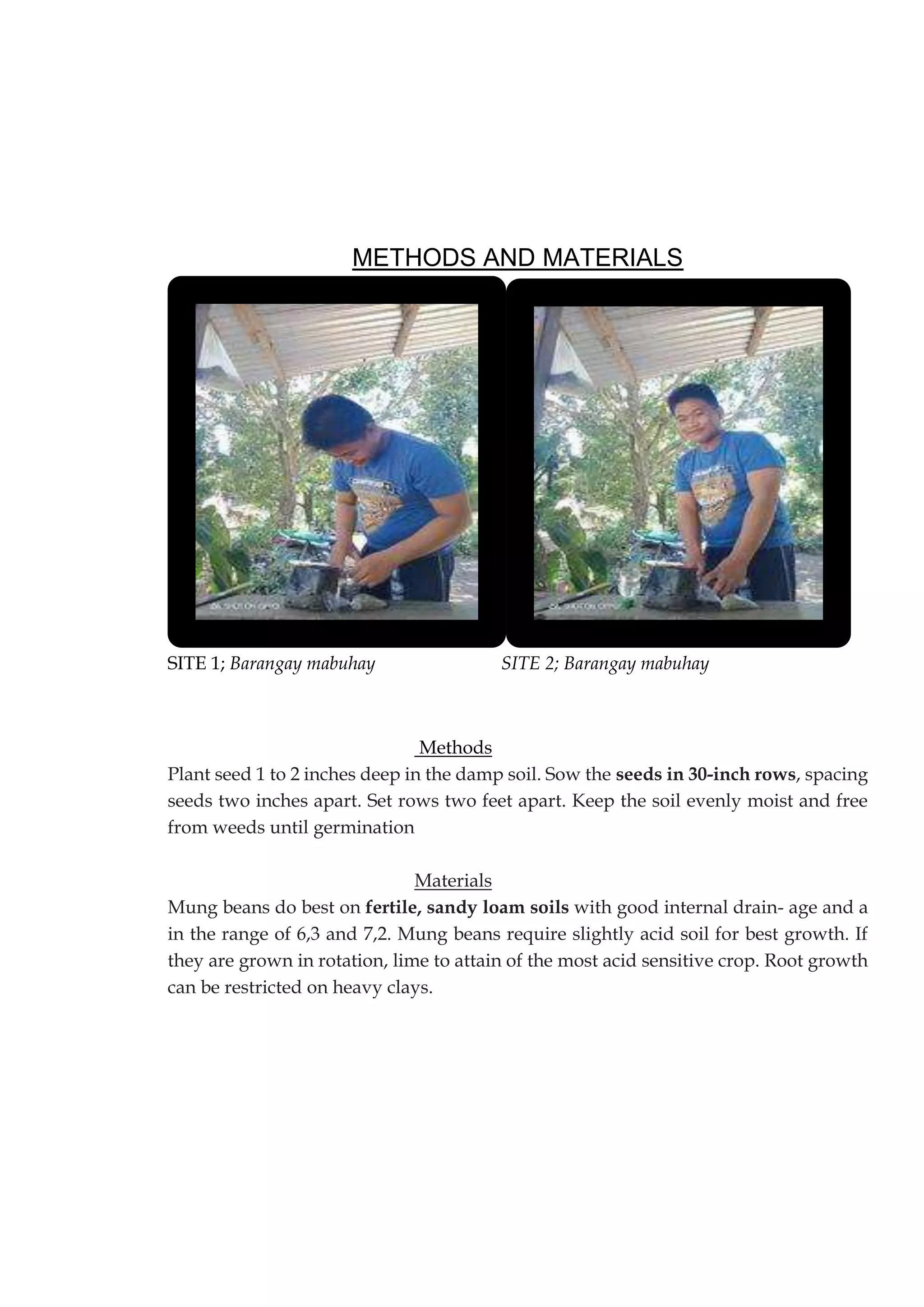
SITE 1; Barangay mabuhay SITE 2; Barangay mabuhay
Methods
Plant seed 1 to 2 inches deep in the damp soil. Sow the seeds in 30-inch rows, spacing
seeds two inches apart. Set rows two feet apart. Keep the soil evenly moist and free
from weeds until germination
Materials
Mung beans do best on fertile, sandy loam soils with good internal drain- age and a
in the range of 6,3 and 7,2. Mung beans require slightly acid soil for best growth. If
they are grown in rotation, lime to attain of the most acid sensitive crop. Root growth
can be restricted on heavy clays.
RESULT AND DISCUSSION
Collection of mung bean with sunlight
Figure 1: SAMPLE OF MUNG BEAN WITH SUNLIGHT
Table 1.1 SAMPLE OF MUNG BEAN WITH SUNLIGHT
DAY 1 NONE
DAY 2 On second day as I see mung bean with sunlight is starting to grow
faster.
DAY 3
.
On third day as I measure mung bean without sunlight is already 2.5
inch but so healthy.
Collection of mung bean without sunlight
Figure 2: SAMPLE OF MUNG BEAN WITHOUT SUNLIGHT
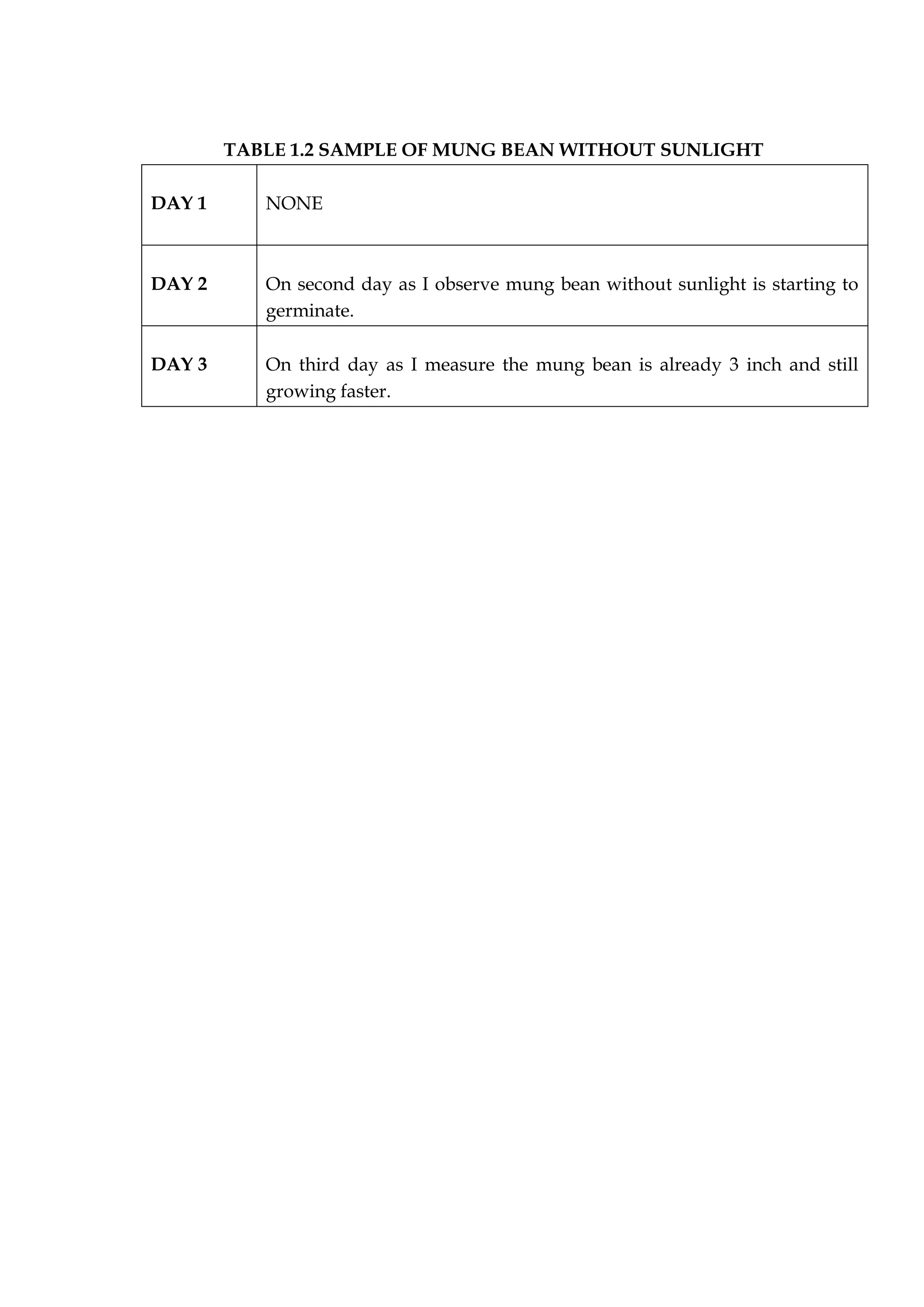
TABLE 1.2 SAMPLE OF MUNG BEAN WITHOUT SUNLIGHT
DAY 1 NONE
DAY 2 On second day as I observe mung bean without sunlight is starting to
germinate.
DAY 3 On third day as I measure the mung bean is already 3 inch and still
growing faster.
DISCUSSION
According to table 1.1 this activity is make in outdoor where you can heat and get energy from
the sun, while mung bean seed dont need direct sunlight to geminate, the suns energy helps to
warm the soil to create optimum environment for that process. Mung beans with sunlight do not
germinate, if the soil is cold and will rot in the ground if planted in soil less than 50 degrees
Fahrenheit. As the soil warms quickly to the correct temperature and been seeds germinate
rapidly. As soon as the first shoots appear, sunlight starts the process of photosynthesis and the
plants grow to maturity and mung beans are ready to harvest in roughly 60 days.
According to table 1.2 this activity is make in indoor where without sunlight get from the sun in
short in dark place, most of seeds germinate when theyre placed in the dark but most of them is
skinny. The presence of light, which is crucial to seedling development, may actually stunt the
process of germination. The mung bean can grow in just one day in the dark but so skinny. They
grow faster but not totally healthy. Mung beans do not need a sunlight to grow but they need
warmth. Most of beans required a soil temperature of 60 degrees Fahrenheit or higher to
germinate well.
OBSERVATION/QUESTION
1. How do you prepare mung beans for planting?
l. Add half cup mung beans to a large bow. Pick and discard stone and broken
beans. Also you find any shrunk and wrinkled beans discard them as well.
II. Rub and rinse them well in lots of water at least thrice or until the water is
clear.
lll. Soak them for at least 9 to 12 hours.
lV. After 9hrs. The skin on beans must be broken. That is the right time to begin
sprouting them.
V. Discard the water and pour fresh water, the very well a few times again with
clear water only and drain them.
2. Do mung bean grow better in light or dark?
A bean plant needs to be in an area that requires full sunlight, which means o
10 hours of sunlight daily can reduce the plants expected fields. Beans do not
need sunlight to germinate, but they need warmth. Most beans requires a soil
temperature 60 degrees Fahrenheit or higher to germinate well.
3. How does temperature affect the growth of mung beans?
Within the temperature range that mung bean can germinate and grow, the
higher the temperature. The better mung beans will germinate and grow.
Temperature affects germination in 3 primary ways
4. How does sunlight affect the growth of mung beans?
Besides the salinity or salt stress, light also influence the growth of mung beans. The
mung beans' seed which were place on the medium without the source of sunlight
(in the dark) has the germination velocity in greater as compared to seed were place
on the medium with less sunlight and with the source of also planting young beans
plant when the sunlight is intense or bright can cause them to wilt and even die. Too
much sunlight can dry out soil, causing the plants to have water stress and blossoms
to drop.
5. What are the ideal growing conditions for mung bean?
Mung beans do best on fertile sandy, loam soils with doog internal drainage. They do
poorly on heavy clays soils with poor drainage. Performance is the best on soils with
pH between 6.2 and 7.2 and plant can show sever iron chlorosis symptoms and certain
micronutrient deficiencies on more alkaline soil.
SEED
the seeds
absorbs the
water.
SPROUT
the root pushes
through seed
caot.
ADULT PLANT
the seedling
(new plant)
grows out of the
ground.
FLOWER
flower make
seeds.
FRUIT
(LEGUME)
these are the
ready
CONCLUSION
Following the exrcises, it is decided that studying the difference of mung bean. Mung
bean can be eaten mostly in india. Some of examples are mung bean soap, mung bean
cake, mung bean noodles, mung beans contain about 60% carbohydrate and rich in
protein, more on vitamins and minerals and mung beans are high in nutrients and
antioxidants which may provide health benefits.
DOCUMENTATION
Data Collection of Mung Bean Samples
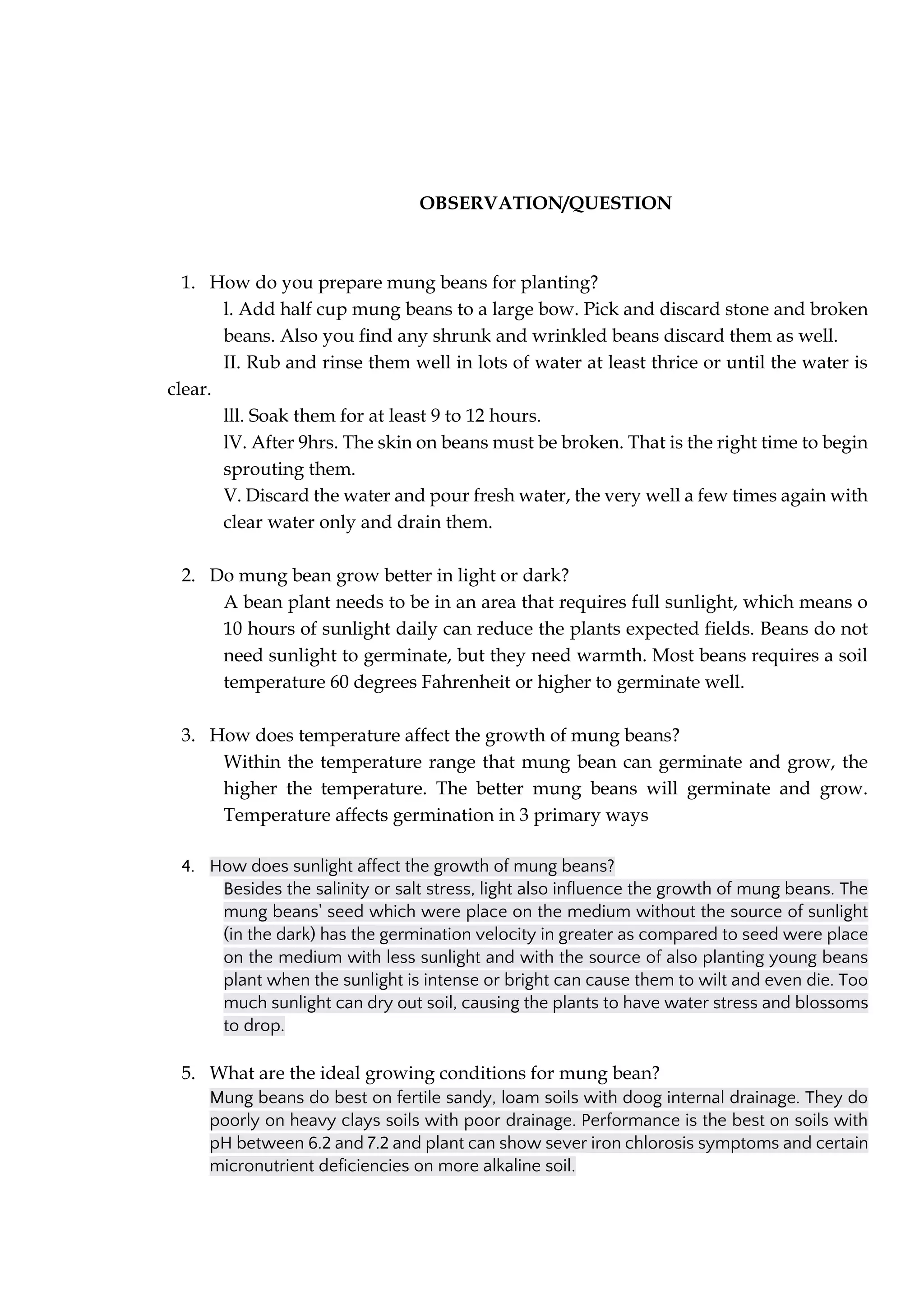
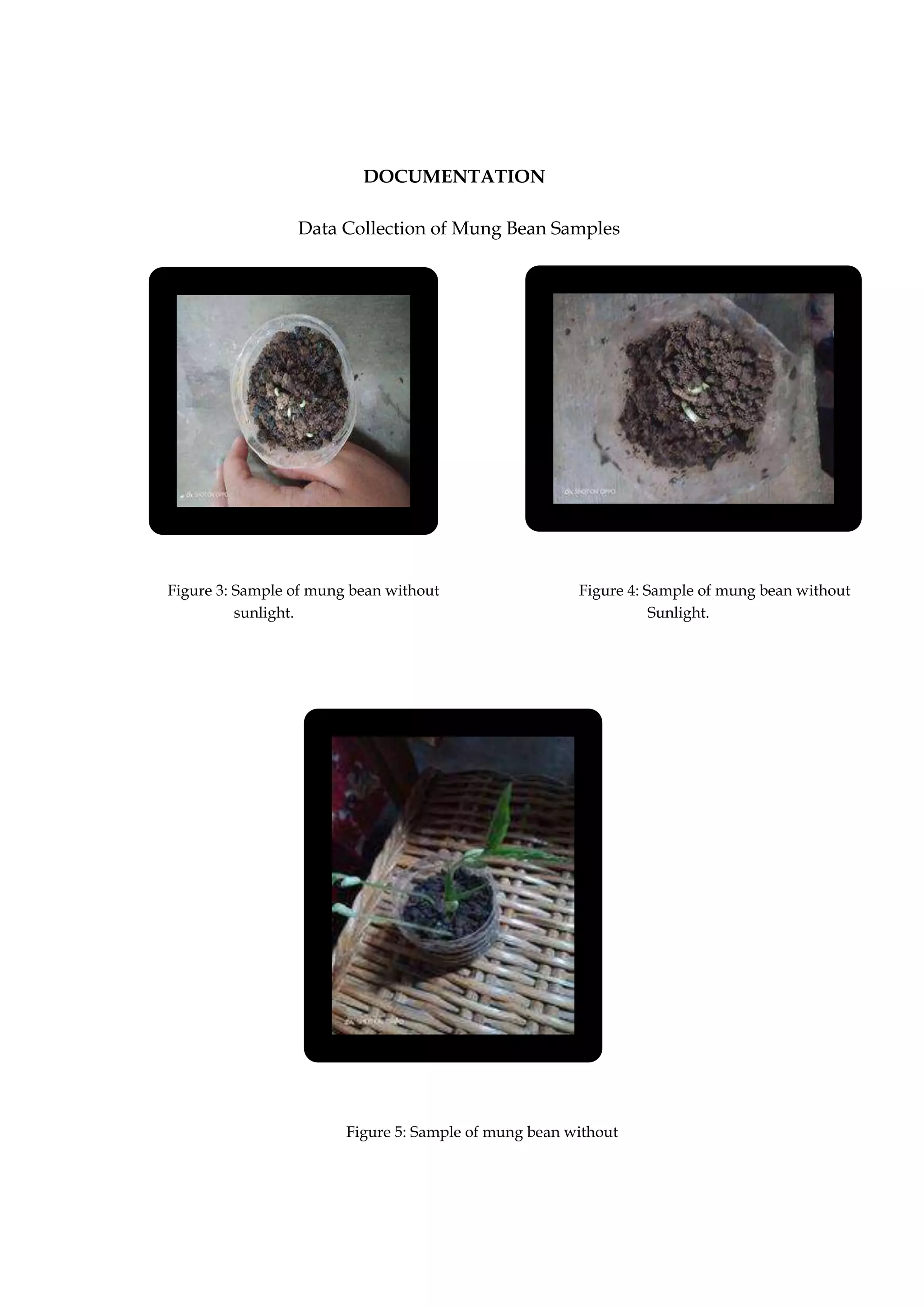
Figure 3: Sample of mung bean without Figure 4: Sample of mung bean without
sunlight. Sunlight.
Figure 5: Sample of mung bean without
Figure 6: Sample of mung bean without Figure 7: Sample of mung bean without
Sunlight. Sunlight.
Figure 8: Sample of mung bean without
Sunlight.
REFERENCES
Science Biology
https://Farming.com
https://shoope.com
https://mungbeans.com

eboy.docx

  • 1.
    10/27/2021 UNIFYING THEMES IN STUDYOF LIFE Designing an experiment for life John Patrick lee Jo Grade12 jade
  • 2.
    Abstract Growth parameters suchas leaf area total dry mass production, crop growth rate relative growth rate and net assimilation rate were compared in six varieties of mungbean under subtropical condition (24°8′ N 90°0′ E) to identify limiting growth characters for the efficient application of physiology breeding for higher yields. Results revealed that a relatively smaller portion of TDM was produced before flower initiation and the bulk of it after anthesis. The maximum CGR was observed during pod filling stage in all the varieties due to maximum leaf area development at this stage. Two plant characters such as LA and CGR contributed to the higher TDM production. Results indicated that high yielding mungbean varieties should possess larger LA, higher TDM production ability, superior CGR at all growth stages, and high relative growth rate and net assimilation rate at vegetative stage which would result in superior yield components.
  • 3.
    Introduction Mungbean is oneof the most important pulse crops for protein supplement in subtropical zones of the world. It is widely grown in Indian subcontinent as a short duration catch crop between two principal crops. Mungbean contains 51% carbohydrate, 24–26% protein, 4% mineral, and 3% vitamins [1]. Besides providing protein in the diet, mungbean has the remarkable quality of helping the symbiotic root rhizobia to fix atmospheric nitrogen and hence to enrich soil fertility [2]. In spite of the best efforts for improving the mungbean varieties, the yield of this crop remains low. Several studies have been made to understand their performances which mainly include the contribution of various yield components towards yield [3–6]. The yield components depend on some physiological traits. To understand the physiological basis of yield difference among the genotypes of mungbean, it is essential to quantify the components of growth, and the variation, if any, may be utilized in crop improvement. Variation in dry matter accumulation and pod production in different genotypes may be related to some factors such as leaf area (LA), crop growth rate (CGR), net assimilation rate (NAR), and relative growth rate (RGR). Pandey et al. [7] analyzed growth parameters of five varieties of black gram in order to study the physiological causes of yield differences and observed the differences in CGR, NAR, RGR, and LA among the varieties. Egli and Zhen-wen [8] suggested that seeds per unit area were related to canopy photosynthesis during flowering and pod set and canopy photosynthesis rate was determined through LAI and CGR. A plant with optimum LAI and NAR may produce higher biological yield as well as seed yield [9]. The dry matter accumulation may be the highest if LAI attains its maximum value within the shortest possible time [4, 10, 11]. Not only TDM production, but also the capacity of efficient partitioning between the vegetative and reproductive parts may produce high economic yield [12, 13]. Probably a better understanding of crop growth and yield parameters and the partitioning of assimilates into seed formation would help to expedite yield improvement of this crop. It was with this aim that the present investigation was carried out. Objectives Mung beans not only have good nutritional value but also show hypolipidemic, cholesterol-lowering, antiallergy, antibacterial, and antitumor effects (He et al., 2011). They also increase appetite and have other medicinal values.
  • 4.
    METHODS AND MATERIALS SITE1; Barangay mabuhay SITE 2; Barangay mabuhay Methods Plant seed 1 to 2 inches deep in the damp soil. Sow the seeds in 30-inch rows, spacing seeds two inches apart. Set rows two feet apart. Keep the soil evenly moist and free from weeds until germination Materials Mung beans do best on fertile, sandy loam soils with good internal drain- age and a in the range of 6,3 and 7,2. Mung beans require slightly acid soil for best growth. If they are grown in rotation, lime to attain of the most acid sensitive crop. Root growth can be restricted on heavy clays.
  • 5.
  • 6.
    Collection of mungbean with sunlight Figure 1: SAMPLE OF MUNG BEAN WITH SUNLIGHT
  • 7.
    Table 1.1 SAMPLEOF MUNG BEAN WITH SUNLIGHT DAY 1 NONE DAY 2 On second day as I see mung bean with sunlight is starting to grow faster. DAY 3 . On third day as I measure mung bean without sunlight is already 2.5 inch but so healthy.
  • 9.
    Collection of mungbean without sunlight Figure 2: SAMPLE OF MUNG BEAN WITHOUT SUNLIGHT
  • 10.
    TABLE 1.2 SAMPLEOF MUNG BEAN WITHOUT SUNLIGHT DAY 1 NONE DAY 2 On second day as I observe mung bean without sunlight is starting to germinate. DAY 3 On third day as I measure the mung bean is already 3 inch and still growing faster.
  • 11.
    DISCUSSION According to table1.1 this activity is make in outdoor where you can heat and get energy from the sun, while mung bean seed dont need direct sunlight to geminate, the suns energy helps to warm the soil to create optimum environment for that process. Mung beans with sunlight do not germinate, if the soil is cold and will rot in the ground if planted in soil less than 50 degrees Fahrenheit. As the soil warms quickly to the correct temperature and been seeds germinate rapidly. As soon as the first shoots appear, sunlight starts the process of photosynthesis and the plants grow to maturity and mung beans are ready to harvest in roughly 60 days. According to table 1.2 this activity is make in indoor where without sunlight get from the sun in short in dark place, most of seeds germinate when theyre placed in the dark but most of them is skinny. The presence of light, which is crucial to seedling development, may actually stunt the process of germination. The mung bean can grow in just one day in the dark but so skinny. They grow faster but not totally healthy. Mung beans do not need a sunlight to grow but they need warmth. Most of beans required a soil temperature of 60 degrees Fahrenheit or higher to germinate well.
  • 12.
    OBSERVATION/QUESTION 1. How doyou prepare mung beans for planting? l. Add half cup mung beans to a large bow. Pick and discard stone and broken beans. Also you find any shrunk and wrinkled beans discard them as well. II. Rub and rinse them well in lots of water at least thrice or until the water is clear. lll. Soak them for at least 9 to 12 hours. lV. After 9hrs. The skin on beans must be broken. That is the right time to begin sprouting them. V. Discard the water and pour fresh water, the very well a few times again with clear water only and drain them. 2. Do mung bean grow better in light or dark? A bean plant needs to be in an area that requires full sunlight, which means o 10 hours of sunlight daily can reduce the plants expected fields. Beans do not need sunlight to germinate, but they need warmth. Most beans requires a soil temperature 60 degrees Fahrenheit or higher to germinate well. 3. How does temperature affect the growth of mung beans? Within the temperature range that mung bean can germinate and grow, the higher the temperature. The better mung beans will germinate and grow. Temperature affects germination in 3 primary ways 4. How does sunlight affect the growth of mung beans? Besides the salinity or salt stress, light also influence the growth of mung beans. The mung beans' seed which were place on the medium without the source of sunlight (in the dark) has the germination velocity in greater as compared to seed were place on the medium with less sunlight and with the source of also planting young beans plant when the sunlight is intense or bright can cause them to wilt and even die. Too much sunlight can dry out soil, causing the plants to have water stress and blossoms to drop. 5. What are the ideal growing conditions for mung bean? Mung beans do best on fertile sandy, loam soils with doog internal drainage. They do poorly on heavy clays soils with poor drainage. Performance is the best on soils with pH between 6.2 and 7.2 and plant can show sever iron chlorosis symptoms and certain micronutrient deficiencies on more alkaline soil.
  • 13.
    SEED the seeds absorbs the water. SPROUT theroot pushes through seed caot. ADULT PLANT the seedling (new plant) grows out of the ground. FLOWER flower make seeds. FRUIT (LEGUME) these are the ready
  • 14.
    CONCLUSION Following the exrcises,it is decided that studying the difference of mung bean. Mung bean can be eaten mostly in india. Some of examples are mung bean soap, mung bean cake, mung bean noodles, mung beans contain about 60% carbohydrate and rich in protein, more on vitamins and minerals and mung beans are high in nutrients and antioxidants which may provide health benefits.
  • 15.
    DOCUMENTATION Data Collection ofMung Bean Samples Figure 3: Sample of mung bean without Figure 4: Sample of mung bean without sunlight. Sunlight. Figure 5: Sample of mung bean without
  • 16.
    Figure 6: Sampleof mung bean without Figure 7: Sample of mung bean without Sunlight. Sunlight. Figure 8: Sample of mung bean without Sunlight.
  • 17.