1 23
Applied Water Science
ISSN 2190-5487
Appl Water Sci
DOI 10.1007/s13201-016-0439-7
Groundwater quality assessment using
geoelectrical and geochemical approaches:
case study of Abi area, southeastern Nigeria
Ebong D. Ebong, Anthony E. Akpan,
Chimezie N. Emeka & Job G. Urang
1 23
Your article is published under the Creative
Commons Attribution license which allows
users to read, copy, distribute and make
derivative works, as long as the author of
the original work is cited. You may self-
archive this article on your own website, an
institutional repository or funder’s repository
and make it publicly available immediately.
ORIGINAL ARTICLE
Groundwater quality assessment using geoelectrical
and geochemical approaches: case study of Abi area,
southeastern Nigeria
Ebong D. Ebong1 • Anthony E. Akpan1 • Chimezie N. Emeka2 • Job G. Urang1
Received: 24 April 2015 / Accepted: 6 June 2016
Ó The Author(s) 2016. This article is published with open access at Springerlink.com
Abstract The electrical resistivity technique which
involved the Schlumberger depth sounding method and
geochemical analyses of water samples collected from
boreholes was used to investigate the suitability of
groundwater aquifers in Abi for drinking and irrigation
purposes. Fifty randomly located electrical resistivity data
were collected, modeled, and interpreted after calibration
with lithologic logs. Ten borehole water samples were
collected and analysed to determine anion, cation concen-
trations and some physical and chemical parameters, such
as water colour, temperature, total dissolved solids, and
electrical conductivity. The results show that the lithos-
tratigraphy of the study area is composed of sands, sand-
stones (fractured, consolidated and loosed), siltstones,
shales (compacted and fractured) of the Asu River Group,
Eze-Aku Formation which comprises the aquifer units, and
the Nkporo Shale Formation. The aquifer conduits are
known to be rich in silicate minerals, and the groundwater
samples in some locations show a significant amount of
Ca2?
, Mg2?
, and Na?
. These cations balanced the con-
sumption of H?
during the hydrolytic alteration of silicate
minerals. The geochemical analysis of groundwater sam-
ples revealed dominant calcium–magnesium–carbonate–
bicarbonate water facies. Irrigation water quality parame-
ters, such as sodium absorption ratio, percentage of
sodium, and permeability index, were calculated based on
the physico-chemical analyses. The groundwater quality
was observed to be influenced by the interaction of some
geologic processes but was classified to be good to excel-
lent, indicating its suitability for domestic and irrigation
purposes.
Keywords Electrical sounding Á SAR Á Permeability index Á
Water facies Á Physico-chemical
Introduction
Groundwater is the most preferred and effective source of
water for agricultural and domestic uses. Groundwater
supply has increased significantly in recent times and
becomes the main water source for all purpose in rural and
urban areas of West Africa, especially in the dry season
(Pimentel et al. 1997). The surface water resources in this
region, influenced by seasonal rainfall include rivers, lakes,
and dams (Pimentel et al. 1997). The increasing water need
is acknowledged for Abi area during the last few decades
due to the establishment of both micro- and macro-agri-
cultural development projects, such as the Abi Songhai
Farm Limited. More than 75 % of water used in agricul-
tural projects of such magnitude will be derived from
freshwater resources available in close area (Wallace
2000). Given that the use of contaminated surface water for
domestic purposes engenders several endemic health
problems resulting from water-borne diseases (e.g., guinea
worm, cholera, dysentery); we have undertaken this study
to contribute to the investigation for additional good
quality water resources. Most of the water sources used by
the rural people are rivers, streams, ponds, and lakes, which
are highly vulnerable due to surface contaminants resulting
from anthropogenic activities (Akpan et al. 2013). Several
donor agencies (e.g., United Nations Children Emergency
& Ebong D. Ebong
dickebong@yahoo.co.uk; ebongdickson@unical.edu.ng
1
Applied Geophysics Programme, University of Calabar,
PMB 1115, Calabar, Cross River State, Nigeria
2
Department of Geology, University of Calabar, PMB 1115,
Calabar, Cross River State, Nigeria
123
Appl Water Sci
DOI 10.1007/s13201-016-0439-7
Fund, European Union, Micro Project Programme in the
nine Niger Delta States, Niger Delta Development Com-
mission, and Cross River State Community and Social
Development Agency) in partnership with the government
of Cross River State have been involved in several
capacities to ameliorate the impending water supply chal-
lenges of the people. These agencies have made concerted
efforts, geared towards tackling these problems by funding
to drilling of water boreholes in communities, and provi-
sion of other social amenities to alleviate the sufferings of
the people. The suitability of groundwater resources for the
afore-mentioned purposes is of immense importance and,
therefore, requires routine assessment to determine its
quality (Ketata et al. 2011).
Hydrogeophysical researches within the Ikom Mamfe
Embayment (IME) (Fig. 1) revealed that the groundwater
resource is not evenly distributed. While some areas have
huge quantities of this resource, others are limited due to
the complex geologic history of the area (Ebong et al.
2014; Akpan et al. 2013). Over time, the embayment has
been under serious threats resulting from failure of water
boreholes, rapid depletion of groundwater in most part of
the area as a result of excessive abstraction, and contami-
nants from geologic formations, soils, and sediments (Pa-
padopoulou-Vrynioti et al. 2013, 2014), and anthropogenic
sources (Akpan et al. 2015). Population growth together
with the development of agricultural and industrial activi-
ties in the study area resulted in an increasing demand for
water. However, studies of groundwater quality within the
Mamfe area are roughly regional and seem not to be rel-
evant for local scales. It is why our investigation comes to
assess the suitability of the aquifer system within Abi area
for both domestic and irrigation purposes. Within this
investigation, we used the depth sounding method together
with geochemical and hydrogeologic data. The depth
sounding method has been successfully applied in solving a
wide range of hydrological, hydrogeophysical, engineer-
ing, and environmental problems, including aquifer map-
ping and geohydraulic parameter estimation (Soupios et al.
2007; Massoud et al. 2010; Ebong et al. 2014), character-
isation of aquifer formation, assessment of infiltration rate
of the vadose zone, and groundwater contamination studies
(Inoubli et al. 2006; Samsudin et al. 2007; Ogilvy et al.
2008; Gemail et al. 2011; Minsley et al. 2011; Akpan et al.
2013; Mhamdi et al. 2015). Multi-criteria spatial geo-
chemical data analyses have been used by several authors
to determine contaminant levels from groundwater samples
(Bathrellos et al. 2008; Panagopoulos et al. 2012). The
main objective of this investigation in Abi, southeastern
Nigeria is to assess the quality, availability, and distribu-
tion of groundwater resources, for domestic and agricul-
tural uses.
Sokoto
Basin
Bida
Basin
Niger
Delta
Basin
Lower
Benue
Trough
Middle
Benue
Trough
Upper
Benue
Trough
Ibadan
Lagos
Abuja
Borno Basin
Republic of
Cameroun
Ikom Mamfe Embayment
Basement
Complex
Oban
Massif
TerƟary volcanics
Quaternary and TerƟary sediments
Cretaceous sediments
Basement Complex
Abakaliki AnƟclinorium
Afikpo Syncline
0 200 km
12oN
4oN
8oN
4oE 8oE 12oE
A(a)
(b)
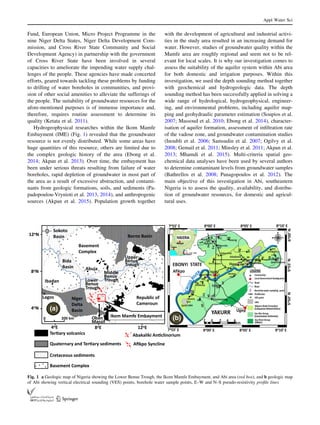
Fig. 1 a Geologic map of Nigeria showing the Lower Benue Trough, the Ikom Mamfe Embayment, and Abi area (red box), and b geologic map
of Abi showing vertical electrical sounding (VES) points, borehole water sample points, E–W and N–S pseudo-resistivity profile lines
Appl Water Sci
123
Geological setting
Abi area is located between longitudes 7.93° and 8.17°E and
latitudes 5.76° and 6.02°N in Cross River State, Nigeria
(Fig. 1b). The area is limited by Ebonyi State to the north; it
is adjacent to Yakurr and Obubra to the northeast and lim-
ited to the south by Biase. Abi is located in the IME which
extends between longitudes 7.75° and 8.75°E and latitudes
5.25° and 6.50°N (Akpan et al. 2013). Studies by Petters
et al. (1987) showed that the IME is the NW–SE splay
segment of the NE–SW trending Benue Trough and always
referred to as a contiguous part of the Lower Benue Trough
(LBT). The IME segment of the LBT extends laterally into
parts of western Cameroun, where it covers an area of
2016 km2
(Nguimbous-Kouoh et al. 2012). The IME is
bounded to the northeast by the Obudu Plateau and the
Cameroun Volcanic Line and to the west by the Abakaliki
Anticlinorium and Afikpo Syncline. In the southeastern part,
it is bounded by the Oban Massif in Cross River State,
Nigeria (Fig. 1a). The IME is characterised by low relief and
gently undulating topography (Eseme et al. 2002) and cuts
across Abi, Obubra, Yakurr, Biase, and Ikom local gov-
ernment areas (LGAs) in Cross River State. Following the
mid-Santonian tectonism and magmatism, the depositional
axis in the Benue Trough was displaced westward resulting
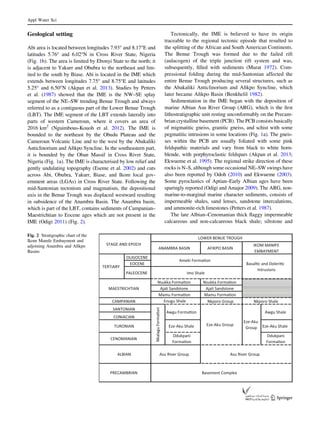
in subsidence of the Anambra Basin. The Anambra basin,
which is part of the LBT, contains sediments of Campanian–
Maestrichtian to Eocene ages which are not present in the
IME (Odigi 2011) (Fig. 2).
Tectonically, the IME is believed to have its origin
traceable to the regional tectonic episode that resulted to
the splitting of the African and South American Continents.
The Benue Trough was formed due to the failed rift
(aulacogen) of the triple junction rift system and was,
subsequently, filled with sediments (Murat 1972). Com-
pressional folding during the mid-Santonian affected the
entire Benue Trough producing several structures, such as
the Abakaliki Anticlinorium and Afikpo Syncline, which
later became Afikpo Basin (Benkhelil 1982).
Sedimentation in the IME began with the deposition of
marine Albian Asu River Group (ARG), which is the first
lithostratigraphic unit resting unconformably on the Precam-
brian crystalline basement (PCB). The PCB consists basically
of migmatitic gneiss, granitic gneiss, and schist with some
pegmatitic intrusions in some locations (Fig. 1a). The gneis-
ses within the PCB are usually foliated with some pink
feldspathic materials and vary from black to white horn-
blende, with porphyroclastic feldspars (Akpan et al. 2013;
Ekwueme et al. 1995). The regional strike direction of these
rocks is N–S, although some occasional NE–SW swings have
also been reported by Odoh (2010) and Ekwueme (2003).
Some pyroclastics of Aptian–Early Albian ages have been
sparingly reported (Odigi and Amajor 2009). The ARG, non-
marine-to-marginal marine character sediments, consists of
impermeable shales, sand lenses, sandstone intercalations,
and ammonite-rich limestones (Petters et al. 1987).
The late Albian–Cenomanian thick flaggy impermeable
calcareous and non-calcareous black shale; siltstone and
AFIKPO BASIN
OLIGOCENE
EOCENE
PALEOCENE
Nsukka FormaƟon
Ajali Sandstone
Mamu FormaƟon
Nkporo Group
Ameki FormaƟon
Imo Shale
Nsukka FormaƟon
Mamu FormaƟon
CAMPANIAN
STAGE AND EPOCH
TERTIARY
LOWER BENUE TROUGH
MAESTRICHTIAN
ANAMBRA BASIN
IKOM MAMFE
EMBAYMENT
TURONIAN
CENOMANIAN
ALBIAN
PRECAMBRIAN
Asu River GroupAsu River Group
Basement Complex
Odukpani
FormaƟon
Eze-Aku
Group
Awgu FormaƟon
CONIACIAN
SANTONIAN
BasalƟc and DoleriƟc
Intrusions
Ajali Sandstone
Awgu Shale
Eze-Aku Shale
Enugu Shale
NkalaguFormaƟon
Nkporo Shale
Eze-Aku Shale
Odukpani
FormaƟon
Eze-Aku Group
Fig. 2 Stratigraphic chart of the
Ikom Mamfe Embayment and
adjoining Anambra and Afikpo
Basins
Appl Water Sci
123
sandstone of the Eze-Aku Group (EAG), which correlates
with the marine Cenomanian–Turonian Nkalagu Formation
(black shale, limestone and siltstone) and the interfingering
regressive sandstones of the Agala Formation, overlays the
ARG. The thickness of this formation do exceed 100 m
locally (Ukaegbu and Akpabio 2009). Murat (1972)
reported that the Eze-Aku Shale reflects deposits of marine
condition in a tectonically controlled basin and the sand-
stone deposits marked a period of regression, while the
shale deposits indicate a period of transgression. These
Cretaceous sediments are occasionally intruded by dense,
fine-grained, and sometimes dark coloured Tertiary vol-
canic rocks, such as basalts and dolerites in some locations
(Benkhelil 1982). The post-Cretaceous tectonic activities,
which were believed to have originated from the adjoining
Cameroun Volcanic Province and other low-grade meta-
morphism in the area, caused serious fracturing of the
basement rocks and deformation of the adjoining Creta-
ceous lithostratigraphic units (Ebong et al. 2014; Akpan
et al. 2013). Thus, the overlying Cretaceous sequence is
highly baked, domed, and seriously deformed in many
locations (Etuk et al. 2008; Offodile 1975). In many
locations, the sandstones in the EAG form ridges that
averagely strike at N40°E and dip between 20°and 68°,
e.g., Owutu–Afikpo–Adadama Ridge system (OAASRS)
(Odigi and Amajor 2009). The shales within the EAG was
reported by Okereke et al. (1998), as having secondary
properties, such as interconnected porosities, joints, frac-
tures, and folds, resulting from syn- and post-depositional
deformations. These properties are very significant and
necessary in the transmission and storage of fluid (Raju and
Reddy 1998). These striking characteristics of the IME
introduce a slight geologic complexity in the lithostrati-
graphic architecture of the area at certain locations, espe-
cially those localities around the geologic contacts. The
Nkporo Shale Formation (NSF) that Petters (1989) and
other authors refer to as the Nkporo–Afikpo Shale Province
unconformably overlay the Post-Santonian hiatus and
represent a fossiliferous pro-deltaic facies of the late
Campanian-early Maestrichtian brackish marsh deposits
consisting of shale and sandstone lenses (Odigi 2011).
Deposition of the sediments of the NSF reflects a funnel-
shaped shallow marine setting that graded into channel
low-energy marshes which roughly runs across the Benue
Trough (Odigi 2011).
Hydrogeology
Groundwater conditions in aquifers are influenced by the
intensity of precipitation, amount of water and duration,
depth of weathering, specific yield, and slope of formation
towards drainage channels (Srinivasamoorthy et al. 2014).
It can occur in a confined or an unconfined state. The
shallow aquifers (*60 m) within the area are products of
high-level metamorphism and fracturing of the EAG.
Hence, the fractured shales and sandstones, sand lenses,
and siltstones are the main groundwater aquifers in the area
(Ebong et al. 2014). Permeability values vary from 2.0 to
3.0 m/day around the fractured shale and siltstone aquifers.
The sandstone and fractured sandstone aquifers show per-
meability, which range between 3.2 and 4.5 m/day. Aqui-
fer thicknesses vary between 7 and 27 m, while
transmissivity ranges between 25 and 100 m2
/day (Ebong
et al. 2014). However, research in the area suggests that
some high yielding aquifers exist at depths greater than
100 m. These aquifer structures are highly localized (Ak-
pan et al. 2013, 2015).
Average annual precipitation and average relative
humidity for the area are over 2200 mm and about 88 %,
respectively (Akpan et al. 2013), while annual temperature
is between 23 and 27 °C in the rainy season and rises to a
peak value of 35 °C in the dry season (Ebong et al. 2014).
The main drain in the study area is the Cross River, which
experiences variations in water volume with seasons. Other
smaller water inlets, such as rivers and streams, which
serve as tributaries to the main drain (Cross River), also
drain the area. At the peak of the rainy season, water levels
in both the groundwater and surface water resources attain
maximum heights, while the major drain overflows its
banks. Topographic-induced water flow influences the flow
of seepages from the OAASRS towards the low-lying
areas, resulting in saturated soils within these areas in the
rainy season (Ebong et al. 2014). Towards the end of the
dry season, the volume of water in the rivers and streams
decreases due to loss of water to local surface waters, such
as ponds, localized evapotranspiration, and predominantly,
the main drain (Cross River). During this period, water
flow within the Cross River is restricted to narrow channels
within the river bed.
Materials and methods
Geoelectrical data acquisition and analyses
The geoelectrical resistivity technique, involving vertical
electrical sounding (VES) surveys, was performed using
the Schlumberger electrode configuration. This procedure
is known to generate reliable shallow subsurface strati-
graphic contrasts. This technique uses two pairs of elec-
trodes technically referred to as the current and potential
electrodes connected to a resistivity meter. The resistivity
meter used during the investigation was the IGIS resistivity
meter (model SSR-MP-ATS). Fifty (50) evenly distributed
depth soundings were completed in the area (Fig. 2), and
Appl Water Sci
123
some were close to borehole locations which enable the
correlation of the sounding data with lithologic logs from
the boreholes. The current electrode spacing ranges from a
minimum of 2 m to a maximum of 800 m, while the
potential electrode spacing varies between 0.25 and 20 m.
These values were chosen to enable optimal mapping of
both shallow and deeply seated structures ([100 m),
assuming that penetration is about 1/6 of maximum current
electrode spacing. Potential electrode values at cross-over
points were carefully selected to take on integer multiples
of their previous values, so that observed resistances can be
visually converted and compared with previous value at the
same current electrode position. Observed data were plot-
ted manually in the field on a bi-logarithmic graph by
plotting half-current electrode spacing on the abscissa
against apparent resistivity (qa) on the ordinate axes,
respectively. This exercise was done for each sampling
point to assess the quality of data acquired before moving
to the next survey point. Standard curve matching and
smoothening techniques were also adopted where neces-
sary, and qualitative interpretations carried out using
standard charts (Orellana and Moony 1966). The RESIST
code developed by Vender Velpen (1988) was employed in
the computer-aided modeling process. The input parame-
ters (e.g., resistivities and depths) used as starting models
during the inversion process were derived from manually
interpreted curves and were constrained using lithologic
logs. The lithologic logs used were those from boreholes
closest to the VES points acquired from the Cross River
State Rural Water Supply and Sanitation Agency (CRS-
RUWATSSA) and the Cross River State Community and
Rural Development Agency (CRSCRDA). The RESIST
software compared the field data with the synthetic models
and displayed their differences using the root-mean-square
(RMS) technique. High RMS errors were prevalent in
noisy data sets, which were traced to poor electrode-ground
contacts. Such noisy raw data were either smoothened
manually or removed by applying user-defined filtering
criteria built into the software. Iterative procedure was
performed to reduce the high RMS values to a user-defined
confidence level of 5 %. Beyond this level, the initial input
parameters were adjusted, and the iteration procedure was
repeated. Constraints on the depth obtained from the
inversion process were provided by comparing observed
depths with lithologic data. The inversion process after a
couple of iterations provided models that best fit the curves
in a least square sense (Inman 1975).
Groundwater sampling and analyses
Water samples meant for hydrochemical analyses were
collected from ten sampling points using two polyethylene
bottles thoroughly rinsed with distilled water. A
preservative—concentrated nitric acid—was put inside one
of the two sample bottles. The nitric acid, when dissolved
in water, lowers its pH, and thus prevents precipitation of
cations when in transit. The sample bottles were once again
rinsed at least three times using groundwater collected
from the sampled borehole water. The samples were col-
lected, labeled, sealed, and stored following APHA (1995)
standards in all cases. All the water samples were collected
after the water from the borehole has been pumped for at
least 10 min (Ketata et al. 2011). The HI98130 model of
Combo electrical conductivity (EC) and pH meter from
Hanna Instruments, USA, was used for in situ measurement
of physico-chemical parameters (EC, pH, TDS and tem-
perature), because these parameters vary with atmospheric
condition, such as temperature. Geographic coordinates of
the water sampling and VES locations, used in posting
borehole and VES points on Abi map, were measured using
GPSMap 76C model of a global position system (Fig. 1b).
The flame photometer was used in measuring the concen-
trations of Na?
and K?
, while volumetric method was used
in the analyses of total hardness (CaCO3), calcium (Ca2?
),
carbonate (CO3
2-
), bicarbonate (HCO3
-
), and chloride
(Cl-
). Mg2?
was calculated from concentrations of total
hardness and calcium (Eq. 1) according to Sawyer et al.
(2003) as:
Total Hardness mg=lð Þ ¼ ðCa2þ
þ Mg2þ
Þ Â 50 ð1Þ
where Ca2?
and Mg2?
concentrations are expressed in
meq/l. Sulphates (SO4
3-
) were measured using the
colorimetric technique. The samples meant for heavy
metal analyses were acidified to a pH of 2 using nitric acid.
Richards (1954)’s equation was used to calculate the
Sodium Adsorption Ratio (SAR) necessary in ascertaining
the suitability of groundwater for irrigation purposes
SAR ¼
Naþ
ffiffiffiffiffiffiffiffiffiffiffiffiffiffiffiffiffiffi
Ca2þ
þMg2þ
2
q : ð2Þ
Sodium percent (Na %) was used to assess the amount
of sodium in irrigation water (Prasanth et al. 2012). It is a
parameter commonly used in expressing the fitness of
water for irrigation purposes, because reaction of sodium
with soils reduces permeability. Excess amount of sodium
in irrigation water, which can cause changes in soil
properties, was calculated using Todd and Mays (2005)
equation:
Na % ¼
Naþ
þ Kþ
ð Þ Â 100
ðCa2þ
þ Mg2þ
þ Naþ
þ Kþ
Þ
: ð3Þ
The permeability index (PI) is another parameter for
rating the suitability of water for irrigation purposes. Soil
permeability is affected by the long-term use of irrigation
water, as it is influenced by its Na?
, Ca2?
, Mg2?
, and
Appl Water Sci
123
HCO3
-
composition. PI, as defined by Ragunath (1987),
was computed using the following:
PI ¼
Naþ
þ
ffiffiffiffiffiffiffiffiffiffiffiffiffi
HCOÀ
3
p
Ca2þ
þ Mg2þ
þ Naþ
þ Kþ
 100: ð4Þ
The WAGTECH spectrophotometer method was
employed to measure the concentrations of some anions:
nitrite (NO2
-
), nitrate (NO3
-
), phosphate (PO4
3-
),
sulphate (SO4
2-
), and cations: total iron (Fe), zinc (Zn),
and manganese (Mn). All the water samples were analysed
following standard procedures prescribed by APHA (1995)
in the CRS-RUWATSSA Laboratory, Calabar. Observed
concentrations were compared with the World Health
Organization, WHO (2010) standards for potable water.
Routine analyses of blanks, duplicates, and ionic balance
checks were performed during sample analyses. To meet
the electroneutrality requirement, cation–anion balance
error was calculated and was observed to be within ±5 %.
Results and discussion
Geoelectrical interpretation
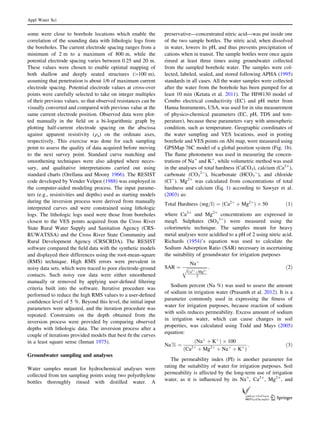
Subsurface models generated from the VES data with
constraints from lithologic logs were used to construct
electrostratigraphic units. Figure 3 shows samples of the
modeled curves generated in the area. These one-dimen-
sional (1-D) models were used to construct the
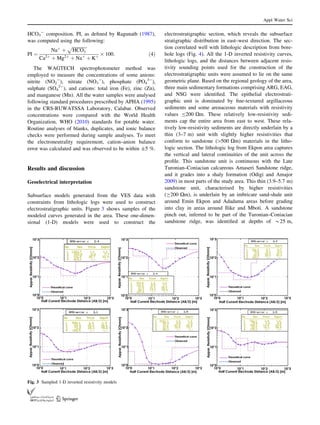
electrostratigraphic section, which reveals the subsurface
stratigraphic distribution in east–west direction. The sec-
tion correlated well with lithologic description from bore-
hole logs (Fig. 4). All the 1-D inverted resistivity curves,
lithologic logs, and the distances between adjacent resis-
tivity sounding points used for the construction of the
electrostratigraphic units were assumed to lie on the same
geometric plane. Based on the regional geology of the area,
three main sedimentary formations comprising ARG, EAG,
and NSG were identified. The epithelial electrostrati-
graphic unit is dominated by fine-textured argillaceous
sediments and some arenaceous materials with resistivity
values B200 Xm. These relatively low-resistivity sedi-
ments cap the entire area from east to west. These rela-
tively low-resistivity sediments are directly underlain by a
thin (3–7 m) unit with slightly higher resistivities that
conform to sandstone ([500 Xm) materials in the litho-
logic section. The lithologic log from Ekpon area captures
the vertical and lateral continuities of the unit across the
profile. This sandstone unit is continuous with the Late
Turonian–Coniacian calcareous Amaseri Sandstone ridge,
and it grades into a shaly formation (Odigi and Amajor
2009) in most parts of the study area. This thin (3.9–5.7 m)
sandstone unit, characterised by higher resistivities
(C200 Xm), is underlain by an imbricate sand-shale unit
around Emin Ekpon and Adadama areas before grading
into clay in areas around Ilike and Mboti. A sandstone
pinch out, inferred to be part of the Turonian–Coniacian
sandstone ridge, was identified at depths of *25 m,
Fig. 3 Sampled 1-D inverted resistivity models
Appl Water Sci
123
towards the eastern end of the profile. This structure is
usually targeted during groundwater exploitation within the
area, although its lateral and vertical continuities limit its
productivity. This sandy horizon has been reported by
Akpan et al. (2013) and Petters (1989) as having moderate
groundwater yield and serves as the dominant source of
potable water in the area. The sandy-shale unit grades into
a highly fractured shale formation, which also serve as the
aquifer unit in the area (Ebong et al. 2014). Directly
underlying the fractured shale layer is the silty layer which
also serves as groundwater exploitation target.
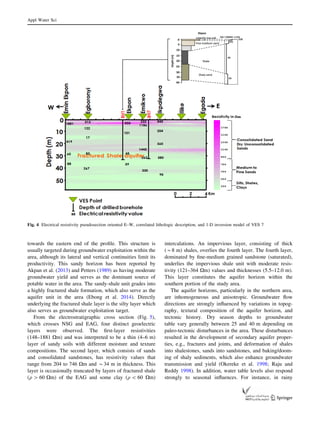
From the electrostratigraphic cross section (Fig. 5),
which crosses NSG and EAG, four distinct geoelectric
layers were observed. The first-layer resistivities
(148–1881 Xm) and was interpreted to be a thin (4–6 m)
layer of sandy soils with different moisture and texture
compositions. The second layer, which consists of sands
and consolidated sandstones, has resistivity values that
range from 204 to 746 Xm and *34 m in thickness. This
layer is occasionally truncated by layers of fractured shale
(q [ 60 Xm) of the EAG and some clay (q  60 Xm)
intercalations. An impervious layer, consisting of thick
(*8 m) shales, overlies the fourth layer. The fourth layer,
dominated by fine-medium grained sandstone (saturated),
underlies the impervious shale unit with moderate resis-
tivity (121–364 Xm) values and thicknesses (5.5–12.0 m).
This layer constitutes the aquifer horizon within the
southern portion of the study area.
The aquifer horizons, particularly in the northern area,
are inhomogeneous and anisotropic. Groundwater flow
directions are strongly influenced by variations in topog-
raphy, textural composition of the aquifer horizon, and
tectonic history. Dry season depths to groundwater
table vary generally between 25 and 40 m depending on
paleo-tectonic disturbances in the area. These disturbances
resulted in the development of secondary aquifer proper-
ties, e.g., fractures and joints, and deformation of shales
into shalestones, sands into sandstones, and baking/doom-
ing of shaly sediments, which also enhance groundwater
transmission and yield (Okereke et al. 1998; Raju and
Reddy 1998). In addition, water table levels also respond
strongly to seasonal influences. For instance, in rainy
Fig. 4 Electrical resistivity pseudosection oriented E–W, correlated lithologic description, and 1-D inversion model of VES 7
Appl Water Sci
123
seasons, groundwater tables are usually high (3–5 m in the
low-lying areas and 10–20 m elsewhere) due to a rise in
water levels inside the Cross River which brings about a
direct inflow of river water landwards. Table 1 summarizes
the shallow subsurface resistivity and lithologic variations
of Abi area.
Hydrochemistry and water quality
The chemical composition of groundwater depends on the
soluble products of rocks and soils that it makes contact
with, as it circulates within porous and permeable media
(Ragunath 1987). The lithologic composition of the vadose
zone materials and the rock chemistry of groundwater
conduits are potential sources of cation and anion con-
centrations in the groundwater system. More so, they could
be human-induced, either through industrial wastewater
seepages, municipal waste, unsewered sanitary facilities, or
from soil enhancement chemicals, which when not atten-
uated during the process of leaching will adversely alter the
physical, chemical, and biological characteristics of the
groundwater system (Sakthimurugan 1995).
The Pearson’s correlation matrix, a bivariate technique
usually employed in geochemical analyses to show how
well one variable can predict the other was used to estab-
lish correlation coefficients of ions in the groundwater
samples. Distinct sets of strong relationships were estab-
lished between the cations and the anions (Table 3). Prior
to the computation of the correlation matrix, the data were
normalized to take on values between 0.1 and 0.9 using the
following equation:
Xn ¼ 0:8 Â
ðXi À XminÞ
Xmax À Xmin
 
þ 0:1 ð5Þ
where Xn is the normalized value, Xi is the measured value,
Xmax and Xmin are maximum and minimum values,
respectively. Normalization (scaling) was considered
essential to avoid higher values prevailing over lower ones
which could lead to saturation. Scaling also makes the
values to become dimensionless (Ozcep et al. 2010). The
level of relationships obtained from the Pearson correlation
matrix varies between -1 and ?1 based on the statistical
significance of the estimated correlation (Ketata et al.
2011). Correlation coefficients[0.7 were considered to be
strong, whereas those between 0.5 and 0.7 were considered
to have moderate correlation (Giridharan et al. 2008).
Negative coefficients were indicative of the fact that the
considered variables are evolving in opposite directions.
Based on the Douglas and Leo (1977) groundwater
chemistry relationships, it was observed that the correlation
coefficients of the highly competitive ions were weak, such
that Na?
with Mg?
(-0.11), Ca?
with Na?
(0.13), and
SO4
2-
with Cl-
(-3.6). In terms of affinity ion relation-
ship, Ca?
with SO4
2-
were strongly correlated (0.71),
whereas other ions, such as Na?
with Cl-
(0.13), Mg2?
Fig. 5 Electrical resistivity
pseudosection oriented N–S
Table 1 Summary of resistivity ranges and lithologic description
Resistivity (Ohm-m) Lithologic description
[50 Clay
50–100 Silt/shale
100–250 Fine sand
250–500 Fine-to-medium sand
500–850 Medium-to-coarse sand
850–900 Consolidated sand
[900 Dry unconsolidated sand
Appl Water Sci
123
with SO4
2-
(-0.03), Na with HCO3
-
(0.25), and K?
with
HCO-3
(0.03), were weak. The non-competitive relation-
ships were also weakly correlated except HCO3
-
with Cl-
(-0.50).
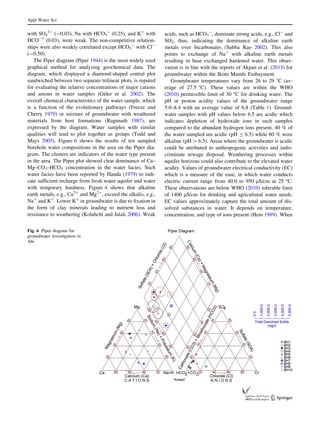
The Piper diagram (Piper 1944) is the most widely used
graphical method for analyzing geochemical data. The
diagram, which displayed a diamond-shaped central plot
sandwiched between two separate trilinear plots, is reputed
for evaluating the relative concentrations of major cations
and anions in water samples (Gu¨ler et al. 2002). The
overall chemical characteristics of the water sample, which
is a function of the evolutionary pathways (Freeze and
Cherry 1979) or mixture of groundwater with weathered
materials from host formations (Ragunath 1987), are
expressed by the diagram. Water samples with similar
qualities will tend to plot together as groups (Todd and
Mays 2005). Figure 6 shows the results of ten sampled
borehole water compositions in the area on the Piper dia-
gram. The clusters are indicators of the water type present
in the area. The Piper plot showed clear dominance of Ca–
Mg–CO3–HCO3 concentration in the water facies. Such
water facies have been reported by Handa (1979) to indi-
cate sufficient recharge from fresh water aquifer and water
with temporary hardness. Figure 4 shows that alkaline
earth metals, e.g., Ca2?
and Mg2?
, exceed the alkalis, e.g.,
Na?
and K?
. Lower K?
in groundwater is due to fixation in
the form of clay minerals leading to nutrient loss and
resistance to weathering (Kolahchi and Jalali 2006). Weak
acids, such as HCO3
-
, dominate strong acids, e.g., Cl-
and
SO2, thus, indicating the dominance of alkaline earth
metals over bicarbonates (Subba Rao 2002). This also
points to exchange of Na?
with alkaline earth metals
resulting in base exchanged hardened water. This obser-
vation is in line with the reports of Akpan et al. (2013) for
groundwater within the Ikom Mamfe Embayment.
Groundwater temperatures vary from 26 to 29 °C (av-
erage of 27.5 °C). These values are within the WHO
(2010) permissible limit of 30 °C for drinking water. The
pH or proton acidity values of the groundwater range
5.0–8.4 with an average value of 6.8 (Table 1). Ground-
water samples with pH values below 6.5 are acidic which
indicates depletion of hydroxide ions in such samples
compared to the abundant hydrogen ions present. 40 % of
the water sampled are acidic (pH B 6.5) while 60 % were
alkaline (pH [ 6.5). Areas where the groundwater is acidic
could be attributed to anthropogenic activities and indis-
criminate sewage disposal. Weathering processes within
aquifer horizons could also contribute to the elevated water
acidity. Values of groundwater electrical conductivity (EC)
which is a measure of the ease, in which water conducts
electric current range from 40.0 to 950 lS/cm at 25 °C.
These observations are below WHO (2010) tolerable limit
of 1400 lS/cm for drinking and agricultural water needs.
EC values approximately capture the total amount of dis-
solved substances in water. It depends on temperature,
concentration, and type of ions present (Hem 1989). When
Fig. 6 Piper diagram for
groundwater investigation in
Abi
Appl Water Sci
123
the EC of water changes significantly over time in an area
or from one point to another within a locality, it may be
inferred that the water quality will also change, occasioned
by changes in the amount of dissolved substances present
as both are directly related. TDS values, which represent
the weight of residual materials deposited after the water
samples, have evaporated, vary from 28.5 to 623.8 mg/l
with an average of 204.8 mg/l (Table 2). These observa-
tions show that the TDS values are within the WHO
(2010)’s acceptable limit of 1000 mg/l for domestic and
agricultural water needs. Zones with high aquifer resistiv-
ities, prevalent outside argillaceous sediments-enriched
EAG Formation, are characterised by low TDS (50 mg/l)
and EC (100 lS/cm) values, and vice versa. Such low-
resistivity zones reflect increased total solute content
resulting from dissolution of some minerals, such as
gypsum and halite. The water colour values range from 1.2
to 4.8 Pt–Co, which are below the WHO (2010) standard
colour of 15.00 Pt–Co. These variations were attributed to
changes in the amount of clay minerals, ferruginous
materials and schists that have dissolved in the ground-
water. The localized high values of colour, EC, pH, and
TDS in areas around Imabana are indicators of the abun-
dant free ions present in the water. This can be attributed to
the dissolution between water and existing soluble rock
masses (Hem 1989).
The concentrations of cations: Na?
, Ca2?
, K?
, Mg2?
,
Mn2?
, and Zn?
vary, respectively, from 11.3–25.0,
4.0–48.8, 0.5–5.7, 0.01–40.30, 0.01–0.03, and
0.04–0.80 mg/l (Table 3). Increase in the concentrations of
Na?
, Ca2?
, and Mg2?
was traceable to dominant ionic
compositions of major rock types in the sedimentary
Table 2 Results of physico-chemical analysis
Sample
location
Depth to water
table (m)
Total hardness
(mg/l)
Salinity as NaCl
(mg/l)
EC (iS/
cm)
pH Colour (Pt–
Co)
TDS
(mg/l)
Na K Ca Mg
BH1 44.0 250.0 3.78 688.9 6.8 2.7 461.6 18.0 2.10 37.6 37.90
BH2 17.0 50.0 0.83 62.8 6.5 1.4 41.2 16.4 1.10 25.6 8.70
BH3 101.0 63.0 0.45 467.0 7.0 2.1 313.2 11.3 1.20 33.6 40.30
BH4 46.0 185.0 4.70 608.0 7.1 4.3 407.5 19.0 1.60 4.0 18.50
BH5 75.0 120.0 7.84 950.0 8.4 4.8 623.8 17.6 5.30 48.8 17.90
BH6 48.0 102.0 1.18 341.0 7.2 1.9 156.9 18.0 5.70 35.2 0.01
BH7 38.0 56.0 0.21 40.0 5.5 1.5 30.0 12.0 2.60 7.6 1.40
BH8 18.0 83.0 0.30 89.1 5.0 1.2 48.9 18.0 2.20 15.2 2.81
BH9 41.0 58.0 0.12 51.0 5.9 1.3 28.5 25.0 0.50 7.2 7.49
BH10 59.0 216.0 4.60 330.0 8.4 4.2 193.0 23.0 1.90 12.0 35.10
Maximum 101.0 250.0 7.84 950.0 8.4 4.8 623.8 25.0 5.70 48.8 40.30
Minimum 17.0 50.0 0.12 40.0 5.0 1.2 28.5 11.3 0.50 4.0 0.01
Average 48.7 118.3 2.40 362.8 6.8 2.5 230.5 17.8 2.42 22.7 17.01
WHO
(2010)
– – – 1400.0 6.5–8.5 15.0 1000.0 50.0 12.00 200.0 150.00
Sample location NH4 HCO3 Cl SO4 NO2 NO3 PO4 Fe Mn Zn SAR Na %
BH1 0.15 135.20 3.50 48.0 0.17 0.12 2.49 0.01 0.00 0.04 2.93 21.03
BH2 0.18 121.40 0.50 22.0 0.19 0.07 1.56 0.05 0.00 0.05 3.96 33.78
BH3 0.13 92.40 4.80 40.0 0.04 0.02 2.32 0.06 0.00 0.00 1.86 14.47
BH4 0.28 312.90 2.60 48.0 0.09 0.11 9.00 0.01 0.03 0.08 5.66 47.8
BH5 0.11 216.60 4.10 190.0 0.27 0.24 2.24 0.15 0.00 0.00 3.05 25.56
BH6 0.09 98.00 4.00 142.0 0.45 0.49 1.45 0.00 0.00 0.80 4.29 40.23
BH7 0.18 157.80 11.50 16.0 0.02 0.02 1.46 0.03 0.00 0.22 5.66 61.86
BH8 0.32 58.00 37.50 13.0 0.01 0.07 1.58 0.05 0.00 0.20 6 52.87
BH9 0.31 76.00 17.50 25.0 0.03 0.03 1.62 0.01 0.02 0.12 9.22 63.45
BH10 0.32 365.40 2.50 45.0 0.08 0.10 0.10 0.02 0.01 0.05 4.74 34.58
Maximum 0.32 365.40 37.50 190.0 0.45 0.49 9.00 0.15 0.03 0.80 9.22 63.45
Minimum 0.09 58.00 0.50 13.0 0.01 0.02 0.10 0.00 0.00 0.00 1.86 14.47
Average 0.21 163.37 8.85 58.9 0.14 0.13 2.38 0.04 0.01 0.16 4.74 39.56
WHO (2010) – – 250.00 250.0 3.00 50.00 – 0.30 0.05 5.00 – –
Appl Water Sci
123
formations present in the area (Figs. 1b, 6). The various
aquifer horizons and their vadose zone materials are rich in
silicate minerals, thus the groundwater captures the abun-
dant Ca2?
, Mg2?
and Na?
, which probably are fallouts
from calcite and silicate weathering processes (Holland
1978; Hem 1989). The concentration of potassium ion in
groundwater is low, perhaps, due to the resistance of
K-feldspathic-enriched rocks to weathering (Kolahchi and
Jalali 2006). Interactions of carbonate rocks with ground-
water (percolating and water circulating inside aquifers)
alter the chemistry of the groundwater system. Aquifer
water–rock interaction also occurs during other processes,
such as dolomitization, albitization of feldspars, and cation
exchange in clay minerals. Possible sources of such cation
concentrations in groundwater are calcite (CaCO3) and
dolomite (CaMg(CO3)2) in rocks and soils (Younger 2007).
Akpan et al. (2013) and Tijani (2004) have also reported
similar cases of increased concentration of these cations in
the other parts of the Mamfe Embayment and Benue
Trough, respectively. Other causes of elevated cation
concentration in groundwater include indiscriminate dis-
posal of industrial waste water and the application of soil
fertility enhancement chemicals, such as NPK [i.e., nitro-
gen (15 %), phosphorus (30 %), and potassium (55 %)];
composts, pesticides, herbicides, and soil fumigants. Such
chemicals are capable of passing through preferential
pathways in the vadose zone, especially, if the vadose zone
materials lack the capacity to naturally attenuate the ver-
tical flow of such contaminants (Akpan et al. 2014).
Variations in the concentrations of major anions: Cl-
,
HCO3
-
, NO3
2-
, NO2
2-
, SO4
2-
, and PO4
3-
were 0.5–37.5,
58.0–365.4, 0.02–0.49, 0.01–0.45, 13.0–190.0, and
0.1–9.0 mg/l (Table 3). The low concentrations of NO3
were attributed to the influence of denitrification prevalent
in the area (Akpan et al. 2014). Cl-
and HCO3
-
are the
most dominant ions, and their abundance is indicative of
the various salinization sources (Akpan et al. 2013).
Drinking and irrigation water quality assessment
Water use for drinking and domestic purposes will depend
on hardness (Karanth 1987). Hardness of water could be
temporal due to the presence of carbonate and bicarbonate
and permanent, if sulphates and chlorides of calcium and
magnesium exist (Fig. 4). The high concentrations of cal-
cium and magnesium are traceable to the siltstones and
other calcic and dolomitic components present in the area
(Ebong et al. 2014; Haritash et al. 2008). Schroeder (1960)
reported that hard water can cause some heart diseases and
also requires more detergents to foam. The maximum
permissible limit of total hardness for drinking is 500 mg/l
and the WHO desirable limit is 100 mg/l. The TH classi-
fication based on Sawyer and McCartly (1967) showed that
BH1, BH4, and BH10 which constitute 30 % and BH5,
BH6, and BH8 (30 %) of the water are hard and moder-
ately hard, respectively. BH2, BH3, BH7, and BH9 (i.e.,
40 %) are soft (Table 3).
In general, groundwater considerations for irrigation
purposes depend on the effects of mineral constituents of
soils and plants (Ketata et al. 2011). Presence of excess
dissolved ions in irrigation water affects agricultural soils
and plants both physically and chemically, hence could
lead to low productivity. The suitability of groundwater
for any purpose will depend on the amount of TDS, which
should be below 500 mg/l (Freeze and Cherry 1979).
Excess sodium concentration in soils can change its
properties, thereby reducing its permeability (Todd and
Mays 2005). The SAR, which indicates the degree to
Table 3 Pearson’s correlation matrix of chemical constituents of groundwater in Abi aquifers
Na K Ca Mg NH4 HCO3 Cl SO4 NO2 NO3 PO4 Fe Mn Zn
Na 1.00
K 0.27 1.00
Ca 0.15 0.73 1.00
Mg 0.29 0.11 0.50 1.00
NH4 0.73 -0.13 -0.29 0.21 1.00
HCO3 0.53 0.37 0.17 0.57 0.48 1.00
Cl 0.43 0.28 0.14 0.03 0.63 0.08 1.00
SO4 0.37 0.92 0.80 0.29 -0.13 0.45 0.19 1.00
NO2 0.37 0.86 0.77 0.19 -0.16 0.34 0.13 0.87 1.00
NO3 0.43 0.90 0.67 0.15 -0.04 0.38 0.28 0.87 0.96 1.00
PO4 0.37 0.32 0.23 0.39 0.39 0.60 0.35 0.42 0.39 0.43 1.00
Fe 0.20 0.60 0.71 0.38 0.09 0.39 0.43 0.71 0.47 0.43 0.39 1.00
Mn 0.69 0.08 -0.11 0.31 0.68 0.65 0.35 0.24 0.19 0.27 0.81 0.16 1.00
Zn 0.37 0.74 0.39 -0.04 0.11 0.21 0.49 0.59 0.78 0.87 0.38 0.21 0.30 1.00
Appl Water Sci
123
which irrigation water can engage in cation exchange
reaction, was employed in this study. Excess sodium
concentration in water can produce undesirable effects,
like changes in soil properties and reduction in soil per-
meability, when used for irrigation. These reactions can
be used to estimate the rate, at which peculating water
engages in cation exchange reaction in soils (Todd and
Mays 2005). The replacement of calcium and magnesium
by sodium in soils causes damage to the soil structure by
making it compact and impermeable (Raju 2007). The
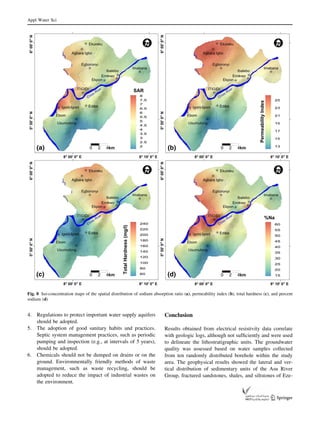
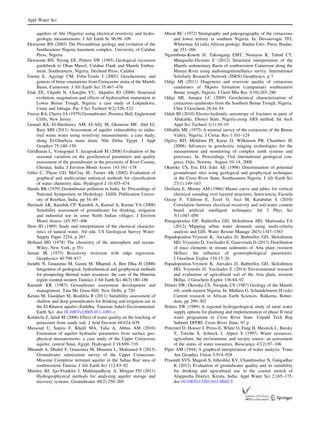
spatial distribution of SAR shows that their concentra-
tions are high in the western part of the study area around
Igoni–igoni, Itigidi, and decreases towards Agbara in the
northern part (Figs. 7, 8). Salinity hazards were low in
BH9, BH8, BH7, BH10, BH6, and BH4, while in BH3 and
BH1, it was high and very high in BH5. Distribution of
permeability indices reveals that groundwater quality at
borehole locations BH1, BH2, BH3, BH5, BH6, BH7, and
BH8 is of Class 1 (PI  25 %), while BH4, BH9, and
BH10 were of Class II (PI [ 25 %). The water quality
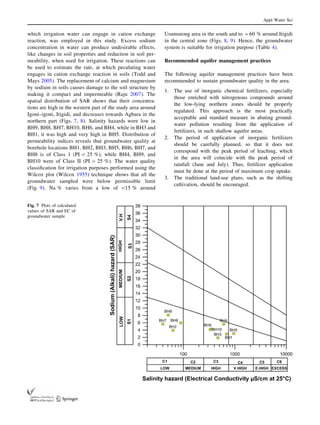
classification for irrigation purposes performed using the
Wilcox plot (Wilcox 1955) technique shows that all the
groundwater sampled were below permissible limit
(Fig. 9). Na % varies from a low of 15 % around
Usumutong area in the south and to *60 % around Itigidi
in the central zone (Figs. 8, 9). Hence, the groundwater
system is suitable for irrigation purpose (Table 4).
Recommended aquifer management practices
The following aquifer management practices have been
recommended to sustain groundwater quality in the area.
1. The use of inorganic chemical fertilizers, especially
those enriched with nitrogenous compounds around
the low-lying northern zones should be properly
regulated. This approach is the most practically
acceptable and standard measure in abating ground-
water pollution resulting from the application of
fertilizers, in such shallow aquifer areas.
2. The period of application of inorganic fertilizers
should be carefully planned, so that it does not
correspond with the peak period of leaching, which
in the area will coincide with the peak period of
rainfall (June and July). Thus, fertilizer application
must be done at the period of maximum crop uptake.
3. The traditional land-use plans, such as the shifting
cultivation, should be encouraged.
Fig. 7 Plots of calculated
values of SAR and EC of
groundwater sample
Appl Water Sci
123
4. Regulations to protect important water supply aquifers
should be adopted.
5. The adoption of good sanitary habits and practices.
Septic system management practices, such as periodic
pumping and inspection (e.g., at intervals of 5 years),
should be adopted.
6. Chemicals should not be dumped on drains or on the
ground. Environmentally friendly methods of waste
management, such as waste recycling, should be
adopted to reduce the impact of industrial wastes on
the environment.
Conclusion
Results obtained from electrical resistivity data correlate
with geologic logs, although not sufficiently and were used
to delineate the lithostratigraphic units. The groundwater
quality was assessed based on water samples collected
from ten randomly distributed borehole within the study
area. The geophysical results showed the lateral and ver-
tical distribution of sedimentary units of the Asu River
Group, fractured sandstones, shales, and siltstones of Eze-
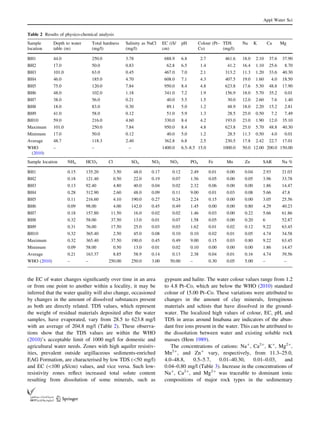
Fig. 8 Iso-concentration maps of the spatial distribution of sodium absorption ratio (a), permeability index (b), total hardness (c), and percent
sodium (d)
Appl Water Sci
123
Aku Group which serves as the aquifer unit having mod-
erate groundwater yields and the Nkporo Shale Formation.
These formations are known to be rich in silicate minerals
and groundwater from such aquifers show dominance in
Ca2?
, Mg2?
, and Na?
, suggested to have resulted from
silicate weathering processes. These cations balanced the
consumption of H?
during the hydrolytic alteration of
silicate minerals. The geochemical analysis of groundwater
samples revealed dominant calcium–magnesium–carbon-
ate–bicarbonate water facies. In general, water facies in the
area are influenced by regional geology and showed three
distinct classes with amount of low-sodium (S1) and can be
used for irrigation with no risk of developing harmful
levels of exchangeable Na?
. Based on the salinity value
and the concentration of sodium, waters are classified as
follows: (1) Low salinity (C1) and low-sodium (S1) water
that can be used for irrigating most of the crops on
permeable soils that permits leaching. (2) High salinity
(C3) and low-sodium (S1) water, adequate for moderate
salt tolerance plants on soils with moderate permeability
leaching potentials. (3) Very high salinity (C4) and low-
sodium (S1) water which cannot be used on soils with
restricted drainage. The results of the physico-chemical
analyses of the groundwater when compared with standards
for drinking and agricultural water uses were found to be
good, since the results were below permissible limits. The
groundwater system was observed to be fresh and is,
consequently, suitable for domestic uses, drinking, and
irrigation purposes. Although this approach can provide
reliable results that can serve as the initial guide to the
distribution, availability, and quality of groundwater in the
area, it is limited due to paucity of hydrochemical data.
Acknowledgments The authors are thankful to the Cross River State
Rural Water Supply and Sanitation Agency (CRS-RUWATSSA) and
the Cross River State Community and Rural Development Agency
(CRSCRDA) for freely releasing the borehole data used in this study.
We also thank Dr. Ferid Dhahri and the other anonymous reviewers
for their constructive comments, suggestions and contributions, which
have greatly improved the quality of the original manuscript.
Open Access This article is distributed under the terms of the
Creative Commons Attribution 4.0 International License (http://
creativecommons.org/licenses/by/4.0/), which permits unrestricted
use, distribution, and reproduction in any medium, provided you give
appropriate credit to the original author(s) and the source, provide a
link to the Creative Commons license, and indicate if changes were
made.
References
Akpan AE, Ugbaja AN, George NJ (2013) Integrated geophysical,
geochemical and hydrogeological investigation of shallow
groundwater resources in parts of the Ikom-Mamfe Embayment
and the adjoining areas in Cross River State, Nigeria. J Environ
Earth Sci 70:1435–1456
Akpan AE, Ebong ED, Ekwok SE (2014) Assessment of the state of
soils, shallow sediments and groundwater salinity in Abi, Cross
River State, Nigeria. J Environ Earth Sci. doi:10.1007/s12665-
015-4014-6
Akpan AE, Ebong ED, Emeka CN (2015) Exploratory assessment of
groundwater vulnerability to pollution in Abi, southeastern
Nigeria using geophysical and geological techniques. J Environ
Monit Assess 187(4):4380. doi:10.1007/s10661-015-4380-2
APHA (1995) Standard methods for the examination of water and
waste water, 19th edn. American Public Health Association,
Washington, DC
Bathrellos GD, Skilodimou HD, Kelepertsis A, Alexakis D, Chrisan-
thaki I, Archonti D (2008) Environmental research of ground-
water in the urban and suburban areas of Attica region, Greece.
Environ Geol 56(1):11–18
Benkhelil J (1982) Benue trough and Benue chain. Geol Mag Niger
119:115–168
Douglas EB, Leo WN (1977) Hydrogeochemical relationships using
partial correlation coefficient. Water Resour Bull 13:843–846
Ebong ED, Akpan AE, Onwuegbuche AA (2014) Estimation of
geohydraulic parameters from fractured shales and sandstone
Fig. 9 Wilcox diagram irrigation water classification [After Wilcox
(1948)]
Table 4 Groundwater classification based on total hardness [after
Sawyer and McCartly 1967]
Total hardness
(TH) as
CaCO3 (mg/l)
Type of
water
Sample
numbers
Number
of samples
% of
samples
75 Soft BH2, BH3,
BH7, BH9
4 40
75–150 Moderately
hard
BH5, BH6, BH8 3 30
150–300 Hard BH1, BH4,
BH10
3 30
[300 Very hard – – –
Appl Water Sci
123
aquifers of Abi (Nigeria) using electrical resistivity and hydro-
geologic measurements. J Afr Earth Sc 96:99–109
Ekwueme BN (2003) The Precambrian geology and evolution of the
Southeastern Nigeria basement complex. University of Calabar
Press, Nigeria
Ekwueme BN, Nyong EE, Petters SW (1995) Geological excursion
guidebook to Oban Massif, Calabar Flank and Mamfe Embay-
ment, Southeastern, Nigeria. Dechord Press, Calabar
Eseme E, Agyingi CM, Foba-Tendo J (2002) Geochemistry and
genesis of brine emanations from Cretaceous strata of the Mamfe
Basin, Cameroon. J Afr Earth Sci 35:467–476
Etuk EE, Ukpabi N, Ukaegbu VU, Akpabio IO (2008) Structural
evolution, magmatism and effects of hydrocarbon maturation in
Lower Benue Trough, Nigeria: a case study of Lokpaukwu,
Uturu and Ishiagu. Pac J Sci Technol 9(2):526–532
Freeze RA, Cherry JA (1979) Groundwater. Prentice Hall, Englewood
Cliffs, New Jersey
Gemail KS, El-Shishtawy AM, El-Alfy M, Ghoneim MF, Abd El-
Bary MH (2011) Assessment of aquifer vulnerability to indus-
trial waste water using resistivity measurements: a case study,
along El-Gharbyia main drain, Nile Delta, Egypt. J Appl
Geophys 75:140–150
Giridharan L, Venugopal T, Jayaprakash M (2008) Evaluation of the
seasonal variation on the geochemical parameters and quality
assessment of the groundwater in the proximity of River Cooum,
Chennai, India. J Environ Monit Assess 143:161–178
Gu¨ler C, Thyne GD, McCray JE, Turner AK (2002) Evaluation of
graphical and multivariate statistical methods for classification
of water chemistry data. Hydrogeol J 10:455–474
Handa BK (1979) Groundwater pollution in India. In: Proceedings of
National Symposium on Hydrology. IAHS, Publication Univer-
sity of Roorkee, India, pp 34–49
Haritash AK, Kaushik CP, Kaushik A, Kansal A, Kumar YA (2008)
Suitability assessment of groundwater for drinking, irrigation
and industrial use in some North Indian villages. J Environ
Monit Assess 145:397–406
Hem JD (1989) Study and interpretation of the chemical character-
istics of natural water, 3rd edn. US Geological Survey Water-
Supply Paper 2254, p 263
Holland HD (1978) The chemistry of the atmosphere and oceans.
Wiley, New York, p 351
Inman JR (1975) Resistivity inversion with ridge regression.
Geophysics 40:798–817
Inoubli N, Gouasmia M, Gasmi M, Mharndi A, Ben Dhia H (2006)
Integration of geological, hydrochemical and geophysical methods
for prospecting thermal water resources: the case of the Hmeima
region (central-western Tunisia). J Afr Earth Sci 46(3):180–186
Karanth KR (1987) Groundwater assessment development and
management. Tata Mc Graw-Hill, New Delhi, p 720
Ketata M, Gueddari M, Bouhlila R (2011) Suitability assessment of
shallow and deep groundwaters for drinking and irrigation use in
the El Khairat aquifer (Enfidha, Tunisian Sahel) Environmental.
Earth Sci. doi:10.1007/s12665-011-1091-z
Kolahchi Z, Jalali M (2006) Effect of water quality on the leaching of
potassium from sandy soil. J Arid Environ 68:624–639
Massoud U, Santos F, Khalil MA, Taha A, Abbas AM (2010)
Estimation of aquifer hydraulic parameters from surface geo-
physical measurements: a case study of the Upper Cretaceous
aquifer, central Sinai, Egypt. Hydrogeol J 18:699–710
Mhamdi A, Dhahri F, Gouasmia M, Moumni L, Mohamed S (2015)
Groundwater salinization survey of the Upper Cretaceous-
Miocene Complexe terminal aquifer in the Sabaa Biar area of
southwestern Tunisia. J Afr Earth Sci 112:83–92
Minsley BJ, Ajo-Franklin J, Mukhopadhyay A, Morgan FD (2011)
Hydrogeophysical methods for analyzing aquifer storage and
recovery systems. Groundwater 49(2):250–269
Murat RC (1972) Stratigraphy and paleogeography of the cretaceous
and lower tertiary in southern Nigeria. In: Dessauvagie TFJ,
Whiteman AJ (eds) African geology. Ibadan Univ. Press, Ibadan,
pp 251–266
Nguimbous-Kouoh JJ, Takougang EMT, Nouayou R, Tabod CT,
Manguelle-Dicoum E (2012) Structural interpretation of the
Mamfe sedimentary Basin of southwestern Cameroon along the
Manyu River using audiomagnetotellurics survey. International
Scholarly Research Network (ISRN) Geophysics, p 7
Odigi MI (2011) Diagenesis and reservoir quality of cretaceous
sandstones of Nkporo formation (campanian) southeastern
Benue trough, Nigeria. J Geol Min Res 3(10):265–280
Odigi MI, Amajor LC (2009) Geochemical characterization of
cretaceous sandstones from the Southern Benue Trough, Nigeria.
Chin J Geochem 28:44–54
Odoh BI (2010) Electro-hydraulic anisotropy of fractures in parts of
Abakaliki, Ebonyi State, Nigeria-using ARS method. Int Arch
Appl Sci Technol 1(1):10–19
Offodile ME (1975) A mineral survey of the cretaceous of the Benue
Valley, Nigeria. J Cretac Res 1:101–124
Ogilvy RD, Meldrum PI, Kuras O, Wilkinson PB, Chambers JE
(2008) Advances in geoelectric imaging technologies for the
measurement and monitoring of complex earth systems and
processes. In: Proceedings 33rd international geological con-
gress, Oslo, Norway. August 10–14, 2008
Okereke CS, Esu EO, Edet AE (1998) Determination of potential
groundwater sites using geological and geophysical techniques
in the Cross River State, Southeastern Nigeria. J Afr Earth Sci
27(1):149–163
Orellana E, Moony AM (1966) Master curve and tables for vertical
electrical sounding over layered structures. Interciencia, Escuela
Ozcep F, Yıldırım E, Tezel O, Asci M, Karabulut S (2010)
Correlation between electrical resistivity and soil-water content
based artificial intelligent techniques. Int J Phys Sci
5(1):047–056
Panagopoulos GP, Bathrellos GD, Skilodimou HD, Martsouka FA
(2012) Mapping urban water demands using multi-criteria
analysis and GIS. Water Resour Manage 26(5):1347–1363
Papadopoulou-Vrynioti K, Alexakis D, Bathrellos GD, Skilodimou
HD, Vryniotis D, Vasiliades E, Gamvroula D (2013) Distribution
of trace elements in stream sediments of Arta plain (western
Hellas): the influence of geomorphological parameters.
J Geochem Explor 134:17–26
Papadopoulou-Vrynioti K, Alexakis D, Bathrellos GD, Skilodimou
HD, Vryniotis D, Vasiliades E (2014) Environmental research
and evaluation of agricultural soil of the Arta plain, western
Hellas. J Geochem Explor 136:84–92
Petters SW, Okereke CS, Nwajide CS (1987) Geology of the Mamfe
rift, south eastern Nigeria. In: Matheis G, Schandelmerer H (eds)
Current research in African Earth Sciences. Balkema, Rotter-
dam, pp 299–302
Petters SW (1989) A regional hydrogeological study of rural water
supply options for planning and implementation of phase II rural
water programme in Cross River State. Unpubl Tech Rep
Submitt DFFRI. Cross River State, 97 p
Pimentel D, Houser J, Preiss E, White O, Fang H, Mesnick L, Barsky
T, Tariche S, Schreck J, Alpert S (1997) Water resources:
agriculture, the environment, and society source: an assessment
of the status of water resources. Bioscience 47(2):97–106
Piper AM (1944) A graphical interpretation of water analysis. Trans
Am Geophys Union 5:914–928
Prasanth SVS, Magesh S, Jitheshlal KV, Chandrasekar N, Gangadhar
K (2012) Evaluation of groundwater quality and its suitability
for drinking and agricultural use in the coastal stretch of
Alappuzha District, Kerala, India. Appl Water Sci 2:165–175.
doi:10.1007/s13201-012-0042-5
Appl Water Sci
123
Ragunath HM (1987) Groundwater, 2nd edn. Wiley Eastern Ltd.,
New Delhi
Raju NJ, Reddy TVK (1998) Fracture pattern and electrical resistivity
studies for groundwater exploration. J Environ Geol
34(2–3):175–182
Raju N J (2007) Hydrogeochemical parameters for assessment of
groundwater quality in the upper Gunjanaeru River basin,
Cuddapah District, Andhra Pradesh, South India. Environ Geol
52(6):1067–1074
Richards LA (1954) Diagnostics and improvement of saline and
alkaline soils. US Dept. of Agriculture hand book no. 60. US
Salinity Laboratory, Washington, DC
Sakthimurugan S (1995) Hydrogeological studies and simulation of
contaminant migration in and round Dindigul, Anna district,
Tamil Nadu. Ph.D Thesis (unpublished), M.S. University,
Tirunelveli, p 214
Samsudin AR, Haryono A, Hamzah U, Rafek AG (2007) Salinity
mapping of coastal groundwater aquifers using hydrogeochem-
ical and geophysical methods: a case study from north Kelantan.
Environ Geol, Malaysia. doi:10.1007/s00254-007-1124-9
Sawyer GN, McCartly DL (1967) Chemistry of sanitary engineers,
2nd edn. McGraw Hill, New York, p 518
Sawyer GN, McMcartly DL, Parkin GF (2003) Chemistry for
environmental engineering and science, 5th edn. McGraw Hill,
New York
Schroeder HA (1960) Relations between hardness of water and death
rates from certain chronic and degenerative diseases in the
United States. J Chron Dis 12:586–591
Soupios P, Kouli M, Vallianatos F, Vafidis A, Stavroulakis G (2007)
Estimation of aquifer parameters from surficial geophysical
methods. A case study of Keritis Basin in Crete. J Hydrol
338:122–131
Srinivasamoorthy K, Gopinath M, Chidambaram S, Vasanthavigar M,
Sarma VS (2014) Hydrochemical characterization and quality
appraisal of groundwater from Pungar sub basin, Tamilnadu,
India. J of King Saud Univ Sci 26(1):37–52
Subba Rao N (2002) Geochemistry of groundwater in parts of Guntur
district Andhra Pradesh, India. Environ Geol 41:552–562
Tijani MN (2004) Evolution of saline waters and brines in the Benue-
Trough, Nigeria. J Appl Geochem 19:1355–1365
Todd DK, Mays LW (2005) Groundwater hydrology, 3rd edn. Wiley,
New York, p 636
Ukaegbu VU, Akpabio IO (2009) Geology and stratigraphy of middle
cretaceous sequences Northeast of Afikpo Basin, Lower Benue
Trough, Nigeria. Pac J Sci Technol 103:518-256
Vender Velpen BPA (1988) A computer processing package for D.C.
Resistivity interpretation for an IBM compatibles, ITC JouR,
Vol. 4, The Netherlands
Wallace JS (2000) Increasing agricultural water use efficiency to meet
future food production. J Agric Ecosys Environ 82:105–119
WHO (2010) Drinking water standards, monitoring and reporting, vol
1, recommendations, 2nd edn. WHO, Geneva, p 130
Wilcox LV (1948) The quality of water for irrigation uses. US Dept.
Agri. Tech. Bull. 962. USDA, Washington, DC
Wilcox LV (1955) Classification and use of irrigation waters. USD
Circular No. 969, p 19
Younger PL (2007) Groundwater in the environment: An introduc-
tion. Blackwell Publishing, Malden, p 318
Appl Water Sci
123

Ebong groundwater assessment aws

  • 1.
    1 23 Applied WaterScience ISSN 2190-5487 Appl Water Sci DOI 10.1007/s13201-016-0439-7 Groundwater quality assessment using geoelectrical and geochemical approaches: case study of Abi area, southeastern Nigeria Ebong D. Ebong, Anthony E. Akpan, Chimezie N. Emeka & Job G. Urang
  • 2.
    1 23 Your articleis published under the Creative Commons Attribution license which allows users to read, copy, distribute and make derivative works, as long as the author of the original work is cited. You may self- archive this article on your own website, an institutional repository or funder’s repository and make it publicly available immediately.
  • 3.
    ORIGINAL ARTICLE Groundwater qualityassessment using geoelectrical and geochemical approaches: case study of Abi area, southeastern Nigeria Ebong D. Ebong1 • Anthony E. Akpan1 • Chimezie N. Emeka2 • Job G. Urang1 Received: 24 April 2015 / Accepted: 6 June 2016 Ó The Author(s) 2016. This article is published with open access at Springerlink.com Abstract The electrical resistivity technique which involved the Schlumberger depth sounding method and geochemical analyses of water samples collected from boreholes was used to investigate the suitability of groundwater aquifers in Abi for drinking and irrigation purposes. Fifty randomly located electrical resistivity data were collected, modeled, and interpreted after calibration with lithologic logs. Ten borehole water samples were collected and analysed to determine anion, cation concen- trations and some physical and chemical parameters, such as water colour, temperature, total dissolved solids, and electrical conductivity. The results show that the lithos- tratigraphy of the study area is composed of sands, sand- stones (fractured, consolidated and loosed), siltstones, shales (compacted and fractured) of the Asu River Group, Eze-Aku Formation which comprises the aquifer units, and the Nkporo Shale Formation. The aquifer conduits are known to be rich in silicate minerals, and the groundwater samples in some locations show a significant amount of Ca2? , Mg2? , and Na? . These cations balanced the con- sumption of H? during the hydrolytic alteration of silicate minerals. The geochemical analysis of groundwater sam- ples revealed dominant calcium–magnesium–carbonate– bicarbonate water facies. Irrigation water quality parame- ters, such as sodium absorption ratio, percentage of sodium, and permeability index, were calculated based on the physico-chemical analyses. The groundwater quality was observed to be influenced by the interaction of some geologic processes but was classified to be good to excel- lent, indicating its suitability for domestic and irrigation purposes. Keywords Electrical sounding Á SAR Á Permeability index Á Water facies Á Physico-chemical Introduction Groundwater is the most preferred and effective source of water for agricultural and domestic uses. Groundwater supply has increased significantly in recent times and becomes the main water source for all purpose in rural and urban areas of West Africa, especially in the dry season (Pimentel et al. 1997). The surface water resources in this region, influenced by seasonal rainfall include rivers, lakes, and dams (Pimentel et al. 1997). The increasing water need is acknowledged for Abi area during the last few decades due to the establishment of both micro- and macro-agri- cultural development projects, such as the Abi Songhai Farm Limited. More than 75 % of water used in agricul- tural projects of such magnitude will be derived from freshwater resources available in close area (Wallace 2000). Given that the use of contaminated surface water for domestic purposes engenders several endemic health problems resulting from water-borne diseases (e.g., guinea worm, cholera, dysentery); we have undertaken this study to contribute to the investigation for additional good quality water resources. Most of the water sources used by the rural people are rivers, streams, ponds, and lakes, which are highly vulnerable due to surface contaminants resulting from anthropogenic activities (Akpan et al. 2013). Several donor agencies (e.g., United Nations Children Emergency & Ebong D. Ebong dickebong@yahoo.co.uk; ebongdickson@unical.edu.ng 1 Applied Geophysics Programme, University of Calabar, PMB 1115, Calabar, Cross River State, Nigeria 2 Department of Geology, University of Calabar, PMB 1115, Calabar, Cross River State, Nigeria 123 Appl Water Sci DOI 10.1007/s13201-016-0439-7
  • 4.
    Fund, European Union,Micro Project Programme in the nine Niger Delta States, Niger Delta Development Com- mission, and Cross River State Community and Social Development Agency) in partnership with the government of Cross River State have been involved in several capacities to ameliorate the impending water supply chal- lenges of the people. These agencies have made concerted efforts, geared towards tackling these problems by funding to drilling of water boreholes in communities, and provi- sion of other social amenities to alleviate the sufferings of the people. The suitability of groundwater resources for the afore-mentioned purposes is of immense importance and, therefore, requires routine assessment to determine its quality (Ketata et al. 2011). Hydrogeophysical researches within the Ikom Mamfe Embayment (IME) (Fig. 1) revealed that the groundwater resource is not evenly distributed. While some areas have huge quantities of this resource, others are limited due to the complex geologic history of the area (Ebong et al. 2014; Akpan et al. 2013). Over time, the embayment has been under serious threats resulting from failure of water boreholes, rapid depletion of groundwater in most part of the area as a result of excessive abstraction, and contami- nants from geologic formations, soils, and sediments (Pa- padopoulou-Vrynioti et al. 2013, 2014), and anthropogenic sources (Akpan et al. 2015). Population growth together with the development of agricultural and industrial activi- ties in the study area resulted in an increasing demand for water. However, studies of groundwater quality within the Mamfe area are roughly regional and seem not to be rel- evant for local scales. It is why our investigation comes to assess the suitability of the aquifer system within Abi area for both domestic and irrigation purposes. Within this investigation, we used the depth sounding method together with geochemical and hydrogeologic data. The depth sounding method has been successfully applied in solving a wide range of hydrological, hydrogeophysical, engineer- ing, and environmental problems, including aquifer map- ping and geohydraulic parameter estimation (Soupios et al. 2007; Massoud et al. 2010; Ebong et al. 2014), character- isation of aquifer formation, assessment of infiltration rate of the vadose zone, and groundwater contamination studies (Inoubli et al. 2006; Samsudin et al. 2007; Ogilvy et al. 2008; Gemail et al. 2011; Minsley et al. 2011; Akpan et al. 2013; Mhamdi et al. 2015). Multi-criteria spatial geo- chemical data analyses have been used by several authors to determine contaminant levels from groundwater samples (Bathrellos et al. 2008; Panagopoulos et al. 2012). The main objective of this investigation in Abi, southeastern Nigeria is to assess the quality, availability, and distribu- tion of groundwater resources, for domestic and agricul- tural uses. Sokoto Basin Bida Basin Niger Delta Basin Lower Benue Trough Middle Benue Trough Upper Benue Trough Ibadan Lagos Abuja Borno Basin Republic of Cameroun Ikom Mamfe Embayment Basement Complex Oban Massif TerƟary volcanics Quaternary and TerƟary sediments Cretaceous sediments Basement Complex Abakaliki AnƟclinorium Afikpo Syncline 0 200 km 12oN 4oN 8oN 4oE 8oE 12oE A(a) (b) Fig. 1 a Geologic map of Nigeria showing the Lower Benue Trough, the Ikom Mamfe Embayment, and Abi area (red box), and b geologic map of Abi showing vertical electrical sounding (VES) points, borehole water sample points, E–W and N–S pseudo-resistivity profile lines Appl Water Sci 123
  • 5.
    Geological setting Abi areais located between longitudes 7.93° and 8.17°E and latitudes 5.76° and 6.02°N in Cross River State, Nigeria (Fig. 1b). The area is limited by Ebonyi State to the north; it is adjacent to Yakurr and Obubra to the northeast and lim- ited to the south by Biase. Abi is located in the IME which extends between longitudes 7.75° and 8.75°E and latitudes 5.25° and 6.50°N (Akpan et al. 2013). Studies by Petters et al. (1987) showed that the IME is the NW–SE splay segment of the NE–SW trending Benue Trough and always referred to as a contiguous part of the Lower Benue Trough (LBT). The IME segment of the LBT extends laterally into parts of western Cameroun, where it covers an area of 2016 km2 (Nguimbous-Kouoh et al. 2012). The IME is bounded to the northeast by the Obudu Plateau and the Cameroun Volcanic Line and to the west by the Abakaliki Anticlinorium and Afikpo Syncline. In the southeastern part, it is bounded by the Oban Massif in Cross River State, Nigeria (Fig. 1a). The IME is characterised by low relief and gently undulating topography (Eseme et al. 2002) and cuts across Abi, Obubra, Yakurr, Biase, and Ikom local gov- ernment areas (LGAs) in Cross River State. Following the mid-Santonian tectonism and magmatism, the depositional axis in the Benue Trough was displaced westward resulting in subsidence of the Anambra Basin. The Anambra basin, which is part of the LBT, contains sediments of Campanian– Maestrichtian to Eocene ages which are not present in the IME (Odigi 2011) (Fig. 2). Tectonically, the IME is believed to have its origin traceable to the regional tectonic episode that resulted to the splitting of the African and South American Continents. The Benue Trough was formed due to the failed rift (aulacogen) of the triple junction rift system and was, subsequently, filled with sediments (Murat 1972). Com- pressional folding during the mid-Santonian affected the entire Benue Trough producing several structures, such as the Abakaliki Anticlinorium and Afikpo Syncline, which later became Afikpo Basin (Benkhelil 1982). Sedimentation in the IME began with the deposition of marine Albian Asu River Group (ARG), which is the first lithostratigraphic unit resting unconformably on the Precam- brian crystalline basement (PCB). The PCB consists basically of migmatitic gneiss, granitic gneiss, and schist with some pegmatitic intrusions in some locations (Fig. 1a). The gneis- ses within the PCB are usually foliated with some pink feldspathic materials and vary from black to white horn- blende, with porphyroclastic feldspars (Akpan et al. 2013; Ekwueme et al. 1995). The regional strike direction of these rocks is N–S, although some occasional NE–SW swings have also been reported by Odoh (2010) and Ekwueme (2003). Some pyroclastics of Aptian–Early Albian ages have been sparingly reported (Odigi and Amajor 2009). The ARG, non- marine-to-marginal marine character sediments, consists of impermeable shales, sand lenses, sandstone intercalations, and ammonite-rich limestones (Petters et al. 1987). The late Albian–Cenomanian thick flaggy impermeable calcareous and non-calcareous black shale; siltstone and AFIKPO BASIN OLIGOCENE EOCENE PALEOCENE Nsukka FormaƟon Ajali Sandstone Mamu FormaƟon Nkporo Group Ameki FormaƟon Imo Shale Nsukka FormaƟon Mamu FormaƟon CAMPANIAN STAGE AND EPOCH TERTIARY LOWER BENUE TROUGH MAESTRICHTIAN ANAMBRA BASIN IKOM MAMFE EMBAYMENT TURONIAN CENOMANIAN ALBIAN PRECAMBRIAN Asu River GroupAsu River Group Basement Complex Odukpani FormaƟon Eze-Aku Group Awgu FormaƟon CONIACIAN SANTONIAN BasalƟc and DoleriƟc Intrusions Ajali Sandstone Awgu Shale Eze-Aku Shale Enugu Shale NkalaguFormaƟon Nkporo Shale Eze-Aku Shale Odukpani FormaƟon Eze-Aku Group Fig. 2 Stratigraphic chart of the Ikom Mamfe Embayment and adjoining Anambra and Afikpo Basins Appl Water Sci 123
  • 6.
    sandstone of theEze-Aku Group (EAG), which correlates with the marine Cenomanian–Turonian Nkalagu Formation (black shale, limestone and siltstone) and the interfingering regressive sandstones of the Agala Formation, overlays the ARG. The thickness of this formation do exceed 100 m locally (Ukaegbu and Akpabio 2009). Murat (1972) reported that the Eze-Aku Shale reflects deposits of marine condition in a tectonically controlled basin and the sand- stone deposits marked a period of regression, while the shale deposits indicate a period of transgression. These Cretaceous sediments are occasionally intruded by dense, fine-grained, and sometimes dark coloured Tertiary vol- canic rocks, such as basalts and dolerites in some locations (Benkhelil 1982). The post-Cretaceous tectonic activities, which were believed to have originated from the adjoining Cameroun Volcanic Province and other low-grade meta- morphism in the area, caused serious fracturing of the basement rocks and deformation of the adjoining Creta- ceous lithostratigraphic units (Ebong et al. 2014; Akpan et al. 2013). Thus, the overlying Cretaceous sequence is highly baked, domed, and seriously deformed in many locations (Etuk et al. 2008; Offodile 1975). In many locations, the sandstones in the EAG form ridges that averagely strike at N40°E and dip between 20°and 68°, e.g., Owutu–Afikpo–Adadama Ridge system (OAASRS) (Odigi and Amajor 2009). The shales within the EAG was reported by Okereke et al. (1998), as having secondary properties, such as interconnected porosities, joints, frac- tures, and folds, resulting from syn- and post-depositional deformations. These properties are very significant and necessary in the transmission and storage of fluid (Raju and Reddy 1998). These striking characteristics of the IME introduce a slight geologic complexity in the lithostrati- graphic architecture of the area at certain locations, espe- cially those localities around the geologic contacts. The Nkporo Shale Formation (NSF) that Petters (1989) and other authors refer to as the Nkporo–Afikpo Shale Province unconformably overlay the Post-Santonian hiatus and represent a fossiliferous pro-deltaic facies of the late Campanian-early Maestrichtian brackish marsh deposits consisting of shale and sandstone lenses (Odigi 2011). Deposition of the sediments of the NSF reflects a funnel- shaped shallow marine setting that graded into channel low-energy marshes which roughly runs across the Benue Trough (Odigi 2011). Hydrogeology Groundwater conditions in aquifers are influenced by the intensity of precipitation, amount of water and duration, depth of weathering, specific yield, and slope of formation towards drainage channels (Srinivasamoorthy et al. 2014). It can occur in a confined or an unconfined state. The shallow aquifers (*60 m) within the area are products of high-level metamorphism and fracturing of the EAG. Hence, the fractured shales and sandstones, sand lenses, and siltstones are the main groundwater aquifers in the area (Ebong et al. 2014). Permeability values vary from 2.0 to 3.0 m/day around the fractured shale and siltstone aquifers. The sandstone and fractured sandstone aquifers show per- meability, which range between 3.2 and 4.5 m/day. Aqui- fer thicknesses vary between 7 and 27 m, while transmissivity ranges between 25 and 100 m2 /day (Ebong et al. 2014). However, research in the area suggests that some high yielding aquifers exist at depths greater than 100 m. These aquifer structures are highly localized (Ak- pan et al. 2013, 2015). Average annual precipitation and average relative humidity for the area are over 2200 mm and about 88 %, respectively (Akpan et al. 2013), while annual temperature is between 23 and 27 °C in the rainy season and rises to a peak value of 35 °C in the dry season (Ebong et al. 2014). The main drain in the study area is the Cross River, which experiences variations in water volume with seasons. Other smaller water inlets, such as rivers and streams, which serve as tributaries to the main drain (Cross River), also drain the area. At the peak of the rainy season, water levels in both the groundwater and surface water resources attain maximum heights, while the major drain overflows its banks. Topographic-induced water flow influences the flow of seepages from the OAASRS towards the low-lying areas, resulting in saturated soils within these areas in the rainy season (Ebong et al. 2014). Towards the end of the dry season, the volume of water in the rivers and streams decreases due to loss of water to local surface waters, such as ponds, localized evapotranspiration, and predominantly, the main drain (Cross River). During this period, water flow within the Cross River is restricted to narrow channels within the river bed. Materials and methods Geoelectrical data acquisition and analyses The geoelectrical resistivity technique, involving vertical electrical sounding (VES) surveys, was performed using the Schlumberger electrode configuration. This procedure is known to generate reliable shallow subsurface strati- graphic contrasts. This technique uses two pairs of elec- trodes technically referred to as the current and potential electrodes connected to a resistivity meter. The resistivity meter used during the investigation was the IGIS resistivity meter (model SSR-MP-ATS). Fifty (50) evenly distributed depth soundings were completed in the area (Fig. 2), and Appl Water Sci 123
  • 7.
    some were closeto borehole locations which enable the correlation of the sounding data with lithologic logs from the boreholes. The current electrode spacing ranges from a minimum of 2 m to a maximum of 800 m, while the potential electrode spacing varies between 0.25 and 20 m. These values were chosen to enable optimal mapping of both shallow and deeply seated structures ([100 m), assuming that penetration is about 1/6 of maximum current electrode spacing. Potential electrode values at cross-over points were carefully selected to take on integer multiples of their previous values, so that observed resistances can be visually converted and compared with previous value at the same current electrode position. Observed data were plot- ted manually in the field on a bi-logarithmic graph by plotting half-current electrode spacing on the abscissa against apparent resistivity (qa) on the ordinate axes, respectively. This exercise was done for each sampling point to assess the quality of data acquired before moving to the next survey point. Standard curve matching and smoothening techniques were also adopted where neces- sary, and qualitative interpretations carried out using standard charts (Orellana and Moony 1966). The RESIST code developed by Vender Velpen (1988) was employed in the computer-aided modeling process. The input parame- ters (e.g., resistivities and depths) used as starting models during the inversion process were derived from manually interpreted curves and were constrained using lithologic logs. The lithologic logs used were those from boreholes closest to the VES points acquired from the Cross River State Rural Water Supply and Sanitation Agency (CRS- RUWATSSA) and the Cross River State Community and Rural Development Agency (CRSCRDA). The RESIST software compared the field data with the synthetic models and displayed their differences using the root-mean-square (RMS) technique. High RMS errors were prevalent in noisy data sets, which were traced to poor electrode-ground contacts. Such noisy raw data were either smoothened manually or removed by applying user-defined filtering criteria built into the software. Iterative procedure was performed to reduce the high RMS values to a user-defined confidence level of 5 %. Beyond this level, the initial input parameters were adjusted, and the iteration procedure was repeated. Constraints on the depth obtained from the inversion process were provided by comparing observed depths with lithologic data. The inversion process after a couple of iterations provided models that best fit the curves in a least square sense (Inman 1975). Groundwater sampling and analyses Water samples meant for hydrochemical analyses were collected from ten sampling points using two polyethylene bottles thoroughly rinsed with distilled water. A preservative—concentrated nitric acid—was put inside one of the two sample bottles. The nitric acid, when dissolved in water, lowers its pH, and thus prevents precipitation of cations when in transit. The sample bottles were once again rinsed at least three times using groundwater collected from the sampled borehole water. The samples were col- lected, labeled, sealed, and stored following APHA (1995) standards in all cases. All the water samples were collected after the water from the borehole has been pumped for at least 10 min (Ketata et al. 2011). The HI98130 model of Combo electrical conductivity (EC) and pH meter from Hanna Instruments, USA, was used for in situ measurement of physico-chemical parameters (EC, pH, TDS and tem- perature), because these parameters vary with atmospheric condition, such as temperature. Geographic coordinates of the water sampling and VES locations, used in posting borehole and VES points on Abi map, were measured using GPSMap 76C model of a global position system (Fig. 1b). The flame photometer was used in measuring the concen- trations of Na? and K? , while volumetric method was used in the analyses of total hardness (CaCO3), calcium (Ca2? ), carbonate (CO3 2- ), bicarbonate (HCO3 - ), and chloride (Cl- ). Mg2? was calculated from concentrations of total hardness and calcium (Eq. 1) according to Sawyer et al. (2003) as: Total Hardness mg=lð Þ ¼ ðCa2þ þ Mg2þ Þ Â 50 ð1Þ where Ca2? and Mg2? concentrations are expressed in meq/l. Sulphates (SO4 3- ) were measured using the colorimetric technique. The samples meant for heavy metal analyses were acidified to a pH of 2 using nitric acid. Richards (1954)’s equation was used to calculate the Sodium Adsorption Ratio (SAR) necessary in ascertaining the suitability of groundwater for irrigation purposes SAR ¼ Naþ ffiffiffiffiffiffiffiffiffiffiffiffiffiffiffiffiffiffi Ca2þ þMg2þ 2 q : ð2Þ Sodium percent (Na %) was used to assess the amount of sodium in irrigation water (Prasanth et al. 2012). It is a parameter commonly used in expressing the fitness of water for irrigation purposes, because reaction of sodium with soils reduces permeability. Excess amount of sodium in irrigation water, which can cause changes in soil properties, was calculated using Todd and Mays (2005) equation: Na % ¼ Naþ þ Kþ ð Þ Â 100 ðCa2þ þ Mg2þ þ Naþ þ Kþ Þ : ð3Þ The permeability index (PI) is another parameter for rating the suitability of water for irrigation purposes. Soil permeability is affected by the long-term use of irrigation water, as it is influenced by its Na? , Ca2? , Mg2? , and Appl Water Sci 123
  • 8.
    HCO3 - composition. PI, asdefined by Ragunath (1987), was computed using the following: PI ¼ Naþ þ ffiffiffiffiffiffiffiffiffiffiffiffiffi HCOÀ 3 p Ca2þ þ Mg2þ þ Naþ þ Kþ Â 100: ð4Þ The WAGTECH spectrophotometer method was employed to measure the concentrations of some anions: nitrite (NO2 - ), nitrate (NO3 - ), phosphate (PO4 3- ), sulphate (SO4 2- ), and cations: total iron (Fe), zinc (Zn), and manganese (Mn). All the water samples were analysed following standard procedures prescribed by APHA (1995) in the CRS-RUWATSSA Laboratory, Calabar. Observed concentrations were compared with the World Health Organization, WHO (2010) standards for potable water. Routine analyses of blanks, duplicates, and ionic balance checks were performed during sample analyses. To meet the electroneutrality requirement, cation–anion balance error was calculated and was observed to be within ±5 %. Results and discussion Geoelectrical interpretation Subsurface models generated from the VES data with constraints from lithologic logs were used to construct electrostratigraphic units. Figure 3 shows samples of the modeled curves generated in the area. These one-dimen- sional (1-D) models were used to construct the electrostratigraphic section, which reveals the subsurface stratigraphic distribution in east–west direction. The sec- tion correlated well with lithologic description from bore- hole logs (Fig. 4). All the 1-D inverted resistivity curves, lithologic logs, and the distances between adjacent resis- tivity sounding points used for the construction of the electrostratigraphic units were assumed to lie on the same geometric plane. Based on the regional geology of the area, three main sedimentary formations comprising ARG, EAG, and NSG were identified. The epithelial electrostrati- graphic unit is dominated by fine-textured argillaceous sediments and some arenaceous materials with resistivity values B200 Xm. These relatively low-resistivity sedi- ments cap the entire area from east to west. These rela- tively low-resistivity sediments are directly underlain by a thin (3–7 m) unit with slightly higher resistivities that conform to sandstone ([500 Xm) materials in the litho- logic section. The lithologic log from Ekpon area captures the vertical and lateral continuities of the unit across the profile. This sandstone unit is continuous with the Late Turonian–Coniacian calcareous Amaseri Sandstone ridge, and it grades into a shaly formation (Odigi and Amajor 2009) in most parts of the study area. This thin (3.9–5.7 m) sandstone unit, characterised by higher resistivities (C200 Xm), is underlain by an imbricate sand-shale unit around Emin Ekpon and Adadama areas before grading into clay in areas around Ilike and Mboti. A sandstone pinch out, inferred to be part of the Turonian–Coniacian sandstone ridge, was identified at depths of *25 m, Fig. 3 Sampled 1-D inverted resistivity models Appl Water Sci 123
  • 9.
    towards the easternend of the profile. This structure is usually targeted during groundwater exploitation within the area, although its lateral and vertical continuities limit its productivity. This sandy horizon has been reported by Akpan et al. (2013) and Petters (1989) as having moderate groundwater yield and serves as the dominant source of potable water in the area. The sandy-shale unit grades into a highly fractured shale formation, which also serve as the aquifer unit in the area (Ebong et al. 2014). Directly underlying the fractured shale layer is the silty layer which also serves as groundwater exploitation target. From the electrostratigraphic cross section (Fig. 5), which crosses NSG and EAG, four distinct geoelectric layers were observed. The first-layer resistivities (148–1881 Xm) and was interpreted to be a thin (4–6 m) layer of sandy soils with different moisture and texture compositions. The second layer, which consists of sands and consolidated sandstones, has resistivity values that range from 204 to 746 Xm and *34 m in thickness. This layer is occasionally truncated by layers of fractured shale (q [ 60 Xm) of the EAG and some clay (q 60 Xm) intercalations. An impervious layer, consisting of thick (*8 m) shales, overlies the fourth layer. The fourth layer, dominated by fine-medium grained sandstone (saturated), underlies the impervious shale unit with moderate resis- tivity (121–364 Xm) values and thicknesses (5.5–12.0 m). This layer constitutes the aquifer horizon within the southern portion of the study area. The aquifer horizons, particularly in the northern area, are inhomogeneous and anisotropic. Groundwater flow directions are strongly influenced by variations in topog- raphy, textural composition of the aquifer horizon, and tectonic history. Dry season depths to groundwater table vary generally between 25 and 40 m depending on paleo-tectonic disturbances in the area. These disturbances resulted in the development of secondary aquifer proper- ties, e.g., fractures and joints, and deformation of shales into shalestones, sands into sandstones, and baking/doom- ing of shaly sediments, which also enhance groundwater transmission and yield (Okereke et al. 1998; Raju and Reddy 1998). In addition, water table levels also respond strongly to seasonal influences. For instance, in rainy Fig. 4 Electrical resistivity pseudosection oriented E–W, correlated lithologic description, and 1-D inversion model of VES 7 Appl Water Sci 123
  • 10.
    seasons, groundwater tablesare usually high (3–5 m in the low-lying areas and 10–20 m elsewhere) due to a rise in water levels inside the Cross River which brings about a direct inflow of river water landwards. Table 1 summarizes the shallow subsurface resistivity and lithologic variations of Abi area. Hydrochemistry and water quality The chemical composition of groundwater depends on the soluble products of rocks and soils that it makes contact with, as it circulates within porous and permeable media (Ragunath 1987). The lithologic composition of the vadose zone materials and the rock chemistry of groundwater conduits are potential sources of cation and anion con- centrations in the groundwater system. More so, they could be human-induced, either through industrial wastewater seepages, municipal waste, unsewered sanitary facilities, or from soil enhancement chemicals, which when not atten- uated during the process of leaching will adversely alter the physical, chemical, and biological characteristics of the groundwater system (Sakthimurugan 1995). The Pearson’s correlation matrix, a bivariate technique usually employed in geochemical analyses to show how well one variable can predict the other was used to estab- lish correlation coefficients of ions in the groundwater samples. Distinct sets of strong relationships were estab- lished between the cations and the anions (Table 3). Prior to the computation of the correlation matrix, the data were normalized to take on values between 0.1 and 0.9 using the following equation: Xn ¼ 0:8 Â ðXi À XminÞ Xmax À Xmin þ 0:1 ð5Þ where Xn is the normalized value, Xi is the measured value, Xmax and Xmin are maximum and minimum values, respectively. Normalization (scaling) was considered essential to avoid higher values prevailing over lower ones which could lead to saturation. Scaling also makes the values to become dimensionless (Ozcep et al. 2010). The level of relationships obtained from the Pearson correlation matrix varies between -1 and ?1 based on the statistical significance of the estimated correlation (Ketata et al. 2011). Correlation coefficients[0.7 were considered to be strong, whereas those between 0.5 and 0.7 were considered to have moderate correlation (Giridharan et al. 2008). Negative coefficients were indicative of the fact that the considered variables are evolving in opposite directions. Based on the Douglas and Leo (1977) groundwater chemistry relationships, it was observed that the correlation coefficients of the highly competitive ions were weak, such that Na? with Mg? (-0.11), Ca? with Na? (0.13), and SO4 2- with Cl- (-3.6). In terms of affinity ion relation- ship, Ca? with SO4 2- were strongly correlated (0.71), whereas other ions, such as Na? with Cl- (0.13), Mg2? Fig. 5 Electrical resistivity pseudosection oriented N–S Table 1 Summary of resistivity ranges and lithologic description Resistivity (Ohm-m) Lithologic description [50 Clay 50–100 Silt/shale 100–250 Fine sand 250–500 Fine-to-medium sand 500–850 Medium-to-coarse sand 850–900 Consolidated sand [900 Dry unconsolidated sand Appl Water Sci 123
  • 11.
    with SO4 2- (-0.03), Nawith HCO3 - (0.25), and K? with HCO-3 (0.03), were weak. The non-competitive relation- ships were also weakly correlated except HCO3 - with Cl- (-0.50). The Piper diagram (Piper 1944) is the most widely used graphical method for analyzing geochemical data. The diagram, which displayed a diamond-shaped central plot sandwiched between two separate trilinear plots, is reputed for evaluating the relative concentrations of major cations and anions in water samples (Gu¨ler et al. 2002). The overall chemical characteristics of the water sample, which is a function of the evolutionary pathways (Freeze and Cherry 1979) or mixture of groundwater with weathered materials from host formations (Ragunath 1987), are expressed by the diagram. Water samples with similar qualities will tend to plot together as groups (Todd and Mays 2005). Figure 6 shows the results of ten sampled borehole water compositions in the area on the Piper dia- gram. The clusters are indicators of the water type present in the area. The Piper plot showed clear dominance of Ca– Mg–CO3–HCO3 concentration in the water facies. Such water facies have been reported by Handa (1979) to indi- cate sufficient recharge from fresh water aquifer and water with temporary hardness. Figure 4 shows that alkaline earth metals, e.g., Ca2? and Mg2? , exceed the alkalis, e.g., Na? and K? . Lower K? in groundwater is due to fixation in the form of clay minerals leading to nutrient loss and resistance to weathering (Kolahchi and Jalali 2006). Weak acids, such as HCO3 - , dominate strong acids, e.g., Cl- and SO2, thus, indicating the dominance of alkaline earth metals over bicarbonates (Subba Rao 2002). This also points to exchange of Na? with alkaline earth metals resulting in base exchanged hardened water. This obser- vation is in line with the reports of Akpan et al. (2013) for groundwater within the Ikom Mamfe Embayment. Groundwater temperatures vary from 26 to 29 °C (av- erage of 27.5 °C). These values are within the WHO (2010) permissible limit of 30 °C for drinking water. The pH or proton acidity values of the groundwater range 5.0–8.4 with an average value of 6.8 (Table 1). Ground- water samples with pH values below 6.5 are acidic which indicates depletion of hydroxide ions in such samples compared to the abundant hydrogen ions present. 40 % of the water sampled are acidic (pH B 6.5) while 60 % were alkaline (pH [ 6.5). Areas where the groundwater is acidic could be attributed to anthropogenic activities and indis- criminate sewage disposal. Weathering processes within aquifer horizons could also contribute to the elevated water acidity. Values of groundwater electrical conductivity (EC) which is a measure of the ease, in which water conducts electric current range from 40.0 to 950 lS/cm at 25 °C. These observations are below WHO (2010) tolerable limit of 1400 lS/cm for drinking and agricultural water needs. EC values approximately capture the total amount of dis- solved substances in water. It depends on temperature, concentration, and type of ions present (Hem 1989). When Fig. 6 Piper diagram for groundwater investigation in Abi Appl Water Sci 123
  • 12.
    the EC ofwater changes significantly over time in an area or from one point to another within a locality, it may be inferred that the water quality will also change, occasioned by changes in the amount of dissolved substances present as both are directly related. TDS values, which represent the weight of residual materials deposited after the water samples, have evaporated, vary from 28.5 to 623.8 mg/l with an average of 204.8 mg/l (Table 2). These observa- tions show that the TDS values are within the WHO (2010)’s acceptable limit of 1000 mg/l for domestic and agricultural water needs. Zones with high aquifer resistiv- ities, prevalent outside argillaceous sediments-enriched EAG Formation, are characterised by low TDS (50 mg/l) and EC (100 lS/cm) values, and vice versa. Such low- resistivity zones reflect increased total solute content resulting from dissolution of some minerals, such as gypsum and halite. The water colour values range from 1.2 to 4.8 Pt–Co, which are below the WHO (2010) standard colour of 15.00 Pt–Co. These variations were attributed to changes in the amount of clay minerals, ferruginous materials and schists that have dissolved in the ground- water. The localized high values of colour, EC, pH, and TDS in areas around Imabana are indicators of the abun- dant free ions present in the water. This can be attributed to the dissolution between water and existing soluble rock masses (Hem 1989). The concentrations of cations: Na? , Ca2? , K? , Mg2? , Mn2? , and Zn? vary, respectively, from 11.3–25.0, 4.0–48.8, 0.5–5.7, 0.01–40.30, 0.01–0.03, and 0.04–0.80 mg/l (Table 3). Increase in the concentrations of Na? , Ca2? , and Mg2? was traceable to dominant ionic compositions of major rock types in the sedimentary Table 2 Results of physico-chemical analysis Sample location Depth to water table (m) Total hardness (mg/l) Salinity as NaCl (mg/l) EC (iS/ cm) pH Colour (Pt– Co) TDS (mg/l) Na K Ca Mg BH1 44.0 250.0 3.78 688.9 6.8 2.7 461.6 18.0 2.10 37.6 37.90 BH2 17.0 50.0 0.83 62.8 6.5 1.4 41.2 16.4 1.10 25.6 8.70 BH3 101.0 63.0 0.45 467.0 7.0 2.1 313.2 11.3 1.20 33.6 40.30 BH4 46.0 185.0 4.70 608.0 7.1 4.3 407.5 19.0 1.60 4.0 18.50 BH5 75.0 120.0 7.84 950.0 8.4 4.8 623.8 17.6 5.30 48.8 17.90 BH6 48.0 102.0 1.18 341.0 7.2 1.9 156.9 18.0 5.70 35.2 0.01 BH7 38.0 56.0 0.21 40.0 5.5 1.5 30.0 12.0 2.60 7.6 1.40 BH8 18.0 83.0 0.30 89.1 5.0 1.2 48.9 18.0 2.20 15.2 2.81 BH9 41.0 58.0 0.12 51.0 5.9 1.3 28.5 25.0 0.50 7.2 7.49 BH10 59.0 216.0 4.60 330.0 8.4 4.2 193.0 23.0 1.90 12.0 35.10 Maximum 101.0 250.0 7.84 950.0 8.4 4.8 623.8 25.0 5.70 48.8 40.30 Minimum 17.0 50.0 0.12 40.0 5.0 1.2 28.5 11.3 0.50 4.0 0.01 Average 48.7 118.3 2.40 362.8 6.8 2.5 230.5 17.8 2.42 22.7 17.01 WHO (2010) – – – 1400.0 6.5–8.5 15.0 1000.0 50.0 12.00 200.0 150.00 Sample location NH4 HCO3 Cl SO4 NO2 NO3 PO4 Fe Mn Zn SAR Na % BH1 0.15 135.20 3.50 48.0 0.17 0.12 2.49 0.01 0.00 0.04 2.93 21.03 BH2 0.18 121.40 0.50 22.0 0.19 0.07 1.56 0.05 0.00 0.05 3.96 33.78 BH3 0.13 92.40 4.80 40.0 0.04 0.02 2.32 0.06 0.00 0.00 1.86 14.47 BH4 0.28 312.90 2.60 48.0 0.09 0.11 9.00 0.01 0.03 0.08 5.66 47.8 BH5 0.11 216.60 4.10 190.0 0.27 0.24 2.24 0.15 0.00 0.00 3.05 25.56 BH6 0.09 98.00 4.00 142.0 0.45 0.49 1.45 0.00 0.00 0.80 4.29 40.23 BH7 0.18 157.80 11.50 16.0 0.02 0.02 1.46 0.03 0.00 0.22 5.66 61.86 BH8 0.32 58.00 37.50 13.0 0.01 0.07 1.58 0.05 0.00 0.20 6 52.87 BH9 0.31 76.00 17.50 25.0 0.03 0.03 1.62 0.01 0.02 0.12 9.22 63.45 BH10 0.32 365.40 2.50 45.0 0.08 0.10 0.10 0.02 0.01 0.05 4.74 34.58 Maximum 0.32 365.40 37.50 190.0 0.45 0.49 9.00 0.15 0.03 0.80 9.22 63.45 Minimum 0.09 58.00 0.50 13.0 0.01 0.02 0.10 0.00 0.00 0.00 1.86 14.47 Average 0.21 163.37 8.85 58.9 0.14 0.13 2.38 0.04 0.01 0.16 4.74 39.56 WHO (2010) – – 250.00 250.0 3.00 50.00 – 0.30 0.05 5.00 – – Appl Water Sci 123
  • 13.
    formations present inthe area (Figs. 1b, 6). The various aquifer horizons and their vadose zone materials are rich in silicate minerals, thus the groundwater captures the abun- dant Ca2? , Mg2? and Na? , which probably are fallouts from calcite and silicate weathering processes (Holland 1978; Hem 1989). The concentration of potassium ion in groundwater is low, perhaps, due to the resistance of K-feldspathic-enriched rocks to weathering (Kolahchi and Jalali 2006). Interactions of carbonate rocks with ground- water (percolating and water circulating inside aquifers) alter the chemistry of the groundwater system. Aquifer water–rock interaction also occurs during other processes, such as dolomitization, albitization of feldspars, and cation exchange in clay minerals. Possible sources of such cation concentrations in groundwater are calcite (CaCO3) and dolomite (CaMg(CO3)2) in rocks and soils (Younger 2007). Akpan et al. (2013) and Tijani (2004) have also reported similar cases of increased concentration of these cations in the other parts of the Mamfe Embayment and Benue Trough, respectively. Other causes of elevated cation concentration in groundwater include indiscriminate dis- posal of industrial waste water and the application of soil fertility enhancement chemicals, such as NPK [i.e., nitro- gen (15 %), phosphorus (30 %), and potassium (55 %)]; composts, pesticides, herbicides, and soil fumigants. Such chemicals are capable of passing through preferential pathways in the vadose zone, especially, if the vadose zone materials lack the capacity to naturally attenuate the ver- tical flow of such contaminants (Akpan et al. 2014). Variations in the concentrations of major anions: Cl- , HCO3 - , NO3 2- , NO2 2- , SO4 2- , and PO4 3- were 0.5–37.5, 58.0–365.4, 0.02–0.49, 0.01–0.45, 13.0–190.0, and 0.1–9.0 mg/l (Table 3). The low concentrations of NO3 were attributed to the influence of denitrification prevalent in the area (Akpan et al. 2014). Cl- and HCO3 - are the most dominant ions, and their abundance is indicative of the various salinization sources (Akpan et al. 2013). Drinking and irrigation water quality assessment Water use for drinking and domestic purposes will depend on hardness (Karanth 1987). Hardness of water could be temporal due to the presence of carbonate and bicarbonate and permanent, if sulphates and chlorides of calcium and magnesium exist (Fig. 4). The high concentrations of cal- cium and magnesium are traceable to the siltstones and other calcic and dolomitic components present in the area (Ebong et al. 2014; Haritash et al. 2008). Schroeder (1960) reported that hard water can cause some heart diseases and also requires more detergents to foam. The maximum permissible limit of total hardness for drinking is 500 mg/l and the WHO desirable limit is 100 mg/l. The TH classi- fication based on Sawyer and McCartly (1967) showed that BH1, BH4, and BH10 which constitute 30 % and BH5, BH6, and BH8 (30 %) of the water are hard and moder- ately hard, respectively. BH2, BH3, BH7, and BH9 (i.e., 40 %) are soft (Table 3). In general, groundwater considerations for irrigation purposes depend on the effects of mineral constituents of soils and plants (Ketata et al. 2011). Presence of excess dissolved ions in irrigation water affects agricultural soils and plants both physically and chemically, hence could lead to low productivity. The suitability of groundwater for any purpose will depend on the amount of TDS, which should be below 500 mg/l (Freeze and Cherry 1979). Excess sodium concentration in soils can change its properties, thereby reducing its permeability (Todd and Mays 2005). The SAR, which indicates the degree to Table 3 Pearson’s correlation matrix of chemical constituents of groundwater in Abi aquifers Na K Ca Mg NH4 HCO3 Cl SO4 NO2 NO3 PO4 Fe Mn Zn Na 1.00 K 0.27 1.00 Ca 0.15 0.73 1.00 Mg 0.29 0.11 0.50 1.00 NH4 0.73 -0.13 -0.29 0.21 1.00 HCO3 0.53 0.37 0.17 0.57 0.48 1.00 Cl 0.43 0.28 0.14 0.03 0.63 0.08 1.00 SO4 0.37 0.92 0.80 0.29 -0.13 0.45 0.19 1.00 NO2 0.37 0.86 0.77 0.19 -0.16 0.34 0.13 0.87 1.00 NO3 0.43 0.90 0.67 0.15 -0.04 0.38 0.28 0.87 0.96 1.00 PO4 0.37 0.32 0.23 0.39 0.39 0.60 0.35 0.42 0.39 0.43 1.00 Fe 0.20 0.60 0.71 0.38 0.09 0.39 0.43 0.71 0.47 0.43 0.39 1.00 Mn 0.69 0.08 -0.11 0.31 0.68 0.65 0.35 0.24 0.19 0.27 0.81 0.16 1.00 Zn 0.37 0.74 0.39 -0.04 0.11 0.21 0.49 0.59 0.78 0.87 0.38 0.21 0.30 1.00 Appl Water Sci 123
  • 14.
    which irrigation watercan engage in cation exchange reaction, was employed in this study. Excess sodium concentration in water can produce undesirable effects, like changes in soil properties and reduction in soil per- meability, when used for irrigation. These reactions can be used to estimate the rate, at which peculating water engages in cation exchange reaction in soils (Todd and Mays 2005). The replacement of calcium and magnesium by sodium in soils causes damage to the soil structure by making it compact and impermeable (Raju 2007). The spatial distribution of SAR shows that their concentra- tions are high in the western part of the study area around Igoni–igoni, Itigidi, and decreases towards Agbara in the northern part (Figs. 7, 8). Salinity hazards were low in BH9, BH8, BH7, BH10, BH6, and BH4, while in BH3 and BH1, it was high and very high in BH5. Distribution of permeability indices reveals that groundwater quality at borehole locations BH1, BH2, BH3, BH5, BH6, BH7, and BH8 is of Class 1 (PI 25 %), while BH4, BH9, and BH10 were of Class II (PI [ 25 %). The water quality classification for irrigation purposes performed using the Wilcox plot (Wilcox 1955) technique shows that all the groundwater sampled were below permissible limit (Fig. 9). Na % varies from a low of 15 % around Usumutong area in the south and to *60 % around Itigidi in the central zone (Figs. 8, 9). Hence, the groundwater system is suitable for irrigation purpose (Table 4). Recommended aquifer management practices The following aquifer management practices have been recommended to sustain groundwater quality in the area. 1. The use of inorganic chemical fertilizers, especially those enriched with nitrogenous compounds around the low-lying northern zones should be properly regulated. This approach is the most practically acceptable and standard measure in abating ground- water pollution resulting from the application of fertilizers, in such shallow aquifer areas. 2. The period of application of inorganic fertilizers should be carefully planned, so that it does not correspond with the peak period of leaching, which in the area will coincide with the peak period of rainfall (June and July). Thus, fertilizer application must be done at the period of maximum crop uptake. 3. The traditional land-use plans, such as the shifting cultivation, should be encouraged. Fig. 7 Plots of calculated values of SAR and EC of groundwater sample Appl Water Sci 123
  • 15.
    4. Regulations toprotect important water supply aquifers should be adopted. 5. The adoption of good sanitary habits and practices. Septic system management practices, such as periodic pumping and inspection (e.g., at intervals of 5 years), should be adopted. 6. Chemicals should not be dumped on drains or on the ground. Environmentally friendly methods of waste management, such as waste recycling, should be adopted to reduce the impact of industrial wastes on the environment. Conclusion Results obtained from electrical resistivity data correlate with geologic logs, although not sufficiently and were used to delineate the lithostratigraphic units. The groundwater quality was assessed based on water samples collected from ten randomly distributed borehole within the study area. The geophysical results showed the lateral and ver- tical distribution of sedimentary units of the Asu River Group, fractured sandstones, shales, and siltstones of Eze- Fig. 8 Iso-concentration maps of the spatial distribution of sodium absorption ratio (a), permeability index (b), total hardness (c), and percent sodium (d) Appl Water Sci 123
  • 16.
    Aku Group whichserves as the aquifer unit having mod- erate groundwater yields and the Nkporo Shale Formation. These formations are known to be rich in silicate minerals and groundwater from such aquifers show dominance in Ca2? , Mg2? , and Na? , suggested to have resulted from silicate weathering processes. These cations balanced the consumption of H? during the hydrolytic alteration of silicate minerals. The geochemical analysis of groundwater samples revealed dominant calcium–magnesium–carbon- ate–bicarbonate water facies. In general, water facies in the area are influenced by regional geology and showed three distinct classes with amount of low-sodium (S1) and can be used for irrigation with no risk of developing harmful levels of exchangeable Na? . Based on the salinity value and the concentration of sodium, waters are classified as follows: (1) Low salinity (C1) and low-sodium (S1) water that can be used for irrigating most of the crops on permeable soils that permits leaching. (2) High salinity (C3) and low-sodium (S1) water, adequate for moderate salt tolerance plants on soils with moderate permeability leaching potentials. (3) Very high salinity (C4) and low- sodium (S1) water which cannot be used on soils with restricted drainage. The results of the physico-chemical analyses of the groundwater when compared with standards for drinking and agricultural water uses were found to be good, since the results were below permissible limits. The groundwater system was observed to be fresh and is, consequently, suitable for domestic uses, drinking, and irrigation purposes. Although this approach can provide reliable results that can serve as the initial guide to the distribution, availability, and quality of groundwater in the area, it is limited due to paucity of hydrochemical data. Acknowledgments The authors are thankful to the Cross River State Rural Water Supply and Sanitation Agency (CRS-RUWATSSA) and the Cross River State Community and Rural Development Agency (CRSCRDA) for freely releasing the borehole data used in this study. We also thank Dr. Ferid Dhahri and the other anonymous reviewers for their constructive comments, suggestions and contributions, which have greatly improved the quality of the original manuscript. Open Access This article is distributed under the terms of the Creative Commons Attribution 4.0 International License (http:// creativecommons.org/licenses/by/4.0/), which permits unrestricted use, distribution, and reproduction in any medium, provided you give appropriate credit to the original author(s) and the source, provide a link to the Creative Commons license, and indicate if changes were made. References Akpan AE, Ugbaja AN, George NJ (2013) Integrated geophysical, geochemical and hydrogeological investigation of shallow groundwater resources in parts of the Ikom-Mamfe Embayment and the adjoining areas in Cross River State, Nigeria. J Environ Earth Sci 70:1435–1456 Akpan AE, Ebong ED, Ekwok SE (2014) Assessment of the state of soils, shallow sediments and groundwater salinity in Abi, Cross River State, Nigeria. J Environ Earth Sci. doi:10.1007/s12665- 015-4014-6 Akpan AE, Ebong ED, Emeka CN (2015) Exploratory assessment of groundwater vulnerability to pollution in Abi, southeastern Nigeria using geophysical and geological techniques. J Environ Monit Assess 187(4):4380. doi:10.1007/s10661-015-4380-2 APHA (1995) Standard methods for the examination of water and waste water, 19th edn. American Public Health Association, Washington, DC Bathrellos GD, Skilodimou HD, Kelepertsis A, Alexakis D, Chrisan- thaki I, Archonti D (2008) Environmental research of ground- water in the urban and suburban areas of Attica region, Greece. Environ Geol 56(1):11–18 Benkhelil J (1982) Benue trough and Benue chain. Geol Mag Niger 119:115–168 Douglas EB, Leo WN (1977) Hydrogeochemical relationships using partial correlation coefficient. Water Resour Bull 13:843–846 Ebong ED, Akpan AE, Onwuegbuche AA (2014) Estimation of geohydraulic parameters from fractured shales and sandstone Fig. 9 Wilcox diagram irrigation water classification [After Wilcox (1948)] Table 4 Groundwater classification based on total hardness [after Sawyer and McCartly 1967] Total hardness (TH) as CaCO3 (mg/l) Type of water Sample numbers Number of samples % of samples 75 Soft BH2, BH3, BH7, BH9 4 40 75–150 Moderately hard BH5, BH6, BH8 3 30 150–300 Hard BH1, BH4, BH10 3 30 [300 Very hard – – – Appl Water Sci 123
  • 17.
    aquifers of Abi(Nigeria) using electrical resistivity and hydro- geologic measurements. J Afr Earth Sc 96:99–109 Ekwueme BN (2003) The Precambrian geology and evolution of the Southeastern Nigeria basement complex. University of Calabar Press, Nigeria Ekwueme BN, Nyong EE, Petters SW (1995) Geological excursion guidebook to Oban Massif, Calabar Flank and Mamfe Embay- ment, Southeastern, Nigeria. Dechord Press, Calabar Eseme E, Agyingi CM, Foba-Tendo J (2002) Geochemistry and genesis of brine emanations from Cretaceous strata of the Mamfe Basin, Cameroon. J Afr Earth Sci 35:467–476 Etuk EE, Ukpabi N, Ukaegbu VU, Akpabio IO (2008) Structural evolution, magmatism and effects of hydrocarbon maturation in Lower Benue Trough, Nigeria: a case study of Lokpaukwu, Uturu and Ishiagu. Pac J Sci Technol 9(2):526–532 Freeze RA, Cherry JA (1979) Groundwater. Prentice Hall, Englewood Cliffs, New Jersey Gemail KS, El-Shishtawy AM, El-Alfy M, Ghoneim MF, Abd El- Bary MH (2011) Assessment of aquifer vulnerability to indus- trial waste water using resistivity measurements: a case study, along El-Gharbyia main drain, Nile Delta, Egypt. J Appl Geophys 75:140–150 Giridharan L, Venugopal T, Jayaprakash M (2008) Evaluation of the seasonal variation on the geochemical parameters and quality assessment of the groundwater in the proximity of River Cooum, Chennai, India. J Environ Monit Assess 143:161–178 Gu¨ler C, Thyne GD, McCray JE, Turner AK (2002) Evaluation of graphical and multivariate statistical methods for classification of water chemistry data. Hydrogeol J 10:455–474 Handa BK (1979) Groundwater pollution in India. In: Proceedings of National Symposium on Hydrology. IAHS, Publication Univer- sity of Roorkee, India, pp 34–49 Haritash AK, Kaushik CP, Kaushik A, Kansal A, Kumar YA (2008) Suitability assessment of groundwater for drinking, irrigation and industrial use in some North Indian villages. J Environ Monit Assess 145:397–406 Hem JD (1989) Study and interpretation of the chemical character- istics of natural water, 3rd edn. US Geological Survey Water- Supply Paper 2254, p 263 Holland HD (1978) The chemistry of the atmosphere and oceans. Wiley, New York, p 351 Inman JR (1975) Resistivity inversion with ridge regression. Geophysics 40:798–817 Inoubli N, Gouasmia M, Gasmi M, Mharndi A, Ben Dhia H (2006) Integration of geological, hydrochemical and geophysical methods for prospecting thermal water resources: the case of the Hmeima region (central-western Tunisia). J Afr Earth Sci 46(3):180–186 Karanth KR (1987) Groundwater assessment development and management. Tata Mc Graw-Hill, New Delhi, p 720 Ketata M, Gueddari M, Bouhlila R (2011) Suitability assessment of shallow and deep groundwaters for drinking and irrigation use in the El Khairat aquifer (Enfidha, Tunisian Sahel) Environmental. Earth Sci. doi:10.1007/s12665-011-1091-z Kolahchi Z, Jalali M (2006) Effect of water quality on the leaching of potassium from sandy soil. J Arid Environ 68:624–639 Massoud U, Santos F, Khalil MA, Taha A, Abbas AM (2010) Estimation of aquifer hydraulic parameters from surface geo- physical measurements: a case study of the Upper Cretaceous aquifer, central Sinai, Egypt. Hydrogeol J 18:699–710 Mhamdi A, Dhahri F, Gouasmia M, Moumni L, Mohamed S (2015) Groundwater salinization survey of the Upper Cretaceous- Miocene Complexe terminal aquifer in the Sabaa Biar area of southwestern Tunisia. J Afr Earth Sci 112:83–92 Minsley BJ, Ajo-Franklin J, Mukhopadhyay A, Morgan FD (2011) Hydrogeophysical methods for analyzing aquifer storage and recovery systems. Groundwater 49(2):250–269 Murat RC (1972) Stratigraphy and paleogeography of the cretaceous and lower tertiary in southern Nigeria. In: Dessauvagie TFJ, Whiteman AJ (eds) African geology. Ibadan Univ. Press, Ibadan, pp 251–266 Nguimbous-Kouoh JJ, Takougang EMT, Nouayou R, Tabod CT, Manguelle-Dicoum E (2012) Structural interpretation of the Mamfe sedimentary Basin of southwestern Cameroon along the Manyu River using audiomagnetotellurics survey. International Scholarly Research Network (ISRN) Geophysics, p 7 Odigi MI (2011) Diagenesis and reservoir quality of cretaceous sandstones of Nkporo formation (campanian) southeastern Benue trough, Nigeria. J Geol Min Res 3(10):265–280 Odigi MI, Amajor LC (2009) Geochemical characterization of cretaceous sandstones from the Southern Benue Trough, Nigeria. Chin J Geochem 28:44–54 Odoh BI (2010) Electro-hydraulic anisotropy of fractures in parts of Abakaliki, Ebonyi State, Nigeria-using ARS method. Int Arch Appl Sci Technol 1(1):10–19 Offodile ME (1975) A mineral survey of the cretaceous of the Benue Valley, Nigeria. J Cretac Res 1:101–124 Ogilvy RD, Meldrum PI, Kuras O, Wilkinson PB, Chambers JE (2008) Advances in geoelectric imaging technologies for the measurement and monitoring of complex earth systems and processes. In: Proceedings 33rd international geological con- gress, Oslo, Norway. August 10–14, 2008 Okereke CS, Esu EO, Edet AE (1998) Determination of potential groundwater sites using geological and geophysical techniques in the Cross River State, Southeastern Nigeria. J Afr Earth Sci 27(1):149–163 Orellana E, Moony AM (1966) Master curve and tables for vertical electrical sounding over layered structures. Interciencia, Escuela Ozcep F, Yıldırım E, Tezel O, Asci M, Karabulut S (2010) Correlation between electrical resistivity and soil-water content based artificial intelligent techniques. Int J Phys Sci 5(1):047–056 Panagopoulos GP, Bathrellos GD, Skilodimou HD, Martsouka FA (2012) Mapping urban water demands using multi-criteria analysis and GIS. Water Resour Manage 26(5):1347–1363 Papadopoulou-Vrynioti K, Alexakis D, Bathrellos GD, Skilodimou HD, Vryniotis D, Vasiliades E, Gamvroula D (2013) Distribution of trace elements in stream sediments of Arta plain (western Hellas): the influence of geomorphological parameters. J Geochem Explor 134:17–26 Papadopoulou-Vrynioti K, Alexakis D, Bathrellos GD, Skilodimou HD, Vryniotis D, Vasiliades E (2014) Environmental research and evaluation of agricultural soil of the Arta plain, western Hellas. J Geochem Explor 136:84–92 Petters SW, Okereke CS, Nwajide CS (1987) Geology of the Mamfe rift, south eastern Nigeria. In: Matheis G, Schandelmerer H (eds) Current research in African Earth Sciences. Balkema, Rotter- dam, pp 299–302 Petters SW (1989) A regional hydrogeological study of rural water supply options for planning and implementation of phase II rural water programme in Cross River State. Unpubl Tech Rep Submitt DFFRI. Cross River State, 97 p Pimentel D, Houser J, Preiss E, White O, Fang H, Mesnick L, Barsky T, Tariche S, Schreck J, Alpert S (1997) Water resources: agriculture, the environment, and society source: an assessment of the status of water resources. Bioscience 47(2):97–106 Piper AM (1944) A graphical interpretation of water analysis. Trans Am Geophys Union 5:914–928 Prasanth SVS, Magesh S, Jitheshlal KV, Chandrasekar N, Gangadhar K (2012) Evaluation of groundwater quality and its suitability for drinking and agricultural use in the coastal stretch of Alappuzha District, Kerala, India. Appl Water Sci 2:165–175. doi:10.1007/s13201-012-0042-5 Appl Water Sci 123
  • 18.
    Ragunath HM (1987)Groundwater, 2nd edn. Wiley Eastern Ltd., New Delhi Raju NJ, Reddy TVK (1998) Fracture pattern and electrical resistivity studies for groundwater exploration. J Environ Geol 34(2–3):175–182 Raju N J (2007) Hydrogeochemical parameters for assessment of groundwater quality in the upper Gunjanaeru River basin, Cuddapah District, Andhra Pradesh, South India. Environ Geol 52(6):1067–1074 Richards LA (1954) Diagnostics and improvement of saline and alkaline soils. US Dept. of Agriculture hand book no. 60. US Salinity Laboratory, Washington, DC Sakthimurugan S (1995) Hydrogeological studies and simulation of contaminant migration in and round Dindigul, Anna district, Tamil Nadu. Ph.D Thesis (unpublished), M.S. University, Tirunelveli, p 214 Samsudin AR, Haryono A, Hamzah U, Rafek AG (2007) Salinity mapping of coastal groundwater aquifers using hydrogeochem- ical and geophysical methods: a case study from north Kelantan. Environ Geol, Malaysia. doi:10.1007/s00254-007-1124-9 Sawyer GN, McCartly DL (1967) Chemistry of sanitary engineers, 2nd edn. McGraw Hill, New York, p 518 Sawyer GN, McMcartly DL, Parkin GF (2003) Chemistry for environmental engineering and science, 5th edn. McGraw Hill, New York Schroeder HA (1960) Relations between hardness of water and death rates from certain chronic and degenerative diseases in the United States. J Chron Dis 12:586–591 Soupios P, Kouli M, Vallianatos F, Vafidis A, Stavroulakis G (2007) Estimation of aquifer parameters from surficial geophysical methods. A case study of Keritis Basin in Crete. J Hydrol 338:122–131 Srinivasamoorthy K, Gopinath M, Chidambaram S, Vasanthavigar M, Sarma VS (2014) Hydrochemical characterization and quality appraisal of groundwater from Pungar sub basin, Tamilnadu, India. J of King Saud Univ Sci 26(1):37–52 Subba Rao N (2002) Geochemistry of groundwater in parts of Guntur district Andhra Pradesh, India. Environ Geol 41:552–562 Tijani MN (2004) Evolution of saline waters and brines in the Benue- Trough, Nigeria. J Appl Geochem 19:1355–1365 Todd DK, Mays LW (2005) Groundwater hydrology, 3rd edn. Wiley, New York, p 636 Ukaegbu VU, Akpabio IO (2009) Geology and stratigraphy of middle cretaceous sequences Northeast of Afikpo Basin, Lower Benue Trough, Nigeria. Pac J Sci Technol 103:518-256 Vender Velpen BPA (1988) A computer processing package for D.C. Resistivity interpretation for an IBM compatibles, ITC JouR, Vol. 4, The Netherlands Wallace JS (2000) Increasing agricultural water use efficiency to meet future food production. J Agric Ecosys Environ 82:105–119 WHO (2010) Drinking water standards, monitoring and reporting, vol 1, recommendations, 2nd edn. WHO, Geneva, p 130 Wilcox LV (1948) The quality of water for irrigation uses. US Dept. Agri. Tech. Bull. 962. USDA, Washington, DC Wilcox LV (1955) Classification and use of irrigation waters. USD Circular No. 969, p 19 Younger PL (2007) Groundwater in the environment: An introduc- tion. Blackwell Publishing, Malden, p 318 Appl Water Sci 123