Earthquake
Hazards: Unveiling
Nature's Powerful
Forces
Introduction to Earthquake
Hazards
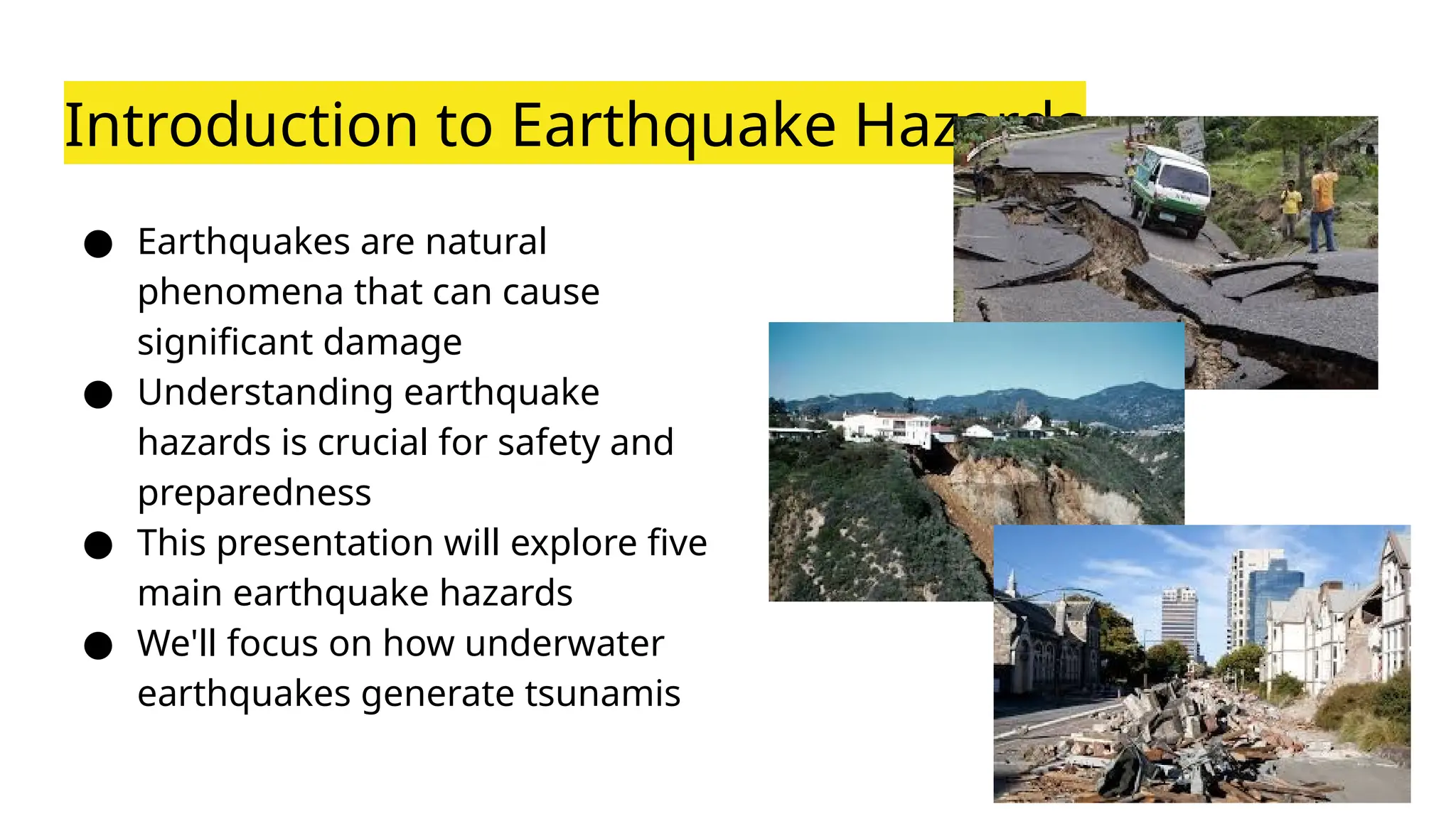
Introduction to Earthquake Hazards
● Earthquakes are natural
phenomena that can cause
significant damage
● Understanding earthquake
hazards is crucial for safety and
preparedness
● This presentation will explore five
main earthquake hazards
● We'll focus on how underwater
earthquakes generate tsunamis
What Are Earthquake Hazards?
Earthquake hazards are the various dangers and risks associated with
seismic events. The five main hazards we'll discuss are:
● Ground shaking
● Liquefaction
● Landslides
● Ground rupture
● Tsunamis
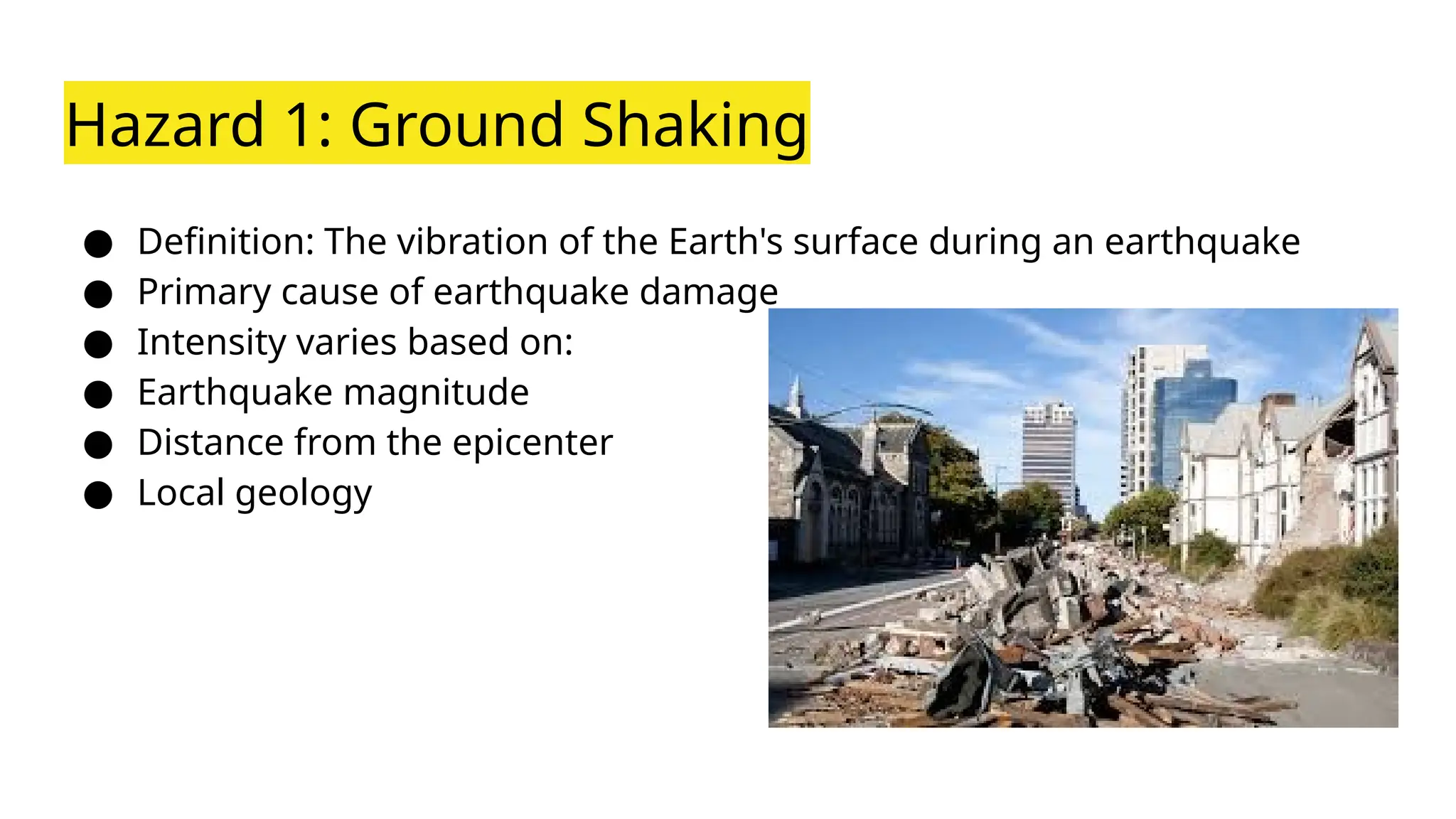
Hazard 1: Ground Shaking
● Definition: The vibration of the Earth's surface during an earthquake
● Primary cause of earthquake damage
● Intensity varies based on:
● Earthquake magnitude
● Distance from the epicenter
● Local geology
Effects of Ground Shaking
● Building damage or collapse
● Disruption of utilities (water, electricity, gas)
● Falling objects and debris
● Road and bridge damage
● Emotional distress and panic
Hazard 2: Liquefaction
● Definition: When water-saturated
soil loses strength and behaves
like a liquid
● Occurs in loose, granular soils
with high water content
● Can cause buildings to sink or tilt
● May result in sand boils or mud
volcanoes
Consequences of Liquefaction
● Structural damage to buildings and infrastructure
● Buoyancy of underground tanks and pipes
● Lateral spreading of the ground
● Formation of sand boils and mud volcanoes
● Increased risk in coastal and riverside areas
Hazard 3: Landslides
● Definition: The movement of rock,
soil, or debris down a slope
● Can be triggered by ground shaking
or soil saturation
● Types include:
● Rock falls
● Debris flows
● Slumps
Landslide Dangers
● Burying or crushing structures
and people
● Blocking roads and evacuation
routes
● Damming rivers, potentially
causing floods
● Triggering additional landslides
● Long-term landscape changes
Hazard 4: Ground Rupture
● Definition: The physical breaking and displacement of the ground surface
● Occurs along fault lines
● Can cause severe damage to structures built directly on the fault
● May lead to permanent changes in the landscape
Impact of Ground Rupture
● Splitting of roads, buildings, and infrastructure
● Creation of scarps (small cliffs) in the landscape
● Offset of streams and other natural features
● Long-term changes to local topography
● Potential for ongoing fault creep
Hazard 5: Tsunamis
● Definition: A series of ocean waves caused by sudden water
displacement
● Often triggered by underwater earthquakes
● Can also be caused by landslides or volcanic eruptions
● Capable of traveling long distances across oceans
How Underwater Earthquakes Generate
Tsunamis
● Seafloor displacement: The earthquake causes a sudden uplift or drop in
the ocean floor
● Water column disturbance: This movement displaces a large volume of
water
● Wave formation: The displaced water forms a series of long waves
● Wave propagation: Waves travel outward in all directions from the source
● Coastal impact: As waves approach shore, they grow in height and lose
speed
Tsunami Wave Characteristics
● Long wavelength (up to 200 km
between wave crests)
● Low amplitude in deep water (often
less than 1 meter)
● High speed in deep water (up to 800
km/h)
● Increase in height as they approach
shore
● May appear as a rapid rise in water
level or a wall of water
Tsunami Warning Signs
● Strong ground shaking near the coast
● Unusual sea behavior (rapid recession or rise)
● Loud roaring sound from the ocean
● Official warnings from authorities
● Remember: If you see signs, move to higher ground immediately!
Tsunami Impacts
● Flooding of coastal areas
● Destruction of buildings and infrastructure
● Erosion of beaches and coastlines
● Loss of life and injuries
● Long-term economic and environmental damage
Earthquake Hazard Mitigation
● Building codes and structural reinforcement
● Land-use planning to avoid high-risk areas
● Early warning systems
● Public education and preparedness drills
● Emergency response planning
Preparing for Earthquake Hazards
● Create an emergency kit with supplies
● Develop a family communication plan
● Secure heavy furniture and objects
● Know evacuation routes and safe meeting places
● Stay informed about local hazards and warning systems
What to Do During an Earthquake
● Drop, Cover, and Hold On
● Stay away from windows and heavy objects
● If outdoors, move to an open area
● If in a vehicle, pull over safely
● Be prepared for aftershocks
Conclusion: Staying Safe in Earthquake
Country
● Understand the five main earthquake hazards
● Recognize the special danger of tsunamis from underwater earthquakes
● Stay informed and prepared
● Follow official guidance and warnings
● Remember: Knowledge and preparation save lives!
ESSENTIAL QUESTIONS
● How does the movement of tectonic plates contribute to the formation of
underwater earthquakes?
● What role does water displacement play in the generation of tsunamis
following an underwater earthquake?

Earthquake Hazards_ Unveiling Nature's Powerful Forces.pptx

  • 2.
  • 3.
    Introduction to EarthquakeHazards ● Earthquakes are natural phenomena that can cause significant damage ● Understanding earthquake hazards is crucial for safety and preparedness ● This presentation will explore five main earthquake hazards ● We'll focus on how underwater earthquakes generate tsunamis
  • 4.
    What Are EarthquakeHazards? Earthquake hazards are the various dangers and risks associated with seismic events. The five main hazards we'll discuss are: ● Ground shaking ● Liquefaction ● Landslides ● Ground rupture ● Tsunamis
  • 5.
    Hazard 1: GroundShaking ● Definition: The vibration of the Earth's surface during an earthquake ● Primary cause of earthquake damage ● Intensity varies based on: ● Earthquake magnitude ● Distance from the epicenter ● Local geology
  • 6.
    Effects of GroundShaking ● Building damage or collapse ● Disruption of utilities (water, electricity, gas) ● Falling objects and debris ● Road and bridge damage ● Emotional distress and panic
  • 9.
    Hazard 2: Liquefaction ●Definition: When water-saturated soil loses strength and behaves like a liquid ● Occurs in loose, granular soils with high water content ● Can cause buildings to sink or tilt ● May result in sand boils or mud volcanoes
  • 10.
    Consequences of Liquefaction ●Structural damage to buildings and infrastructure ● Buoyancy of underground tanks and pipes ● Lateral spreading of the ground ● Formation of sand boils and mud volcanoes ● Increased risk in coastal and riverside areas
  • 11.
    Hazard 3: Landslides ●Definition: The movement of rock, soil, or debris down a slope ● Can be triggered by ground shaking or soil saturation ● Types include: ● Rock falls ● Debris flows ● Slumps
  • 12.
    Landslide Dangers ● Buryingor crushing structures and people ● Blocking roads and evacuation routes ● Damming rivers, potentially causing floods ● Triggering additional landslides ● Long-term landscape changes
  • 13.
    Hazard 4: GroundRupture ● Definition: The physical breaking and displacement of the ground surface ● Occurs along fault lines ● Can cause severe damage to structures built directly on the fault ● May lead to permanent changes in the landscape
  • 14.
    Impact of GroundRupture ● Splitting of roads, buildings, and infrastructure ● Creation of scarps (small cliffs) in the landscape ● Offset of streams and other natural features ● Long-term changes to local topography ● Potential for ongoing fault creep
  • 15.
    Hazard 5: Tsunamis ●Definition: A series of ocean waves caused by sudden water displacement ● Often triggered by underwater earthquakes ● Can also be caused by landslides or volcanic eruptions ● Capable of traveling long distances across oceans
  • 16.
    How Underwater EarthquakesGenerate Tsunamis ● Seafloor displacement: The earthquake causes a sudden uplift or drop in the ocean floor ● Water column disturbance: This movement displaces a large volume of water ● Wave formation: The displaced water forms a series of long waves ● Wave propagation: Waves travel outward in all directions from the source ● Coastal impact: As waves approach shore, they grow in height and lose speed
  • 17.
    Tsunami Wave Characteristics ●Long wavelength (up to 200 km between wave crests) ● Low amplitude in deep water (often less than 1 meter) ● High speed in deep water (up to 800 km/h) ● Increase in height as they approach shore ● May appear as a rapid rise in water level or a wall of water
  • 18.
    Tsunami Warning Signs ●Strong ground shaking near the coast ● Unusual sea behavior (rapid recession or rise) ● Loud roaring sound from the ocean ● Official warnings from authorities ● Remember: If you see signs, move to higher ground immediately!
  • 19.
    Tsunami Impacts ● Floodingof coastal areas ● Destruction of buildings and infrastructure ● Erosion of beaches and coastlines ● Loss of life and injuries ● Long-term economic and environmental damage
  • 20.
    Earthquake Hazard Mitigation ●Building codes and structural reinforcement ● Land-use planning to avoid high-risk areas ● Early warning systems ● Public education and preparedness drills ● Emergency response planning
  • 21.
    Preparing for EarthquakeHazards ● Create an emergency kit with supplies ● Develop a family communication plan ● Secure heavy furniture and objects ● Know evacuation routes and safe meeting places ● Stay informed about local hazards and warning systems
  • 22.
    What to DoDuring an Earthquake ● Drop, Cover, and Hold On ● Stay away from windows and heavy objects ● If outdoors, move to an open area ● If in a vehicle, pull over safely ● Be prepared for aftershocks
  • 23.
    Conclusion: Staying Safein Earthquake Country ● Understand the five main earthquake hazards ● Recognize the special danger of tsunamis from underwater earthquakes ● Stay informed and prepared ● Follow official guidance and warnings ● Remember: Knowledge and preparation save lives!
  • 24.
    ESSENTIAL QUESTIONS ● Howdoes the movement of tectonic plates contribute to the formation of underwater earthquakes? ● What role does water displacement play in the generation of tsunamis following an underwater earthquake?